



 Newsletter
 Search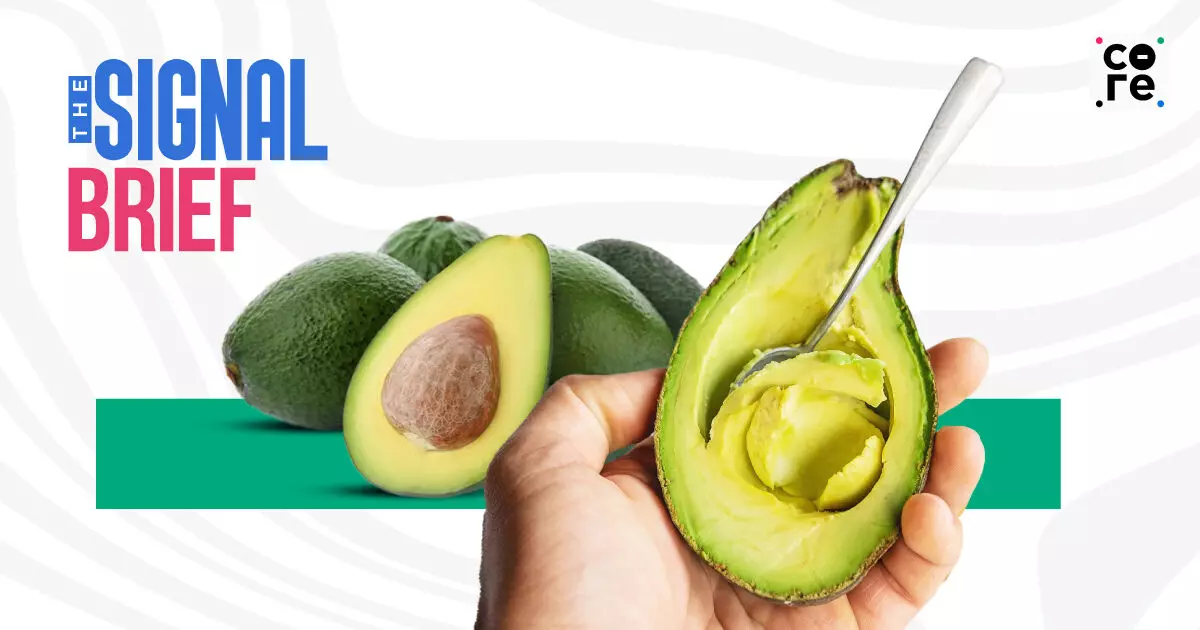
Why Is India Suddenly Eating Avocados?
- Podcasts
- Published on 5 Dec 2025 7:30 AM IST

You’ve probably heard of avocado toast. But have you heard of avocado dosa? Avocado pani-puri? Or even avocado biryani?
Across the country, restaurants are experimenting with this once-exotic fruit. And as prices fall, more Indians are adding avocados to their plates for its taste, texture, and health benefits.
Since 2014, India’s avocado imports have jumped by over 11,000% and could cross 20,000 tonnes next year.
So what’s driving India’s avocado moment?
For the latest episode of The Signal Brief, I spoke to chefs, consumers, farmers, and nutritionists to unpack our growing obsession with this creamy green fruit.
The Core produces The Signal Brief. Follow us wherever you get your favourite podcasts. To check out the rest of our work, go to www.thecore.in
NOTE: A machine transcribed this episode. A human has looked at this text but there might still be errors. Please refer to the audio above, if you need to clarify something. If you want to give us feedback, please write to us at feedback@thecore.in.
—
TRANSCRIPT
Kudrat (Host): Nishant Chaubey is an Indian chef and restaurateur, he has been in the business for 25 years. In November a high-profile wedding in Udaipur made headlines: bollywood stars like Shahid Kapoor and Jahnvi Kapoor performed, as did the American pop icon Jennifer Lopez. Nishant was the food curator at the wedding and says that his avocado counter was a hot favourite of the guests.
Nishant: I had six dishes from avocados and all were super hit. I had an avocado filo pouch, uh, with Rosell jam that I made, and it was, it was beautiful, and, and guests really appreciated it. Uh, other than sushi and ceviche and, uh, you know, other stuff, it is, uh, it is something. In fact, tandoori avocados are quite nice as well.
Kudrat (Host): Avocados aren’t just a favourite of the Indian uber-wealthy anymore. Industry estimates suggest that avocado imports have risen over 11,000 percent since 2014 and could cross 20,000 tonnes next year. That is a small country’s worth of green fruit arriving on plates across India.
When Nishant first added avocado to his menu in 2015, people had questions. Some liked the buttery texture, others shrugged and called it bland. In 2015, diners poked at it with the tips of their forks. By 2020, the poking stopped .Avocado toast became a café staple. Today, Indian chefs like Nishant are experimenting with avocados by making dishes like avocado dosa and avocado pani puri.
Kudrat (Host): My name is Kudrat Wadhwa and you’re listening to The Signal Brief. We don’t do hot takes. Instead, we bring you deep dives into the how and why of consumer trends.
Today we follow one bright green thread through India’s cafés, kitchens and supermarkets to ask: why are avocados suddenly everywhere?
Kudrat (Host): Avocados are pear-shaped fruit, they have a thick dark green skin. Cut an avocado open and you find pale green flesh, buttery and soft – that’s what you eat – wrapped around a single round seed.
These fruits are native to South and Central America, though some Indian towns have been growing them for decades. These are coffee-growing estates like Ooty, Kodaikanal and Coorg as well as the North-eastern state of Sikkim. American missionaries brought them here in the early 20th century, by way of Sri Lanka.
Kudrat (Host): The avocado boom in the US exploded in the 2010s. ‘Avocado toasts’ became an Instagram star, the hashtag would bring up millions of images. In 2015, ‘avocado’ became the most pinned food on Pinterest.
But, before that, including for most of the 20th century, Americans saw avocados as exotic and unfamiliar. They could access it only for a couple of months a year, during the harvest season in California. Then in 1992, the US, Mexico and Canada signed NAFTA or the North American Free Trade agreement, which removed duties on Mexican exports. This meant that now, avocados were available all year round.
But, just because something is available doesn’t mean it’s beloved. So, to improve the fruit’s image, the Hass Avocado Board, the California Avocado Grower’s Exchange and ‘Avocados from Mexico’ invested millions of dollars into marketing campaigns. Their advertisements portrayed avocados as “superfoods”; they highlighted that avocados have “good fats” which help fight against diabetes and heart disease.
It took some time, but by the 2010s, eating avocados became in vogue in the US, and has stayed so. Reports say that in the US, consumption of avocados is rising by about 10% each year by volume.
Kudrat (Host): Most Western consumer trends reach India about five to ten years later.
So when Harshit Godha was studying in the UK, and eating avocados regularly, he spotted a business opportunity: Why not plant avocados in India before the trend took off?
Harshit Godha: My name is Hashit Godha and I'm the founder of Indo-Israel Avocado. Uh, I have been in the avocado industry for the last seven years, and, uh, I'm growing avocados and I have an avocado nursery in the, uh, in the central region. So my nursery is the first commercial avocado nursery in Central India, and, uh, one of the first in India itself. Uh, I import avocado planting material from Israel, and I sell plants all over the country.
See, when I started, I knew that avocado was a niche product that will propel itself to the mass market in some time, because we have seen that pattern in different countries all over the world.
So, uh, for example, Israel, California, Australia, New Zealand, South Africa — uh, it has the same growing pattern. So, uh, it was a niche product first, but then the fruit was in itself quite healthy and tasty, and it looks appealing. So the demand kept on rising.
Kudrat (Host): Harshit is right. Avocado imports in India have been rising sharply, doubling in some recent years. The fruit has also gotten cheaper since he began growing it.
Harshit said that thanks to a duty-free agreement that India signed with Tanzania in 2022. Unlike avocados from Mexico, Australia and New Zealand, Tanzanian avocados arrive at a lower cost, and that has helped put the fruit reach more consumers.
The Signal Brief visited Delhi State Fruit and Vegetables, a store in South Delhi selling fresh produce. Every day, workers refill a crate of green ovals, brushing off dust, weighing them in their palms.
Ritesh runs his hand over the fruit. He tells me they sell about five kilos of the fruit a day. He also confirmed that its falling price has led to increased sales.
Kudrat (from clip): So, Ritesh, what have you noticed with the, you know, how popular are avocados right now? When did that start?
Ritesh: Since last five to ten years, the avocado has finally been increasing in, in India, I will say. Okay, I'm more lucky. And, and the prices also that, uh, medium-level people can, uh, buy.
Initially, it is also, uh, 2,200 for a kilo. Okay. Now the prices are 800, 600, 500, depending on the, uh, region where it's coming from.
Kudrat (from clip): So, um, how many do you sell per day, per week?
Ritesh: Um, per day? Uh, five kilos. Five. Close. Five kilos. Five kilos.
Kudrat: Okay. So what do you think about the future? Do you think they'll get more popular?
Ritesh: Yeah. Yeah, obviously it'll be more popular.
Kudrat: Okay. Why? Why?
Ritesh: Actually the nutrients they have in it, that's why.
Kudrat (Host): At the Safal outlet nearby, a digital weighing scale beeps. A customer picks up an avocado, presses it gently to test ripeness. The shopkeeper there tells me that their daily sale of avocados is about three to four kilos.
Avocado sales in India are rising. Shopkeepers expect the trend to continue, and rise even. They say that shoppers like avocado primarily for their health benefits.
Dhanraj, who’s 65 and diabetic, told me that his doctor recommended him to eat avocadoes because they are low on carbs.
Dhanraj: हाँ डॉक्टरों ने बताया था सुगर वालों ने बताया था की कभी कभी इस्तेमाल करा तो
ठीक है तो आपको कैसा लगता है तस्ते में। शुरू से अच्छा लगता था और किस कैसे खाते है
आप इसकी सलाद बना के प्याज टमाटर सब मिक्स करके बेड पे लगा के
Kudrat (Host): Nutritionist Sheryl Salis, who’s based in Mumbai, confirms that avocados have numerous health benefits.
Sheryl: Avocado does, um, you know, score in terms of certain other nutrients which really add a lot of benefits, whether it comes to heart health. Uh, you know, you want good skin because it's got vitamin E, it's got the good MUFA fats, which is your monounsaturated fatty acids, which is very good for the heart.
It also scores very well in terms of, uh, you know, the lower carbohydrate content and the lower glycaemic index.
Kudrat (Host): Tanya, a 29-year old archivist, said that she eats avocados also because of their health benefits. Moreover, she enjoys their taste too.
But, she says she only buys about one avocado per week. She prefers buying the Indian kind, not the imported one, because the latter is more expensive and sometimes too bitter.
I spoke to Mahantesh Patil, who used to work in aviation but has now retired is growing avocados. We spoke about the difference between Indian and foreign avocados.
Mahantesh: It's called as a butter fruit. Okay. We have it in India. Okay. It's also a very good fruit. We, we, uh, uh, have seen them since, uh, childhood.
Kudrat (Host): But, like most commercial Indian avocado farmers, Mahantesh says he doesn’t grow Indian avocados. Rather, he grows Hass avocados, named after Rudolph Hass, a horticulturist from California.
Mahantesh: The difference — the Hass avocados, I think currently in the market, have been sold anywhere in between 500, 1,200. Even I've seen some of the supermarkets in Bangalore or even in Mumbai, the prices are nearly in between, uh, five to 800. Some places it's around 1,100 rupees or something like that.
But a butter food, the maximum price goes up to around 200 to 50 rupees in a retail. So you can imagine the difference between the farm, uh, margins, where the farmers can make more money out of butter. Food. There are no value add, which farmers can make out okay.
Kudrat (Host): Hass avocados offer better margins than Indian avocados, which is why farmers prefer growing them.
But, their nutritional value is actually similar. They both contain healthy fats, fiber, vitamins (C, E, B vitamins), and minerals.
Moreover, avocados aren’t essential either, said Sheryl, the nutritionist we heard from earlier.
If you don’t like the fruit or find it too expensive, other foods like almonds or peanuts offer similar fats and vitamins.
Sheryl: Well, almonds and all do very well, you know, so again, you look at cost. Like we've done our maths for almonds — roughly around one rupee per almond. So maybe if you can do like — and there's a lot of studies that have been done with almonds. Again, they score because of the vitamin E content. You know, they do have it. They have the good MUFA fats, and I think that's again a very traditional Indian practice. I think every house, uh, traditionally, you know, you always had five to six almonds soaked overnight and had in the morning.
Kudrat (Host): The avocado trend began in the US, boosted by trade policy and multimillion-dollar marketing that turned avocados into a global wellness symbol.
In India, the shift was slower. Chefs like Nishant introduced avocados to menus in the mid-2010s.
Then, doctors began recommending them to diabetic and heart-health patients.
And young consumers like Tanya added them to salads and smoothies, attracted by their health halo and aesthetic appeal.
Today, the avocado sits at the intersection of health, aspiration, and café culture. It isn’t just a fruit: it's a lifestyle symbol, shaped as much by global marketing as by genuine nutritional value.
Kudrat (Host): That's all for today. You just heard The Signal Brief. We don't do hot takes. Instead, we bring you deep dives into the how and why of consumer trends. The Core produces The Signal Brief. Follow us wherever you get your favourite podcasts.
To check out the rest of our work, go to www.thecore.in.
If you have feedback, we'd love to hear from you. Write to us at feedback@thecore.in or you can write to me personally at kudrat@thecore.in.
Thank you for listening.


