



 Newsletter
 Search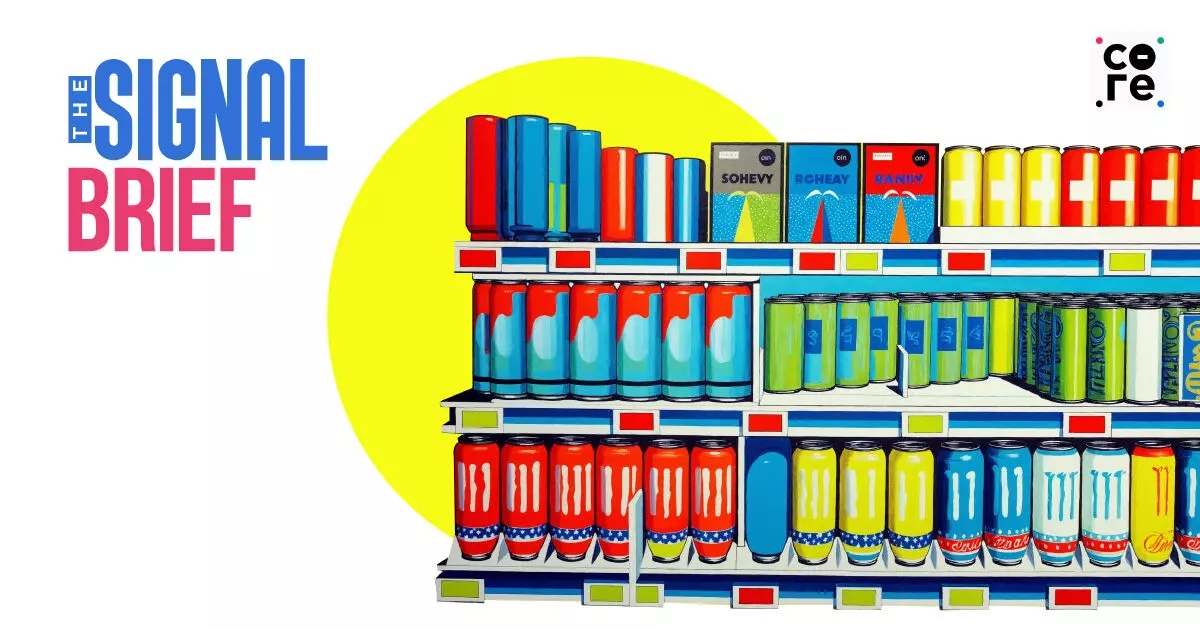
What’s Wrong With ‘Energy Drinks’?
- Podcasts
- Published on 14 Aug 2026 7:30 AM IST

In July, the FSSAI sent notices to 'energy drink' brands directing them to remove the term from their label. Why?
Today, 'energy drinks' are everywhere--at paan shops, kiranas, and even at college canteens.
But now, India's food regulator is cracking down.
In July, the FSSAI, or the Food Standards Safety Authority of India, sent notices to six major brands, including Red Bull, Monster, and Sting, to remove the term ‘energy drink’ from their label.
So why did the food regulator say so? And what's really in these so-called ‘energy drinks’?
To find out, tune in to the latest episode of The Signal Brief.
The Core produces The Signal Brief. Follow us wherever you get your favourite podcasts.
NOTE: A machine transcribed this episode. A human has looked at this text but there might still be errors. Please refer to the audio above, if you need to clarify something. If you want to give us feedback, please write to us at feedback@thecore.in.
TRANSCRIPT:
Kudrat (Host): At the corner of a posh market in South Delhi is a small, crowded paan store called Apna Paan.
It sells cigarettes, paan, and the usual cold drinks: Pepsi, Fanta.
Alongside them also sit two bottles: Red Bull and Sting.
I spoke to Pali Arora, the shop’s owner, on a rainy Wednesday afternoon. He told me that it’s primarily blue collar workers who buy Sting.
Pali: उनकी thought है कि इसको पीने से energy आती है। इसमें मीठा ज्यादा है, इसलिए वो इसे पीना मतलब पसंद करते हैं।
Kudrat (Host): Just a minute later, a young boy walked out of the store holding a plastic bottle with that distinct bright red drink.
Kudrat (from clip): नाम क्या है?
Mohammed: मोहम्मद फाजिल।
Kudrat (from clip): Age?
Mohammed: Seventeen.
Kudrat (from clip): और अभी आपके हाथ में क्या है?
Mohammed: Sting.
Kudrat (from clip): Okay. और आपको कैसा लगता है?
Mohammed: अच्छा है, ठीक है। और क्यों पीते हैं आप? बस कभी-कभी मन करता है, इसलिए पीते हैं, ma'am. Okay. Taste के लिए या energy के लिए?
Mohammed: Energy, non, taste के लिए only. Okay.
Kudrat (from clip): Mohammed, who works as a carpenter after school, told me he prefers Sting because it’s significantly cheaper than a Red Bull.
Mohammed: Sting, ma'am, थोड़ा normal है ये, twenty rupees और वो hundred twenty-five का आता है। But आपने limit से चलना है। बस इतना ही।
Kudrat (Host): One bottle for Rs 20.
Another for over Rs 125.
Both promise some version of the same thing: more energy.
And now, the FSSAI or the Food Safety and Standards Authority of India has challenged that promise.
Just last month, the FSSAI sent notices to six major brands including Red Bull, Sting, Monster, asking them to remove the tag of ‘energy drink’ from their label.
It also asked them to remove claims like “vitalises body and mind,” “enhances focus,” “boosts energy levels”, “aids in general weakness.”
So why did the FSSAI crack down?
And what is the story of these caffeinated drinks in India?
Kudrat (Host): My name is Kudrat Wadhwa and you’re listening to The Signal Brief. We don’t do hot takes. Instead, we bring you deep dives into the how and why of consumer trends.
Today: why India's food regulator says there may be no such thing as an ‘energy drink.’
Kudrat (Host): I’m sure you’re familiar with Red Bull, which commands the largest share in the energy drinks market globally.
Though the brand is Austrian, its story began in Thailand.
In 1976, a Thai man called Chaleo Yoovidhya noticed truck drivers and construction workers struggling through long shifts.
He had an idea--he created a thick, sweet tonic mixed with caffeine, taurine, sugar and B vitamins. He called it Krating Daeng--or Red Gaur. Gaur is the largest animal in the cattle species, not a bull but close enough.
The drink came in small glass bottles and cost just 10 baht.
It picked up. Labourers started drinking it between shifts. Drivers kept it in the cabin for night hauls.
Then, some years after, in 1982, Austrian marketer Dietrich Mateschitz landed in Thailand, exhausted and jet-lagged.
Someone handed him a bottle of Krating Daeng. It worked.
Kudrat (Host): He tracked down Chaleo, formed a partnership, and took the formula back to Europe with him.
In 1987, they adapted the product. They added carbonation, put it in a slim silver-and-blue can, and launched Red Bull.
They even built a whole lifestyle around it. Extreme sports, cliff diving, and the slogan everyone still knows:
CLIP: Shot Put
Kudrat (Host): India met Red Bull in the mid-2000s.
A single can cost more than a hundred rupees.
Red Bull’s teams showed up on college campuses with free samples, sponsored university cricket tournaments, parked tour buses outside festivals, and made the drink part of late-night study sessions and club nights.
CLIP: Imagine walking on the IISc campus and witnessing an F1 car
Kudrat (Host): At that time, energy drinks belonged to students and young professionals who wanted to feel sharp and live at full speed.
It stayed a high-priced, big-city product.
Then, in 2017, PepsiCo launched Sting.
PepsiCo priced it at just twenty rupees. They packaged it in a plastic bottle and pushed it into kirana shops, paan stalls.
And, they even brought in Akshay Kumar for the ads.
CLIP: Sting Energy | Akshay Kumar | Gorilla TVC | Hindi
Kudrat (Host): Soon, the bright red liquid was showing up in the hands of construction workers, rickshaw drivers, and students who needed something cheaper than Red Bull but stronger than a regular soft drink.
Today, Sting accounts for roughly 80 to 90% of the volume in India’s so-called ‘energy drinks’ market: a category now worth more than Rs 13,000 crore.
The drink that began with Thai labourers had come full circle.
Its biggest new audience was Indian workers like Mohammed looking for the same thing: a cheap, reliable jolt to get through the day.
Today, energy drinks are everywhere. In kirana stores. Paan shops. Gyms. College canteens.
But while consumers see them as a category of their own, India's food regulator doesn't.
On July 1, 2026, the FSSAI sent notices to six major brands: Red Bull, Sting, Adrenaline Rush, Monster, Hell Energy and Campa Energy.
Later that month, it gave the companies 90 days to remove the words "energy drink" and several marketing claims from their packaging and advertisements.
FSSAI says India doesn't have a separately notified food standard for a product called an "energy drink."
So companies can't market them as "energy drinks".
They also cannot claim they "boost energy," "enhance focus," or "vitalise body and mind.”
Under the FSS Act of 2006, companies can only make science-based claims that are backed by rigorous, peer-reviewed clinical trials and validated by an FSSAI scientific panel.
Now FSSAI’s concern about energy drinks isn’t new.
It began more than a decade ago.
That’s when an FSSAI expert group questioned the very term "energy drink." It called the name a misnomer and recommended regulating these products as caffeinated beverages instead.
India eventually introduced standards for caffeinated beverages.
The regulator capped caffeine at between 145 and 300 milligrams per litre.
They also required labels warning that the drinks are not recommended for children, pregnant or lactating women, or people sensitive to caffeine, and directed consumers not to drink more than 500 millilitres a day.
Across the world, countries have varying approaches to energy drinks.
Canada limits caffeine per serving. Several European countries have banned sales to minors. Australia requires warning labels.
India already has caffeine limits and warning labels.
This time the regulator has posed an even more existential question: should companies be allowed to call these products “energy drinks” at all?
Kudrat (Host): Now, nutrition experts agree with FSSAI on one thing: the term energy drink is misleading.
One of them is nutritionist Niti Desai.
Niti: Because energy drink gives you an impression that it is good for the body. That it will energize my body. Right? For example, say a glass of milk or a hearty soup can be an energy drink. But it puts this drink in the same category, like you do a glass of vegetable juice or, as I said, a hearty warm soup, but that's not what this is. So it is basically man-made. It is not from natural ingredients. So it's a very different composition. So therefore it's a misnomer.
Kudrat (Host): ‘Energy drinks’ don’t contain a magical ingredient called energy. Rather, they rely on two familiar things: sugar and caffeine.
One gives you calories. The other makes you feel more awake.
Niti: And the sugar numbers are also, these are kind of staggering in terms of 250 ml bottle of these, one of these drinks or the 16-ounce cans has... So, for example, let's talk about 250 ml of bottle first. There's 28 to 30 grams of sugar in that one bottle. And our ICMR NIR requirements tell us, even the WHO requirements, the SFDA requirements say that our sugar intake should not be more than 25 grams in a day. So just one bottle will overshoot our daily requirement.
And we know that especially in our country, in India, where we are anyway a carb-loving nation and we eat lot of carbs, we don't need that, even the 25 grams of sugar. We don't need any sugar for that matter. So excessive sugar intake obviously is going to lead to weight gain, obesity, serious insulin spikes. Your sugar is just going to go up like a rocket. And sugar spiking in the body, insulin levels spiking is the beginning of most of the so-called lifestyle diseases. So we clearly don't need this for the general population.
Kudrat (Host): There’s too much sugar in these drinks, as Niti explained.
And then there’s caffeine.
Caffeine works by temporarily blocking adenosine, a chemical that makes you feel sleepy.
80% of the world drinks some form of caffeine every day.
But, too much caffeine can cause anxiety, heart palpitations, poor sleep and elevated blood pressure.
But that doesn't mean caffeine itself is the problem.
Nutritionists say moderate amounts of unsweetened tea or coffee are perfectly fine for most healthy adults.
The bigger issue is relying on highly sweetened caffeinated drinks to compensate for poor sleep or fatigue.
Niti: So coffee in moderation is not the evil. Two cups of coffee in a day, no problem.
Black coffee is actually good for the liver. So if you do two cups of black coffee in a day, it is actually good for the liver. This is obviously minus milk, minus sugar.
Kudrat (Host): Back at the paan shop, seventeen-year-old Mohammed already knows all of this.
Mohammed: अब ma'am अगर लोगों को देखोगे, लोग वो तो ninety percent हर चीज गलत बताते हैं और वो है, गलत है। गलत है।
आप देखोगे हर कुछ गलत है। आप बोलो Red Bull कुछ शरीर के लिए सही नहीं है। मगर फिर भी लोग पीते हैं। आजकल हर चीज में देख लो आप, किसी भी चीज में देख लो, सब चीज में कुछ ना कुछ खराबी है ही।
Kudrat (Host): By questioning the term "energy drink", FSSAI wants consumers to stop confusing these products with something that's good for them.
But that's only part of the story.
Mohammed already knows Sting isn't healthy.
He buys it anyway.
Because it's cheap and he likes the taste.
Now, changing what's written on the bottle might be the easy part.
Changing why people reach for it is much harder.
Outro: That's all for today. You just heard The Signal Brief. We don't do hot takes. Instead, we bring you deep dives into the how and why of consumer trends.
The Core produces The Signal Brief. Follow us wherever you get your favourite podcasts.
To check out the rest of our work, go to www.thecore.in.
If you have feedback, we'd love to hear from you. Write to us at feedback@thecore.in or you can write to me personally at kudrat@thecore.in.
Thank you for listening.


