



 Newsletter
 Search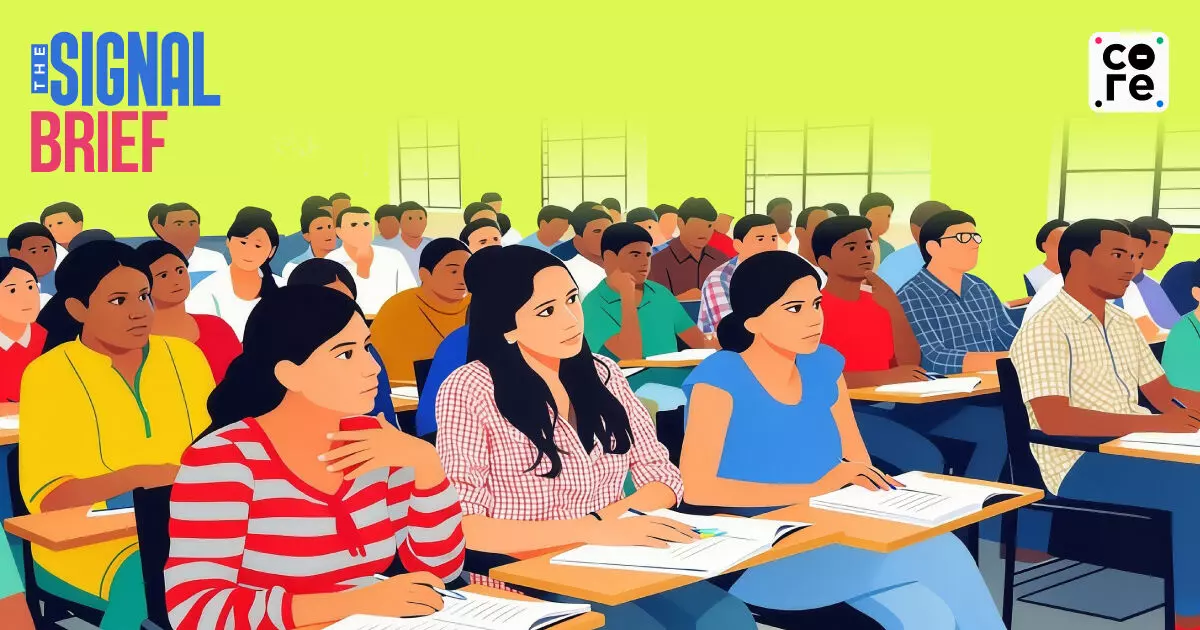
What It Costs To Crack NEET
- Podcasts
- Published on 28 Aug 2026 7:30 AM IST
Two students, one teacher, and the multi-billion-dollar coaching machine they are all inside.
Last month, people from around the country participated in the Cockroach Janata Party-led protests against NEET paper leaks and student suicides.
The protests were a success. Education Minister Dharmendra Pradhan resigned.
But as we all discussed protests and paper leaks, we missed one thing: coaching, the industry built around these exams.
In India, the test preparation or coaching market is worth 14.8 billion dollars and is growing at 12-15% annually.
Several NEET aspirants I spoke to told me that they could not have cracked NEET without coaching.
But coaching comes with costs: lakhs of rupees, grueling schedules, and an immense pressure to succeed.
So what happens when an industry builds around exams?
To find out, tune in to the latest episode of The Signal Brief.
The Core produces The Signal Brief. Follow us wherever you get your favourite podcasts.
NOTE: A machine transcribed this episode. A human has looked at this text but there might still be errors. Please refer to the audio above, if you need to clarify something. If you want to give us feedback, please write to us at feedback@thecore.in.
TRANSCRIPT:
Kudrat (Host): I’m standing in Kalu Sarai, New Delhi.
Coaching institutes line both sides of the street.
Their boards all scream the same promises: clear JEE, crack NEET.
Flyers cover every electricity pole.
One reads “AC Room: Only for Girls.”
Another shows smiling toppers next to their ranks, the numbers printed large enough to catch your eye from across the road.
A young man walks up to me.
He asks if I’m looking for coaching. I say no. But he doesn’t leave.
He steps closer and says, “Just tell them inside you’re looking for NEET coaching. That’s all. It helps with my commission.”
I step through the door.
Outside, the Delhi afternoon heat presses down.
Inside, the air-conditioning hits cold and clean. White walls, bright lights. The contrast is sharp.
Kudrat (Host): Last month, the Cockroach Janta Party protests brought the medical exam NEET into all our living rooms.
A paper leak, a cancelled exam, a retest, and finally, the resignation of the education minister.
But while everyone debated the exam, we missed another aspect: the industry built around it.
According to consulting firm Redseer, India’s test-preparation market sat at roughly $14.8 billion in FY26.
Analysts project that it will grow to $23-26 billion by FY30.
Undergraduate entrance coaching, led by JEE and NEET, drives most of that growth.
This year, about 23 lakh students sat the NEET exam. There were roughly 1.37 lakh MBBS seats in all, and only about 63,000 of those were in government colleges.
Now, families spend years and large sums chasing a roughly 1% chance of an IIT seat or a 3% chance of a preferred government college medical seat.
In places like Kalu Sarai, that pressure is visible on every wall and every electricity pole. The protests fixed a minister. But they did not fix the machine.
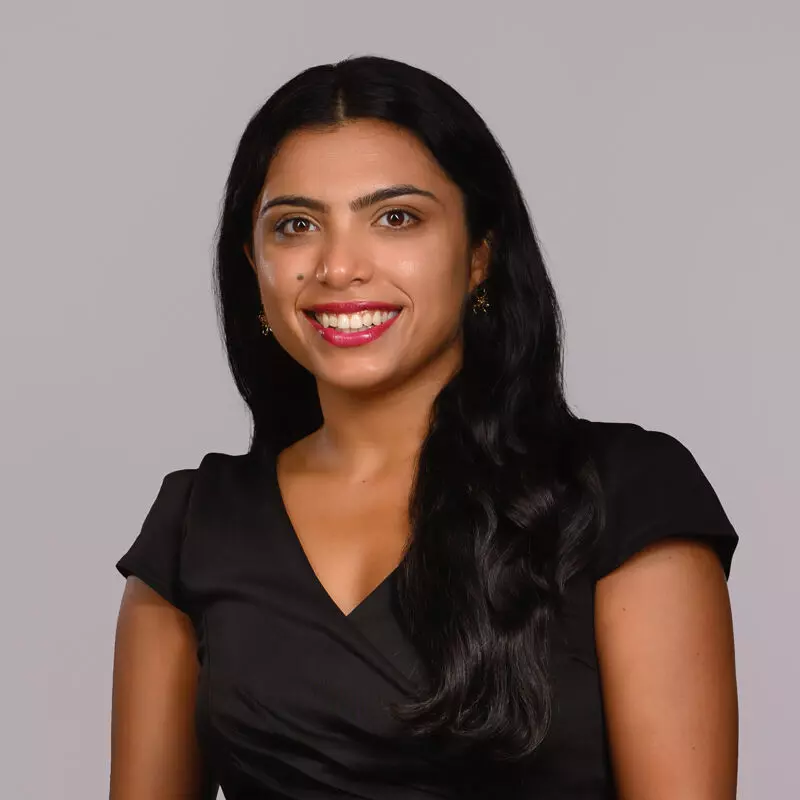
Kudrat (Host): My name is Kudrat Wadhwa and you’re listening to The Signal Brief.
You’re listening to our Friday episode, where we tell stories about how Indians live, work and spend.
In today’s episode: two students, one teacher, and the multi-billion-dollar machine they are all inside.
Kudrat (Host): Dhwani is 19. Her father is a head-and-neck cancer surgeon, and her mother is a dental surgeon. Her naana, or maternal grandfather, also a doctor, still does hospital rounds at age 74.
She told me that she decided in class 4th that she too was gonna become a doctor.
In class 11th, she joined a well-known coaching centre in Vile Parle, not too far from her home in Goregaon, Mumbai.
Dhwani: I used to wake up a little early because my classes were in Vile Parle. So I used to travel by train, so I used to reach around 6:50 because the classes start at 7:00. So, 7:00 to 9:00, then they used to give a break of 20 minutes, then again till 11:30 or something, and then another break, and then till 1:00, 1:30.
There were three classes in a day, PCB. Okay.
There were students who used to wait back in the class and study. It was like a library, not obviously like a... It was like you could... It was like a study room. So if you cannot study at home, if you have disturbance at home, so you can choose to stay back and study there. So I used to stay back and study there till from maybe... I used to take a break till 2:30 or something.
And then from 2:30 to probably 6:30, I used to sit, sit there and study.
Kudrat (Host): Like many NEET aspirants, she did not attend a regular school.
Instead, she enrolled in an integrated course–a package that combines board exam preparation with full-time coaching for the entrance. In practice though, the entrance work takes over.
The two-year course cost her family 4.5 lakh rupees.
Dhwani says the institute delivered what they promised. Her only concern–the teachers tended to focus on the so-called toppers over others, especially in her biology class.
Dhwani: For Bio, I chose Harshad sir this year, 'cause I was not really, I was not really understanding what they were teaching, 'cause there were a lot of students. When I tell you a lot of students, we had to keep our bags under our benches so that we could fit in a class. So like maybe 100. And, you know, they cannot focus on each and every child, you know, when you're in a class of 100 students. So I was not really understanding... Sir was just teaching and the main, main students who were like toppers, they were only getting the attention. So I was not really understanding.
Kudrat (Host): Overall though, Dhwani says that her experience was good.
Dhwani: They taught very well. They used to keep daily tests, so I was very prepared for NEET.
Kudrat (Host): Dhwani's experience is what coaching promises at its best: more preparation, more practice, and, hopefully, a better shot at a seat.
But not every student wants to bet on a classroom of 100 though.
Shaurya Uppal, also 19, refused these big batch coaching classes and opted for private coaching.
Shaurya: The main reason being that is the teacher-to-student ratio. Because, in these big, like, you know, in all these big classrooms and everything, there are around 70 to 80 students in one batch, and there's only one teacher. And I had a lot of friends doing this, and they were telling me, "Bro, I'm really glad that, you know, you've done a one-on-one or like maybe like one teacher to five students," because you get more attention. You can ask doubts because some students, you know, feel shy to ask in front of 70 students.
Like, they feel like, you know, they'll feel dumb.
Kudrat (Host): Both Shaurya and Dhwani sat for the NEET exam on May 3rd, 2026.
Shaurya’s exam went very well. Dhwani says she ran out of time and couldn’t fill out most of the biology answers.
Kudrat (Host): Soon after Dhwani and Shaurya finished their exam in Mumbai, hundreds of kilometres away, in Sikar, Rajasthan, chemistry teacher Shashi began solving the same paper with his students.
Sikar has become one of India's major coaching hubs, particularly for students preparing for medical entrance exams.
At first, Shashi thought the paper looked pretty straightforward.
Then, he received a message from his landlord. A pdf had been circulating on whatsapp from the previous day, labelled a “guess paper.”
Shashi: तो उन्होंने मुझे जो PDF दिखाई तो मेरे होश उड़ गए जैसे। क्योंकि शाम का time था 6:00 बजे के करीब। जब मैंने PDF देखी तो उसमें 45 out of 45 question same to same थे। फिर मैंने एक दो मेरे colleagues से colleagues को बताया, friend circle में बताया कि paper तो जो था वो पिछली रात को ही WhatsApp पर circulate हो रहा है। क्योंकि उनके phone में जब मैंने देखा तो वो पिछली रात के 11:00 बजे का time था। मतलब 2 May को 11:00 बजे उनके पास paper आ गया था।
Kudrat (Host): The questions were identical, right down to the answer choices.
Shashi and his colleagues spent two days building a chain of evidence.
On the night of 7th May he emailed the National Testing Agency, the Education Ministry and the CBI. The next morning the NTA Director-General called him.
By evening an investigating team reached Sikar. On 12th May, the authorities cancelled the exam.
Kudrat (Host): Shashi says a leak like this hits both students and teachers hard.
Shashi: तो फिर उनको बहुत मतलब ये painful होता है और एक teacher के लिए भी painful होता है कि जब वो class में पढ़ाता है तो बच्चों के साथ मिलकर मेहनत करता है। वो दोनों hard work कर रहे होते हैं। वो guide करता है। वो बच्चे भी जरूर उनके पीछे-पीछे चलते हैं। और अगर ऐसी चीजें मतलब होती हैं तो एक teacher के लिए भी काफी painful है कि वो क्यों फिर ऐसे hard work करेगा।
Kudrat (Host): Shaurya, the Mumbai-based student we heard from earlier, felt that impact directly.
Shaurya: I actually broke down as well, like, around, you know, 10, 12 days after the exam got leaked because I'm like, "I'm not getting the momentum. I can't study properly," you know.
Because in the past one and a half year, two years, I've only, like, you know, I've just been studying. I've not been going out. All those sleepless nights, I thought it finally paid off on 3rd May, but then the paper got leaked and they were like, "Give the re-exam."
Kudrat (Host): Shaurya sat for the retest on 21st June. He found the paper tougher. He scored around 400, lower than his first attempt.
Dhwani’s first paper had been a disaster.
The retest then felt like a second chance. She scored 484.
Both of them managed.
But for others, especially those from rural or low-income backgrounds, a leak like this can be crippling.
Arjun Kapoor works on youth mental health and suicide prevention at the Centre for Mental Health Law and Policy. He sees the competitive exam system as one node in a larger web of pressure.
Arjun: And of course, for a young person who has been primed to prepare for this as the single most important thing, you know, in their life at that phase, of course that's going to be a huge setback. Of course it's gonna feel like a huge failure. Not because they are a failure but because the whole system has, has kind of, you know, kind of, pushes you into believing that, because there are such high stakes, on you kind of getting through those examinations.
Kudrat (Host): The leak was the visible failure. But the problems with the system run deeper.
Prof Anita Rampal: I'm Anita Rampal. I've been professor and former dean in the Faculty of Education, Delhi University.
Kudrat (Host): Prof Rampal has been a consistent critic of the National Testing Agency, the agency that conducts these exams.
Prof Anita Rampal: So we've seen it functioning, and I, I don't need to repeat the kinds of complete incompetence that has been exhibited. And we know from people who go there to set exam papers that it's quite a nightmare the way these things happen there.
There is no academic wherewithal, and everything seems to be outsourced, either getting people to come and set papers, telling people to translate it using Google Translator, and also, now that we've seen after the CBI investigation that paper setters themselves are people in collusion or themselves are people who've been selling out, these papers, and it's an organized paper loot, if I may say.
Kudrat (Host): Prof Anita argues for a more decentralised, state-based system so that an entire generation’s future does not rest on one national exam.
She further says that the multiple-choice format itself is the core design flaw.
Prof Anita Rampal: So if we talk about what happens in this is, this completely narrow speed-based, you recognize the patterns, you recognize this kind of question, and then you exactly know how to deal with it in half a minute or one minute. So, you, you will appreciate that that doesn't tell you very much about a student's thinking capacities and analytic capacities. They're not being assessed.
Kudrat (Host): And the same exam that creates such intense competition has also created a lucrative market for predicting, practising and, in some cases, reproducing the questions that appear on it.
Prof Anita Rampal: Secondly, we also know that, under the name of doing mock tests or practice tests, the coaching industry actually doles out to them the actual exam paper, or most of the questions, like we found in last year, 150 out of the 180 questions were given out under the garb of a mock test. So again, that is you're charging money, huge money.
The CBI inquiry told us that students were made to pay eight months in advance 10 lakhs for students, per student for getting this mock test, which is actually the actual exam paper. So it's not a chance with the leak which has just happened accidentally by some questions being, you know, given out.
Kudrat (Host): Beyond the leak, Prof Rampal added that the coaching industry is worrying also because it targets families from around the country.
People take on debt and even sell land so their kids have a shot at social mobility.
In Mumbai, Dhwani and Shaurya could live at home.
In places like Kota or Sikar, many students come from outside and have to pay for boarding too.
A year of coaching plus hostel and food commonly runs Rs 3-5 lakh or more.
A second year, or a drop year, multiplies that. And drop years are common—because the exam is that hard.
Prof Anita Rampal added that for families from smaller towns and villages, coaching is much more than an educational add-on.
Prof Anita Rampal: It's an aspirational project for them. It'll change lives.
And that is what is killing because children in class eight, when I speak to them and when they have come into a residential school, they are told, "Don't make any friends because they're all competitors here." Can you believe it?
A 12-year-old child or 13-year-old child in a, in almost like prison you're staying, and in Rajasthan they actually covered the grid on top to show that no one can jump and commit suicide. It was as horrifying and poignant as that.
And then you're there, and then you're told, "Don't make friends."
So you're not having a holistic education. A child never learns alone, so you're placed in this very contrived situation, and you cannot tell your parents you don't do well.
You don't get it, because the chances of getting it are very small. It's maybe less than a percent or even smaller, half a percent from where you're taking it, and you don't know that you will not get it the next time.
So you just say, "I can't tell my parents that I don't like this." We have heard students say that, "And I will work harder." So you're just killing yourself.
You're killing the child's entire sort of creative period of her life, his life. They are being stifled to only do this test, to get into this exam, knowing that they don't really want to do it, but just because they owe it to their parents or they owe it to whoever has mortgaged their own future to send you here, and that is the very, very sad and disturbing part of it.
Kudrat (Host): The emotional costs while preparing for the exam are massive, as Prof Anita Rampal laid out.
But, there's another problem too: what happens when the skills needed to ace the exam aren't the same skills needed after it?
Here’s Shaurya, the Mumbai-based student we heard from earlier.
Shaurya: I personally don't think, like, scoring in NEET gives you a, you know, it is... It doesn't guarantee you that you're gonna become a good doctor.
Like, I have a lot of friends who have friends who are telling me that, you know, I have, seniors who did really well in NEET but during MBBS they broke down and they couldn't, you know, they couldn't cope up because it's very different. Because in NEET is just MCQ solving.
A lot of people just rote learn and write the answers. But when it comes to being a doctor, you gotta be able to communicate well, you gotta understand your, you know, where your patient's coming from. You gotta be open-minded. You gotta be, you know, the patient should be able to talk to you. I don't think this exam takes that into account.
Kudrat (Host): So, students sometimes struggle in their MBBS courses. But even beyond that, Prof Anita Rampal questioned the kinds of doctors we are creating as well as their priorities.
Prof Anita Rampal: During the MBBS, their teachers say that they're preparing for the need of the post-graduate course, which is for a specialization. So in terms of basic healthcare, which we need for the country, they are not prepared.
So the whole system is worrying because you're not getting people who have the understanding, who even think that that understanding is important, who even pay attention to gaining more practical knowledge of the medical system, and who are just sailing into this because of one multiple choice, and again, preparing next for another competitive choice without really, devoting themselves and then being able to deal with issues of healthcare, whether in a rural environment or an urban environment.
Kudrat (Host): After all this, it would be natural to treat coaching as the villain.
The industry looks extractive. The costs are high. The pressure is immense.
But Shashi, the teacher who first raised the alarm about the paper leak, sees it differently.
Shashi: Coaching industry बनी नहीं है, सरकार की खामियों की वजह से इसे बनना पड़ा है। क्योंकि आज हम-- आप भी समझते हैं, मैं भी समझता हूं कि आज हमारे बच्चे पढ़ रहे हैं। हमने खुद ने पढ़ाई करी है तो school में कितनी की पढ़ाई होती है। अब paper उससे high level का आता है। है ना? और paper में वो school में वो चीजें पढ़ाई भी नहीं जा सकती पूरे साल भर में। Time बहुत कम होता है teacher के पास।
तो हमारा जो schooling system है ना, वही जो था वो weak था और हमेशा से है। इसीलिए coaching को पनपना पड़ा। Coaching उनका एक substitute है ना कि coaching main है। अगर बच्चे को school में आप अच्छी शिक्षा दे दोगे तो कौन है जो आकर दो-ढाई लाख रुपए लगाएगा और अपने time waste करेगा।
Kudrat (Host): Maybe he's right.
The system afterall, predates coaching.
And now, even the government is getting into the coaching business.
It has announced plans to offer free coaching for exams like NEET and JEE to students who cannot afford private classes.
Meanwhile, Shaurya still wants to become a doctor, and says that he'll decide on a specialty once he's in medical school.
Dhwani says she’s looking at a dentistry course, and then following the surgical path her family took. She's clear she won't keep taking drop years to improve her score.
The system has been kinder to them, it didn’t spit them out.
Still, the more I reported this story, the clearer it became: the problem wasn’t the leak. Or even the coaching industry.
The real issue is what the system has come to prioritise.
Speed over understanding.
An exam over an education.
Getting the right answer over asking the right questions.
Back in Kalu Sarai, the boards are still up.
The toppers are still smiling from flyers hung over electricity poles.
The young man is probably still walking up to strangers, asking if they’re looking for coaching.
The air-conditioning is still cold.
The machine is still running.
Outro: That's all for today. You just heard The Signal Brief, your twice-a-week look at the stories shaping Indian consumers.
The Core produces The Signal Brief. Follow us wherever you get your favourite podcasts.
To check out the rest of our work, go to www.thecore.in.
If you have feedback, we'd love to hear from you. Write to us at feedback@thecore.in or you can write to me personally at kudrat@thecore.in.
Thank you for listening!


