



 Newsletter
 Search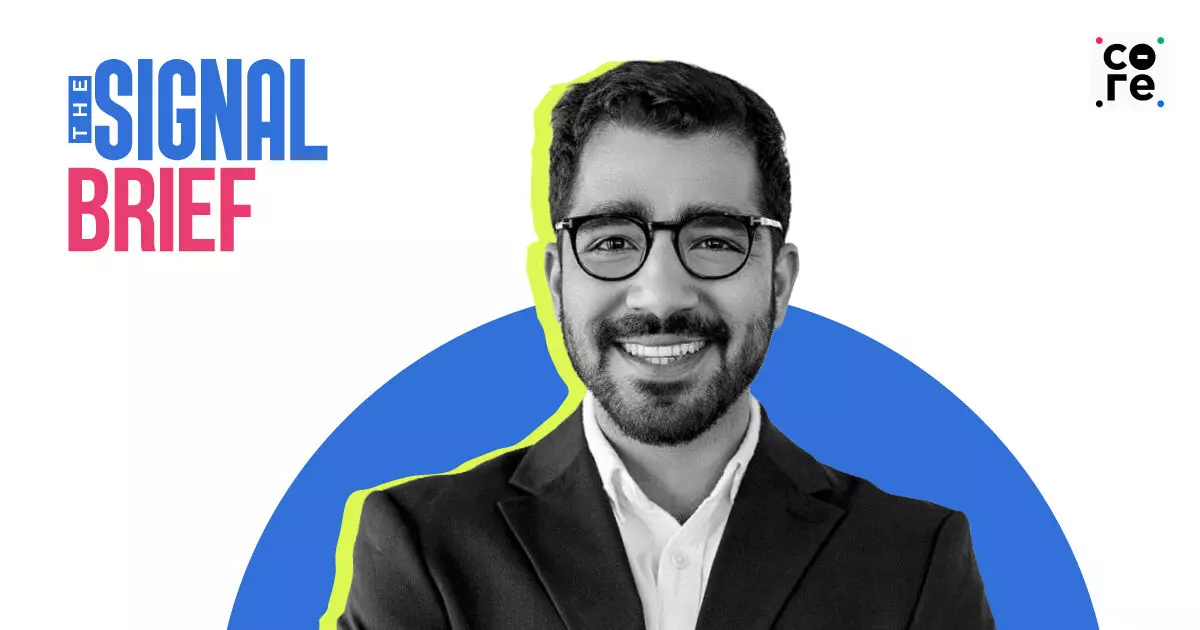
Tuesday Special: Surya Khurana On The Future Of Bus Travel
- Podcasts
- Published on 8 Sept 2026 7:30 AM IST
How is FlixBus trying to make a mark in the Indian bus market?
In The Signal Brief’s Tuesday special, we feature insider interviews with leaders shaping modern consumption.
Today’s guest is Surya Khurana. He’s the MD of FlixBus India, a global travel tech company that offers affordable and sustainable intercity bus services across multiple continents through partnerships with local operators.
We spoke about FlixBus’s USP in the Indian bus market, the company’s approach to standardising the bus travel experience, and how it is trying to make bus travel a more attractive option for Indian consumers.
The Core produces The Signal Brief. Follow us wherever you get your favourite podcasts.
NOTE: A machine transcribed this episode. A human has looked at this text but there might still be errors. Please refer to the audio above, if you need to clarify something. If you want to give us feedback, please write to us at feedback@thecore.in.
TRANSCRIPT:
Kudrat (Host): So, Surya, welcome to The Signal Brief.
Thanks for speaking to me. So my first question is, you know, India already has an extensive bus system. We have all of these state operators as well as private companies.
So what is the value that Flix is bringing? What is your USP in this market?
Surya: So part of the answer of what you were saying is actually in the question itself. So you mentioned that it's fragmented and there's a lot of different operators which are there. So Flix is actually a German, Munich-headquartered company.
We are now in close to 45 countries around the world. We provide long-distance intercity bus as well as coach services. And we have marquee brands like Greyhound in the US, which is a hundred-year-old brand, and also Camelcodge in Turkey under our group.
What Flix does is that Flix actually compounds the knowledge and the depth of the local operator and adds a technology layer on top to provide a high-quality and standardised experience to a customer. What this means is that we will, when we enter a market, we try to understand the local nuances. We try to pick small and medium operators who've been running these services already.
And then based on our SOPs and our way of actually getting these vehicles on board, we have a Flix standard in terms of the experience. So whether it's the vehicle type, whether it's how your host behaves with you, what the booking process looks like, what kind of a bus you're going to eventually end up into, what kind of safety standards we have for it. We try to ensure that every bus that you take looks and feels more or less the same.
And that is actually the gap that we also saw was there in the market. So while the market has a lot of operators, it's been running for decades now, it is extremely fragmented. There's low NPS and the trust in general in the market is lower.
And bus is never seen as, or in most cases, not seen as the go-to choice for people. It's kind of a plan B or a plan C in most cases for most consumers. And that's basically what we're trying to change with our work over here at Flix.
That we're trying to make that experience standardised and getting a layer of technology added on top. So working with local operators, adding a layer of technology, and then making sure that the customer experience is seamless and consistent across different markets, different cities, and different pick-up points.
Kudrat (Host): Okay, understood. Thanks for that. So I know you've been doing this for a couple years now.
So when it comes to the standardisation, what are some of the top things that you focused on? Is it reliability, cost, quality, safety? Could you talk about maybe the top two or three factors that your company has been focussing on?
Surya: Sure thing. So actually, I'll take you back to 2023 when I came back to India. So I was working in a mobility company before, but then I moved to India to then launch and scale Flix.
For the first few months, I spent a lot of my time at the ISBTs in and around Delhi. So I think Dholakpur, I think Kashmiri Gate, Anand Vihar. And I would spend hours looking at how customers were booking their trips.
I used to take my own bus journeys as well from players that were already existing in the market to try and understand the gaps which were there. What I saw was that most of the gaps existed in these quarters. The first was that your booking experience was very different across different platforms and different players.
In a lot of cases, the information was given to you upfront of what your vehicle is going to be, where your vehicle will pick you up from, how to get there, etc. In some cases, it would be a communication that you would have with the host. So you would get a number of the driver or of the conductor, which was again not seamless because they would either be driving or they would be busy with something else.
So you would not be able to get through to them with a high success rate. And then they would tell you where you have to come. So there was no consistency in the pre-booking experience as well as in the booking experience.
Then when you look at the bus, the make and models of the buses were oftentimes quite deceptive. So you would see a Volvo AC sleeper or an AC sleeper or an AC semi-sleeper, but don't really know what that means. And a lot of times the photos were generic stock photographs that were put.
So the vehicle that you would get into, you would not really know what vehicle it would be. And I've seen a bunch of them. You would have these neon blue light vehicles.
You would have these green light vehicles, which are there. And then different kinds of seats, different seat pitch, whether it reclines or doesn't recline, you don't really know about it. So that's the second part, which was the onboard and the vehicle experience in general.
The look and feel of the vehicle was not the same. Then it comes to what kind of onboard experience you get. So what is the rest stop that you're stopping at?
What time will the bus start? When will it reach? What is the SOP on?
How long does the bus wait for each passenger? If there is a delay along the way, how do the customers who are getting picked up somewhere along the way informed about the delay as well? So we saw that these are all the things which are fairly inconsistent across buses.
And then one of the things which actually is a top priority for us, that the vehicles and the standards that the vehicles have was also very different. So I saw 13.5-metre buses with a standard 36-seat sleeper bus. I saw some with 18-seat sleeper bus as well.
So they were not the standard of the week. It was not the one which is in the regulations. So these were made after the fact and the fabrication was done later.
A lot of seater buses in India do not have seatbelts. All of our buses have seatbelts now. So there were no seatbelts, which were the emergency windows, things like a fire extinguisher, a hammer to break the glass in case of a fire.
These things were missing. So what we then came up with was then, like I mentioned before, a Flick standard. That these are all the things which we believe right now are existing gaps in the product.
And it's not like there is no operator out there who's trying to do this or this is the first time that this is being done. There are a few bits and pieces where you will find that there are small operators who are trying to do this and increase the standard of the quality that they give to customers. They also understand that that's how the flywheel of the consumer getting into the bus ecosystem will happen, but not at the scale that we are doing it right now.
So that's where we saw that this is the gap that we're seeing in the market. Spoke to a lot of consumers and our own first-hand experience of taking buses in different parts through different pickup points and realised that the pre-booking experience, the on-trip experience and the post-trip experience needed to be standardised and have a Flick standard. And that's what we try to achieve.
And that's what we try to do with our operations and on-ground teams on every trip.
Kudrat (Host): OK, OK, great. Thanks for that. So, you know, bus is also one of the most affordable ways to travel.
And all of these changes that you're mentioning will also require like an increase in the ticket fee, for example. So like how much leeway do you think there is to increase the ticket fee or are you trying to do that within the same ticket charges that the operators are currently charging?
Surya: See, most businesses will have a margin. Most businesses are a margin expansion or a margin reduction game over time. The cost of materials or the production cost of a trip, the baseline of it hardly varies.
The bus is pretty much the same price for everybody. Cost of petrol is the same. Unless you are not following government labour law regulations, the cost of your driver, your host and everyone else on board is going to pretty much be the same.
So the base cost, which makes up to 70-80% of what you're doing when you're supplying a bus from point A to point B, which is production cost, more or less is the same for customer. Basically, company A versus company B or operator A versus operator B. On top of it comes other costs, which are costs which are related to running the service outside of the bus by itself.
So these would be things like operations teams, whether you have parking lots or not, whether you're using technology, how many people are there in your pricing team? Who does sales and distribution for you and so on? So across the board, you will see that there are these different cost elements that keep getting added over and above.
What we try to do at Flix is that we try to optimise for two things over there. First is that if you are able to fill more seats on the bus by virtue of having a brand, a consistent value proposition that I just spoke about on the consumer side, and then are able to reinforce that again and again in subsequent trips, you see that the fill rate or the utilisation of your vehicle goes up. So for the same fixed cost that you have for your asset, you're able to get more revenue.
So you don't necessarily need to price the tickets at a higher price. You just need to fill more of your seats. And that comes with being reliable, being punctual, having a value proposition to a customer which is consistent, having a value of being a safer and reliable service over time.
Kudrat (Host): OK, got it. So I heard a couple of your other interviews and, you know, you mentioned this make bus travel cool again. So, you know, why do you think bus travel is not cool?
I mean, you mentioned earlier, it's like the second, third choice for people. And what is Flix doing, especially to add that kind of coolness factor to bus travel?
Surya: Bus travel, like if you most people, if you ask them about whether they would want to take a bus from point A to point B, you're not going to get a very enthusiastic reaction. It's not like taking a flight. Not that that's any better, but most people associate buses with these old run-down buses.
Remember the Piddle Light ads for Ferry Call where there used to be more people hanging outside the bus than they were inside. A lot of people still believe that that's how buses in India are. To add to that, there's this belief that they stop along the way to pick up as many passengers as they can.
There's cargo, there's more people stuffed in than there should be. The seats don't recline, it's not a premium service, etc. This perception that is built in the minds of a lot of people, that is what has rendered bus travel to be plan B or plan C.
And a majority of the population in India actually uses bus. It's the backbone of intercity travel. And you'd be surprised to know that we actually ferry more people than railways and airlines combined.
Railway pre-COVID hit its peak in terms of passenger volume, but it's never been able to come back to it. We do hear about a lot of new trains coming, but it's not new kilometres which are getting added. The number of stations or the number of connections are still the same.
It's the older trains which are getting replaced by the newer ones. Passenger volume is not dramatically rising at the same pace as demand is. Because bus has this connotation to it that this is how your journey is going to look like, people think of it as plan B or plan C.
And that's what we're here to solve for and that's what we're advocating for. Bus is and will continue to be the backbone of getting people around in India. There is no better way to travel, in my opinion.
And to a very large extent, it's also the most cleaner and the greenest way to get around because you're able to fit more people into a much smaller form factor. And hence, have your carbon emissions also controlled to a very large extent. Folks, however, think that this is the former example that I was giving you of what that bus experience is going to look like.
And our job is to break that myth. Our job is to make sure that the experience of people that are trying Flixbus out for the first time or who are using other services and then moving to Flix, looking at a European player, entering the market. Or people who are even trying it for the first time.
We know that a lot of Gen Z and Gen Alpha who are now starting to travel and are starting their, let's say, travel journey in general, they are using very different ways of getting around. There's a lot of solo travel that happens. Solo travel is much easier to do in a bus.
We see that in North India. A lot of people are travelling to the hills very consistently over long weekends now. And it's not really a seasonal travel, but you see a long weekend and there's already a lot of people trying to take these trips.
Each time a customer takes a Flixbus and each time they come back feeling that, oh, this was a comfortable, reliable and an affordable journey. They are going to tell more. Nothing sells more than word of mouth and nothing sells more than a high-quality customer experience.
And that's what we're optimising for. And if you look at our front-end ratings or even our NPS scores, they are very positive. Our NPS is incredible.
It's double-digit positives. And even our rating scores on some of the OTAs and distributors that we work with, they're also UC numbers in the order of 4.4 and above. And that's a testament to the quality and the service that we are building over.
And it's not going to be a one-day shift or a one-year shift. We are in this business now a little over three, two years already in India. But we do believe that we consistently keep giving this service again and again.
Over time, this is going to change and so will the perception around bus travel. And hopefully we'll make bus travel cool again.
Kudrat (Host): OK, great. So I just have one last question. So you mentioned, you know, solo travel.
And I mean, as a woman myself, and I've had friends who've travelled on buses, overnight buses where they've had really bad experiences with safety. So what is Flix doing to ensure safety of passengers, especially women passengers? And you mentioned technology.
So are there any ways that you all are using technology to enhance safety?
Surya: I would split safety into three different parts. I think the first, I would talk about what we're doing on the bus, during the bus, and, you know, the customer journey. So let's start with that.
So the first thing that we do when we have, when we're signing on a bus partner, that we have a very extensive bus partner audit process and a bus audit process. So the bus operator gets from us a standard sheet that this is what the bus needs to look like. And these are all the things and all the amenities that the bus has to have.
Once that is done, that goes from the operator to the OEM and to the bus bodybuilder. And then there is a bus that looks and feels like any other Flix bus that gets delivered. There's a team that goes and does the audit to the point that they carry a, they carry an intuitive with them to see if the seat pitch is correct or no, check each and every part of the bus.
And once that is done, there is retrofitting of a few devices on top. So there is a GPS tracker as well as a dashcam, a two-way dashcam to see the driver as well as see the road that gets added to it. There are a few other things that we add on top of it.
For example, a seat belt that I already spoke about, which is not, you know, which does not come out of the box. And then once that is done, the vehicle is ready and is set. This takes care of layer one of how we want the vehicle to actually by itself and the form factor to be more, to be safer.
The second thing that we do is the staff on board. We have a host and a driver who are on board. We have a third-party company that does a background check for each of them.
So we do the background check. Then we do an extensive training for them on how to use the app, how to work with customers, what to do in cases of delay. And we've now gone, you know, a level above after that.
And we've also started giving CPR training and other safety-linked training for them in cases of emergencies, which we know when you're on the road, you know, unfortunately quite, quite often. So we want to make sure that all of our staff is trained and equipped to deal with situations like this. And also trained properly to be able to give a higher-quality experience to the customers who are coming on board.
When you're on board, you have a few things that the app then gives you. And that's where the technology comes in. So pre-trip, you're able to see where your bus is going to come.
So there's life tracking and there's also a station walkthrough. This is my pickup point and how do I get there? So the app actually helps you in getting to that point.
You get the number of your host so that you can be in touch with them. You get the option to have your life tracking in your current bus trip details, shared with the folks in your family or other people that you would like to send your location to while you're on your journey. And they can then on their apps or on their phone, they can live monitor where your bus is at.
If there's any delay or if the bus has a deviation, you can see it. So it shows the route and then you can see where the bus is actually going. This basically takes care of a lot of what we do on the bus and in the customer journey.
The second thing that we are doing is that we are advocating for terminal access for private bus and private operators. In most ISBTs in India right now, only the state operators get the ability to go and pick up from the inside. Delhi ISBT, Chennai ISBT are two examples where private operators have been allowed and the access has been opened up.
And just by doing that, the quality and the safety of the customers has, at least in my opinion, has taken a step forward. Instead of getting picked up on the sidelines of the road in the middle of the night where there's no service, no CCTV, in a lot of cases, no place to stop, no place to go, no washroom to use, very little lighting. You get a terminal which has been set up by the government for people to actually take buses.
And that's a massive, massive jump from the experience that was there and also adds to the safety promise that we have. So we're trying to advocate with as many states and as many governments as possible to open up terminal access. And this terminal access is paid, mind you.
So there is a lot of revenue also that the state gets by doing this. And just between us and the rest of the private operators in the Kashmiri ISBT, there's massive revenue flow which is happening, which is also now helping them in the upkeep and the infrastructure development of the ISBT, which is up until now suffering to a very large extent. And the third thing that we do through the course of both of these is that we have a strong operating SOP, which starts with something which we call as a PDC, it's a pre-departure check.
So there's an app which our ground operations teams have. So before every trip that gets started, there's a person who goes on board and checks for all of the things. So there's a 15-point safety checklist that they have.
And then we have a traffic control team in the back. This is a 24-7 monitoring team which sits out of a couple of offices in India based on the regional depth of the markets that they're looking at and also the language support that they need. And it's basically a controlled room of all of the buses which are running at all points of time.
So they're able to see which bus is on time, which has left, which hasn't left. If there's a breakdown or there's an accident, then they get an auto notification. So we combine all three of these and then we try to make this into a safety promise.
And our recent brand campaign was also around this. The tagline was Har Safar Safer. So with Flixbus, we're trying to make Har Safar safer for all consumers.
And that's the idea and that's the ambition that we have, that we want to make our buses the safest place that we can. See, anything that happens on the road or anything that happens in a city happens in a bus. It's the unfortunate reality that we live in.
But we as an organisation want to make sure that we're trying to do whatever we can in order to make sure that we are stepping up the bar on safety. And we know that just how competitive the market is, the bar will keep rising again and again in a free competitive market. And that's the ambition that we have.
Kudrat (Host): OK, great. So, yeah, that's all from my end. Is there anything else that you'd like to add?
Surya: That's about it. If there's anything that you want to know, then I'm happy to talk. Otherwise, it was great speaking to you.
Kudrat (Host): So thanks, Surya. Thanks for joining me for The Signal Brief.
Surya: Thanks a lot for the very engaging discussion. And I'm glad that you had me on board. And I hope that our listeners also enjoy listening to this.
Kudrat (Host): That’s all for today.
The Core produces The Signal Brief. Follow us wherever you get your favourite podcasts.
To check out the rest of our work, go to www.thecore.in.
If you have feedback, we'd love to hear from you. Write to us at feedback@thecore.in, or you can write to me personally at kudrat@thecore.in.
Thank you for listening.


