



 Newsletter
 Search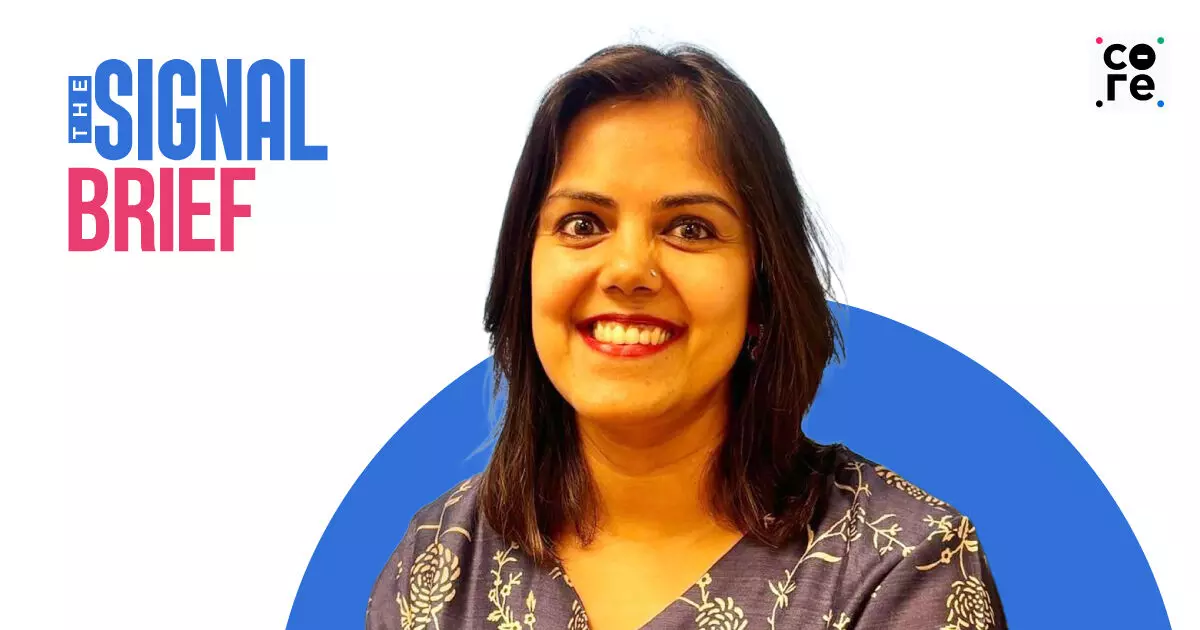
Tuesday Special: Neha Kirpal On Why Women Put Mental Health Last
- Podcasts
- Published on 22 Sept 2026 7:30 AM IST

And the other challenges they face in accessing mental healthcare.
Hi, I'm your host, Kudrat Wadhwa, and you're listening to the Tuesday Special of The Signal Brief, where we interview leaders from across industries shaping modern consumption.
Today's guest is Neha Kirpal. She's the co-founder of Amaha, a mental health organisation, as well as the co-founder of IMHA, or the India Mental Health Alliance, which works with mental health care organisations, professionals, funders, governments and institutions to help build capacity.
Neha and I spoke about the challenges that women face in accessing mental health care in India today.
The Core produces The Signal Brief. Follow us wherever you get your favourite podcasts.
NOTE: A machine transcribed this episode. A human has looked at this text but there might still be errors. Please refer to the audio above, if you need to clarify something. If you want to give us feedback, please write to us at feedback@thecore.in.
TRANSCRIPT:
Kudrat (Host): So, thanks, Neha, for being with me. It's great to have you. To start, I would love to hear more about a little bit about your personal journey.
What is it that drives you to do this work every day?
Neha: Thanks for that, and thank you for having me.
I think, for me, it's really a labour of love. This journey comes out of two generations of navigating mental illness in my family, in the case of my mother and my younger brother.
And I think what we've seen is really how hard it is for women, no matter what your role might be, as a wife, as a sister, as a daughter, and as an entrepreneur or a working woman, how hard it is for women to access care and support.
So that's been a big driver for me. And over the last five years, the journey of building out IMHA and then also, of course, the India Mental Health Alliance, is really about bringing people together, centred around those with lived experience and the caregivers, people who we are really here to serve.
So that's sort of the goal.
And last year, we also brought out a book called Homecoming, which is an anthology of 11 women and their experiences with severe mental illness, the stories of their lives and how they are thriving, but also what their care journey has looked like.
So it's an insightful read for anyone looking for some experience, strength and hope.
Kudrat (Host): Great. So, coming to what we are talking about today, there are studies that put the treatment gap for women with common mental disorders at about 82%. And that's worse in urban non-metros in India than in rural areas.
And that's despite the fact that, of course, cities have more clinics, more professionals and so on.
So what's really going on here?
Neha: I think we are able to speak a little bit about the trends of smaller towns, small-town India and the non-metro cities. But it is hard to be able to capture a trend in terms of the formal mental health support structure in rural India as well.
So, just to say that, to caveat that, I don't know if we can say in certain terms. While there is a lot of social scaffolding, a lot of support systems, joint families and various other forms of informal support that women may have in rural India, the last-mile connectivity for mental health support in a specialist way is very much lacking and is very much an urban phenomenon.
Having said that, I think when we look at Tier 2 India and also the smaller metros, some of it is true, even, frankly, for the larger metros. The experience of women as the ones carrying the caregiver burden, as the ones really carrying their unfair share of childcare and elder care, but also becoming a sort of two-income household.
So women are playing both roles, in a sense. I think that has made it quite challenging. The lack of me-time and the ability to really be able to, in the list of priorities, find yourself has been quite hard.
I think women in these regions seem to be caught in the in-between. On the one hand, having the exposure, the desires and aspirations equal to any man, but also having exposure to different kinds of lifestyles and different aspirations in terms of travel, in terms of career, in terms of personal fulfilment.
So there's a lot of exposure on the one hand, and the inability to fulfil some of it.
At Amaha, we see, I mean, on the online platform, we reach about 600 cities and towns across the country. It's an overwhelming majority of those who are women reaching out for help.
And yet, we don't know how much space and privacy they have to actually continue and get the right help for as long as they need it.
Kudrat (Host): Yeah, and I think even data from Tele-MANAS, which is basically, for our listeners, the government's free telehealth care helpline, shows that there are women who reach out. I think 50% of callers are women.
But the challenge happens after that first call. So, in your experience through Amaha's work, what is it exactly that happens after the first call?
Why does that drop-off happen?
Neha: Yeah, I mean, in any case, the statistic globally is that there is a big drop-off rate, regardless of men or women, and there's a drop-off after the first call or after the first two or three. So those are global statistics in any case.
But I think what makes things a little challenging is, and I don't know if it's very different for men and women, but it does make it a little challenging to continue to find time for yourself.
I think when you're pushed, people often tend to leave self-care till the very end. You know, when they're in a crisis, or they're pushed to the brink, and they need a little bit of a Band-Aid or a quick fix, sometimes people do it as a one-off and not really pursue it.
I think the other thing is that therapy is hard work, and it's effortful.
And it does need... Sorry, I'll repeat this bit. There's a... I'll just repeat the last bit.
Yeah, I think it is true that therapy is quite an effortful, long-term commitment to get the right results.
And it requires a level of personal investment. What is often unseen is the lack of mind space or headspace. Also, it's not just about physical time and the ability or the resources to do something.
It's also about what our preoccupations might be. I mean, I know, for instance, as a young mother, as a single mom, as a sole breadwinner, what are all the preoccupations that sit in one's mind? And where does the toll of caregiving sit in that mix?
Self-care often gets deprioritised. Also, the time that is there is measured against time for physical self-care as well, whether it is yoga or meditation or any of the other forms of exercise that people might do that they regard as very important for their ongoing health and longevity.
So I think those are some of the factors that impact people in continuing their journey of self-care.
Kudrat (Host): Okay. And I understand what is it that prevents them from accessing mental health care, continuing and so on. But what are the costs then, both to the individual as well as to their family and society, if someone stays untreated?
Neha: Yeah, I mean, the costs are... You know, we see that almost 300 million people are impacted by mental health challenges. And if it's one in four, then the other family members are also impacted.
We see these problems becoming younger, more dire, more severe and significant.
You know, India is the country where the suicide rates are going up. And we're seeing in schools, colleges and communities, this is a growing challenge.
Now, leaving things unaddressed for later only means that it takes that much longer to receive, to get stable and to be able to receive a sense of... rehabilitate oneself.
And it also comes at a cost, which is financial, which is relational, which has to do with your overall well-being as a family and as an individual. It also takes a toll on career and various other aspects.
So pretty much on every aspect of your life, a delayed mental health intervention takes a toll. There is a price to pay.
And so our nudge is always early intervention: identify challenges early, identify the root causes early and not just treat the symptoms. And then really spend the time and effort to prioritise it, because otherwise there's a heavy cost to pay.
Kudrat (Host): Okay, got it.
And then, specifically when it comes to women and mental health care, if there's one thing that you could change to get more of this care to women, what would that be? And what is something that you would not want to spend resources or money on?
Neha: Yeah, I think it's more a mindset shift of saying, "I come after my child or my husband or my parents," to saying, "I'm equally... I have to regard myself equally."
So my physical health, my mental health, my financial health, all of these things have to take equal priority, because that peace of mind within me will impact my whole family.
Women are seen as the carriers of the entire family.
And so, in a sense, you might even argue that their mental health has a far greater impact on everybody else than some of the other family members.
So I think that's really the first mindset change: consider oneself worthy and equal of the same amount of care and attention that one might give to somebody else, and not postpone that for another day.
So I think that would be the main nudge to make a change.
Kudrat (Host): And what about something that you feel, you know, maybe something that is getting resources right now, but it's not as important?
Neha: Well, you know, everything is important when it comes to finding an overall balance. One cannot say yoga and meditation and satsangs are less important than mental health. Often, these are the community-based practices that hold us up in the absence of mental health care.
So, in a sense, all of these things are important.
I think what I would say is that when we talk about balance, balance needs to include your own physical and mental well-being as well, and not waiting for getting to distress, but being able to address it at the soonest.
I think that is quite key.
Oftentimes, I mean, if there's one thing that we shouldn't do, it's that we shouldn't rely on quick fixes and sweeping things under the carpet or hoping that it will go away for another day.
I think it's really important to be proactive when it comes to mental health care. It's almost like, you know, you should put some safeguards in place and fiercely guard them and do an audit every six months to see where we're at, so that we're able to replenish.
Kudrat (Host): Okay, got it.
So one more thing I want to ask is, through your work with Amaha and the IMHA, are there any other surprising findings that you have learned about women and mental health care, or anything that you'd like to share with our audience?
Neha: Yeah, I think what people tend to not recognise is the number of comorbidities that women often deal with, and how interlinked they are.
When we look at physical health care, everything from menstruation to menopause has an impact on your mental health. Postpartum depression, we talk about, but not enough.
And so I think the one area that seems quite invisible to people, including to women themselves, is the link between their physical health and their hormonal stages, and their corresponding mental health.
And a bit more attention to that, I think, would be quite prudent.
It's rare for even general physicians to enquire about mental health, or for specialists to enquire about mental health while doing other things. So everything from cancer care to cardiac issues to hypertension, there's a big rise in autoimmune conditions.
So a lot of these pain syndromes, and cancers for that matter, are to do with unprocessed trauma, grief, that is sitting within our cells, really. And so I think that there's not enough understanding and awareness of that.
And if people knew that, then perhaps they would take better care, perhaps even if the only incentive is to avoid physical distress.
I think that is something that we need to pay a lot more attention to.
And the other is that the kind of comorbidities that women are living with, even when it comes to mental illness, often go undiagnosed. So, for example, adult women with ADHD, or women living with bipolar or PTSD, and various other sorts of challenges.
I think the delay in diagnosis of these means that you have spent already years trying to compensate and live in a compromised situation where you're often fighting with yourself.
A lot of these battles are silent battles within oneself. And so there's a lot of internal shaming, internal judgement, without actually getting help.
Because you don't believe... You feel like it's a moral failing on your part, rather than an illness.
So just being more mindful, and perhaps looking at some milestones to measure, you know, from a young age, if a majority of the mental health conditions set in at the age of sort of 15 to 20, 29, 30, then we can really look at monitoring.
It's also the stage where maximum life transitions are taking place.
People are setting up families, people are getting married, there are career transitions, you're transitioning from college to perhaps a work environment, and you're also moving homes perhaps multiple times.
So these periods are particularly vulnerable, and care tends to be divided between childcare and adult care. So these transition years often get lost.
And the overwhelm, we just attribute to all the many changes, and don't necessarily catch on if there's a mental health challenge, whether it's depression or ADHD or anxiety, that might underline someone's life experience.
I think the last bit that I would like to add is that you'd be amazed how well women can do if they get the right help at the right time.
You know, so the diagnosis of ADHD, for example, in adult women, or dealing with their anxiety, or whatever it might be, with the support of therapy or medication, or other support systems that work for them, it's amazing to see the results that are there, and how much it can amplify the possibilities in life and how much more energy and zest for life it can give us if we were to do the right treatment at the right time.
Kudrat (Host): Okay, great. Thanks for that. That's an inspiring note.
So I think that's all from my end. Anything else that you'd like to add?
Neha: No, I think this is good.
Women must recognise that all of us wear many hats, some of them are invisible even to us. And we must recognise the responsibilities we carry, but also the burden and sometimes the burnout that might come with that.
And so a regular check-in to really see where we are at in our own physical and mental health and doing something proactively about that is really important.
And expecting men and other people in the family to lean in and support us is also part of, you know, asking for help is also an important part of it.
So one is recognising the challenges and getting self-help, but the other is also asserting and asking for help from our peers, from our family and friends.
That is an important thing also that women tend to not often do.
So I think that's what I will close with. Thank you.
Kudrat (Host): Thank you so much, Neha. Thanks for joining me. Appreciate it.
Neha: Thank you.
Kudrat (Host): That’s all for today.
The Core produces The Signal Brief. Follow us wherever you get your favourite podcasts.
To check out the rest of our work, go to www.thecore.in.
If you have feedback, we'd love to hear from you. Write to us at feedback@thecore.in, or you can write to me personally at kudrat@thecore.in.
Thank you for listening.


