



 Newsletter
 Search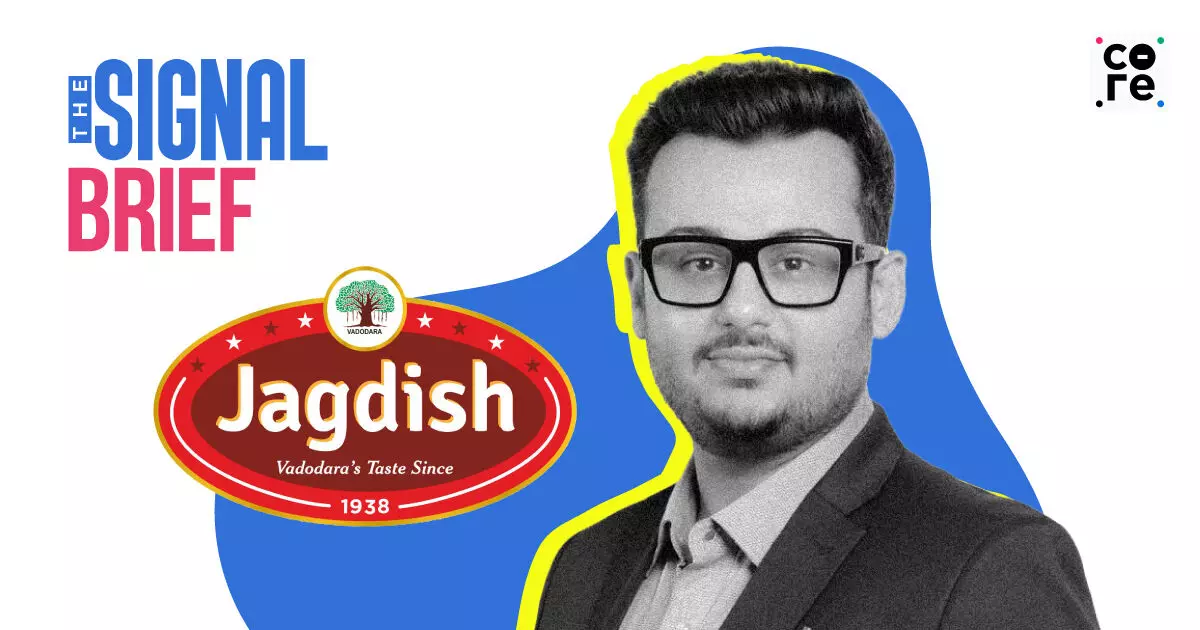
Tuesday Special: Aakash Kandoi On The Future Of Indian Snacking
- Podcasts
- Published on 28 July 2026 7:30 AM IST

What's behind the trend towards premiumisation and better-for-you snacks?
Starting today, July 28th, The Signal Brief is introducing a new weekly segment.
Every Tuesday, I'll sit down with a leader or expert from across industries, whether it's FMCG, technology, finance, manufacturing, healthcare, or beyond.
Our focus remains the same: helping you understand the ideas, businesses, and trends shaping India. We're simply bringing you more of the conversations behind those stories.
The Core produces The Signal Brief. Follow us wherever you get your favourite podcasts.
NOTE: A machine transcribed this episode. A human has looked at this text but there might still be errors. Please refer to the audio above, if you need to clarify something. If you want to give us feedback, please write to us at feedback@thecore.in.
TRANSCRIPT:
Kudrat (Host): Hello and welcome. You're listening to The Signal Brief.
We don't do hot takes. Instead, we bring you deep dives into the how and why of consumer trends.
Today's guest is Aakash Kandoi, the MD of Jagdish Farsan, an 87-year-old farsan brand.
We spoke about the trend towards premiumisation and better-for-you snacks.
So, Aakash, if you could introduce yourself to our listeners in just one line.
Aakash: Hi, I'm Aakash Kandoi. I'm the current Managing Director of Jagdish Farsan Private Limited. We are into manufacturing, retailing, and exporting namkeen, sweets, and savouries since 1938. We're based out of Vadodara, Gujarat.
Kudrat (Host): And you are trained as a chef, so I would love to hear about your journey into your family business. Did you always want to be a chef?
Aakash: I was always inclined towards food. My childhood was around the Jagdish Farsan outlet that we had in the factory.
So food is something that has been in our family for almost 90 years. I've always been inclined towards food, and I am a hardcore foodie at heart.
After my 12th grade, I decided to join a culinary school in Bombay. I did a Bachelor's in Culinary Arts, where I learned the entire art of cooking and was always inclined towards taking cooking forward.
My experience in the culinary field was more of a passion. I thought I'd do culinary school and then do business school, but culinary school was also my calling.
After I graduated, I went on to work at hotels like Taj Fort Aguada. I was working in the Italian section of the restaurant.
I did my specialisation in Italian cuisine, which currently has no relation to what I am doing. But studying subjects like nutrition and sanitation, along with how food evolved, the French cuisine and all, gave me a lot of insights into the entire food industry.
That is how I joined culinary school, my career started, and then I went on to the international side of things. I went to Australia and the US. I worked there as an intern for two or three months to understand what the global food scene is, the difference between working in India as a chef and working abroad, and the different types of cuisine and cultures that affect food all over the globe.
Kudrat (Host): And now that you've joined your family business, I would love to know what trends you've seen in the recent past. I know people wanting healthy snacks is one, protein is another. So what are some other changes that you're seeing among your consumers?
Aakash: Over the years, consumers' preferences have been shifting, and I think it is more related to awareness.
Right now, as we see, protein is moving up. Protein was always there, but now protein has just come into everything that we eat, and people are conscious as well. The shift is mainly because of awareness.
As a company, we've also introduced better-for-you products. Something that we introduced recently was our namkeens, traditional sev and other products, fried in avocado oil.
So we're the first in the country to do so. The same classic taste of your kulami sev and your usal sev, but these are fried in avocado oil. It is better for you because avocado oil retains nutrients, has a high smoke point, and contains healthy fats as well.
Along with that, we're not following the protein trend. What we're trying to tell our consumers is that the food we make, most of our products are chickpea-based, so that is besan. Chana dal besan has a lot of protein in it. We've just never stamped it by saying "10 grams of protein for every 100 grams that you consume," but it has always been a protein-rich product.
So now we're bringing that awareness, saying this also has natural protein, and that is how we are changing things, simply by creating awareness about certain products of ours which are protein-rich and better for you as well.
Kudrat (Host): Okay, understood. And then with your avocado oil line, what is the cost difference compared with refined oil, I'm guessing?
Aakash: So there's refined, there's groundnut. We use multiple oils depending on the products because we also have to make sure the product that tasted the same 87 years ago still has the same taste.
So our take on making traditional Gujarati namkeens better for you is that whatever we use, the taste shouldn't change.
Today, what you've been eating for the past 20 or 30 years should taste the same, even if it's better for you. That's where a lot of food changes. Better-for-you products, when the trend started, I would say five years ago, right after COVID, were not always tasty.
Now, after a few brands, a lot of R&D, and new product development, things have started moving towards better-for-you products where something traditional is still the same product.
So we've now worked on the avocado range. The pricing is definitely premium.
Currently, we're offering both ranges because these are common products, like the sev and gathiya and all. We let the consumer pick what their preference is.
But I would say it is almost a 50% price hike.
Kudrat (Host): And then, you mentioned avocado oil. We covered avocados as well on our podcast and people's growing interest in avocados. Of course, avocados are good for you, but at the same time, the avocado trend happened abroad, say, five or ten years ago, and then it came to India in the last couple of years.
I would love to know how much of it you think is a trend and how much of it is a lasting trend. Also related to that, in the future, do you think snacking will be more about making traditional Indian snacks healthier, or will it again be inspired by the West?
Aakash: So I think it will be a mix of both.
The Indian snack market is growing. It has been growing at almost 9% CAGR, and it is predicted to grow at 13% over the years. So traditional Indian snacking will be there. But traditional Indian snacking and better-for-you products is also a trend that will come. We are one of the pioneers of that, without losing the essence of tradition while giving it to you in a better way.
Obviously, modern better-for-you products, using ingredients like kale, seaweed, and other international ingredients, are just coming into the country now. Something like seaweed chips that you get abroad is now coming to India.
So we're also using those kinds of ingredients to make better-for-you products. It is going to be a mixed balance of both. We have both kinds of consumers, and price point will play an important role. It all depends on how much you can deliver at a certain price point that is affordable to a normal layperson.
We've now had the avocado trend coming to India. Five years ago, there were very few cafés serving avocado toast. Now we have street vendors serving avocado toast. So that awareness is there.
The same thing happened with matcha and wasabi back in the day. These are trends that come from the Western side of the world, and we keep following them. Some are here to stay, some are not. But it's always about being relevant.
For us, avocado oil is something that we tried. Since we have our chefs in place, we're trying to make our products better. We had two or three mandates. One was that the oil had to have a high smoke point so that it doesn't burn off or get absorbed. Second, it had to be neutral in taste because when we're frying our products, if they take on the flavour of the oil, then the product is not the same.
While doing this, we came across avocado oil. We tried it, did our lab tests, went through the entire process, and realised this is something that can be used.
I could say that it might stay or it might not. I'm not sure. But the current traction that we're seeing is pretty good. I think it is here to stay. If not avocado oil, then rice bran oil definitely, because it has similar properties and a neutral taste.
So for premium customers wanting premium products, I think it is here to stay.
Kudrat (Host): Okay.
And what about the other way around? Do you see Indian snacks, like the kinds you all make, becoming a trend in the West as well, where even non-Indians adopt them in a mainstream way?
Aakash: Well, that has been happening. Surprisingly, I'll tell you, we do export, and we've received inquiries.
We had a buyer, and we supplied a few shipments. We took the same product we sell in India, our classic sev, and branded it as ready-to-eat chickpea noodles. It's the same product, tasting the same way, just branded differently so that it appeals to Western consumers.
So that trend has been there.
We still don't have a product that has become massively popular, the way products from the US or Australia have in India. But I think it's going to happen very soon.
We hope to be one of the companies to do that: bring a product from India to the rest of the world that becomes famous. We're working on that. I think it's highly possible, and that is the goal.
Kudrat (Host): Okay. So basically it's a matter of rebranding.
Aakash: When a new product comes into a market, the first step is awareness. If people are already aware of it, then it becomes easier to sell.
Indian products, in their traditional form, are difficult to explain to Western consumers. So the only way you can do it is to rebrand the product in a way they can understand, and then let the product do its work.
That's what we're working on.
Kudrat (Host): Okay, understood. So I think that's pretty much what I wanted to ask. Is there anything else that you would like to add?
Aakash: Thank you for having me on this call. I really appreciate it.
We at Jagdish Farsan have an 87-year legacy, and now we are adapting, adopting, and improving on the things we've done. We want to be one of the pioneers in taking Gujarati namkeen specifically to the world, whether through distribution, quick commerce, or retail.
I don't know if you know this, but we also have two retail outlets in North America. One of our retail outlets is in Edison, New Jersey, which is a Gujju land, and the second one is in Brampton, Canada.
We're expanding our presence there as well because we always felt that Indians only had the option of going to an Indian grocery store in these countries and buying a packed snack with a shelf life of a year. They would often get a product that was already 90 to 120 days old.
We thought, why not give them something fresh? Hence, we started our US outlet, and now we're seeing a tremendous response. People are willing to pay a premium for an Indian product that is made in America because they get it fresh rather than packaged, which is what most brands are doing.
So we're focusing on bringing the taste of India, fresh, to those countries for our people to enjoy.
Kudrat (Host): Okay. And where's your plant in the US?
Aakash: We have a plant in New Jersey. It's a small plant there. Samosas are one of our best-sellers. Western consumers love samosas.
Kudrat (Host): Okay, great. Thank you so much, Aakash.
Aakash: Absolutely. Thank you so much.
Kudrat (Host): That's all for today. You just heard The Signal Brief.
We don't do hot takes. Instead, we bring you deep dives into the how and why of consumer trends.
The Core produces The Signal Brief. Follow us wherever you get your favourite podcasts.
To check out the rest of our work, go to www.thecore.in.
If you have feedback, we'd love to hear from you. Write to us at feedback@thecore.in, or you can write to me personally at kudrat@thecore.in.
Thank you for listening.


