



 Newsletter
 Search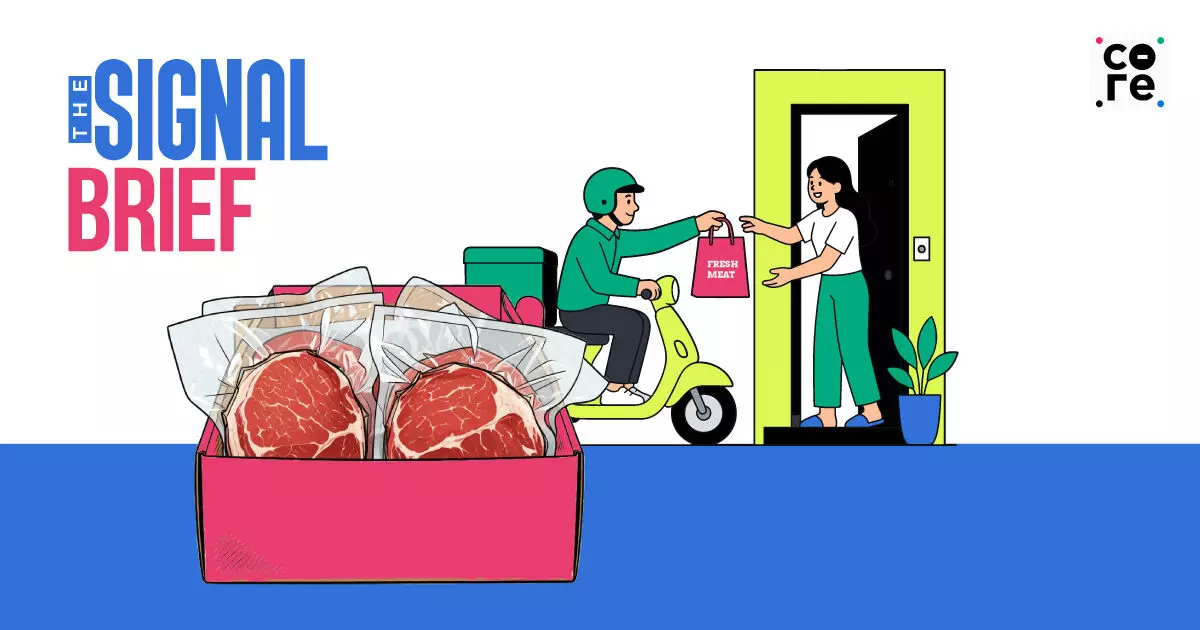
The Rise And Reality Of Buying Meat Online
- Podcasts
- Published on 16 Oct 2026 7:30 AM IST

Have online meat delivery changed the way Indians buy meat? Or just the business around the butcher?
For decades, Indians have bought meat through their neighborhood butcher.
But now a new model has emerged. Companies like Licious, ZappFresh, and FreshToHome picked up, especially during the pandemic, when investors poured millions into them.
Now you can go on an app, tap a few buttons, and a clean and packaged meat arrives right at your doorstep.
But here's the thing, running an online meat delivery business is very challenging.
You have to manage a complicated supply chain and deliver a perishable product to a consumer who may not be willing to pay a premium.
And now a lot of these businesses are expanding into offline stores, or they're supplying restaurants, or they're expanding into products beyond meat.
So has online meat delivery changed how India buys meat? Or has it simply changed the business around the butcher?
To find out, tune in to the latest episode of The Signal Brief.
The Core produces The Signal Brief. Follow us wherever you get your favourite podcasts.
NOTE: A machine transcribed this episode. A human has looked at this text but there might still be errors. Please refer to the audio above, if you need to clarify something. If you want to give us feedback, please write to us at feedback@thecore.in.
TRANSCRIPT:
Kudrat (Host): Rows of fish sit atop a table in CR park in New Delhi. Behind it, there’s a couple stalls with stacks of chicken coops.
I met with Nirupada Fish Shop’s owner, Dev. He told me that his father first set up shop here, about 50 years ago.
Dev: A lot of different kinds of fish, like sea fish, river fish and lake fish. Different kinds of fish hain. Jaise ki Rajasthan ho gaya, Punjab ho gaya, Haryana ho gaya, aur aapka basically yahan se jo nearby ho gaya, Meerut ho gaya. Aapka Punjab yahan se aata hai, aur jo kuch fish hote hain, jo sea fish hote hain, woh aapka aata hai Calcutta se, aata hai Odisha se, aata hai Mumbai se, aata hai Gujarat se. Haan.
Kudrat (Host): Dev told me that he doesn’t own a cold storage. That he sells what he gets the same day.
Dev: Nahi, hamara cold storage nahi. Hum fresh. Haan, hum yahi nahi ki bahut extra karke lekar aayein, aisa kuch nahi hai. Minimum lekar aate hain aur kuch orders hum pehle se le lete hain. Jaise ki kal fish laayenge na, toh hum customer ko message kar dete hain ki kal yeh fish aane wali hai, toh aapko kya pasand hai? Toh woh apne hisaab se message kar dete hain ki humein yeh lena hai, woh lena hai. Us tareeke se hum lete hain.
Kudrat (Host): A couple hundred metres away sits Azhar, he runs National Mutton Bazaar. He too only sells freshly cut, raw meat.
Azhar: Hamari dukandari hi isi wajah se bachi hui hai. Jo customer aata hai, woh fresh hi leta hai. Jo fresh khane wale hain, woh aakar bas dekhte hain. Unko fresh mutton milta hai aur fresh chicken milta hai, toh hi woh lekar jaate hain.
Kudrat (Host): For decades, this was how India bought meat.
A farmer sold to a trader. The trader sold into a mandi. The neighbourhood butcher made the final cut. And then, the meat made its way to your kitchen.
Around 95% of the market still works through this traditional channel. The broader meat economy is worth more than Rs 6 lakh crore, with poultry alone accounting for around Rs 2.7 lakh crore according to Ricky Thaper, joint secretary of the Poultry Federation of India.
Then, in 2020, the world shut down.
Wet markets became harder to access. And suddenly, a different way of buying meat started looking like the future.
Licious. FreshToHome. Zappfresh.
You picked what you wanted on an app. A cleaned, packaged piece of meat or seafood arrived at your door.
Investors poured money into the idea.
Licious raised around $490 million and was last valued at $1.5 billion. FreshToHome raised hundreds of millions of dollars. Zappfresh raised a smaller amount, but eventually became a listed company.
The online meat market is now estimated at around Rs 2,500-3,000 crore.
Licious alone reported revenue of around Rs 1,100 crore in the last financial year.
But there’s a problem.
Online meat is still only a tiny fraction of the meat Indians buy.
And now, something even stranger is happening.
The companies that promised to take the butcher out of the equation have started opening stores of their own.
Licious now has more than 60 stores. Its offline sales jumped from Rs 26 crore to Rs 177 crore in a year. Other companies are building physical hubs, investing in cold chains, supplying restaurants and putting their products on quick-commerce apps.
So what happened to the promise of online meat?
Kudrat (Host): My name is Kudrat Wadhwa and you’re listening to The Signal Brief.
You’re listening to our Friday episode, where we tell stories about how Indians live, work and spend.
In today's episode: India's bet on buying meat online, why the economics turned out to be so complicated, and what the next version of the meat business could look like.
Kudrat (Host): Deepanshu Manchanda started ZappFresh, a D2C meat delivery company, in 2015.
Deepanshu: So I got intrigued and started looking at the wholesale market closely: how are they functioning, what are their pains and challenges, etc.? And that's where, when we went to a local mandi here in Delhi, I was shocked to see how they were processing and cutting on the floor. There was no water, no temperature control.
Overall, the state of affairs and hygiene were very hazardous, and there was very monopolistic behaviour. There was no customer orientation or service-level standards of any kind. Product quality, anyway, was not there. So it was in shambles, and it was a very horrific experience overall for us. How was it sustaining? How were people consuming this? And even the best hotels were buying from the same place. So I thought that nobody was looking at it keenly.
Kudrat (Host): So, Deepanshu got to work. He contacted farmers directly, because he wanted to get right to the source.
And he wasn't alone. Companies like Licious, FreshToHome, TenderCuts were also trying to bring meat buying into the organised, online retail market.
The opportunity was enormous.
From the perspective of consumers as well, online meat delivery has been a game-changer.
Paras Satija is 41–he works in real estate and is a self-described “Punjabi foodie.” He told me that he eats meat at least once a day, except on Tuesdays.
Like many Indian families, his family has been buying meat from the same local neighbourhood shop for years.
But now, they’ve moved primarily to Licious.
Paras: I think 90% of the time, we buy from Licious.
Because it's a lot more convenient. I mean, if I have to rate the checklist in order of priority, number one would obviously be convenience. You're sitting at home, you open the app, order whatever you want, and now, especially with 30-minute deliveries from Licious in a lot of locations, our house falls into that category.
Kudrat (Host): Paras also told me that he’s quite happy with the quality of products that Licious sends him.
Paras: Licious gives us very good quality. And especially, there are certain products that we've never had a chance to get before. Their fish, I mean, the marinated chicken tikka is absolutely a no-brainer. I don't have a second replacement for it.
It's super clean, hygienically packed, and vacuum-sealed. Whenever we get them, they're as fresh as if they were cut and delivered at the same time.
It's as good as what you get freshly cut from a butcher shop, but a little more hygienic and more nicely packed.
Kudrat (Host): In fact, Paras says that when he tells his friends that he primarily orders from Licious, they question if he’s okay paying a premium.
But he says that he’s never even considered that he might be paying a higher price–to him, the packaging and the convenience are unmatched.
Now, although Paras doesn’t notice the premium, that’s not the case with everyone.
Deepanshu told me that many customers expect that companies like ZappFresh charge the same as the neighborhood meat shop.
Deepanshu: There is that expectation that the corner neighbourhood store gives me this product at this price, so I should look at a competitive price when customers buy. I think that poses a challenge in adding quality standards and then charging for that quality. Customers become very reluctant to pay that kind of price, and they start comparing you with the local guys.
Kudrat (Host): For a company like ZappFresh, the challenge is that better meat comes with additional costs. It has to build a supply chain that can deliver consistent quality, maintain the right temperatures and get a perishable product to customers quickly.
These challenges become particularly important when you look at seafood.
Fish is highly perishable, and getting it from the point of sourcing to a customer's doorstep requires even more careful handling and temperature control.
Deepanshu says the back end makes it harder still.
Deepanshu: The biggest challenge has been in the ecosystem. As I said, it's very monopolistic, and the supply chain operating at the back end, whether it's the wholesalers, the trader community or all those people, do a lot of undercutting on pricing, and they deteriorate the quality as well.
So somewhere, the customer who is expecting quality is not able to get it because they do a lot of manipulation in prices and also in the quality aspect. For us, it took three years to standardise the supply chain and ensure that we don't get into any kind of foul partnership with any farmer or vendor we work with.
Kudrat (Host): Because of all these reasons, Deepanshu does not think a pure meat delivery business holds.
Deepanshu: It's not an online business only. We cater to hotels and restaurants. We are doing supplies as well, so we don't rely only on online sales.
Online businesses at scale become challenging to make profits from. So we feel that it has to be a mix, so that you can do your hedging and balancing act on how much you invest in each area.
Kudrat (Host): Euromonitor, a market intelligence company, says organised meat startups are increasingly moving towards omnichannel models, combining physical stores, owned delivery networks and digital ordering.
Licious has made the bet on expanding offline. It now has more than 60 stores. Offline sales went from Rs 26 crore to Rs 177 crore in a year.
The stores are also hubs.
At first glance, the move towards physical outlets might seem like a retreat from the original promise of online meat delivery.
But there's another way to look at it.
The companies may not be abandoning online sales. Instead, they may be building the physical infrastructure needed to make those sales work.
A nearby hub can help a company get orders to customers faster. Processing facilities and cold chains can help it maintain quality. Physical outlets can also give customers another way to discover and buy their products.
And these aren't necessarily changes happening only among online-first companies.
Here’s Ricky of the Poultry Federation of India.
Ricky: Several online meat delivery players have set up retail stores or regional hubs to cater to consumers in the shortest possible time. Stores are also serving as pickup points.
You see, there are combination models emerging, with more investment going into cold storage and abattoir facilities. For online players, physical stores functioning as regional or locality-based hubs would help deliver large supplies in the shortest possible time. Even wet markets are investing in cold storage facilities, with refrigerators for storing products.
Kudrat (Host): In other words, the future of meat retail may not be a choice between the neighbourhood butcher and the delivery app.
Consumers may use both, depending on what they want to buy.
Take Tushar Bedi, who lives in Delhi. He buys meat through neighbourhood butchers as well as online platforms and quick-commerce apps.
For him, the choice depends on the cut, the quantity and the kind of meal he's planning.
Tushar: It really depends on what you're doing. If you're ordering just for your own personal consumption and it's mostly not red meat, but white meat, then quick commerce is the right way to go.
You'll get a clean cut. You don't have to remove the fat. It's mostly ready to go straight to the pan. You just need to wash it a little bit, and then you can throw it into the pan.
However, if you're trying to cook in quantity, or if you're going to cook red meat, or if you like a little bit of fat content on your meat, or you want specific cuts for specific dishes that you're preparing, then you'd rather go to a butcher. And that also only makes sense when either the butcher knows your habits over time or you know exactly what you want, which my father usually does. So he goes and picks out the cuts and everything accordingly.
Kudrat (Host): Azhar, the mutton shop owner, has also expanded into deliveries.
Azhar: Online se related, madam, yeh ho gaya hai ki hum logon ke yahan pehle delivery system nahi tha. Lekin online se kya hua hai ki logon ko ghar baithe-baithe sab ghar par mil jaata hai, toh yeh facility humne bhi apni include kar li.
Achha, jaise kitne log aise the ki unhe yahi wala meat chahiye tha, lekin woh aa nahi paate the. Humein phone aate the ki, "Bhaiya, main office mein hoon. Aap ghar yeh mutton bhijwa dena, aap chicken bhijwa dena." Toh hum delivery karke unke ghar par pahuncha dete hain.
Kudrat (Host): For all the money poured into online meat delivery, the neighbourhood shop has remained.
Azhar still sells fresh mutton and chicken to his regular customers. Dev, whose family business has sold fish in Delhi for around 50 years, still has customers who want to inspect the fish before they buy it.
Both have also adapted to the demand for convenience by offering delivery.
Perhaps that's the real story of online meat in India. It hasn't replaced the traditional market. Instead, it has introduced new expectations around convenience, while forcing businesses to rethink how they reach customers.
The butcher is still here. But the business around him is changing.
Outro: That's all for today. You just heard The Signal Brief, your weekly look at the stories shaping how Indians live, work and spend.
The Core produces The Signal Brief. Follow us wherever you get your favourite podcasts.
To check out the rest of our work, go to www.thecore.in.
If you have feedback, we'd love to hear from you. Write to us at feedback@thecore.in or you can write to me personally at kudrat@thecore.in.
Thank you for listening!


