



 Newsletter
 Search
Markets Continue to Grapple with Oil Price and Rupee Pressures
- Podcasts
- Published on 18 May 2026 6:00 AM IST
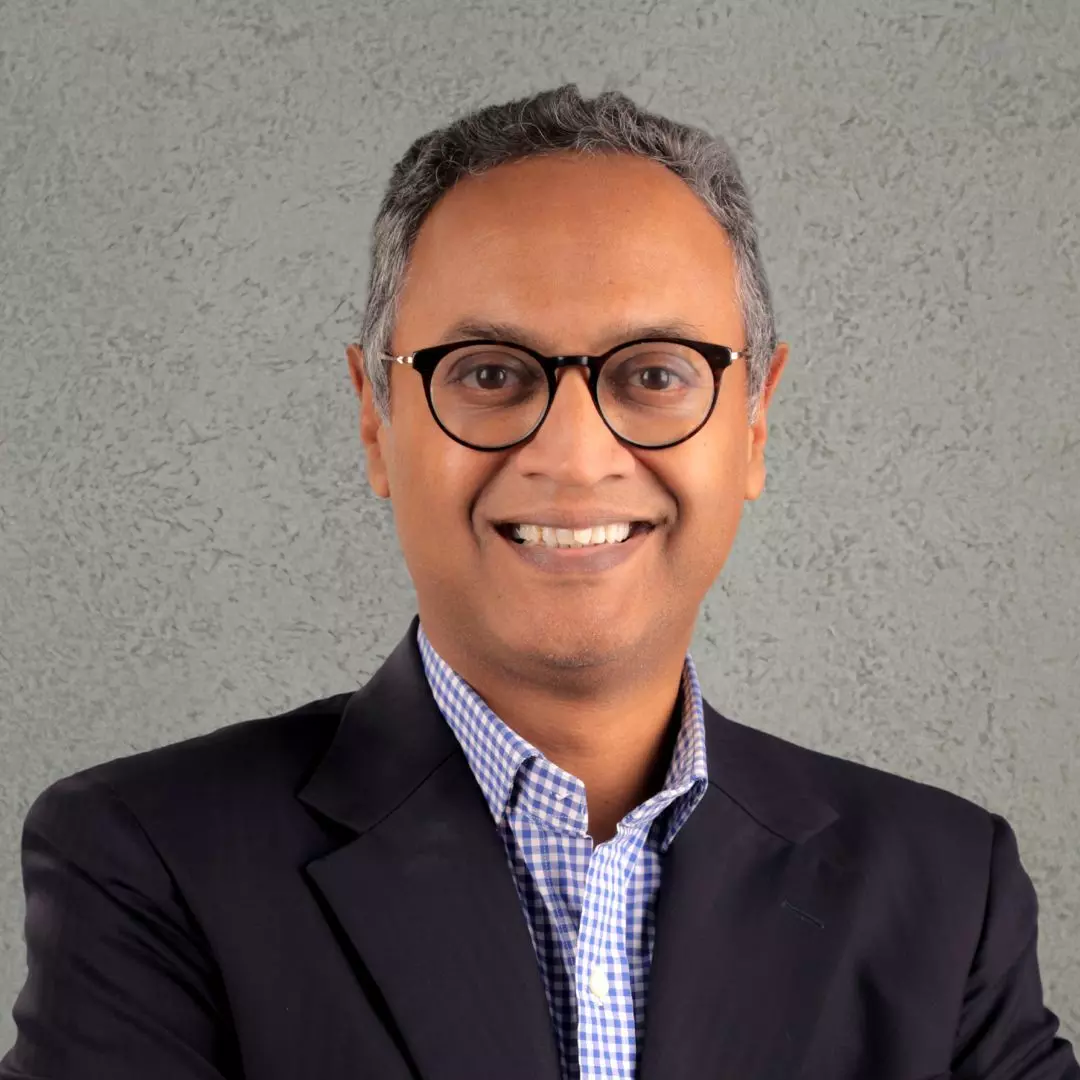
India is well positioned in terms of foreign exchange reserves and the macro fundamentals are still stable
On Episode 876 of The Core Report, financial journalist Govindraj Ethiraj talks to Sanjay Lazar, aviation and regulatory expert as well as Chitra Rentala, Partner at Trilegal.
SHOW NOTES
(00:00) The Take
(04:31) Markets continue to grapple with oil price, rupee pressures
(07:54) Indian airlines are cutting back capacity, what does that mean for passengers and airlines
(16:26) A bribery charge against HDFC Bank’s CEO is quashed, decoding the defense with the bank’s lawyers
Check out our Live Earnings tracker: https://earnings.thecore.in/
—
NOTE: This transcript contains the host's monologue and includes interview transcripts by a machine. Human eyes have gone through the script but there might still be errors in some of the text, so please refer to the audio in case you need to clarify any part. If you want to get in touch regarding any feedback, you can drop us a message on feedback@thecore.in.
Good morning, it's Monday, the 18th of May, and this is Govindraj Ethiraj broadcasting and streaming weekdays from Mumbai, India's financial capital
The Take
At 96 to the US dollar, the Indian rupee is perilously close to the century mark. New Delhi is now in a state of panic, several months too late, perhaps, but the alarm is warranted.
The question now is how policymakers will navigate the fallout. Now, consider a counterfactual. If the rupee was still trading at 84 to the dollar where it stood just a year ago in May 2025, before its current slide, the political angst would be muted.
Despite a Middle East war, an energy shock, and heavy economic tolls, a stable currency could have absorbed the blow, at least relatively. Now, the reality is that the rupee's decline exposes a deeper structural weakness in the Indian economy. Five years ago, during the pandemic, the currency traded around and the slide to 96 has been steady, thanks also to a lengthy phase of over-management by the Reserve Bank of India.
Despite official defences, the currency has been battered by relentless capital flight. Foreign portfolio investors have yanked roughly $50 billion from Indian equities in the last 18 months. Foreign direct investment is increasingly being repatriated as venture capital and private equity firms find exits, domestic companies are deploying capital abroad, while Indian consumers are burning through foreign exchange on gold, offshore education, and international travel, apart from investments overseas.
What explains this massive foreign portfolio investor withdrawal? Initially, markets blamed India's lack of a compelling AI play, the prevailing obsession from Wall Street to Seoul. But a bleaker consensus has emerged, structural doubts about Indian corporate growth prospects and stretched equity valuations. Add to this the punitive capital gains taxes on foreign investors and a perennial lack of regulatory predictability, and the case for Indian equities weakens particularly at a time like this.
To the government's credit, the pace of reform did accelerate after the US launched a tariff war last May, around when the rupee's latest slide began. Remember, while Washington slapped tariffs globally, India received punitive treatment for its continued purchase of Russian crude in the form of additional tariffs. A year of inward-looking policy has followed, including a much-welcomed lowering of goods and services tax.
But long-term structural adjustments also require short-term breathing room. Returning the rupee to the 84 level or thereabouts requires a concerted effort to woo back portfolio capital. The broader imperative is to quote all investors, including domestic industry, which is currently hoarding cash for the same overlapping reasons foreign investors are fleeing.
There are bright spots at the sub-national level. Andhra Pradesh is making waves with near-weekly announcements of fresh investments from data centres to motorcycle factories, totalling tens of billions of dollars. State officials channelling Chief Minister N Chandrababu Naidu's successful 2000s-era transformation of Hyderabad are aggressively pitching to capital.
And yet, outside of the annual January Suwari in Davos, most other Indian state leaders seem to be conspicuously absent or I'm missing it. At the federal level, the finance ministry has been remarkably quiet. Private meetings with visiting institutional investors are insufficient when global capital is shifting at this pace.
Contrast this, at least to some extent, with US President Donald Trump, who recently visited China, flanked by top executives from Nvidia, Apple, and Tesla, amongst many others. India's finance minister and business and finance titans must embark on aggressive roadshows across major global financial capitals. They need to pitch the India story, face tough questions, and crucially, listen to what global capital requires to return.
A roadshow isn't just public relations, it's a market signal of intent. There is, of course, much more to be done on stepping up direct investments and improving business climate. None of that can or will happen overnight.
India possesses a resilient economy, but as the plunging rupee proves, it is far from invincible.
And that brings us to the top stories and themes…
More price rises are coming.
Markets continue to grapple with oil price and rupee pressures.
Indian airlines are cutting back capacity. What does that mean for passengers and the airlines?
Then a bribery charge against HDFC Bank's CEO is quashed, decoding the defence with the bank's lawyers.
Markets, The War, Austerity and the Monsoon
The headlines are not looking good, expectedly. Fuel prices are still being raised. In pockets, CNG being the latest on Sunday after Friday's increase in petrol and diesel prices.
Silver imports have been restrained further, apart from the higher import duties on gold and silver, which are at 15% now as of last week. And a unquoted report by a business news channel about possible taxes on international travel was quashed with a hammer by the Prime Minister himself quite unusually. The larger point, of course, is that the display of panic will cause more panic, including for capital, which could flee faster.
India is well positioned in terms of foreign exchange reserves, just under $700 billion right now. And the macro fundamentals are still stable. But it does appear that we are attempting to overcompensate for the two months lost.
Remember, the war started on the 28th of February, 2026. Back in the market, stocks posted a weekly loss on Friday, and the rupee went past the 96 rupees to a dollar level, even as oil prices rose and therefore weighed on the markets. So far in 2026, foreign portfolio investment outflow is at about $23.6 billion or close to $24 billion.
That's just in 2026. On Friday, the Sensex was down 160 points to 75,237. And the Nifty was down 46 points to 23,643.
And it was a choppy day. Brent crude was over $109 a barrel after fresh attacks and seizures of ships in the Middle East. And no clear clue emerging from the US-China meetings on whether there could be an opening up of the state of Hormuz, at least not so far.
The rupee hit, as we said, a record low on Friday and has fallen 1.5% last week. The rupee fell to 96 rupees 13 paise, going past its previous all-time low of 95 rupees 95 paise in the previous session. Now, there is a small bit of good news for the economy.
And that is that the rain gods, quite literally, might smile earlier. Monsoon rains are expected to hit India's southern coast at Kerala on the 26th of May, six days before normal, according to the Indian Meteorological Department. And this obviously suggests that there could be early planting of crops like corn, rice, soya bean and sugarcane, according to a Reuters report.
The Indian Meteorological Department or IMD said that the monsoon could set in on the 26th of May with a margin of error of four days. Last month, the IMD had forecast that there would be below-average monsoon rains in 2026 for the first time in three years, which obviously would put pressure on the economy. Elsewhere, India's merchandise trade deficit has grown to $28 billion in April, thanks to a rise in crude shipments, which pushed imports to a six-month high, with the Middle East conflict disrupting supplies and raising oil and gas prices, according to Reuters.
A surge in crude shipments also obviously means that there is or much efforts are being made to ensure regular supplies of crude oil into India. India, of course, imports close to 90% of its crude oil requirements. Merchandise exports rose to about $44 billion in April, from about $39 billion in the previous month, while exports rose to a six-month high of $72 billion, against about $59.5 billion in March.
Exports, according to the Reuters report, hit a decadal high in April, thanks to electronics, engineering goods and higher-value petroleum shipments, the government said.
How has the West Asia War affected Flights?
Last week, Air India suspended its Delhi-Chicago flights and reduced several other U.S. services for June to August. It has already stopped its flights from Delhi to Washington and Bangalore and Mumbai to San Francisco since last year.
Despite the cuts, Air India said it would continue operating more than 1,200 international flights every month across five continents. The cutbacks by Air India and IndiGo will have a medium to longer-term impact on passenger choice. Air India and IndiGo also face unique challenges, being that Indian airlines cannot overfly Pakistan.
So how do the next few months look like for both passengers and airlines as they navigate a clearly challenging period ahead? I reached out to Sanjay Lazar, aviation and regulatory expert, and I began by asking him how he was assessing the impact of the latest round of cancellations and cutbacks announced.
INTERVIEW TRANSCRIPT
Sanjay Lazar: Yes, first of all, we've seen Air India cut back almost 145 odd frequencies a week from June onwards, going right through to August and September, perhaps even October. A lot of these are flights that have flight paths over West Asia, but Air India has gone one step further and actually analysed all routes that were heavily loss-making or, you know, cash losses and culled a lot of them because there is also a reduction in demand apart from, obviously, the sticker shock because of energy and the oil prices. What this would mean in terms of passenger choices, you are restricted really to foreign airlines that are coming in now.
And mind you, a lot of the foreign airlines do not face the same disadvantage that Air India or Indigo or any Indian airline would face because the entire Pakistan region is open to, say, a British Airways or a Virgin or a Lufthansa, but it's not at all open to Indian carriers for which they used to go over Iran. Now, with the Iran war opening, they're really going all the way down to Saudi Arabia or North Africa to cross over into Europe. So, that has made flights unfeasible.
So, whilst it will, you know, benefit a lot of the rival carriers who are foreign carriers, it will hurt Indian carriers. But passengers will still have the opportunity and the choice, we've already read, of some foreign carriers increasing their flights to India. But they also are constrained by bilateral limits.
But we will see foreign airlines jumping into the fray and choice will, of course, be limited because Air India has cut back a great amount of westbound flights.
Govindraj Ethiraj: Right. And you said there's a reduction in demand. So, that I'm assuming applies to Air India and Indigo and anyone flying westwards.
So, where are you seeing that? Or where have you seen the reduction in demand? And is that linked to the war or otherwise?
Sanjay Lazar: Well, Bhuvan, we have been looking at data numbers. And in fact, Heathrow just announced this morning that they're seeing a huge drop in demand. There has been a drop in demand over the last three months.
And it's purely related to the war. There is an amount of uncertainty in the market. So, you know, you have passengers, holidaymakers, who've decided discretion is the better part of valour for now.
And therefore, they're opting to delay travel rather than fly, come what may, during a war time. Because obviously, flying over or near war zones does concern passengers, does trouble people, does trouble family members. So, there is a little bit of a drop off.
And I do believe that we are going to see this consistently for at least this quarter and the next for sure. I mean, I'd said this three months ago that, you know, you'd see two dark quarters before the first green shoots appear at the end of the year. So, yeah, we are seeing demand largely westbound.
Though eastbound, there is no drop in demand. You know, people are still enjoying going to Bangkok, Thailand, Vietnam, Japan, there's a huge rush of people there. But the price of tickets has started rising and we're seeing that impact us.
Govindraj Ethiraj: But Air India has also cut frequencies on the eastbound, including to Singapore. So, why is that? Cost of fuel.
Sanjay Lazar: There is a limit beyond which I think the consumer will not absorb the sticker shock. And Air India has realised that it's absolutely, you know, probably even for that matter, Singapore Airlines is reducing some of its flights. A large number of Southeast Asian carriers are reducing their flights in the region.
Because once the oil goes so high, now mind you, the distinction here is between domestic and international. In India, if you were paying, you know, the airlines are paying two lakhs a kilolitre for your ATF, they're getting it subsidised for domestic operation. Because they're not getting that subsidy for international flights, it's hurting, you know, carriers like Air India, Indigo, etc.
So, Air India has chosen the more astute way because they're gearing up that this is not going to be short-term, this is going to be long-term pain. And therefore, they're doing this. I'm sure they'll tweak it maybe a month or two down the line when they see if demand is picked up or if the war is settling down.
They'd probably look at, you know, differently.
Govindraj Ethiraj: Right. And I'm going to come back to domestic demand in a second. So, a lot of people obviously have booked tickets on these sectors for Air India or other airlines which have now been cancelled.
So, do airlines rebook them or do they just say goodbye?
Sanjay Lazar: No. Well, you know, by and large, I can speak because I know of Air India what they've been doing, because it's quite public. They have been trying to accommodate passengers on alternate flights.
But they've also given passengers the option that should you wish to cancel it, we'll give you a full refund without, you know, any questions asked. So, they're doing that. There are a lot of other airlines which aren't doing that.
And I don't want to name names, but I mean Middle East carriers and stuff like that. So, passengers have to rebook on another airline at the current prices. The current prices have already gone really high.
Also, mind you, Middle East carriers and other carriers are reacting to Air India's cutback by doubling down their, you know, certain sectors. For example, if we take Chicago, Air India will be pulling out of it altogether. Etihad is now going to Papadeli.
Etihad has just announced that they will start double daily from Abu Dhabi. Of course, they are restricted by how much traffic they can carry from India to Abu Dhabi. But they're, you know, so you'll see a lot of this happening.
Passengers are accommodated by and large. But like I said, not everybody will get the choice of their flights. So, they may be rebooked.
Govindraj Ethiraj: And you mentioned domestic and, you know, as we look ahead, you know, we've also seen the launch or the start of two new airports, Navi Mumbai and Jewar. And both have ambitious near-term targets of ramping up flights and so on. So, how are you seeing that and the overall, I don't know if growth is the right word, but let's say how are things looking for the next few months, given the cost of fuel?
Sanjay Lazar: Well, the government has been very careful and calibrated on domestic ATF prices. You've just seen announcements of two cities, both states, Maharashtra and Delhi have dropped ATF significantly. I mean, it will make a big dent in the pricing because they both realised that we have to compete and give airlines a level playing field.
They're trying to do what they can. The government also is trying to retain lower price ceilings. As far as domestic demand is concerned, it is, I won't say it's fallen away, it's stagnant, it's there.
It is what it is, but we've just heard from IndiGo yesterday that they will be cutting back some flights on metro routes. How many, they've not yet come out totally to say so, but there will obviously be some stagnation in demand. Be that as it may, it's still a continued demand positive outlook.
So, I don't think it's that much of a worry. As long as the government is absorbing 50% of the ATF pricing, it's still valuable for an airline like Air India, IndiGo, Okasa to operate those sectors and the frequencies domestically as they were doing. Going forward, there is also the government has also said that they're likely to calibrate and increase the domestic ATF prices in the future.
We don't know when and how, where it will go up to market price, but for now, domestic demand is safe.
Govindraj Ethiraj: That's a good note to end on. Sanjay, thank you so much for joining me.
Sanjay Lazar: Thank you so much, Govind. Lovely to be here. Thanks.
Who Defends the CEO for allegations of Bribery?
A few weeks ago, the Bombay High Court quashed a bribery case against HDFC Bank MD and CEO Sashidhar Jagdishan, filed by the Lilavati Kirtilal Mehta Medical Trust, calling the counterblast to the bank's recovery proceedings to reclaim dues of over Rs 65 crore. A division bench of the court said financial institutions are bound to initiate proceedings for recovery of loan amounts and observed that the complaint was a result of the acrimony and strained relations between the trust's past and present trustees.
The trust in question runs Lilavati Hospital in Bandra in Mumbai. The trust had alleged that a diary found during loan recovery proceedings involving a company linked to one of its trustees indicated payments totalling about Rs 2 crore to Jagdishan allegedly on the directions of a Chetan Mehta, following which a first information report was registered by the police against the CEO of the bank following a magistrate's order to take actions against relevant sections of the penal code. Now, while HDFC Bank has also been in the news for its internecine battles, this is an interesting and unusual case because it raises the question of how and who defends the CEO at a time like this and how does the company in this case separate itself from its CEO who is accused of a crime? And also, what could other companies take away from this episode? I reached out to Chitra Rentala, a partner at Trilegal, the law firm that represented HDFC Bank.
Rentala focusses on complex commercial litigation, white-collar criminal defence and investigation and arbitration. I began by asking her what were the practical implications for businesses and lenders and how companies could or should navigate similar situations if they were to be faced with them in future.
INTERVIEW TRANSCRIPT
Chitra Rentala: So I'll just start, I think, with the background, with the facts, because that becomes the most relevant to assess how the company approaches it, how the individual approaches it. In these particular facts, we'll just focus on what the FIR contended. The FIR that was registered not by the police, but pursuant to a magistrate's order, it stated that there was a photocopy of a cash diary that was found in a particular place, and that contains certain transactions, alluding to the fact that people have received money, and that would be syphoned off from the trust by ex-trustees, whether it is to a higher official of a financial institution or to other people who are named in the diary, but essentially that diary alludes or depicts the fact of syphoning off a fund. That's really the sum and substance of the FIR, and the aspect of cheating and criminal breach of trust really comes out from the FIR.
That's how the HDFC CEO's name came out, because it was provided for in the cash diary. Obviously, as you can imagine, the HDFC CEO had no idea about this, because this cash diary is found somewhere else, he has no idea. But what we do in terms of the fact-finding within the organisation is try to understand what is sort of going on, what are the facts of the matter, and when we do that analysis, what we understand is that there is a long-standing civil recovery dispute between related parties, that is HDFC and related parties, in these proceedings.
Now, going into a little bit of the legal aspects, there are Supreme Court precedents now which say that FIRs honestly should not be quashed in general circumstances, you should let police authorities investigate. In this particular case, we applied one of the limited principles on which you can quash proceedings, which says that if there are long-standing civil proceedings, that can become a ground to quash the FIR, because it would suggest that the FIR has been registered on malafide or malicious grounds. So, that was one of the grounds that we invoked to sort of quash the proceedings.
Now, having said that, as you can imagine, the allegations may be personal in nature in the FIR, but the defence is really linked to the bank, because you're really looking at the paperwork within the organisation to see, wait a minute, there are so many cases pending against related parties, so maybe it is not just a CEO in his individual capacity being involved, but rather a person being involved as a retaliatory mechanism. So, that's the manner in which we approached the case and presented the facts before the court, and that's sort of what led to the judgement.
Govindraj Ethiraj: Right. So, how does one distinguish between, let's say, where the culpability, I hope I'm not using the wrong term here, of the individual ends and the company's takes over or the responsibility as well, and how does that work in an operational sense? As in, quite literally, at least from an external point, if someone has to pick up the tab, account for the time that's being spent in all of this.
So, in any such situation, how does that move forward?
Chitra Rentala: I think we should get the facts a little right in terms of the law. I think it's very interesting, and that will come to as to how you apply it in practise. You have the Negotiable Instruments Act, and then you have the Indian Penal Code or the BNS, right?
Something like Negotiable Instruments Act, it makes directors responsible, and then it has vicarious liability, which also makes the company responsible for the of the directors. That concept, in most of the cases, is an alien concept under the Indian Penal Code or the BNS now, which essentially means that when I allude something in a complaint, I can't say that because a director in his individual capacity or even in his official capacity has done, hence the company is liable. That concept of vicarious liability, for most parts, is absent under the Indian Penal Code or the BNS now.
So, it's really the person who has been named who has to defend, he or she has to defend themselves. So, in this particular matter, the financial institution was not named. And to give you a context, there were two cases, two separate FIRs involving two separate financial institutions, right?
So, the idea is that when a financial institution itself is roped in, then the financial institution needs to defend itself. But if the individual is roped in, the individual needs to sort of defend themselves, right? In these kind of cases, again, not going into these specifics, but what is the general principle applied that most companies have DNO policies, which will be applicable, where you'll say that, you know, if the person is really acting in his official capacity and has to defend, keeping the position in mind, keeping the fact that all of this is instituted, because it's really a larger institutional issue, I would think that the DNO policy would cover it. But just to also be very clear that if it turns out to be individualistic, for instance, if the FIR is continued, if the FIR is personal, if somebody has syphoned off and received money, that's not something the institution has allowed.
It's something that is more individualistic. So, I wouldn't think that the DNO policy would cover it in those circumstances.
Govindraj Ethiraj: Right. You know, this was obviously a rare case. I mean, obviously, this is also a very high profile blue chip company, and its CEO who was under the lens.
And we've not seen such cases. Mostly, if we have, then usually it's involving founders and promoters and so on. So, slightly different category.
So, what should companies be doing in situations like this to, let's say, maintain high levels of transparency and disclosure? And how could they navigate it best?
Chitra Rentala: So, you know, when I was also thinking about it, you have to understand, especially in this case, the civil recovery proceedings date back to the 2000s. And we are talking about in 2024-25, when the FIR got registered. So, there's a significant time period that has elapsed.
But what could financial institutions do going forward is have a clear recording of the liability in their contracts. And I think sometimes borrowers tend to say that I've not understood the liability, or, you know, the provisions were complicated, or I was duped by a particular individual in the financial institution, right? So, I think it becomes very important to document the understanding between the borrower and the lender very clearly, and to not make it complicated.
Because why do courts more often than not support borrowers is because they feel that the borrower is the smaller person who would not have understood the legalities involved. So, one is to have clear demarcated liabilities incorporated into the contract, but also to make sure that the borrower understands it at the same time. And that's a gap that I do see in practise.
And an instance of this is that you have a lot of borrower arrangements. And this was happening a few years back where financial institutions would send collection agents to their residences. Court said, sorry, you can't do that.
That's absolute harassment. So, now financial institutions have brought in a different clause where they say, you can have SMSs, emails, and then you can call and then maybe you can do a couple of visits built into the contract itself. And that protects them quite often before court saying that this is built into your contract.
So, that becomes important at the contract drafting stage. I think at the later stages, you have to understand that the way the criminal mechanism is put into motion is more unilateral. That is, when I go to the police station and I lodge a complaint, if the police determines prima facie that, okay, I don't want to even conduct a preliminary enquiry, I don't want to register an FIR, what they will do is they will close the matter.
I will then take that complaint and file it before the magistrate, asking the magistrate to register. At that stage, the respondent doesn't have an opportunity of hearing. So, the magistrate only has my version.
And unfortunately or fortunately, that sort of obviously would colour a particular forum because the only facts that are presented are my facts. Obviously, at a later stage, you can obviously present the correct facts and get the proceeding squashed. But that is a big lacuna in the law on the 156.3 stage. But the BNS has slightly changed it. When you have private complaints, the magistrate now cannot issue summons directly because there is something called a pre-cognisant summons. That is, the respondents will have a right to respond as to should a case proceed against them or not.
But there is a lacuna on the side of registration of FIR, which sort of still needs to be filled in.
Govindraj Ethiraj: Right. Last question. So, how do courts distinguish between commercial disagreements and criminal liability?
And I know you've touched upon this, but if you can expand on that a little.
Chitra Rentala: Sure. I'll give a small example of what criminal liability would be. And I think that sort of puts it into focus.
Let's assume that I was the financial institution and you're the borrower. Now, you as the borrower would come to me asking me for 100 crores rupees saying that, well, let's call you a developer, that you'd come to me saying you need 100 crore rupees because you want to develop a project in Worli. I'm very happy with it.
I give you the 100 crore rupees you put into the project. Unfortunately, because of regulatory issues, because of non-compliances, you're not able to develop the project, but not really because you've not used the money for the purpose for what it was. In that case, it's really a recovery proceeding that I can institute against you because it's not like you've syphoned off the money or diverted the money.
You've used it in the project at the stages of construction, but unfortunately, because of regulatory non-compliance, you've not sort of recovered the money because of which you couldn't transfer it back. But had I transferred the 100 crores to you and you didn't put any amount of it in the project, but syphoned it off maybe to your own companies, that's a clear case of you trying to cheat me. That's, I would say, a very clear divide.
And I think it would be right to say, how do courts know it? I think more than me, courts deal with this quite often. And I think they have a better sense of appreciating the evidence prima facie to know when it's going on the criminal side and when it's a pure recovery proceeding.
Govindraj Ethiraj: Got it. Chitra, thank you so much for joining me.
Chitra Rentala: Of course. Thank you so much.


