



 Newsletter
 Search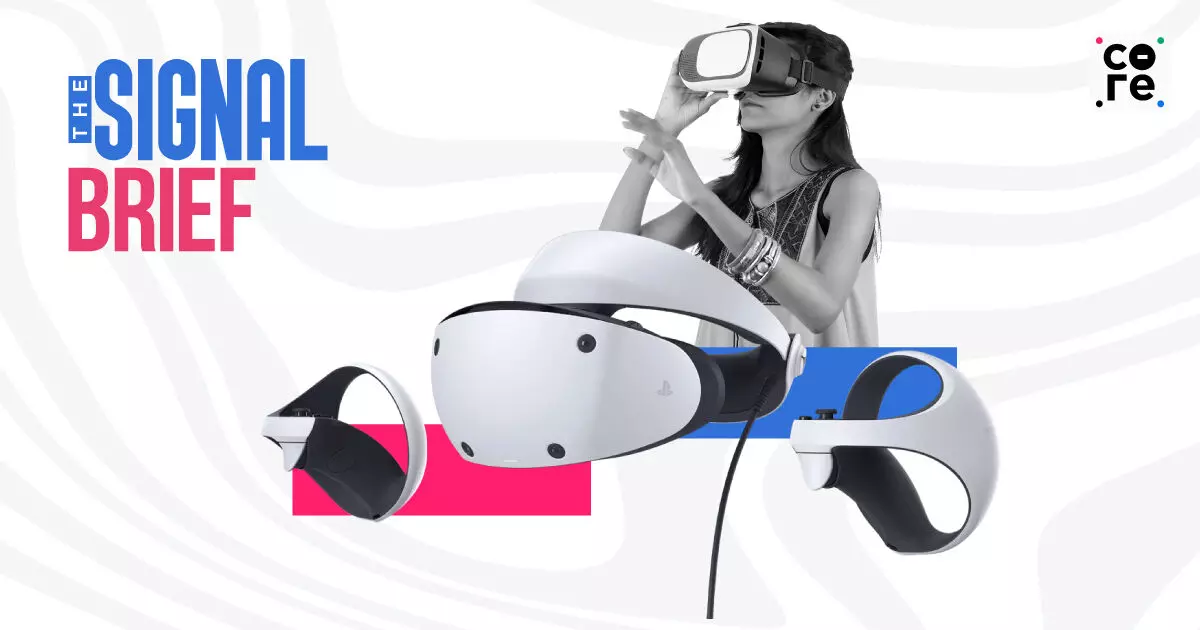
Are AR Glasses The Next Big Consumer Device?
- Podcasts
- Published on 29 Nov 2025 6:30 AM IST

Seen those videos of people wearing large headsets and entering a different world? That’s called virtual reality; it's a glimpse of the future India might be heading toward.
India’s mixed reality market – that includes VR and augmented reality or AR – crossed 900 million dollars in 2025, and could touch 1.5 billion by 2030.
Indian startups like Tesseract, Ajnalens and Jio Glass are fast building the hardware and others are building the software.
But can AR and VR become part of everyday life here?
We explore that question and more in the latest episode of The Signal Brief.
The Core produces The Signal Brief. Follow us wherever you get your favourite podcasts. To check out the rest of our work, go to www.thecore.in
NOTE: A machine transcribed this episode. A human has looked at this text but there might still be errors. Please refer to the audio above, if you need to clarify something. If you want to give us feedback, please write to us at feedback@thecore.in.
—
TRANSCRIPT
Kudrat (Host): This year’s Kumbh Mela in Prayagraj felt familiar and strange at the same time. The pilgrims, the snaan in the Ganga, the massive crowds and the unmistakable chaos were all there. But there was something more on offer too.
This time, organisers also set up a 3-D virtual reality zone at the mela. Visitors could don a headset and watch a 15-minute immersive film. It traced the origin of the Kumbh — how drops of amrit fell on four sites during the samudra manthan, the same locations the mela cycles through every 12 years. Here’s an audio clip of how visitors reacted to the VR experience.
YT clip: https://www.youtube.com/watch?v=BcYQJScZm3Y
Kudrat (Host): Industry estimates suggest India’s mixed-reality market is expanding fast. One report projects that the AR and VR market, that’s augmented reality and virtual reality (more on this later), generated about USD 917 million in 2025, and is set to grow at about 10% a year. Meaning that this market will reach 1.5 billion USD by 2030.
Kudrat (Host): My name is Kudrat Wadhwa and you’re listening to The Signal Brief. We don’t do hot takes. Instead, we bring you deep dives into the how and why of consumer trends.
Today we look at India’s mixed reality scene. What Is Augmented Reality? What Is Virtual Reality? And what does their future look like in India?.
Kudrat (Host): First, the basics. Mixed reality, or MR, and extended reality, or XR, are umbrella terms for immersive technologies. Virtual reality puts you inside a completely different world. Augmented reality keeps you in your real environment but layers digital objects or information on top. For example, AR can show you how a sofa would look in your living room.
These technologies aren’t mainstream in India yet, which means they appeal to early adopters in tech.
Sahil: I own a Vision Pro, uh, and I own the new Meta Ray-Ban, uh, display glasses. Um, I’ve, I had played around with the Meta Quest, uh, before that, uh, like used something that my friends owned.
But, um, that never really appealed to me a lot, uh, because, uh, at the end of the day I was, I wanted to experience the most extreme form of the technology,
but something that I’ve been following since I was a kid, actually, because I used to watch Star Trek a lot. And, uh, and, uh, uh, being a sci-fi aficionado, it is the holy grail, uh, of, um, you know, morphing reality in a way.
Kudrat (Host): For years, mixed reality lived mostly in science fiction . Remember The Matrix from 1999? In it, characters plug into a fully simulated reality that looks, sounds and feels real, right down to the city streets and the déjà vu glitches. Or take Iron Man, where Tony Stark casually manipulates floating holograms in his workshop, resizing blueprints with his hands and pulling digital objects apart in mid air as if they were physical tools.
Kudrat (Host): Virtual reality began in US military and research labs. Through the 1970s and 80s, the military and NASA built early simulators.
Consumer tech companies took it forward in the 1990s. Sega announced the Sega VR headset in 1993, and Nintendo launched the Virtual Boy in 1995. Both failed commercially, but they kept the idea alive. The real breakthrough came in 2012 when Oculus launched on Kickstarter. Two years later Facebook, now Meta, bought Oculus and pushed VR into mainstream attention.
Kudrat (Host): India entered the mixed-reality wave a little later. Through the early 2010s, large IT and engineering firms used VR for safety training, architectural demos and remote support. Today, hundreds of Indian startups are building hardware, software and virtual worlds, from Jio Glass and Ajnalens to ShemarooVerse, BharatBox and Loka.
One such startup is Tesseract. The Signal Brief spoke to its founder Abdul Saboor.
Abdul: My name is Abdul Saboor. Um, I'm the co-founder of this company called Tesseract. Imagine, uh, it was founded in 2015, so we are primarily a mixed reality company. Um, the way we started the company was primarily to, uh, address the content creation part of, uh, virtual reality.
What we wanted to do was create 360 VR cameras that captured the real content that could then be, uh, consumed in mixed reality.
Um, so we built, uh, 360 VR cameras for, um, enterprises first, uh, primarily sort of targeting the real estate and the hotel industry, wherein you could capture real estate spaces in 360 virtual reality and, uh, put them up on your website or on your platform, and then this content could be consumed on virtual reality or augmented reality headsets.
Kudrat (Host): Abdul told me that several enterprises are already using VR for training and virtual walkthroughs, but consumers haven’t adopted it in a big way yet. Companies tried to target education and retail spaces but VR only really picked up in gaming, both globally and in India.
I spoke to Faisal Kawoosa of market research firm TechArc to understand why VR has not taken off at scale.
Faisal: But the issue is that, uh, it is more of, you know, you have to wear a different headgear and, uh, you know, it's not a generic use case out there.
Okay. And, uh, that did not see much of a success.
Even like, you know, if we look at Apple’s, you know, their own device, it did not see a great, uh, you know, success globally. Also, it did not, uh, see much of a success in India. It, it even did not get launched.
Kudrat (Host): So his point is simple: VR requires its own hardware, and that extra friction limits mainstream adoption. Think about it: most of us already use multiple devices: phones, laptops, watches, earbuds. Adding one more piece of hardware is a big ask.
Sahil, the consumer we heard from earlier, said that when he initially got his Vision Pro – that’s Apple’s VR device – in 2023, he was using it a lot.
Sahil: When I originally got it, I was using it easily around, like, seven, eight hours a week.
Uh, but the weight has been a bit of a challenge and my usage has dramatically, uh, reduced. Uh, I have not actually picked it up, uh, in two months actually.
I just haven’t been using it that much because of the weight.
Do I recommend it to someone?
I mean, you have to be a nerd like me to get it.
Kudrat (Host): His experience is not unusual. Beyond the bulk, VR headsets are expensive. A good Meta headset costs around Rs 30,000 for older models and can go up to Rs 70,000 for newer ones. And Apple’s Vision Pro is over 3500 USD. And India is a deeply price-sensitive market.
But Faisal said that while VR struggles, industry attention is shifting to AR.
Faisal: Entire AI with ChatGPT movement. Okay. I think the Ray-Ban Meta thing is something which can be seen in a similar way. Uh, and that has flipped the entire thing for this AR/VR industry today. Uh, one, because, you know, it's, uh, uh, something we are already used to — eyewear. Okay? We are all wearing spectacles, goggles, so it's not an added kind of a new device.
So that's where I believe, uh, it's going naturally with users, and that's where it is seeing more acceptance.
Kudrat (Host): Experts say that AR glasses stand a better chance because eyewear is already familiar to consumers.
The Ray-Ban Meta glasses, which went viral in September, combine cameras, speakers and Meta AI, allowing users to take photos, translate text and access information hands-free. The newer Display model adds a small in-lens screen and a wristband that turns hand movements into commands.
Faisal said that experts and industry people expect that the AR smart glasses sector will pick up significantly, especially once they figure out how to lower costs. While there are cheap smart glasses in the market, their efficacy remains poor. The Meta Ray-Bans work well, but again, cost upwards of 30k rupees.
But, Abdul of Tesseract says he expects the costs to go down in the near future, especially as big Indian players like Jio and Lenskart expand in this space.
Abdul: Cost will definitely go down. Uh, that is, uh, it's going to follow the same trend as any new technology, right? So, um, as more and more products keep coming up and there's more competition and, uh, as we come up with better manufacturing, um, cost will definitely sort of come down, uh, over time.
Abdul: I mean, we are very, uh, optimistic about, uh, smart glasses becoming ubiquitous in the sense of, um, I mean, so if you look, uh, there have been a lot of different types of smart devices in terms of wearables that have done well in India.
You have your AirPods and headphones market, which, uh, which is basically wearable audio. Um, so smart glasses also can sort of replace that, uh, with their built-in audio systems. Um, apart from that, they are also a good replacement for smartwatches, which are primarily used for looking at notifications or calls and all of that.
So all of these devices sort of come together. And all of that functionality can sort of be provided on a smart glass instead of using multiple devices, which I feel is going to be a lot less, uh, it's going to present a lot less friction for people and, uh, is going to sort of create that, um, what do I say, uh, that consumer joy.
I feel that, uh, we are going to see a lot of products introduced, uh, next year, um, uh, with Jio coming with a product called Jio Frames.
Apart from this, you see Lenskart and boAt also sort of, uh, stepping in, uh, stepping into this space as well. So you're gonna see a lot of products being launched over the next, uh, couple of years.
Kudrat (Host): Mixed reality in India is growing, but it is still early. The hardware is improving, the apps are evolving and the costs are slowly coming down.
So should you buy smart glasses now? Only if you like testing early tech. For most people, the real utility will become clearer over the next few years. Until then mixed reality will continue to raise an interesting question. Not whether it replaces the real world, but what happens when the digital and the physical start to overlap in ways we have not seen before.
Kudrat (Host): That's all for today. You just heard The Signal Brief. We don't do hot takes. Instead, we bring you deep dives into the how and why of consumer trends. The Core produces The Signal Brief. Follow us wherever you get your favourite podcasts.
To check out the rest of our work, go to www.thecore.in.
If you have feedback, we'd love to hear from you. Write to us at feedback@thecore.in or you can write to me personally at kudrat@thecore.in.
Thank you for listening.


