



 Newsletter
 Search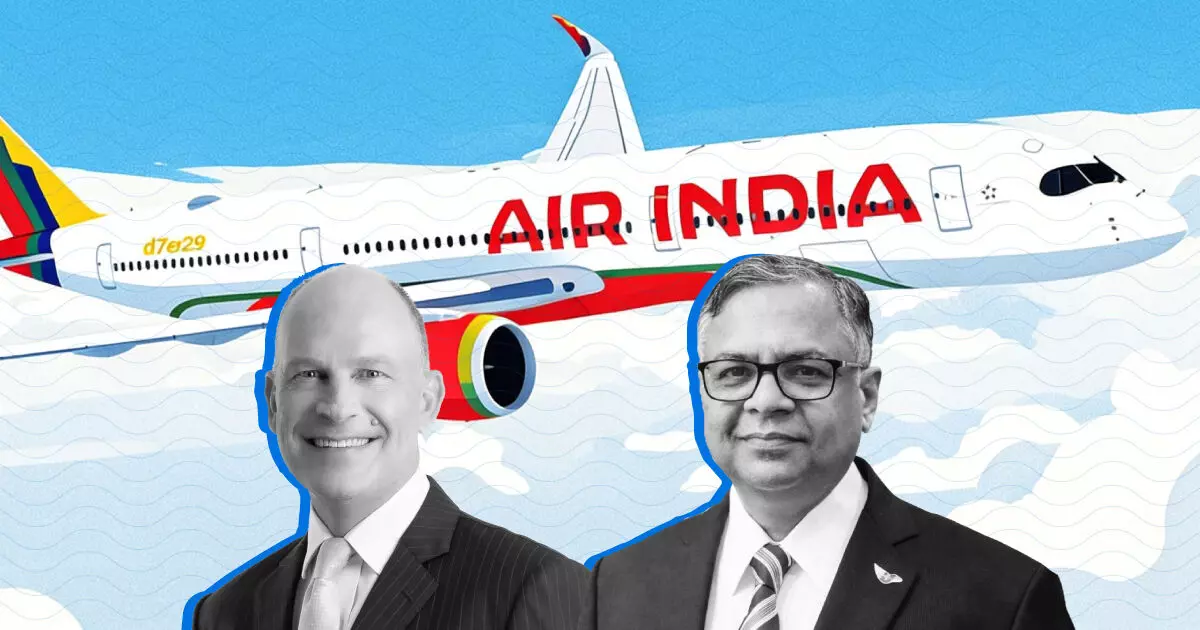
Air India's Rudderless Succession Shows Why Planning Matters
- The Take
- Published on 13 July 2026 1:34 PM IST
Tata Sons has turned to a committee to run Air India after CEO Campbell Wilson's exit. HUL's decades-long succession culture shows a better way forward.
The Gist
Hindustan Unilever's approach to nurturing leadership contrasts sharply with Air India's current struggles.
- Unilever's management trainee program fosters a strong internal pipeline, preparing executives for top roles.
- Air India is currently without a clear leader after the early departure of its CEO, relying on a committee for continuity.
- This reliance on a committee reflects governance failures, as Air India faces multiple operational challenges and a stalled promotion process.
Years ago, a senior executive at Hindustan Unilever told me that the odds of an external candidate parachuting into the chairman’s seat were essentially nil.
Replying to my off-the-record query regarding succession, a perennial source of intrigue in India’s corporate circles, he was unequivocal.
“We consistently build and promote our internal pipeline,” he explained, noting the premium the multinational places on organisational continuity.
From the day you join the company out of college, you are on a path to the top, at least potentially, he quipped.
HUL’s legendary management trainee programme operates as a corporate crucible.
By the time an executive ascends to the apex, they have typically traversed global markets and acquired a panoramic view of the consumer landscape.
This talent factory is so prolific that hundreds if not more of successful chief executives can trace their lineage back to the company, including Chanel's CEO Leena Nair who spent some 29 years in Unilever, of which at least 20 were in India.
It is a testament to the virtues of cultivating leadership diligently in times of calm.
Contrast this with another prominent conglomerate currently experiencing severe turbulence in its talent pipeline.
Air India, the Tata group’s flagship aviation turnaround which it acquired in 2022, finds itself rudderless at a critical juncture.
Following the resignation of chief executive Campbell Wilson, who will depart well ahead of his 2027 contract, Tata Sons chairman N Chandrasekaran has resorted to a somewhat classic corporate stopgap: a committee.
This interim panel of senior executives, which includes Chandrasekaran himself, is tasked with ensuring "continuity".
The Irony Is Inescapable
A chairman whose own tenure extension at Tata Sons remains a subject of polite speculation is now presiding over the continuity of an airline whose future is considered turbulent in the best of days.
The holding company, Tata Sons, grappling with its own labyrinthine leadership dynamics, is overseeing an unlisted company and airline still struggling to shed the bureaucratic sclerosis of its state-owned past.
A committee is a poor substitute for a captain though, especially when flying through a storm.
Air India has faced a barrage of crises over the past year: route deviations following border clashes in May 2025, the tragic crash of a Boeing 787 Dreamliner just a month later in Ahmedabad and soaring jet fuel costs exacerbated by geopolitical conflict this year.
Add to this the monumental challenge of integrating a disparate workforce and retrofitting a decrepit fleet that routinely draws the ire of long-haul passengers.
Even senior Air India pilots are heard harbouring deep misgivings about the carrier's operational resilience.
While external shocks impact airlines globally, Air India’s internal succession pipeline is a problem that is unique to the airline.
The current promotion process appears to have stalled, leaving two reported frontrunners in limbo: Nipun Aggarwal, the chief commercial officer and a former banker, and Vinod Kannan, industry veteran from Singapore Airlines and former head of Vistara, an airline started by the Tata Group before it bought Air-India and merged the two.
The decision is mired in complexity.
The Governance Lesson
Singapore Airlines, which holds a 25 per cent stake, would rightly demand a say, and possibly aligning the joint venture partners on this is causing some delays.
Furthermore, importing seasoned aviation talent from abroad is fraught with the bureaucratic friction of securing Indian security clearances.
The ultimate lesson here is one of corporate governance.
Conglomerates can ill afford to ignore succession planning and even in the calmest times must devote disproportionate time to it.
A continuing exercise that is and must be driven from the top.
Unilever has arguably always chosen the latter, ensuring a steady hand is always waiting in the wings.
There are surely many more such companies who have focussed on their pipelines, including within the Tata Group.
Air India, burdened by its past and paralysed by boardroom indecision, is learning the hard way that an airline navigating severe turbulence cannot be flown by committee.
It requires a single, decisive hand at the yoke.
Core.
Core.


