



 Newsletter
 Search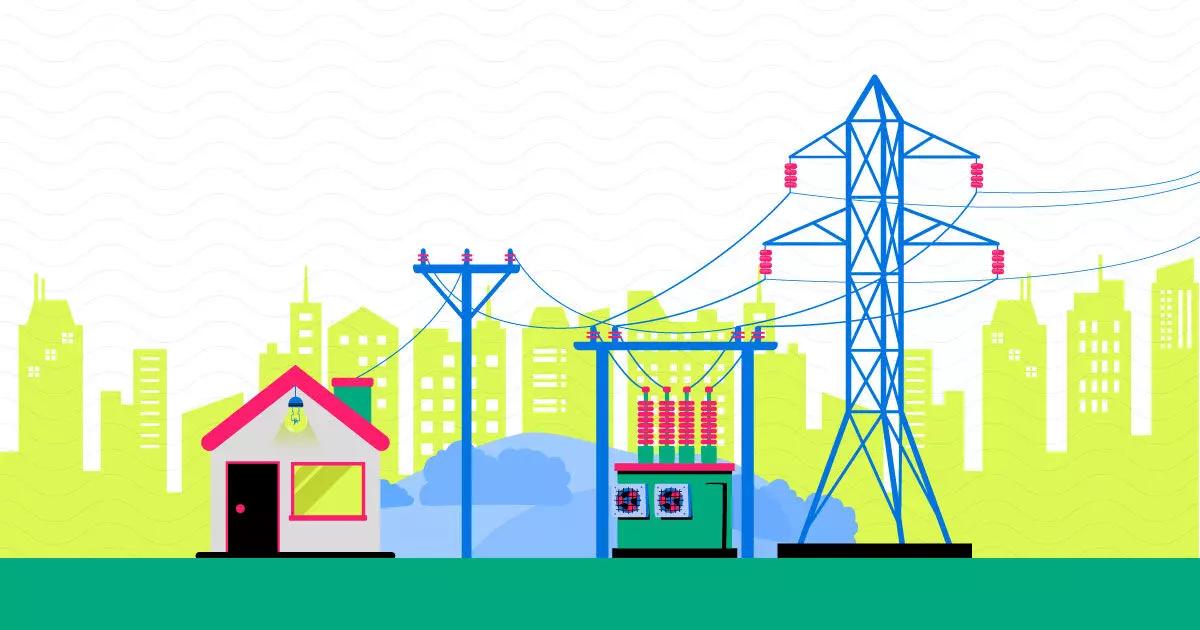
India's Next Power Crisis Lies In The Last Mile
- Economy
- Published on 6 Aug 2026 6:00 AM IST

India built generation and transmission. Now, ageing local grids are emerging as the weakest link in its power story.
The Gist
This summer, power outages in India, particularly in Mumbai, highlighted critical weaknesses in the electricity distribution network.
- Consumers expressed frustration, with incidents like a woman bringing a pillow to an electricity office.
- Peak demand reached 270 gigawatts, stressing ageing infrastructure and local distribution networks.
- Policymakers now face the challenge of investing in last-mile distribution to ensure reliable electricity delivery.
Earlier this summer, it was reported that an angry woman marched into the office of a Navi Mumbai electricity provider with a pillow in tow, frustrated by power cuts.
Her case wasn’t isolated.
Power outages across multiple cities in India have left customers angry, promoting one state discom to revive its old 'fuse off' helpline.
While India has spent the past few years worrying about whether it could generate enough electricity and build enough transmission lines to move it across the country, this summer exposed the problem of getting that power from the grid to homes and businesses.
As the country touched a record peak electricity demand of 270 gigawatts three times this year, ageing transformers, overloaded substations and stretched local distribution networks buckled under the strain in parts of the country.
From Mumbai to Kerala, consumers complained of repeated power cuts, highlighting a weakness that could define the next phase of India's power-sector investments.
The frustration spilt onto the streets.
These incidents may appear local, but together they point to a niggling problem in India's electricity story.
For years, policymakers have focused on expanding generation capacity, integrating renewable energy and strengthening interstate transmission networks.
This summer, industry analysts said, exposed the country's next power constraint, which is the last mile, or the neighbourhood distribution grid.
They said ageing distribution infrastructure, weak financial health of many distribution companies and hence their ability to invest in grid modernisation and network expansion, as reasons for the last-mile hitch.
Grid Can’t Keep Up With Demand
India’s summer electricity demand has steadily risen since the pandemic with rising use of cooling devices among the reasons. This year’s unprecedented summer with unusually warmer nights has amplified the trend.
The power ministry told the Parliament in July that peak electricity demand during April-June rose around 12% from a year earlier and could remain elevated because of El Niño conditions.
In Mumbai, Adani Electricity said demand during the April-June quarter increased about 10% from last year.
That surge has intensified pressure on infrastructure that often receives less attention than generation plants or transmission corridors.
Distribution assets — including substations, transformers, feeders and low-voltage lines — are the final link between the grid and consumers. When they fail, electricity generated hundreds of kilometres away never reaches homes.
The problem has surfaced across multiple states this summer. Maharashtra attributed repeated outages in parts of Mumbai to ageing distribution infrastructure struggling with record demand. Kerala linked disruptions to excessive loading on local networks.
Punjab carried out maintenance-related outages during the peak season, while parts of Karnataka also reported supply disruptions tied to distribution infrastructure. Adani Electricity said reliability metrics during the quarter were affected by higher network loading amid extreme heat.
"During periods of extreme heat, we have seen more transformer and substation failures, leading to supply disruptions for consumers," said Vibhuti Garg, director for South Asia at the Institute for Energy Economics and Financial Analysis (IEEFA). "With heatwaves becoming more frequent and India's peak electricity demand already touching record levels, strengthening the distribution network has become an urgent priority."
The Next Investment Cycle
Now, India will need to decide where the power sector will make its next investments.
So far, investments in the power sector have been focused on transmission capacity to evacuate renewable energy and adding thermal generation to maintain grid stability.
Now states are pointing out that overload or maintenance of their distribution assets has caused power failures. Last-mile distribution infrastructure includes assets such as sub-stations, feeders and transformers, and is now emerging as the next major investment requirement.
The central government has already begun pushing utilities in that direction. According to the power ministry, projects worth Rs 1.85 lakh crore had been executed under various schemes through 2022 to strengthen distribution infrastructure. Under the Revamped Distribution Sector Scheme (RDSS), projects worth about Rs 1.53 trillion have been sanctioned for new substations, transformers, feeder segregation, conductors and digital monitoring systems.
However, implementation continues to be uneven. While most sanctioned projects have been awarded, physical progress stands at only about 43%, suggesting much of the infrastructure intended to ease pressure on local networks is still under construction.
For electrical equipment manufacturers, that lag represents a pipeline of future orders.
"Both state-owned and private discoms are expected to continue investing in distribution infrastructure through network strengthening, grid modernisation, loss-reduction initiatives and new consumer connectivity," said Arun Kailasan, Research Analyst at Geojit Investments.
"The ongoing RDSS programme and broader power-sector reforms provide a multi-year opportunity set for capital goods and electrical equipment companies."
The Biggest Constraint
Whether those investments materialise, however, depends on the financial health of India's distribution companies.
Electricity distribution remains a state subject, leaving investment decisions dependent on individual utilities, many of which continue to grapple with accumulated losses and high technical and commercial losses.
The latest discom performance data illustrate the uneven picture. National aggregate technical and commercial (AT&C) losses have declined to about 15%, but states such as Maharashtra and Madhya Pradesh continue to remain above the national average.
Gujarat and Andhra Pradesh have performed better, while Tamil Nadu and Uttar Pradesh each continue to carry accumulated losses exceeding Rs 1 lakh crore.
The Central Electricity Authority has also flagged a structural challenge. Distribution companies must maintain networks and incur fixed infrastructure costs regardless of how much electricity consumers eventually buy.
During cooler summers or economic slowdowns, lower electricity sales can weaken revenues without reducing maintenance obligations, making it harder to invest consistently in upgrades.
Kailasan expects spending on distribution infrastructure to continue, but says execution is unlikely to be uniform.
"Order inflows are likely to remain phased, as recent spending has been more concentrated in higher-voltage transmission assets," he said.
"Although the medium-term outlook for distribution-linked capital expenditure remains positive, the pace of orders may vary depending on funding availability, project execution progress and state-level spending trends."
Garg argues the contrast between public and private utilities is becoming increasingly visible.
"Privately managed distribution utilities, which are generally in a stronger financial position, have been able to invest more consistently in infrastructure upgrades," she said. "As a result, they have typically experienced fewer outages and better service reliability."
For uninterrupted power supply, India will need to ensure that local networks can deliver that electricity reliably during periods of record demand. The country has spent the past decade expanding power plants and transmission lines.
The next phase of the energy transition will likely depend on whether neighbourhood transformers, substations and feeders can keep pace with a hotter, more electricity-intensive economy.
Core.
Core.


