



 Newsletter
 Search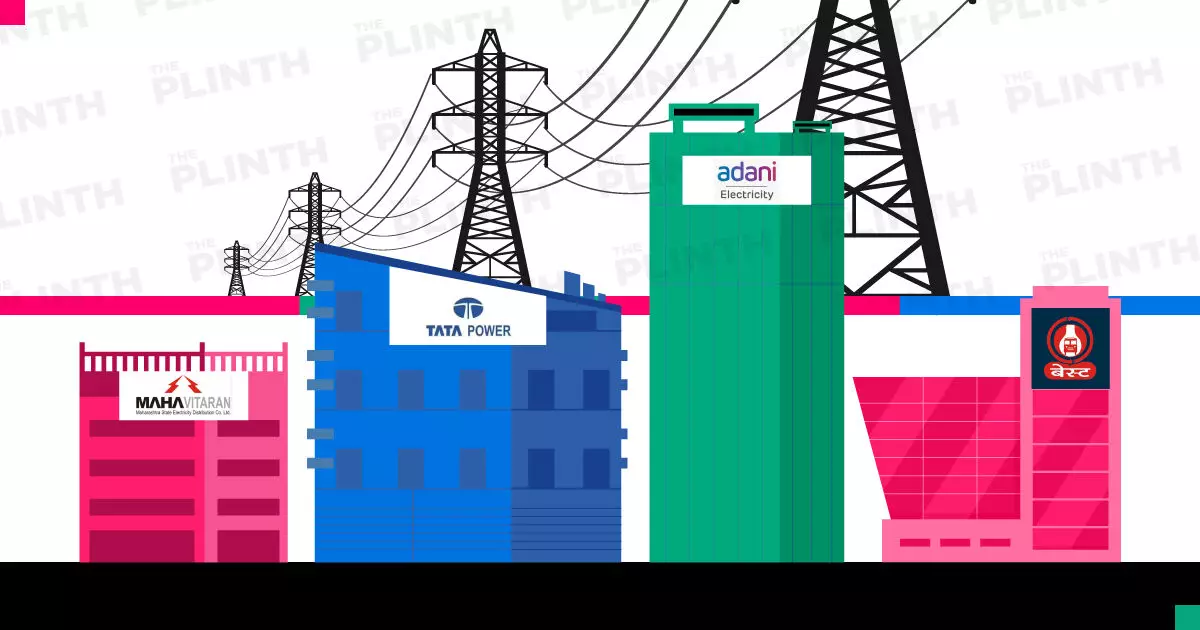
Why New Infrastructure Won’t Fix Mumbai’s Power Grid Problem
- The Plinth
- Published on 26 Jun 2026 6:00 AM IST

Replacing British-era cables and adding transmission lines won't fix Mumbai's grid. The bottleneck for clean, non-stop power is not generation, storage technology, or tariffs. It is the absence of a single buyer.
The Gist
- This division results in multiple control rooms operating separately, lacking a cohesive strategy.
- Past blackouts have shown the need for better coordination among utilities.
- The city's transition to renewable energy is hindered by the absence of a single decision-maker to negotiate large contracts.
When the lights went out in Mumbai last week, the usual explanations rolled out. Cables are eighty years old. Not enough power is generated inside the city. No batteries to save daytime solar for the evening rush. Versova residents slept on the beach. For a city that has spent decades trading on the assurance of round-the-clock supply, the spectacle was new.
The 2022 committee set up under the state Chief Secretary to fix Mumbai's grid was reminded that it exists. BEST pulled out its Rs 6,000 crore plan to replace ageing wires. The new Kudus–Aarey power line, switched on in April this year, was held up as proof that the city is finally taking the problem seriously.
All of this is true. None of it is the actual problem.
Mumbai is India’s only metropolis where four rival utilities carve up the same footprint without a central commander. Until the city establishes a single, unified system operator to steer real-time crises and anchor massive clean-energy contracts, billions in infrastructure spending will do little to prevent the next grid collapse.
Too Many Cooks
Mumbai is unusual. Most large cities are served by one power company. Tokyo has TEPCO. Singapore has SP Group. New York has Con Edison. Seoul has KEPCO. Bengaluru has BESCOM, Chennai has TANGEDCO, Kolkata has CESC, and Hyderabad has TSSPDCL.
Mumbai has four. BEST serves the old island city. Tata Power and Adani Electricity hold parallel licences for the western and central suburbs, where both companies maintain their own networks for the same households. Maharashtra State Electricity Distribution Co Ltd (MSEDCL) covers the periphery. Each buys its own power. Each manages its own customers. Each looks after its own wires.
Delhi has multiple discoms too, but each runs its own demarcated zone — Mumbai is the only Indian city where two licensees serve the same household.
What this means in practice is that no one person's job is to keep Mumbai's lights on. Each of the four companies handles its own patch. When the city's peak demand hit 4,608 megawatts on June 8 this year, a record, it was managed by four separate control rooms running their own playbooks. There is no captain of the ship.
This is the gap that no new cable or substation can fill.
Four Grids, No Real Captain
Consider what the cities Mumbai is compared with have. Tokyo's wires are run by TEPCO Power Grid, the network arm legally separated after the 2011 nuclear accident but still operating the city as one system. Singapore's SP Group handles both transmission and distribution across the whole island.
London has competing retailers, but UK Power Networks owns the wires across the capital, and National Grid ESO balances the system end to end. In every case, when something goes wrong, there is one phone number to call and one balance sheet that absorbs the cost.
Mumbai has four phone numbers and four balance sheets. The state transmission company MSETCL owns the wires that bring power into the city, but it does not run the city grid as a system. The state load dispatch centre balances supply and demand for all of Maharashtra, not for Mumbai alone.
When BEST sees a fault in its area, it deals with it. When the same fault spreads to Adani's network, Adani deals with it separately. There is communication between the four. There is no unified control.
The October 2020 blackout, which paralysed the city for hours, was traced to a chain reaction of failures across multiple transmission lines. It showed what cross-company coordination looks like under stress: many phone calls, no clear chain of command.
Islanding Illusion
On paper, and largely in practice, Mumbai already has an islanding scheme, set up in 1981 by Tata Power. Standby charges paid by the city's discoms to MSEDCL for backup capacity sit as a line item in every tariff order. Since embedded generation inside the city is more expensive to run than rural baseload, Mumbai’s consumers pay a premium per unit over the rest of Maharashtra precisely to fund this insurance, and the spread shows up on every monthly bill.
Neither held in October 2020. When the cascade hit, Mumbai's embedded generation came in at 1,394 megawatts against a demand of over 2,800 megawatts. The island formed and collapsed minutes later, as the frequency fluctuated at a rate the scheme was never tuned to survive. What followed in public was a blame volley between MSETCL and Tata Power over whose generation came up too late and whose relay settings were wrong. That argument, more than the technical post-mortem, is what the islanding question really turns on.
Singapore and Tokyo can do this because one operator decides, within seconds, what gets switched off, what stays on, which generators take over, and at what cost.
In Mumbai, the moment islanding is declared, the four companies would have to agree, in real time, on whose customers get cut off first, whose power plants run the island, and who pays the higher cost of running a smaller, self-contained system. The much-quoted 1981 design of the Mumbai grid addresses a physical constraint, but the institutional constraint of four separate companies with no umpire is older and harder to fix. The premium pays for cables, substations, and standby contracts. It does not pay for a single decision-maker, because no single decision-maker exists to be paid.
Clean Energy Meets Wall
This matters more than it sounds, because the next big question, India's shift to round-the-clock clean power, runs into the same wall.
Round-the-clock clean power means contracts where one buyer commits to take twenty-four hours of supply every day, from solar plus wind plus batteries, for fifteen or twenty years. SECI, the central government's renewable energy buyer, has been running these auctions. The most recent one, in May 2025, cleared at around Rs 5 per unit, with delivery guarantees of 90% during peak hours.
That looks similar to what discoms pay today when they buy power on the exchange, India's spot market, where utilities top up their daily supply. But the comparison is misleading. Exchange power is not firm. When demand spikes, prices touch the regulator's ceiling of Rs 12 per unit. The buyer does not know what tomorrow will cost.
An RTC contract is the opposite. Twenty-four-hour supply, known price, two decades of certainty. The buyer pays a small premium on average and gets predictability in return.
So, for Mumbai, who signs the contract? BEST serves perhaps a tenth of the city's demand, not enough to anchor a large purchase. Tata Power has its own generation and its own procurement preferences. Adani Electricity is part of a group that owns renewable generation and has applied to the state regulator for a parallel licence in the north-eastern suburbs, meaning it would compete with MSEDCL for the same customers. MSEDCL's priorities lie far outside Mumbai, across 534 towns and 44,778 villages of rural Maharashtra. The economics work, the firmness argument works, and no single party has the customer base, the balance sheet, or the mandate to act on it for the city as a whole.
The fragmentation that makes islanding unworkable also makes large clean power purchases unworkable.
New Wires, Old Politics
The Chief Secretary's committee has done useful work on the wires problem. The Kudus–Aarey line matters. It raises the amount of power Mumbai can import from outside by a factor of five, from 250 megawatts to 1,250 megawatts, and it can restart the city's grid from a complete blackout without outside help.
BEST has started replacing cables in South Mumbai after the recent prolonged outages. The single-window clearance for new substations will save years on individual projects. These count.
But the committee was set up to deal with hardware. Its terms of reference do not extend to the licensing architecture. They cannot, because changing how Mumbai's grid is licensed would require the Maharashtra Electricity Regulatory Commission, the state government, and the central electricity law to align on something none of them currently wants to touch. Each of the four companies is a politically constructed entity. BEST has a powerful labour union and a municipal identity going back over a century.
Tata Power has been generating electricity in Bombay since before the Republic. Adani Electricity has the political weight of one of India's largest business houses behind it. MSEDCL is the rural Maharashtra political economy in corporate form. Merging them, or even just creating an umpire above them, would unsettle every one of these constituencies.
The alternative is to engineer around the licensing structure. This is where the conversation needs to move.
Who Controls the Switch?
The simplest workable model is a city-level system operator with the authority to direct the grid in real time, but without taking over billing or customers. The four companies continue to send out bills and own their wires.
A separate body, possibly housed within MSETCL or set up fresh, takes over real-time operation of the Mumbai grid. It decides which generators run, in what order, at what cost. It manages load shedding sequences. It controls islanding. And it can negotiate large round-the-clock clean power contracts on behalf of the city as a whole, the way SECI does on behalf of states.
This is much lighter than merging the four companies. BEST keeps its identity. Tata keeps its franchise. Adani keeps its turf. But the city gets the single phone number and the single balance sheet that resilience requires.
It also creates the buyer for clean power at scale. A Mumbai system operator with a five-gigawatt peak demand and a regulated way to pass costs back to the four companies would be a counterparty any renewable developer would line up to sign with. Everything else is in place. The technology works, the tariffs are competitive, and the developers are willing. What Mumbai lacks is the counterparty.
The Chief Secretary's committee will not propose this, because it is outside its remit. The Electricity Act of 2003, which restructured India's power sector, assumed state-level system operators would handle city-scale coordination. For most Indian cities, where one local distribution company functions as the city operator, that assumption has held. Mumbai is the outlier, because four separate companies have grown into the same metropolitan footprint, and the state operator's gaze has stayed on Maharashtra as a whole rather than on the city.
The lights will keep dimming. People will keep sleeping outside. The next committee will be formed. Another transmission line will be commissioned. All of it is helpful. But none of it touches the institutional architecture itself.
When Versova residents next decamp to the beach, the question is not why the cables failed. Cables fail. But who is in charge of this grid? The answer, embarrassingly, is no one in particular.
Core.
Core.


