



 Newsletter
 Search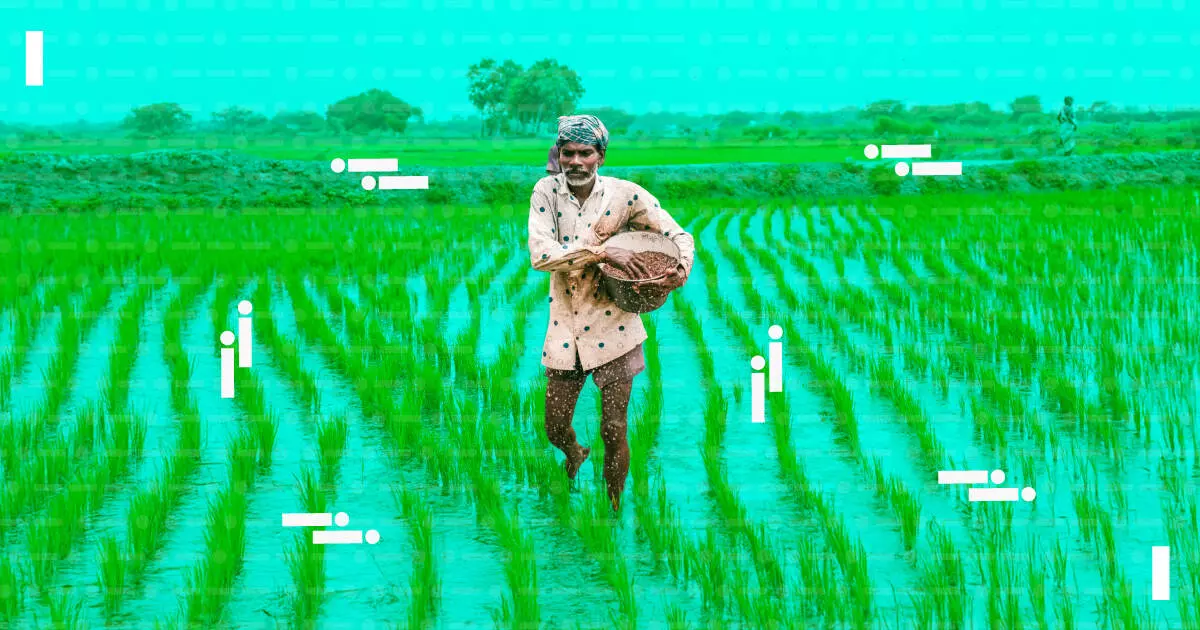
A ‘Double Whammy’ For India: How War And El Niño Could Ignite A New Inflationary Fire
 By Katya Naidu
- Economy
- Published on 24 March 2026 6:00 AM IST

This "double whammy" of a disrupted monsoon and soaring energy costs could impact rural incomes and force a sharp cut in discretionary spending across the economy.
A new shock might await Indian consumers in 2026, who are already troubled by the oil and gas supply dearth. El Niño, which caused a jarring heatwave in 2024, might return as the current La Niña — the antithesis of El Niño, where ocean surface temperatures cool in the central and east-central equatorial Pacific — tapers.
According to Skymet, while it’s a tad early to make sound predictions, the odds of the El Niño phenomenon returning have increased, and there are chances it could affect or even spoil the seasonal rainfall. El Niño is a weather pattern that involves warming of surface waters, weaker winds, and shifting atmospheric circulation.
“We believe that El Niño chances increase to nearly 60% during the peak monsoon of 2026,” AVM GP Sharma, president (Meteorology & Climate Change) at Skymet Weather, told The Core.
Things will become clearer around June. “If it hits, it’s going to be an evolving El Niño this time. It means once it starts, it will increase in magnitude, extend to fall, peak in October and November and start tapering after it,” said Sharma.
Warm sea surface temperatures in the Pacific Ocean characterise the El Niño phenomenon. Because of this, trade winds falter or reverse, in turn affecting rainfall patterns in Southeast Asia, Australia, and even parts of Africa. It can lead to droughts in Asia/Australia and even floods in the Americas.
The return of El Niño and the geopolitical conflict in West Asia could have a severe impact on India's cooling inflation and steady consumption growth. This "double whammy" of a disrupted monsoon and soaring energy costs could impact rural incomes and force a sharp cut in discretionary spending across the economy.
Hotter Inflation This Year
While retail inflation grew at 3.2% in February, the era of benign inflation might be over. BMI of Fitch has revised headline CPI inflation upwards from the previous 4.5% to average around 5.1% in FY27. It also expects core inflation to hit 4.7% in the fiscal year.
In 2024, El Niño-induced heat waves impacted businesses as well as individuals. This time around, if monsoons are disrupted, it could be devastating, as it would add to the widespread disruption of supply chains across industries, especially oil and gas, because of the Gulf War. As a result, prices could spiral upwards.
“A weak monsoon could slash kharif yields, spiking food prices (40% of CPI basket) by 6–10%. Brent crude averaging $100/bbl adds fuel and transport cost pressures, pushing headline CPI potentially to 5.5–7%,” Dhananjay Sinha, CEO & co-head of institutional equities at Systematix Group, told The Core.
India’s reservoir levels have been good because of the recent good monsoon years. But the possibility of a monsoon disruption could be a “double whammy” for inflation.
“One year of a bad monsoon might not see huge disruption. But if you add food inflation on top of fuel inflation, its impact would be much higher,” Vipul Bhowar, senior director & head of Equities at Waterfield Advisors, told The Core.
Rating agency Crisil expects CPI inflation at 4.3% with the base case of a normal monsoon in FY27. “In the current scenario wherein vegetable oils, fuel and transportation-related categories are already expected to be directly vulnerable to the first-round effects of continued uncertainty in the Middle East, a larger-than-base-case pick-up in food inflation could pose an upside risk for headline inflation,” Dipti Deshpande, principal economist at Crisil, told The Core.
The government has recently altered the CPI headline inflation formula, reducing the weightage of food inflation to modernise it to include other items. Food inflation is currently in the lower ranges and is expected to tick up, but some of the hit of rising food inflation could be neutralised by the change in weightages.
Hot Weather, Cool Consumption
El Niño could have a multi-pronged impact on agriculture as well as India's consumption story. India’s rural economy sector would be most impacted as its fortunes are directly related to agricultural production and hence monsoons.
In the last El Niño event of 2023-24, kharif output growth was flat, and rabi output grew 1.4% on-year, both trending below their decadal averages, as per Crisil data.
“El Niño often weakens the southwest monsoon, leading to sub-par rainfall, reduced kharif crop yields (rice, pulses, etc.), and lower farmer incomes, especially in rain-fed areas where agriculture employs a large rural workforce. This strains rural spending, as seen historically: bad harvests cut household earnings, dampen discretionary demand in FMCG, two-wheelers, tractors, and slow overall consumption,” said Sinha.
The rural economy has been growing faster than the urban economy in the last few years. But that story could come to a grinding halt if the kharif and rabi seasons are impacted.
“Rural consumers do not have financial buffers, and the growth has already been sluggish and this could impact them more,” said Bhowar.
The Gulf War has already increased the risks of agricultural output, as fertiliser output is already impacted by a dearth in imported gas supply. “If fertiliser prices are significantly impacted in the case of prolonged conflict, the headwinds could be greater,” said Deshpande.
She, however, also added that the increasing importance of allied industries in rural areas, free food schemes and unconditional cash transfers might cushion some of the impact on the rural economy. While distress may be reduced, any growth in the rural consumption story might be slower.
Delays & Downtrades
The Indian government took several steps to push consumption last year, including cuts to the Goods and Services Tax (GST), Income Tax and interest rates. BMI predicts that Indian household consumption will post a strong growth over 2026, with real household spending (measured at 2010 prices) rising 8.3% y-o-y over the year.
“The growth in consumer spending over 2026 will come as India's wider economic growth continues and approaches a more stable medium-term (2026-2030) trajectory, supported by growing domestic demand brought about by the continuous expansion of the Indian middle class,” the report added.
Yet, experts believe that an unusual heatwave that could come with El Niño might impact consumption in multiple ways. The foremost being reduced discretionary spending, as the higher inflation effect is passed on to households. “They would simply pause or delay spending or even downtrade in some cases,” said Bhowar.
Mall Footfalls & AC Sales
Apart from fuel, a hotter-than-expected summer could push individuals to delay travel plans, which have already become expensive due to jet fuel prices impacting air travel. The most direct impact of a heat wave is on the electricity bills, apart from fuel bills.
“The power output itself will not be impacted, as we are mostly dependent on thermal and solar. But thermal coal prices have already hit historic highs due to the war and rising freight, and it will have an impact. If El Niño hits, peak power demand might be reached ahead of time, and spot prices of power will fluctuate extensively and hit a high,” Pradeep Lenka, a power sector consultant and the former COO of ACWA Power International in Dubai, told The Core.
The summer of 2024 saw intense disruption across various consumption themes. Anuj Kejriwal, CEO of retail leasing and industrial & logistics at Anarock Group, said heatwaves could boost sales of cooling appliances like air conditioners, fans, and coolers, drinks, and ice cream as demand rises with the heat. But others, like rising logistics costs, electricity bills and more, could force people to hold on to their wallets tighter.
“It also means higher electricity bills for cooling. When combined with people staying inside to avoid the heat, this can and does impact mall foot traffic and retail sales as people tend to spend less money on things they don't really need because of rising prices,” Kejriwal added.
Core.
Core.


