



 Newsletter
 Search
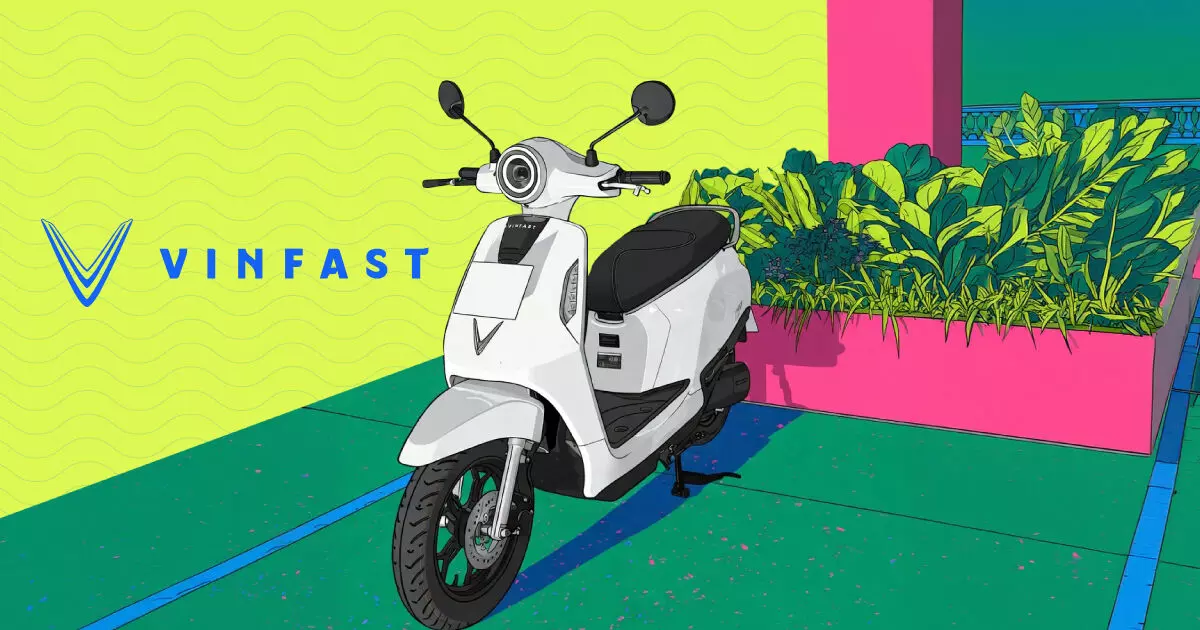
VinFast Bets On Electric Scooters To Crack India's Mass Market

Vietnamese electric car maker VinFast plans to launch electric scooters in India in 2027, betting on a growing market despite entrenched rivals.
Vietnamese electric vehicle (EV) maker VinFast is looking beyond electric cars to tap into India's mass market and plans to enter the country's electric two-wheeler segment in early 2027.
The company, which entered India in September last year with the VF6 and VF7 SUVs, at a starting price of Rs 18 lakh and Rs 23 lakh, later added the VF MPV 7 at Rs 24.49 lakh (all prices, ex-showroom). It is now preparing to introduce electric scooters and a more affordable SUV as it expands beyond the premium end of the market.
The launch of its electric scooters will put VinFast up against established Indian manufacturers such as TVS Motor, Bajaj Auto and Hero MotoCorp.
For a relatively new entrant, the challenge will be to build consumer trust, offer competitive products and establish an after-sales network in a market where incumbents already have a significant presence.
The move comes just over a year after foraying into the Indian market. And it is not very common, as carmakers rarely venture into two-wheelers, with BMW among the few to have done so successfully.
It also reflects a larger shift that Vinfast is looking to make, where manufacturers are looking beyond a single vehicle category.
The segment is already very crowded.
Anurag Singh, managing director at Primus Partners, pointed out that the approach automakers took in the internal combustion engine (ICE) era is quite different from what we are seeing in EVs. OEMs in this segment (EVs) are entering different vehicle categories.
“But this is not a space where everyone will survive, and it is difficult to say right now who will,” he said.
Even in passenger vehicles, expanding EV lineups from Mahindra & Mahindra, Tata Motors and JSW MG, along with Hyundai's upcoming locally developed model, are also set to compete for the same buyers.
With rivals this entrenched, VinFast's ability to build a viable mass-market EV business in India remains to be proven.
Scooters Next
The Vietnam-based EV maker intends to start selling electric scooters in India in early 2027. However, it has not announced a launch date or pricing yet.
VinFast plans to develop products specifically for Indian customers, targeting different segments rather than relying on a single scooter model.
“We are creating the products as per the needs and wants of Indian customers. We understand that we have to not only participate in this Indian market but also we have to win the trust of the customers. To do so, it is very important that we give the product which is apt for everyday use,” Anurag Saxena, CEO of Two Wheelers at VinFast India, told The Core.
“We would have multiple products to start with and they would be targeted towards families as well as individuals, performance-oriented users, and different use cases. So you can expect multiple solutions from us,” he said.
Alongside the products, VinFast is building a wider ownership ecosystem, including battery swapping and charging options to address range anxiety and reduce the risks associated with battery ownership.
The company has not specified how many stations it plans to establish. It has signed dealer agreements with more than 50 partners across 34 cities.
However, VinFast isn’t the only one to do so. Earlier, Honda launched its battery swapping service for the Activa e electric scooter through Honda Power Pack Energy India (HEID).
The Scooter Opportunity
Globally, India is the largest two-wheeler market. BCG analysis puts electric two-wheeler penetration in India at 9.9% in FY27 year-to-date through August 2026, up from 5.5% in FY24. The adoption is largely driven by the scooter segment.
VinFast said a separate scooter production line is being developed at its existing Thoothukudi plant in Tamil Nadu, and it has the potential to eventually produce up to one million units a year. Though it is yet to finalise its starting capacity.
“Two-wheeler capacity can go up to 1 million units per annum, but that does not mean suddenly we will invest at that level of capacity. We will assess customer response to the products we launch next year and scale up accordingly,” Tapan Ghosh, CEO of VinFast Asia said.
VinFast's caution is in line with the wider industry.
Singh said electric two-wheeler makers have announced far more capacity than the market can absorb today, while what they have actually built is only slightly ahead of demand. Dependence on Chinese supply chains is a constant risk, he said, which keeps OEMs wary of adding capacity.
While the established players in the market have an edge on existing consumer trust and wide spread dealer network, Puneet Gupta, Director at Mobility Global is convinced that the electric two-wheeler market in India still presents an interesting opportunity, particularly given the white space emerging from the challenges faced by some players, including Ola.
“Consumers in this segment are not necessarily looking for the biggest brand; they are looking for a dependable product, competitive pricing, consistent quality and, most importantly, reliable aftersales service. This creates an opportunity for a new player like VinFast to challenge the existing competitive landscape and establish a meaningful position,” he said.
The Bigger Picture
Founded in 2017 as the EV arm of Vietnam's Vingroup, VinFast is pushing an aggressive expansion in India.
Vingroup, Vietnam's largest private company, is reportedly expanding overseas, with projects planned in at least 15 developing countries. The projects span sectors such as real estate, technology, smart city development and EVs.
As in its home market, VinFast wants to enter multiple automotive segments and build an ecosystem in India.
In December 2025, VinFast signed an MoU with the Tamil Nadu government to expand its assembly plant at Thoothukudi in Tamil Nadu. The state agreed to provide about 500 more acres. Currently, VinFast has invested $500 million as part of its $2 billion commitment to India.
Can It Build Beyond Fleets?
Another task for VinFast will be to establish demand beyond commercial fleets, which have contributed to its initial growth in India.
For VinFast, passenger vehicle sales volumes are still growing gradually, with a good share of this growth coming from the group’s ride-hailing captive fleet service Green SM (GSM).
GSM is majority-owned by Vingroup chairman and VinFast promoter Pham Nhat Vuong. Its fleet runs on VinFast's Limo Green model, a seven-seat electric MPV available in an aqua-teal colour exclusive to Green SM cabs.
Monthly registrations, including private and fleet buyers, have climbed from about 300 in the first few months when it started selling, to roughly 2,500-3,000 units now.
The Core earlier reported how VinFast’s fleet-led growth is helping it crack India’s top five EV list.
Currently, the personal segment accounts for around 60-70% and commercial at about 30-40% of the total sales volumes for VinFast in India.
“Commercial segment is not just GSM, commercial means our dealers can also sell in other commercial segments. But in future we have not fixed any percentage; it depends upon the demand and supply,” Ghosh said.
Gupta said that VinFast has made a “calculated strategic move” by entering both personal mobility and commercial mobility segments. Its singular focus on electric mobility gives it a distinct advantage over traditional automakers that are simultaneously managing multiple powertrain technologies. As a relatively new entrant, VinFast also carries no legacy ICE portfolio or associated transition challenges.
“If it can successfully leverage these advantages through competitive products, localisation, distribution and a robust after-sales ecosystem, it has the potential to become the ‘Maruti of India’s EV era’,” he said.
Similar to its passenger vehicle segment, the company is evaluating plans for two-wheelers in the commercial space as well. However, the first preference will be personal customers here.
“India is a very important and big market, and we have a huge geography to cover. So our first priority is to focus on our core business that is targeting the Indian customers, personal ride customers, and then maybe we will be evaluating and moving ahead with other business avenues,” Saxena said.
In Vietnam, it already offers its products for the commercial segment for services like Grab, and will soon begin this in Indonesia as well.
While VinFast has no plans to bring an electric motorcycle in the near term, it will continue to “evaluate" the option as the market demands. In India, only a handful of players, including Royal Enfield, Revolt Motors, Ultraviolette, Oben Electric, have electric motorcycles in their portfolio.
New Compact SUV
In the passenger vehicle segment, Vinfast plans to launch the VF5 electric SUV in 2027 as it moves towards more affordable segments. However, neither the launch month nor the price has been confirmed yet.
“We are planning to cater to the compact SUV segment. So we would like to launch the VF5 for the personal segment," Ghosh said, adding that broader EV uptake would call for a range of products across the mass market.
VinFast is also considering the smaller VF3 for Indian roads, but has made no commitment as yet.
It currently sources the models as kits imported from Vietnam, which are then assembled at the India facility, with localisation levels at around 15%.
The company has also put its electric bus plans on hold. Even though as recently as January 2026, Ghosh had indicated that buses and two-wheelers would arrive in India in the second half of this year.
“We like to do justice to whatever products we launch. The bus is something which we will be looking at in future. Currently, we will be focussing on four-wheelers and the two-wheeler which will help us establish ourselves. We need to do justice to the volume,” Ghosh said.
“Product introduction is an ongoing process. Later on, after a few months, we can look at the bus segment also,” he added.
The recent decision to defer entering the bus segment comes as the market is still growing gradually. The Core earlier reported how state transport undertakings (STUs) are cornering the electric bus market, while financing gaps and charging shortfalls keep India's private bus operators on the sidelines.
The Larger Question
VinFast's ambitions in India are backed by a planned $2 billion investment and a push to manufacture locally. But building a mass-market EV business will take more than capital.
The company will need to localise production, scale up its after-sales and service network, and win over price-sensitive buyers, all while Indian automakers expand their EV portfolios, especially in scooters, where incumbents have a head start.
Whether VinFast can turn its multi-segment expansion into a sustainable mass-market business will depend on how quickly it can do all of this.
Core.
Core.


