



 Newsletter
 Search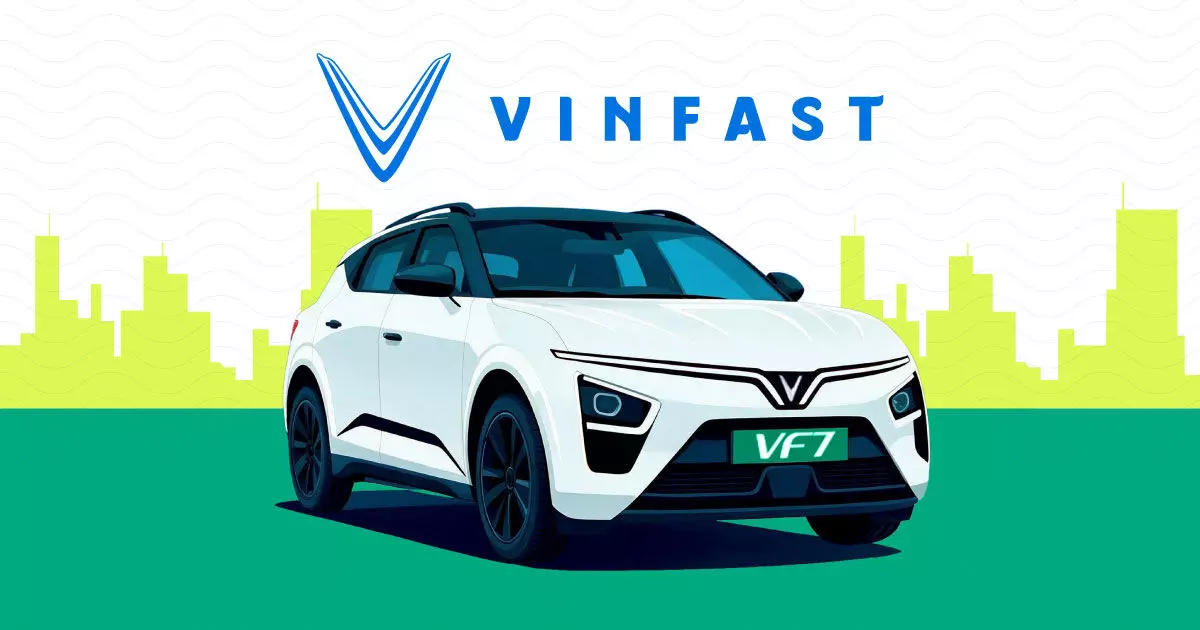
VinFast’s India Sales Surge, But Can It Win Beyond Green SM Fleet?

VinFast’s fleet-led growth is helping it crack India’s top five EVs, but quality and aftersales concerns could test whether retail demand can sustain its momentum.
Eleven months after entering India, Vietnamese electric vehicle (EV) maker VinFast has crossed retail sales of more than 7,000 vehicles and cracked the country's top five electric carmakers, trailing Tata Motors, Mahindra & Mahindra, JSW MG Motor, and Maruti Suzuki.
But the rise in numbers is boosted by a captive ride-hailing fleet, even as a small but vocal set of retail customers report quality issues.
With India being central to VinFast's growth plan, the real test of whether the company has found a foothold in the country is only just beginning.
Why VinFast Now
Founded in 2017 as the EV arm of Vietnam's Vingroup, VinFast is pushing an aggressive expansion in India.
Vingroup, Vietnam's largest private company, is reportedly expanding overseas with projects planned in at least 15 developing countries. The projects span across sectors like real estate, technology, smart city development, and EVs, among others.
In India, Vingroup has proposed a $3 billion investment in Telangana for a smart-city project to build a "multi-sector ecosystem."
Meanwhile, VinFast has earmarked up to $2 billion in Tamil Nadu. It began operations at its Thoothukudi assembly plant in August 2025, and launched two new models the following month. It currently sources these models as kits imported from Vietnam, which are then assembled at the India facility, with localisation levels at around 15%.
Vivek Sharma, director-automotive (India and Middle East) at data analytics and consulting company GlobalData, told The Core that VinFast entered the Indian market "at an opportune time," with the EV industry nearing an inflexion point and the broader market trending premium.
"Its models are feature-rich and competitively priced, a value proposition Indian consumers tend to respond well to,” he said.
Retail data from the Federation of Automobile Dealers Associations (FADA) shows EV penetration in India stood at just 4% in the fiscal year ended March 2026, as India sold close to 2 lakh electric cars. This leaves room to expand and win over buyers early.
Legacy players like Hyundai and Maruti Suzuki are yet to expand their EV lineups beyond one mass-market product, while others like Toyota Kirloskar have yet to foray into the market at all.
VinFast's India lineup for private owners includes the VF 6 and VF 7 SUVs, priced between Rs 18-23 lakh, and the VF MPV 7 at Rs 24.49 lakh (all prices, ex-showroom). The models come with a 5-star Bharat NCAP safety rating and certain ownership benefits.
Gaurav Vangaal, associate director for production forecasting at Mobility Global, said the company’s pricing strategy for the entry model looks sound.
“As a pure-EV player in a market, VinFast benefits from buyers' willingness to try a new brand if product quality holds up, and from its status as a global name already present in markets like the US,” he told The Core.
As of August 2026, VinFast operates 60 dealerships nationwide, up from 50 in March 2026. It wants to push towards a target of 75 dealerships across more than 60 cities by year-end, the company said in a press note recently.
Behind The Retail Numbers
VinFast's retail sales climbed gradually after its September 2025 launch of the two products, from just six units sold that first month to nearly 700 by March, the end of FY26.
Monthly volumes have consistently crossed 1,000 units in the first four months of FY27, starting April to July.
While consumer demand is still growing only gradually, a good share of this growth has come from the group’s ride-hailing captive fleet service Green SM Limo, which rolled out across Delhi-NCR during the same period.
The company, Green SM, is majority-owned by Vingroup chairman and VinFast promoter Pham Nhat Vuong. Its fleet runs on VinFast's Limo Green model, a seven-seat electric MPV available in an aqua-teal colour exclusive to Green SM cabs.
The same model is also available for sale to other fleet owners, though not in the signature shade. In April, VinFast launched it for retail buyers as well, as the VF MPV 7, with added features. With this, the total count of the company's product offerings in India stands at four.
Avik Chattopadhyay, co-founder of brand strategy and consultancy firm Expereal, called the captive fleet strategy a smart play. “It's a low-risk way to test their technology and vehicles on Indian roads with Indian consumers, and it gives them a constant feedback loop before a wider retail push,” he told The Core.
Green SM accounted for an average of 25% of VinFast's monthly sales between April and July, so even without these sales, the company would still be the fifth-largest EV seller in the country currently.
But this fleet-led strategy has given a boost and helped the automaker’s sales in the Indian EV market maintain a substantial gap with players like BYD, Hyundai and Kia. That matters at this stage, as VinFast is the newest foreign entrant in the space, and the perception of larger volumes during the first year could work in its favour.
Vangaal said this move could be rewarding, as “the shutdown of EV-only fleet operator BluSmart last year left a gap in the ride-hailing market that VinFast's fleet push is now trying to fill.”
Automakers have long tied up with cab service providers, including Ola, Uber, BluSmart, and Meru, to supply their cars. Tata Motors, for instance, used to supply its EVs to BluSmart. Mahindra, Maruti, Toyota, Nissan, and Hyundai have all struck similar tie-ups in the past.
This isn't new for the industry as well. As far back as 2002, Maruti Suzuki (then Maruti Udyog) forayed into fleet management business under the brand name N2N.
Analysts tracking the industry suggests that VinFast will eventually decide whether they want to focus on the individual consumers or the fleet segment, but either path can work.
“In fact, even as they expand to other cities, there is a legitimate business case for Green SM continuing to account for a meaningful share of their sales,” Chattopadhyay said.
A detailed questionnaire sent to VinFast India did not elicit a response.
The Buyer's Eye View
Harshith Gowda, a Hassan (Karnataka) based customer who bought a VinFast VF 7 in May this year, says the brand offered him genuine value for money.
"The other option was BYD, but it seemed to be going beyond my budget," he told The Core. Performance and range sealed the decision for him.
But not every early buyer has had as smooth a ride.
Piyush Khadgi, who bought a VF 6 in Nagpur in April, said he was satisfied with the car. This was until just 15 days in, it wouldn't start after a full charge. The dealership diagnosed a motor fault requiring replacement, kept the car for a month, and then had to take it back a second time when the same problem recurred, this time for about a week.
"It works just fine now," Khadgi said, though he added that he saw several other customers at the service centre reporting identical issue.
What kept Khadgi confident enough to buy from a brand barely a year old in India, he said, was pre-purchase research, including YouTube reviews and satisfactory answers from the dealer. His lingering concern is ride quality though, as he described the VF6 as "very bouncy," a real liability on pothole-heavy Indian roads.
Hari Krishna, a Rajahmundry (Andhra Pradesh) based buyer, opted for the VF MPV 7 for its three-year free charging offer, a decision driven largely by cost savings, given how much driving his work demands. His ownership experience so far, however, has been "mixed," he said.
While the car feels comfortable, he listed several niggling issues, including an infotainment screen that occasionally glitches and goes blank mid-drive, doors that don't always shut in one go, and interior plastics and build quality that feel underwhelming. "The issues may be small, but they're troubling," he said, adding that the recurring problems have chipped away at his confidence in the vehicle.
Even so, the biggest win for him remains the savings on charging costs, though he notes that VinFast's own charging network is still fairly sparse in his region. That gap, he added, is somewhat offset by the company's tie-ups with charge point operators including ChargeZone.
VinFast customers across India get complimentary access to EV charging via V-Green, the Vingroup ecosystem's EV charging infrastructure arm, until March 2029.
For Hyderabad-based Phani Raja, what sealed the deal on a VinFast was a 10-day trip to Vietnam last year. He recalled spotting VinFast cars everywhere he went, and experiencing the Limo Green taxi service for his local commutes, an encounter that left him struck by what he describes as the brand's "premiumness."
Back in India, he researched the company further and visited Hyderabad's only VinFast showroom, where he spoke to an existing owner before deciding to invest in a VF 7.
But less than a month later, he discovered water leaking inside the car from the air conditioning unit, as the AC drain pipe, it turned out, had been fitted facing the wrong direction.
"The vehicle is very good, but only as long as it is running fine on the road," Raja told The Core. "The day it develops a fault, you suffer, because the service centres do not have all the spare parts in stock. In my case, it was a manufacturing defect from their plant itself."
Several owners that The Core spoke to shared a similar customer service experience, as certain replacement parts are shipped from Vietnam, resulting in longer wait times for customers.
What's Next?
VinFast is an extremely ambitious company, Chattopadhyay said. “They have left no stone unturned in hiring the right talent and getting the right technology; and their ambition goes beyond VinFast succeeding as a company. This is as much about putting Vietnam on the global automotive map.”
However, where VinFast really needs to sharpen its game is customer support and service. They cannot invest only upstream, in manufacturing and technology, and neglect downstream, he added.
“If a repair or spare part replacement is going to take longer than 72 hours, VinFast should take the disruptive step of simply replacing the vehicle. That's the only way to keep customer trust intact in a market where trust, once broken, is very hard to win back,” he said.
Vangaal also suggests VinFast needs to treat Indian consumers with the same seriousness as its global buyers, because early impressions of a new entrant are hard to reverse.
"If the aftersales and product quality are taken care of, we expect it should gain progressive share in the market going forward," he said.
Further, VinFast has committed to launching two new products every year in India. GlobalData projects the company to clock sales volumes close to 40,000 units by 2030, which is almost double the 17,000- 18,000 units it expects the company to sell this year.
VinFast has also announced its plan to enter the electric two-wheeler segment by the end of this year. This will place it against established players like TVS Motor, Bajaj Auto, Hero MotoCorp, Ather Energy, among others.
Chattopadhyay said this strategy of entering multiple segments simultaneously is bold, but it comes down to the group's long-term financial discipline.
“They are better served by establishing themselves firmly in one category where they have entered first (passenger vehicles), building strong word of mouth there, and only then scaling into two-wheelers,” he said, adding that the two-wheeler segment could actually be a strong bottom line driver once the brand has built its credibility.
Last year, VinFast also shared plans to enter India's electric bus segment by August 2026. That plan, however, has stalled for now.
Analysts believe the $2 billion investment is a sign of long-term commitment, but the real test comes as the Indian EV market matures further.
In the passenger vehicle segment, Sajjan Jindal-led JSW Group's automotive arm, JSW Motors, plans to launch its first vehicle by the end of this year. Meanwhile, expanding EV lineups from Mahindra, Tata Motors, and Maruti, along with Hyundai's upcoming locally developed models, are all set to compete for the buyers VinFast is courting now.
Core.
Core.


