



 Newsletter
 Search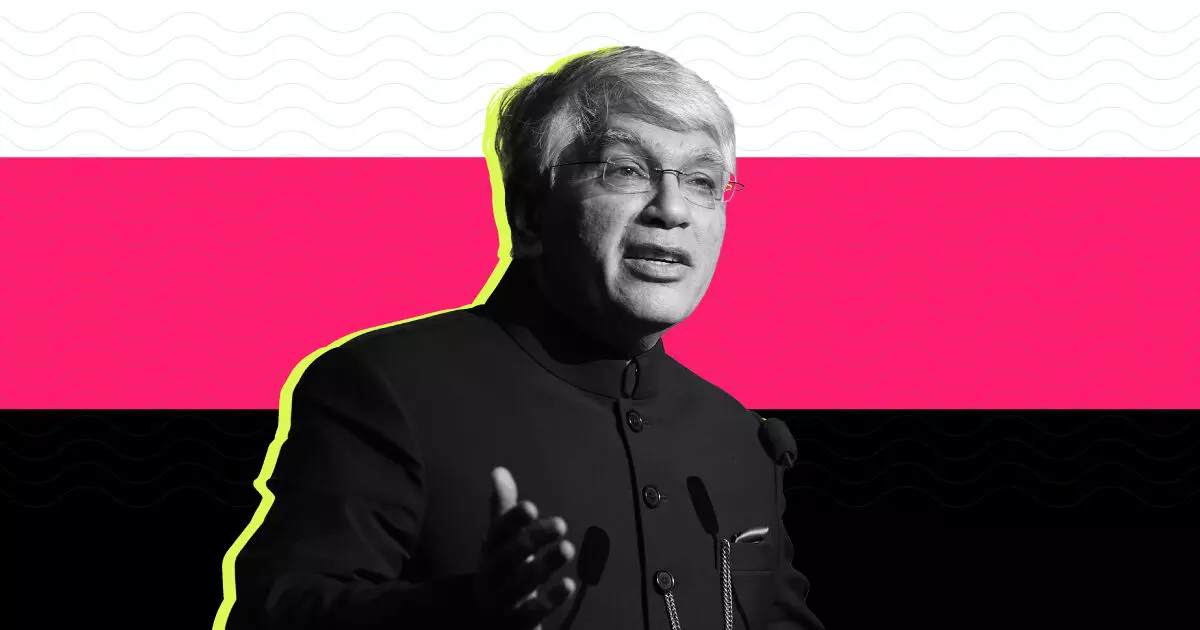
We Don't Have a Jobs Problem, We Have a Wages Problem: TeamLease's Manish Sabharwal On Employed Poverty
- Business
- Published on 3 Oct 2026 6:00 AM IST

In this episode of The Core Report, Manish Sabharwal, Co-Founder, TeamLease Services Limited , Co-author, Made in India: The Story of Desh Bandhu Gupta Limited talks about what Lupin's D.B. Gupta can teach India about jobs, red tape and building companies that last.
The Gist
- India holds a significant share of the global generics market but struggles with innovation.
- Regulatory issues and educational shortcomings hinder progress in R&D.
- The conversation emphasizes the need for a shift from volume to value in the pharmaceutical sector to enhance global competitiveness.
NOTE: This transcript contains the host's monologue and includes interview transcripts by a machine. Human eyes have gone through the script but there might still be errors in some of the text, so please refer to the audio in case you need to clarify any part. If you want to get in touch regarding any feedback, you can drop us a message on feedback@thecore.in.
Hi and welcome to The Core Report special edition. We are talking today about Made in India, the book on Desh Bandhu Gupta, the founder of Lupin Laboratories, and I am going to do that with Manish Sabharwal, chairman and co-founder of TeamLease Services. Our conversation is going to be split between the pharmaceutical industry and, of course, the larger opportunities for the Indian economy and the challenges within.
Manish is the co-author of this book. He wrote it along with Sandeep Khanna, who is also a financial journalist. Manish, thank you so much for joining me. I am going to start with the industry that D.B. Gupta was part of. One of the things mentioned in several places is, of course, the fact that India has substantial scale in the pharmaceutical industry. If we have that kind of scale, with such a share of the global generics market in the US, why is there a feeling that we have not arrived?
Well, I think the volume versus value question is key, right? Why didn't DeepSeek come out of India when we exported more software than Saudi Arabia did oil a few years ago? And if you flip that question to pharma, if Americans ate 400 billion pills last year, India made 200 billion of them, and 20 billion were made by Lupin, then why did China become the source of one-third of new medicines and innovation licensed last year, from a standing start 20 years ago?
In the writing of this book, I noted that Dr. Anji Reddy and D.B. Gupta, both of whom are no longer with us, used to say, "Well, volume is all okay, but the true test of the pharma industry is when we do innovation." I think innovation is a much more complex problem, right? It depends on universities, it depends on public funding, it depends on lower regulatory cholesterol, and it depends on many other things.
So my sense is that we should celebrate pharma. I don't think anybody in the world would have predicted that a country ranked 128th in the world in per capita GDP would be making half the world's medicines. It is not something that the World Bank would have told us in the '60s and '70s.
I think it is not celebrated enough, because people say, by sleight of hand, that it was created with a policy flick of a pen. And even for somebody who has cribbed about regulatory cholesterol, it is important to acknowledge that without the 1970 Patents Act, the industry would not exist. But it was also the 1984 Hatch-Waxman Act in the US.
So this was two governments on opposite sides of the planet making decisions 14 years apart, which really let Indian pharma scale. I think the scale they have accomplished is remarkable, and the quality reputation they have is remarkable.
The next test will be moving from volume to value, which is why people sometimes hesitate about them. But I think both software and pharma are industries that you would not predict would exist in a country with a per capita income of $2,800.
I am going to come to the D.B. Gupta story in a moment, and the way you have written it from your perspective. But can we apply what we have achieved in pharmaceuticals to any other industry? I know you mentioned IT services. Or does it really stop there? And if so, why?
Well, the difference between IT and pharma is that pharma is a Made in India story, right? We have given up on manufacturing, which I think is a mistake. China may be the factory to the world, but it became the factory to the world only in the last 30 to 40 years, and its per capita GDP is now five times ours.
I think pharma, to my mind, is a classic example of what happens when you compete globally and get yourself globally certified, which is what the FDA does. If you learn the global language of contracts, the global language of quality, and the global language of reliability, there really is no reason why India's manufacturing employment should be stuck at 11% of our labour force. That is the same as in the post-industrial United States. If you had told me in 1991 that 35 years later 45% of our labour force would still be on farms and only 11% in manufacturing, I wouldn't have believed it.
So I think the biggest lesson from pharma, which is distinct from software, which really innovated on the people supply chain side, is that the pharma industry has innovated in its normal supply chain. That means the supply of raw materials, the conversion of those raw materials, process research, legal knowledge, establishing an overseas sales presence, and building long-term customer relationships.
So I am hoping that the pharma success can be replicated in manufacturing, which is one area where India has unfortunately not delivered at the scale, and with the number of jobs, that we possibly could.
You mentioned innovation, and that is obviously a key ingredient in the journey from volume to value. This is also a very large discussion. But from your vantage point, as someone who has written this book, looked at Lupin closely, and looked at D.B. Gupta's journey, including his own efforts at bringing in innovation and setting up research labs and parks, where do you think someone like Lupin, or a country like India, has got things right in the innovation journey, and where has it not?
Well, global pharma companies spend about 15% of their revenues on R&D. Indian companies spend about 7 or 8%. I think they are in the process of taking that number up to 10 or 11%.
Obviously, a large part of that research has traditionally gone to generics research. Now it is going to delivery systems and other things. We are starting to see some early signs of the bets that Glenmark, Sun Pharma, and others made. Sun Pharma acquired its pipeline, while Glenmark has built its pipeline. Everybody has tried over the years, so I think the past is not necessarily to be extrapolated to the future.
They have to figure out how to do more innovation. They might start with innovation for India, right? We are starting to have a lot of drugs for the domestic market, which, if you scale them up... I think the biggest advantage US companies had was that they were innovating for their domestic market. Getting the domestic market to critical mass is an important advantage that domestic pharma companies will hopefully leverage as one of their strengths.
I do think the regulatory cholesterol in drug discovery is excessive. I think the amount of time they take and the number of hurdles they place in the way of new drugs and clinical trials are possibly now outdated. That is an area where China made a lot of innovations, which are now showing up. Of course, drug discovery is risky, and there should be safeguards. But India's current situation is not allowing companies to take the risks they need to take to deliver on innovation.
Let's pick both those aspects. One is the filing of patents, and the second is clinical trials. The industry and its leading lights have consistently talked about this for years.
And lost a lot of money on it. Lost a lot of money.
So what, in your mind... and maybe this is where I am going to ask you to wear your other hat, which is running a large human resources company, with all the research that goes into it... has slowed us down or stopped us, despite these red flags being waved over decades?
Well, the formation of the IIMs, IITs, and AIIMS was genius just after independence. But the neglect of primary education in the K-12 system is obviously going to bite you in the long run, right? Now I think the most embarrassing number about India is that only 45% of kids are left in government schools. In Japan, only 5% of kids go to private school; in the UK, only 10%; and in the US, only 15%. This is not an argument against private schools, because without that supply-side response, I don't know where India would have been. But if anything should be free and of quality in a country, it needs to be K-12 education.
So the first thing we have to get right is the foundations of reading, writing, and arithmetic if we want to deliver human capital. China had many advantages, but its opening balance in healthcare and education when Mao died and Deng took over in 1978 was a really important and underestimated part of its success. Another underestimated part was women's labour force participation of 60%, whereas we are stuck at 21%. But I think they are mirror images of human capital, formalisation, urbanisation, and industrialisation.
The other missing piece is that, I don't say Poorna Swaraj, full freedom, but there is too much regulatory cholesterol in education, and the expansion of universities is very tightly controlled. Tsinghua University was practically destroyed by Mao and today has 82,000 students and 26,000 PhDs. I am one of the co-founders of Ashoka, and we are very proud of what we have done, but we have 4,000 kids, maybe 100 PhDs, and 200 faculty.
But you are only a little over a decade old.
We are only 10 years old, but they are 30 years old, right? I am not sure that in 30 years we will be at 76,000 students at our current trajectory, because we need the soil also. We need the government to recognise this. Harvard, despite Trump's rants, gets $92,000 per student per year from the government, while its average tuition is $78,000 per student. Johns Hopkins gets $100,000 per student per year from the government. Those two universities get angry when I say this, because they ask, "Why are you calculating research dollars per student?" But the point is that a university receives research money from very low-governance grants, without huge claws in you, which allows you to take much bigger risks, and both of them have delivered.
In India, there is no such thing yet as a low-governance, risk-taking grant from the government. We now have two funds, so some risk-taking is starting, but whenever anything goes wrong with government money, we don't distinguish between fraud, incompetence, bad luck, bad judgement, or just risk-taking. We say it is all fraud. So the risk-taking that public money should be doing in India is lower, our school pipeline is weaker, and the university system has not yet been released.
The private sector is downstream, just as I have been saying for years that we can't manufacture our own employees. Innovation is downstream from a scientific ecosystem. CSIR has not delivered; it spends 40,000 to 45,000 crores a year. Maybe the government should spend that money, but instead of using it itself, it should give it to other people to spend, right? So I think there needs to be a reboot of our innovation ecosystem, which has to go hand in hand with the fixing of government schools, which has to go hand in hand with letting go of universities. Today I can identify maybe three or four universities outside the IITs and IIMs which have a chance of being among the top 100 universities in the world. We need to have 20 or 30 universities in that group. This is a national security priority, not just an innovation priority, given the way the world is going. But if we continue with the current prohibited-till-permitted regime, we will have a university regime that confuses building schools with school buildings, and that is just not going to be sustainable.
Just as we have had a 1991 moment for licences... though I am a little tired of the puja of 1991, because China and India had the same per capita GDP that year, and now they are five times ours. So clearly we could have done much more in these 35 years. I think innovation, regulatory cholesterol, and state capacity are interrelated concepts, particularly for innovation industries.
Right. And you are saying that because we have a weak pipeline, we are not in a position to look at patents or clinical trials the way we should, which are two specific bottlenecks in the pharmaceutical industry.
Yes. Ricardo Hausmann is my favourite professor for thinking about development. He says development is a game of Scrabble, right? The government provides the vowels, the private sector provides the consonants, and you have to make longer words and more words. In the licence raj, we had one vowel, so we made two-letter and three-letter words. Pharmaceuticals is a 25- or 30-letter word. I think the number of vowels being provided by the government has increased, and that is why we are starting to see the beginning of a cycle.
But we can't compare ourselves to where we were; we have to compare ourselves to where we should be. That is why this combination matters: public spending on R&D, and letting go of universities. And obviously the GCC boom in India, and making India a hub for clinical trials, which is not an exploitation of Indians, or a hub for drug development, just as we have decided to make ourselves a hub for many things. People are worried about China, and the China-plus-one strategy is only now becoming real. So this is a unique opportunity for India to do what we should have done 10 years ago. But the best time to plant a tree was 20 years ago, and the second best time is today.
D.B. Gupta, for instance, took time to get licences. He went and sat outside the licensing authority's office, begged, pleaded, and waited, and then eventually started getting licences. And there were so many more licences to get. If someone like him were to embark on a similar journey today, would he or she encounter fewer hurdles?
I think fewer than what he faced in the licensing way, but there are still the NOCs and the edicts. There are acts, rules, and then the edicts: the 25 other instruments, guidelines, circulars, notifications, office orders, FAQs, and press releases. So compliance is not what the government thinks it is. The government thinks in terms of acts and rules, right? The government reads left to right, and we read right to left. We need compliance, and we don't even reach the act, because how does that impact us? I think the deregulation agenda is really, really unfinished right now.
The decriminalisation agenda has begun, but deregulation, which really requires trust... we have not renegotiated our trust relationships. Jan Vishwas is not only about citizens; it is also about enterprises. Today, prohibited-till-permitted is probably the norm. I have been asked 120 times in my life by a bureaucrat, "Who allowed you to do this?" That is a profound question from a theory-of-knowledge perspective, right? If things are permitted till prohibited, then who stops me? All innovation has to be permissionless.
So yes, in some ways life has become easier, but in other ways we are not even close to being fertile soil for entrepreneurship. We have 63 million enterprises. Twelve million don't have an office and work from home, only 1 million pay social security, and only 30,000 companies in India have paid-up capital of more than 10 crores. We should look at our 6.3 crore enterprises against only 30,000 companies with more than 10 crores of paid-up capital. I think that explains why China's per capita income is five times ours. They have renegotiated the relationship between society and the economy, and between the state and entrepreneurship. We sometimes give lip service to MSMEs, but regulatory cholesterol hurts MSMEs more than big companies. Big companies like us have 160 people in regulatory affairs, or team leads, who handle the regulatory cholesterol. The small guys are going to be...
And you have teams who research the regulations that the government is putting out.
Exactly. If we really believe that an army marches on its belly, and I hear every politician romanticise the small and medium entrepreneur, then why don't we make their lives easy? I think the deregulation and decriminalisation agenda is the unfinished part of reform.
Right. As D.B. Gupta grew, one of his challenges was capital. Let me pick three or four factors of production. Capital is something he, too, had to struggle with, like many entrepreneurs of his time across industries. He went to a bank, and the bank was good enough to help him, and that became a long-term relationship. This is a somewhat sweeping question, but as you look back at the last decade, at the amount of capital that has flowed, whether venture, private, and so on, are we better off than we were then? Of course we are better off, but by how much is the question.
Yes. I think the major question is the seed capital, which he got from his wife, right? His father was a government school teacher. In fact, I don't think D.B. Gupta would have been an entrepreneur if he hadn't been fired from BITS Pilani. Sometimes misfortune can lead to fortune. His father was a teacher, his grandfather was a teacher, and his great-grandfather was a teacher, so he was surrounded by role models. For a first-generation entrepreneur, seed capital matters more than growth capital, and obviously we have seen a revolution in seed capital.
The question is, as Field Marshal Rommel used to say, "Sweat saves blood, blood saves lives, but brains save both." Return on equity is the only thing that matters in the long run. We go through fads in business where you pursue revenue growth at all costs, or profit at all costs, but return on equity is the only evergreen metric. I think these early entrepreneurs understood return on equity. They understood that it doesn't matter how much money you make; it matters how much money you spend to make what you make. So many of these businesses have really high returns on equity. Large corporate India is actually much more capital-efficient than China.
If you had told me 20 years ago that the Indian stock market would return 1,300% and the Chinese stock market would return minus 13%, but that India would still have 45% of its labour force on farms while China would have moved 300 million people off farms, then from a political economy perspective I wouldn't have believed it. You would expect a democracy to care about wage growth, not shareholder growth, and you would expect an autocracy to care about shareholder growth, not wage growth. Yet a democracy like India delivers almost the most spectacular equity returns of any country in the world, and we still haven't moved people off farms. As a nation, we need to ask ourselves how we deal with this. Why have we held back the Cambrian explosion of entrepreneurship? Many Indians are entrepreneurial, but they create dwarfs, not babies. Their ventures are small and stay small, rather than starting small and growing. The difference between a baby and a dwarf is not more food, and it is not more money. It is in the DNA, right?
Capital is a constraint, but not the binding one. Fifty percent of the FDI India has received since 1947 has come in the last eight years, and 90% of India's venture capital and private equity has come in the last 10 years. So if we make ourselves a fertile habitat for job creation, capital will not be a binding constraint. I don't think land is a binding constraint either: you could give every Indian household half an acre and still put it into Rajasthan and Maharashtra. I don't see labour as a binding constraint; 40% of our labour force is vela, or idle. Apple has scaled so quickly by training people for eight weeks to make iPhones. We used to walk around with this ghost, but modern manufacturing has taken tacit knowledge, codified it, and embedded it in the process or the machinery, so that you can make iPhones with eight weeks of training, as they are doing in Chennai. So infrastructure and finance are not the binding constraints; they have shifted from being a dagger in the heart to a thorn in the flesh. The dagger in the heart is really regulatory cholesterol.
It is a very hard place to do business. The largest factory in China, even today, at its peak, had a million people, and 700,000 people work in a single location. The largest single-location factory in India has 50,000 people. This is purely related to regulatory cholesterol, and the labour laws, the politicisation of trade unions, and the criminalisation of politics are a toxic combination outside big cities. So I think we should step back now. I don't want to live in China, but I believe that moving 300 million people from farm to non-farm employment is something we could have done and should do now.
Got it. Let me come to the other aspect of D.B. Gupta, to use his journey as a peg in our conversation. He thought big. He was already comparing himself with, or contrasting himself against, Ranbaxy, which was also there, and some of the multinational pharmaceutical companies, and he worked with one too. So do we not set our sights big enough, and is that what holds us back?
Well, he grew up in a house without electricity or water. He had a lifelong limp, and he had a hearing problem. But he really balanced thinking and doing in ways that are key for an entrepreneur. I think he balanced three things. He balanced the next quarter and the next quarter century. While he was worried about the next quarter, he was setting up a US FDA-approved plant 10 years before he exported from it. He moved his daughter to the US many years before he knew what she was going to do there, but it was clear that the US was the key market. He asked one child to come back and the other to stay, and the US presence has been a very important part of Lupin's journey. Vinita built that from scratch. So balancing the next quarter and the next quarter century is a key part of building a great company.
Second, he balanced risk-taking and prudence, and he thought about governance in the early stages. What is your executive role? What is your board role? What is your shareholder role? I frame it as the difference between amanat and jagir. A jagir is yours, but an amanat is something you hand over in better condition to the next generation. He always talked about Lupin as an amanat, which he was going to hand over, and he did successfully hand it over.
The third balance, thinking and doing, is one people underestimate. Thucydides, the Peloponnesian historian, used to say that any army with too big a gap between its thinkers and its doers will have its fighting done by fools and its thinking done by cowards. Great companies strike the right balance, because with too much thinking and no doing, you do nothing, and with too much doing and no thinking, you do nothing great. The idea that you campaign in poetry but govern in prose applies to IPO roadshows, and it applies to building great companies. What D.B. Gupta did spectacularly well was balance the poetry and the prose in the company. He said, "Yes, we will be very aggressive in sales." He was a sales guy; he obviously knew chemistry, but he was one of the world's most charming salespeople, constantly meeting people.
Yes. So sales was important, but that didn't come at the cost of quality or global ambition. When they had revenues of one crore, within a few years of starting the company, he went campus recruiting at IIM Ahmedabad and IIM Bangalore. When one recruit joined, he said, "Well, we have revenues of one crore, but we have a thousand-crore business plan." Obviously, that was not in the realm of possibility then, but it has worked out spectacularly.
Right. So in finding and identifying the right people who were not necessarily in the family, though the family grew and the next generation joined later... he was ahead of his time, but he was also, I guess, defining the blueprint of good leadership and thinking in terms of big growth. I mean, how do you grow big unless...
But he had a huge problem. 1994 to 2004 was the lost decade for Lupin, right? They diversified into real estate. He went through personal mental challenges. The company almost went bankrupt because of thinking big, which was, "I've had my IPO." For most people, doing the IPO is the start of a good time, but those 10 years after the IPO were lost for Lupin. At that point, he made the very conscious decision not to hand over the company to the kids, and he brought in Kamal Sharma as managing director, who for the next 10 years was able to groom the next level and stabilise the company. Then, obviously, Vinita and Nilesh took it to the next level.
My sense is that after the crisis, he became more strategic. As Napoleon used to say, leaders are dealers in hope. D.B. Gupta was a classic example: he was always optimistic, always looking forward, and always thinking big. But after the crisis, he became more strategic. Sometimes the problem with optimists is that they are not strategic. But being an optimist and being strategic, idealism without illusions, as I call it, is a very powerful notion. After that crisis, he wrote a note to his management team about five vectors, and over the last 20 years those five vectors have played out exactly as he thought they would. And then, obviously, he didn't hand over to the kids but brought in a professional manager, who then handed over to the two kids.
But the professional manager was there earlier as well. He had just left.
So he brought him back.
Right. That is my question. I will come to the real estate part, because I remember covering it as a journalist as well. But what about the need to bring in professional management, which has nothing to do with the succession part, the need to acknowledge that I need professionals who can supplement my talent, knowledge, and skills, and that the combination of all of us, the professionals and me, can really make the company grow? That is not a realisation that comes easily, does it?
India doesn't change when she has a better option; she changes when she has no option, right? We know that from reform. I think he learned that through the crisis. I think the most dangerous lies are the lies we tell ourselves, as boards, as companies, as individuals, and definitely as entrepreneurs. We need a hearing aid, a mirror, or a seatbelt. That is why a good board is a very powerful asset, underestimated by many entrepreneurs. Usually you don't want your board to be the leader of the opposition, but you do want it to be honest and to hold you to standards.
I think D.B. Gupta realised that some of the mistakes he made with that real estate diversification, and with some of the other things which almost made the company bankrupt, would probably not have happened if he had listened more to the people around him, or if he had had stronger people around him. The kids were still young. So I think he used that crisis to make Lupin much stronger: spiritually, intellectually, legally, and financially.
So the lesson from this, apart from bringing back professional management to run the company, is to stay focused on the core business that has brought you this far and not get diverted. India is a conglomerate country, and there is a temptation. If you look at the Birlas, for example, or any group, they are constantly investing and reinvesting, and many of them are in real estate today. Some of the biggest names are in real estate, and that has become a more prominent and desirable part of the portfolio. Maybe he thought similarly then, but it didn't work out at that point.
Well, Germans have this wonderful word, Fingerspitzengefühl: you develop intuition in your fingertips after doing the same thing for 20 years. I think modern business is just way too competitive for conglomerates. There is the Tata model, where the companies are independently listed, rather than the GE model, and GE has broken up. There, the businesses were not independently listed, so the governance was being provided by the chief executive. I think there is some merit in recognising that compounding requires uninterrupted focus in one area. Adjacencies will always be required because some products get commoditised. But operating in one space for 20, 30, or 40 years is probably not as bad, or as much of a punishment, as some of the Indian conglomerates think. In the long run, they will realise this.
And when you say this, you are also leaning on your own memories and experience of what you have seen around you.
And I see it around us today. To be truly global and world-class... I think this is the Korean experience too, and the Japanese experience too. They talk about all these companies, but Samsung is an electronics company. That is just the reality of it. Ninety-nine percent of its market value, even though it may have all these other shipyards and so on, is largely driven by that. And they have done a wonderful job of learning that business. I think the Japanese zaibatsus have also fallen apart because of their return on equity. I think nothing sabotages return on equity more than diversification beyond a point.
So if I come back to what we talked about earlier, regulatory cholesterol and the challenges businesses face as they scale or aspire to scale, and contrast that with the ambitions of businesses, entrepreneurs, and business leaders, to what extent would you apportion the blame, if I can put it like that?
Oh, I think India had two reckless experiments after independence. The democratic one has worked out spectacularly. We have created the world's largest democracy on the infertile soil of the world's most hierarchical society. But the 1955 Avadi resolution and the 1956 Second Five-Year Plan explain a lot of why our per capita income is only $2,700. Why haven't we added mass prosperity to mass democracy? I actually think mass democracy is harder than mass prosperity, in a country where printed newspapers exist in 41 languages. We are poor, we are large, we are linguistically diverse, and we are religiously diverse. I think the democratic project was harder, yet we did that and didn't do this, and that was purely ideological. What we talked about at the beginning, the renegotiation or reimagination of the relationship between the state and entrepreneurship in India, has not happened. We are not going to be able to move 45% of our labour force off farms unless we have a massive explosion of entrepreneurship.
And you feel that entrepreneurs, on their part, also have to be more focused, and, to use the...
Yes, but I think entrepreneurship in India is not in short supply.
Yes, but if you look at the last decade, many in the latest wave or boom have also made some of the same mistakes.
Not the private-equity and venture-capital-funded ones, which provide governance, right? Sometimes the capital markets have let people who are already in the game get away with it. But take PhonePe: it just does payments. It may do financial services, but it doesn't plan to get into running other things. I think many of the new-age companies in the pipeline, whether they have become unicorns or are in the process of being listed, are going to build companies that will really challenge some of the older, traditional companies. Not because they are smarter, and not because they have more money, but just because they are doing one thing and learning. Finally, all learning in life is learning by doing, and the faster you compound that, the better.
And you are saying that they will do well because they are staying focused, or at least the ones who do well will be the ones who stayed focused.
Like manufacturing. I think manufacturing is a really, really acquired skill, gained by running a factory at high levels of quality, which is what pharma has learned. A healthy baby cannot be born an adult. You have to have FDA problems. The only way to improve air traffic safety is to have plane crashes, because you learn from them. And that is the only way to do this.
So I think corporate India is renegotiating its image with itself, and it is renegotiating its place in the world. I think the American trade negotiation has been very difficult. I have been involved on the periphery, and it has been humiliating, because they change the negotiator every time. But the main point they make is, "What do you have to offer us? We don't really need to do a trade deal with you." The only lesson for India is that we have to make ourselves stronger. My favourite Hindi poet, Ramdhari Singh Dinkar, says, "Kshama shobhti us bhujang ko jiske paas garal ho." Only snakes with venom can be kind, benevolent, and generous.
Right.
Snakes with less venom can't be. I think corporate India, and India, have to recognise that we have to make ourselves stronger. We have to compete on the world stage. There is nothing cultural about China's success. I think we are in the process of transformation right now, and I think Trump is accelerating that transformation in the world. There is a unique opportunity for India to take the space that is being created. We are a democracy. We are a logical partner for many countries for whom China is not, but who hold their noses with China because it is powerful. In the long run, I think our power may be more attractive. But we have to make ourselves stronger.
I am sticking to the staying-focused element because that is hopefully going to produce stronger companies that will help the country stand on its own, or stand up against bullies, for lack of a better term. Now, if we are on that trajectory, and let's say entrepreneurs are not distracted by other ventures or diversification and so on, what else do we need to bring in?
I know we have talked about regulation, but let's say that a lot of that regulatory cholesterol has to come down. Let's assume that will happen. We have to be focused, and as entrepreneurs we have to separate our roles as shareholder, board member, and executive. I think we can play all three roles, but we have to be mindful that the board member role is about the next quarter century, the executive role is about delivering execution and performance, and the shareholder role is about being patient and allowing the company to take long-term bets, because yield to maturity is much higher than current yield.
I think this has already started happening. Many people are not necessarily handing over their businesses to their kids. Bringing in professional CEOs happened in FMCG, and it is happening in many businesses where we are thinking about transformations. But there are also classic examples like Lupin, where the business was handed over to the kids and they grew it by a factor of 10 or 20. D.B. Gupta acknowledged that after Nilesh and Vinita came in, they grew the company substantially. So I would say that, on average, India has suffered from a lack of focus, too much diversification, and not enough governance. But it is possible to find the middle ground, because a company with no voice of capital is also a problem, and a company where the founder is an ayatollah who doesn't listen to anybody is a problem. There is a middle ground which corporate India is transforming itself into, and those are the companies I respect, and, finally, the companies which will attract human capital.
Why did the IPL become a talent nursery in ways that the Ranji Trophy never was? I talked to cricket selectors for the Indian team, and they say, "We have no job." There are 1,400 people killing themselves in the IPL. They are fitter than ever, and all we have to do is tap that nursery. I think private equity and venture capital have become that nursery for entrepreneurs. It is much easier to be a first-generation entrepreneur than it was when I started, and it was much easier then than when D.B. Gupta started. I think the IPL has become more meritocratic, OTT has made films more meritocratic, and so has private equity. India is becoming more meritocratic with human capital, and with the partnership between professionals and entrepreneurs, which is so logical and normal in parts of Silicon Valley, where you don't always expect founders to run companies. Some founders will stay the course, like Bill Gates and Mark Zuckerberg, but I think the models are starting to change.
So if we fix our regulatory cholesterol, if we don't get too diversified, if we think about the governance of the shareholder role, and if we just attract human capital, there is nothing that can stop us in India. There are no cultural explanations for India, right? The "Hindu rate of growth" went from 2% to 7% without shooting all the Hindus, so clearly that was an incomplete, if not stupid, explanation. Confucianism was used to explain why China was poor, and now it is used to explain why China is rich, right? So I think that the minute we get into cultural explanations, they are at best the soft bigotry of low expectations and at worst racism.
So businesses like pharmaceuticals are boring at one level, but they are also challenging at another level, in a way that many other businesses are not, even within manufacturing.
I think they are very exciting. I think of pharma shifting from chemistry to biology, the application of AI to pharma, and the application of India's manufacturing prowess to global manufacturing. I think pharmaceuticals has a really exciting future in the next 20 to 25 years. Obviously, everybody will narrowly define it only as new drug discovery. But I think Indian pharma's opening balance creates a lot of adjacencies through which it can lead the world in many ways. And 1.4 billion people, just innovating for India, can make us leaders.
My follow-up question to that is really, will entrepreneurs, and can they, rise up to this opportunity? I know some are, but is that enough? Maybe some of the larger business opportunities in India are also seemingly the more challenging ones. You talked about FDA approvals, and that is a fact of life. And maybe there are far more...
But I think there is a lot of pressure on India's drug regulator and the Ministry of Health, and a lot of recognition and acknowledgement that if they don't change this, Indian companies will offshore their R&D. They might choose to do so because they have to, and I think that would be a tragedy. Just as we are getting our act together in many other technology areas, from a resilience perspective, we have already improved substantially in APIs. This learning by doing is what happened when people were attacking the Apple factory in Chennai, saying there was only 2.5% value add. It has already reached 12.5%, then it will go to 15%, then to 20%, right? So it is learning by doing.
So I think pharma is held back by some regulatory challenges, but they have now recognised that their future is very different from the past, and they are making the investments. I won't be able to predict which of them will succeed; I have no idea. But I think India has enough horses in the race to make sure that a few will win.
Right. And you believe, just to re-emphasise, that entrepreneurs should heed that call. I am talking about an industry like pharmaceuticals, as opposed to, let's say, a consumer internet industry or an investment, which seems easier, in a manner of speaking.
I think that's not fair. It's like the licence raj used to say, "Why do you need to make toothpaste? Why do you need consumer durables?" India's economic complexity is very high, and I think we shouldn't mock economic complexity. We need all the different parts of the economy, because the gig economy is an apprenticeship on steroids. Delivery boys get digital literacy and customer service skills, and then they move on to other things. So I think we need a lot of horses in this race. I think the capital markets are starting to reward focus anyway. There are only two premiums in India's equity market: growth and governance. If you have growth and governance, it doesn't really matter which industry you are in, because the total addressable market in India is very, very large. So I would be careful about saying that we should do this and we shouldn't do that.
I know that, given the industrial policy of rich nations right now, which is throwing money at industries they think matter, we are also feeling pressured. Obviously PLI was born out of some of that. It is a bribe to people to invest, and they have responded to it.
Or semiconductors, with a 50% subsidy in almost all cases.
Exactly. But in other countries too, to be fair.
Yes.
So how do you compete if you don't do that? But I think we have done the licence raj; we have seen that movie before. My view is that if SEZs are a good idea, make the whole of India an SEZ. Make it fertile soil for entrepreneurship. The role of the government is not always to set things on fire; it is to create the conditions for spontaneous combustion. There are enough entrepreneurs, there are enough capital markets, and there is enough professional talent. Today, what economists call total factor productivity, meaning how land, labour, and capital combine with what you can call technology or entrepreneurship, is held back by regulatory cholesterol. I think that if we fix that problem, our farm-to-non-farm transition can accelerate substantially.
Finally, we have to make jobs the priority. Policy has to pray to the one God of jobs, because that is becoming the issue for young people, for education institutions, and for everybody. If we have to keep one metric of our progress, it should be that, because the only way to help farmers is to have fewer farmers. The 45% of our labour force on farms has to come down to 25%, which will happen through a combination of pharma, consumer durables, exports, and domestic consumption. If I were to teach a development economics class, it would be the five things Deng Xiaoping said. I don't care if a cat is black or white as long as it catches mice. If you open the door, some flies will get in. Some areas will get rich before others. There are some problems you won't solve. Exactly.
So I would favour the pragmatism of thinking about policy over the ideology of rich people and poor people. India's problem is not inequality; it is poverty. You could throw the 10 richest billionaires into the Indian Ocean, and India's Gini coefficient of inequality would come down, but the poor wouldn't care. So we shouldn't put inequality ahead of prosperity. India's problem is poverty. It is employed poverty, not unemployment. We don't have a jobs problem; we have a wages problem. People have jobs, but they don't make enough in wages. There is no such thing as poor people; there are people in poor places. That is why pharma is a high-productivity sector and IT is a high-productivity sector, which is why they pay high wages.
Last question. You have had a ringside view of D.B. Gupta's journey, and I would like you to spend a minute explaining what that ringside view is. But my question is, you have chosen a path that is quite different from his. TeamLease Services is in staffing, human resources, research, and a lot of other things, but nothing to do with this world. So how did the twain never meet?
Well, I am the son-in-law, right? And it is always difficult to have a father-in-law whose company is 100 times bigger than yours. But he was a remarkable person. He changed the size of my thoughts, and he gave me ambition. When he passed away in 2017, it was logical for me to get to know more about how he became what he did. This book works at three levels: it is the journey of Indian pharma, the journey of Lupin as a company, and the journey of him as an individual. Obviously, he is the spine of it. It is a very unlikely entrepreneurial journey. He would have been a teacher if he hadn't been fired from BITS Pilani; there is no question in my mind that this was his first love.
His timing was remarkable. He quit in 1968 and started Lupin in 1968. In 1970, the Indian Patents Act came in, so they learned chemistry and built the Indian market. Then, in 1984, Hatch-Waxman happened, so he started looking outwards. There is the old question of whether we are history's slaves. Carlyle says that the history of the world is the biography of its great men, while Tolstoy argues otherwise. In writing the book, I became clear that leaders matter much more than circumstances. Everybody deals in IT and software, so I wanted to chronicle a journey of entrepreneurship and agency. I inhabit a different world, and my interest at this stage is public policy, purely because of the vantage point I have had on labour markets. The two most important decisions a child in India makes are choosing their parents and their pin code wisely. That need not be the case, right? If we fix education, employment, and employability, the infrastructure of opportunity, which is currently broken, can be fixed. That is my vector and my path.
But obviously we should admire entrepreneurship like that of Indian pharma, whether it is Dilip Shanghvi at Sun, Anji Reddy at Dr. Reddy's, D.B. Gupta at Lupin, or Habil Khorakiwala at Wockhardt. There are so many of these people, and they have been remarkable beacons of what is possible. They started in the licence era and scaled up after that. As Maya Angelou says, the universe isn't made of atoms; it is made of stories, right? Role models are much more powerful than any theory you can offer. So I think India's software and pharma role models are remarkable lighthouses for the next generation of entrepreneurs.
That is a very optimistic and good note to end on. Manish, thank you so much for joining me.
Absolutely.


