



 Newsletter
 Search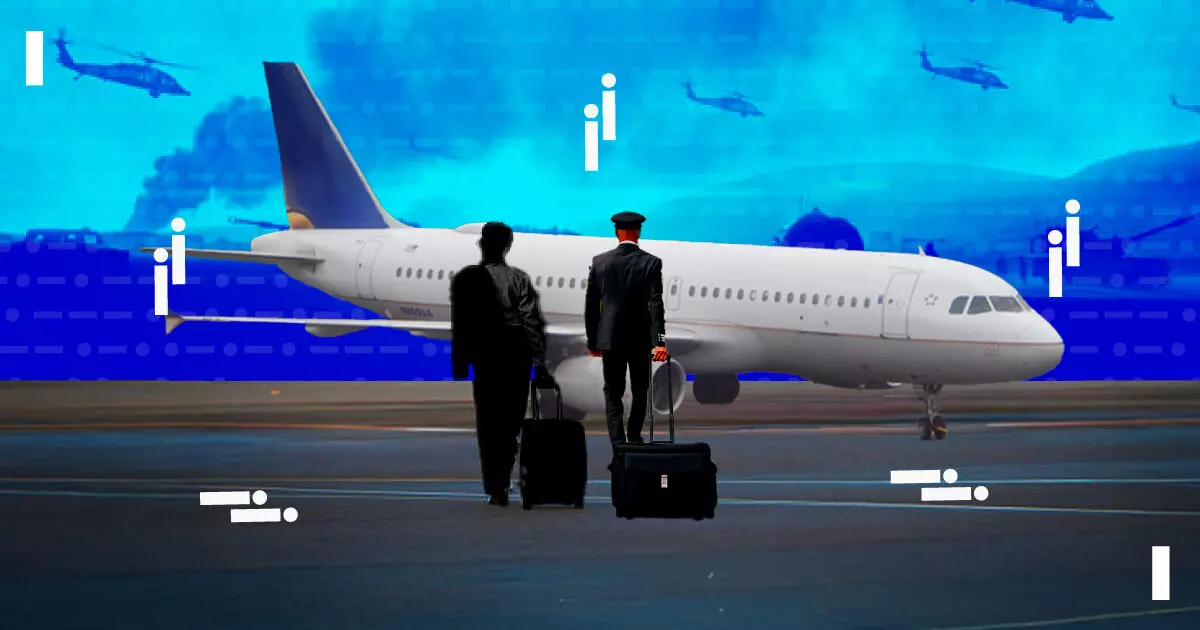
Pilots, Reroutes, and War Risk: The Hidden Cost of India's West Asia Flight Operation
- Business
- Published on 14 March 2026 6:05 AM IST
The conflict in West Asia has fractured its aviation grid, forcing Indian carriers into rapid, hour‑by‑hour recalibration.
A small group of India‑based pilots rostered to West Asia routes have recently reported sick, citing rising anxiety over the escalating conflict and concern for their families. This comes despite no incidents involving commercial aircraft in the region so far.
One pilot told The Core the intensifying war was causing severe stress and triggering debilitating migraines ahead of flights.
Meanwhile, Air India has requested the Directorate General of Civil Aviation (DGCA) on March 12 to relax duty‑hour limits, which has become a pressure point.
War Time Duty Hours
Air India wants longer Flight Duty Periods and approval to operate certain long‑haul sectors with fewer pilots, arguing conflict‑driven reroutes are stretching aircraft utilisation and straining an already tight pilot pool.
Pilots have pushed back hard. They have said extending duty hours in the middle of an active conflict heightens fatigue risk precisely when vigilance should be at its peak. The detours, now looping via Oman, southern Saudi Arabia, Egypt and Greece, keep aircraft out of conflict‑affected Flight Information Regions (FIR) but significantly lengthen duty days and workload.
With Indian carriers already short of cockpit crew, pilots insist long‑haul flying needs more pilots, not fewer, and that safety margins cannot be traded for schedule integrity. With Iranian, Iraqi and Pakistani airspace shut, Europe and US flights are running 90-120 minutes longer.
Despite the unease, most pilots The Core spoke to continue operating, noting aviation is an essential service and rerouting keeps them out of high‑risk airspace. Their willingness, however, is conditional — they will fly only if safety protocols, rest norms and fatigue science are upheld. The decision now rests with the regulator to balance operational continuity with crew wellbeing amid a volatile geopolitical backdrop.
Guidelines And Regulator
Repatriation of citizens is a key reason airlines need to fly into conflict zones. Geneva Convention IV sets the baseline for civilian repatriation in conflict zones. Returns must be safe, risk‑free and conducted with dignity, protecting people’s rights and basic needs.
A senior airline official told The Core that repatriation flights begin with a granular risk assessment to determine the stability of the conflict area for an aircraft to depart. Airlines must have war‑risk insurance. “Even with cover in place, airlines must weigh missile threats, NOTAM (Notice to Air Missions) and diversion options before deciding if a route is viable,” he said.
In Europe, pilots are legally required to decline a duty if fatigued. India’s DGCA mirrors the principle: pilots must self-declare, operators cannot roster or pressure a fatigued pilot, and a mandatory report follows.
India does not phrase this as forcefully; the intent is similar. Mindsets, however, differ. Mindsets, however, are different. An Indian pilot to self‑declare fatigue counts as unfitness, a professional stigma.
The Unseen Grind Of Repatriation
The conflict in West Asia has fractured its aviation grid, forcing Indian carriers into rapid, hour‑by‑hour recalibration. As airspaces shut down across key transit hubs, India’s westbound network has buckled under the weight of cancellations in light of the conflict. This has triggered rolling reroutes, ballooning block times, and significant operational strain.
Air India and IndiGo led the evacuation effort-issuing waivers, processing refunds, restoring schedules, and effectively turning their fleets into India’s emergency mobility backbone. Operating special flights is complex.
Airlines rely on embassy lists, MEA inputs, government‑portal registrations and their own bookings to decide whether a widebody or narrowbody is viable.
Conditions shifted hourly: clearances opened and closed, reroutes appeared mid‑flight, and altitude limits changed with military activity. Before dispatch, operations teams must confirm airspace status, conflict‑zone NOTAMs, insurance cover, crew duty limits, diversion fuel, ground‑handling readiness, diplomatic permissions and passenger documentation.
“Despite the odds, Air India continues to maintain its scheduled services to Europe and North America… using alternative routings that are assessed as safe for operations,” said Nipun Aggarwal, the airline’s Chief Commercial Officer. An official, requesting anonymity, cautioned: “If Southern Saudi airspace closes, we will have to cancel all flights to Europe.”
Repatriation flights are rarely profitable. Loads are uneven-full inbound, empty outbound-leaving airlines to absorb detours, capped fares and irregular‑ops costs. “Yet they operate them because they see it as a national responsibility,” former SpiceJet CFO Kiran Koteshwar told The Core, noting government coordination, brand goodwill and long‑term Gulf presence make these missions “strategically worthwhile.”
Airline and Passenger Insurance
Insurers levy per‑aircraft, per‑sector premiums that can jump 10–20× above normal, forcing airlines to judge whether a flight is commercially viable, insurable, or better suited to specific aircraft types. Industry estimates shared with The Core suggest a narrowbody entering a Gulf conflict zone can incur an extra Rs 40 lakh, while a widebody can exceed Rs 1 crore per sector. These premiums directly shape how many missions carriers mount, with airlines “absorbing losses as a matter of national duty,” Koteshwar said.
Travel insurance becomes complicated in conflict zones because most standard travel and health policies exclude “war, invasion, armed conflict or civil unrest,” said Sonam Chandwani, Managing Partner, KS Legal & Associates. This often leads to denied claims for evacuation, medical care or trip interruption. “It’s a legal grey zone-travellers assume they’re covered, but broad war‑risk exclusions shield insurers and shift the burden of evacuation onto the state,” she added.
Core.
Core.


