



 Newsletter
 Search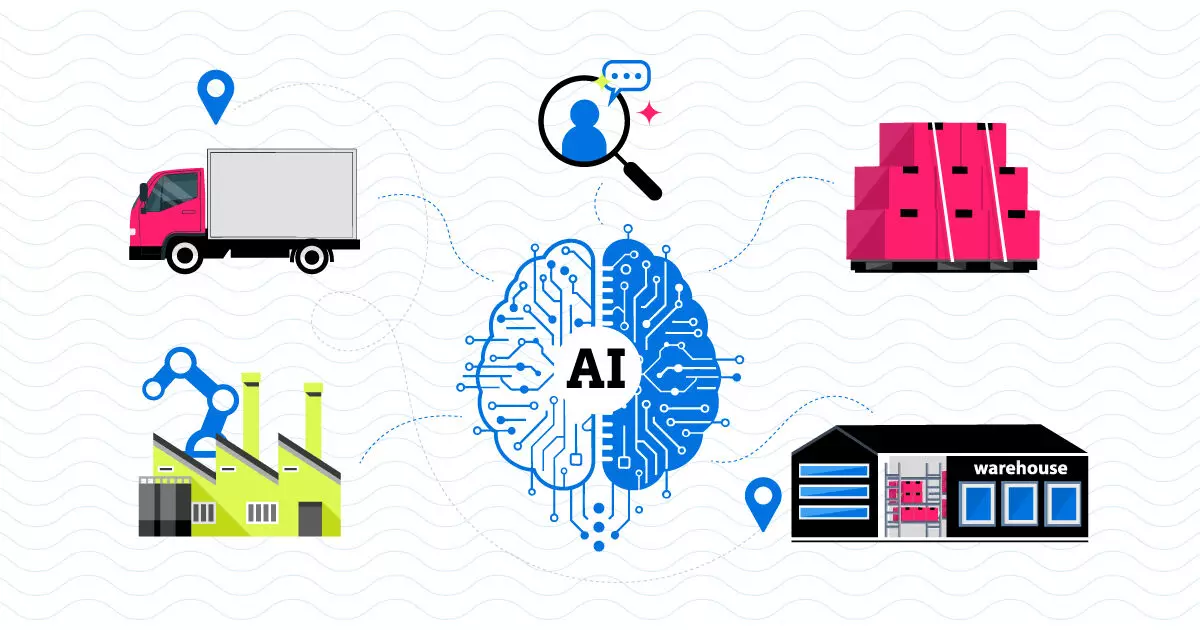
AI Can Transform India’s FMCG Chain But Scaling Is Proving to Be Hard
- Business
- Published on 29 Sept 2026 6:00 AM IST

India’s biggest FMCG companies are putting AI to work in supply chains and retail, but smaller players remain largely untouched.
The Gist
The integration of AI in India's FMCG sector is growing, but significant challenges remain for smaller players.
- Hindustan Unilever's Shikhar app connects 1.4 million kirana stores, offering AI-generated stock recommendations.
- Despite advancements, actual adoption and utility of AI tools among shopkeepers are largely undocumented.
- Many smaller FMCG operators still rely on traditional methods, highlighting a gap in AI implementation across the sector.
If HUL’s annual report is to be believed, a million-plus kirana stores across India now order Unilever's soaps and shampoos through an app that tells them what to stock before they even ask.
In the cotton and chilli belts of Madhya Pradesh, a farmer can point a phone camera at a diseased leaf and get a diagnosis from an algorithm trained on more than 70 crops.
On paper, AI has the potential to transform the FMCG chain from farms through precision agriculture and yield prediction, in manufacturing via quality control and predictive maintenance, across logistics through demand forecasting and route optimisation, and in retail through smart shelves, personalised recommendations and dynamic pricing.
In practice, adoption on the ground is thin, especially among smaller players who lack the infrastructure and expertise to get going.
AI adoption among shopkeepers in kirana stores is usually framed in terms of features and reach, but whether they actually find these tools useful is largely undocumented.
Attempts to digitise kirana catalogues for platforms like ONDC have stalled because typing hundreds of SKUs into a form is a full-time job that shop owners don't have time for.
Much of their inventory, like loose grains or hand-weighed spices, doesn't even carry a barcode.
How FMCG Is Betting On AI
India's FMCG sector generated roughly Rs 25 trillion in revenue in FY25 and is projected to reach around Rs 58 trillion by FY30, according to KPMG's sector tracking.
Much of that volume still moves through general trade, the neighbourhood kirana stores that have traditionally run on salesman visits and manual stock counts.
That gap between a large, fast-growing industry and a still largely analogue distribution network is exactly where AI has found its first real foothold.
A Deloitte India-FICCI report published this year found that India has become the global leader in AI adoption among the world's largest economies, with retailers and FMCG firms embedding the technology into merchandising, pricing, inventory, and demand forecasting rather than treating it as an experimental side project.
Quick commerce, which is growing at 70-80% a year and already operates in roughly 80 Indian cities, has only added pressure on FMCG companies to know what is selling in real time.
Hindustan Unilever's answer to that gap has been Shikhar, an app that now connects close to 1.4 million kirana stores directly to the company, cutting out the wait for a travelling salesman and feeding those stores AI-generated stock recommendations instead.
Despite Shikhar reaching 1.4 million kirana stores and offering AI-powered features like shelf-recognition-based product recommendations and Smart Basket order suggestions, HUL has not publicly disclosed what share of these outlets actually use the AI recommendation feature, or how often retailers follow its suggestions versus placing their own orders.
Padmanabhuni cites it as one of the clearer examples of machine learning applied to replenishment in Indian FMCG.
Colgate-Palmolive runs a comparable engine called Smile Stores, which reaches over 1.7 million outlets, according to the company's latest annual report.
In Smile Stores, the AI works through two mechanisms Colgate has disclosed.
First, predictive analytics looks at each store's sales history, local demographics, and past stocking patterns to recommend which specific products, out of Colgate's full range, that particular store should carry, rather than every outlet getting the same generic assortment.
Second, an image-recognition tool scans shelf photos to check whether products are actually stocked and visible, flagging gaps in real time.
Together, these replace a distributor's guesswork with data-driven assortment decisions per store, which the company says has optimized store-level product mix rather than simply pushing more inventory blindly.
"There isn't one single company that dominates AI in Indian FMCG," said Dr Srinivas Padmanabhuni, CTO of AiEnsured. "ITC is doing strong work upstream, combining ITCMAARS, digital sourcing, crop diagnostics, and analytics. Hindustan Unilever goes deeper on the retail and distribution side with Shikhar and demand sensing."
ITC's contribution is Crop Doctor, an image-recognition feature on its ITCMAARS platform that the company says can flag disease and pest problems across more than 70 crops, part of a broader push to bring 10 million farmers onto the app.
What’s The Real Impact?
Padmanabhuni puts genuinely scaled AI activity in Indian FMCG at 20-30%, with the rest still pilots or basic productivity tools.
AI expert Dr Ashish Chandra, Former Gen AI Leader & Partner at KPMG Global and CEO & Founder of GFF AI, offers a similar split at the global level: about 35% of what companies claim is genuinely operational, another 35% is real but not yet material to profit, and the remaining 30% is what he calls AI "sprinkled on dashboards, campaign decks and vendor language."
"If AI is deciding production runs, replenishment, route planning, quality release, pricing experiments or consumer insight at scale, it is operational. If it sits in an innovation lab, writes copy, or appears only in a keynote, it is communications," he said.
By that test, the clearest success story either of them points to sits outside India: Unilever's supply chain partnership with Walmart Mexico.
First piloted in 2022, the system shares real-time sales and inventory data directly between the two companies rather than letting each forecast in isolation, syncing the moment a shopper buys a product with the factory that makes it.
The pilot pushed on-shelf availability above 98% while cutting inventory, and Unilever has since expanded the model to other major retail partners.
"Real advantage in this sector comes when AI connects manufacturer, distributor and retailer decisions, not when it merely produces faster consumer insight slides," Chandra said.
Where Does Hype Run Ahead Of Results?
Experts single out the same soft spot: personalisation at mass scale. Marketing decks are full of promises about AI tailoring offers to individual shoppers, but Chandra says the payoff rarely justifies the cost.
"It sounds seductive, but for toothpaste, biscuits or detergent, the incremental lift often does not justify the data, privacy and execution complexity," Chandra said.
Padmanabhuni points to cashierless retail — the kind Amazon experimented with — as a similar cautionary tale, flashy, expensive, and thin on returns relative to the investment.
Chandra warns FMCG boards planning next year's AI budget against "vanity interfaces: generic chatbots, AI influencers, synthetic ad factories" built before a company has clean product, price and inventory data to begin with.
Padmanabhuni's list is similar and points instead toward "data quality, replenishment, inspection, and sales execution support" as the more durable spend.
The Other India
Most of this remains out of reach for the vast majority of FMCG operators, who are smaller, newer and running on far thinner margins than Unilever or Godrej.
Sajal Srivastava, director of Noida-based Swad & Masala Food and Beverages, runs a food-stall business that has not touched AI in any form, no forecasting software, no chatbot, no computer vision on the line.
"At our current stage, we are not using a dedicated AI-driven forecasting tool, and we prefer to be transparent about that," he said, adding that daily sales tracking and direct conversations with customers still do the job.
Srivastava expects AI to matter eventually, in forecasting and customer segmentation, once the business generates enough data to make it worthwhile. "We introduce technology when it solves a genuine operational need, rather than adopting it simply because it is a trend," he said.
That gap, a handful of companies running AI at genuine scale across forecasting, distribution and quality control, and a much larger tier still tracking sales in a notebook, is likely to define the next phase of AI in Indian FMCG more than any new product launch will.
Core.
Core.


