



 Newsletter
 Search

Will The Markets Affair With AI Take A Pause?
- Podcasts
- Published on 13 Nov 2026 6:00 AM IST
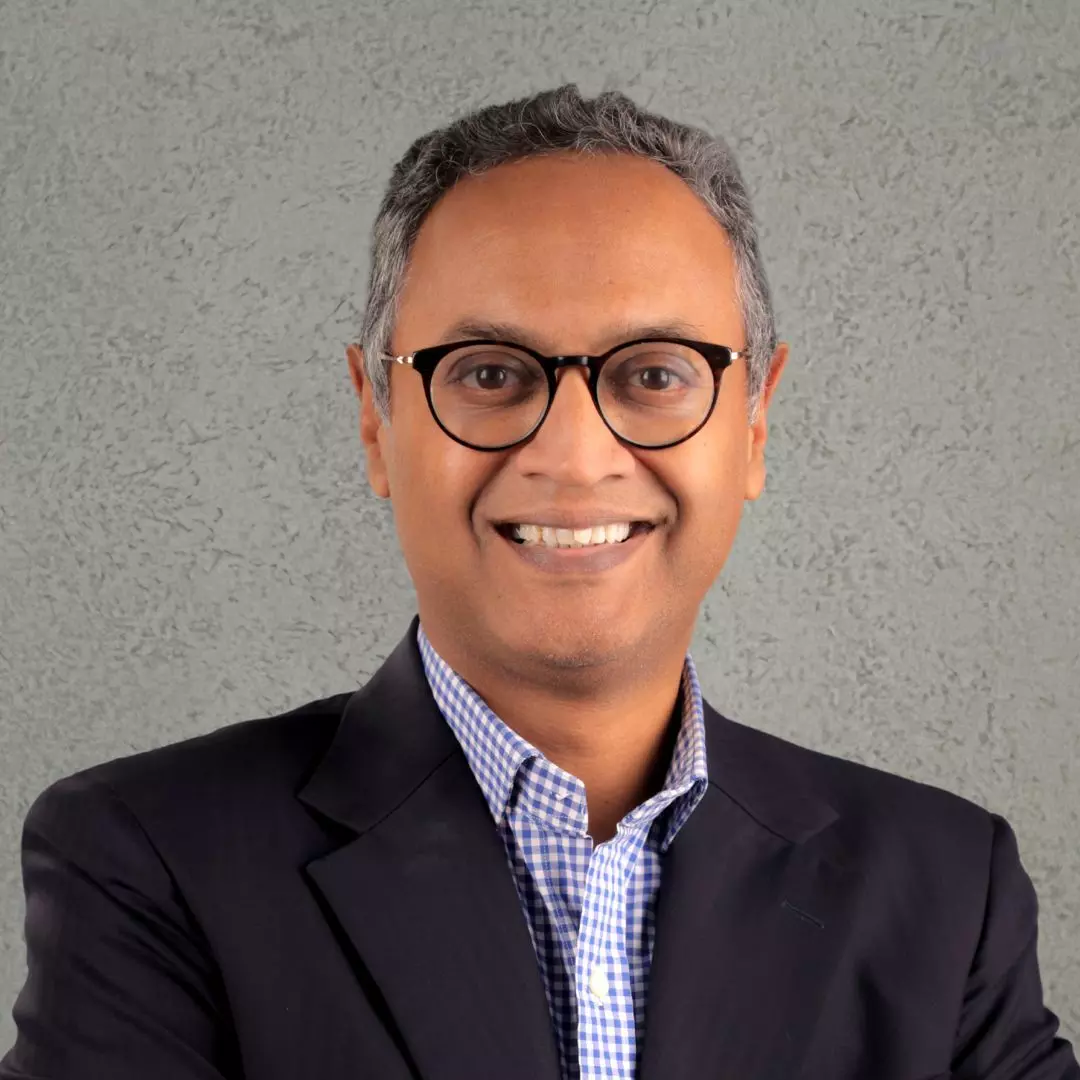
Jensen Huang has resigned as CEO of NVIDIA following revelations of his affair with an alleged Chinese spy
On Episode 1032 of The Core Report, financial journalist Govindraj Ethiraj talks to Ajay Kedia, Founder and Director at Kedai Advisory; Himanshu Sinha, Head of Tax Practice at Trilegal; and, Vineet Jain, Senior Director at CareEdge Ratings.
SHOW NOTES
(00:00) Stories of the Day
(01:00) Jensen Huang Resigns As CEO of Nvidia, Will The Markets Affair With AI Take A Pause?
(04:31) Inflation Continues To Rise
(06:13) Why Are Turmeric Prices Hitting Record Highs?
(11:58) Decoding The Latest Direct Tax Collection Numbers
(17:46) NBFC Loan Growth Is Galloping Away, Including Due To Gold Loans
(25:18) The First Roadblock To AI Agents Are Coming
—
NOTE: This transcript contains the host's monologue and includes interview transcripts by a machine. Human eyes have gone through the script but there might still be errors in some of the text, so please refer to the audio in case you need to clarify any part. If you want to get in touch regarding any feedback, you can drop us a message on feedback@thecore.in.
Good morning, it's Friday the 13th of November and this is Govindraj Ethiraj broadcasting and streaming weekdays from Mumbai, India's financial capital. And yes, indeed, it is Friday the 13th, a date and day which does not come often, but neither do foreign portfolio investors who obviously returned to India with a bang.
Our top stories and themes…
will the market's love affair with artificial intelligence take a pause
Inflation continues to rise crosses the 6% mark
Why are termitic prices hitting record highs
Decoding the latest direct tax collection number
NBFC loan growth is galloping away including thanks to gold loans
And the first roadblock to AI agents are coming.
Markets, Nvidia, Oil and Inflation
This week, the world is focused less on machines, read artificial intelligence, and more on humans and the fragility of their character. Whether machines will start to think or not, it's quite clear that humans will think like humans and behave like them.
Which brings us to the sudden but expected resignation of Jensen Huang as CEO of NVIDIA following revelations of his affair with an alleged Chinese spy. Huang has stepped down as CEO of a chip-making giant he co-founded 33 years ago and built into a $4 trillion company that has powered the artificial intelligence boom as we know it. CFO Colette Kress has been named interim CEO.
On Sunday, Wang, who's 63 years old, apologised for being unfaithful to his wife, though he provided no details about his affair with Alice Huang, who has worked for a Chinese company and NVIDIA customer called Megaspeed. Huang has denied allegations that he had compromised national security or NVIDIA secrets after reports of the Alice Huang affair, according to a CNBC report.
The scandal at NVIDIA has brought up two things. First, a welcome interruption to the almost galloping frenzy for everything AI related, though the interruption had nothing to do with the technology itself. Interruptions lead to pauses and hopefully some introspection depending on how investors measure the outcome of these latest developments.
India could definitely see some step up in AI flip trades which had in any case begun before the present scandal hit the airwaves. The second is succession. Like we pointed out earlier, NVIDIA has no clear successor or number two and Huang worked with some 60 direct reportees.
Superstar tech founders start like this and also run their companies for a long time in this manner. But some evolved like Microsoft's Bill Gates and Amazon's Jeff Bezos who've handed over to number twos. But this is a lesson for companies small and large wherever they are in the world that succession planning is critical for continuity and investors and stakeholders and shareholders must look out for this.
Because it's not just affairs that can bring leadership down. There could be many more things that cause that discontinuity. Which brings us to what else is moving the markets.
Oil prices are still mostly steady though as we've said before, indications are that a war may not resume at least as far as the United States is concerned in the near future but there are no specific signs of peace either. On Wednesday oil prices were down slightly also because of increased output at about $92.30 a battle. So just over $92 a battle on Thursday.
With this in the backdrop, Indian markets saw a somewhat choppy day with the rally slowing down. But as a backdrop, overseas investors have bought about $6.5 billion of Indian shares in November, their biggest monthly purchase in more than two years, which has also taken India's market capitalisation to the fifth largest in the world overtaking Taiwan. Including debt, the number is over $7 billion of portfolio investment in just about 10 days.
With all this in the backdrop, the benchmark indices still ended the day with some gains thanks to banks, realty and financials. The Sensex was up 31 points to $81,911 and the Nifty 50 was up 44 points to $25,299. In the broader markets, the Nifty mid cap and small cap were up 0.8 and 1.1% each.
Meanwhile, MSCI, the index, has added four companies to its flagship global standard index and increased the weights of 11 other stocks as part of its November index review, effectively increasing India's weight in the MSCI Emerging Markets Index. Companies that have come in including Adani Green Energy, CoForge, Life Insurance Corporation, and e-commerce company Misho. All their share prices rose slightly after the announcement on Thursday.
Elsewhere, retail inflation in the country has crossed the 6% mark at 6.09% for October, which also breaches the Reserve Bank's upper tolerance limit of 6% for the first time in two years. According to data released by the Ministry of Statistics and Programme Implementation on Thursday, this rise has been driven largely by higher food prices, something that we were referring to or have been referring to and will come back to in a moment as well. In September, CPI inflation was at about 5.5% and the October reading is also the highest since the new CPI series with a base year of 2024 was introduced.
The Reserve Bank's inflation target is 4% with a tolerance band of 2% on either side. Food inflation, measured by the Consumer Food Price Index, rose to about 8.9% in October from 7.7% in September. Onion prices showed the highest inflation at about 116% in October, up from 108% in September.
Elsewhere, amongst business news, Andhra Pradesh has welcomed two new investments and announcements. Reliance Industries has said it will invest about 43,000 crores or about $4.6 billion in two phases to build an integrated underground coal gasification complex, according to a Reuters report. And Kia Motors of South Korea and its suppliers will invest about $2 billion to set up a second manufacturing plant also in Andhra Pradesh with production expected to start in about four years' time.
Both projects are expected to create several thousand direct and indirect jobs as well as follow-on investments, particularly for the coal gasification plant. Google has already committed about $15 billion to build an AI hub in Reliance and joint venture partners will invest another $11 billion in data centre capacity, all of which of course is facing a lot of questions right now.
Why Are Turmeric Prices Hitting Record Highs?
Turmeric futures hit an all-time high last week thanks to adverse weather conditions and tight supply.
An increase in demand, which is ahead of the wedding season in the country, which usually starts around this time, has also pushed prices higher. Last week, turmeric recorded a historical high of about Rs 28,300 per 100 kg on the NCDX. According to commodity tracking firm KD Advisory, this was mainly due to expectations of a decline in acreage for the upcoming season and tight stocks.
And much of this is also linked, like in other cases of food products, a strengthening El Nino event and a deficient southwest monsoon, particularly in this case, key turmeric regions of Maharashtra and Karnataka. So why is this happening and could it spread to other spices and food items? I reached out to Ajay Kedia of Kedia Advisory, who pointed out the spike in prices last week and I also began by asking him to give us a sense or a description of this market.
INTERVIEW TRANSCRIPT
Ajay Kedia: Definitely, you see, India's spice market is estimated to be around more than 2 lakh crore as per 2025 numbers and coming on the India export around 40,000 crore of spices because individually definitely the numbers would be different but overall the spice market is quite large which is around export volumes reach around 17 lakh tonnes. So I think around 40,000 crore is the exportable market we export and around 2 lakh crore would be the size of spice market. And how big is India in relation to other countries who are also spice producers?
So I think particularly for turmeric one of the biggest market is India only we produce around 80 to 85 percent of global turmeric other than that there is a medical grade turmeric has been there from the Southeast Asia but 85 percent of production has been done from Indian market only.
Govindraj Ethiraj: So you're saying 85 percent of world turmeric production is in India?
Ajay Kedia: Yeah, one of the biggest producer of raw turmeric that is annual value could be around 50,000 crore around for turmeric. I think one of the biggest market is India only. And India is the largest producer as well, right?
That's my question. India is the largest producer of turmeric and consumer we can say some pharmaceutical demand from Japan, European market would be there but highest producer is India and even consumer is India. Right, and tell us about prices.
Govindraj Ethiraj: So what has caused turmeric prices to hit record highs so suddenly?
Ajay Kedia: So it's not a one thing from last couple of years we have seen the area under cultivation has progressively fall in turmeric because of farmers were shifting to some other crop but this year it is more important despite we have seen area under cultivation has gained by 20 percent important would be the El Nino. As soon as we have completed our showing number in the month of May-June it was confirmed that this year that 13 percent rainfall is been deficit this year and El Nino will be impacting. So what happened in the month of October when sudden rise in temperature started yield has started shrinking and that is why our balance sheet is very much tight generally around 72 to 75 we can say bag of turmeric we consume and around 35 lakh bag we export.
So this is the balance sheet around one crore bags is being the total supply for every year but this time now because of yield fall maybe our production would be limited to 92 to 95 lakh bag that is why there is a shortage and we have a very low carrier stock and that is why prices has readied almost 90 percent in this calendar year of 2020. You're saying prices are up 90 percent as compared to last year? Not last year we can say this calendar year from January till now almost 90 percent prices has gained why it could be around 80-85 percent but almost 90 percent prices has been.
Govindraj Ethiraj: Right and is there a relationship or co-relationship between turmeric prices and prices of other spices in the last few months?
Ajay Kedia: So yes there are couple of certain fundamentals which are been impacting. First of all this is very much clear India is one of the biggest producer of all spices it could be jeera it could be coriander it could be turmeric percentage might be slightly variable. Secondly the what is the common thing is first of all the weather condition because of El Nino turmeric prices vary but jeera and coriander will be showing in the month of October and November and because of low moisture we can see the area under cultivation will be getting hampered because farmers will go with the crop which can resist this drought like situation first of all the area under cultivation that is why we have seen a sharp rally in jeera, coriander and turmeric also. Second would be the middle east because most of our spices are been exported to middle east and other part of world and because of higher freight charges and insurance charges we have seen export number has slightly dropped but pipelines are totally empty as soon as on last Monday when midterm elections were out and food prices started moving down so it is a hope that export demand would pick up now because Ramzan this year is going to be early. So I think global demand is been improving with the empty pipeline has contributed spice rally in last 15 months.
Govindraj Ethiraj: Do you see or have you seen in the past a correlation between prices of spices including turmeric and broader food inflation which of course is continuing to rise?
Ajay Kedia: So basically spices of particular turmeric is not a big crop we can say as compared to wheat, rice and soya bean and other crop this is a minor crop it doesn't comes under ASMA so essential commodity act. I think with the rise is a natural phenomena but if it is because of rain or drought like situation that definitely food inflation and turmeric prices go hand in hand but there are many other factors that impact turmeric also but yes this time the impactful factor is the El Nino and that is where food inflation are rising and turmeric is also.
Govindraj Ethiraj: Right Ajay thank you so much for joining me.
Ajay Kedia: Thank you Govind.
Decoding The Latest Direct Tax Collection Numbers
Direct tax collections figures were out on Wednesday.
Net direct tax collections till November 10th are at about 14.4 lakh crores, which is about 12% year-on-year growth. Overall collection of direct taxes, which includes personal, IT, corporate tax, and securities transaction tax, has touched about 53% of what the government wants to raise this year. Net corporate tax collection was up 18% to about 6.32 lakh crores.
And however, net non-corporate tax, taxes paid by individuals like you and me firms and Hindu undivided families or HUFs, grew less or at a lower pace of 5.3% to about 7.5 lakh crore rupees. Refunds also jumped about 26% year-on-year to about 3.08 lakh crores. That's roughly 300,000 crores of refunds.
Collections from securities transaction tax was up 52% to about 54,000 crore rupees between April 1st and November 10th. A reflection obviously of increased trading activity and of course the higher tax rate for STTs affected in the previous year. So with all of this in the backdrop, how does the government's target of about 27 lakh crore rupee look like? I reached out to Himanshu Sinha, head of tax practice at Law Firm Trilegal and I began by asking him how he was reading the latest numbers.
INTERVIEW TRANSCRIPT
Himanshu S. Sinha: So, you know, my first reaction is that if you look at the comparative figures of last year, if you, you know, FY25 as compared to FY24, you will find that, you know, the data, current year data is vastly more encouraging, there's no doubt about it. So that is one thing which is not really being noticed and being sort of highlighted. So just to let you know that last year, you know, the comparative half yearly figures, which was released on 10th of November of showed a growth of gross collection of just two and a half percent.
And the net collection was also around six percent. So this year, if you look at the comparative figures, the figures are quite good, you know, at a gross level, the collections are up 14%. So that is a significant jump as compared to last year.
So the major growth, I think, has come from the corporate side. And on the non-corporate side, the growth has been neutered mainly on account of refunds. The refunds have gone up significantly.
So I guess the explanation for that would be that the individual returns have been fired and processing of returns of refunds have become faster. So on the administrative side, because the government has been more proactive on issuing refunds, that is reflected in the accelerated release of refunds for the non-corporate SSCs.
Govindraj Ethiraj: So you're saying that one takeaway from this is that corporate performance has been strong in terms of taxes paid?
Himanshu S. Sinha: That's right. I think that's one of the key things which one has to bear in mind. So if you look at the data that was released by the CBDT earlier for advanced tax, that data is consistent with what is being raised now, which shows that priest corporate earnings and corporations carry out an estimate of their annual tax liability, and they split it up in four parts, you know, June, September, December, and then March.
So effectively, we are looking at half yearly collections on advanced tax and therefore projections pertaining to corporations should be met as far as the corporate side is concerned, because they are far more organised in terms of estimating the tax liability for the whole year.
Govindraj Ethiraj: Right now, net non-corporate tax is higher than corporate tax. Non-corporate tax is about 750,000 crores. Corporate tax is about 630,000 crores.
So how do you see these numbers? I mean, is this contrary to the trend that one should normally see?
Himanshu S. Sinha: On the individual side, on the non-corporate side, which is largely individuals, of course, there are some other categories like firms, AOPs, etc. HUFs, which would be far smaller in numbers, we effectively are looking at the individuals. Now, as you sort of appreciate that last year, the government brought about significant changes and reduction in taxable liability of individuals up to 12 lakhs, there's no tax at all after taking into account all the rebates, etc.
So that is reflected in the tax buoyancy in the individual non-corporate tax side. So that is one key thing to bear in mind.
Govindraj Ethiraj: Okay, but the growth is much lower. And you're saying the growth is slower for individuals because of refunds or higher refunds, which is up 26%.
Himanshu S. Sinha: Yeah, on both the accounts, one is the policy change pertaining to reduction of tax liability on account of rationalisation of tax rates and increase of tax benefits that is being given to individuals on account of rebates, which has now led to a situation where up to 12 lakhs, there's no tax at all.
Govindraj Ethiraj: And what is this telling you about the rest of the year and larger target of about 27 lakh crore for direct tax collections?
Himanshu S. Sinha: I think we cannot be sanguine that it will be achieved. But of course, the trajectory, the revenue collection trajectory is encouraging. And as compared to last year, we see that the trend shows a much higher upswing.
Now, how much will that get translated, especially on the non-corporate side? We don't know. Maybe there'll be some collections, increased collections on account of capital gains that may arise on account of the stock market doing better now, because the last two years, the stock market hasn't done too well.
Now, that has started sort of improving. Now, on the securities transaction tax, we've seen that the collections have really gone up on account 50 percent. That's because of tax rates were increased this year on futures and options.
And that has resulted in higher sort of collections on STT. But of course, that's very limited. But I feel that we have a reasonable chance of meeting the target because the corporate collections are likely to be steady and the estimations are likely to be on target.
But on the non-corporate side, one has to wait and watch as to how it will play out.
Govindraj Ethiraj: Right. Himanshu, thank you so much for joining me.
Himanshu S. Sinha: Thank you for having me.
NBFC Loan Growth Is Galloping Away, Including Due To Gold Loans
Non-bank finance company credit grew about 15% year-on-year to about 61 lakh crores as of September 30th 2026, faster than the roughly 13% growth a year earlier. Retail loans grew about 22% year-on-year and made up about 59% of the roughly 8.2 lakh crore rise in NBFC credit. Retail loan share of NBFC credit rose to what 43% from about 41%.
Gold loans grew about 66% year-on-year to about 3.7 lakh crore rupees or 370,000 crore rupees and that's the number that we've been talking about elsewhere too. Gold loans are now about 6% of the NBFC book but reflect about 18% of the rise. Consumer durable loans were up 54% from about 22% last year and housing loan growth was at about 12.6% from 10% last year.
Elsewhere, industry credit growth and services credit growth slowed down though agriculture credit grew about 18% up from 5.2% also thanks to a lower base. So broadly over the last year, NBFCs have grown faster than mainline banks in retail. So what do these numbers tell us about the growth and the stress if any in the system? I spoke with Vineet Jain, Senior Director of CareEdge Ratings and I began by asking him to walk us through what was driving the very sharp growth in NBFCs credit levels.
INTERVIEW TRANSCRIPT
Vineet Jain: If we look at the gold loan numbers, the headline is 66%. So the growth in gold loan is really very very high compared to historical levels that we have seen. If you look at a data over let's say maybe 30 months or so, the gold loan would have gone up by 4 to 5 times.
If you look at both banks and NBFCs taken together, from close to maybe 2.5 lakh crore at the end of March 24, in September 26, we are looking at a number of close to 9 lakh crore. So that's a significant jump by any standard when you look at in the lending framework. Having said that, we need to be little mindful of the fact that this system represents a very very small segment of the overall credit market.
So if you look at bank credit, that would be approximately I think 2 to 30 lakh crore. And if you look at let's say NBFC credit, that will be another 60-61 lakh crore, right? There would be a bit of overlap between the two.
But if you look at total number, it would still be a very very small segment of the market. That's the one way to look at the numbers. Certainly is high, there's no doubt.
But base number is also something to look at.
Govindraj Ethiraj: Right. I'm going to come to the comparison between NBFCs and banks in a moment. But consumer durable loans are also up quite sharply, which is about 54%.
What does that tell you or is there a base effect that's working here?
Vineet Jain: So there is certainly a base effect working on the consumer durable loans. Secondly, if you look at the larger trend, there is a trend towards consumption loan, right? Consumption loan is going and CD loans are essentially pointing towards state number.
Part of gold loan is also going towards consumption. We don't have exact data. But there is a reasonable level of certainty that part of the gold is also going towards consumption.
Govindraj Ethiraj: And when we say consumption, so obviously this is consumer durable. So it obviously means consumer durable. So what else are we looking at in terms of essentially what are people borrowing to buy?
Vineet Jain: So if you look at it from the asset side perspective, when we look at household borrowing moving away from consumer durable and gold loan, when you look at borrowing that is being done by the individuals from banks or NBFCs, it's largely going towards acquisition of assets. So home loan is one segment which is growing. Vacant loan is another which is growing significantly.
So these are the two segments which are driving the growth apart from the emissary working capital.
Govindraj Ethiraj: Right. And, you know, we did talk about gold and gold is now roughly half the size of mortgages in the country. Are you seeing from these numbers any signs of stress anywhere in the system?
Vineet Jain: So if you look at directionally, the gold loans have gone up. There's no doubt. And recently, one of the world financial NBFC has come up with numbers where NBFC has gone up by maybe 40-50% in a quarter's time.
So, yes, this is an area where we need to be certainly watchful. If you look at from overall independent perspective, if you look at debt-to-GDP number of households in India, it's around 45-50% depending on which estimate you look at it. So, yes, it's certainly going high.
So if you look at directionally, yes, there is a concern the ratio has been going high. If you look at absolute number, it's manageable. If you look at, let's say, developed economies or US, etc., the household debt would be approximately 60 and north of 60%. So that way it is manageable. But if you look at composition of household debt, that's where there is slight concern because half of the borrowing by the individuals have been towards consumption loans. So that's a cause of concern.
And if you look at from the perspective of debt servicing, we need to be little cautious on borrowing, which is done by low-income borrowers, as well as insecure lending.
Govindraj Ethiraj: So that's a cause of concern that we have in mind. And when you say that half of household borrowings are now directed towards consumption, would this be also the first time that's happening in India? No, that's a trend.
The share of consumption loan has been going up. Happening suddenly, density is low. Right.
And one of the points that your report makes is that over the past year, NBFCs have grown faster than banks in retail. So could you explain what that means? And in general, where do banks and NBFCs stand vis-a-vis overall growth and exposure to borrowers?
Vineet Jain: See, the point that we are trying to make is historically, if you look at it, NBFCs have been growing faster than the banks. So that's the longer term trend that you would be observing. If you look at YOY number that we published in September, you find that NBFC has grown at close to 15.4% and banks have grown at closer to 19%. So there's more of an abrasion, so to say, in the longer term trajectory. That's the point that we are trying to highlight when you say that NBFCs have grown slower than the banks. When we talk of where the growth is coming for, let's say, NBFCs, so more than half of the growth in the last one year for NBFCs has come from the assets, back in retail loans.
Around, if you look at the report, so retail loan would be contributing around 6 lakh crore of the loan. Industry would be around 1.6 lakh crore and services would be 1.2 lakh crores. Those are the sectors from where the growth has come from, which is sector.
Govindraj Ethiraj: Right. And banks, as you said, and as been pointed out elsewhere, that are growing at 19%. I mean, that's bank credit has grown at 19%.
And some people have said that seems high. Now, how are you seeing these numbers in a sort of subjective way, that's banks independently and NBFCs and the overall credit environment in the country?
Vineet Jain: So two things. It's high, certainly. It's healthy today when you look at the growth rate. If you look at in the context of normal GDP to bank growth, normal GDP would be around 10.1% for India. And the credit worth has been 19% year on year till September.
So that's certainly high. There is no doubt. We don't expect this pace to continue.
We expect bank rate to probably moderate to maybe 15, 16% by March 27. For NBFC, we are expecting the growth to pick up slightly, pick up a bit.
Govindraj Ethiraj: Right. Vineet, thank you so much for joining me.
Vineet Jain: Thanks.
The First Roadblock To AI Agents Are Coming
United Airlines does not want to deal with your AI agent. The airline said on Wednesday in a move that could clearly be picked up by other airlines among other service providers that it will prevent personal artificial intelligence agents from accessing its systems to book tickets according to a Wall Street Journal report. United said that it was concerned that third party agents could expose customers sensitive information or make unintended purchases.
It also said automated AI actions could violate Federal Aviation Administration and Transportation Department rules governing the information airlines must present to customers and AI agent can't, for example, attest during checking that bags do not contain explosives. In general, as the Wall Street Journal report points out, banks, retailers and other companies are grappling with how best to handle the rise of agents like Meta's Muse and OpenAI's Dots that promise to take care of many of life's daily nuisances from online shopping to scheduling appointments. Agents will still have ways to show customers United's flight options and prices but they will not be able to transact on its website.
And there's an interesting dichotomy here. Some companies have embraced agents as potential new sales channels or move to develop their own. Others are pushing back against what they see as a new middleman that could disrupt their ability to reach customers with advertising, according to that Wall Street Journal report.
While other U.S. airlines have not taken a public stance against AI agents, United has joined companies like Amazon that are also keeping purchasing bots away. United said that it's not seeing many bookings from AI agents. Its back-end tech systems can identify the source of a booking, whether it's an individual, a traditional travel agency, or an AI agent.
Well, we don't know this is going to evolve in India but it's quite clear that many companies will have to reckon with this challenge as more and more Indians use AI and large language model platforms to address or solve life's many nuisances.


