



 Newsletter
 Search
Will Modi Walk Away From a Trade Deal With Trump?
- Podcasts
- Published on 21 Oct 2026 5:00 PM IST

Insights on the India-US trade negotiations and why India should prioritise a balanced deal that delivers lasting benefits
The India-US trade deal has been in the works for more than a year, but negotiations remain mired in uncertainty. Despite repeated announcements that an agreement is close, disagreements over tariffs, market access and India's strategic autonomy continue to complicate the process. The US is India's largest export destination, accounting for around a fifth of its exports, making the stakes particularly high for Indian businesses and exporters.
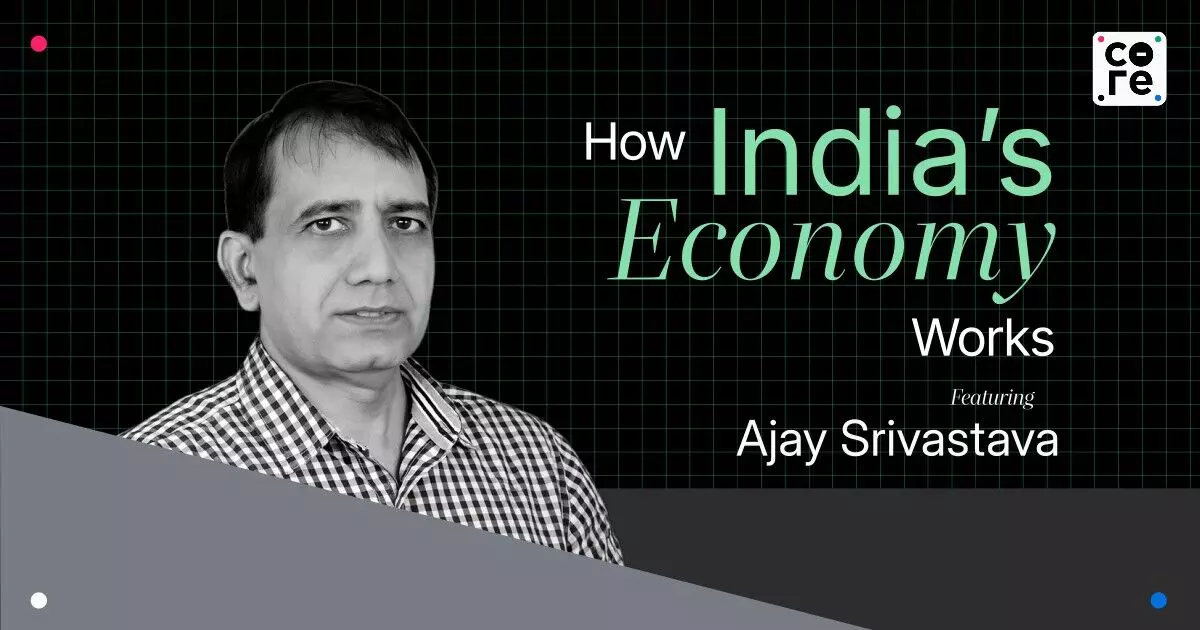
In this episode of How India's Economy Works, journalist and author Puja Mehra speaks with Ajay Srivastava, founder of the Global Trade Research Initiative (GTRI), about why the negotiations have stalled and what India stands to gain or lose from an agreement. They examine the implications of US tariff policy, the uncertainty surrounding penalties linked to India's Russian oil purchases, and the demands for greater access to India's markets, including agriculture. Srivastava argues that India should not exchange permanent trade concessions or strategic commitments for temporary tariff relief, particularly when the US cannot guarantee protection against future tariffs.
The conversation also explores whether India should retaliate against US tariffs, how trade agreements with the UK and European Union could open alternative markets for Indian exporters, and what the changing rules of global trade mean for India's economic interests.
Tune in for insights on the India-US trade negotiations, the costs and benefits of a potential agreement, and why India should prioritise a balanced deal that delivers lasting benefits over one driven by tariff threats and uncertainty.
—
TRANSCRIPT
NOTE: This transcript is done by a machine. Human eyes have gone through the script but there might still be errors in some of the text, so please refer to the audio in case you need to clarify any part. If you want to get in touch regarding any feedback, you can drop us a message on feedback@thecore.in.
Puja Mehra: Mr. Ajay Srivastava, welcome to the show. Thank you for coming again.
Ajay Srivastava: Thanks. Thanks, Puja. Thanks for inviting me.
Puja Mehra: I want to talk to you today about the Indo-US trade deal, which has been in the works for a long, long time, and we've seen several ups and downs. Before I begin to ask you the questions that I want to understand, could I request you to help listeners come up to date with all that has happened, because so much has happened since April of last year, so that we have some idea of where we stand today on the Indo-US trade negotiations.
Ajay Srivastava: Great. So, US is important for India. They are our largest export destination.
About 20% of our exports go there. So, we are very concerned that we get fair tariff treatment from the US, and that's one of the great objectives of the trade deal. The deal is stuck because we are not getting any understanding how much tariff US is going to offer to us.
If you recall that last year, when Mr. Trump imposed reciprocal tariffs on all countries, he imposed 50% on us, 25% normally, and 25% additional penalty because we were buying oil from Russia. So, half of the last year, about six months, we paid 50% plus MFN tariffs our exports were paying. So, monthly exports were down, especially for the labour-intensive goods, but for many products, if we see the overall export performance of financial year 2026, we were pleasantly surprised to find that exports did not dip.
Annual exports did not dip. The exports were where they were. In fact, they increased by 0.9%. So, it was a pleasant surprise to us and also tells about the solidity of our exports. Both the sides, they started negotiating trade agreement from April last year. And we have been, all of us are watching, positive statements are being made that the deal is almost near. And deal, we came nearest to the deal on February 6, 2026, when both the sides, they agreed for a joint statement.
So, here the US promised to cut the tariffs from 25% to 18%. In return, India promised five, six things to them. So, we thought that both the sides will be working on this.
And in a few weeks' time, a trade deal may be signed. That's what we were asked to believe in February. But just two weeks after, on February 20th, US Supreme Court turned the table on the deal.
And they said that reciprocal tariffs are illegal. Trump has no authority to impose them. It's the task of the Congress to decide on the tariffs.
All this made the US side of the offer disappear. So, US promised to cut the reciprocal tariffs to India and other countries. But with this Supreme Court judgement, the US side of the bargain disappeared simply.
And since then, both the sides are trying to understand what US has to offer. What India has to offer is very clear. It stands whatever we agreed on February 6th joint statement.
But the US side of the offer disappeared. Since we are watching for the past many months that US side and Indian side are saying deal is ready. But nobody was answering to this question.
And this was the basic thing that was delaying the deal. Now, US, on September 18th, they passed Graham's Act wherein they say that countries who are buying oil from Russia will be punished with up to 100% tariffs. And President Trump will have the absolute authority whether to impose tariff, what tariff level, which country and all those things.
So, India and China are the biggest buyer and we expected that tariffs will be imposed on us. But then US facing shortage of diesel, their diesel prices started increasing. And they were forced to enter into an agreement with Russia to buy diesel.
Now, on one hand, US is saying anybody buying energy from Russia will be punished. And on the other hand, they themselves are buying. So, these two were not reconciling.
So, US was forced to issue a temporary waiver. They say for some time, they have not specified the time, they say that they will not be charging any tariffs because somebody is buying from Russia. But that how much, how many days, weeks, months, years, nobody knows.
So, US said this and we thought we got relief. But third or fourth day, only three or four statements came from Marco Rubio and others that US has got 60 days period to decide. Trump will decide whether to impose tariffs on India and others.
So, he revived. And our fears were whether US is going to use this threat of imposing Russian tariffs on India to get us to agree to that trade deal. So, that's where we are right now.
Puja Mehra: From what you say, several things become clear. One, that of course, India's endeavour is not to grant lasting trade concessions to the US in return for temporary relief from American tariffs. And why I say that is because clearly that's why India was willing to live with tariffs of up to 50% rather than rush into an agreement on unfavourable terms.
So, that probably is a consideration in the back of the negotiators' minds. Do tell me if you agree or not. And then the other thing that becomes very clear is that fundamentally, this is an unequal negotiation.
Fundamentally, India does not have probably that much negotiating room to secure a lasting tariff advantage over countries that have not made compatible concessions because the bargain is fundamentally unequal. And probably that's also why we go from threat to threat and concession to concession on India's side. Outside of the trade deal negotiations, we've seen several concessions being granted from the Indian side, whether it is increased purchases of US oil or it is some changes in customs duties which largely impact India's import of US goods.
So, the two things that become clear is that one, India is not willing to get locked into a trade deal which is fundamentally unequal. And it is unequal because the relationship is unequal. The trade relationship is unequal.
Is that right?
Ajay Srivastava: Yeah, I agree with both of your points. Relationship is unequal not because US is more powerful, we are less powerful. You know, earlier we used to have a WTO where even island countries, they have got favourable judgement against the US.
But now that mechanism is broken. Even though US is more powerful in trade negotiations, both sides have to act as equals. And the results, put aside, the results should be balanced.
Otherwise, how else the countries are going to justify the trade deal back to their people. So, it has to be equal. But in this case, two, three problems are there.
One is what US wants is not fixed. It's a moving target. For example, US has signed trade agreement with European Union, Japan, South Korea last year.
And even after signing the trade deal where they extracted maximum from these countries in terms of investment commitments, buying of energy, opening of their economy through cut in custom tariffs, US has gone ahead and imposed Section 301 tariffs on all three, European Union, Japan, and Korea. And another investigation under Section 303 on excess capacity, the results are about to come in this month or next month. And I'll not be surprised if these countries are targeted again.
So, there is no certainty if I am doing a trade deal with any country. It's for tariff certainty that you don't impose more tariff, but there is no such certainty with US. That's why anything US offers, I mean, unless you say you provide me certainty from future tariffs, it's not easy.
So, others are suffering. We should not suffer. And second one cardinal rule of trade agreement negotiation is that when your negotiation is on, then you give give and take on the negotiating table.
If you do any give and take outside the table, it's just digested without even acknowledgement. So, what Indian government is doing for the past two years, we have been cutting custom tariffs from Ethernet, from Harley Davidson motorcycles, and so many other items. We cut the import duty on nuclear reactor and its components.
We allowed no income tax on data centres till 2045. Last to last month, we allowed the FDI on e-commerce for exports. This was a long demand, 20 year old demand.
We were not agreeing. We thought our MSMEs will be hurting. And now, post Diwali, we agreed to impose some fee on UPI payments.
All these things were demand of US. I'm not saying right or wrong at this point of time. I say, if you're negotiating a deal with any country, do all this give and take on the table.
If you give, you'll get something. Outside you give, you don't get anything. They will digest and will keep on coming for more.
So, Puja, I agree with both of your observations. One, there is no certainty from the US side. And second, we should not keep on giving things outside the negotiating table.
Puja Mehra: How do you think our negotiators can make the US behave in a more predictable manner?
Ajay Srivastava: We should only take care of ourselves, what we have to do. What the US does is their problem. We see how they talk, how they behave.
It's a changed America. I think it's a declining America. A stronger America was always for free trade, was in good terms with all countries, was supporting WTO trade rules, global value chains, no more.
I think they are declining power and their behaviour is like they are trying to latch up to the power which they are losing gradually. So, we should only worry about ourselves, how we behave. Whatever the US does, we should royally ignore that.
And we should not commit to any agreement which does harm to us. If the US imposes some tariff, it's fine. It will hurt some of our exports.
But in return, we agree to give something that hurts our economy. For example, we agree to buy $500 billion worth of things which most of the things we don't require. Or we agree like we agreed on February 6th, the joint statement.
We agreed that we'll align our economic and security policy with the US. What does that mean? That means if the US says don't buy oil from Russia, we'll not buy oil from Russia.
So, it's not a trade deal. It's trade and security and economic. So many restrictions are there.
We should not agree to these things. But if any balance agreement is possible from both the sides, then we can think about this. Else, it's not the proper time for the agreement.
Puja Mehra: So, you're saying that one, there is no real reason for India to rush into a deal unless we can judge that the agreement being offered is going to provide us with durable benefits and the parameter to be used for judging how good the deal is, not the temporary pain or threat of tariffs that it removes, but the durable benefits that it secures. Point number one. And point number two, you're saying that we have to be sure that whether the commitments we secure from the US in exchange for any concessions that we are being asked to make cannot be easily reversed.
Essentially, that is how we should judge any negotiations or any deal, right?
Ajay Srivastava: Absolutely, yes. I'll just try to elaborate on this point only. So, today, most of our exports are paying MFN tariffs, which are the regular tariffs everybody has to pay, plus 10% tariff US imposed accusing us of using imported post-labour produced goods.
US has imposed not only on us, but 60 other economies, 15 other economies. So, our exports are paying MFN plus 10%. For example, that MFN tariff on shirt is 12%.
So, our shirt going to US is paying 22%. What if we do the trade deal with the US? Will we be allowed to pay less than 22%?
No. The US will ask us to continue paying this 22%, 10 plus 12%, MFN tariff plus post-labour tariff, because it's asking with other trade deal partners also the same thing. In return, today we are paying this 22% tariff.
Post-deal also will continue paying this tariff. Why should we do the deal? Because we have to send so many concessions to them.
So, what is US justification is that this 10% plus 12%, 22% is alright. We'll be paying this only, but we'll not charge the threatened tariff, which otherwise we would have imposed on you for buying Russian oil, always forgetting that China is also a buyer. They dare not talk about imposing tariff on China.
Even now they are buying, so they forget all these things. So, all these things, they don't look very objective. It's like somebody is pushing you to the wall.
Puja Mehra: Right. And you're also saying that several strategic elements also have entered into this negotiation when the February framework was announced, wherein there was a commitment from India for purchase of $500 billion of American exports to India. That is, we would import up to $500 billion.
Although the time period, I think, was not clear. Please correct me if I'm wrong. And number two, you're saying that we could be signing off some of our strategic considerations where they may tell us whether or not to buy Russian oil, or what we do with China, or what we do with some other country, which was not very well defined and may not align with what we would do on our own.
Therefore, fundamentally, from what we know so far in the public domain, nothing in the deal is very exciting for us.
Ajay Srivastava: We cannot explain the deal to a 10-year-old with a straight face. Even a 10-year-old boy or girl will say, no, no, no, this is a totally one-sided, deeply unequal deal. So, I say, if we get an equal deal, there is no problem.
The US is our largest trading partner. We must do a deal. But the deal should be equal.
That's how all trade deals before the coming of Trump was happening. It's not between big power and small power. Any two powers, small or big, the deal has to be balanced.
Else, how are you going to justify it back?
Puja Mehra: But, you know, with the coming of President Donald Trump, the world seems to have changed. And many commentators have said that even in a post-Trump world, some of these elements will perhaps survive him. Given this new world that we are living in, where trade policy can be used as an instrument, this geopolitical pressure and tariff concessions can be withdrawn or replaced by new demands.
What is a permanent solution for a country like India? Can we permanently be in the situation where we are negotiating on a day-to-day basis what the tariffs applicable will be, what concessions we'll have or we'll grant? Because it creates a whole lot of uncertainty for our exporters.
Of course, like you said, last year, exporters did fairly well in face of uncertainty and higher tariffs. But is there a way to negotiate this new world that we are in?
Ajay Srivastava: So we have to understand the two, three points here. First, the world has more than 200 functioning countries. How many trade deals under Trump have happened in the past two years?
Less than 20. And if we talk about the biggest economies who did the deal, European Union, Japan, South Korea, UK. Let's talk about these four.
They are the biggest economies, and biggest trading partners of the US apart from China. So in all these countries, US has military, air force, navy bases. They have security, military relationships.
Europe, in many countries, US military, US air force is there, physically protecting them, NATO is there. Japan, more than 50,000 US troops are there. South Korea, about 30,000 troops are there.
UK, similarly, air bases are there. So they have military relationship, and US may extract its found of flesh. Not with Russia or not with China, not with India.
We don't have any such relationship with US. So we have to think in terms of economics only. If it suits us, we'll do it.
We cannot be forced like US has forced European Union or others like this. That's point number one. Point number two, suffering of the exporters.
That's very real because 20% of our exports go there. We have to weigh benefits and losses. Suppose US imposes tariffs on us.
One, it will be very clear to the world. It's buying oil from, it's buying diesel from Russia. It dare not touch China, but it's isolating and imposing tariffs on India.
Why isolating India? There is no reason. It can do it.
So we have to see how much our exports are going to suffer if we don't sign. And if we sign, how much our economy is going to suffer because we cannot buy cheap energy from Russia, because we have to buy $500 billion worth of goods from US in the next five years. What will happen to the rupee by this news alone?
And then US is pressing us to open a lot of agriculture items. Whole list is not out yet. We don't know, but you know their demands.
They want the moon. They want all the industrial goods to be open. We have no problem with most of the industrial goods, but agricultural goods is a problem.
$500 billion is a problem. Security and economic alignment is a problem. So exporters suffering, we should worry about that.
But for that suffering, how much we are willing to sacrifice on other front. A country has to weigh the pain, gains and losses, and they'll take decisions.
Puja Mehra: And in fact, I thought that the trade department, trade negotiators have done very well to quickly conclude negotiations on some of the other long-standing FTA deals that we were talking with, for instance, with the UK, with EU. EU was, of course, a large market. Today, I think the New Zealand FTA comes into force.
So exporters are being provided with these alternative markets. And I think US companies will see that their competitors from EU, etc., will make inroads into the Indian markets. And that might be a source of pressure for US trade negotiators, maybe.
Ajay Srivastava: Things are very different in the US right now. And what's happening is, you know, the trade deals of the US in the past two years under Trump, they're very different from the normal deals anybody in the world is doing. For example, when two countries negotiate a trade deal, they have to cut their regular MFN tariffs.
In this case, anybody doing a deal with the US in the past two years, US Congress has not authorised Trump to cut MFN tariffs. That's why he has to conjure those special tariffs, like reciprocal tariffs earlier, and now Section 301 tariffs. So he is imposing those tariffs over and above the MFN tariffs and asking countries to take a cut on this.
And in return, you make permanent concessions by cutting your MFN tariffs permanently. So this is totally unthinkable. Today, New Zealand is our 17th trade agreement with the world.
And everywhere, both the sides have cut MFN tariffs. In the US, no. The US president doesn't have power to cut MFN tariffs.
So they want you to cut MFN tariffs. And no, no, no, their MFN tariffs will remain the same. They will only cut something else, which is not defined.
And even that is not certain. They may agree to cut Section 301 tariffs, but tomorrow they can impose new Section 301 tariffs, as we have discussed that they have done in the past with the European Union, Japan, South Korea. So it's very uncertain.
I say, you know, after a few years, when we talk about these stories, we'll say, my God, you were in very strange, interesting times. And if you tell this story to youngsters, they will laugh at the story itself, how weird it could be.
Puja Mehra: Especially when the contrast is that, you know, the rest of the world is getting into deepening of trade. Deals that India was not concluding for 20 years, the EU FTA had not been concluded, and now it has been. So the rest of the world is deepening trade engagement.
It's only the US which is sort of in this strange world of its own, right?
Ajay Srivastava: US is the only country which is violating MFN principles of the WTO. You know, before Mr. Trump came in the second term, about 98% of world trade was happening in conformity with the country's commitment to the World Trade Organisation. Now Mr. Trump came, everybody else, I say 80 to 85% trade still happens under the MFN terms. Only US is deviating from there. So all the countries, they are meticulously today also following their commitment to the WTO that they will not be raising tariffs to what level they committed at the WTO. So a lot of certainty is there amongst everybody else, small and big countries, except the US.
And I sincerely hope it's a temporary phenomenon.
Puja Mehra: So from what you're saying, it seems to me that all the commentators who've been saying that this Trumpian way of doing trade or trade negotiations will probably not outlast him, will probably not survive him, because the rest of the world is carrying on in the usual way.
Ajay Srivastava: That is my wish and hope, but I'm not very sure. You know, when Mr. Trump came for the first term, he imposed tariffs only on steel and aluminium, and most of the other tariffs were against China. But when Mr. Biden came, he didn't withdraw a single tariff. He added so many more tariffs, Amicon and other things. Especially on China. Yes, yes.
US thinking is changing. And worse is, they are saying that they are imposing tariffs to promote manufacturing and investment in the US, but manufacturing is not happening. You know, for the first time these tariffs were imposed on steel and aluminium in 2018.
So I compared the data between 2017 and last year's data. US imports from the world, US imports from China. So max restrictions were imposed on China.
US imports to China came down by $200 billion in this. So it looks like good. But US global imports increased by $1.1 trillion in the last five years. $1.1 trillion. Imports from China came down by $200 billion. Imports from the world, $1.1 trillion. So many of the Chinese intermediates, they were being finished in other countries and reaching US. And that is a perfectly legal international trade. If sufficient processing is done, we can call it totally legal.
Puja Mehra: Apple, iPhones, for instance, are being routed through India now.
Ajay Srivastava: So I can't say it's routed when Apple iPhone has thousands of components.
Puja Mehra: With considerable value addition.
Ajay Srivastava: Yeah, yeah. It comes with the value addition. And it's not that you put two parts together, thousands of parts.
They have to meticulously put the value addition there. So it becomes an Indian transformed product totally. So that's how Chinese intermediates were reaching US.
So US manufacturing has not gained. I say at the global level, their imports have increased by $1.1 trillion. Their policy is helping.
I was wondering that in the second term, Mr. Trump's team should tell him that tariff policy is not happening. Something else needs to be done. But the tariff policy is being imposed.
Puja Mehra: I just want to ask you that, you know, in the first Trump administration, India did impose reciprocal tariffs on US imports. Do you think doing something like that will serve Indian interests at this point?
Ajay Srivastava: Yeah, we did that. The US imposed tariffs on steel, aluminium. We identified 30 products out there, including apples and many fruits and some industrial products.
And imposed the tariffs. But now, what has changed too much? When European Union, Japan, Korea, nobody is confronting US.
So we can take it quietly. We may not retaliate. Though many of my friends, they say we must retaliate.
I say, okay, let's not provoke. Let's not provoke them. But let's not accept any of their unreasonable demand.
If they impose tariffs, it's fine. We'll see what has to be done. But we should not agree to grant them concessions, like agreeing on their security and economic restrictions, not buying oil from Russia and so many other things.
If we do that, we'll do a self-harm. So I say, if they are doing, let's ignore. Because the whole of the world, except China, is ignoring them.
Let's ignore, it's a temporary phenomenon. Let's not provoke them. But on our own, we should not take any action that hurts us.
That's what I think.
Puja Mehra: And on this waiver, which is probably temporary in nature, on 100% tariffs for buying with Russian oil, perhaps something to do with the midterms, because energy prices are also an electoral consideration for President Trump back home, midterms the next month. How do you think these political incentives could realign depending on what the result is of the midterms after the 3rd of November?
Ajay Srivastava: Ideally, if a country is buying diesel from Russia and wants to punish others, they would have announced, okay, we work for one year or six months or nine months for everybody. And then in the nine months, if the diesel situation in the US would have improved, they would have stopped buying diesel from Russia. And again, they would have reasserted this RAHM Act.
Now tariffs will be charged, no more exemptions. No, just after two weeks of passing RAHM Act, they started buying diesel from Russia. And after two, three days, they are talking about review of the waiver and talking of imposing tariffs on India and others and all those things.
So it's very laughable for me. I thought any commonsensical person will allow some time to lapse before talking so many contradicted things all together.
Puja Mehra: I agree. But do you see any chance of the waiver getting extended for India?
Ajay Srivastava: So I think they will be talking to India separately, secretly that they will not impose any tariffs. So you will continue to buy oil, you will enjoy a waiver. But in return, you sign the trade deal.
Puja Mehra: Which India is very unlikely to do, unless the terms are favourable.
Ajay Srivastava: India should do what you are saying, basically. But we are seeing all type of announcements from Indian senior ministers that trade deal is near. So I don't know.
Puja Mehra: We've been hearing this now for more than a year where ministers have been saying, oh, we're going to sign the deal next month. But I think we are waiting for a favourable deal. The minister keeps saying a win-win deal.
And I think that's what we are waiting for. I hope that's what we are waiting for.
Ajay Srivastava: Our trade team is very good. And I think they have the best interests of the country in mind. And because we are not getting a good deal, we are not getting the certainty from future tariffs, it's being delayed.
But the announcement, they are going in one direction and the real happenings are in just opposite direction. So we should watch the real happenings and ignore the announcements from all the sides, US side, Indian side. I think that's how we can keep our sanity intact.
Puja Mehra: I think what is happening is exactly what you said, that the announcements are duplicating the US because we don't want to attract any unfavourable action from them. And therefore the announcements are that we are agreeing to a deal and we are agreeing to a deal. But what actually matters is what's being done, which is the deal is probably waiting for more favourable terms.
Ajay Srivastava: But Puja, announcements are coming not only from Indian side, from the US side also. Sergei Gore is, for the past June, is saying 99% done. Rubio, I think yesterday, he said in India, while in India, the deal is very near.
So not only Indian ministers, the US officials also echoing the same thing.
Puja Mehra: I agree, but the US, like you said, has been saying all kinds of things, inconsistent, unpredictable. They say something one day, three days later, they say something completely different. So perhaps we should just completely discount what the US is saying.
Ajay Srivastava: Yeah, I totally agree. But we are going to remember all these things and it will be a great lesson for the students of trade and economy forever. Next 10, 20, 30 years, it will be a great case study of this period we are right now in.
Puja Mehra: Yes, but you must come again on the show as we keep observing and watching what's going on and discussing it. Thank you so much for helping us understand all these difficult and hard to understand day-to-day developments in the India-US trade negotiations.
Ajay Srivastava: Thanks for inviting me, Puja.
Puja Mehra: Thank you for Mr. Ajay Srivastava.


