



 Newsletter
 Search
Why Nvidia CEO Statement Sets Indian Markets Racing
- Podcasts
- Published on 3 Jun 2026 6:00 AM IST
South Korea's equity markets have now overtaken India as the world's 6th largest
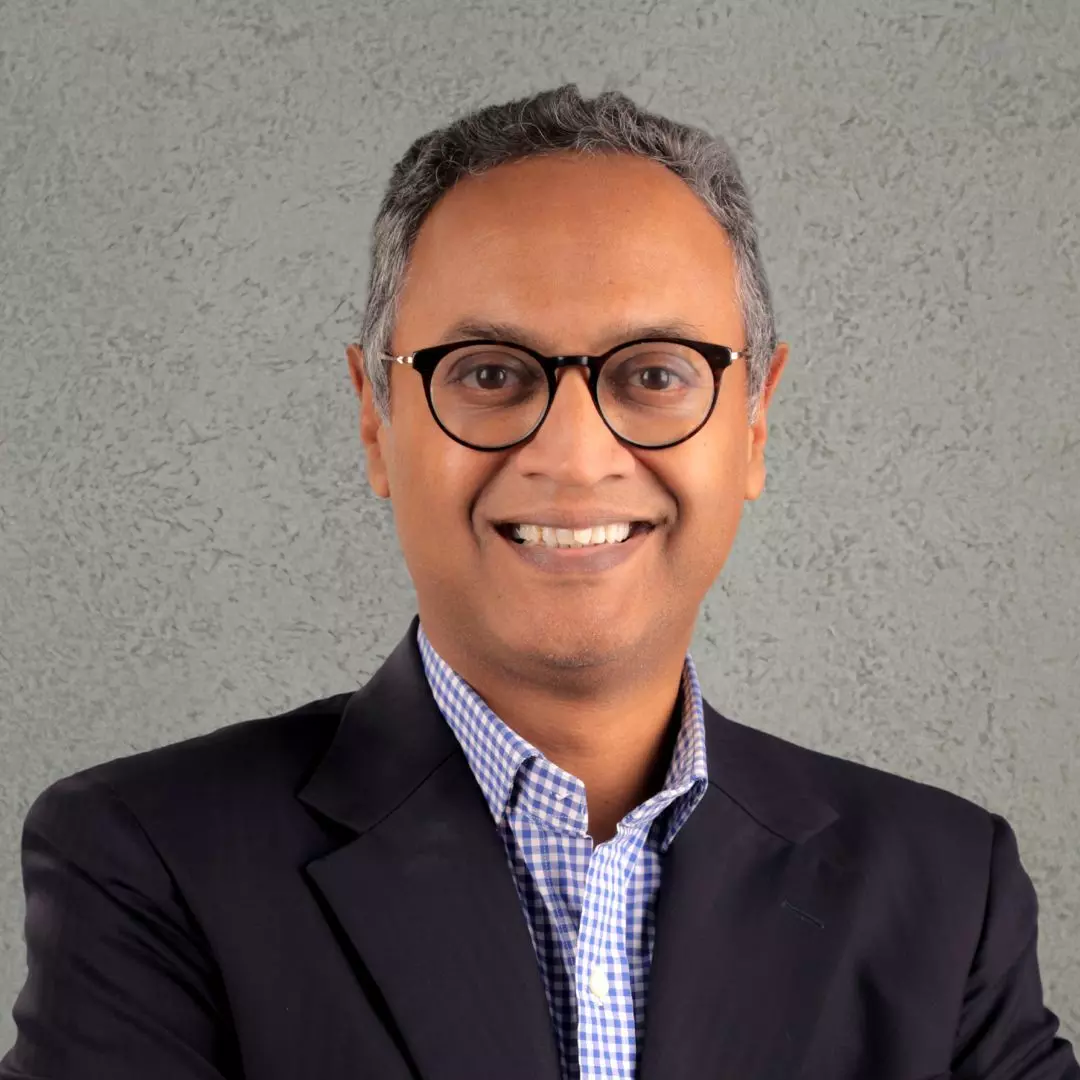
On Episode 891 of The Core Report, financial journalist Govindraj Ethiraj talks to Anshuman Magazine, Chairman & CEO, India, SEA, MEA at CBRE.
SHOW NOTES
(00:00) Stories of the Day
(00:41) Decoding the AI Investment Frenzy
(05:08) Why Nvidia CEO statement sets Indian markets racing
(09:55) Assessing Inflation Impact of Rising Fuel Prices
(11:00) Why Jewellery Stores are Expanding Across India and What That Means for Retail
Subscribe to "How India’s Economy Works" - Spotify | Apple | Youtube
—
NOTE: This transcript contains the host's monologue and includes interview transcripts by a machine. Human eyes have gone through the script but there might still be errors in some of the text, so please refer to the audio in case you need to clarify any part. If you want to get in touch regarding any feedback, you can drop us a message on feedback@thecore.in.
Good morning, it's Wednesday, the 3rd of June, and this is Govindraj Ethiraj broadcasting and streaming weekdays from Mumbai. India's financial capita.
Our top stories and themes…
Why NVIDIA CEO statement set Indian markets racing?
Decoding the AI investment frenzy
Assessing the inflation impact of rising fuel prices
And why jewellery stores are expanding across India and what that means for retail.
Markets, AI, Energy and the Monsoon
South Korea's equity markets have now overtaken India as the world's 6th largest.
The total market capitalisation of Korea-listed companies has gone up 86% this year to $5 trillion, while India has declined to $4.8 trillion, according to data from Bloomberg. Samsung Electronics and SK Hynix, the latest members of the $1 trillion valuation club, have led Korea's equity surge and powered it. Together with Taiwan, the two Asian chipmaking hubs are rewriting global equity rankings in a captures investor fascination over their outsized influence in the AI economy, even as it stirs concern about the risks of an overheated market, according to the Bloomberg report.
Three further developments this week underline how the AI industry is entering another phase, defined this time by capital intensity, platform expansion, and of course, investor frenzy. First, Alphabet is seeking to raise $80 billion to fund AI infrastructure, data centres, and compute capacity, Alphabet is Google. Second, Anthropic, the maker of Cloud, has confidentially filed for an initial public offer or IPO, a signal that AI labs are now beginning to transition from venture-funded startups to public market companies.
Third, as we mentioned yesterday as well, NVIDIA is attempting to extend its dominance beyond data centres into personal computers with a new generation of AI-focused PC chips, betting that AI workloads will increasingly run on devices rather than solely in the cloud. All of this obviously means more capital, dedicated hardware, and public market funding to sustain growth. So what does it all add up to? There are of course several theories, which of course change every week too.
But here is what IBM's CEO Arvind Krishna told Nikolaj Tanjan, CEO of Nordisk Bank Investment Management on a podcast a few weeks ago. Do listen carefully.
TRANSCRIPT
Nicolai Tangen: Which part of AI is a bubble?
Arvind Krishna: I think that some of the infrastructure buildout is probably a bit ahead of what the world can tolerate for the next few years. The way I would phrase it as, because I've been accused sometimes by saying that it's not a bubble, but I believe that, which is kind of why I posed the question a bit carefully, some will disappoint, many will thrive, but not all will thrive, is the way I would phrase it.
Nicolai Tangen: So when you say the infrastructure buildout is a bit ahead, what does that mean?
Arvind Krishna: Look, by the math that I have done, about a gigawatt of power, you can debate, but it costs you $60 to $80 billion worth of semiconductors to go populate it. So if you look at people have committed over 100 gigawatts of AI data centre buildout, that points to six to eight trillion worth of a buildout. If you say that that's got a five to seven year payback, you are going to need an extra one to two trillion a year of revenue, because inside that one to two, even if it's high margin, that high margin will be 20 to 30%.
So that much incremental revenue, I don't believe is there. And so that's why I think it's a bit ahead. I also believe on a second one, that many of the largest models are going to be a commodity.
Commodities can have a lot of value, but there is low switching costs usually between commodities. If there is low switching costs, that means you can have a margin, but it's not going to be a margin with a massive boat around it. So those two make me believe that perhaps there aren't going to be a half dozen to a dozen companies who can build the largest models and survive, maybe two or three.
And that then tells you the second side of it is how much can be the total capital expense that goes into the data centres. If you had said it was half as much as today, I would have said that completely makes sense. I mean, that aligns, but when it's double of that, then maybe some of those are not going to be able to get a great return.
Nicolai Tangen: So who are going to be the losers?
Arvind Krishna: That is very hard to predict.
Nicolai Tangen: Who's going to be the winners generally from AI?
Arvind Krishna: Look, some of them that already have a very large consumer business, that means you have a natural distribution advantage on the consumer side. On the enterprise side, I think it's wide open to decide who's going to win. I don't think that that is predetermined.
On the consumer side, I think history has shown us if you have distribution, and if the distribution is aligned to AI, there's a pretty good chance you will be one of the winners.
—
Of course, IBM's CEO is being careful about what he calls a bubble and not, but you can clearly see where the euphoria lies.
But there is some good news for India coming from all of this. Thanks once again to NVIDIA CEO Jensen Huang. This is actually an incredible time to be a software company, Bloomberg reported Huang saying, as he once again dismissed fears that artificial intelligence will decimate the software industry.
He echoed a view long held by some of the sector's few but committed investors that AI will ultimately expand rather than shrink the market for tech services. A lot of people have said, Jensen, agentic AI is coming, therefore all of the software companies are going out of business. I said it's exactly the opposite because there are going to be so many agents, the world is no longer limited by the number of people.
Therefore, those agents are going to use more tools than ever. This is, of course, Jensen Huang speaking, as reported by Bloomberg. Now, all of this back home sparked a rally in software stocks across Asia and Europe, and of course, India and stocks like TCS and Infosys jumped more than 5%.
Technology stocks have the third largest weight in the benchmark index, that's Nifty 50, and the Nifty 50 was up 100 points today at 23,483 and the Sensex was up 382 points at 74,649. That was not how the day started because both the indices were much lower in the negative and then they swung around later in the day. In the broader markets, the Nifty mid cap and small cap were up 0.18 and 0.4% each.
Oil prices were down more than a percent on Tuesday, losing some of the gains of Monday after Iran said it reviewed a proposed agreement with the United States to halt a war between the two countries, according to the Meher News Agency of Iran. US President Donald Trump said on Monday that negotiations with Iran were continuing and there would be a deal to extend the ceasefire and reopen the state of Hormuz over the next week, according to a Reuters report. And then a US delegation under the leadership of an Assistant US Trade Representative for South and Central Asia are holding three days of talks that are on right now with our Indian counterparts to finalise a trade deal.
The prospect of some closure on this deal was also seen as positive in the markets on Tuesday. A Bloomberg report says overseas investors' cumulative net equity investments in India have fallen to a near 10-year low after relentless selling. Aggregate net investments by foreign portfolio investors in local stocks stood at about Rs 730,000 crore as of June 1st, the lowest level since 2016, Bloomberg said, quoting data from the National Securities Depository.
The figure sums investments or withdrawals for each year since 1993 into Indian equities. Meanwhile, growth has been steady for Indian companies. The top 50 listed companies posted single-digit percent profit growth for the eighth straight quarter.
Net profit of nifty 50 companies rose 6.6% year-on-year. In the three months ended March 31st, according to Kotak Institutional Equities, which is ahead of forecasts of a 2% growth. And if it's getting too hot outside, relief may be close.
India's annual monsoons could hit Kerala on the southern tip of the country on Thursday or around Thursday, thus delayed by a few days. Conditions are also favourable for the system to move into parts of neighbouring Tamil Nadu at about the same time, according to a note from the Indian Meteorological Meteorological Department. Monsoons usually start on the 1st of June and the delay is the first since 2023, when rainfall came on the 8th of June.
A Bloomberg report said the weather bureau initially predicted the monsoon would arrive on May 26th, but did not elaborate on why there's been a delay. The report also added, as we know, that rains usually run through September and deliver the bulk of India's annual precipitation, which is important for replenishing groundwater reserves and, of course, farming. There's a new producer price index, and this is for the first time also a step towards aligning with advanced economies, giving policymakers a broader measure of inflation that captures price pressures across both goods and services in the country.
The reading under the new index will be released on June 15th, Reuters quoted India's principal economic advisor in the Department for Promotion of Industry and Internal Trade speaking on Tuesday. Elsewhere, the Reserve Bank may have offloaded a portion of its gold holdings to shield its currency assets from the cascading fallout of the war in West Asia, according to an analysis by Bloomberg Economics based on publicly available data. The Reserve Bank of India likely sold gold reserves worth about $12 billion in the two weeks through May 22nd, while buying $7.5 billion of foreign currency assets, according to Bloomberg Senior India Economist.
Staying with currency, rupee and dollar-rupee forward premiums fell on Tuesday, thanks to opposing forces of importer hedging, foreign portfolio outflows, and possible Reserve Bank intervention across Forex market segments, according to Reuters, which added that the rupee ended at Rs. 95.26 per dollar, down 0.3% from the previous session. Traders once again said the losses could have been steeper had it not been for the Reserve Bank's dollar-selling interventions.
Where could inflation land, given high and potentially higher fuel prices?
A new report from Crisil Ratings said they estimate the direct upside to inflation linked to consumer price index at about 36 basis points, with a hike of Rs. 7.5 per litre in petrol and diesel prices, rising to 48 basis points if the retail fuel prices increase by Rs. 10.
The report says producers face a dual-cost shock with higher prices of crude, petroleum products, and gas raising manufacturing costs. Transport is the major channel through which fuel inflation radiates across the economy, the report adds, also saying that freight transport accounts for 54% of India's logistics costs. Road transport represents nearly 71% of total freight movement.
Fuel is the single largest component of road transport at 42%, according to a NCAER study. The report says that the increase in retail fuel prices will directly impact these freight cost structures and feed into prices across supply chains in coming months.
What does the Expansion of jewellery stores across India mean for Retail?
A new report from CBRE, one of the world's largest commercial real estate services firms, says jewellery brands are expanding rapidly with new retail stores and growing in size as well in India.
Notably, this also reflects an increasing shift or an additional emphasis on physical for some brands who were so far only direct to consumer or digital. This also reflects other shifts in overall retail and store trends. The jewellery sector's share of organised retail leasing has increased from about 2% in 2019 to about 8% in 2025, or in about six years, placing jewellery amongst the top three demand drivers after fashion and apparel and food and beverage, according to the CBRE report.
I reached out to Anshuman magazine, chairman and CEO for India, Southeast Asia, Middle East and Africa at CBRE and I began by asking him how he was seeing the latest trends, including extending into the broader realm of retail.
INTERVIEW TRANSCRIPT
Anshuman Magazine: Jewellery, as you know, in India is one of the, gold jewellery especially, is India's one of the largest consumers. But what is really happening is, first of all, the expansion, if we, what we track is how many jewellery stores are being taken up, how much leasing is happening. So, like you mentioned, you know, that is going up every year.
And the overall leasing, you know, from as low as 2% now, it's gone up to about 14% of what jewellery stores are leasing. So, which means that demand is increasing. And also, the formats are changing.
So, earlier, the jewellery stores were smaller. Now, we're seeing a percentage of jewellery stores are becoming larger, 8,000 to 14,000 square feet above. And what that also means is that the buying pattern is slowly changing.
And if we look at the jewellery section, again, sector is moving also from people buying jewellery for traditional reasons, which is, for example, wealth preservation, hedge against inflation, to now people buying for fashion, just for going to get together. So, there is a quite a bit of shift in jewellery buying. And interestingly, the trend is that earlier, as you would know, large amount of jewellery buying would happen in weddings.
And that was the main purpose also, besides, of course, hedge against inflation and wealth preservation. Today, the wedding jewellery is about 50%. The rest is for get-togethers, anniversaries, gifts.
That's a clear trend and movement. And that also shows that retail as such is being focused on Gen Z. So, even in jewellery, there's a shift from millennials to focus on Gen Z is changing the patterns of buying.
Govindraj Ethiraj: And it's interesting, you pointed out that the stores are becoming larger, which means the experiential part is clearly increasing for something that could also be an investment as opposed to... So, what does that tell us about retail and retail trends overall?
Anshuman Magazine: Once what you mentioned, experience, that's extremely important. Retailers are using the technology for, you know, virtual, like we used to do virtual tours in real estate, but this is also looking at the products. Data is being utilised on assessing demand and what the customers want.
And that is reflecting in the design of the premises and to address all the customer needs. What we're seeing in jewellery is that in India is a price-sensitive market. So, like in other retail, there is a shift towards providing to a wider audience.
So, from traditional heavy jewellery, expensive, to for the younger people, lighter jewellery, what is preferred, which can be not, which is beyond attending weddings, going to the office, to anniversaries, to parties. And the whole price range also is there so that, you know, that's how the retailer is also making a bit more money or trying to do better is to providing the whole range from the heavy jewellery to Gen Z, to the lighter jewelries and making experience an important part and using AI technology to making sure that they also do data analysis. What has happened is that as the gold prices have gone up, labour has gone up.
And that's another reason why there is a shift now besides to provide different kinds of products in different price ranges and have different carats and different quality so that, you know, overall the market could expand.
Govindraj Ethiraj: What are the other sort of broader retail trends that you're seeing Anshuman across the country right now?
Anshuman Magazine: One trend which started since last few years is really overall retailers going into tier two, tier three cities. And if any retailer today in India wants to expand and scale up, really there's not much choice for them, but to go to tier two, tier three cities, because of course, the cost is lower. But of course, the sales volume also increases, but the value could be lower.
But there's a clear trend in detail that we have seen last few years to tier two, to the three cities, you know, going after that. Second is that a lot of the companies started with only doing digital sales are moving to physical brick and mortar stores, D2C what we call. And that trend is increasing the percentage of what they call it, you know, digital first retailers going into physical brick and mortar stores has increased significantly.
So it also shows that initially when all this digitisation was happening or technology is coming in, there was a big scare that is retail brick and mortar, will it going to die? And I remember even that time you're saying, look, it's going to coexist. But that time it was a bit of a theory.
Today, we have facts and figures to show that both online, digital and physical stores are not only surviving together, but you need both. So they are interdependent completely. And the trend of leasing of space by digital or the first the companies started in digital and are taking physical spaces is increasing.
In fact, this is really started going up from last year. And I think that trend is going to stay.
Govindraj Ethiraj: Right. What are the kind of demand signals that you're seeing? I mean, both from, let's say, people who are taking up leases across retail, that is across retail in malls and elsewhere.
What is the kind of consumer signals they're seeing, particularly in the last few months, if so?
Anshuman Magazine: From the supply side, there's a problem because of wastation of work going on. It is impacting every business, include retail, because there is a supply chain disruption. There is a challenge on the labour front.
There's labour shortages. On top of it, if you look at the gold prices have gone up, there's been a duty of 15% levied on gold. And the rentals, frankly, because there's a shortage of quality retail space, the rentals have also gone up.
That one side is a challenge. For the consumer side, if you look at overall in India, our per capita income as an average is still low. But of course, if you look at the main cities, there is consumption.
But at the same time, like I mentioned, there's a price sensitive market. So the retailers are also providing for the entire spectrum. But certainly with inflation, with the cost going up, the jewellery and all goes beyond a lot of consumers.
And that's why we see in jewellery, again, lab grown diamonds to lower carriage of lighter jewellery to address that market. But certainly right now, for all businesses, include retail, supply chain and labour shortages are two major challenges.
Govindraj Ethiraj: We talked about how jewellery is growing within the retail universe. Are there any newer entrants that you're seeing either right now or on the horizon into retail in India, or maybe into other cities or types of cities?
Anshuman Magazine: Fashion apparel is still dominant. What we are seeing is that besides few international names, a lot of domestic companies, startups, young people are bringing in and of course, is accelerated because of digital space. So nowadays, we see a lot of youngsters will set up their talented designers and they just go online, start and then maybe move on to physical space.
So I think the pace of that is quite high. Besides that, F&B is a major part of the business. As you know, F&B is expanding in a significant manner.
Again, the younger people and the whole, the entire shift of people going out, F&B is also tied to entertainment. So F&B and entertainment are actually growing at an accelerated pace. So I would say fashion apparel and F&B and entertainment are clearly the dominant players in the retail space.
Govindraj Ethiraj: So would you say that F&B and entertainment are, let's say, more recession proof relatively? I mean, is there any sign of that?
Anshuman Magazine: To a large extent, they are recession free because again, in most of the Indian cities, if you look at entertainment, there are relatively limited choices. So F&B becomes important in entertainment. So they can down cycle, they can bear better than the sectors, no doubt.
Govindraj Ethiraj: Right. Anshuman, thank you so much for joining me.
Anshuman Magazine: Thank you.


