



 Newsletter
 Search
Why Indian Markets Are Holding Steady
- Podcasts
- Published on 4 Aug 2026 6:00 AM IST
There is growing optimism that fundamentals are looking better, even though a full-blown return to confidence and normalcy is a while away
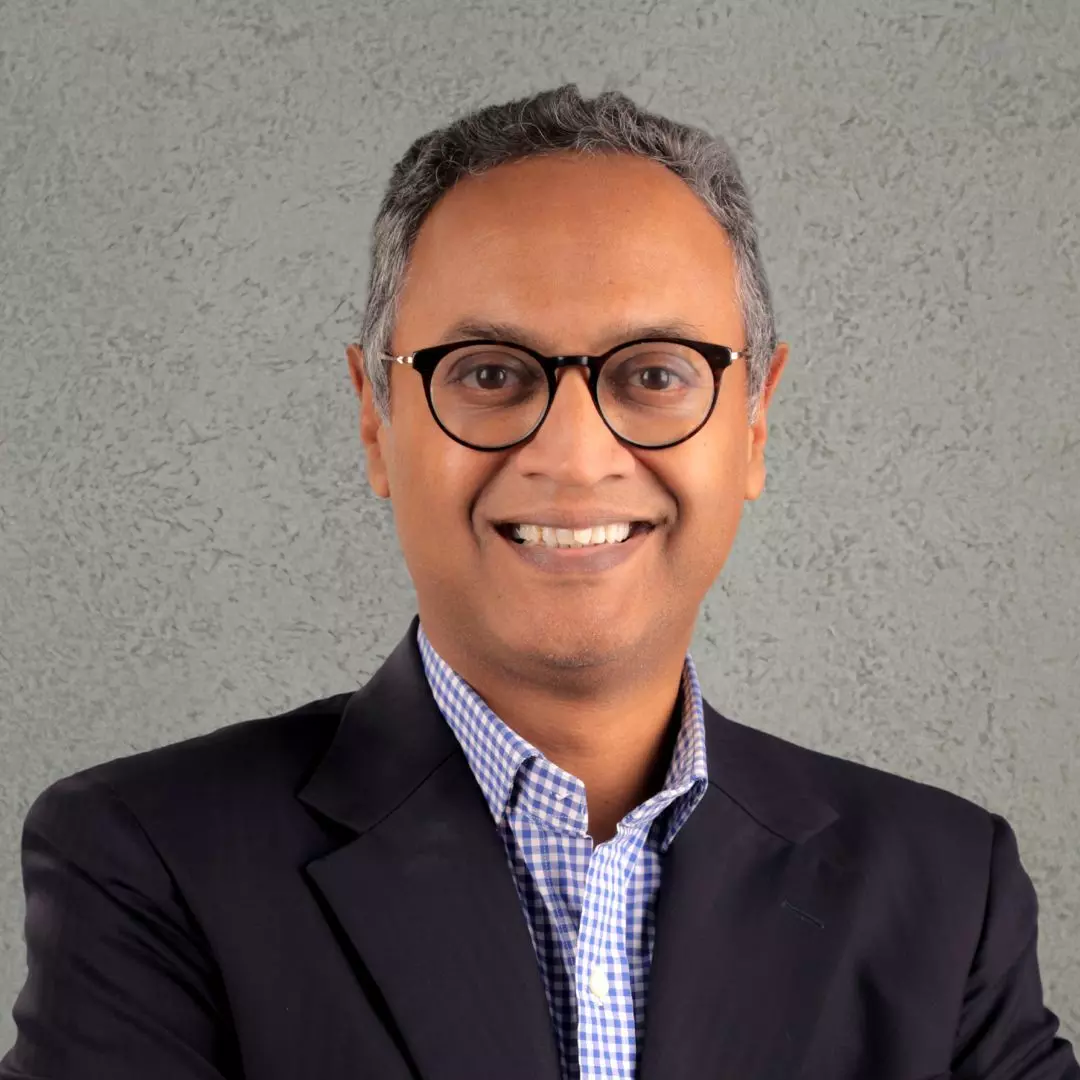
On Episode 938 of The Core Report, financial journalist Govindraj Ethiraj talks to Madhavi Arora, Chief Economist at Emkay Global Financial Services.
SHOW NOTES
(00:00) Stories of the Day
(00:50) Why Indian Markets Are Holding Steady
(04:20) Why The US And Japan Joint Intervention To Prop Up The Yen Is Unusual
(08:37) Which Banks Have The Most Clout With NRI Funds And Deposits?
(10:07) What Is The RBI’s Grappling With, Ahead Of The Credit Policy On Wednesday
EVENT: Spotify x The Core's "Building Wealth for a Longer Life" with Saurabh Mukherjea of Marcellus Investment Managers. Register Here
—
NOTE: This transcript contains the host's monologue and includes interview transcripts by a machine. Human eyes have gone through the script but there might still be errors in some of the text, so please refer to the audio in case you need to clarify any part. If you want to get in touch regarding any feedback, you can drop us a message on feedback@thecore.in.
Good morning, it's Tuesday the 4th of August and this is Govindraj Ethiraj broadcasting and streaming weekdays from Mumbai, India's financial capital.
Our top stories and themes…
Why Indian markets are holding steady
Why the US and Japan joint intervention to prop up the yen is unusual
What is the Reserve Bank of India grappling with ahead of the credit policy on Wednesday,
And which banks are the most cloud with NRI funds and deposits.
Markets, Truth Social and The Yen
Prices of Brent crude, the international benchmark, are now back under $84 a barrel after President Donald Trump reignited hopes of a deal to de-escalate the conflict in West Asia.
In a social media post on Saturday night, he said the US had been asked by Iran and other Middle Eastern countries to hold off the planned attacks and that the perimeters of a deal has been agreed to. The deal, he said, would include reopening the state of Hormuz to commercial traffic. Of course, those social media posts, in case you missed it, that's on Truth Social, other high-profile posters are available to be viewed earlier if you pay $100,000 per month as of Saturday.
Called Truth API, the Application Programme Interface, or API, is intended to provide businesses with a direct, licenced, real-time feed of the platform's most market-moving truths, according to the company. Well, meanwhile, Iran has suggested that negotiations to get more ships moving through the state of Hormuz are making progress. Iran's Foreign Minister Abbas Araghchi said on Monday that discussions between Tehran and Oman over management of the state are in the final stages, according to a Bloomberg report.
The question, as always, is whether the ceasefire will hold, and for how long, and in what way. Meanwhile, back to the Indian markets, there is growing optimism that fundamentals are looking better, even though a full-blown return to confidence and normalcy is a while away. Stock brokerage Jefferies summed it up by saying that beyond the pullback in Asian memory, stocks which have supported domestic equities, foreign inflows, credit growth, auto sales, property activity, and power demand have all exceeded expectations, while June quarter earnings have been broadly encouraging.
With all of this as a backdrop, the Nifty 50 and the Sensex extended their winning streak to the fourth session. As oil prices corrected, as we pointed out earlier, the Sensex was up 544 points to 78,639, and the Nifty ended a new closing auction session at 24,774 or up 391 points. In the broader markets, both the Nifty mid-cap and Nifty small-cap were up 1.2 and 1.29% higher.
Both saw record highs during trade. Interestingly, a new system to discover end-of-day market prices got off to a confusing start, with traders trying to make sense of a spike in the Nifty 50 index stemming from the shift, according to a Bloomberg report. Starting Monday, the NSC began holding a closing auction session to determine the day's final prices for stocks with derivatives tied to them.
This replaced the volume-weighted average price of trades executed in the final 30 minutes of the session. The change, says the Bloomberg report, aims to improve price discovery, curb manipulation, and bring the market structure closer to that of global peers. Instead, the debut sparked confusion across trading desks.
The rupee was mostly steady on Monday, retreating from a three-week high hit in early trade as dollar demand from importers and state-run banks rose, which countered the boost from a sharp fall in oil prices, according to a Reuters report, which added that the currency closed at Rs 95.33 per dollar against Rs 95.38 on Friday. All eyes are on the Reserve Bank of India's policy moves due tomorrow and other statements that could give a sense on how the central bank is viewing the economy and responses to it. Now, rates are not likely to change, though, and there is clearly a lot for the Reserve Bank of India's monetary policy to grapple with, and I'll come back to that in a moment.
Elsewhere, the United States and Japan are jointly trying to boost the yen, which had fallen to a 40-year low. In carrying out their first joint effort in a generation to boost the yen, the United States and Japan are trying to contain tremors that could be triggered by a falling Japanese currency, according to Bloomberg, which added that the yen slide indirectly threatens to bump up U.S. interest rates and also threatens Japan's plans to invest billions of dollars into the United States. The U.S. has traditionally been hands-off in this regard, which is to intervene in other currencies except in moments of exceptional peril, according to that report.
Now, before the U.S. and Japanese governments stepped into the foreign exchange market to buy the yen on Friday, the Japanese currency had been trading at its lowest level since or rather for four decades, according to the Bloomberg report, adding that earlier bouts of solo intervention had fizzled, which sparked further anxiety in Japan about faster inflation and a bigger import bill for energy thanks to the war in West Asia. Treasury Secretary Scott Besson said the Trump administration would deliver or will deliver for America's trusted partners. Besson made a fortune trading currencies and other assets for George Soros's investment firm.
And he also said that the U.S. wouldn't hesitate to intervene again to correct the substantial undervaluation of the Japanese yen, according to that Bloomberg report. So why does the U.S. want a stronger yen? Well, that report says that a rapid and disorderly decline in the yen could spill over to other assets, especially as the yen is a popular funding currency because of the gap in interest rates between Japan and the rest of the world, including the U.S. Meanwhile, on Wall Street, U.S. Treasury yields followed oil prices lower on Monday and the yield on the 10-year Treasury note, that's the U.S. Treasury note, which is the key benchmark for U.S. government borrowing, was down seven basis points to 4.67 percent, according to CNBC. The longer-dated 30-year bond was also down six basis points to 5.21 percent.
Last week, the 30-year Treasury bond had risen to its highest level since 2007, as investors reacted to an apparently hawkish hold from Federal Reserve interest rate settlers, according to that CNBC report.
The Latest on India’s Manufacturing Sector
India's manufacturing sector expanded at its slowest pace in nearly five years in July, as overall demand remained soft, while a third consecutive month of slowing job creation also signalled a loss of momentum, according to a Reuters report quoting the S&P Global HSBC India Purchasing Managers Index, or rather the Manufacturing Purchasing Managers Index, or PMI. The index was down to 53.5 in July from 54.2 in June, and this is the lowest reading since August 2021.
A PMI reading above 50 indicates growth in activity. Reuters quoted the report saying that new orders, a key gauge for demand, rose at the second-weakest rate in over four years, as challenging market conditions and reduced client interest weighed on sales growth. Export orders rose at the fastest pace since April, but were modest after falling to a 39-month low in June.
Consumer goods were a weak spot, while intermediate and capital goods makers did better. Input cost inflation eased to a five-month low in July, though transportation costs continued to rise. Selling prices increased only modestly at a rate broadly in line with June, limiting the burden passed on to consumers.
It would be interesting to see where that stands in the next quarter or coming months. Business confidence, the report says, edged up from June's recent low, with firms citing positive expectations around demand and infrastructure projects.
NRI Deposits
The Reserve Bank of India revealed last week that non-resident Indians have brought in close to $40 billion in the latest scheme to attract NRI deposits into India under the FCNRB umbrella. It is interesting to see who are the banks leading the charts and thus also reflecting their size and clout with the NRI community and their funds.
State Bank of India, HSBC and ICICI Bank have garnered the largest amounts of banks under the scheme to attract dollar deposits, according to government data quoted by Reuters. HSBC's India unit raised about $6.1 billion, which is the highest amongst all lenders, while State Bank of India, which is the largest bank in India, pulled in about $4.1 billion between June 5th and July 30th. Amongst the private sector banks, ICICI was at $3.7 billion, while HDFC Bank and Axis Bank were at about $1.5 billion each.
So, HSBC leads the charts with $6.14 billion raised from NRIs at this point. The central bank's moves to attract NRI deposits are similar to what was done in 2013 at that time to deal with the Federal Reserve's taper tantrum and followed a period of sustained depreciation pressure on the rupee. The dollar inflow also helped the rupee appreciate and fairly fast at that time, which is not quite the situation this time.
The rupee had hit a record low in May but steadied after the measures were announced in June.
Predictions for the outcomes of the RBI’s MPC
The Reserve Bank of India's Monetary Policy Committee began its three-day policy meeting on Monday with most observers predicting the central bank would maintain status quo on the benchmark repo rate. There are a mix of issues, both domestic and global, that the Reserve Bank's Monetary Policy Committee has to reckon with against the continued uncertainty in oil prices.
I reached out to Madhavi Arora, Chief Economist at MK Securities, and I began by asking her how she was seeing the latest global developments, including at the Federal Reserve in the United States, in terms of actions or no actions before getting a take on the credit policy coming up tomorrow.
INTERVIEW TRANSCRIPT
Madhavi Arora: When the year started, nobody was talking about a US Fed rate hike. Then the Middle Eastern crisis sort of disturbed the global dynamics in terms of a higher inflation expectations. India was no different at that point in time.
Of course, we had other variables which are also getting impacted. And then, you know, post-June, we saw things totally turn around for good for global oil markets. And even, you know, treasury markets globally also had sort of normalised.
But the last one and a half months had also seen the ignition of US Fed rate hike expectations. Markets are expecting probably two rate hikes, a shallow rate hike cycle in the US. But nonetheless, our possibility of a rate hike has increased.
That had, you know, not augured well for the US treasury markets where you had seen the bear sticking of the US bond yield curve and also some impact being played out across emerging market bond yields as well. That still remains a risk, although we do believe that the rate hike that you probably will see in the US will be largely towards the end of the year and will be a shallow one. So we'll see how that plays out.
But I don't think it will immediately impact the RBI's reaction function or even the domestic dynamic. But yes, the cost of fundings have gone up globally, and that has to be kept in mind for the Reserve Bank, not only just for the policy rate point of view, but also with regard to how the whole FCNR dynamics could play out for banks who are giving heavy leverage at this point in time.
Govindraj Ethiraj: Right. And we've seen some figures come in there about $40 billion of FCNR flows or mostly predominantly FCNR flows. So how are you reading that number in the context of what you've just said?
Madhavi Arora: Oh, it's a very healthy number. Because if you look at the last time when this scheme was introduced in 2013, a large chunk of money actually had come towards the end of the scheme. So the expectation even this time around was that because there were uncertainty with regard to taxation, uncertainty with regard to SBLCs between two banks, a line of credit between two banks that could be involved in the process, all of that could possibly delay the inflows.
But as we stand today, July month has been quite positive. And as you rightly mentioned, $40 billion-plus has been achieved out of these concessional windows. That's a very healthy number.
If this trend continues, we may actually see at least crossing $75 billion overall for these concessional schemes on a gross basis, which definitely augurs well for our balance of payment, or where we think that if it indeed crosses $75 billion-plus kind of number, we may actually see a BOP surplus this year to the extent of $30 to $40 billion. Again, we are assuming that Brent would be somewhere close to $85 billion and not $95 billion-plus.
Govindraj Ethiraj: Right. I'll come to Brent in a second. But you mentioned that the cost of funds has risen.
So what does that mean in the context of all this money that we're pulling from NRIs?
Madhavi Arora: It's obviously increased the margin. It's not like shot up dramatically. But see, banks play on margins in the end, right?
When they are giving you a leverage as an NRI or to put money in the FCNR schemes, they also are raising money from the markets, right? So they want to keep a decent spread, say, 150 to 100 people between their borrowing cost and lending cost. And that is where they make their basis points spread.
So that spread that they were making in terms of leverage is reducing for them, which also will imply that eventually, they may give you a less FCNR deposit rate, if at all that the case may be. So that leads to a less lucrative FCNR rate compared to what they could give otherwise. But as we stand today, I mean, they're still able to manage, they're still able to fund themselves comfortably.
But if the cost of funding, say, goes up in August, September, for all you know, the momentum could slow at the margin. But as of now, we're not looking at that as a major risk. I think banks are able to sort of manage their way to keep their margins also comfortable while giving leverage.
Govindraj Ethiraj: Right. So a couple of weeks ago, quite literally, we were looking at the war having stopped or a longer peace process and crude around $75 a barrel. Now that's reversed already.
And while it may or may not go back to $100, but it's definitely higher and more importantly, it's unpredictable. So given that and where we are in terms of our overall economic, let's say sweep, which includes monsoons and where they are right now, how are you seeing or rather, what do you think is the Monetary Policy Committee grappling with right now? And what could be the outcome of that?
Madhavi Arora: See, a lot of externalities they really won't have a handle on, right? What is happening in the Middle Eastern crisis is something that's basically not in my hand as a policymaker. Of course, I as a policymaker will have to see what I can do to sort of ensure that the, you know, the risks to the economy are minimised from their point of view.
To that extent, I think my understanding is that the geopolitical risk premium is going to be staying. And we believe that Brent would be opening, you know, around $85 per barrel in the next quarter as well. Will that be a big risk for the RBI in terms of their forecast?
Not really, because if you recall in June, they were pricing a $95 per barrel as an average. So against that, we have actually come down. You know, $10 per barrel itself saves the Reserve Bank at the margin on 30% inflation, keeping everything else constant.
We also have higher elinor risk. But at the same time, domestically, you know, the monsoons have sort of caught up relatively well. So probably we are somewhere still better off.
And the first quarter inflation has also undershot the Reserve Bank's own expectations. That said, I'm not expecting them to revise down their inflation expectations, because as I said, global elinor risks have actually gone up. The probability of that has gone up.
Plus, the geopolitical risk premium is still there on Brent. So I think they will probably be better off just keeping inflation at around 5% or 5.1%, which is what they have kept in June. And with regard to growth also, while the momentum has been pretty strong in the first quarter, it's a healthy start to the year in terms of growth, I think they would still have that caution in mind, wherein, you know, we are looking at a mixed picture on consumption.
It still is largely led by normal consumption. And the fact that investment story probably could be still a little lacklustre given global uncertainties that the world is facing at this point in time, and even policy uncertainty back home to some extent. So I think we're not expecting any material change in terms of RBI's outlook on either growth or inflation.
And also, I'm not expecting them to be changing their policy stance at this point in time. But there will be a cautiously positive tone is what I feel, given whatever has happened. Things are at the margin improved from June in terms of global geopolitics.
Govindraj Ethiraj: So you seem to have had a fairly healthy quarter one in terms of corporate results. Are you seeing that trend continue? And how is that relating to the other macro numbers that we've been talking about so far?
Madhavi Arora: I was actually reading the commentaries of some of the consumer companies, you know, they actually have shown a much better outlook compared to what we had expected. A large chunk of consumer behaviour is being led by rural. Some of the big companies have also said that they're expecting urban consumption to sort of pick pace in the second quarter.
As of now, we are more neutral on consumption as a theme, because we believe that the income effects are still more dominant than any kind of stimuli from fiscal side or subsidies that the government may give to certain strata of the economy. And thus, I'm not too enthused about it. But you know, whatever we are seeing in terms of the trends, I think we're not looking at a massive downtick in consumption.
So I think it would be a steady flow of momentum in the coming quarter as well. So I think that should be also a positive place. So if you're able to sustain this extra half percent kind of growth this year, that could be a very strong number, given that India is not, you know, basically positioned very well as far as the West Asian crisis is concerned, because oil is clearly, you know, the biggest den to Asian economies and India as well.
Govindraj Ethiraj: Thank you so much for joining me.
Madhavi Arora: Thank you.


