



 Newsletter
 Search
Why Indian IT Stocks Are Getting Battered
- Podcasts
- Published on 22 Jun 2026 6:00 AM IST
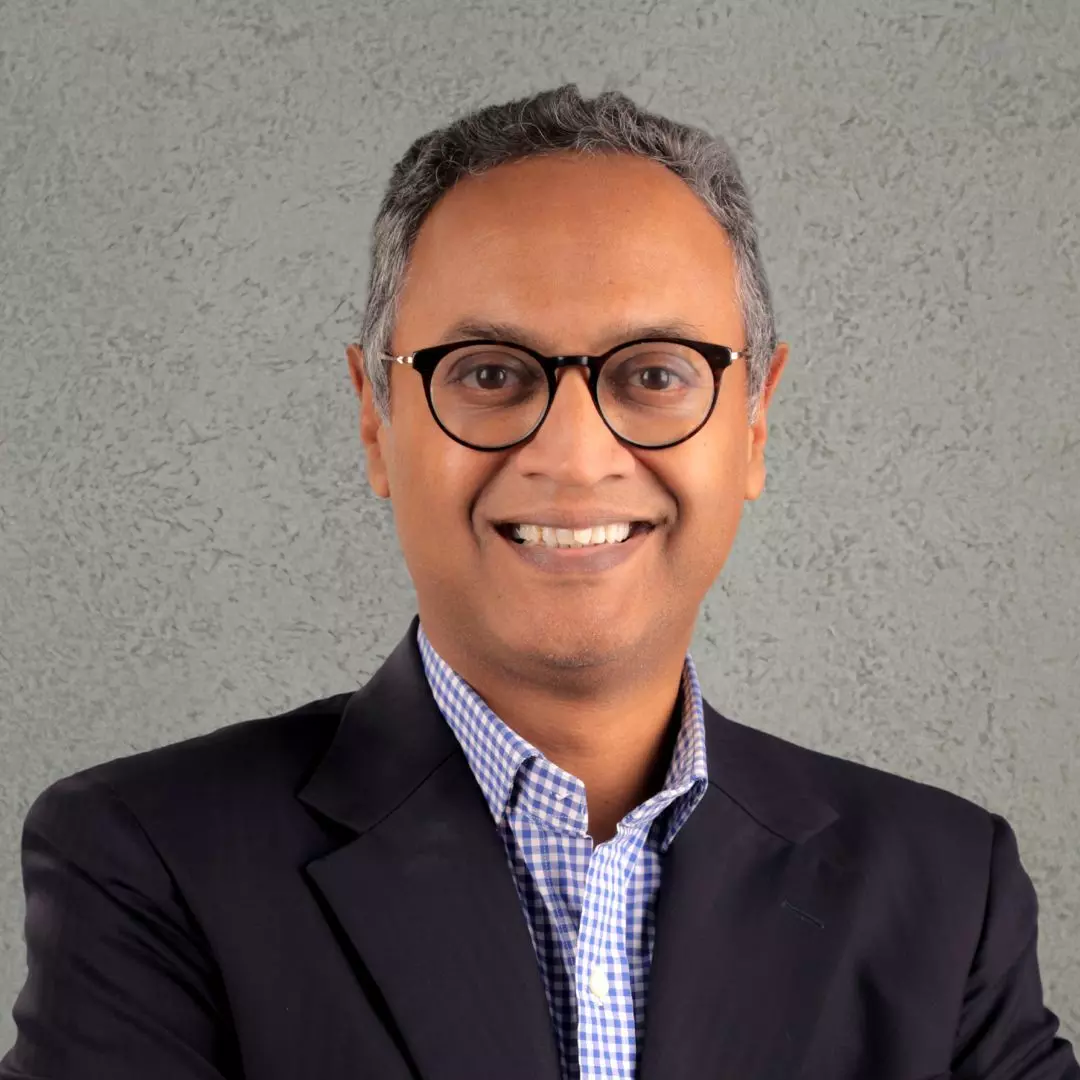
On Friday, the markets reversed after a five-day rally, mostly on weakness in IT stocks
On Episode 907 of The Core Report, financial journalist Govindraj Ethiraj talks to Muralikrishnan B, Founding Faculty at the International Institute for Faculty and Research.
SHOW NOTES
(00:00) The Take
(06:45) The Rains Are Here.
(07:54) Why Indian IT Stocks Are Getting Battered.
(09:51) Rupee Has Best Week In 11 Weeks. Meanwhile, The World’s Best Performing Currency In The Last Few Weeks Is..
(11:04) A Wave Of Mega IPOs And Smoothened Buyback Norms Could Provide Some Lift To The Markets.
(14:02) Why B Schools Want To Hear Corporate Leaders But More Than Just War Stories
—
NOTE: This transcript contains the host's monologue and includes interview transcripts by a machine. Human eyes have gone through the script but there might still be errors in some of the text, so please refer to the audio in case you need to clarify any part. If you want to get in touch regarding any feedback, you can drop us a message on feedback@thecore.in.
Good morning, it's Monday the 22nd of June and this is Govindraj Ethiraj broadcasting and streaming weekdays from Mumbai, India's financial capital, usually but in transit right now.
The Take
Sometime during the optimistic economic dawn of the 1990s, I sat down to interview a leading light of Mumbai's financial sector.
Because he has since evolved with the times and achieved immense success, I will leave him unnamed. But on that day, he railed bitterly against the very concept of the National Stock Exchange and the reformers behind it. Specifically, he targeted the late Manohar Fairwani, whose committee report on new financial instruments was viewed as an existential threat by the old guard.
My interviewee was a member broker of the Bombay Stock Exchange, established in 1875, and until then, the undisputed king of India's broking universe. The BSE, of course, ultimately lost that battle. The infamous Harshad Mehta Stocks Market Scam of 1992 hardened the government's resolve to end the BSE's monopoly.
By 1993, the NSE was launched, or the National Stock Exchange, with Dr. R. H. Patil, then at the Industrial Development Bank of India, or IDBI, tapped to lead it. He assembled an energetic team, including Ravi Narayan, who took the reins as CEO and guided the exchange for over two decades. At a single stroke, they revolutionised India's markets, transitioning from a scandal-prone paper-based trading system to a modernised electronic and paperless architecture.
Dr. Patil, an economist by training, did not stop at the NSE. He played an important role, along with his peers, in laying the foundation for a suite of modern financial institutions, the National Securities Depository Limited, the Stock Holding Corporation of India, the Over-the-Counter Exchange of India, for small caps, and the credit trading agency CARE, or C-A-R-E. While there were inevitable failures, the OTCI never quite fulfilled its promise.
For example, the successes were many. These entities were capitalised by what was then known as development financial institutions like UTI, ICICI, IDBI, and IFCI. UTI, however, was a mutual fund.
Incidentally, ICICI and UTI also established CRISL, India's first credit trading agency, back in 1987, and the 90s marked a profound transition. The Securities and Exchange Board of gained statutory powers in 1992, and the sharpest financial minds in government and adjacent organisations were busy writing the architecture for a modern financial economy. There was a willingness to experiment.
Subsequent scams and market failures simply exposed the chinks in the armour, which were addressed over time. And the spirit of state-backed innovation extended well into the 2000s. When you watch a presentation breathlessly extolling the virtues of India's digital payment system today, remember that the National Payments Corporation of India was set up in 2008.
It was promoted by the Reserve Bank of India, which astutely brought in several commercial banks as shareholders to democratise its ownership, a visionary move to ensure the central bank didn't have to manage retail transactions itself. Today, the NSE is back in the headlines as it prepares for a highly anticipated mega initial public offer, and more on that shortly. The original government-backed institutional investors stand to make a fortune if they exit.
Some, like the Life Insurance Corporation, may hold on to their shares, likely to maintain a degree of indirect government holding. The heavy lifting of building India's financial plumbing is largely over. Policy shifts today are predominantly incremental and reactive, such as the cautious exploration of digital currencies.
But as the state rightly steps back from actively playing in the financial markets, a critical question emerges. Is India missing the visionary leadership of men like R. H. Patil, S. S. Nadkarni, and N. Waghul? S. S. Nadkarni ran IDBI and N. Waghul ICICI at that time. While there are undeniably accomplished leaders in the current generation of financial services, few seem to possess the institutional vision of their predecessors.
Part of this is structural. ICICI and IDBI, for example, are now fully functioning commercial banks. UTI operates with substantial international private equity ownership.
The umbilical cords to nation-building mandates have been severed. Yet, India still desperately needs major institutional leadership. Consider the geographic misallocation of our financial capital.
The gift city, India's heavily promoted international financial centre, sits in another state, that's Gujarat. I can say with some authority that many of the corporate leaders and financial leaders who publicly extol gift cities' accomplishments sing a very different tune in private. In 2007, a committee led by former World Bank Director Percy Mistry submitted a landmark report on making Mumbai an international financial centre.
Backed by heavyweights like K. V. Kamath, Aditya Puri of HDFC Bank, and O. P. Bhatt of State Bank of India, the committee concluded that Mumbai was a natural fulcrum of the country's finance. It possessed the social and cultural infrastructure to rival the city of London, with the Bandra-Kodla complex serving as its beating heart, to quote an Hindustan Times article on this subject a few years ago. Now, why that whole report was shelved deserves a book of its own.
But decades after the pioneering work of the 1990s, we're left grappling with a new set of complex structural questions. How do we manage the explosive growth of the stock market so it doesn't devolve into a casino for poorly informed retail investors? This is an old concern, but it has been supercharged by app-based brokerages and relentless diet of social media finfluencers. How should India further integrate its financial systems with global economies while navigating the grey area of assets like Bitcoin? And, foreign portfolio investors have fled equities at a scale not seen since they first entered in the market in the 1990s, going back to the time we started.
Our current regulatory architecture, designed by the institution builders of the past, was years ahead of its time and has served the economy well. But facing massive capital outflows and the gamification of retail trading requires more than just reactive regulation, it requires structural vision. And these are only some of the issues.
One cannot help but wonder how the architects of India's modern markets, leaders who watched the first waves of foreign capital arrive on our shores, would have tackled these modern challenges and even crises quite differently, I suspect.
And that brings us to our top stories and themes…
A Wave Of Mega IPOs And Smoothened Buyback Norms Could Provide Some lift to the markets,
where Indian IT stocks are getting battered,
the rains are here,
the rupee has had its best week in 11 weeks, meanwhile the world's best performing currency in the last few weeks is…
why b-schools want to hear corporate leaders but more than just war stories.
Markets, The Rain, Currency and IT Stocks
The big news is not so much US Vice President JD Vance, who has landed in Switzerland to start talks with the Iranians, an affair which promises to be bumpy like before, but the rains that are advancing in India after several false starts.
Remember, we have the oil, but we don't necessarily have the water. The IMD has warned that heavy rainfall could lead to localised flooding, water logging, traffic disruptions, reduced visibility, and essentially another day in Mumbai. And yes, landslides in vulnerable regions.
Now, not to convert this into a boring weather monologue, but Sunday was also the summer solstice, which is the longest day of the year and the first summer in the northern hemisphere. Meanwhile, across the world, oil prices are back over $80 a barrel as negotiations kick off in Switzerland, so the oil markets are not clearly over their initial exuberance of the peace deal. Meanwhile, in the stock markets, back home, the large and small-cap dichotomy continues.
India's large caps remain heavily anchored to global headwinds and global capital flows. Domestic-focused smaller companies are doing better on the bosses. For the week, the benchmarks gained about 1.7 percent each, while small and mid-caps rose 3.2 and 2.9 percent each.
And on Friday, the markets reversed after a five-day rally, mostly on weakness in IT stocks led by an Accenture warning and more on that in a moment. The IT index dropped about 3.5 percent to a three-year low. In the markets, the Nifty 50 ended 155 points lower at 24,013, and the Sensex fell about 608 points to 76,802.
Earlier on Friday, global consulting and IT services firm Accenture forecast quarterly sales below Wall Street expectations, cut its annual revenue outlook, and reported softer bookings in its managed services business. Accenture said clients are being cautious with their spends, and because Indian IT firms rely heavily on the same global pipeline for discretionary tech projects, Accenture's forecast is a warning for the entire sector, according to analysts who spoke to Reuters. And those pronouncements set off a wave of selling shares of Indian IT companies, including TCS, Infosys, and HCL Tech, fell 4 to 8 percent.
Now, the concerns are consistent. As the Reuters report highlights, AI can disrupt India's $315 billion IT sector, which faces a labour-intensive model shift. On the other hand, geopolitical and economic uncertainty is causing clients to defer non-essential tech spending.
Indian IT stocks have fallen about 29 percent this year, making them the worst-performing sector, versus an 8.3 percent drop in the benchmark Nifty 50, according to Reuters. Meanwhile, in a move that could push up at least some stock prices, markets regulator Securities and Exchange Board of India will reintroduce open-market buybacks for companies. It had phased out direct repurchases by firms on stock exchanges in 2025, cycling concerns over inequitable shareholder treatment and tax implications.
The route was seen as benefiting only select investors. The regulators now impose checks to prevent any misuse, Bloomberg quoted SEBI officials saying, adding it will also provide greater flexibility in share repurchases, reduce procedural complexity, and strengthen investor protection. On Friday, the rupee held steady against the dollar, and it posted its best week in the last 11 on debt inflows.
This is also the fourth weekly gain in the last five weeks, and the rupee closed around Rs. 94.32, mostly unchanged, and for the week it had risen about 0.8 percent, making it its best move since the week ended April 3. The rupee has obviously been on a rising trend after the Reserve Bank announced dollar-attracting measures a few weeks ago. Meanwhile, the British pound, which is currently at about Rs.
125 to the pound, is said to face growing pressure as its recovery from the post Brexit sell-off has made it the most overvalued currency amongst major peers, according to Goldman Sachs Group, quoted by Bloomberg. After a strong recovery in real terms, the sterling is the most overvalued G10 currency, according to analysts who spoke to Bloomberg. Speaking of pounds, Egypt's pound has become the world's best-performing currency after oil prices dropped sharply in recent weeks.
The Egyptian currency has risen about 4 percent against the dollar since Friday, outperforming all global peers, according to Bloomberg. It's up more than 7 percent since early May, also the best currency performance worldwide over that period, according to Bloomberg.
Oil and Gas
Oil shipments through the Strait of Hormuz picked up on Friday after the United States and Iran signed that ceasefire deal, with several Gulf producers set to increase exports despite concerns over conditions set by Tehran for using that waterway, according to Reuters.
Oil prices, as we mentioned earlier, are above $80 a barrel. What people are doing is to watch exactly what is happening on ground or on sea, and it appears that ships have resumed broadcasting positions as they transited Hormuz after weeks of concealing movements by switching off transponders. There were 25 commercial crossings through Hormuz on the 18th of June, the highest single-day count since April 18, and more than five times the average daily level of the first 10 days of June, Reuters quoted AXS Marine Data as saying.
Of course, compared to the pre-conflict level of 120 daily crossings, this number is below that.
Reliance Jio Platforms IPO
Reliance Jio Platforms has filed regulatory papers for an IPO to raise about $3.8 billion in what could be a record listing, according to Reuters. Jio is the world's second-largest operator by single-country subscribers after China Mobile and has Meta and Google amongst its major foreign investors who came in mostly during the COVID period.
Proceeds from the offering will be used to repay debt of the telecoms businesses, and the IPO, along with a similarly-sized one from the National Stock Exchange, will surely put pressure on India's capital markets, though analysts have told Core that pedigreed IPOs also tend to lift markets even if they suck out liquidity. This IPO is looking at a fundraise of about $3.8 billion, according to Reuters' report, equivalent to about 2.9% of post-issue equity, valuing the business at about $131 billion. Some $2.92 billion of that raise could go back to pay Reliance Jio Infocomm's debt.
India was the world's second-largest IPO market in 2025, according to Reuters, and Jio's IPO if it raises $3.8 billion, depending on what NSE raises, either will surpass Hyundai Motor's $2.95 billion offering in 2024. The Reuters report says Jio has about 524 million subscribers as of March 31, including 268 million on its 5G network. Its headcount also fell 21% to 27,935, even as subscriber base and revenue grew.
Staying on IPOs and coming back to the National Stock Exchange, its likely $3.2 billion listing will consist entirely of existing stock with about 149 million shares, representing about 6% of the company, according to a Bloomberg report. NSE is valued at more than $52.9 or close to $53 billion in the grey market.
Professors of Practice
Many future leaders emerge from B-school campuses.
During their one- or two-year MBA programmes, they're exposed to several senior leadership of organisations who deliver visiting lectures or talks on either a specific subject or talk about their own corporate journey. Useful as these visits are, are they enough? A new institute, called the International Institute of Faculty and Research, or IIFR, set up by the 1938-founded Bharatiya Vidyabhavan, wants to change the rules of the game. The IIFR's remit is to strengthen the missing link between scholarship, pedagogy, and applied leadership.
Its vice-chairman, Rajendra Srivastava, is also the former dean of the Indian School of Business. In keeping with all this, it wants to rewrite, among other things, the blueprint for how business leaders engage with B-schools. I spoke with founding faculty member, Murali Krishnan B, who's transitioned from the corporate sector most recently as president of Xiaomi India, to a professor of practise after completing his doctoral degree at the Indian School of Business, and I began by asking him how this would work
INTERVIEW TRANSCRIPT
Muralikrishnan B: See firstly, the need for industry and academia to come together has always been there. I am not the first person to talk about the need for industry and academia to come together, neither will I be the last. But there have been enough efforts over the past so many decades and not everything has quite paid off to realise the potential of what can happen if the two come together.
Let's just take a few statistics for a moment. There are about 50 to 60 percent of professor-level positions vacant in higher education institutions in this country. The national education policy has mandated that professors of practise must be inducted in higher education and professors of practise who come from the industry are even more relevant in management education.
What we at IFR are endeavouring to do is to try and become the bridge, to try and synthesise these two poles as it were to be, between theory and practise, between academia and industry and bring the two together to synthesise not just a new way of educating future students but also to enable applied research and that in some sense is the broader agenda behind the International Institute of Faculty and Research.
Govindraj Ethiraj: Right and so in a way I'm guessing you're teaching the teachers or teaching those who will become teachers but who are already in a way teachers. So tell us how this will work and on ground and how will it play out?
Muralikrishnan B: So the big goal that we have is to unleash what we call an army of pracademics and that's an interesting term that we have chosen to use, pracademics, because that's a good cusp between practise and academia and we want to unleash them on management educational institutions in this country and we're doing this through a few initiatives. The first initiative is a programme that we are launching in August this year and this is called the Educators Certificate Programme and the need for this is so. I mean I come with 25 plus years in the industry and I am not transitioning into academia as a researcher and a teacher and I've had so many friends and colleagues who have expressed a desire to make this transition into academia but there's one interesting insight that we have observed which is somebody with years of experiential wisdom could enthral a classroom in a two-hour guest lecture peppered with war stories, with battle scars and possibly walk out of that room with a standing ovation. But when that same professional has to convert all of that into a 15-20 hour full credit course, that's a whole different ball game.
You cannot convert a 20-hour course into a series of anecdotes and war stories because then people don't have learning. In order to construct a course, you need to weave together theory, frameworks, concepts, pepper that with examples from the industry, pepper that with case studies, have assessment methodologies so that the learning objectives are complete and the pedagogy reflects what is required in the course objectives and that is what we are attempting to do with the Educators Certificate Programme and we have three four very very simple objectives here.
Number one is to enable senior executives to make this transition into becoming either visiting faculty, professors of practise and maybe even take on let's say administrative positions in institutes of higher education and management schools maybe as a career 2.0. So the course curriculum is structured around helping people become educator of educators. So how do you design a curriculum? How do you design a course?
How do you design the session plan? How do you use AI in all of this let's say management of educational institutions work and a whole host of just such concepts bringing them together so that when people work out of this a today's certificate programme, they are equipped with a certificate which is certified by the European Federation for Management Development and they can go and use that to start their teaching career at various business schools in India and abroad and that's the first initiative that we're going with. The next big initiative and this is much larger in ambition is a programme called the Executive Fellow and Management where it's not just about teaching, we go far beyond teaching and we enable senior executives from the industry to pursue applied research and this is like a three-year programme where we have let's say a dissertation committee of expert academics who work with you on a specific business problem that you have identified and help you go deep, conduct both quantitative and qualitative research and publish an original body of work which is your contribution to the knowledge base.
Govindraj Ethiraj: Right and did you say the first course is eight days?
Muralikrishnan B: Eight days spread over three weekends and it's in person in the classroom because that's when some of these engagements are most effective.
Govindraj Ethiraj: Right and the sense I'm getting from you is that the supply of people or executives who want to do this is sufficient but what's your sense on they're actually implementing and going back because as you said I mean it's always fun to go and narrate war stories but the moment you convert it into a course of 20 hours then there's a sense of maybe you know tragedy or not enough incentive to do it.
Muralikrishnan B: The incentive most certainly exists because there is this you know deep desire for people to give back and a lot of these senior executives have come from business school themselves and they understand what kind of let's say pedagogy as well as classroom instruction works and how times have changed. I mean today the industry is a lot more competitive, businesses have become global, the impact of technology we have seen, the impact of AI is still panning out so they realise that somewhere the quality and content and management education also needs to uprev and they perhaps know look I have something that I can offer to management school students what they are figuring out is a pathway what they are figuring out are what are the tools and frameworks to apply in order for them to translate their experiential wisdom into something that can become nuggets of learning that can get delivered in the classroom and we hope we hope to offer that pathway.
Govindraj Ethiraj: And amongst the many aspects or let's say modules that you will focus on in that eight-day programme what in your mind is the most critical in terms of what people should be doing first or how they should be approaching it?
Muralikrishnan B: The entire curriculum is divided into eight different modules as it would be it'll be difficult for me to pick what would be more important the other but in terms of let's say real world impact one of the novel things that we are bringing to the table is application of artificial intelligence not as a learning tool but as a teaching tool right we all know that students today use AI tools in their learning process and that's something that everybody has now assumed is a given but what if we were to flip that entire argument and say how can I empower the educator with AI tools to make the entire teaching experience more effective how do I use AI in designing a course how do I use AI in planning sessions how do I use AI to write case studies with all the experiential wisdom executives have if I can leverage AI to write quick teaching case studies simple two pages that can illustrate a simple problem but in a more holistic manner instead of me orally explaining it what if there's a two-page docket that I can create using AI and that gets delivered in a classroom tomorrow and people are deep diving into a specific problem how do I use AI in having let's say in-class simulation let's say there is a management problem that I want to describe I can create a simulation using a custom GPT and let the class interact with that GPT and learn how their decisions are impacting business outcomes how do I use AI in assessment and evaluation of the student at the end of the course or even in between so this becomes a very let's say unique proprietary source of input that this specific course brings to the table so this is one the other one is is what we call framework of frameworks and let's just call this meta frameworks what we want to do here is in management there are concepts in strategy in marketing and operations and behavioural science our endeavour is how can we bring all of this together into a single framework that can be applied across different contexts in the classroom and business so between AI and the framework of frameworks I believe these are two very unique offerings that should set apart the ECP from
Govindraj Ethiraj: pretty much everything else out there right and if you can give me some numbers I mean how many courses will you run as you start and what's the demand side looking like I mean where will some of these people who acquired this certificate go to or what are the potential places they could
Muralikrishnan B: go to so we'll start with two programmes the first programme is the eight-day educator certificate programme which will run over let's say about six weeks three different weekends this is aimed at three big audiences the first of course is senior executives and CXOs people who want to pursue a future career in teaching maybe part-time maybe full-time the second is existing academicians who are let's say early to mid-stage junior faculty who want a certification from EFMD to get that jump in their career and the third could be learning and development professionals in corporates themselves because even they would want inputs on how to craft curriculum how to craft learning journeys for their respective organisations so these are three big audiences that we have the first cohort for this starts in August this year later this year in Q4 we would be launching the executive fellow programme which is a much longer three-year engagement with some coursework followed by research work where people can create their original body of research and eventually go on towards publishing it in an academic or a practitioner journal so these are the two key programmes that we are starting with.
Govindraj Ethiraj: Right. Murali, you've been in industry of course and was there a like an epiphany where you felt that oh you know this is what I need to do and not just going to academia myself but you know transfer this knowledge that I've gained or others have gained or was it more like a gradual realisation?
Muralikrishnan B: Govind, to be honest it happens over a period of time when you're in the industry over a period of time as you gain in leadership roles there are two big things that you're doing making the big strategic calls and the second thing is working with people mentoring and grooming them and this is where most of your time goes and over a period of time I sort of came to the realisation that there is immense value to be gained in terms of grooming and mentoring people and that's when I got started with this entire academic journey so way back in 2022 I embarked on a doctoral programme at the ISB did my original piece of research I worked trying to understand how people get locked in into technology platforms and parallelly also started figuring okay all the learning and wisdom that I have how do I translate in that into the classroom and started curating a few courses and delivering those so it's happened over a period of time and the realisation came obviously through the corporate journey when you start spending more time mentoring people in senior leadership roles.
Govindraj Ethiraj: Right and last question so what's your sense of demand I know you've said that a lot of people have shown interest you've seen people clearly having a lot more knowledge that could be potentially transmitted but is this something that you see as like an all India effort or will it be more localised?
Muralikrishnan B: So in terms of conversations about a month and a half ago I was part of a conclave of various educational leaders our deans from some of the top business schools in this country and when this specific point was floated the kind of enthusiasm that this was met with gave me personally a lot of confidence second are personal conversations that I've had with friends and colleagues of a similar background as I have and a lot of them very instinctively say hey this is something that I would love to do and a third of course is again statistically the sheer need in terms of experience faculty to enter business schools and the fact that the national education policy of 2020 prescribes professors of practise to enter academia and what it lacks is a clear pathway to enable people from the industry to come there so from multiple fronts this signal seems super positive and I'm hoping that this is something that a lot of people take with a lot of enthusiasm and we're able to unleash that army of academics on management educations institutions in India.
Govindraj Ethiraj: Right let me supplement that question between let's say undergrads and management schools I mean is there sort of focus in terms of where most of the people who could pass through this will go or is it really up to the professors to find their own pathways?
Muralikrishnan B: Honestly I think people will figure which direction what inspires them most the most immediate value that I see is in management educations which is the postgraduate courses it could be the one year two year courses the executive MBA courses it could be executive education courses right where experienced professionals have even more value to add some of them might even translate that into learning journeys within their organisations because learning and development in organisations within companies have their own learning journey so some of that could also be channelled inwards but the biggest impact I see happening in management education in this country from a postgraduate perspective.
Govindraj Ethiraj: Right Murali thank you so much for joining me.
Muralikrishnan B: Thank you very much lovely talking to you.


