



 Newsletter
 Search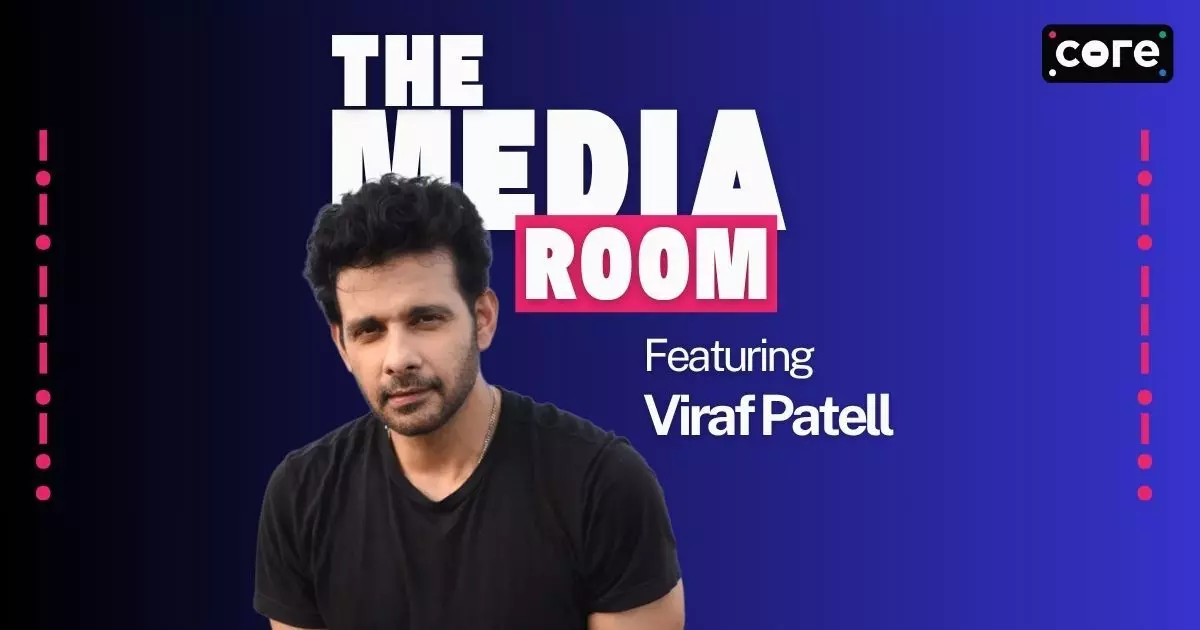
Viraf Patell On Why New Writers Struggle To Break Into Bollywood
- Podcasts
- Published on 26 Aug 2026 5:30 PM IST

Through Frame Your Idea, Viraf Patell is working to uncover new writers and bring fresh stories to Indian cinema.
How does Frame Your Idea help aspiring writers pitch their scripts directly to Bollywood producers? Viraf Patell joins Vanita Kohli-Khandekar to explain how the FICCI Frames initiative connects screenwriters and filmmakers with studios, producers and industry decision-makers.
In this episode of The Media Room, Viraf Patell explores one of the biggest challenges facing India’s film industry. Thousands of writers have compelling stories, but few have direct access to the people who can bring those stories to the screen.
Frame Your Idea was created to bridge this gap. What began with 115 writers and 650 meetings has grown into a curated talent marketplace featuring more than 450 writers, around 75 producers and over 3,300 structured pitch meetings.
Viraf explains how the platform works, what Bollywood producers look for in a script and why only 5 to 7 percent of pitches result in another meeting. He also examines the business behind talent discovery, including the oversupply of creative talent, the limited demand from producers and the high barriers facing aspiring screenwriters.
The conversation includes success stories involving Netflix’s Choked, Disney, Colour Yellow Productions and Dharma Productions. It shows how a single pitch meeting can lead to a film deal, a writing opportunity or the beginning of a career in Bollywood.
Viraf also reflects on his unconventional journey from the Merchant Navy and Mr India to YRF television, screenwriting, Gujarati cinema and acting in Pathaan. He discusses learning screenwriting from Boman Irani through Spiral Bound and co-writing the National Award-winning Gujarati film Kutch Express.
The episode also features Viraf’s personal account of Shah Rukh Khan’s generosity on the Pathaan set and a glimpse into his role in Hansal Mehta’s Gandhi, starring Pratik Gandhi with music by A.R. Rahman.
Watch the full conversation to learn
* How to pitch a script to Bollywood producers
* How Frame Your Idea works at FICCI Frames
* Why talented writers struggle to enter the film industry
* What producers look for in writers and filmmakers
* Why most script pitches do not progress
* How Bollywood discovers new writing talent
* What Viraf Patell learned from Boman Irani
* How Kutch Express became a National Award-winning film
* What Shah Rukh Khan was like on the Pathaan set
This conversation is essential viewing for screenwriters, filmmakers, actors, media professionals and anyone interested in Bollywood, film production, creative careers, script pitching and the business of India’s media and entertainment industry.
Subscribe to The Core for informed conversations on Indian business, media, technology, financial markets and the forces reshaping the economy.
NOTE: This transcript is done by a machine. Human eyes have gone through the script but there might still be errors in some of the text, so please refer to the audio in case you need to clarify any part. If you want to get in touch regarding any feedback, you can drop us a message on feedback@thecore.in.
—
TRANSCRIPT
Vanita Kohli-Khandekar: Hello and welcome to the Media Room. Today I have a very special guest whom I cannot describe properly. Viraf Patel, I've known him for more than a decade now.
He's an actor, a writer, a creative director with FICCI. He has kick-started one of the biggest programmes to discover writers from across India at FICCI Frames and it was completely his brainchild. So we're going to be talking to him about Frame Your Idea but also a bit about Viraf.
So first, Viraf, just take us through all the three or four things that you do. Acting, was it the first thing that started or did it start with writing? A little bit of the genesis of how you got into the creative fields.
Viraf Patell: Just like everybody in this generation, I wanted to do something significant. I went off to the Merchant Navy and from the Merchant Navy, because Merchant Navy was going through a recession, my brother suggested that, hey, I saw this cutting of Mr. India, why don't you participate? And I went and participated in Mr. India and I won. So after five years of being in the Merchant Navy, I went and participated in Mr. India. I became a model and then the anxiety to remain relevant and be able to survive.
Vanita Kohli-Khandekar: Which year was this, Viraf?
Viraf Patell: 2005. And at that time, it was called Grasim Mr. India and I won that and I got a chance to, you know, start working in front of the camera by virtue of that and found some mentors and very early in my career. I remember this, I remember.
Yeah, very early in my career, I got a chance to meet Mickey Mehta who sort of helped me groom myself for Mr. India. I'm a beneficiary of this Parsi social camera dream. Then I met Cyrus Brocha and he said, yeah, man, you've got it.
You can go and do these things. John is doing this. Dino is doing this.
This seems to be quite a route, you know, win a pageant, go and start acting. And then, yeah, yeah. And it seemed like a foot in the door.
And then I met Boman, sir. And about 20 years back, he told me one thing that stayed with me. He said, Viraf, you don't come from a family where your daddy is going to put 20 girls next to you and make you dance in the centre and launch you.
Let Kraft be your ticket. You'll have to make Kraft your ticket. Your second name will not be your ticket.
And in some sense, he was right. Patel is not the most common leading man surname in Bombay. But having said that, that's how I started my curiosity towards.
Vanita Kohli-Khandekar: Who said this, sorry, Cyrus Brocha or Mickey?
Viraf Patell: Boman, sir. Boman said it. I met him on the sets of Vakht back in 2006.
Vanita Kohli-Khandekar: Yeah.
Viraf Patell: So, yeah, that's how I started taking my craft very seriously. I did every possible acting course in Bombay. I started with Kishore Namit Kapoor and I told and I remember him very fondly because he said, I'm going to let you do this class for free because I believe in you.
And he had come in the Grassy Mr. India as one of the mentors. And he says, I believe in you. And he was very famous that time because Hrithik Roshan had also come out from Kishore Namit Kapoor, you know, back then.
And he was really odd. So, yeah, one thing led to another. I kept on acting class, doing acting classes, TV commercials.
And that's when the first acting break happened with Yash Raj, which is when Adi started YRF TV. So, I got to play lead in a couple of shows that he made out of the six he made. One was Mahiway, the other one was Kismat.
And this is when, yeah, this is the time just after recession. This was 2010. And as I started spending time in the business, Vanita, I started recognising concepts of the business, you know, the so called television rating business, because my heart broke because we worked very hard on the Yash Raj shows.
And they wouldn't rate as much as we would expect them to. And to understand that dynamic, I started digging in more, I became very, very, very curious to learn of the trade as well. Then one day, I see an ad of Ficky Frames.
And it's got like the opening conversation was supposed to be with Shekhar Kapoor, Karan Josh, Shah Rukh Khan. And I'm like, God, I want to be in this room. And I want to listen to these people.
How could I not? So and I remember as an aspiring, perspiring actor, I barely didn't have the fees to you know, that 10-15,000 that we needed to register for a conference. I didn't have that.
So I sneaked into the conference with somebody else's badge. And much to my embarrassment, rather, I just sneaked in because I wanted to attend. He says, come here.
And let's get you a badge made. And he made me a badge. This is Manish Ahuja from Ficky.
And then he took me to meet Leena Jaisani. And, and that's how my relationship with Leena Jaisani started. And sounds like she said, Okay, you sneaked into conference.
Now we're punishing you. Now you're going to be the emcee of this conference. You know, you are this actor and all this and you can say a few lines.
Do it for us. I was like, Yeah, sure. I wanted to just be here to learn.
And that's how the association with Ficky Frames started. And this is back in 2010. Yeah.
Vanita Kohli-Khandekar: But that's how I met you. I met you when you've been emceeing Frames and I'm on stage anchoring something and we exchanged that little banter. But tell me, you've done written Kutch Express, you acted in, I was looking up your shows, a lot of Gujarati films, a lot of Pathan, of course, with Shah Rukh.
You're one of the most famous ones. And more recently, the Titan Story on Amazon MX player. So, you know, a lot of very good, solid roles have come your way.
But yet your heart seems to be in writing. What is it, Viraf? And I'm not saying that you need to choose or whatever, but I'm just curious that it seems like your heart is in writing.
What is the thing which interests you most? One, part one of the question and two, therefore, how was Prem your idea born? I want you to take my viewers through that.
Viraf Patell: You know, I kind of beg to differ a little bit that, OK, my heart is in writing because I think my heart is in storytelling. Last few decades that we have siloed storytelling into acting, writing, camera work, direction. But when we study the greats like the chaplains, like the Dilip Kumars, like our very current legends like Aamir Khan and you know, who have left bodies of work that reckon with the Clint Eastwoods and they don't silo themselves.
They integrate themselves and learn every discipline of storytelling. And that, I think, is what I approach myself with. I was doing a short film with this lady called Farida ji and she is in Three Idiots also and she plays Madhavan's mom.
And she was a child actor. She was a child actor with Dilip Saab. OK.
And she said. I think I know who you're referring to. Yes.
And she told me that Dilip Kumar Saab would not be just sitting around when his take is not happening. He would call the kids of the film and say, come on, do your lines with me. And he would get into that and he would be a contributor by and large of the process of storytelling.
And then I have seen Aamir Khan on set and how hands on he is on everything. And then I hear stories about Clint Eastwood. I've not met him, but when I look him up, he's quite a storytelling icon in my head.
So I don't silo myself as an actor, writer, director, producer. I'm not a student of storytelling. As long as I'm into storytelling around the stage behind, you know, helping someone do a stage programme.
I just like to see myself as somebody who has some gifts which can contribute to storytelling. I just try to use those gifts as wisely as possible. How was Frame Your Idea born?
In 2014. Firstly, are you satisfied with that response? I think that's fine and clear enough for you, right?
Vanita Kohli-Khandekar: I'll come back to it. Don't worry. It's all being recorded somewhere.
Oh, my God. I like that. I like that.
Because I had questions about Gujarati versus Hindi writing. But I'll come back to it.
Viraf Patell: Awesome. Awesome.
Vanita Kohli-Khandekar: Awesome. Because I tend to put multiple questions and it's a fault with me.
Viraf Patell: Yeah, that's okay. That's okay. No problem.
So you asked how Frame Your Idea started, right? So let me go back to 2014. There was, should I name the writer?
What the hell, I think I should. There's this lovely writer called Rajshree Raju who had written this book. And she was, you know, hustling at the conference like all of us do.
And for a writer or an actor, or maybe sometimes a filmmaker, the hustle at Ficky Frames usually becomes like catching hold of the decision makers or the popular stars when they finish their work on stage and they get to the VIP lounge. That's the only brief window you would get to say, hello, this is who I am. This is what I do.
I'd like to collaborate with you. Here is my card. Can I take your card or whether you're trying to get a 30 second window with a Gaurav Banerjee or whether you're trying to get a 30 second window with a film star, or just any channel head, producer, Anurag Kashyap, you know, everybody comes there.
So likewise, Vidya Balanji had finished her session and she was going back to the speaker lounge and Rajshree was just quickly following her and trying to get a word in. Vidya Balanji gets into the speaker lounge, Rajshree gets stopped at the security and I was behind Rajshree. So I nodded at the security, my saviour complex, God complex, guilty as charged.
Rajshree goes in and she starts talking to Vidya. Vidya is very polite. Oh, wow.
Yes. Tell me everything. And she's looking at a book, she's talking, talking.
And as the conversation grows longer, maybe two minutes, three minutes, you know, I can see Rajshree is like getting tired, bending down at the lounge space. And there is no other space in the lounge because there are other popular people already occupying those seats. And finally, Rajshree had to kneel down and finish the conversation, you know, not because Vidya wanted her to kneel, it's just that sometimes when you're tired, and you want to continue the conversation.
But something felt wrong about that frame, because that stayed with me. And it is not because Vidya ji was impolite, or it was not because Rajshree was, you know, doing it wrong or something, she was trying to do her best to. I remember Vidya taking the book very politely and said, I'll get back to you or whatever.
And they exchanged details. And that moment got over. But that frame of a writer kneeling, stayed with me.
I wasn't even a writer then. And I kept hearing and it's been going on at all our major media and entertainment conferences since the last 20 years that oh, we have to we have to empower our writing and our writers, we have to empower our writing and our writers. And I was like, I went to Leena ji and I grumbled to her like a good Parsi should grumble.
Okay, you know, we are doing all these large grandstanding conferences, and we can't give a writer some dignity and all of this. And she's like, you are grandstanding yourself by taking up this whole thing. Why don't you do something about it?
Here, I give you the stage, go do something about it. I said, I can't. Yeah, go, I'll back you.
What do you want to do? I was like, we should just give them rooms. Yeah, 10 minutes with any producer.
She's like, okay, go. And then I went on the spree to convince producers and tell them, listen, if we gave you a room for whole day at the conference, and we sent writers 10 minutes, all the time throughout the day, would you come? And the first producer I had to convince was Disney.
And that was Showankar who was that time in Disney, who's right now I understand it's Sony. And he said, I like the idea. You convince Malvika, my assistant, and then we'll see.
And that's when Malvika Khatri heard me. And she said, Yes, okay, we are coming. And that's how I got my first producer.
And because I got Disney, I went to Excel. And then I went to so I managed to get about eight film producers for the first year. I had nothing to do with that.
Writing, I promise you, I had no credits that time. I had just curiosity.
Vanita Kohli-Khandekar: Which year, just to contextualise.
Viraf Patell: This is 2000.
Vanita Kohli-Khandekar: First one was 2000.
Viraf Patell: Okay. And I got managed to get some eight film producers, including Sikhiya, I think, and the promos are still online of how we did the first year. And I got some television producers.
I went to then Anjum sir, who champions the cause of writers. I said, Why don't why doesn't SWA partner with us? Yes.
And he's like, Listen, we've been wanting to do our own thing. I said, till then, you support us here. And then he supported us.
And I remember the first edition of frame your idea had 616 producers, out of which eight were film producers forward television producers forward, like nonfiction and all of that. And we had 115 writers and we managed 650 meetings in three days. This was edition one.
And something had started the next the next year, because this proof of concept was there. The next year I was able to get like 27 producers. And then we just then we just kept not looking back.
And Leena ji also started believing in this because a lot of people within the conference also started saying, Hey, this is this is interesting. This is making sense. I had some structured meetings with these people.
And then we started finding success stories. And over the last week, of course, during COVID, we had to shut down because like every event with space, everything took a beating during COVID. And in November 25, we Leena ma'am asked me to revive it for Ricky.
And we revived it. And last year, we had 74 producers or 75 producers and over 450 writers. And we did 3300 plus structured meetings in two days at the Fairmont.
Now these are 3300 into 10 minutes, which is 33,000 minutes of creative exchange. That's, that's, that's, that's the, that's the big deal. And yeah, that's how it was last year.
And now we're set to roll in for the next year as well.
Vanita Kohli-Khandekar: I love the frame your idea because I remember when Leena mentioned it to me, I don't know how years back. This for my viewers, Leena Jasani was the director at FICCI for frames, which is a media and entertainment conference, which is the one which Virat hosted. I don't know if you still host it.
You don't host it anymore.
Viraf Patell: I think they've all gotten bored of me. And they're like to frame your idea.
Vanita Kohli-Khandekar: So the point is, I think it plugs a huge gap in this ecosystem, where you keep saying that talent, but there is so much writing talent available across the country. You just don't have a platform with it. And online is not a great platform to make pitches.
You know, though you can reach out and get contact, but when you have to make pitches for stories, it's very difficult. So therefore frame your idea is a great idea. But you know, Virat, if I was to ask you, how would you, and this is pre-talk, we talked about this.
How would you measure the success? I mean, how many shows and movies have come to fruition or what are the measures with which you would say that frame your idea? Because the quantum of meetings just tells you there's a hunger to tell stories and there are a lot of people and producers are also looking for new ideas.
But taking this forward, how much is the ecosystem absorbing and churning out from this particular forum is what I'd like to understand.
Viraf Patell: I think there are three things here that interesting things I'd like to share over here. I'll start with the most pertinent question, which everybody asks us when we talk about frame your idea, that does this even lead to anything? Does this matter?
Does it need to exist? And when we started doing these things, when we kept saying to ourselves, you know, even if one life changes because of this thing, it's worth it. You know, we are doing 3000 meetings or whatever, one life changes, it's worth it.
Now, what's the barometer of an event, which is pretty much like a speed dating event? You know, between here, the two involved parties are a writer and a producer or some aspiring filmmaker and a producer. And you can't stand outside a speed dating event, because we've all heard of speed dating events.
I'm going to use this metaphor and ask that how many of them are getting married today, or in the next six months, and so you can't put that measure of success. What you can ask is that how many of these people who met want to meet again. And that is the barometer of success for an event like frame your idea.
We are not a lab. We are not a competition. We are a curated marketplace where we give a chance to people who may otherwise not have access to this kind of decision makers, and give them an opening and those decision makers may not have a chance to meet them because of geographical or XYZ challenges, right?
We have people coming from Ladakh, Amsterdam and North East and North South Kochi, everywhere, Gujarat everywhere. So that's the barometer of success in my head that how much of this converts to future meetings. By and large, this number is 5%.
What do I mean by 5% 5 to 7%. Okay, if we've had 3000 meetings, we did a survey with the out of all these writers you met, how many writers would you like to meet again and be curious about and what you know, you want to check out the material and you want to know more or you just want to meet them again because you found them interesting. And we did the we did the tally about 200 220 producers, sorry, 220 writers were called in again for the next meeting.
Now this is, this is the dipstick we did. All right. Now, here's the interesting thing.
This success rate is not changed over the past seven editions of frame your idea. And there's this executive called Sri Dattri, who used to be with star, I don't know where she is now in life, but she gave me this insight. She used to come on behalf of staff back in 2016 17.
And I said, you know, a star, you are starting, you know, use the star network, and you have so many people pitching to you. And every day, you must be having like 10 people wanting to pitch something to you. And you're meeting them, you're meeting so many people every day, how much how much converts, she says, if we meet about 100 people in the office, about five, we like to meet again.
So that's the same metric of success, which is happening while sitting in her office over six months. And here's the same metric of success that is happening while they are sitting for two days. So it's consistent more.
Yeah, that's, that's a lot of getting to meet values, you know, 5% success, the same success rate, but squeezed into two days versus six months. And think about it. No, Vanita, when we schedule this call, we had to do at least three four phone calls, exchange two three SMS is to confirm Hey, are we going to do this even because even though we know each other for so long, we had to plan it.
So there is a lot of logistic effort that goes into setting up the meeting. And the cost, you know, just to get an Uber to go to someone's office, at least 500 bucks and whatever to and fro or maybe even if you're taking a bus, I don't know. But here is the rationale.
It's in two days who you can meet up to 24 producers.
Vanita Kohli-Khandekar: So in music companies as a function called artists and repertoire in the old style music labels, where the function of that particular department was to wet new singers or new talent. And that was supposed to be one of the most inept departments in most music companies, because all talent was discovered totally randomly. Usually, you know, from a judge in India, if I was to take a judge, it's saying who had to sit outside record company's office for hours before anybody heard him out.
And I think what frame your idea is doing is doing an A&R kind of function at scale in a focused manner. And I think that's why I like it so much, because it plugs a real need gap in this particular media and entertainment business that both of us like. But tell me one thing.
So it continues. And I mean, does what does FICCI get out of it? Do you charge something for the people to come and present ideas?
How does it work?
Viraf Patell: So, you know, the whole effort of frame your idea is powered by the resources of the mother conference that is FICCI Frames. And FICCI Frames itself is powered by the, you know, the pillars of the industry, whether who are the main sponsors, et cetera, and all of that, whether that's, you know, at times it's Meta or Jio or Netflix or Star or, you know, every through the 25 years, 26 years of its existence, you know, these pillars of the industry support it. What we do at Frame Your Idea, we try to sort of reduce the impact on the mother conference by charging a fee to the writer.
Obviously, a very uncomfortable place to be. I've been doing this for over 10 years. So I am extremely uncomfortable about it that I'm charging the lowest member in the food chain a registration fee.
Vanita Kohli-Khandekar: Yeah.
Viraf Patell: And it's the fact is not lost on me. And I have been trying very, very hard to bring in some sort of fee for the producers, which can offset the cost and make it slightly more affordable for the writer. But I think I have a few more battles to fight before I reach there.
Why are we in this place? Because the demand and supply is a very skewed situation. There's an oversupply of writers and talent and the demand is very little.
So in any market scenario where you have such a skewed demand and market supply situation, you are going to land up with a situation like this, which may not sometimes be. My vision is that I make Frame Your Idea so undeniable to the producers that they come and say, we would like to pay and come here because we really find good talent here. And we are building our repertoire of success stories.
Right now, you know, out of most, can I be honest, when I go to producers and I tell them, please come to Frame Your Idea. And they're like, why do I need to come there? And you know, I'm already getting pitches over here, where I'm sitting at my office.
So I have to sell the idea to them and get them to this space for starters, which is some come with the vision that oh no, I might be hungry and let me get something from there as well. Some come for optics, though we want our brand to be seen over there. Some come for like, okay, Viraf is calling, he's been calling me since so many years and let me just go there.
You know, it's different motivations for every producer. Some producers tell me, I remember Rajiv Singh from Rakesh Mera Productions, when I did it for the first time, he was so overwhelmed by this effort. He's like, please take money from me.
I remember Shamath when working with Aamir Khan Productions, he came and he did meetings for the first time. He's like, why aren't you charging me? I said, Shamath, I can't charge one or two or three well-meaning producers.
And then I don't charge the rest because the rest of them don't want to come if I charge them. So I need to earn my stripes as a platform, as a space, as a curated marketplace, such that the other stakeholder community that is the producers said, yes, we are willing to pay this dollar. And then we would be hopefully be able to subsidise the entry barrier for the cost barrier, at least for the writers.
So that's the long and short of it. And I'm glad you brought this up because this is something that I try to fight with every day when I'm trying to put Frame Your Idea together. But the quest is on.
Vanita Kohli-Khandekar: A couple of success stories from Frame Your Idea. Can you share some examples with me offline?
Viraf Patell: Okay, one of our first success stories is, happy stories is, Nihit Bhave was this journalist who I think met Phantom in 2016. You know, had nothing to do with the business, met, I think, Neha Sinha, who was back then in Phantom. And his script reached Anurag Kashyap, who was that time part of Phantom.
I think that over the years, Phantom got dissolved or whatever. But Anurag stayed in touch with Nihit and he liked the film. And that film became choked on Netflix in 2020.
Vanita Kohli-Khandekar: It was a post demonetisation.
Viraf Patell: Yes.
Vanita Kohli-Khandekar: I remember the film.
Viraf Patell: And because the demonetisation happened, when I met Anurag in 2017, I was like, Anurag, are you doing anything with that script? Anurag and I were shooting an ad together. And he's like, Oh, yeah, I have not given up on that script because after demonetisation, it's become all the more relevant and I have to do it.
So he told me this in 2017. And then finally, the movie did come out in 2020 on Netflix with C.R. Meemian and Roshan Mathew, I think. Then there is this element called Siddhant Ashdeer, who sold a script to Disney and got a seven figure check from Disney because of meetings at Freemuir Idea.
Then there is an Amol Mehrotra, a writer called Amol Mehrotra, who came in for the first time from Ahmedabad, fresh off the boat or train from Ahmedabad. And he got a job with Eros back then. And that's how his career started in Bombay.
He got a job as he got some 60, 70,000 a month. And that's how his intern careers. So and and from in 2019, Abhishek Bandekar was found by Colour Yellow Productions.
And Amaya Mohanty, who is now in Juggernaut, was that time with Colour Yellow. And she said, Virat, I just found the boy interesting. And I told my bosses that, listen, this boy we found is interesting.
I don't like his story right now. Let's keep him. And they just staffed him.
Over the years, Abhishek went... Colour Yellow is Anand Rai, no? Yes, Colour Yellow is Anand Rai Himanshu Sharmaji.
And this year, Abhishek Bandekar's movie released, which is directed by Bijoy Nambiar, the creature feature Tu Ya Main. And ironically, or poetically, Abhishek is now sitting and listening to pitches on behalf of Colour Yellow at Frame Your Idea. Now he's on the other side at the same platform.
So that's a full circle story. And the total duniya gol hai moment. And here is another one, if you allow me, there is this boy called Deep Dholakia from Gujarat.
Okay. And he's been, I know him since about four or five years because of my, he's part of the same screenwriting community that Baman Sir runs, Spirals Bound. And Mikhil Musale introduced me to Deep and Deep said, Viraf, I have been writing and we've been in touch.
And then I said, last year, I said, Deep, the entries are closing for Frame Your Idea. You keep bugging me that you want to meet people and all that. Why don't you come here?
And so Deep Dholakia was one of the last moment entries at Frame Your Idea 25. He finally gets to meet Dharma amongst the 10 other people he met. Dharma doesn't like his script.
But he tells Dharma, guys, I've made this small Gujarati film. Would you like to have a look at it? And they're like, yeah, okay, send us the link.
Then they say, okay, organise a screening for us. Then there's another screening. And at the end of it, they say, this will be Dharma's first Gujarati release.
And the name of the movie is Zindagi Once More, it stars Siddharth Randheria and Deep Dholakia. So now, this is the diversity of successes that can happen. And they are far and few.
But let's face it, the gestation period of something being seeded and something finally coming on screen is huge. And there's many a slip between the cup and the lip in our business, but it's working.
Vanita Kohli-Khandekar: I mean, in the absence of so many other mechanisms, which this business could have had, which studios could have had, I mean, this is a fabulous mechanism to have in place and to be put in place. But to come back to your thing that you would like to be described as a storyteller, the fact is you're also an actor. So when you wear these hats, so when you're an actor, are you analysing the story you're part of?
How does that work? Because though we've had, especially in the Indian film industry, we've had lots of people who've been actors and storytellers or writers. But when you do these two hats, and especially because you got into the developmental end so strongly, what sort of background noise is running in your head when you're acting?
Viraf Patell: Okay, let me be honest, when I was just initially starting out as an actor, my dream would always be like, oh, it'll be like a Fata Poster Nikla Hero kind of entry. Wow, then the narrative should serve my vanity. You know, that's do I have the smart line?
Do I have that moment where I can make people move to tears? And do I have that funny line that made people chuckle? And that's the way I would, in my very, very early days, observe a written material that would come to me as an actor.
What would be my approach to the craft? Slowly, steadily, as I started learning writing more and more, I remember my girlfriend in 2008, back then, now ex-girlfriend, she was so present to the fact that I'm curious about what goes on behind the scenes. She gifted me Sid Field's story in 2008.
And I have been trying to learn about this entity called script since 20 years. Like, what is a script? Why do people give it so much importance?
You know, you take a star and make a movie, everyone comes to watch it. And then as I started learning more about the writing process, I was like, oh man, this is the holy grail of storytelling. It all begins from here.
Whether it's character, whether it's theme, whether it's structure, and this is the whole, the, you know, that, that is what my education in storytelling as I evolved in. And I was not one of those privileged kids who went to, or rather, I studied about life in Merchant Navy, that was my graduation. I didn't go to NYFA and did a degree for two years.
I didn't go to FTII and come and then bring my education and then started working here as a professional. I had to work as an actor, pay bills and learn about the craft around and keep being relevant in the business. That was my modus operandi.
And that's what I've been doing. So while learning on the job, it became increasingly clear while I was observing great technicians, I have been lucky to work with some of the nicest technicians. I mean, be it Nopur Asthana and my first show, you know, there was Naresh Malhotra who made Yeh Dil Lagi.
He was the director of Yeh Dil Lagi, you know, that Saif movie. And he, he and I were running into a little bit of a conflict in a Yash Raj show. And he gave me this education, which is so necessary because I was being this honest actor and he was like telling me, Virat, bring it up, you know, bring it up.
I want to see your pain. And I was like trying to be all subtle and real. And he's like, come here son.
When you do TV, remember that when people watch TV, it's a 4 by 3 screen. And there, the kid is crying, the bell is ringing, the cooker whistle is blowing, someone is telling the daughter-in-law, daughter-in-law, bring me food. Despite that, their attention should not move away from your close-up.
So now will you do it subtle or loud, you tell me. And I was like, sir, I'll make, I'll, I'll give you what you want. I got it.
So then I started learning the distinction between performance versus medium. He said in a film, you have a captive audience, so you will perform differently. And stage, you have to project because your audience needs to hear you, you can't be quiet.
In television, it's far more compelling. And now social media has its own monstership, right? So this whole learning is, it comes to four.
And I give most of my storytelling education credit to Boman sir, because when he started Spiralbound in 2020, he made us watch like 40-50 films, which are the classics. And in the lockdown, he would sit with us every day, one and a half hour, breaking down the 40-50 top classics, you know, from right from Sunset Boulevard to Birdman to everything, everything. And his guru is Alex De Nilaris, he considers him as his guru.
And he broke down those movies for us 15 minutes at a bit, you know, he would make us watch 15 minutes, then we would read the pages. And then he would describe why did the writer make this choice? Why is it there, and then join it to the climax.
And then we, that deep study was actually my university-like writing education that happened during the pandemic. And that's one of the good things that came out of the pandemic for me, at least for a lot of people, it has some challenging memories. One of the good memories of the pandemic was my storytelling education, thanks to Spiralbound started by Boman sir.
And that gave me the impetus to finish the scripts that I've always been dabbling in. And that's when Kutch Express happened. Because my fellow producer collaborator Mansi Parekh would also come to Spiralbound.
And she, she, you know, there's a very funny story how I landed up in Kutch Express writing credits. Can I tell you?
Vanita Kohli-Khandekar: No, before that, can you tell my viewers what is Spiralbound?
Viraf Patell: Spiralbound is this online phenomena started by this legendary man called Boman Irani. Something over there doesn't make sense. I'll tell you why.
Because everybody who knows Boman sir, he becomes invariably a mentor to him, because he has so much to share. And I have been chewing his brain since 20 years. I remember in 2015, I went to him with my first attempt at storytelling script.
I said, Sir, I have this script. And I have this movie that I want to write, I want to cast myself in and all of that. And he gave me my first lesson in structure in 2015.
He said your movie starting too late, you need to fix this. And so he knew since 2015 that Virat is curious about writing and stuff like that. This was during his journey of learning screenwriting because he took a concept from Sujoy Ghosh.
And he decided to write it as a movie which became Mehta Boys with Alex DeLaris. So he kept on studying with Mehta Boys. 2020, March 24, the lockdown happened for us in India.
I think roughly if I've got the dates right. I remember this day on 5th April, I get a message from Boman sir. Virat, I am doing these online screenwriting classes.
Do you want to join? We will just connect at 12pm and we'll discuss screenwriting. And you want to come?
I said yes, yes, yes. And I didn't care to ask, what will be the charge? I said we'll see, we'll do something, we'll ask for a discount from sir, we don't have money, everyone is in lockdown, etc.
So we joined. And it turns out he is just spewing screenwriting wisdom. And then he gets his cousin who is Anosh Irani, who is his nephew actually, who teaches creative writing in Canada also to start helping us and teaching us.
And we're like, wait, what is happening? This is not stopping and he's doing it and it's not becoming like a few days of enthusiasm. He is doing it like a prayer religiously every day.
It became six weeks, it became six months, and now it's been six years. Boman Irani teaches screenwriting for free to anybody who wants to learn from anywhere in the world. All you have to do is keep your camera on and mic on mute, and come with curiosity, and he welcomes everybody.
And most of my screenwriting education, whether it is Kutch Express, whether it is Shubh Chintak, whether it is everything I create now, is all thanks to Spiralbong.
Vanita Kohli-Khandekar: How different is it to write in for a Gujarati film versus Hindi or any other language? Does the language make a difference to how the story pans out?
Viraf Patell: No, there's an answer to that. I think stories are universal because of the human...
Vanita Kohli-Khandekar: Do you write in Gujarati?
Viraf Patell: No. So the process I had for me as a Gujarati writer is that I would write it in English, then the Gujarati dialogue writer would come in and give it the cultural leaning required to contextualise that scene in Gujarat and work with... We would collaborate and bring in that cultural leaning to not...
So for example, the funny thing is that when I would read the script to him, he'd be like, he's not proficient in English. He's like, I don't understand English. So how am I going to work on this script?
So then we would write... Then I would write the dialogues in Hindi. So then he would convert Hindi to Gujarati.
And that's the process we followed because the writer was more comfortable converting Hindi to Gujarati. So I had to write the dialogues twice, actually. So I wrote the script in English, my producers approve it.
Then my fellow dialogue writer has to approve it because then I have to write all the lines in Hindi. And then he gets it. So the point is that no, I think stories are universal, especially good stories are universal.
And Kutch Express is extremely universal. It's a story of a married woman who has been married for 20 years and finds out her husband is having an affair and how when the world shakes and how is she going to save her marriage and what does she find along the way for herself and her family is pretty much the logline. Now, this can be made in Spain.
This can be made in America. And the arc is durable. And it's all thanks to what Spiralbound taught us.
That's why Kutch Express opens with thanks to Boman Irani, Anush Irani, Alex Danilaris and Spiralbound community. That's because Bansi and we realised that Bansi Parekh, my producer and I realised that we have this Kutch Express because of what we've learned from Boman sir. Yeah.
And it won the national award for best film, not best Gujarati film. It won the national award for best film in 2024. So it felt a little validating.
Vanita Kohli-Khandekar: Very nice. Must have felt very good. Okay, last couple of questions.
One is, are we doing Frame Your Idea this year on 30th September? I think Vicky Frames is happening.
Viraf Patell: Yes, we are. Yes, we are. We are having Frame Your Idea this year.
And the submissions close on August 30th. And I would urge all people who have a story to share or a script that is sitting in their laptop or feel rejected from a particular lab or somewhere. Here is another door.
Do knock it. Yes, there is a fee. Please bear with it.
But try and make something for yourselves from that platform. That's my humble prayer to you. And if you just come and grow from it, we'd be much delighted.
Vanita Kohli-Khandekar: Very good. Glad to hear that. And the last question comes from a Shah Rukh fan.
What was it like working in Pathan with him? I think I've asked you this at Frames, but I want my listeners to know.
Viraf Patell: Shah sir, as he's called on set.
Vanita Kohli-Khandekar: Oh, okay.
Viraf Patell: With love, you know, like Shah sir on set, you know, the 80s will go like Shah sir on set, Shah sir, suddenly everybody's like disciplined. I think this is what happens when there are legends on set. Like I've been on set with Reema Lagu ji also, right?
Who's been in the business for she was. Yeah. So when she would come on the sets also, like everybody would be.
And that's so kind of cute about our culture, because the moment we see a veteran walking on set, everybody is on their best behaviour, whether it's Mahesh Bhatt, or whether it's Reema Lagu, whether it's now Shah sir, or whatever. So anyway, I remember this clear lesson of generosity from Shah Rukh. And, you know, there's a shot where he has to, we have this action sequence where I'm one of the agents in his team.
And, you know, I'm stuck in a toppled car. And he's trying to rescue me. And I'm hanging up upside down, and he's trying to pull me out.
And then another comrade is pulling Pathan out of there, because it's a ticking time bomb, because Pathan may sacrifice his own life trying to save me. And I'm trying to move inside and tell Pathan, go away. It's my ticket is punched, you go.
And, you know, I get to do this parting Jai Hind shot with him. And so we were shooting that sequence. And for those who have sorry, who've not watched Pathan, sorry, this is spoiler alert.
But here's the interesting thing. Seniority wise, the director took Shah Rukh sir's shot first, which is totally normal. No, no questions asked.
Obviously, you honour that much seniority. So we took Shah Rukh sir's shot over my shoulder. And then it was my shot over his shoulder.
So usually what happens is that the guy goes off, the star can take a break and a body double may come in and you can shoot the same shot with the body double. And that's that's normal practise, because there are other stressors on the star. So you want to protect them and all of that.
And they want to conserve their energy for whatever reason. So I thought that's going to happen. And he my shot is placed and he you know, I'm stuck in this awkward place on a topple car, you know, in the backseat.
And then he also bends down and comes in the back from the back window and he looks at me and he holds my hand and he says, I'm doing the shot here with you. Give a good shot. And he just held my hand like this.
Come on, give a good shot. Okay, I'm here with you. Now, again, I was on set for Pathan for like, maybe for that cameo, I must have shot maximum six, seven days or something like that.
Okay. And Pathan was shot over many, many, many days and over the lockdown and all that. So he knows that okay, this boy's got this one little part over here.
And he's contributing to the story in this particular way. He didn't need to extend that generosity to me. But he did.
Because I personally I have two theories. One, he's genuinely nice one to two, I also feel that he was serving the story. Not like, because he knows that if I am giving the shot looking at him, that I would probably do it better.
Because it's him and not a body double. And he knows that's important scene because it's in the beginning of act one and it sets up the emotional ball rolling, blah, blah, blah. I think he's also a present from that aspect as well.
It was not like a mood based choice. And then I then I watch him just sitting on the when we do a lot of face replacement work and all of that CG work. A lot of times you're just sitting in the on a green screen or mounted in some particular posture and you just have to be there.
And even Shah sir has to bring that patience and he's just quietly within himself. And it's just very fascinating. I've actually had the fortune to watch all the three Khans on set and there's something fabulous to learn from each one of them.
But Shah sir totally took my heart. And yeah, so that's my that's my Shah sir story, the lesson in generosity to the fellow actor that he extended.
Vanita Kohli-Khandekar: No, I would have loved to have asked you the other Khan stories, but I'm not going to ask you the other Khan stories.
Viraf Patell: We'll save it for another chat.
Vanita Kohli-Khandekar: We'll have another chat. But that chat will be maybe after your next big hit. Because Titan is already a hit.
So you had you had quite a couple of episodes in Titan, I think.
Viraf Patell: I think probably only 1.2. Because I come in on that.
Vanita Kohli-Khandekar: But it was a it was a pivotal character who comes and changes the narrative for Titan in that story.
Viraf Patell: Yeah. Yeah.
Vanita Kohli-Khandekar: So the next next big Virat show of movie when what is coming next?
Viraf Patell: Vanita, I think that the next big thing that I'll get to be able to see myself on screen is Hansal Mehta's Gandhi. I've been able to do something valuable over there. So we're all looking forward to that because I think that some of our best stories to come out and some of our best storytellers are at work over there.
Pratik is playing Gandhi and it's fantastic. Rehman sir is doing the music and Hansal sir has made it with a lot of love. And I really hope whenever that comes out it finds it's the best audiences that there is there probably a film in the making.
There's probably a Gujarati film in the making. But I'm at a stage in life now where I want to take my voice like that voice of the crow if you can hear. Take my voice out there as a storyteller.
Vanita Kohli-Khandekar: Fine. Thank you, Virat. Thank you for being on the Media Room.
Viraf Patell: Thank you.


