



 Newsletter
 Search
Tony Gunnarsson On How Advertising Is Reshaping Subscription Video and OTT Growth
- Podcasts
- Published on 6 May 2026 5:00 PM IST
Streaming is entering a new phase defined by ads, aggregation, and consumer choice
Streaming Meets Advertising Netflix ad tiers OTT bundling and SVOD monetisation are reshaping the global streaming industry and redefining how platforms like Netflix, Disney, Amazon Prime Video and HBO Max grow in a slowing subscription market.
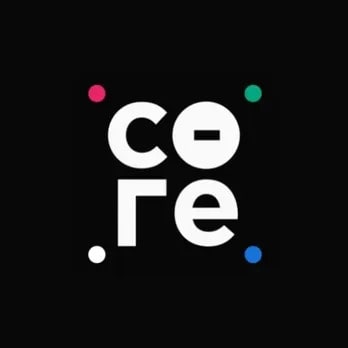
In this episode of The Media Room by The Core, host Vanita Kohli Khandekar speaks with Tony Gunnarsson - Senior Principal Analyst Online Video, Omdia, a global media and technology research firm. The discussion breaks down the future of streaming platforms, advertising led video growth, OTT industry consolidation, and the rise of bundled subscription models across global markets.
The conversation explores how the subscription video on demand SVOD industry is shifting from pure subscriber growth to hybrid monetisation driven by advertising tiers, price optimisation and large scale distribution partnerships. Streaming services are increasingly being packaged into telecom and broadband bundles, reducing churn and reshaping consumer behaviour across developed markets.
Key topics include Netflix advertising strategy, OTT bundling and aggregation, streaming industry slowdown in mature markets, SVOD versus AVOD transition, and the impact of media consolidation including major studio and platform mergers. The discussion also examines how global streaming trends are influencing markets like India, where digital video adoption is evolving at different speeds but following similar structural patterns.
This episode is essential for professionals tracking business news, digital media disruption, global entertainment industry trends, and the future of subscription based platforms in a post growth streaming economy.
NOTE: This transcript is done by a machine. Human eyes have gone through the script but there might still be errors in some of the text, so please refer to the audio in case you need to clarify any part. If you want to get in touch regarding any feedback, you can drop us a message on feedback@thecore.in.
TRANSCRIPT
Vanita Kohli-Khandekar: Hello and welcome to the Media Room. Tony Gunnarsson is, designation-wise, he's a Principal Analyst for TV, Video and Advertising at OMDIA, which is a global media consulting, media and technology consulting firm based out of London. Tony is based out of Sweden, but he is my go-to man when I want to understand anything about online video.
And Tony's specialisation or his research interest is subscription-based video services, which have been under a little bit of fire, with a lot of bundling going on, with a lot of churn happening. And how are services aggregating themselves and looking at growing their numbers, because they're looking at advertising as a growth area. Tony's been doing a lot of research on this lately, and I plugged into his research and had a long chat with him on where the global market on this one is headed.
Remember, Tony specialises in markets outside of India, so the conversation was about where the global markets are headed. But remember, streaming and online video is a global business, so whatever is happening outside is happening in India as well, maybe at a different pace than it may be happening in the US or in Western Europe. So over to Tony to hear what is happening to pay video and what is happening with the Paramount Warner merger also.
Over to Tony. Hello and welcome to the media room, Tony. Lovely to have you.
I think it's your second time on my show, I think. Last year, we talked about linearisation of streaming. I remember you were there on the show.
So Tony, you've done a lot of work in the last few years, and I see that the Omdia profile says that you now specialise more in the escort side of things and in trying to understand online aggregation. And I remember this long conversation we had, I think in Singapore, where you were doing the research, a lot of grunt work in that research. So I had four or five key questions, and really, you have to take off from there.
First of all, where are we on the whole online video streaming space? And if you want to specifically focus on subscription video streaming, please do. But my sense is there's some sort of stability has come into the whole marketplace.
So, you know, we discussed linearisation of streaming last year, but I think now it's become literally broadcasting as far as I'm concerned. I can see the same plays happening, DTH and cable plays, and I can see aggregation plays. So please take my viewers through what's happening.
Tony Gunnarsson: It is slightly, yeah, it is, how can I put it? There's definitely stabilisation going on.
Vanita Kohli-Khandekar: Okay.
Tony Gunnarsson: But there's also a lot of, there's frantic activity happening behind the curtains. So I think one of the big, if I sort of chart the last couple of years to where we are today, I'll get to the main point. So the big groundbreaking change for SVOD, and therefore streaming, was of course advertising, making a return to Netflix.
And they weren't the first, they aren't the pioneers. Hulu's been doing it in the US for many years, but when Netflix did it, and it's still a limited experiment from their side, so to say, they only have 12 markets. They haven't expanded everywhere.
It's still the same as it was when they launched it. But it was a shocker. It was a huge, it really was a big deal.
Then that came after a year when growth had disappeared for SVOD. For the first time ever, we saw negative results in 2023. 2024, partly due to natural order of things, was a slightly better year, but also because of ad tier, which are cheaper versions of Netflix and SVOD services with advertisement.
Now that has continued a little bit. Our longer term forecasts always indicated that growth rates would just fall off a cliff ultimately. We're looking at late 2020s being low single digit annual growth rates for SVOD.
Remember, we spent 15 years talking about Netflix ads, 10 million subscription in the US in three months. Insane astronomical growth behind SVOD. Then suddenly came to nothing, and then advertisement.
All of this was very much foreseeable. We've been expecting it. It's the type of thing that becomes political.
How, as forecasters, how can we actually say this? But we carried on. But anyway, the first step was a domestic US market expansion of ads here, and then international.
I think at the time I made a report saying, by the end of next year, all the big services will have advertisement in every major market. That's where we are today. Now, the key around advertisement is that you need scale.
You cannot just have a little side of business with advertisement, because then no one's going to buy the advertising space. If you're Netflix and you're selling advertisement, you're advertising eyeballs of 300 million worldwide, not wild markets. Where we are today is, as I say, it's a deceptive point of stability, but so much craziness is happening in the background.
One of the big takeaways that we've seen this year, and I'm going to list some of the key things, but the big one for me, from my point of view as an analyst, is seeing how the third-party bundling of Asphod has really become focused on those ad tier versions of the big streaming services. Did you see what I mean? It's an economic thing, where if the streaming service costs $5 per month in North America and Western Europe, as opposed to $15 a month, one-third of the normal retail price, then you can suddenly have three services for the same price as one in a bundle for customers.
To make those bundles look amazing, you have to have multiple services in a bundle, and that's kind of what we're getting now, late 2025 and into 2026 already. It's Netflix plus Disney plus perhaps Paramount Plus plus HBO Max plus perhaps another service, all of them, and they come in at the price point of around $25 a month. Typically, we'll also get a linear, perhaps IPTV service, a basic pay TV package included in that price.
We're looking at $25 a month, which is, when you talk to customers, they're like, oh, okay, well, that makes sense. You have so many streaming services and they cost me so much money, but I can just go to my telco, my mobile phone provider or my home broadband provider, and I can get all of those services with huge discounts. It's not necessarily huge if you look into the numbers, but because we're talking about those cheaper basic ad tiers of the streaming services, it's mind-blowing.
Examples of this, Canal Plus in France, Deutsche Telekom is doing a little bit of that in their markets, Sky in the UK. Suddenly, we're calling it super or premium super aggregation bundle. The premium refers to, it's the big names, it's more than three, four services in one package at one set price.
I'm sorry for getting excited, but it's somewhat unprecedented that they're doing this.
Vanita Kohli-Khandekar: No, no, no, Tony. I think we're forgetting that this is exactly how cable and DTH and everything, and then telco started aggregating them and the DTH players. It's the same trajectory that linear video services saw that we are seeing in on-demand, but you made a point about only 12 markets having Netflix.
I think in many ways, the online video market is very determined by what Netflix does. It sets the benchmarks in most cases, I think, especially on product and pricing on those parameters. I understand that a meta or a YouTube is about scale.
In India, for example, 400 odd million users and therefore the scale is huge, but on a Netflix, aren't you going for what you miss in a YouTube or a meta? You're going for the premium audience. You're hoping that you catch a sliver of the, it's not the smart TV audience, it's not the fast audience.
This is a Netflix audience, it's paying whatever, I don't know, it's $10. In India, Netflix is six times what prime video is in a month. You're really paying a high price.
You're reaching out to this. Of course, Netflix doesn't offer advertising in India, but isn't that the logic? I'm very curious about why you said it has to be about scale.
That's what I was curious about.
Tony Gunnarsson: It's striking to me. As a consumer, I don't understand it. Netflix taught me that I never have to watch a commercial.
It comes down to economics. For over a decade, we've kept this tracker of what video services are available and where. Typically, we have...
Only with scripted programming, not the user-generated, not the super-niche streaming services, but the ones that essentially a household will have as their offering. We're talking about 50, 80, 100 more services in virtually every market. It is such a fiercely contested place.
Yes, of course, 10 of them represent 90% of all the money generated. The rest are just outliers, something like this. Even so, 10 services.
You have the big five, US Studio, Netflix, and Amazon as well, and Apple. Then you have local services, typically one, two, three, which comes from the old either commercial broadcasters or pay TV. Then you have regional ones.
Where I live in Sweden, in the Nordics, we have regional streaming services that focus on those four markets. It's very, very busy and fiercely contested. The idea...
Internet is... I keep reminding when I go to conferences, and yes, we're 20, 30 years in, but it's still at the really early phase of the development of internet. Customers still see if you have to pay for something online, then they have different mindsets than if they buy physical goods.
I had a very good example. People don't like to pay for things, even if they aren't expensive. Compare...
At the very beginning of streaming, Hollywood wanted to replace DVD with transactional video on demand that you can buy or rent movies. They are generally priced... The rental product is priced where the ad tier of Netflix is.
The retail product, when you buy a movie, is at the premium tier Netflix. One movie that you get to keep or you can... It comes back to this a la carte versus buffet style of TV movie viewing, which has been a strain forever alongside...
Vanita Kohli-Khandekar: But tell me, doesn't this make aggregation all the more important? I mean, from what you're... And then the amount of choice.
And then when it comes to aggregation, there is only the telcos. I mean, I don't see old-style satellite TV aggregators doing the same thing. I mean, though in India, one of the companies is trying it.
So, I mean, how is it panning out in the other parts of the world? I'll leave India aside because aggregation hasn't even begun here. But is it the telcos which are stepping in?
And are the Netflix' and the prime videos of the world comfortable with being on an aggregator? I mean, how does that relationship and the conflicts within hold?
Tony Gunnarsson: Yeah, that's a great question. So, operators, whether they are purely telco or they have some sort of paid TV, typically they are moving away from cable and satellites towards IPTV, right? But all of them are...
Like we often say that every operator in the world is distributing a third-party streaming service. And every streaming service has an operator partnership, distribution partnership. Like literally all of them do.
But yeah, the one thing that I kind of predicted or expected or hoped for was standalone S4 bundling without a telco component, without the linear TV component, right? Okay. Okay.
Vanita Kohli-Khandekar: Okay.
Tony Gunnarsson: And there were some promises. Disney+, Hulu and HBO Max in the US and later with some ESPN stuff. That's a bundle.
I think I mentioned it last time. And I said, well, we're waiting to get some numbers, some credible numbers from the companies in the results. We still have no insights, direct quotable numbers on how well that is performing.
Are Americans buying that free services for the price of one bundle or not? My suspicion is that they are, but perhaps not as much because if this was successful, they would be screaming about it. Look, in the world where you have five US streaming services, free, local, and then a handful of smaller niche specific ones and so on, no one can compete unless your brand name is Netflix, because then you're the standout player, the one that every household has to have.
And it also goes back to the model. At the basic, the business model behind this is like, you can cancel. There's no contract.
The contract is one month, then you can cancel. Disney and HBO, a few others have done some clever stuff. You confirm that you will subscribe to the streaming service for a year, for example, and then you might get a little bit of discount.
So you're locked in for one year. You can't cancel. But at the root, it is one month.
If you don't want to continue, you can cancel. You just go online and cancel. So what's in practise, that means a lot of people got really savvy.
Oh, I don't think they take it to the point where like, I have $20 to spend on streaming services this month. But if they stop using one for a couple of weeks, they might just cancel that. And then they'll sign up to a new one.
And then they circulate. And then there's this sort of seasonality.
Vanita Kohli-Khandekar: They do a lot of that in India.
Tony Gunnarsson: If they are locked in a bundle, they can't do that. Hence why aggregation and bundling becomes so important. It stops churn.
Vanita Kohli-Khandekar: How bad is churn, by the way, before I ask you that question? How bad is churn?
Tony Gunnarsson: Well, we have consumer survey data internally that we use, which talks about anything, depending on the market, but one third to half of all customers say that they regularly cancel. Yeah. And so I think churn is, I mean, it's very hard to, if it's locked, the streaming services are sold to combine with your mobile phone that you typically have a contract of to 36 months until you paid off your handset.
And then you might renew, you know, it becomes much harder to leave.
Vanita Kohli-Khandekar: Yeah. Yeah. But are you seeing S-word growth per se, revenues, or even if aggregation, I know aggregation is one way to drive growth, but are you seeing even D2C, direct-to-consumer, is there growth coming or is the story largely advertising-led for online video right now?
Tony Gunnarsson: There is still some growth. So, I mean, we are approaching a sort of ceiling, certainly in the West, in the mature markets. Growth has been largely driven by the arrival of new services.
When Disney Plus came, they shut up and became, you know, second or third biggest streaming service in Europe. And they're still growing. There's still households that don't buy Disney Plus.
That's a more natural, not the sort of cutthroat rates that we used to see in the 2010s. HBO Max, which has launched in a couple of new markets in Europe just recently, UK, Germany, et cetera, they are still, of course, growing on the retail side too. No, but the big story in terms of the big numbers, certainly because they're starting at such a low rate, is all about the advertisement.
So, aside that, a lot of the analyst firms, of course, we're all observing what's happening and responding as fast as we can to changing business models. But even, you know, I'm due to write a report that I'm going to do probably in a couple of weeks that looks at to try to map this out. How does the growth for the non-advertising section of Netflix compare to that of advertisement?
And do the same thing for all the big services, because there isn't a lot of talk about this. I went to a conference where another analyst firm was up on the stage and they talked very much about the top line growth only, which kind of obscures the picture, you know, as your question. And it's understandable.
I don't blame anyone here because to be able to do that, it's actually quite difficult if you haven't been tracking the advertising side. And there's a lot of, I think, psychological factors that we have to take in for customers. Who are they?
And et cetera. So, watch this space. I'm sure a lot more of this type of analysis.
Vanita Kohli-Khandekar: I want to see your analysis on that one. But, Tony, quickly on advertising dominating the conversation. You know what, if I look at S-Word, also, you know, the whole idea of aggregating, because each service is creating a walled garden.
So, to say, Prime Video is adding, it will add subscriptions, it will add short video, it will add an ad tier, it has added T-Word. I mean, Amazon, by its very nature, can offer T-Word. Netflix is adding whatever, sports, it's adding this.
So, everybody is creating their own world. So, in many ways, they are pushing for a relationship which is more direct. And you can't blame them.
That's how you keep customers and maximise your. So, therefore, does the aggregation story sort of fall, collapses when it comes to these big services? And you could do a telco bundle and get some bump in numbers for 12 months, but that's not the real story.
Tony Gunnarsson: I was like, yes, I agree. It's walled garden, but that's where we're going. But actually, and direct to consumer, but I think we're kind of slowly moving away from that.
I don't think it's, I mean, of course, Netflix is famously the company that don't share data. They don't allow you to take the content out, full set of boxes, for example, or whatever. It all, it's super contained within their app and don't even ask because we're not going to help you.
That's the sort of approach. You come to us, we come to you, don't come to us. I'll call you, don't call me.
Yeah, exactly. Precisely. But some of the, we saw the streamers were so dependent on telco and pay TV distributors that we saw a shift.
This was two, three years ago, where it wasn't, they were begging the streamers to please, can you come into our bundle to, it was the other way around. So the streamers are courting these pay TV and telco operators around the world to be on there. They need to do it because well, everyone is looking after the margins and the revenues, return of investment, all of that stuff.
And we saw a clear change towards making money than simply making this wonderful usage and advertisement. Come on, that's as pure capital list as you can get. That's how it is.
Vanita Kohli-Khandekar: They're listed, they need to make money.
Tony Gunnarsson: But yeah, of course. But there's also a little bit, I feel like we're starting to see some loosening of those kinds of ideas around the wall garden. More and more services are, and it actually reminds me of the Hollywood in the 2000s, but more moves towards working together than working against each other.
And that's kind of where that standalone S4 bundling would come in too. Company X would be happy if company Y put them into a bundle with company Z and then letting that customer relationship be a third party, even though they are technically rivals, because that's the way to succeed in a specific market. That's more realistic.
Yeah, precisely.
Vanita Kohli-Khandekar: If I was to look at the three things, one is aggregation, one is the growth of advertising, and what is the third big thing? If I was to ask Tony Gunnarsson on the trends, three trends striking.
Tony Gunnarsson: The third thing.
Vanita Kohli-Khandekar: Is there a third thing or is it just two things?
Tony Gunnarsson: I mean, content is always going to be the main thing, right? But there, yeah, I don't tend to get a lot involved, but there's so many discussions around connected TV and device, all of that stuff. And there's also, of course, alternative content, social media.
I think I saw a quote just before jumping on the call here, something about social media being the next frontier. Online is not new, but social media is still the main thing. There's so much competition from that.
Vanita Kohli-Khandekar: You've just said something which sort of leads into one of the questions I had for later, but I'm going to ask you, when you look at social media and you look at all the major efforts, your Netflix, the silos seem to be what was earlier silos, movies, entertainment, sports. Now there's micro dramas and shorts and whatever user generated content or content which is affiliated to sports. So I can see Netflix is doing a bit of that.
Amazon is doing a lot of that. In fact, at one point, I think there was talk that one of them would also bid for the IPL here in India, the Indian Premier League. But if the silos are all crashing and they crashed even in broadcasting.
So again, do you see that taking pace or accelerating as we go forward? Because when you're saying advertising in scale, these are the things which will drive that scale. I mean, I wouldn't be surprised if they get into micro dramas or something and say, okay, it's on a big screen.
Tony Gunnarsson: Absolutely. I mean, all the big U.S. media companies, everyone's interested in micro drama, of course, like they were with fast. But I feel like on one side, yes, you have some Netflix has announced that they're going to have vertical video.
They'll probably use it to chop up a trailer into more snackable clips or something, I think. Not necessarily move into synthetic productions on the Chinese model with AI. I don't think that's going to come from Netflix anytime soon.
But yeah, I think Paramount has done some really interesting things on their platform. What they've done by using technology created sort of a fast section of their VOD content. So you can go to the Yellowstone channel and it's just 24 hours continuously rolling episodes from the Yellowstone multi-franchise of seasons.
I think that's quite interesting. I don't know if people are using that a lot, but that certainly goes into fast. I can see the big streamers also doing something similar, sort of micro drama versions of some types of content, particularly on reality TV, I don't know.
But yeah, it's absolutely true that everyone is doing their outmost to move back into vertical video because you recall there were experiments before. And to the point where YouTube is recommending you shorts, whether you like it or not. And I don't like it.
And other social media platforms, there's an evolution of these things. And I think we're risking moving into, excuse the term, but the shitification of good things by diversifying and putting everything into, I don't go to YouTube to have something like TikTok. So if YouTube becomes like TikTok, I might stop using YouTube.
A lot of people are sort of moving away from, or have been moving away from Facebook for many years. A lot of people are now moving away from Instagram because it's too much advertisement, too much AI, too much vertical video of non-scroll nature that no one's really interested in, the doom scrolling. Yeah.
I don't know. It remains to be seen, but now everyone is looking to get into everything.
Vanita Kohli-Khandekar: Correct. But I think it's, what you said in the beginning, it ties in that everybody's aiming for scale because they're aiming for ad revenues. And in that process, they're diluting.
And I think they will learn their lessons as they go along. I mean, that's the normal evolutionary thing. Also very often it's investors and managers who are driving this.
So speaking of which, Paramount Warner, last we spoke about Netflix and Warner, and then the deal didn't happen. Paramount Warner, what do you make of it, Tony? Any top line comments on that one?
I'd be very curious. It looks like it's going through.
Tony Gunnarsson: Yeah. I'm not going to comment on the political side of this, but it seems to be in some sort of, of course. But yeah, I think ultimately we might be good for customers.
Hey, there's four big streamers instead of five. If they were to merge Paramount Plus with HBO Max. I think as much as we all love HBO, for what it's famous for, the HBO streaming direct-to-consumer experience has been, you know, rebranded four times.
And, you know, it went from HBO to Max back to HBO. I think direction and like clear mission to the future would be good for HBO and for fans of HBO, perhaps Paramount as an overseer will allow that. I've heard some other colleagues talk about that it's sad to see one of the biggest movie studios sort of disappear.
It won't disappear, but be going into another. It's good for competition to have those, you know, the majors as they have been forever. Now, of course there's going to be some changes to that, but yeah.
At my desk, the question is how will the streaming service look? How are customers going to respond to that? What kind of pricing will it be?
And yeah, I think for a late comer, Paramount has done some impressive things that are underrated. I think people are talking about it so much and I think they can probably add some of that to the HBO Max sort of user experience and for the better. But yeah, there's so many questions around it.
Vanita Kohli-Khandekar: I know, I know. No, but I think they have to come out with their plan. So I was just asking your sort of take on it.
Okay, last question, Tony. You know, I think the whole S-Word space and the whole online streaming space, though there is YouTube, which is a big mother and which is bigger than Netflix now on top line, if I'm not mistaken, YouTube is bigger than Netflix on top line.
Tony Gunnarsson: Oh yeah, in terms of user, but not by paying subscriptions.
Vanita Kohli-Khandekar: So yeah, but when it comes to defining the space and talk, it is always Netflix, which we look up to. And this is not just me and you as analysts, but when I speak to film producers and show runners and everybody, the aspiration is to be on Netflix. It's like a tag.
I had a show on Netflix or I wrote for it. You know, and this is a dominance it's had now for what, 20, more than 20 years.
Tony Gunnarsson: No, 13 was House of Cards.
Vanita Kohli-Khandekar: So 15 years, 13 was House of Cards and 16 was when they came to India. So, you know, technically a decade maybe. How much do you think that the world is still mentally dominated by Netflix and how long do you think this could continue?
I know it's a horrible question to ask you, but nevertheless, I just wanted your prognosis. See, I also admire the company for what it's achieved, but you always wonder about market leaders, you're waiting for them to stumble. So just curious on where do you see this heading?
Tony Gunnarsson: No, absolutely not. Let's take a couple of minutes and try to elaborate this. It's absolutely sure, right?
They are market leader, you know, they are number one in every market virtually. There are some markets, but some, you know, I'm not talking about India necessarily, but, you know.
Vanita Kohli-Khandekar: No, they're doing very well in India, by the way. They're excellently in India.
Tony Gunnarsson: I think there has been, I wouldn't say backlash, but certainly, you know, there's a bit of snobbiness around content. The reviewers don't like if it's Netflix, then suddenly it's not a proper movie. You know, some of the series fall by the roadside and no one cares, but fans love it.
There are some series and I'm among them too, like that series was great. Why didn't they do a new season? I loved it and I watched it over and over again.
I think one series is kind of a cult series. It's Mindhunter. It's like American serial killer hunters or I don't know, whatever.
It was fantastic series, but yeah, it is the go-to destination. Turn on the TV, click Netflix. That is absolutely a fact and it's going to stay for certainly some time, but I think that there's width since 2020 when Disney and HBO and, you know, Paramount came along.
Apple also, of course, Apple was doing some amazing stuff around content. Superb stuff.
Vanita Kohli-Khandekar: I think Apple is doing the kind of stuff you would have expected Netflix to do.
Tony Gunnarsson: Precisely.
Vanita Kohli-Khandekar: You know, in terms of the kind of shows.
Tony Gunnarsson: Yeah, exactly. No, I agree. But so yeah, they got some competition, but, you know, customers, the way that in practise is they start with Netflix, then they have a second and a third and a fourth service.
That doesn't seem to be changing. There's been some, we started out talking about stability. There's been some signs that customers aren't adding a fifth or a sixth anymore.
The stability is there. It's 3.56 or something across mature markets. That's the number of services they have.
That number obscures the fact that they might be alternating some of those services. You know, six months they have one service and then three months they have another depending on. So yeah, I think that Netflix will probably be the market leader 10 years from now.
But I think that some of the difference in numbers in terms of subscribers might come up close. Perhaps a combined Paramount and HBO will be up there with Disney Plus. Amazon might do something clever and they will also go up in terms of numbers, who knows.
And maybe in more markets than today, some of those other companies will overtake Netflix, but I don't think it's going to disappear. But it's, you know, what do we have to compare against if we think about maybe Blockbuster?
Vanita Kohli-Khandekar: Yeah, it's like the basic tier of S-Word in any house. Even if I was to, it's a very loosely put thing. I think you mentioned this to me some years back, that it's like there.
Netflix is a given. And then, okay, what else? So it's a fabulous position.
Tony Gunnarsson: I've seen big brands fall before, particularly in the more fast-paced world of social media, MySpace, now perhaps Facebook, although I don't know. I mean, I haven't used Facebook for many years now, but everyone complains about it. So YouTube is, as I said earlier, they're forcing me to watch shorts and I don't want to watch shorts.
But Tony, you're not a consumer. Yeah, that's true. That is absolutely true.
But what other things can come then? We have easy-to-use, relatively cheap, all-you-can-eat with content from all over the world. It is a beautiful thing and I admire them for that too.
I wish they would do more of that. When I watch Netflix, I watch Korean drama, Japanese drama, French drama. I started watching an Italian movie yesterday.
I didn't finish it, but I started. And that was on Netflix. But there is one last comment.
I know we're running out of time here, but there is a small sign that in the cinemas around the world, customers are sort of migrating more towards non-American content.
Vanita Kohli-Khandekar: Really? Why do you say that?
Tony Gunnarsson: Yes, yes. Which is giving rise to local productions and more success. Of course, we had a Norwegian Oscar winner for the first time ever.
Vanita Kohli-Khandekar: Yes, okay.
Tony Gunnarsson: Have you seen this movie? Beautiful.
Vanita Kohli-Khandekar: No, I haven't.
Tony Gunnarsson: I haven't done it. And those successes spur on more local investment into local... Of course, it's...
What's to say? We're still in a globalised world, so I'm sure there were some studio money goes into some local productions and so on. But yeah, customers are...
This resonates better with customers. Local content. And I mean, I could be cynical and talk about sort of huge US cultural value falling due to politics.
I'm not going to go there, but there might be a little bit of that also.
Vanita Kohli-Khandekar: That's a long podcast.
Tony Gunnarsson: That's a long podcast. That's a different podcast. It's a different podcast.
It's fascinating. And of course, Netflix has driven that sort of thing in the home and other streaming services.
Vanita Kohli-Khandekar: Yeah. So, so agree with you. I don't know if you know, but David spoke to me from your Omdia.
I'm doing a book which looks at the global footprint of Indian cinema. And one of the big questions I'm asking is, has streaming improved the appetite for local content from across the world? And therefore, does that...
So like more Korean is being watched, more Japanese is being... Is more Indian being watched, whether in cinemas or on streaming? And that's a big question I'm trying to answer in that book.
But you are absolutely bang on there. I think it has homogenised access, but yet given wings to local.
Tony Gunnarsson: Yeah.
Vanita Kohli-Khandekar: In many ways, right? Is that what you will... I think so.
Tony Gunnarsson: Yeah. I think, you know, you mentioned it, everyone goes, I want to be on Netflix. I want to sell my movie or my series too.
Yeah. That's a... It's benefiting...
It's been a good device that benefits arguably customers, but also the movie industry. Got it. Correct.
Vanita Kohli-Khandekar: Correct. So hopefully the next big show will be from Sweden?
Tony Gunnarsson: It could be.
Vanita Kohli-Khandekar: No, Borgen is the... Which is the Swedish show which I watch? I watched a Swedish show recently.
Tony Gunnarsson: Oh, recently? Yeah, Borgen is from... It was co-production with Danish...
Denmark.
Vanita Kohli-Khandekar: Yeah. It's a Danish...
Tony Gunnarsson: No, that was Danish. The Bridge was co-production.
Vanita Kohli-Khandekar: Yeah. No, Bridge was not... Chestnut Man is not Swedish, no?
I don't know if Chestnut Man is Swedish. It's okay. I'll find out.
Don't bother. Don't bother. But thank you so much, Tony.
Lovely conversation. At least I enjoyed it. Because this thing about aggregation and S-word has been niggling my mind for a bit.
And I'm wondering where this is headed. So many of those questions were answered. Thank you for your time and the generosity. Thank you.
Tony Gunnarsson: Always great to talk to you and see you.


