



 Newsletter
 Search
The Markets Struggle To Make Up Their Mind
- Podcasts
- Published on 28 Jan 2026 6:00 AM IST
The European Union and India signed off on a historic free trade agreement
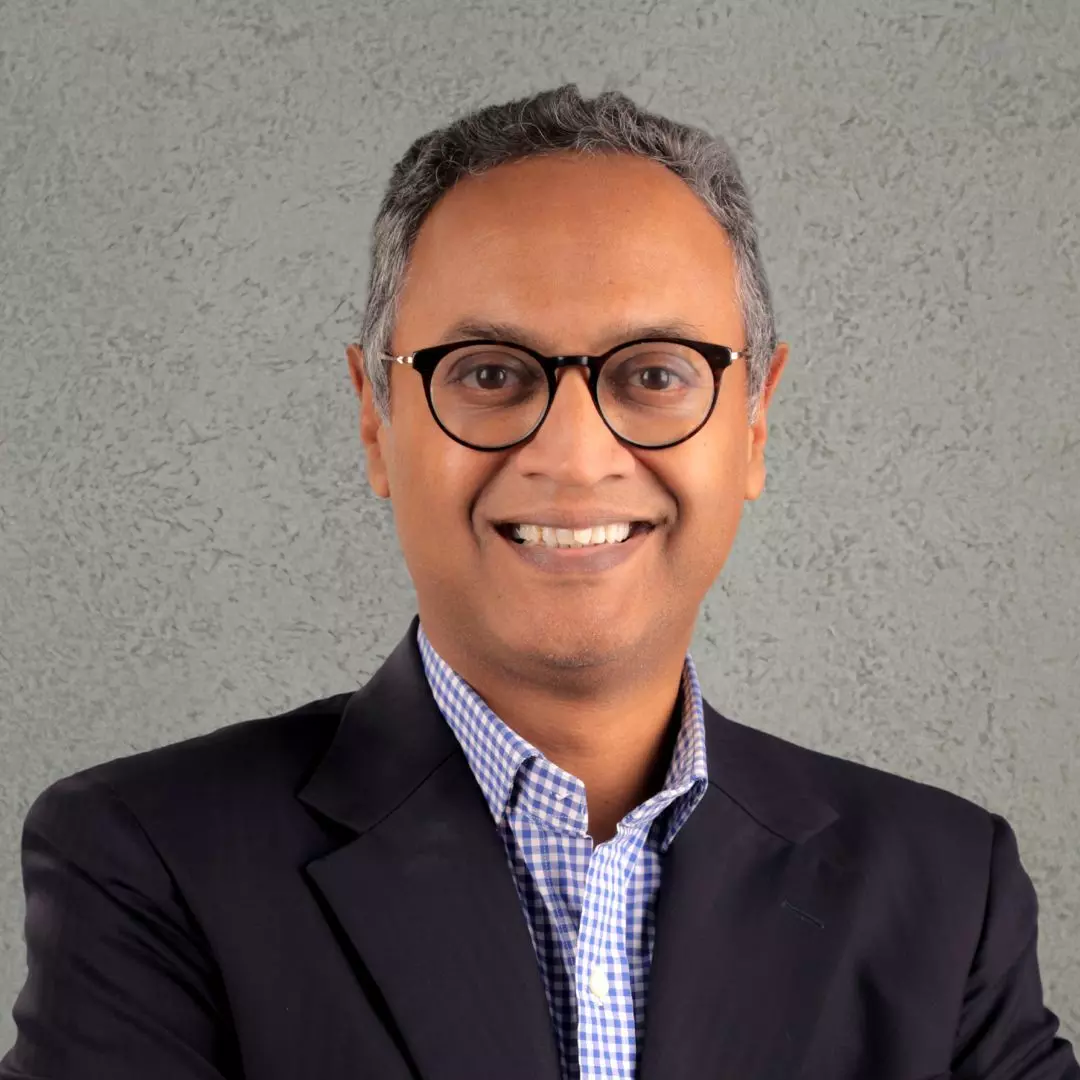
On Episode 785 of The Core Report, financial journalist Govindraj Ethiraj talks to Sanjay Notani, Partner, Economic Laws Practice as well as Krishan Arora, Partner and India Investment Advisory Services Leader at Grant Thornton Bharat. We also feature an excerpt from our India Energy Week interview featuring Energy Expert Anas Alhajji.
SHOW NOTES
(00:00) The Take
(03:14) The markets struggle to make up their mind
(06:41) A landmark EU India deal is in place, what will it really deliver?
(16:23) How India moved rapidly away from Russian oil amidsts global oil dynamics
(23:37) Why there is a need for a customs amnesty scheme
Register for India Energy Week 2026
https://www.indiaenergyweek.com/forms/register-as-a-delegate
Register for India Finance and Innovation Forum 2026
NOTE: This transcript contains the host's monologue and includes interview transcripts by a machine. Human eyes have gone through the script but there might still be errors in some of the text, so please refer to the audio in case you need to clarify any part. If you want to get in touch regarding any feedback, you can drop us a message on feedback@thecore.in.
—
Good morning, it's Wednesday, the 28th of January and this is Govindraj Ethiraj broadcasting and streaming weekdays from Mumbai, India's financial capital.
The Take
India and the European Union have finally signed off on a free trade agreement for which discussions have dragged on for almost two decades. Even at this point, much work needs to be done including legal scrubbing on both sides before the agreement comes into force and that could take at least a year.
But the timing is stark. Both sides clearly want to cushion the impact of a new United States-led trade order where there is increasingly less of order and, for that matter, even trade. The pact paves the way for freer trade in goods and services between the 27-nation European Union and India, together representing a market of roughly 2 billion people.
While currently worth about 136 billion dollars, bilateral trade is expected to surge under this mother-of-all-deals, as it's been called. However, the agreement appears to be as much an immediate political signal as it is a long-term economic one. The stock markets barely responded to this pact and swung indecisively most of Tuesday and I can assure you the markets would have reacted differently if a India-U.S. trade deal was signed and tariffs were brought down.
As a trade lawyer told the court after the deal was signed, the non-trade components of the agreement carried much more relevance. The deal is anchored in a broader joint strategic agenda that moves the relationship into the realms of defence and security, including a proposed formal security and defence partnership, which is the EU's first move in Asia, building on a long history of technical collaboration, including the recent launch of the PROBAR III mission and leveraging the 2022 launch of the India-EU Trade and Technology Council to coordinate on digital and green standards. So the signals are being sent as much to the United States as they are to domestic audiences in Brussels and Delhi.
All eyes are now on Washington to see how it will react and the first signs are far from positive. U.S. Treasury Secretary Scott Besant has already criticised the EU for forging ahead with this deal. The U.S. has made much bigger sacrifices than Europeans have.
We have put 25% tariffs on India for buying Russian oil. Guess what happened last week? The Europeans signed a trade deal with India, Besant told ABC News on Sunday. The U.S. ability to keep global and local nerves frayed is remarkable, though what this maximum pressure achieves obviously is a little unclear.
India's Minister of Petroleum and Natural Gas, Hadeep Singh Puri, offered a cooler perspective to CNBC on Tuesday, stating that he expected the U.S.-India relationship to remain positive. He said that I don't know when trade deals will get signed, but everybody needs to chill a bit. And if only the Trump administration would heed that advice.
And that brings us to the top stories and themes…
The stock markets struggle to make up their mind on the new India-EU pact.
A landmark EU-India deal is in place, but what will it really deliver and when?
How India moved rapidly away from Russian oil amidst global oil dynamics
And why there is a need for a customs amnesty scheme?
Markets
The European Union and India signed off on that historic free trade agreement that was formally concluded during a three-day state visit to New Delhi by European Commission President Ursula von der Leyen and Council President Antonio Costa.
The agreement could double EU exports to the world's most populous nation, that's India, saving European companies an estimated $4.3 billion in annual duties. Amongst the key announcements, tariffs on European cars are currently at about 110%, could fall to 10% for an annual quota of about 250,000 vehicles. India's 150% tax on premium beverages will drop to 20% for wines and 40% for spirits.
And that would obviously open a big middle-class market to European vineyards and distilleries. While duties are as high as 44% on electrical equipment and machinery, which is also EU's largest export category at about $16 billion, that will be eliminated for almost all products. Similarly, for pharmaceuticals and chemicals, the existing 11% to 22% tariffs will be largely removed.
But the deal, as we said earlier, is anchored in a broader joint strategic agenda that moves the relationship into the realms of defence space and emerging technology. The relationship has transitioned from primarily dialogue-based interactions to actionable collaborations, according to a note put out by the Press Information Bureau of India. The deal also secures a predictable framework for digital trade and mobility.
India has made its most ambitious commitments to date on financial and maritime services, granting EU firms unprecedented market depth. And a new European legal gateway office will be established in India to facilitate the movement of mostly technology professionals. As of 2024, about a million Indian citizens were living in the EU, with Indians representing the group of about 21% of EU blue card holders.
More on that FTA coming up shortly. The question of course on Tuesday was, which way would the markets go on this news? Well, it appears that at best sideways, given the share volatility we saw in trading on Tuesday, with the indices crossing positive and negative territory several times before ending up in the positive. At markets, the Nifty 50 was up 126 points to 25,175.
The Sensex was up 319 points to 81,857. The Nifty Mid Cap 100 and Nifty Small Cap 100 were higher, but only slightly by about 0.6 and 0.4% each. Stock prices of some of the leading car companies dropped as much as 5% after that deal was announced, which also included tariff cuts on European car import as part of that deal.
Mahindra stock fell about 5% to its lowest since August 25, which also dragged the Nifty Auto Index down, according to Reuters. Mercedes-Benz India's CEO Santosh Iyer told PTI that with more than 90% of Mercedes-Benz India's sales volumes comprising made-in-India locally manufactured models, and with only 5% of sales coming from completely built-unit imports from the EU, they did not foresee any price reduction for Mercedes-Benz vehicles from the FTA in the foreseeable future. What he did point out was that the depreciating rupee against the euro would continue to pose a challenge for European carmakers in India.
The rupee has depreciated by almost 19% in 2025 compared to the euro, which could erode any benefit arising from lower import duty for completely built units in the next couple of years. Completely built units are essentially the entire stock model imported as is.
Breaking Down The FTA
The new India-EU FTA will see cutting or eliminating of tariffs on 98% of Indian goods.
Since many EU duties are already low, India's main gains lie in labour-intensive sectors where tariffs were still high. The biggest beneficiaries are garments around 12%, footwear about 8-15%, along with marine products, gems and jewellery, handicrafts, chemicals and machinery, according to a note from the Global Trade Research Initiative. India will cut or eliminate tariffs on about 97% of EU exports with reductions phased in over 7-10 years.
Duties on wines could fall from 150% to 20%, spirits to 40%, beer from 110% to 50% and cars, as we said, from 110% to 125% to up to 10% for up to 250,000 vehicles. India will also move to zero tariffs on a wide range of agri-food and consumer products like sheep, meat, fruit juices, bakery items, pasta, chocolate and pet food and phase out duties on most processed foods, chemicals, machinery, electronics and aircraft. Beyond tariffs, the GTRI says, India and the EU took different positions on government procurement, intellectual property, labour environment and sustainability, and the outcomes of this will only be clear once the legal texts are released.
Now, the biggest risk is the EU's Carbon Border Adjustment Mechanism or CBAM, and from Jan 1st, EU imports are taxed based on carbon emissions. Since CBAM has not been addressed in the FTA, says the GTRI, EU goods could enter India duty-free while Indian exports continue to face carbon taxes in Europe. Right now, CBAM only applies to six products, including steel and aluminium, but is designed to expand to all industrial goods, which could erode much of the FTA's tariff benefits.
The GTRI says that plans for an EU-India cooperation platform in 2026 and possible EU funding of 500 million euros for India's green transition do not address exporters' carbon tax burden, which leaves the CBAM an unresolved issue, according to the GTRI. I reached out to Sanjay Notani, who is a partner at the law firm ELP and co-heads the International Trade and Customs Practise and is also a member of the Supreme Court Bar of India, and I began by asking him how and when he saw the agreement coming into force.
INTERVIEW TRANSCRIPT
Sanjay Notani: So as regards the timelines are concerned, I think just now is just the announcement. We will be very shortly, both the countries will be publishing negotiated draft text, that is after the legal scrubbing of all the documents. And legal scrubbing means basically tying in to see both in terms of language in as well as in consonance with the domestic regulations.
So that is something that we will have to wait and watch. After that, then there will be some legal revisions, translations in all languages and particularly from EU, they'll have a much more tougher job. While we will of course do our translations into Hindi for sure, but those folks out there will have to translate into many languages given of the length and breadth of the size of the countries out there.
After that is done, then it gets proposed, the agreement to the council that side and to our cabinet this side. On that side, of course, once it's adopted by the council, then it goes to the signing of actual signing between EU and India, then it goes to the parliaments and then last but not the least, then the council's decision on concluding the deed. And then when both the countries have ratified it, it comes into force.
So over a period of time, I think by 26, we should have all these things taken out of our system and in 27 sometime, subject to all other timelines into consideration, we should see this coming into the force in 27.
Govindraj Ethiraj: Right now, this does not address some areas including what we've called in the past red line areas. And also it appears that the positions that we've taken on environment, sustainability, IP and labour seem to be different. That is each the EU has taken a slightly different position from us.
But the one that I would like to draw your attention to is the CBAM or the Carbon Border Adjustment Mechanism. How will the agreement address that?
Sanjay Notani: So it looks very difficult that the agreement is going to address that issue because they have a very, very broad understanding as to how we are going to discuss some of these issues on CBAM. The only one sort of promising thing what we got to hear in the text right now, subject to further negotiations and timelines and stuff like that is to try and say that if EU gives any MFN treatment or a third party kind of a concession to any other country or a third party as part of the MFN, then India will also stand to benefit from that. And given our understanding of that, I don't think that's an easy one that will come out of the box as much as we can think of.
So we clearly on some of these issues of CBAM, I think we will continue to see some sort of a pull and a push. But that's something which means from our strategic perspective, our industries are already working on it. They are already getting ready on it.
Compliances are happening. Tax needs to be paid. And there are certain other sort of formalities which we will all agree to in terms of how does the audit work?
How does the procedure work? Who are the verifiers? Those are the other sort of things that may or likely be covered as part of the agreement.
But beyond that, I don't see anything on that particularly, which seems to be part of this deal.
Govindraj Ethiraj: Right. You know, so we've got a budget coming up. One of the things that could happen in this budget is that we could reduce tariffs in general, and maybe also therefore allow easier imports of goods from the EU and elsewhere.
What else could happen outside of this agreement that could maybe benefit both sides, if so?
Sanjay Notani: So as far as the budget exercise is concerned, given that whatever we do in budget is largely MFN and works around that, I think broadly, all other things very, very clearly when I talk about and I look at this agreement and when they say mother of all deals, rightly so. Besides the trade part of it, the goods and services and all that, there are many other areas in terms of technology, defence, standards, and other sort of market access tools that we should be considering. So from that perspective, I think those are other larger areas that we should try and concentrate, which makes this whole strategic deal wholesome, purposeful, largely from geopolitical perspectives, rather than only look at it from a trade perspective.
And I think those are much more gains that we should be expecting, because given the geopolitical situation, I think security is very important, understanding on lots of other bilateral stuff. And from a block perspective, being one of the large Western blocks, I think getting those other things sorted is much more important, because given also the wars which are going around it. So I think I would give more sort of impetus that the governments are able to work on those fronts rather than on the trade front.
Trade front, we already have much ready in terms of the train waiting at the station. Once we sign the deal, it moves out of the station. Those are other things then we will have to wait and watch.
Govindraj Ethiraj: Right. Interesting that you use the word train and station because the U.S. Trade Secretary spoke about us missing the train at the station or not catching it. Okay.
So you're saying essentially that we really need to look at this as a broader strategic partnership, which is what it is going into areas like defence and therefore not focus so much on the trade, because that's more like something that will get done, though it's taken 20 years. So what's the one area that you are focussing on from your vantage point as someone who deals in, let's say, or works on deals and cross-border transactions?
Sanjay Notani: I think the most important word, which is, you know, from a very agnostic from sector perspective, I don't want to talk about any sector because ultimately, but I think the one word which comes to my mind is supply chain. And I think those are the kinds of things that we should be looking out of this deal, because I think this government has really been very, very successful in getting lots of FTAs sorted. And this was one of the FTAs which we started very early in the game.
And now we've, you know, sort of got this up to at this stage, which is too quick, too fast, too soon and excellent. I think now it's very important to get some of the supply chain issues sorted. And this brings to this question for the sectors in terms of how do we help them.
FDI is a daily subject of the budget, which we will have to wait and watch. Tariff, again, you know, inverted duty structure issues is again an issue. Supply and demand of certain parts and components, which are very, very important for certain of these sectors like textile.
You know, how do we get some of these issues sorted in terms of raw materials and intermediate so that ultimately we are efficient, we are good to go, largely the demand and the supply situation sorted. And lastly, the quality to offer to the EU when compared to the other sort of competing industries and sectors when we will be launching ourselves into those markets. So I think those are largely some of these areas that if we are able to now get deep into, that would be interesting because the end of the agreement and whatever is all sorted.
Now, let's just go back to the sort of warehouse and try all other things getting sorted so that ultimately that gets an impetus and we are able to compete successfully. So the word is supply chain.
Govindraj Ethiraj: Got it. Sanjay, thank you so much for joining me.
Sanjay Notani: Thank you, Govind, for having me.
The India Energy Week Segment
The head of Abu Dhabi National Oil Company, Adnok, said global oil demand will remain above 100 million barrels a day through 2040, while demand for both liquefied natural gas and electricity will grow by 50 percent or more. The managing director and CEO of Adnok, Sultan Ahmed Al-Jaber, told the India Energy Week conference in Goa on Tuesday that electricity demand will be driven by the need to power cooling systems as well as AI infrastructure and data centres. According to him, demand at this scale and pace requires investment in all forms of energy, and the biggest risk is not oversupply, it's underinvestment.
Adnok counts India as its top market for LNG, and Al-Jaber said the Abu Dhabi firm is also expanding its gas portfolio to Asia and Africa, according to a Reuters report. Earlier, India signed $3 billion to buy LNG from the United Arab Emirates, making it the UAE's top customer, according to Reuters. Earlier, I reached out to Houston, Texas-based Dr. Anas F. Al-Hajji, a leading energy markets expert, researcher, author, and speaker, and also managing partner at Energy Outlook Advisors.
I asked him how he was seeing oil demand and supply dynamics around the world right now, and how India had responded post the tariff hike or the tariff imposition on India's exports to the US for importing oil from Russia.
INTERVIEW TRANSCRIPT
Anas Alhajji: We have, in the United States, U.S. crude oil production been increasing in the first 10 months of the year. So we have an increase in U.S. oil production. That's supposed to be bearish, that's supposed to cause a surplus.
But what the IEA and the major banks like Goldman Sachs are missing, that at the same time, the United States was locking up oil in the strategic petroleum reserves. And they are counting this amount, which is, by the way, larger than the increase in U.S. oil production. So what they locked up in the strategic petroleum reserve is more than the increase in U.S. oil production. The problem is they are counting the U.S. increase in oil production as a surplus, and they are counting the build in the SPR as a surplus, while it is demand. So that's another problem, another mistake. This is not a surplus.
This is oil that is locked up. It's not going to be in the market. The same thing for China.
The increase in inventory since the beginning of 2025 is highly concentrated, and most of it is in China. And the decision by China, basically, to build this inventory is strategic. It's not market-based.
And therefore, it's similar, although it's commercial stock, but it is similar to the SPR. And yet, the IEA and the major banks are counting it as a surplus. So that is a big problem.
Therefore, the way we look at it is the market is almost balanced. We have seasonal built-in inventories. We expect Brent prices to be range-bound in the 60s.
There is no reason to be bearish. But once we go above 70 for any reason, China is going to use some of its inventories, basically, to prevent prices from going up. And therefore, prices are range-bound in the 60s.
To go back to Venezuela, there are many conspiracy theories, as you know, about Venezuela. What does Trump want from Venezuela? He talked about Venezuela and oil a lot.
And people have been saying, look, he wants to control the 300 billion barrels of reserves in Venezuela. But if you look at his statements and you put the story in its right sequence, you find he is not after oil. He is after the money.
These are completely different issues. And the reason why, because when Chavez came to power, he changed the constitution and nationalised the oil assets. And American companies lost billions of dollars.
He's supposed to compensate. The Venezuelan government did not compensate. So they still owe American companies billions of dollars.
What Trump is saying, saying, look, I need my money, but you are bankrupt. And if you are bankrupt, you have nothing else to give me except your oil. So I'm going to control that oil and sell it so I can get my money back.
That's the story about Venezuelan oil. But here is the problem. Because of the sanctions, legally, no one can buy Venezuelan oil.
So the legal manoeuvre is for the Trump administration to take it and sell it because it's become legal if people buy it from the United States. So they can circumvent the sanctions. Meanwhile, because of the sanctions, that discount, the big discount that China and others have been getting will disappear.
So they can sell it at a higher price in this case. So it is a legal manoeuvre to work around the sanctions because they don't want to lift the sanctions. The sanction is a foreign policy tool basically to pressure the current regime now so they don't want to lift it.
So this is a way to work around it. Ironically, what we see today from the Trump administration is a copy of the oil for food deal that was implemented on Iraq in the 90s by the Clinton administration. Just Trump basically pulled it from the past and applied to Venezuela.
It's exactly a copy of it.
And today's our publication, the Daily Energy Report, basically the main story is about India's imports from Russia. And they did decline. And our forecast basically, they can replace about 400,000 to 600,000 barrels a day.
That's already happened. And we were surprised by the speed that it happened.
But there are several question marks on this because we believe that there are some parts of the dark fleet ending up in India and not being counted.
We've seen certain refiners importing more than their capacity and their inventories did not go up. So where did that oil go? And this is, by the way, this is a natural behaviour.
We are seeing this musical share game being played all over the world, not only in India. So it's been happening.
But the decline happened. The question is, is this enough to satisfy Trump? The problem with Trump is if he sees weakness, if you cooperate with him, he wants more.
If he smells blood, he will go for the kill. So the problem is I don't see a resolution here. And you said a few minutes ago, regardless of the merit of it, we all know it is not about imports from Russia.
Turkey imports from Russia. He said nothing about Turkey. Some European countries import from Russia.
He said nothing about Turkey. The U.S. is still importing uranium from Russia, enriched uranium. No, he did not say anything.
It's not about imports from Russia. He wants to use it as a tool to pressure Prime Minister Modi on something else. And that's really where the bottom line is.
So reducing Russian imports is not going to solve those issues or whatever that dispute is with India.
Indirect Taxes
The union budget is coming up on the 1st of February. All eyes will be on the finance minister to see whether she will announce further easing of the goods and services tax regime, as well as whether India will take any steps on the customs and tariffs side. For more details and insights, I reached out to Krishan Arora, indirect tax national leader and partner at Grant Thornton Bharat LLP, and I began by asking him what were the key changes he was expecting on the goods and services side.
World Trade Centre Cuff Parade This finance segment is presented by India Finance and Innovation Forum 2026, happening on February 23rd to 25th at the World Trade Centre Cuff Parade in Mumbai. You can find the link below to register in the show notes.INTERVIEW
INTERVIEW TRANSCRIPT
Krishan Arora: I think the first one on the GST wish list is about GST 2.0. I think it was a large set of reforms which the government had promised and it was done at a very, very opportune time. So the InterDAX framework transitioned from, you know, a stabilisation phase to an optimisation phase, I would say. This move was towards the two-tiered rate structure as we all know, which was the architecture and minimise the classification dispute, bringing the price clarity across value chains, etc.
and addressing it as one of the persistent sources of litigation and interpretational uncertainty under GST. With these improvements being announced by the council, the budget may not very specifically cover all of them, but they need to be given effect too. And specifically in that regard, I think the long pending issues such as rate rationalisation, the provisional simplification is what was on the cards. So industry now seeks timely and consistent implementation as well.
The decision related to intermediaries, you know, becoming export of services on the basis of location of recipient rather than performance-based criteria was one of the key things. Wholesale discounts for that matter was being relaxed, the procedure around that was relaxed. These are very important changes which the industry has been waiting to kind of be announced.
So that actually plays a large role in the transaction structuring and pricing decisions. So over 65% of those GST disputes, which were litigated today, were on valuation, wholesale discounts, intermediary classifications, and place of supply. This is under the CBIC and GST applet trends, which show that.
So with timely implementation of these reforms, these litigation also get reduced substantially, which is what is being awaited.
Govindraj Ethiraj: I think this is time to do that. And Krishan, can you give us a quick illustration of classic case in this realm, the 65% you talked about involving wholesale discounts. So what could be the typical case, assuming if it was a colour television or some other product?
Krishan Arora: Yeah, it could be all the discounts which are passed on from the OEMs or the manufacturers to the, you know, wholesalers and the retailers. Ultimately, I'm a consumer, I'll go and buy a, say, a television from a retail outlet, say a chroma. And the chroma will say that, you know, this is the discount I'm offering to you.
But at the back end, whatever discounts are being passed on are getting passed on by way of a credit note. The documentation trail from a retailer to the wholesaler or a distributor to the OEM is very difficult to establish in all these cases where, you know, discounts happen at a cash discount basis, discounts happen with schemes like Diwali discounts, etc. It's coming.
So all of these have to be documented again and again. And when eventually that discount is not tracked to a particular television or a code number serially, which is linked, it's very difficult for the whole chain to get actually accounted for, for the discount to be pre-agreed. That was the earlier requirement that discounts had to be pre-agreed before the discounts can be passed on so that the trail of GST benefit which is being passed on in line of chain of the discount is not actually given.
So that is what has been relaxed that some of this documentation is not mandatory required, so long as the understanding is, you know, presented in a way that discounts were preempted. So one-to-one tracking is not required. So what could the budget do here now?
All these things have already been announced as part of the GST 2.0 package. You need to implement it by way of implementing the notifications which have to be done. So some of these things have not happened.
The rate changes happens overnight. So those have happened. But all the other procedural requirements, all the other notifications which have to be issued to implement all the changes in the law have not been done.
That has to be given effect.
Govindraj Ethiraj: Got it. Okay. And tell us about the inverted duty structure, which of course is something that we've been grappling with for a while.
Krishan Arora: So inverted duty structure, GST is very different from customs, you know, from that perspective, if you see GST currently allows accumulated input tax credit refund on only inputs, but it does not give the similar status to input services and capital goods, which currently leads to a lot of credit accumulation and acute liquidity stresses arise on the industry. So just taking an example again on that front, with the GST 2.0 changes, you saw the two-tier rate structure coming in. Now if particular rate has moved down in the pattern of the rate structure, 18% GST on services continues to be there.
So a GST rate structure, if the lower rate action comes into play, I'm not able to absorb through my value addition a complete 18% GST on services. If it can happen to different different products in say, pharma sector, in consumer sector, auto, EVs, etc. That services rate continues to be 18% and will not be brought down.
If that is the case, some of these people will not be able to, you know, get the input tax credit liquidity in place because 18% services on say warehousing, rentals, transportation, all will continue to be always be paid on a regular basis. So if I don't get an input benefit of that, either bad rate reduction, which will not happen for services. So it will also gain then become an inverted duty structure.
So the similar benefit should be extended to input services. And I see no case of government not doing that since government itself promised that we will be eliminating as much as possible, you know, discrepancies in terms of a rate distortion or a credit distortion. So that is something which can be a consideration, which will really help the industry to actually give that ease with which the input credits vis-a-vis the output liabilities can be maximised in terms of the accumulation of the liquidity or the working capital impact which you know, the industry is facing today on account of GST 2.0 itself.
Govindraj Ethiraj: Right. Last question on customs. And that's another area where there are expectations, we of course now have a India-EU free trade agreement, which will take a year to kick in, but we'll see duties being reduced, at least vis-a-vis the European Union for a whole lot of areas.
And that's substantial. But we could do things even before that, could we? And what are the other things or other areas that you're expecting some action?
Krishan Arora: If you see the current structure, the custom duty rationalisation measures have been kind of taking place year on year, that is completely in line with the WTO commitments. It also is in line with the industry as wherever there is an inverted duty, do away with that. And government has been very, very proactively doing those structures and also trying to shrink the number of tariffs which are existing today.
Any bilateral trade agreement or any trade facilitation measures which happened with a country, say, you know, in the past, you saw UK, India, you know, treaty coming back, coming in. What happened was that any such duty reduction, which are bilaterally agreed as part of the trade agreement, or the FTA, is independent of a rate reduction or a rate change which can happen at a larger or a generic level. Now, the changes which happened, that being the case, it is government's will to take up that as part of the budget exercise.
It can be done by way of notifications as well. But it is independent of the trade agreements or the FTAs which are being signed. And that is very country specific, that can happen parallelly, that can happen separately, and simultaneously.
So as far as 2026 budget expectation is concerned, at least to rationalise the custom duties further is basically by lowering the tariffs on raw materials and correcting the distortions in the sectors where duty rates on input exceed or are equal to the finished goods. I think in order to provide that impetus continuously to the domestic manufacturing, government has been doing that in past as well when they lowered these rates, but keeping the higher duty rates on finished goods. Similar steps are expected for sectors which are still facing the duty distortion like electronics, textiles, chemicals, footwear.
So example, footwear, raw material or parts or inputs are often sourced from China at a 20% duty, while the tariff rates on finished goods is also 20%. And there is much lower rate in case of FTAs like ASEAN, FTA etc. These are the things which have to be looked at from a sector to sector perspective and wherever such duty distortions can be corrected, that should be continued as a measure to rationalise the duty structure further.
Right. And you're also looking on for an MNST scheme? Yes, I think that's been a long pending ask.
If you see today, almost a lakh and a half crore of a logged in dispute is lying at various levels for customs duty. And that's something which has been a large ask from the industry that you know, also from a past perspective, since you've changed so much of duty and tariffs, and rationalisation has happened. From the ease perspective, I think one time MNST scheme should really help in terms of caring of this past litigation, which the industry is grappling with.
Since it's grown multilevels, it will free up a lot of business capital, which is logged in disputes, which are not necessarily required to be kind of continuing. It also will provide that boost to these businesses in the current volatile trade era. And you know, we can see how tariffs are playing such a major role in terms of creating distortion for, you know, from US perspective and others.
So I think this is a time when all of this can really help the industry and create a positive impact in terms of what can be called as a inclusive budget. And also, from an ease of doing business, give the revenue impetus back to the industry from a customer standpoint.
Govindraj Ethiraj: Right, Krishan, thank you so much for joining me.
Krishan Arora: Thank you.


