



 Newsletter
 Search
The Markets are Not Consoled with Promises of More Oil Supplies
- Podcasts
- Published on 13 March 2026 6:00 AM IST
The world at large seems to be hoping that the United States will see the folly of an extended war
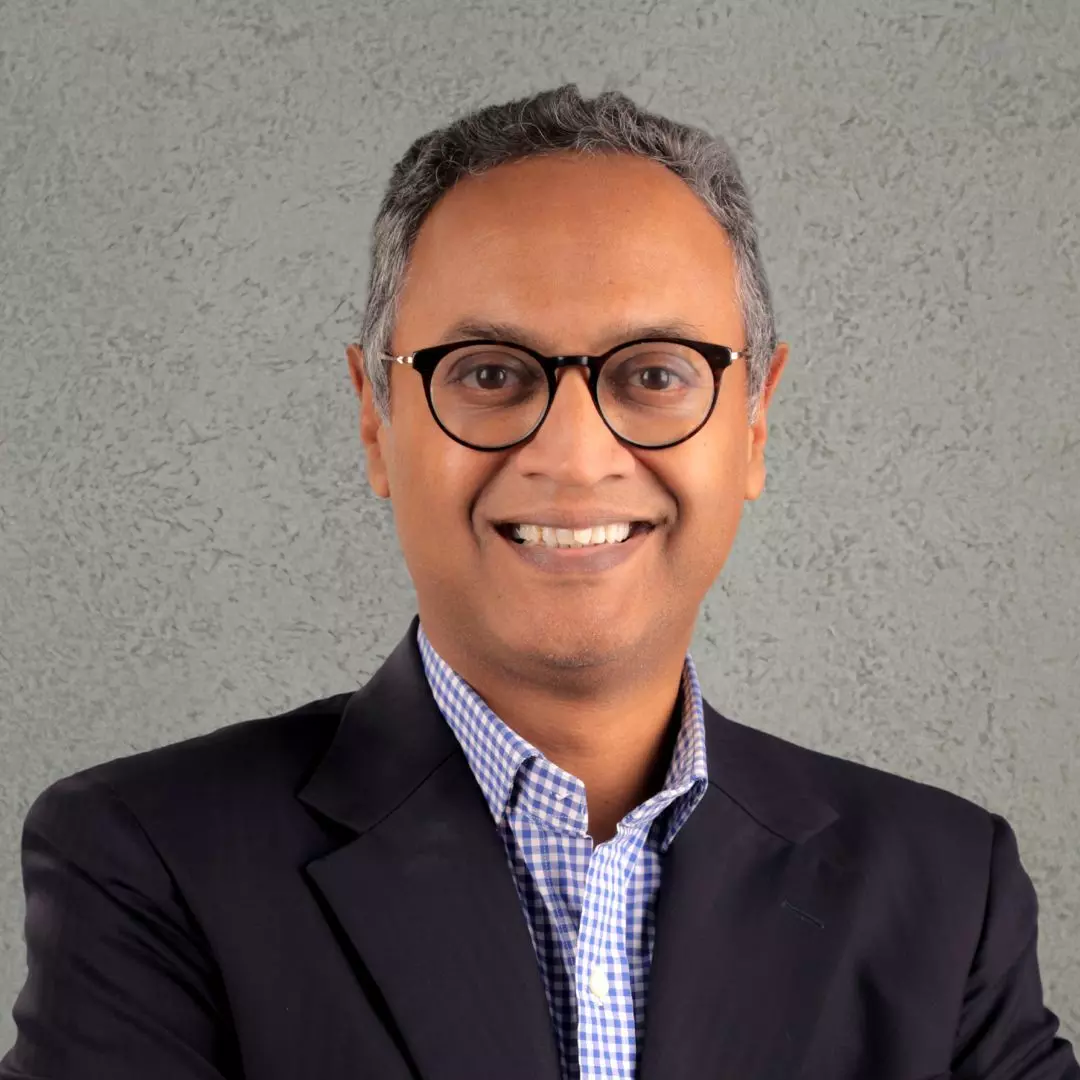
On Episode 821 of The Core Report, financial journalist Govindraj Ethiraj talks to Ankita Pathak, Head – Global Investments at Ionic Asset as well as Indrani Bagchi, CEO at Ananta Aspen Centre.
SHOW NOTES
(00:00) Stories of the Day
(01:00) There is no end in sight to the war as all sides dig in.
(03:27) The markets are not consoled with promises of more oil supplies, globally and in India.
(04:57) Could taking a punt on a depreciating rupee work?
(13:40) Inflation rises in February but March is what we have to wait and watch for.
(14:54) Can India get safe passage for ships going through the Strait of Hormuz and what will it depend on?
Register for our event “Who Builds the Future of AI?”
NOTE: This transcript contains the host's monologue and includes interview transcripts by a machine. Human eyes have gone through the script but there might still be errors in some of the text, so please refer to the audio in case you need to clarify any part. If you want to get in touch regarding any feedback, you can drop us a message on feedback@thecore.in.
—
Good morning, it's Friday the 13th of March and this is Govindraj Ethiraj broadcasting and streaming weekdays from Mumbai, India's financial capital.
Our top stories and themes…
There is no end in sight to the war in West Asia as all sides dig in.
The markets are not consoled with promises of more oil supplies globally as well as in India.
Could taking a punt on a depreciating rupee work?
Can India get safe passage for ships going through the Strait of Hormuz and what will it depend on?
And inflation rises in February, but March is really what we have to wait and watch for.
West Asia War Rages On
The world at large seems to be hoping that the United States will see the folly of an extended war and the damage it's causing to economies world over, including itself and India, and call a halt.
The US and President Donald Trump have exactly the opposite idea, which is to keep going till they achieve whatever they think their ideal objective or outcome is, of which, of course, no one has a clue. It is clear that the populace in middle-income countries like India is taking a bigger hit, particularly when you have shortages like of gas as we are facing right now, all of which is zero concern to the United States and this is perhaps something we should have been alert to, not that we could have done much or made much of a difference. One area that is of relevance right now is whether or not Iran will allow ships carrying crude oil or potentially gas bound for India through the state of Hormuz.
Government sources told Reuters that Iran will allow Indian flag tankers to transit the state of Hormuz, which is a conduit for about 40% of India's crude imports, though an Iranian source outside the country denied that any such deal was reached as of Thursday evening. An Indian government spokesperson said that the foreign ministers of the two countries have had three conversations in recent days and the latest one this week focused on issues pertaining to the safety of shipping and India's energy security. More on that in a moment.
India's sourcing of non-Hormuz crude has increased to 70% of its total imports and the country's current crude supply position is secure, Oil Minister Hardeep Singh Puri told Parliament on Thursday. He said India's petrol and diesel availability is also fully secure and liquid natural gas or LNG cargos are arriving almost daily from alternative routes, adding that the panic on cooking gas supplies were triggered by consumer anxiety rather than a supply shortage. Now of course the data does show a shortage but I'm also not sure this is the case because it is the price rise in gas cylinders announced over the weekend and communiqués to commercial establishments that they would be rationing which triggered the panic.
But it would appear equally that with the government saying production has been ramped up by 25% that's of LPG, we could see some normalcy returning. Remember that production has been ramped up by one asking the refineries across the country to do so and also to do so by adjusting their product output and product mixes. However oil is now at over a hundred dollars a barrel again.
At least five ships from what it appears are ablaze on the Strait of Hormuz, most likely after being attacked by Iran. Meanwhile the International Energy Agency's plan to release 400 million barrels of oil from its reserves announced on Tuesday in the largest such move in its history has failed to soothe investors. Energy analyst Anhas Alhaji who has joined us on the core report in the past said on social media that moves like this are spooking the market even more because it's a clearer sign that there is no end to the war which is what the market is looking for.
It's also the same reason Indian markets are sinking exposing once again the interlinkages of the global economy and pricing of commodities like oil. Analysts told Reuters that even if the reserves are large how quickly they can be delivered to markets is untested and ultimately a market balance via strategic stock releases is going to be far less logistically efficient and the benchmarks extended their losses. The Nifty 50 was down 227 points to 23,639.
The Sensex was down 829 points to 76,034. So now Sensex has fallen about 2,800 points or about 3.6 percent in just four sessions and the Nifty 50 has fallen about 811 points or 3.3 percent in this period. On Tuesday the markets did rise because of suggestions that the war might come to an end.
Those suggestions were of course reversed by the same people who made them which is US President Donald Trump. Broader markets were also down. The Nifty mid cap and small cap index was down 0.37 and 0.69 percent each.
The rupee hit a record low on Thursday possibly triggering the Central Bank or Reserve Bank of India's intervention. It fell to an all-time low of 92 rupees 35 paise and finally closed down 0.16 percent at 92 rupees 19 or 19 paise from the previous session according to Reuters. One of the interesting developments in the last 12 or 13 days is really gold which is that prices are steady and not moving and that's not what you would expect in a war.
Remember in a trade war gold prices were rising or even skyrocketing. So what's happening? Well it rose from about 5,296 to 5,423 after the US and Israel forces launched strikes against Iran on Feb 28th but then fell more than 6 percent to 5,085 on March 3rd. This week as the conflict has escalated it has traded between 5,050 and 5,200 according to CNBC which quoted analysts saying the reasons for this are a stronger dollar and higher treasury yields.
So how does that work? So rising oil prices could lead to prolonged inflation and potentially higher interest rates as central banks try and contain the fallout from a closure for example of the state of Hormuz which in turn will increase the relative appeal of yielding assets such as government bonds versus non-yielding precious metals like gold analysts told CNBC. So back home what should an investing strategy look like at times like this with all these war clouds now directly above us? I spoke with Ankita Pathak, Head – Global Investments at Ionic Asset and I asked her for her investing strategy in these turbulent times.
INTERVIEW TRANSCRIPT
Ankita Pathak: I think asset allocation is really not changed by this particular war, because it is something that we anticipated. It was a question of when and not if. In the same prospect that we've known about, maybe Cuba coming up next.
It's something that markets has, you know, started to anticipate. Geopolitical risk has been highlighted by us also as the biggest risk of 2026. So in that context, numerically, I wouldn't change the asset allocation.
But like we saw with precious metal, you know, buy on rumour, sell on news, and that almost always happens because when there is a true crisis, it is the cash that becomes the ultimate king. So in that context, if you're a moderate risk appetite investor, stick to your neutral equity allocation, but create 20% for commodities. This could be diversified between, you know, majority precious metals and some participation to base and strategic metals, because I see that continuing to be extremely important as we go forward into this AI infrastructure build out.
Govindraj Ethiraj: And what are you specifically liking or focussing on, Ankita, right now?
Ankita Pathak: In terms of themes, I think so one specific play that we think we are very convinced with, except for intermittent volatility, is a dollar weakness cycle. When you look at dollar weakness cycles, you're essentially talking about three themes. One is US exporters.
Second is rest of the world ex-US and third is your commodities basket. All three themes is something that we inherently are liking for the year 2026. We don't see, you know, there could be crisis situation for dollar to, you know, reclaim itself as a safe haven.
But apart from those one-off instances, we don't see any structural reason for dollar to strengthen from here. So we would want to play the dollar weakening cycle through these three themes.
Govindraj Ethiraj: And I mean, the last few days have been interesting because we've seen, even as on February 28th, US and Israel attacked Iran, the dollar actually strengthened and gold weakened. Because until now, through the trade war, it was gold, which was strengthening or silver, which was strengthening and the dollar that was weakening. As we went from a trade war to a real war, it seems to have flipped.
Ankita Pathak: Sure, yeah. And of course, and it's properly said when you do macro that you buy gold when you're worried about the future, you sell gold when you're worried about the present. And I think you saw it with that war kind of a situation where cash ultimately becomes the real kink when the crisis looks deep and whatever history US has with Afghanistan, the kind of debt US is sitting with.
I think investors were fairly worried about what if, you know, US has overplayed itself? What if this war lasts longest? And those are very fair worries to have, like even as we speak today on day nine of the war, Govind, I think it can still go either way.
So that possibility remains and dialling the risk down by holding cash is something that we've done as investment management as we have advised it to the client. So, you know, when all institutions walk into that direction, because we started 2026 with least amount of allocation to cash across all global institutional managers. So that was also an extreme and that number said that the bullish sentiments had gone far ahead.
And then you see the kind of run gold has had, the kind of run Korea, Taiwan, other emerging markets had had, it just makes it more palatable to book profits at a fortunistic time.
Govindraj Ethiraj: Right. So you said dollar weakness, which I'm assuming means exporting industries or industries which are dependent on export that I obviously would include services and goods. Is there anything on the domestic play that you're looking at or focussing on?
Ankita Pathak: So, Govind, I've had this, you know, conflicting view that I do think dollar will weaken. I also think INR will continue to depreciate. Those are two different things for me.
Dollar weaknesses are more, you know, global scenario, which is getting driven by central banks not holding enough US treasuries. And obviously, you know, US not being able to cut rates yet. But I think there is a plan of action that monetary and fiscal stimulus will come in US, which will weaken the dollar further.
Coming to India, see, for an emerging market economy like us, the net inflow of dollar needs to be greater than net outflow of dollar for rupee to gain any strength. Now, net inflow of dollar, the legs to it is FII money, FDI money, ECBs, and I think services exports, current account, oil, none of them, as we speak today, are showing any strength. None of that is growing in double digits.
Probably all combined, they're contracting year after year. In that context, I don't see INR to appreciate significantly. I think INR should stay in that range of 88 to 92.
The FOIL remains closer to even 75, 80. Anything beyond that would mean more INR depreciation. And on to the appreciation side, I think you need FIIs to come back very, very strongly into the equity markets.
And even when that happens, RBI may still choose to build reserves before letting currency appreciate energy fee. So in that sense, I see the appreciation possibility also limited. So dollar weakening, but INR not strengthening by the same measure, but probably still having a downside risk on the currency as far as INR is concerned.
On to the domestic plays that are looking exciting, I think one theme that we've overweighed on is also metals. Because like I said, if you want to play the global commodity cycle, I think is best played in India through participation in some of these metal indices companies. And secondly, of course, chemicals, where the trade talk and the trade agreement has helped us a lot.
It is also a space where we have enough capex in place. So we can really take advantage of China plus one strategy. So that's another sector that we are liking.
But I think the broader Indian markets, while macros are turning positive on the margin, all of it is still happening on the margin. We always say that domestic investors can drive markets like a car, but for the markets to rocket, you need the FIIs to come back. And I think that equation is still something where our valuations are slightly more expensive.
We have not done anything in the tech supply chain yet, which is turning out to be the biggest global theme as we speak today. So I think there you should keep expectations modest, but incrementally positive.
Govindraj Ethiraj: Right, Ankita. Thank you so much for joining me.
Ankita Pathak: Thanks Govind.
Inflation
These are of course February numbers and the March numbers is what we will be waiting to see in anticipation and of course some trepidation.
Meanwhile for the last month India's retail inflation rose 3.21 percent year-on-year in February from a revised 2.74 percent in January on higher food prices according to data released on Thursday. A Reuters poll had projected retail inflation at 3.1 percent. The consumer price index has shifted to a new base with revised weights in January.
The reading was also higher than a 3.14 median estimate in a Bloomberg survey of economists and compared with a revised 2.74 percent in January as we said. Speaking of inflation and of fares and prices going up, airfares are set to rise everywhere and the international ones might go first. Hong Kong-based Cathay Pacific announced new fuel surcharges for most routes on March 12th that are roughly double the existing ones according to the Straits Times.
The company revealed a detailed list of affected routes in a statement titled fuel surcharge updates a day after warning that fuel prices had soared in March with the outbreak of war in West Asia. Cathay's chief executive Ronald Lam told media persons on Wednesday that the cost of fuel so far for March is double the average of the previous two months.
Indian Ships in the Strait of Hormuz
The U.S. Navy is not ready to escort oil tankers through the state of Hormuz.
Energy Secretary Chris Wright told CNBC in an interview on Thursday. He said it'll happen relatively soon but it can't happen right now. We're simply not ready.
All of our military assets right now are focused on destroying Iran's offensive capabilities and the manufacturing industry that supplies their offensive capabilities. He said it was likely that the Navy would be in a to escort tankers by the end of this month so brace yourself for that. He also said that he would be over at the Pentagon later on Thursday and this is what the military was working on which brings us to India.
India and Iran are in talks but it is not clear at this point whether there is a clear agreement to allow ships bound to India or Indian ships to sail through the state of Hormuz from the Persian Gulf through which 20% of the world's oil supply flows. Apart from several tankers ablaze in the state of Hormuz, Bloomberg News reported that Oman had evacuated all vessels from its key oil export terminal at Mina al-Fahl as a precautionary measure. So where are we and where do we stand on relations with Iran and could they give India free passage and how could those discussions go? I reached out to Indrani Bagchi, CEO of Ananta India Centre, also a foreign affairs columnist with the Times of India and a frequent guest on The Core Report and I began by asking her how it was looking like right now.
INTERVIEW TRANSCRIPT
Indrani Bagchi: You're right, the foreign minister Dr. Jaishankar had a chat, I think has been having repeated conversations with his Iranian counterpart. And big part of that is indeed sort of passage for Indian tankers through the streets of Hormuz. If you look at the Iranian gambit at present, they are targeting container ships.
They're not targeting tankers yet. That is largely because most of the oil or the tankers or the gas tankers that are going through are actually Iranian or Iraqi. And going to Iran's sort of their oil, it would take a lot to blow up an oil tanker.
What they're doing is by sort of hitting every second or rather every 10 container ship, having threatened to mine straits. And nobody is actually sort of daring to go through that. But what it's also doing is jacking up the insurance premium for oil tankers and ships, which then affects the price of crude.
And that is literally what the Iranians want. They want that state of instability that insurance can premiums can just go through the ceiling. It is also very clear that after the US offered President Trump, if you remember, offered to escort vessels through the streets of Hormuz, he also offered to let DFC provide reinsurance, none of which have happened.
It can't because the DFC is not an insurance provisioning agency. It is a development. It is like our Ex-Im Bank.
So they don't have, I mean, he could tweet it. But the fact is that, you know, reinsurance and the whole system is fairly complex. It's not their speciality.
So that hasn't happened. The US Navy is not escorting ships.
Govindraj Ethiraj: And at this point, they're saying that it doesn't even look likely that it will happen till the end of the month.
Indrani Bagchi: No, they won't. So let's go back to Iran. So what Iran has done is Iran has allowed Chinese ships to go through.
Iran is not going to trouble the Russians if they have anything going through the straits. Now, you will never see a piece of paper on this. It will be an agreement where they will quietly allow some tankers that come to India to be able to cross the straits.
Now, if you ask people on the record, that's not going to happen. This is full backroom deal that is happening. There is a problem.
The problem is in two areas. One, India doesn't have that many ships. So the tankers that are coming to India are all foreign flagged tankers.
That brings in a level of complexity. Some of them will come through, some of them will not be able to go through. The second problem is that while we have enough crude in our petroleum, in our reserves, what we don't have at all is LPG and LNG.
And that has proven to be a real problem. So you will see second order, third order consequences. I don't know if you've noticed, but the draft of companies across Asia have been declaring force major because they don't have the components.
By the way, we will be looking at semiconductor sort of crunch as well, because helium is not going through. I mean, these will happen. So we will get one or two tankers, three or four tankers every second day, two tankers.
We've already seen a couple of tankers coming through. Not every one of them will come through. Not every one of them will be allowed, but each one is a transaction.
And that transaction is happening. Remember that we also gave Safe Harbour, the Iranian warship that had come for the international fleet review. We had given Safe Harbour to the others as well, but one of them decided to just go back home and went on international waters and got shot, torpedoed by the US.
But the others, one is in Sri Lanka and one is in India.
Govindraj Ethiraj: Just to come back to the question on Iran. So what does this mean in terms of interpretationally? What does it mean in terms of where India and Iran's relations stand?
Or what you're saying is they don't really seem to stand anywhere because it's really ship by ship transaction on letting them through.
Indrani Bagchi: No, that's not correct. If you see the relationship, the relationship is where it was. They have a very realistic view of where we are.
We have a very realistic view of where they are. You know, I mean, just to go back a month or two ago when Trump cancelled the waiver on the Chabahar port, India didn't walk away. India gave the rest, the pending 120 million dollars to Iran with the proviso that please go ahead and build it.
This is the money that we were going to give you to build it. But here is the money. We cannot build it any longer.
That's there. So the relationship is where it is.
Govindraj Ethiraj: It's not a Russia or a China for that matter.
Indrani Bagchi: But even with Russia, we negotiate. There is a transaction going on.
Govindraj Ethiraj: But Iran and China seem to be on more equal footing. And I'm really again coming back to passage of ships.
Indrani Bagchi: Well, definitely. I mean, come on. 80% of Iran's exports go to China.
Govindraj Ethiraj: Okay. And that will continue. So you're saying that we have some kind of backroom understanding, which is somewhat situational.
My question is, why is it a backroom and seemingly informal and ship by ship as opposed to being a little more sort of formal and agreed upon?
Indrani Bagchi: Because Iran has declared that they will not allow ships to go through. So when you are negotiating, you are negotiating through Iran's own declaration. Second, we don't have the kind of relationship with Iran that say China does.
Govindraj Ethiraj: Right. Okay, last question. So step a little away, but still remaining in this theatre.
What does it look like in terms of India's ability to influence any of these actors, that's the US and Israel, or for that matter, Iran, purely from an economic standpoint, or maybe something else as well, that, you know, can there be peace or can there be some kind of resolution to this?
Indrani Bagchi: So the US and Israel are now fundamentally diverged on their war aims. It's not just us. The Trump administration is not clear what their war aims are.
And until we know at which point they want to declare victory, because they will want to declare victory. They are not going to walk away from here saying, sorry, we lost the war. And this can go either way.
But if you think that Prime Minister picking up the phone, talking to the new Khamenei and talking to Trump to say, let's disengage for the sake of the world. I don't know if you just saw the list of demands that Khamenei put out that America has to fulfil. It's going to be very hard.
The Omanis couldn't do it. And they've been mediating between the Iranians and the Americans for ages.
Govindraj Ethiraj: Well, let's see then, and where this ends up. Indrani, thank you so much for joining me.
Indrani Bagchi: This is going to end up very badly.


