



 Newsletter
 Search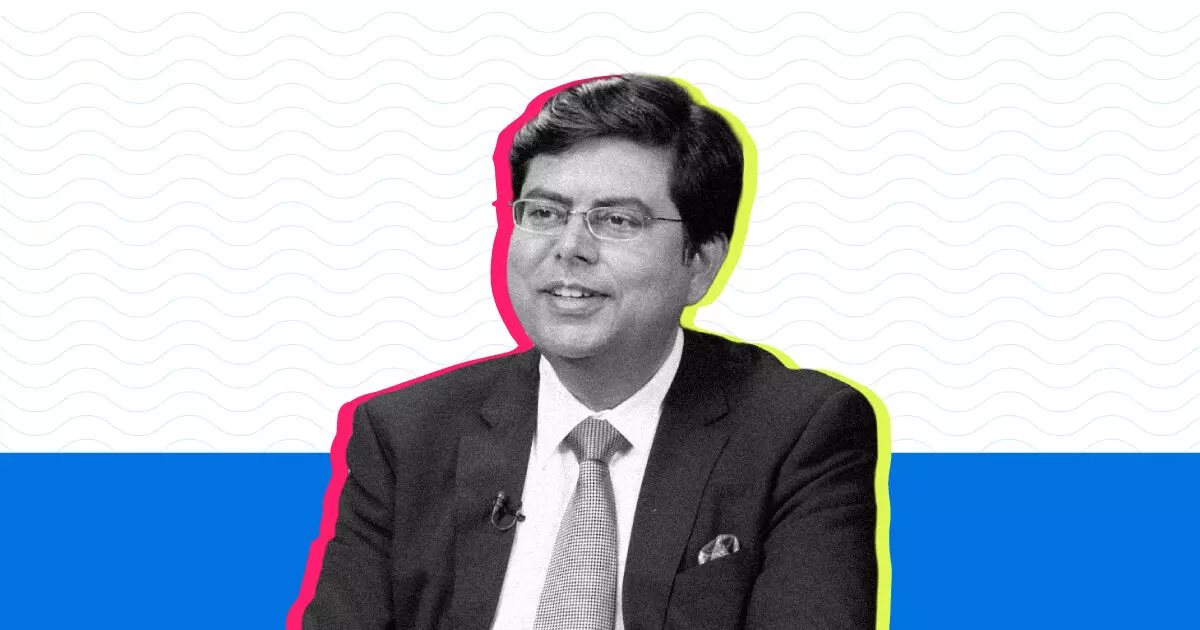
ThyssenKurp CEO: Why India Should Stop Chasing EVs, Back Ethanol and Hydrogen Instead
- The Core Report
- Published on 13 Jun 2026 6:00 AM IST

TKIL (formerly ThyssenKrupp Industries India) CEO Vivek Bhatia on why India's industrial boom is unlike anything seen before and how coal, ethanol, hydrogen, and smarter manufacturing could reshape the economy by 2047.
The Gist
Vivek discusses the promising decade for industrial growth in India, highlighting the transition of TKIL from ThyssenKrupp ownership back to Indian shareholders.
- India's economy is rapidly growing, requiring significant investments in core infrastructure.
- TKIL has evolved from a sugar equipment supplier to a leader in various industrial sectors.
- The focus is on enhancing technology and value creation for customers in mining, cement, and energy sectors.
NOTE: This transcript contains the host's monologue and includes interview transcripts by a machine. Human eyes have gone through the script but there might still be errors in some of the text, so please refer to the audio in case you need to clarify any part. If you want to get in touch regarding any feedback, you can drop us a message on feedback@thecore.in.
Hi and welcome to The Core Report. Vivek, thank you so much for joining me today. You've been telling me that this is a decade of industrials, and we're going to come to what TKIL is and what it was before it became TKIL because most people may not know that. But tell me about the decade of industrials.
Well, it's a beautiful time to be an industrial company. Where we see India today is an economy that is the fastest growing in the world, and a lot of our growth will be driven by building out core infrastructure and making sure that our per capita consumption of various core commodities — like steel, cement, and power — climbs up, because that will be essential as we ramp up manufacturing, ramp up services, and build out a much larger economy going towards 2047. All of that growth requires massive investments in the industrial space. So I'm personally really excited, really happy, and I feel blessed to be running an industrials business at this point in the history of our country.
Got it. So I'm going to come to the areas you focus on, but first tell us a little about TKIL. Everyone would know ThyssenKrupp the previous avatar of this company but Thyssen, which is a German company, has sold its stake to Indian shareholders and moved out. Tell us a little about that transition.
It's actually come full circle for us. We started off in 1947 as an Indian entity, which then partnered with Buckau Wolf — a leading supplier of sugar equipment out of Germany. We then offered our stake to Buckau Wolf and were majority-owned by them for many years, building a very strong reputation in the sugar space, as well as in power, mining, and material handling. That entity was later acquired by Krupp, so we became Krupp Industries India. After the merger with Thyssen, we became ThyssenKrupp Industries India.
In recent years, ThyssenKrupp, as part of their portfolio strategy, exited the mining business worldwide through a divestment to another entity. TKIL, to a certain extent, was not divested at that time, but we became non-core since the parent mining business was no longer within the group. So we were divested in mid-2024 to longstanding Indian shareholders a group of three entities that had been on the board for several decades. In many ways, it was a smooth and natural transition back to Indian ownership.
That said, the journey really changed us as an organisation both the transition to German ownership and the transition back. Being part of a large conglomerate embedded a certain mindset into our DNA and sharpened our focus on technology and value creation for customers, for which we are still well-regarded in India and in export markets around the world, having exported for several decades.
And you've been with the company for more than a decade yourself. You were in the region in an earlier role, and then came back to India and continue to head it today.
Correct. I joined the Citizen Group in 2014 as Head of Strategy for APAC, then became Regional CEO. In 2018, I was keen to come back to India the economy had been doing amazingly well so I took over the leadership role here in 2018, and became MD and CEO on the 1st of January 2019. Since then, we've grown very well, and I'm very proud of what we've accomplished as a team.
Got it. So there are four or five areas that you really focus on, mining and bulk material, cement plants, sugar plants, energy and boilers, and new energy. Let me ask you first about mining, cement, and sugar. You're really building the machines that make the things we might eventually see as finished products. This isn't something a normal consumer would encounter, since it's all happening inside factories or at distant mining locations. What are you seeing today in these sectors, and what does that reflect about what's going on in the broader economy?
It's a very interesting situation. If you look at the media in general, there's a lot of talk about uncertainty in the broader global macro environment. But when it comes to the industrial space in India, this is actually an amazing time — unprecedented growth that all industrials in India are looking forward to.
Take the power sector, for example. We're seeing massive investment both in renewables and in conventional generation. We're talking about 80 gigawatts of thermal power, which brings consequential investments in coal mining as well. In steel, we're talking about more than doubling India's capacity, that comes with investments in iron ore mining and the entire surrounding ecosystem. Similarly, in sugar, we've all seen the ethanol story, which transformed the sector from a loss-making industry into a highly profitable one. And we're now going beyond E20 and talking about E85 and E100.
Yes, we've just seen the launch of an E100 car — though I'm not entirely sure where the fuel for it is going to come from. But there is a car.
Sugar is changing from being an agribusiness to a biochemicals industry. That's the mindset I see in many promoters today, because we're talking about ethanol, CBG, lactic acid, and sustainable aviation fuel. It's no longer just about a commodity associated with sugar problems or diabetes, it's about a commodity that can be truly transformational for industry, and that can move the needle in shifting natural resources toward green, sustainable outcomes in hard-to-abate sectors.
India is one of the largest producers of sugar in the world, we're as large as Brazil, and many people don't realise it, given the scale and size of our industry.
And I'll come back to sugar in a moment, but of the areas you just mentioned, which is your largest piece of the pie?
As of today, the mining and material handling business is the biggest piece of what we do. And as I mentioned, we're seeing tremendous opportunities there. We are one of the leaders in coal handling plants, and with 80 gigawatts of new thermal capacity being built, the market is really exploding, there's more business than the industry can handle.
And you mentioned that you're also benefiting from growth in thermal power capacity. Within thermal power plants, what exactly do you do?
Within thermal power plants, the coal handling unit is critical, all the inbound coal has to be processed, stored, and fed into the silo. It's one of the largest and most complex units in a thermal power plant, and we are one of the leaders in that space in India, if not the leader.
More recently, we've stepped up and started offering the full Balance of Plant, or BOP, package. In a power plant, there are two main sections: the boiler-turbine-generator section, and then everything else which is called Balance of Plant. We've consolidated a range of packages, with coal handling as the largest component, and are offering them as a single integrated solution. We've already won the first couple of large orders in this space and continue to make progress.
And how is that different from what you would have done, say, ten years ago?
Ten years ago, we were a little hesitant to get into full-blown EPC. We were more focused on the product itself. Today, by contrast, we're focused on what the customer needs. We're more flexible, especially with the new ownership structure, to position ourselves in ways that create value for the customer, reduce their risk, and enable faster execution. And for us, it means dynamically managing high-complexity execution and delivering a seamless package. It's a win-win: the customer gets a reliable partner in their journey, and for us, it represents a significant enhancement in scope and scale.
Right.
On the boiler side, you also make boilers? We make captive power boilers, up to 150 megawatts. So we're not in the supercritical boiler space those go into large thermal power plants, which is not our segment. But for anything up to 150 megawatts, we are market leaders or one of the key players in the CFBC boiler space, which is a specialised boiler for complex fuels. And we are the only Indian player with our own proprietary technology in that space.
And when you say complex fuels, you mean?
Low calorific value fuels. We can handle traditional inputs like coal, lignite, and pet coke, but also washery rejects and a certain degree of biomass blending. CFBC technology offers a lot of flexibility while ensuring good environmental outcomes.
Sticking with power for a moment, in a newer power plant coming up today, what would your share of the plant be, in terms of scope and maybe value?
In terms of physical scope, the boiler and turbine package is fairly concentrated, whereas the BOP is spread across many systems. So we cover a large portion of the plant in terms of civil work, erection, and so on. In terms of value, the BOP package would typically be anywhere between 25 and 30 percent, depending on how it's structured. Certain components can be bundled with the boiler package or handled separately depending on that, it could go as high as 40 percent in some cases.
And those are contracts you're presently working on?
Yes, in various forms.
Okay. Let me come back to mines. What has changed in a mine? We all have images of what mining looks like and I assume some of the technology goes back centuries. But what's changed?
A lot, and also not a lot. Let me contextualise that. Mining is one of the largest emitters of greenhouse gases globally we're talking around 7 to 8 percent. And a lot of it is driven by how mining is done. In India especially, we rely heavily on truck-and-shovel-based approaches.
The future of mining lies in in-pit crushing and conveying and greater mechanisation, not only because it improves efficiency, but because it enables electrification of operations, moving away from diesel. When you electrify, you have the opportunity to use green power or whatever competitive power source is available. And if you have a coal washery on site, you can take the washery rejects which are otherwise an environmental hazard and convert them into power to run the whole operation in a self-contained mode.
To give you some perspective: when a truck moves from point A to point B and returns empty, your overall operational efficiency is no more than 30 to 35 percent you're essentially moving dead weight back and forth. With a conveyor-based system, that efficiency rises to around 80 percent. It's far more efficient from a fuel consumption perspective, and as I said, can be made green through electrification.
We're also seeing new trends in blast-free mining. We're already partnering with NOEN and Vítkovice in the Czech Republic to offer a specialised machine that, with sufficient cutting force, can eliminate blasting entirely in certain conditions. That's very exciting, because blasting is one of the key limiting factors in mining, every time you blast, you have to shut down other parts of the operation, and you have to be very careful about proximity to habitation. With blast-free mining, you can run a seamless, continuous operation.
Is that happening in other parts of the world right now, or even in India?
In India, we do have continuous mining at Neyveli, where bucket wheel excavators and shiftable conveyors have been in use for some time they were among the earliest movers in this regard, though that's with lignite. On the conventional coal mining and open-pit mining side, we have a lot of catching up to do.
And bear in mind, once you bring technology into mining operations, you eliminate a lot of the variability we see today. Every monsoon season, you see a 20 to 30 percent dip in coal production, followed by news stories about thermal plants being down to two days of coal supply and potential power outages. With technology-driven mining, you can have sustained, hazard-free, safer operations with consistent throughput regardless of weather conditions. The economics improve dramatically as well.
That's interesting. India has fairly good coal reserves, so the coal is there. What you're saying is that when we experience shortages at thermal power plants, it's not because we've run out of coal, but because we're falling short in our ability to mine it efficiently.
Exactly. During heavy monsoon rains, truck movement at mines slows dramatically and in some cases has to be shut down entirely for safety reasons, and rightly so. But if you have a conveyor-based in-pit crushing solution, you can continue moving material out of the mine regardless of the weather.
Right. Let me come to sugar, and the phrase you used, "biochemicals." Not something you put in your tea, but a biochemical industry. What does that mean in terms of what's going in? I visited a sugar plant about eight or nine months ago it was off-season, so perhaps not the best time and it seemed fairly basic from what I could see. There was a distillery next door, but I didn't get to see that side. I'm sure a lot has changed.
It's a space where I feel a lot of disruption is waiting to happen, both on the upstream and downstream sides. To put it in context when you look at our productivity per hectare of cane, we are nowhere close to the yields that countries like Thailand or Australia achieve. There's enormous potential to improve yields and get more cane through better upstream intervention.
That's on the farming side.
Correct. And equally, our process of getting cane from the farm to the mill is truck-based and very inefficient. The longer the gap between harvesting and crushing, the more sugar you lose because the cane dries out after being cut. In best-in-class operations, the cut-to-crush time is measured in hours. In India, it's often measured in days. Imagine the sugar we're losing due to that inefficiency.
But isn't there a regulatory angle to that as well?
Not really.
In terms of which farmers can sell to which mills?
Each mill has a designated catchment area, but the issue is efficiency in moving cane from the farm to the mill. If it takes days, you lose sugar because the cane dries out. There's a massive opportunity to unlock value there.
On the downstream side, it's equally remarkable what's possible once you have a sugar plant. We've all seen the ethanol story unfold. But the rest of it is just beginning. CBG is a growing space, and we'll see a lot of action there. And beyond CBG, there are even higher-value pathways, lactic acid, for instance, takes you into bioplastics through polylactic acid, which significantly enhances the value you can generate. Then there's SAF, sustainable aviation fuel, which India has already committed to blending, along with the rest of the world.
And we are producing some SAF here already.
Barely, it's a drop in the ocean. It doesn't move the needle. The real disruption will happen when we get more production units making SAF at competitive scale.
The used cooking oil route the UCO route will never deliver the volumes needed. Restaurants want to extract maximum use from their cooking oil before parting with it. The sugar-based route is what will allow us to produce SAF at scale. That's what the industry and the country need to work toward. And when that happens, not only will sugar mill profitability rise dramatically, but we'll also make real progress on sustainability and on reducing crude imports.
So you've talked about the time lag between cutting and crushing, and now the downstream opportunities. Where do you see the interventions happening right now including from TKIL?
We'll naturally be more focused on the technology side, post-crushing. Right from the point of cane receiving onwards, so from cane unloaders through the full sugar plant, that's our domain.
You make the cane unloaders as well?
We do. And of course, we continue to offer the full suite of sugar plant equipment. But we're also working to add technology layers on top of that. We now offer ethanol distilleries as a solution, we offer CBG through our partners, and we're very close to active collaborations on lactic acid and SAF, those will be in the market very soon. With all of this, I think we'll be able to demonstrate a very viable and economically attractive path for sugar mills to evolve into genuine biochemical hubs.
Right. A lot of sugar factories are already producing ethanol either through on-site distilleries or by transporting to nearby ones. Where are the gaps you see today? And would your work involve retrofitting existing plants or building new ones?
The first wave of the ethanol story has largely played out. Today we're in a situation of oversupply. So the real priority now is to accelerate E85 and E100 adoption and get flex-fuel vehicles on the road because once the demand side is sorted, we can come back to the supply side and build out the next phase of ethanol capacity. And that next phase will be very meaningful, because it will put green, India-made fuel on our roads without the need to import. I'm very bullish about what the next two to three years will bring it will be disruptive for sugar, and also for transportation.
Given our current sugar and ethanol output capacity and you're saying there's an oversupply of sorts does the technology to go further downstream exist in India today, functioning in sugar plants?
For ethanol, yes the capacity is there and we can add more. SAF is still very nascent. CBG is progressing. Lactic acid is in its very early stages. But these are the industries of the future over the next decade, you'll hear a great deal about both of them. And as I said, we're also at the cusp of a second ethanol wave once we have a robust pool of flex-fuel vehicles capable of running on E85 and E100.
If I were to ask you to step back and look at this as an energy spectrum, where do you see the biggest action? And how should we be guiding this from a policy perspective? Because energy use is converging in various ways. I could be using induction cooking which is electricity or gas, which could be LNG or LPG, one from a refinery and one from an oil field.
India's energy mix is going to get very interesting from a sourcing perspective. We have the traditional pillars coal and thermal power as well as solar and wind, which are well established. But we're also moving toward coal gasification, where gas from coal fields will feed into fertilisers and other industries. Green hydrogen will definitely be part of the mix and is set for explosive growth. And we're looking at significant nuclear capacity both SMRs and large plants.
Is that an area you're looking at?
We're looking at that space. I have nothing to share at present, but we are in conversations.
So this whole mix is projecting a very vibrant energy ecosystem diverse in sources and with a good combination of baseload power and the fluctuating power that comes from solar and wind, which is important for grid balancing. It's going to be a beautiful 10 to 20 years, given the breadth of technologies and possibilities ahead of us.
Which areas need the nudges policy nudges or CAPEX nudges? As we speak, we've hit peak power demand at 270 gigawatts. That's what we projected, but it's clearly straining the grid. We don't have enough evening power; we have surplus daytime power. So things aren't yet where we'd hope them to be.
A few thoughts. First, I see demand as a largely self-created number. If manufacturing grows from 13 percent to 26 percent of GDP, demand will suddenly zoom. The important thing is to provide power to industry at competitive rates. If we can offer it at three and a half to four rupees a unit, you'll see a lot of power-intensive industries become competitive out of India which will boost both demand and economic output.
So demand isn't something I worry about. It will grow as supply becomes robust and competitively priced.
On the supply side one area where I see enormous potential is green hydrogen. If you look at the pricing trend, we've gone from around 500 rupees per kg to 400, and the latest bid I've seen is around 275 rupees. Through our PCR technology, we're also able to offer competitive pricing.
What I keep pointing out is that this is a chicken-and-egg problem. You don't have enough hydrogen as a fuel, so usage isn't picking up; and because there's no demand, supply doesn't scale. My suggestion which I've shared with various policy stakeholders is that the high cost of green hydrogen is partly driven by the cost of round-the-clock green power, which is currently around 4.6 rupees per unit. If we can bring RTC power down to three or four rupees, hydrogen costs drop significantly. Some of it may be grey, some green but you'd have critical mass in hydrogen supply, which can then trigger an ecosystem of hydrogen vehicles.
We've just launched a hydrogen-powered train. Hydrogen-powered buses are also being readied by OEMs for the market. But they need fuel available at the pump. Let's focus on getting hydrogen into the market first. We can prioritise the green part as step two once the supply chain and dispensing infrastructure are in place, switching from grey to green is a much easier step.
What does that pathway look like? We're building EV charging stations, but we're still lagging where we need to be relative to, say, European levels of electrification. How would you allocate resources between ethanol, hydrogen, and electrification?
It comes down to strategic priorities. The biggest challenge I see with the EV ecosystem is battery dependency on a very limited set of countries. For a country of India's size and scale, building an entire industrial ecosystem on that premise is a risky bet it's essentially the same kind of exposure we had on crude, and now we're at 90 percent import dependence on oil.
90 percent, yes.
Exactly. So I'm more bullish on the ethanol route and the green hydrogen route for transport, because these are things we produce in India supply chains and ecosystems we can build and control ourselves. And India as a geography has huge potential. Imagine a country that goes from being a net energy importer to a net exporter of green hydrogen. That would be a genuine paradigm shift.
And cost is ultimately the determining factor in all of this whether for hydrogen or ethanol. It's not clear, for instance, what running an E100 car would cost per kilometre relative to petrol. India is a very mileage-conscious country.
We are, but we have to look at the bigger picture. When you buy crude or a battery, a significant portion of that value leaves the country. When you produce ethanol, you're helping the farmer. You're supporting your domestic industrial ecosystem. All of that economic output stays in the country — generating employment and positive local impact. And on the balance of payments side, you're not buying with foreign currency in international markets. The strategic case is compelling, and the cost will come down with scale.
And you're suggesting that subsidising hydrogen, for example, would bring more producers into the space.
Let me give you the economics. There's a commercially available car, the Toyota Mirai, that runs on a 5 kg tank for more than 500 kilometres. So roughly, 1 kg of hydrogen does around 100 km. At 450 rupees per kg and the latest bid is 275 rupees you're looking at about four and a half rupees per kilometre. Compare that to diesel, which is nine to ten rupees per kilometre. Even stripping out fuel taxes, hydrogen is already at parity or better. On the consumer side, the economics actually make sense today.
What I'm asking about is the producer side at 275 rupees per kg, what is the capital cost involved, and at what scale? How many companies in India can currently afford to produce at that level?
That's a very valid question. And my answer is: we have to start somewhere. You can't say "we don't have the manufacturing capacity today, therefore we won't do it." Rather, set a target commit to a certain volume and I can guarantee you dozens of players will set up sufficient capacity to meet that demand. But right now, you don't even have hydrogen vehicles that would consume it. And that becomes the excuse for not scaling supply.
With EVs, for example, Maruti Suzuki was a late entrant because they felt India was still a petrol-based market. But they've changed their mind and launched an electric vehicle now that the ecosystem is building. Maybe there are incentives at play as well. But let me come back to the cost of power.
Just to close that point, EVs are also very much an urban phenomenon. But India is vast. You can't quickly build out a charging infrastructure that covers the entire country. Everybody has range anxiety when they drive out of Delhi or Mumbai, that's the reality today, even if it improves in coming years.
Got it. You made an interesting point about the cost of power you said that if we could reduce the cost of power to industry by roughly a third, the entire dynamics of production, scale, and exports could change.
Absolutely, and I believe that very strongly. When I visit many of my customers and ask what they're paying for power, I often hear eight rupees, sometimes even twelve rupees a unit. That's extraordinary when the actual cost of captive power generation is three and a half to four rupees. That's a straight 50 to 60 percent reduction sitting on the table. Who wouldn't want that? And what would it do to their economics?
Equally, if we want to move the needle on manufacturing's share of GDP from 12 to 13 percent up to 25 or even 30 percent, we've done something really good with the FTAs, we've opened up market access. But tariff avoidance alone won't get us there. We also have to work on quality, and on factor costs. Power should be the most competitive in India. Steel should be the most competitive. Raw materials should be most competitive. And we need the skilled manpower to execute on all of that.
On steel we have very limited production of sections and forms that comply with European or US norms, unlike China, which produces a lot of steel meeting those standards. The reason is we manufacture to Indian standards. There's no reason why Indian standards can't be harmonised with European and US standards, so that our products can be readily accepted in export markets without requalification.
That sounds like it should be a straightforward fix.
Sometimes the simplest things are the hardest to fix. And for some reason, it hasn't received enough attention. Our policy and standards framework was historically designed to protect India from imports, creating standards others would find difficult to match. But the current economic environment and policy direction has changed. We want to be competitive going out. So we must ensure that our raw material availability and quality standards are consistent with global benchmarks. You can't expect an SME to source competitively from Europe or China when an Indian supplier with aligned standards could supply the same thing locally.
And that brings us back to the power question. SMEs can't set up captive power, they depend on the grid and end up paying the highest rates. Large players have traditionally set up captive generation, every steel plant does it, and today data centres are doing it too, including with renewables. Is there some balancing happening, or is the gap still too large? Is the cost of grid power still the main bottleneck?
It's definitely holding us back both on cost and reliability. If you had low-cost, high-reliability grid power, why would anyone invest in captive generation? The whole issue is that we don't have it. I'm a strong advocate for addressing that.
One thing the government can do is build low-cost power units inside industrial parks, generating power for the ecosystem at a fair price, without cross-subsidising one segment by inflating the cost for industry. The goal should be the lowest, most competitive cost of power for Indian industry pursued as a mission-mode exercise. And as I said, we need to clean up all the other factor costs as well.
And you feel this is more achievable than some of the other challenges?
Very doable.
Compared to things that will take longer.
Unfortunately, we don't have the luxury of time. I was just reading that India's demographic dividend will start to flatten out after 2040, that's only 14 to 15 years away. We can't afford to spend that time deliberating. We need to roll up our sleeves and move at light speed.
Got it. A few last questions. Looking ahead and I want to split this into two parts. We haven't touched on cement, which is also an energy-intensive but fast-growing industry.
And a growing one.
Yes, and a fairly localised one you generally can't import or export cement easily, though it does happen. Right now, though, we need so much of it domestically that most of it stays here.
So, looking at the broader outlook for manufacturing given the factors of production that we do or don't control what are some of the risks or areas that need focus? And second, you mentioned skills. How do we make this sector more exciting for the engineers who might otherwise be looking elsewhere, including at careers in AI and tech?
Both are questions I'm passionate about. On the demand side, India is at an absolute sweet spot the kind of sustained growth momentum we expect over the next 10 to 20 years is remarkable. We're genuinely blessed to be living through this phase of India's economic development.
But the challenge is competitiveness and quality. If we don't address those, we'll create products that serve the Indian market but fail to measure up when we try to export. The real success for Indian industry will come only when we can become a manufacturing hub for the world. And sometimes I worry that a robust domestic market makes people complacent comfortable enough to sell at home without the discipline of international benchmarking.
We really need to push ourselves to say: yes, India is growing, but I want 20 to 30 or even 40 percent of my production going internationally, so I'm measured against the best in technology and accepted for quality and competitiveness. Without that, we risk selling lower-quality goods at higher prices, sheltered by a protected domestic market. That doesn't serve even the Indian customer.
Two-wheeler manufacturers have a healthy export mix, as do some four-wheeler manufacturers.
Correct. And I'm speaking from a capital goods perspective the machine manufacturers, the hardcore capital goods industry really need to step up. A large and comfortable domestic market, where outside players struggle for various reasons, breeds complacency. That's the real challenge I see for the Indian economy.
On manufacturing's share of GDP 12 to 13 percent is nothing to be proud of. We need to build the muscle to get to 25 or even 30 percent. That would be truly transformational, and we have no choice without it, I don't see us becoming a developed country.
Now, on why young people should enter this industry, I think we've done ourselves a disservice in how we've represented the sector on campuses. For years, even mechanical and civil engineers were gravitating toward IT for better career prospects. But today, I'd say this is one of the most exciting spaces you can be in. You're looking at multi-decade growth, cutting-edge technology, and the responsibility of helping India achieve net zero by 2070. And you're part of Indian manufacturers going out to conquer global markets. From an economic and personal career perspective, this is one of the most exciting places to be right now.
And a young engineer looking at China might see robotics and physical AI happening at scale. We're seeing some of that in India too, I'm sure, but those are the things that excite that generation. Do you see those kinds of opportunities, and where?
Absolutely. I sometimes say we're still in a bit of a dinosaur age in terms of how we operate. But the real success will come to those who adopt AI, adopt robotics, and genuinely move up the technology and innovation curve to disrupt conventional industrial norms. That's where it becomes exciting from a career perspective.
And I believe it's going to happen more and more in India. As we grow, smaller and mid-size companies will scale up and gain the financial muscle to start investing in these technologies.
Right. And just to round things up, we started talking about mines, and as you said, some things have changed while others haven't for perhaps centuries. But mining is also an area seeing a lot of contemporary innovation, autonomous vehicles, AI applications. How is one of the oldest forms of industry seeing some of the most modern inputs?
Absolutely. Look at what Australia has done with autonomous mining, autonomous trains, a level of technology adoption no one could have imagined 20 years ago. That could be a very interesting template.
But I think India needs to find its own balance between technology adoption and employment. Where it comes to safety, quality, and productivity, technology absolutely should come in. But we also have a social obligation to generate jobs. We can't simply copy-paste the Australian model, we need to look at the Indian context and find an approach that embraces technology while still leveraging people and skills.
And actually, that's an advantage. Australia moved to autonomous mining partly because they didn't have enough labour. We have more degrees of freedom as we adopt technology because we do have the workforce. That's a genuine strength.
That's a good note to end on, Vivek. Thank you so much for joining me.
Such a pleasure. Thank you for having me. Loved the conversation.


