



 Newsletter
 Search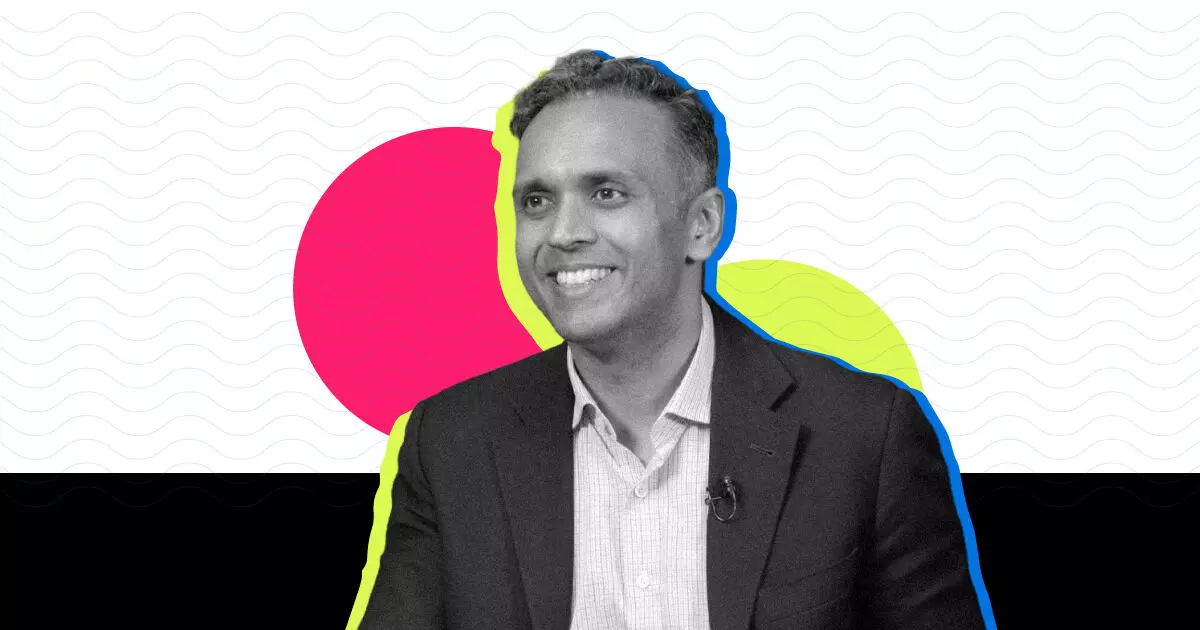
Sterlite Group's Pratik Agarwal on Building the Grid That Will Power India's Future
- The Core Report
- Published on 30 May 2026 6:00 AM IST
In this edition of The Core Weekend Report, Pratik Agarwal, Chairman of Resonia and Serentica Renewables and Managing Director at Sterlite Electric, speaks about India's record power demand, the transmission infrastructure gap, and why renewables have become cheaper than thermal power.
The Gist
Pratik Agarwal, Managing Director of Sterlite Electric, discusses India's record power consumption and the implications for the energy sector.
- India's power consumption has surpassed 270 gigawatts, exceeding government projections.
- Agarwal emphasizes the need for India to transition towards becoming an 'electrostate' with increased electricity reliance.
- He highlights the challenges and opportunities in renewable energy and the importance of efficient transmission systems.
NOTE: This transcript contains the host's monologue and includes interview transcripts by a machine. Human eyes have gone through the script but there might still be errors in some of the text, so please refer to the audio in case you need to clarify any part. If you want to get in touch regarding any feedback, you can drop us a message on feedback@thecore.in.
Hi and welcome to the Core Reports Weekend Edition. I'm joined by Pratik Agarwal, Chairman of Resonia and Serentica Renewables and Managing Director at Sterlite Electric. Pratik, thank you so much for joining me.
So we are meeting at a very interesting time, right? So somewhere last week, India's total power consumption hit or rather crossed 270 gigawatts. Now this is a record.
It's also the higher side of the projection that I think the people in government planned for about four months ago. So when they planned, they said, okay, let's get the power, let's get the gas, let's get the coal, let's get everything. So we are ready for 270 and we've already crossed it and we're still in May.
Now, a couple of questions. I mean, one is how do you see it? I mean, whether as a sector player or as Sterlite?
Second is, it's also interesting that this comes at a time when we obviously have an energy crisis and one of the backups for achieving this high demand or meeting this peak demand was obviously gas, which we are facing shortfalls, but we can come to that later. So how are you looking at this situation right now?
Firstly, thank you so much for having me on your show. It's really a pleasure to be here. As your audience and as you know, I run three businesses in the field of electricity.
One is in grid, owning and operating grid networks. Second is in renewable energy and third is in high voltage cables. So coming to your question of this 270 gigawatt, yes, absolutely.
There is no denying that this is a watershed moment because India in general has been growing as in terms of power sector, the consumption, but has had his periods of low growth starting from COVID for various reasons, right? So this firmly puts India back on the road track. Now, taking a step back and linking this back to also what you said about the current energy crisis, right?
So I firmly believe that every crisis is a wake up call. You know, COVID was a wake up call and the whole UPI, PTM, all of that was born in that time, right? I believe this is our wake up call to say that is it time to electrify our economy end to end and really make India an electro state, right?
Various people have different definitions. Electro state is a state where more than 50% of its energy comes from electricity. That number today is about 25% for India, right?
Of which a quarter is renewables, right? So a quarter of a quarter, right? So the challenge with this is both on the supply side and the demand side.
Supply side wise, if you ask me generally, India is actually doing really well. Like I'm very proud of what we've achieved. You know, we really slowed down thermal expansion and yet we managed to scale up renewables.
So we added 50 plus gigawatts last year in renewables, which is something that they forecasted. But I mean, we all know how some of these central forecasts are, right? Nobody really believes they'll happen and they actually happened. So it's phenomenal. We've already met our 2030 targets. Exactly.
Yeah, that. So now the big challenge, of course, in this is that how do you drive people to consume more electricity and replace other forms of energy consumption? The big forms of consumption, of course, are fossil fuels that go into transport.
And then you've got various forms of heating and cooling, then you've got cooking gas, and then you've got a huge amount of industrial consumption in steel, cement and places like that, all of which are currently fossil fuel and not coming via the electricity route. So this is a time for us to say that, hey, can we go step by step and convert our use cases from fossil consumption to electricity consumption in places such as cooking and transport, through induction cookers, through EVs, etc. And the country, of course, the killer app in electricity is ACs.
And of course, that's why we are here today, it's the peak summer, highest temperature, and people have more ACs than they've ever had before. And they're using them and hence the 270 gigawatts, right? That's really the explanation.
But I think this is a very positive sign that the market can react quickly to these situations. And therefore, we are seeing the highest electricity consumption exactly coinciding with the largest energy crisis we've ever had. And this gives us confidence that India can move towards being a electrostate.
Last fact I'll leave you with, China, between 2001 and 2021, grew its electricity consumption by seven times, which is a 9% CAGR. India is currently at between 5% and 6% CAGR and some people say it'll be 6.5%. But if India can be at 9% CAGR, then we will grow electricity 20 times by 2047, which is Bharat. And then we'll have about from the current 270 gigawatt you mentioned, we'll have 1800 gigawatt peak load consumption.
So to do that, you need to fuel the demand side, people need to aggressively move from consuming petrol, diesel, kerosene, gober, everything, to consuming electricity. And the supply side, I'll talk about it later. But in general, we're doing quite well and many more things we can do.
Right. And tell us about the parts of your company, which are actively affected by this rapid growth. I mean, when I say affected, I mean, in both in a positive way and otherwise.
See, a rising tide lifts all boats. So when the fundamental demand of electricity is growing, everybody and everything in the sector from developers to OEMs to services to the lenders to consultants will do well. So that's exactly what's happening.
Right. The most directly affected is our renewable energy company, where we, Serenteca Renewables, provides round the clock renewable energy to large factories, CNI customers, and some utility customers. We are the youngest, only four years old, but the fastest in the country to reach one gigawatt, two gigawatt, and now three gigawatt in this month.
Right. And our plan is to end this season in June by about three and a half gigawatts, reach about seven gigawatts next year, and 17 gigawatts by…
So when you say three gigawatts, for those who may not understand, that's almost, let's say, a mid-sized city in a country like India. Oh, yeah. It's not Mumbai. Mumbai is about five, six gigawatts consumption, so half of Mumbai.
Exactly.
And this you're really supplying only to, as you said, CNI, which is commercial and industrial consumers.
Because most people think of grids and some grid and transmission lines and all that. But what you're saying is that you're supplying or creating the infrastructure for direct.
See, 40% of greenhouse gases are created by industrial consumption of fossil fuels, Poe Zero. And 50% of all electricity in India is consumed by commercial and industrial establishments. These are the people who are largely not using solar or renewable in a meaningful way.
Why? Because daytime solar doesn't do anything for them. You give them solar for the other 16 hours, he has to pay more to his original supplier.
So he's net-net more expensive. Doesn't make sense. Only when you can take a true round-the-clock solution by combining multiple technologies, wind, solar, battery, pump, hydro, IEX, put it all together, then you can give them a real solution, right?
I link this to what happened in early 2000s in the telecom revolution. If you needed a lease line for your office, you had only two options, MTNL or BSNL. And then the big wave of private sector came.
They provided eventually 100x more capacity at probably one-tenth the price and much better service, right? So that enterprise migration of data that happened in those 20 years, I see that enterprise migration and power happening in these 20 years starting this year.
So give us an example of, let's say, a company or a kind of company who has gone for your product or services and how has it been sort of built up and evolved?
Sure. So let's start with Hindustan Zinc. Of course, it's a group company, but it's the world's largest zinc company.
And zinc, as you know, is critical for galvanising the steel industries. And by definition, a big consumer of power. Massive, massive consumer of power, 800 megawatts across the board, very large.
This company was 100% coal-fired till about 21, 22, right? There was a lot of volatility in coal price. They wanted to be CBAM compliant. They wanted to have green power. So Serenteca was being born around then. They signed PPAs with Serenteca.
In three years, which will end in 26 and spill over a bit in 27, 80% of Hindustan Zinc will be renewable power-fed while reducing prices for Hindustan Zinc. So it's a dual benefit. I've cut down the power cost, which is a very big significant cost for them, and you've gone green, right?
So it's an incredible transformation for the largest zinc company in the world. Now just imagine every other zinc company in the world will follow them and the kind of impact you can have both for the environment, for the planet and for creating this economy. So this is a classic example where companies that were dependent either on government suppliers of electricity, or if you had a captive power plant, you were dependent on government supply of coal.
Either way, your government supply depended. And they said, this is enough. We need to move to a private option.
And if it can be green and cheaper, then why not? I mean, it's absolutely makes tremendous.
This particular case, you're saying about six, 700 megawatts of power that you're generating. So what is the, I mean, what is it coming or where is it coming from? Yes, very interesting.
So what we did uniquely at Serenteca, so typically till about four years ago, if you were a renewable company and you wanted to supply to a large factory, you would typically either set up a solar plant on their premises, or you would set up a solar plant very close to them and using the local distribution grid, you would supply it to them, right? We realised that this was not scalable. A, because around that factory is not necessary, they'll have perfect sun, perfect wind, perfect conditions.
Central India?
This is Rajasthan. Yeah.
Now, on top of that, when you're using the local grid, remember now you're competing with the same guys, right? These were the industrial houses are the most profitable customers for the local discoms because they overcharge them and cross subsidise everybody else. So now you're using their grid to supply power to their customer and stealing their customer.
That's never going to be a smooth ride. So that whole sector never took off as a CNI business. What we, I would say, innovated in this, we said that, hey, there's a national grid.
It offers open access. We also have a very large transmission company, so we know how to build last mile connections to the national grid. Why don't we change this business?
Why don't we start generating power in all parts of the country? So for example, solar where solar makes sense, wind where wind makes sense, pumped hydro where that makes sense. And then over the national grid, supply to the customer.
Now, what we brought unique to this is that the customer wasn't connected to the national grid. So we said, we will connect you to the national grid at our risk and cost. So now coming to your question on Hindustan Zinc, they have a large smelter in place called Chittorgarh in Rajasthan.
We are producing renewable power in Rajasthan, Maharashtra, Karnataka, storing it for the day, part of it in Andhra. So they're releasing it at night. And all of this is then getting sent over the national grid on a transmission line to this plant in Chittorgarh in Rajasthan, all happening in real time.
We have an AI based software called Seranova, which manages this real time. So says that, okay, for the next half an hour, there's likely to be cloud cover over your solar plants. So better to store more the previous two hours.
All of this is done using AI, for example, complete optimisation of the grid. So it's like a symphony, you've got five, six instruments performing, every 15 minutes, something else is firing. And you have to manage this entire symphony on a live continuous basis.
So and Hindustan Zinc is one example. What's the other example, let's say from another part of the country? So another part of the country.
So our two, our largest contracts, which are commissioning in 26 are from the group companies. And then from next year, we have large contracts from third parties. Roughly 60% of our contracts are from Vedanta group companies at the moment.
So the second biggest example is the aluminium business. Aluminium is the largest consumer of electricity after cement in the country. Okay.
So and as you know, we have the largest aluminium smelters in the country amongst the largest in the world 3 million tonnes of aluminium production largely between Odisha and a little bit in So again, same thing, right? They needed to aggressively decarbonise their operations. Currently, all the electricity is coal fired.
And for CBAM reasons for Indian renewable purchase obligation reasons, and for just being a good citizen and their own sustainability goals, they needed to decarbonise while keeping the price low. Because electricity is one third the cost of an aluminium producer. You can't be competitive if you're not the cheapest buyer of electricity.
So again, we did the same thing sign round the clock renewable contracts with aluminium, and then set up solar, wind, batteries, and pumped hydro. Pumped hydro we contracted to a large part in different parts of the country, where it makes more sense, where the resource is the richest, where the sun shines the brightest, wind blows the best at the right times. One more thing very interesting we realise is that when you are using the national grid, you can actually optimise really well.
I'll give you an example. When you're putting together around the clock renewable solution, your most expensive commodity is the battery. Because you have to store to serve at night.
But if you are combining, let's say wind with Karnataka, wind with Maharashtra, then the wind patterns are different in both states, which means that you have two hours of extra wind in your total solution and you require two hours of less battery. And this makes you cheaper than everybody else. And that means what like 6 to 8pm or or even at night?
Correct. So in certain times, certain months, you've got the wind, especially in the monsoons, you've got wind right through to 11pm at night. And then the patterns are different in different states.
So when you combine multiple states together, and you do a sigma of everything, you realise that actually you've got renewable firing in many more parts of the day than your earlier thought. And therefore you need less battery. So this sort of innovation was never happening in India before people hadn't thought of using the national grid.
And then they still don't like doing that because they find it risky to build transmission lines into the grid.
So in these two cases, and maybe elsewhere, so you're saying that their existing coal based power plants are being backed down and dismantled or something similar or just kept as backups?
They're being backed down. And sometimes if the third party market needs that power, like the IEX market, they're probably generating and selling into that market, right? It all depends on where it is.
If it's very cheap power plants, like on the Pithead, then they probably would consume it, hive it off into a different company and maybe use it there. Like as you know, Vedanta is going through a demerger. So some of those are getting hived off into the power company.
We have a thermal power company in the company. In some cases like Rajasthan, where there is no coal in the vicinity, they probably just back down and use at minimum load.
Right. Okay. So I'm going to come back to the distribution because that is fascinating.
Well, tell us a little bit about the conducting side of the business because and where it is growing and what are the sort of driving factors? Sure. So our transmission business is called Razonia.
Here, we've been in this business for about 15 years. We have done close to $7 billion. So about 65,000 crores of development, including projects under construction, including projects that were recycled into the INWIT and including a few projects we did in Brazil.
So this business is the absolute fundamental of the electricity economy. As we know, if you talk to any renewable player anywhere in the world today and you ask them, their number one constraint for growth, they will tell you the lack of grid capacity, right? Anywhere in the world.
So I want to first start by saying that India has done a fantastic job in the way it both plans transmission and it procures transmission. Every other part of the world has national monopolies, which is a single company doing all the transmission, right? And they're getting paid on a cost plus model.
So the incentives to do faster, cheaper, quicker are simply not there.
So this is even in, let's say, economies like the United States and so on.
Yes. Most states in the US, out of 50, at least 45 are in this model, or most of the UK, most parts of China, most parts of Europe, most parts of Australia. Only LATAM is the only other place that has adopted this kind of the Indian model, which is more competitive in nature and sort of driving innovation.
And you are in Brazil as well, but we'll come back to that.
Yes, yes.
So fantastic job done by the Indian government on speculatively planning transmission assets, not waiting for PPAs to get signed. This changed about five years ago. Earlier, we used to follow that model, and now we're planning speculatively.
And in procuring it using competitive methods. So once the transmission grids are planned, they are packaged into small projects and then awarded on BOT basis, just like roads, to the lowest bidder. And then people like us will come in and we will do anything and everything in our power to build it quicker and cheaper.
Because if we build it quicker and cheaper, we get a higher return. And this is exactly what you want as a grid operator, for projects to come as quickly as possible. So that whole system is working really well.
We are currently executing close to 40,000 crores of projects. The country is awarding every year close to 1 lakh crores of projects, roughly $10 billion. Last year awarded $15 billion worth of projects, highest ever in Indian history.
This makes India the largest greenfield transmission BOT market in the world, right? Because nobody else is doing it. So I think that business is the absolute bedrock.
I mean, I expect for the next 10 years, every year there to be this quantum of business. And unlike other infrastructure sectors, where when the volumes rise, the competition also rises usually, and then the returns go down and then there's not much money to be made, right? This sector has proven to be a bit different.
Of course, competition has gone up lately within all the money available in the capital markets as well. But generally, because of the deep development capability needed to execute a transmission line. See, in the case of a road, the government buys the land and you're just building the road.
Here you have to procure the corridor end-to-end. So say you're building a project from Mumbai to Bhopal, you're responsible for procuring that 50 metre corridor end-to-end from Mumbai to Bhopal. In a democracy like India, where you're probably going through, I don't know, 5000 landowners in that process, it's a very complex job.
And what we do really well in Razonia is we take stakeholder management very seriously. We have a full department, full science behind it, SOPs protocols. And we believe that unless you, with empathy and respect, deal with the local stakeholders, these projects can't be built.
So that is the skill set we've built in the last 10-15 years. Apart from that, a lot of technology, helicopters, drones, AI-based route planning, like we are now adopting the home, the NBFC style, instant payment, right? So if you want a home loan, you can, somebody shows up with an iPad and gives you an instant loan.
Like that, if we show up at a farmer's house to say that we want to put a transmission line, can we instantly pay them on the spot using an iPad? So you're paying them for lease, right? You're not buying their, yeah.
Exactly. Good point. You're paying a right to use.
So the good news is that they get to keep the title of the land. You're paying a right to use charge indefinitely for putting up towers in their land. And they continue to, if they're in agriculture, they continue to farm.
Right. And what's in your dashboard that you look at, what's an interesting or challenging transmission project that you're working on right now?
So the most interesting project we're working on is a project called Khawra, which is a, so as you know, the largest renewable plant in the country and one of the largest in the world is coming up in Kutch, where eventually you'll have 30 gigawatts of solar plus wind and battery. So one of the big transmission systems, which will come from Gujarat all the way into Mumbai and eventually into Pune, we're building about a fourth of that. That's one out of the, actually, it's more like a third of that.
So this project starts somewhere near Surat and ends somewhere near Mumbai. And you can imagine, right, that's the economically one of the most richest parts of the country, that whole belt. And each piece of land is super valuable.
Nobody wants to part with their land. And we're currently in the very advanced stages, about 65% built. We think we'll build it on time compared to anybody else.
More recently, we have built a project in the heart of Mumbai. So Mumbai was running out of power. Mumbai consumes about 5000, about 4000 megawatts at the moment.
And it, as you know, it has only two power plants, one in Trombay, one in Dhanu. And then it has one line that comes from Pune. All of this was fully at full capacity.
And Mumbai wants to be a data centre hub. So how's it going to do that, right? So therefore, the central government of India came up with a project to connect a place called Padghe, which has a lot of power and bring it all the way to Navi Mumbai.
So again, 70 kilometres, right through the heart of Mumbai, every place that we went through was a real estate opportunity, right, for the owners of that land, convincing them, talking to them. And all of this is overhead? All of this is overhead.
Okay.
But Maharashtra is also doing underground, right?
Yes. So most whenever you moment you get into a urban, hard urban environment, so let's say within the South Bombay city limits, sorry, the general city limits, I'll end up Mumbai is impossible to build overhead. So then they will specify underground cabling.
So that's the future of transmission, that in more and more urban and suburban areas, you will have to do underground cabling. The cost is extremely high, it's a five to seven times higher, but you save the land. So therefore, there is some breakeven that comes from that from saving the land, because land is equally valuable.
And more importantly, the project gets done significantly quicker.
So the, since we are in Mumbai, I mean, we're all sitting in Mumbai. So where's the landing point for this transmission line? The transmission line landing point is in Diwandi.
The first one. The second one is in Kharghar.
Okay. Yeah. And they're connected?
They connect to each other at the top. Okay. Yeah.
And on the on the sort of supply side, it's going back into Gujarat.
So the, it's like a mesh network, right? I mean, yes, it is, it is created for the Gujarat renewable, but any power from Gujarat.
Any power, yeah. So that was my other question, which is more like a primer question. So there is a grid already there, right?
And that's how the whole city gets electricity, including commercial, industrial and all of that. Now, you're adding these transmission lines, because there is the grid doesn't, the existing grid doesn't have enough capacity, or is it a new source that we want to connect to this grid? Both.
Okay. Both.
The grid does not have enough capacity near the consumption end. Near the generation end, there is no grid. Okay.
Yeah. So both. Okay.
So you talked about this, the Gujarat thing, and you said that basically, you're working on one fourth of this thing. So I'm assuming this is the last fourth? This is the third.
Okay. There's A, B, C, D, we're doing C. Okay.
Yes. Okay. So now broadly, and this is something I think you've talked about as well, we are adding a lot of capacity in terms of renewable generation and quite fast, but our transmission is not keeping up.
So what we're doing something in one year here, and our transmission takes three to four years. Exactly. And that's a big gap that even, let's say, Crystal Ratings has pointed out that, you know, we have a bit of a log jam.
So how are we addressing it, or how can we better address it as a country? And what can companies like yours do with that?
So this is true. That is correct. If I just want to put this in context, however, if I look at the world picture for a second, most people from concept to commissioning, most parts of the world, except China, are building transmission in eight to 10 years.
We are still building transmission concept to commissioning in three and a half, four years, end to end, including the planning phase and the execution phase. Yet... You're saying China takes three times as much time?
No, no, I say excluding China, sorry. China is into three years. Yeah, yeah, China is China.
So in the democratic world, we are definitely amongst the best. Yeah, definitely amongst the best. Now let's come to economy.
Problem is real. A lot of renewable capacity has come up, and they're waiting for transmission. And that is quite scary, because in the first year of a renewable project, if we don't generate revenues, you can wipe out the returns forever.
That first year revenue is critical to success, right? And a lot of foreign money is in those projects. A large amount of pension capital, sovereign capital, global funds.
So it really is very important that they make money, because India's credibility depends on that. And these are people who've got an option to invest in the US, UK, LATAM, Australia, everywhere. So if they have to invest in India, they have to make money, and India needs this capital, right?
So now coming to what can be done better, I think first things first, we planned... When we planned transmission in the country, we awarded them on a very tight schedule, on a 24-month schedule. And then we went and promised the renewable guys that in 24 months, the line will come.
Whereas that was not possible at all from day one. It takes 30 to 36 months to build that. So if we had done that right, told them 36 months, and then they had accordingly planned their capacity to come, matching with the 36 months, there's a far better chance that we wouldn't have this mismatch today.
This has now been fixed. So now future projects are all being planned according to 36 months. Now the actual execution of it, the core challenge, it comes down to right of way and land.
And what really needs to happen, there are no big fixes here. There are a bunch of 20 small things you have to do better. So right of way and land is a state subject, whereas most of the big transmission projects are awarded by the centre.
So the centre-state coordination, where it is good, for example, in Maharashtra, it's excellent.
Or Rajasthan, where you are.
Or Rajasthan is pretty good as well. Those states are doing quite well. The centre and the state sit together every month, they review every project, they call the bureaucrats into that meeting virtually, they make sure that the right focus is on those projects.
In other states where the coordination isn't as good, it's not about necessarily the party being the same. Even when the party is the same, it's not necessarily as good. It's about the centre and the state coming together.
Or state capacity to respond and move faster. Exactly. That's a big one.
I think the second one really, if you ask me, is very interesting. In my 15 years of career in this sector, for 14 years, the biggest challenge was right of way. Last year, right of way stopped being as much of a challenge because the government did a very good job in increasing the guidelines, the amount you pay to the farmers.
So it's become now quite lucrative for the landowners to give their land for the transmission lines.
A side question, what would a farmer, let's say, in Rajasthan or Maharashtra on a median get for leasing out his or her…
So they will get anywhere roughly, if I put average, 50% of the market value of that land. Per? It's a one-shot payment.
While they get to keep the land. So it's free money. You're getting to keep the land.
And you're getting… So India is a land of, I mean, country of small holdings. So it's quite likely that most farmers will just have one tower.
Yeah.
One or two acres, let's say, they'll have. So one tower in there, this thing. Correct.
So they would earn what?
So depending on where you are, right? So let's say if you are around Biwandi or let's say in the Surat-Biwandi belt, probably the land value is between 30 to 80 lakhs an acre. So half of that is what they'll end up, between half and a quarter of that is what one farmer gets.
Right. Then there is, it's not about just, it's not just who has a tower on the land. It's also under the corridor they get payment.
So if a wire is going over your land and no towers, you also get paid. So everybody in the line corridor gets paid. It's slightly smaller for if it's a wire and it's more for if it's a tower.
And you have towers every?
400 metres. Right. So if let's say it's 4000 metres.
Yeah. Which is 4 kilometres. Yeah.
What would be the, no, that's not 4 kilometres, but let's say if it's 10,000 metres, how many, I mean, what would be the payout roughly?
So 25 towers. So think of it as roughly between one and two, one and two and a half crores per kilometre, depending exactly where you are. So if it's Rajasthan where land value is low, think of it as about a crore a kilometre.
And if it's like Southern Gujarat, anywhere in Maharashtra, Karnataka, Bangalore, think of it as two and a half, three crores a kilometre.
So, and let's say it's a 500 kilometre link. So therefore you're paying 500 crore upfront for all your right of way and all, just as an approximate. Yes.
So that's part of your capex in any case.
Yes. So I interrupted you on the...
So what has changed suddenly is that the, because the whole country, the amount it's spending on infrastructure is at epic proportions. It's not just all time highs. It's probably 30, 40, 50% above all time highs between roads and airports and transmission, right?
There's an acute labour shortage in the country, both on the, of course, more on the skilled side, but also on the unskilled side. So today our single biggest challenge in build out is able to get the right labour and to keep them at site. And this has been exacerbated by the fact that the sector didn't innovate fast enough, right?
Because the sector till about 2010, all those privatizers started in 2010, but till about 2020 bulk of the business was still in the hands of government agencies. And again, for whatever reasons, they didn't sort of innovate fast enough. So you've got the labour intensity, the amount of labour we need to do a one kilometre of line in India is two times of Thailand and Latam.
And it is four to five times of Europe is the amount of labour mandates that we use because of, they're not skilled because the productivity is less. And just because we're used to using this and we're not using enough mechanisation and equipment, right? And then the safety issues are on top of that because of the work at high.
But where would, why would the skilled folks go away? I mean, are they migrating to other industries or? Several things.
A, they've got just too many more options. Then you've got Mandrega and then you've got the fact that why should I climb a tower, right? It's just painful work as opposed to just working on a horizontal project or working on a build bag.
Okay. So it's that, but it's a, to be the real solution here is mechanisation. If the speed at which we have to build, uh, you have to reduce the labour intensity because even if you have all the labour, they are going to go home for Diwali, for Chad, for Holi.
So it's, it's causes a lot of disturbance at site, right? And then summer, right? Impossible.
So we've aggressively gone on the mechanisation route. We've been working on importing any and every technology. Currently, all our installation of the wires are done using drones or automated drones, where the drone talks to the tensioning machine and sort of autonomously does this work, right?
Is dramatically improved. And you're also going faster. I'm assuming we're going faster and that's why we did it, but it's very interesting.
The side effect is happening. Like if we had imagined, uh, you asked this question, right? So imagine there's a four kilometre stretch with, let's say, 12 towers on it.
In the traditional way, we would go talk to each, after putting up the towers, we talk to each farmer that, Hey, listen, I now need to pull a conductor. So I'm going to destroy this batch of your crop and I'll pay you for it, but I'm going to have to destroy it. Now, crops are a very sensitive topic for farmers.
And if now in the new way, we don't even talk to them, we pay them, but we just fly on the top and the delight, you have to go there to believe it, right? If you're not destroying their crop, they will be your best friend. They will help you with that project.
They'll make sure the project happens on time because you're the one not destroying the crop. Everybody else is destroying the crop in between. It's a very deep emotional connection.
So these small, small things matter a lot, right? At the field, how, what you're doing to keep the local stakeholders happy, it makes a huge difference in this business.
Right. And I'm going to come to the, the, the part about electrostate in a bit. Uh, but, you know, uh, earlier you talked about the symphony of using, you know, so, uh, working with multiple providers, uh, bringing it all together using technology.
So, uh, obviously you're a, uh, hardware, traditional hardware company in, in, in, in the electricity business, but you're also a digital company because you have to do all of this. But today, as you look ahead, if I, if I were to ask you to put a percentage, how much of Sterlite looking ahead is digital and how much of it is, let's say, pure traditional hardware, how, how would you define it?
It's a great question. Uh, let me give you a stat, right? If you think of the last 50 years of investments in energy or power, um, only 1% of that CapEx went into digital and software.
The forecast is in the next 20 to 50 years, 10% of incremental CapEx will go into digital and software because what are we doing? We're just building, building, building hardware, and we're not investing in optimising the usage. For example, there's a lot of people who say that our own transmission capacity.
So today you hear a lot about curtailment, right? Because of the transmission not coming up on time, but has anyone asked this question that that same transmission line, which you're curtailing actually has 20% more unused capacity, which can be used in certain hours of the day, depending on the temperature and the humidity around that. Now, if you had sensors and a proper digital system, then you'd be unlocking 20% capacity for free and imagine the impact on the economy and imagine on this 270 gigawatt, what you could be doing.
So this is what digital type, one example of what digital brings. No, so I'm particularly very, very excited about the world of digital in, uh, electricity and energy. It is the most under penetrated, agri energy are the most under penetrated, uh, sectors in terms of digital technologies.
We are doing a few things. I mentioned to you Sera, which is our AI platform that does optimisation of generation, matching it with customer demand, storage and weather and IEX, because you also have this trading trading opportunities of five different data sources coming together and hardware and then optimise them on the go. So we have, we build that it's something that's going really well.
Uh, recently in our cables business, we announced something called Stirlumic, which is a cable sensing technology. We partnered with a company in Spain called RDT, which has spent 10 years in building these incredible high-end sensing technologies where using fibre optics, you're able to measure, uh, current and the quality and the, uh, acid health of cabling systems. I'll give you a quick example, right?
I live in Worli in South Mumbai, and, uh, we've hardly ever experienced power outages in the last 30 years. In the last year, I've had three power outages, which is the highest it's ever been. Why?
Because all of us are consuming more electricity. The cable is old. The cable is not able to keep up.
Right now, when that power outage happens, there is no way to know where it has happened, where, where the cable fault has happened. Let's say it's a kilometre long cable. We don't know where the cable fault has happened.
They use the really traditional methods with a man going with a sensor and it takes eight hours to fix it. Right. With this new technology, you will have fibre optics in the cable and you know, at the millimetre level, not only where it has happened, but you know, a few hours before it's about to happen because it's heated up or exactly because it's signals from there.
So you can go in there, you can fix it before it happens. And this is a problem in every city and every industrial establishment in the world. They have cables that have no sensing.
They don't know what's going to happen next. And it's going to disrupt their operation.
So the retrofit opportunity is, I'm assuming large. Exactly. But how much of it can we do?
And when we do, let's say even if you were to take big cities like Mumbai and Delhi.
So we've just launched this about two, three months ago. And all I can tell you is that we had modest plans for the first year, but in the first week, we have already booked enough orders to fill our first year. So that's the kind of uptake we're seeing.
The reason is simple. You're solving a problem, which is a deep chronic problem for the customer. It's a very deep, desperate situation that, Hey, I don't know when my cable will fail.
Right. We spoke to a large industrial steel conglomerate, one of the largest in the countries. One of their factories is an old factory.
Uh, they lose between 30 and a hundred crores a year, just because a random cable fails in their, in their plant. So again, plastic, this is within the plant. Yes.
It's within the plant. So that's another use case. You've got within the, within premises, you've got the distribution and you've got the transmission end, and then you've got within the generating plant.
For example, solar fields, uh, the, the one we spoke in, in, in Gujarat, in Kutch is about 1 lakh acres is imagine the amount of, uh, cabling in there and the amount of sensing you, you could, you could use over that.
Right. And many of the, since you mentioned cable, so a lot of cables are obviously old and maybe decades old. So is that fine or is that, do they need to be replaced?
I mean, one is to retrofit or overfit what you're saying, which is sensors and fibre and so on.
But apart from that, uh, are they okay for now or as a, I mean, you know, um, if you think of the whole T and D infrastructure, yes, of course the cables and conductors have a finite life, but they have a very long life. They have a very long life. Some say 50 years, some say 80 years, and depends on the maintenance.
The parts of the grid where we see more wear and tear and therefore needing repairs is the transformer end. So today, while the technical losses in transmission are very small, maybe three, 4% technical losses in distribution continue to be double digit because of this poor infrastructure, more on the transformer end and then will be insulators and cables and, and, uh, and, and conductors.
Right. And you mentioned transformers, which brings me to the sort of almost mandatory data centre stroke AI question. Big investments are going on there.
And some, of course in, let's say Andhra, but Maharashtra is the data centre capital, Mumbai is the data centre capital. So what does that mean for you in terms of demand? And because I keep reading that transformer companies suddenly are shooting, stocks are shooting for the roof on wall street.
Yes.
So first let's take the big opportunities.
So data centre is the AI data centre specifically is the killer app, so to speak for electricity at the moment. And, um, you've got probably a very large amount of capacity that is in the U S and wants to stay in the U S but U S has a unique challenge that because they don't have a national grid, they actually can't deliver a huge amounts of capacity in a short period of time. So what I've understood is that India has a very unique window, which ends somewhere in 28 or early 29, where it is probably one of the only countries in the world that can provide gigawatts of power at a low cost at a high speed and that too green.
And it can do that in a very short time. So today if somebody came to me as a data centre company and said that, can you do me a gigawatt of round the clock renewable power? I can say yes, in 12 to 24 months in a location, you know, two hours from Mumbai, I can give you that capacity and I can give you the land.
So India is an extremely sweet spot. Of course, um, a lot of the end hyperscalers and the customers who use data centres need to be comfortable with the geography. We have the large announcement for Google and Vizag, and I really hope that, you know, three or four of these follow very soon.
What this means for us first, again, Serentica is the customer facing end of our business. They are currently talking to every major data centre company and hyperscaler to say that we will give you an end-to-end solution in India with land, a renewable PPA, a transmission connection into the national grid, because remember we're the second largest transmission company in the country and the fibre connection into the landing station. So we'll do the entire infrastructure for you.
And then you come plug and play, build your data centre. And of course we'll help you manage that. Right.
So the speed to power is the big advantage India has today. And this is because of the amazing policies over the last 10 years, both on the grid infrastructure and on the renewable side.
Right. And of course there is a shortage of chips, which will go inside the data centres, but are you saying that everything else outside of it, particularly to do with what you supply or other allied industry supply, we're okay in terms of availability?
Yes, everything is relative. So now I have to compete with the US or I have to compete with the Malaysia or the Middle East. Right.
Middle East, we can imagine why it's not a place right now for anybody to go to. So relative to these geographies, speed of power, cost of power, we're doing extremely well. Yes, chips we don't have.
So most of the data centres have their partnerships with the GPU companies and they come together. Right. So that's for them to handle.
Okay. So as you look ahead, you know, you did touch upon Brazil, you have $2 billion of assets, and I understand that you may be leaving that asset and that country, but tell us about how you're looking ahead. I mean, where are the biggest opportunities?
Where does the electrostate fit into that? And what is the company looking like? And what's the financing side of things also?
Sure, perfect.
So coming back to the electrostate idea, I think, yes, this is a wake up call for India to really electrify its economy. If India takes this journey of 250 gigawatts to 1800 gigawatts in the next 20, 25 years, then you're talking about an incredible expenditure in generation assets. I do believe that with, so something unique happened in October of 25.
In October 25, Chinese battery prices reached an inflexion point, which was supposed to reach in 30 or 32. It reached in October 25. And at that Chinese battery price, when you combine it with wind and solar, you can now deliver a round the clock renewable power solution in India at a price, which is cheaper than a new thermal power plot, despite falling coal.
And on top of that, you add the idea that coal will be an inflationary asset and renewables as a flat or a deflationary asset. So just six months ago, renewables became the cheapest source of power in India, period, anywhere in India, not in pockets of India, but anywhere in India because of the grid.
But you're also saying, I mean, because a lot of people ask this question. So you're saying that current battery technology at the affordable cost or at an affordable cost, can power, let's say a small city, all through the night without any fresh generation? No, current battery technology combined with renewable power.
So renewable power is, let's say, is, is obviously feeding the batteries through the day. Yes. And, and then it's, and, and that is enough.
Yes. Answer is yes.
But the current battery technology, along with the inverter technology, transformer technology, along with renewable power, can do everything that thermal and gas and nuclear are doing for the last how many ever years. It's happening at scale. We will deliver our first 24-7 contracts somewhere in this or next calendar year.
We will do exactly that. We will serve 24-7 power to a very large industrial house using batteries and solar mostly. Which means they're also working two shifts or three shifts.
Correct. 24-7 operations. Okay.
Yeah.
So as you look ahead.
Yes. So as we look ahead, this is going to be a huge opportunity, right? Set up giga scale, wind, solar, battery complexes, and then on over the grid deliver all of the growth.
So if people are adding factory capacity, people are adding data centre capacity, call centre capacity, or just resident homes are adding ACs, any of the above, that growth will come in consumption, you cater that through renewables. So that's a mega opportunity. And it's huge.
I mean, if I give you some numbers, right? So today India's electricity market is a hundred billion dollar annual market, nine lakh crores. That will double in just six years if India grows at six, seven percent.
So an extra hundred billion dollars of annual revenue, which by the way is in the form of 25-year PPS. So if you think about the EV of that enterprise value, right? It's a very, very large number, right?
It's about a trillion dollars in value. And if you say conservatively that half of that will be renewable, which I think will be more than that, but let's say half will be renewable, the rest will be nuclear, et cetera. That is $500 billion of enterprise value that renewable players will get to enjoy.
And one third of that will be equity, right? So our focus is to do complex around the clock projects where we believe competition will be lower. Customer delight will be higher.
Innovation will be more critical to success, not just about putting assets on the ground, but managing them smartly. And we want to make at scale the highest IRRs that anybody makes in India on, in the renewable sector. We believe we're already doing that in our current portfolio, the highest IRRs in India, and we want to continue that at scale.
So that's in Sirentica. The grid requirement is going to be mega. Today, in the next 10 years, India has already announced a nine lakh crore plan, which is a hundred billion dollar plan.
I believe this will get revised upwards, which is amazing because it's already the largest plan in the world. So it'll get revised upwards. And therefore, people like us who are able to deliver complex, long distance transmission on time, will be able to name a price, command a premium.
And people don't mind that because remember, transmission is out of a five rupee bill per unit, transmission is 40 paisa. It doesn't matter if 40 becomes 43 or 44. What matters is the grid coming on time, because then you can buy cheap power, you can move it around, right?
So that's, this is going to grow. We are, last year, we won about 10,000 crores of projects. Next year, we hope to win between 15 and 30,000 crores.
You mentioned the future in transmission, one will be a lot more HVDC. So that's the DC technology of long distance transmission. Each project is about four billion dollars in that.
So that's definitely something that we look to get into. A lot more underground, you asked about that as well. It's a lot more projects.
And the high voltage DC or direct current will run alongside AC and, or will it power different things?
No, it'll run, it'll be, so imagine that if you go back to the Rajasthan example, right? In the Western most parts of Rajasthan on the border, you've got the most amount of uninhabited land for solar. Now, Rajasthan can't consume that power.
It has to go to... It is the largest producer in any case in this country. Today, yeah.
So a lot of long distance lines that are needed to take it to MP, Maharashtra, Punjab, et cetera, or even out. So those lines will be DC. Then from there, the downstream lines could still be AC.
But these mega lines of six gigawatts each...
Because DC, you can travel longer and lose less in transmission. Exactly.
And there's a third importance of DC, right? So a lot of the curtailment that you're currently seeing is not because the transmission is not there. Yes, transmission is missing in some cases, but the transmission is there, but they're not able to absorb what we call inverter-based power.
So solar is inverter-based power, and the AC system is designed for absorbing rotating mass power, like thermal and gas. So we have a very serious upgradation needed of what they call FACTS, which is Flexible AC System Management System, things like STATCOMs and CINCONs, which needs to be installed in the grid so the grid can actually absorb renewable power. This is one area where we are slightly behind.
And then finally, the grid management, right? The grid management, the way the grid operators work, they also need to be equipped to allow more injection of renewable power. Currently, they work in a fairly conservative manner.
And fair enough, that's their job to protect the security of the grid. But they have to be able to have more software and more tools to allow more injection without taking any risk, right? So this involves more AI in the way the grid is managed.
And lastly, a lot more battery storage at the grid level. Today, we're seeing a lot of battery storage at the generation level. So people are combining, right?
But if I use an example of food, when you have food grains, food grains are stored at the producer's end, then they are picked up by the large food distribution national companies of India, and they're stored in large warehouses along the national highway so that they can be distributed where they're required. So equally, the national highway in power is the national grid. And therefore, the battery is like the food storage, you want to store it in the national grid so that can quickly go to any part of the country rather than getting curtailed in that part of the country.
So a lot more storage needs to come along with the grid build out. And that's what's currently being discussed in Delhi. And we hope that will come as well.
So these are the big changes and the future of transmission.
And you're sort of going to be more India focused. And therefore, I think you went abroad, but you don't see...
Yes. Again, because for a private company to be a transmission player, the country needs to first adopt the competitive bidding model and the BOT model. So like I said, India is very ahead in this, UK is now experimenting with it, Australia is now experimenting with it.
So till the regulatory system stabilises in those countries, right, we will rather remain focused. So we see for the next 10 years, huge opportunity in India just on transmission. And let's face it, it is a slightly localised business.
Because I told you in the beginning of our chat that the hyper local stakeholder management, understanding what that community in Nagaland cares for and what that community in Kutch cares for, and therefore respecting them and respecting their needs is what makes us successful. So can we do this in Northern England? And can we do this in Western Australia?
Eventually, yes. Yeah, we have to build from there.
Right. Okay. Last question, which maybe gives a sense of how things are unveiled.
I mean, things are going to sort of move forward. Let's say you are going to hire 100 engineers for next year or for the near future. What would their qualifications be?
Or who would you be looking for?
Can I take a step back? I didn't answer one of your questions about the investors. So I really want to talk about this because I mentioned again in the beginning about how infra companies disappear.
And one of the things that I think we did early and I got a lot of support from my family for this is made sure that the businesses are equity funded all the time. And we don't make the mistake of taking debt in the asset debt of the whole core. And then it's a house of cards, right?
So we've been very fortunate over time to build credibility in the sector. Today in transmission, the government of Singapore is a very large owner in our company is probably the largest investor in India period across asset clusters between equities, debt and infra and real estate, the largest investor in India. They really understand India.
So they have a very serious.
And I'm sure they look for an exit at some point.
You know, our other investors are more funds and therefore they need an exit in five to seven years. This being a sovereign don't have a defined exit. And that makes it very nice because they know they have the long-term orientation like we have.
And they're really looking at a five, 10 year, 15 year window, right? In this business. So that is GIC in Rizonia.
In Syrentica, KKR is our partner. This is our fourth deal with KKR. So again, a good track record of doing they've given us close to 650 now approaching $750 million single check in that business.
So I think this building institutional credibility, right? Is one of the most critical things being successful in energy and infrastructure, because I don't think any promoter, no matter how large you are, can fuel their own growth ambitions with their own equity. So then you're going to either do debt, or you're going to try for an IPO, or you're going to, you know, or you need this, which is institutional capital.
So I think this has worked really well. And then in our cables business, we have a small investors, a company called GEF, you know, that is there with us. Of course, at some point, we will look at invits again, we look at a listing at some point.
But by and large, I think it's been a good run.
And you're saying that you will, or you will avoid as far as possible taking any debt. Holding company. In the holding company.
Yes. Okay. And maybe, but that is almost counter to what everyone else is doing.
Even today.
Yeah.
Are you saying others are also now more?
I would say compared to the 2010 to 20 era, where there was a lot more hold code debt, I think lenders anyway have become a lot more conservative. But yes, you're right. Promoters have enough, at least half of the companies do have hold code debt.
And I think it's a philosophical call, right? People will in good times, lend you money wherever you want. And it's for you to say no.
So yes, I think remaining, the meaning well equitized, and that comes with the trade off of diluting. And you have to live with that. I think that that's fine as I rather own 40% of a company that eventually becomes, you know, 10, $20 billion and survives, rather than 100% of a company that remains small and may die.
So now I'll come to your next question.
You said 100 or whatever, or 10 engineers, but what's the, this is get a sense on what the company looking like.
So there are different skill sets that are needed for success here. I think on the field, you definitely want people who understand project management and engineering to an extent. But we have had some very interesting insights.
The people who've been most successful are the ones who are more social and arts in their thinking. Because like I said, building a line or frankly, even building a renewable asset is not rocket science. It's not a nuclear plant.
It's not, you know, it's not SpaceX. It's all right. Your contractor will do most of the work for you.
The managing the local ecosystem, making sure your construction never stops, making sure the locals are happy with you, right from the village to the district or to the state capital, to the centre. So therefore now more and more, we're looking for people who've got those kinds of capabilities. We're hiring history graduates.
We're hiring training people. We have a stakeholder management academy in the company, and we have a Wharton professor who teaches stakeholder managing to large mining companies in the world. He comes for two days a year.
Was he your teacher as well? He was my teacher. He was my teacher at Wharton.
Yes. I stayed in touch with him. He comes for two days in the year.
He does case studies, simulations, workshops. And we have every year, we have a manual called the stakeholder management playbook. It's a hundred page document on how it should be done.
Every year we update that. And most of the awards and rewards in our company go to people who've excelled at this, you know, who really sort of, and remember, it's not, a lot of people approach this with a fixing mindset. Fixing doesn't work.
It's illegal, but more importantly, it doesn't work. It only works when you really get in there and, you know, you empathise with them and in a structured way, you manage the local stakeholders. So there's one answer to your question.
The business is becoming more tech from a construction standpoint. We're looking for more people who understand technology, robotics, AI, more at the head office than in the field, and to really embrace the best technologies. Many of them are not designed for our sector.
So how can I bring in tech from other sectors implemented in our sector, right? And then commercial skills will remain very critical. So my CEOs are typically commercial people and not project people.
And they're the ones who can understand returns and who can make trade-offs. You know, every day you have decisions to make, Hey, I need to spend two crores more on this project. Should I spend it?
Should I not? And he needs to know that, yes, that, you know, if I can save three weeks, I should probably spend it, right? So those commercial decisions become more paramount at this scale.
Right. Last question. So when you go out and I'm sure you do to inspect, what's the one or two things that you look for to know that the project is on track, people are happy, including your on-ground, let's say partners for lack of any other term?
Great question. Fantastic. So first let's start with the partners.
The first thing, the sign that the project is doing well is when the client and the partner in a meeting are speaking like one team, if the client and the partner and the blame game, that project will not go. As simple as that, no matter how, how much ever trouble that project is in, as long as they're maintaining team spirit between the contractor and the developer, there's a decent chance we'll be okay. The next I look for exactly that within my team.
So I look for the team being very well bonded, having collaboration amongst each other, not operating in silos. Third, I look for the focus of the project manager on stakeholder management. Is he really aware?
Does he know the names of every sarpanch by first name, right? And does he have them on WhatsApp? Is he able to communicate with them, right?
As well as a district collector, right? And then I look for innovation, that is this person looking to do things differently? Whatever his on-ground challenges are, is he finding innovative ways of doing that?
Those four.
Prateek, it's been wonderful speaking to you. Thank you so much for dropping by.
Thank you so much, Govind. Thank you. It's a pleasure.


