



 Newsletter
 Search
Investors Want It All: Why Kotak Neo Is Moving Beyond Broking
- The Core Report
- Published on 7 Nov 2026 6:00 AM IST
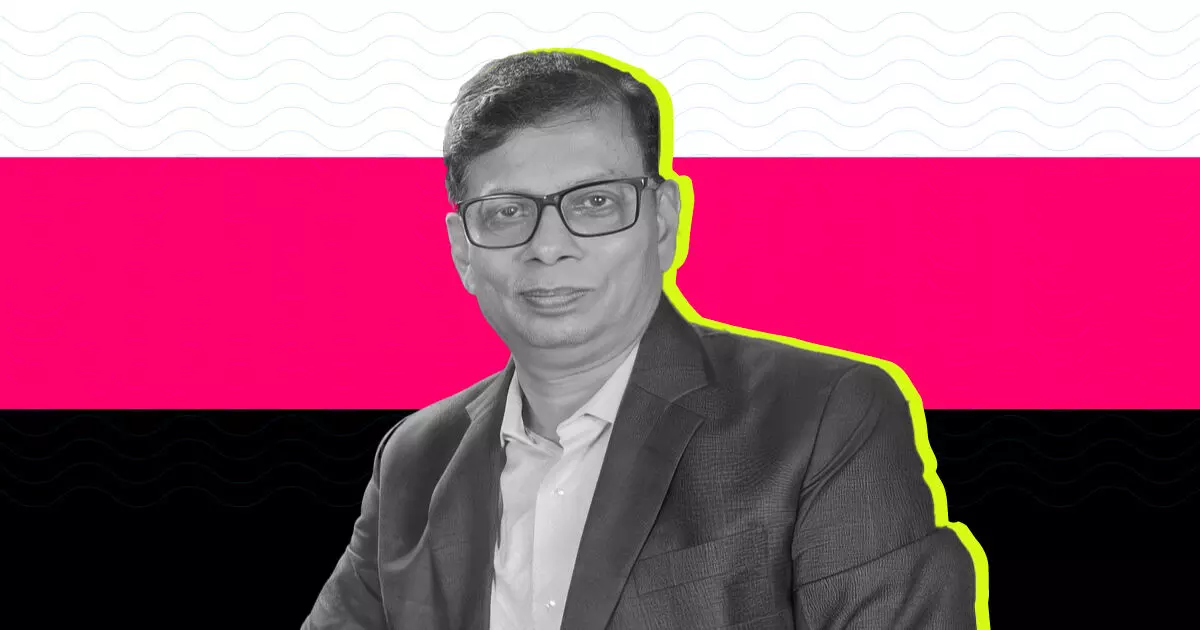
Shripal Shah, MD & CEO, Kotak Neo says two tough years have taught retail investors that quick money is over, and that diversification across caps, asset classes and geographies is the way to build wealth.
The Gist
The investment landscape in India has evolved significantly, particularly post-pandemic, with a surge in retail participation and a shift towards diversification.
- Retail investors now hold around 19% of the market, surpassing Foreign Portfolio Investors (FPIs).
- Investors are encouraged to diversify across asset classes and geographies for wealth building.
- The brokerage industry is adapting by offering a blend of digital and personalized services to meet changing investor needs.
This is a tough market to invest in, and of course, you need good advice at a time like this, not just in terms of which stocks to invest in, but which categories or asset classes. So, how do you find your way in these times? Let's talk about that and everything to do with the financial markets. I know you rebranded recently, and we will come to that a little later, but tell us about what has been happening in the last 5 years at Kotak Securities, which is a reflection of what is going on in the markets, the way investors have been investing, and the way the markets have been behaving.
Yeah. So, let me start with the recent phenomena. In the last 2 years, we have seen the market under challenging scenarios. The large caps are under pressure and FPIs are selling relentlessly, but Indian investment is holding up, and that is what is holding up the market, in a way. But if I look at the last 5-year journey, and particularly post pandemic, we have seen a lot of investors coming to the market, and in a way India has now become a nation of investors from being a nation of savers.
And if I look at the latest data, India is now owned more by investors, or retail investors, than by FPIs. FPI holding has now fallen to 15 percent or so, which is one of the lowest in many years. And retail or direct investors are now holding around 19 percent of the market, directly or through mutual funds. So, that is a big change which has happened. Another thing which has also happened is that, interestingly, for the first 3 years after the pandemic, the market was in a rally and everybody was riding the wave.
It was very easy to make money. It was very easy to read something, buy something and make money, and it worked for everyone. But it is only in the last 2 years that reality has sunk in: fundamentals finally play a big role. You may chase momentum, you may get into rallies of some theme, you may get into a mid-cap rally, you can get into any rally, but at the end of the day, valuation has to justify.
And the last 2 years have proven that you just can't make quick money in this market. This is a place where serious wealth building has to happen. It requires patience. This is not a market where you can make money every month.
As long as you are objectively clear about your goal, this is the market for you. Otherwise, a lot of the retail or young investors who have come into the market have had a tough lesson to learn during the last 2 years.
Right, so in a way the market is forcing investors to do two or three things. One, as you are saying, it is forcing you to become clearer about your direction and your focus. Secondly, it may also be forcing you to decide which asset class is the right one to invest in and what your outlook should be in terms of returns from it.
Absolutely. You are right. Another thing investors have learned is that it is not sufficient to buy only one or two stocks. It is not enough to invest in only a few mid-cap or small-cap stocks. You have to diversify across market caps. You need to diversify across asset classes. You do not have to be only in direct equity. You can be in direct equity, mutual funds, AIFs, PMS, SIFs; there are so many instruments available today. So that is one kind of diversification, across multiple caps and multiple instruments. Now there is another diversification, which is global: whether you really need to invest only domestically, or whether you also want a slice of the global economy. That is where diversification is becoming the big thing nowadays, and it is very essential for an investor to be able to diversify. The good part is that we have all the platform capabilities available in India, where even the small investor can access all this diversification. So diversification is the key to any wealth-building journey.
Got it. I am going to come back to the investor view, but let me now ask you from your vantage point. The way your product portfolio has expanded obviously reflects changing market conditions, what your investment horizon is, and of course investor demand as well. Correct? So from your point of view, you have been adding products to your platform and making access simpler. Now, as I was reading, you have said earlier that access is no longer a competitive advantage. People are able to access the market at high speeds and trade at high speeds, so that is no longer something that you can sell. So, the products that you have added over time: how have they grown in terms of, first, the investor's smartness and, second, the investor's wealth creation?
Yeah, you are right. If you look back at the Kotak Securities and now Kotak Neo journey, we are a three-decade-old firm. Ninety… Ninety-four is when we launched. In fact, we had Goldman as a partner at that time, a joint venture with Goldman. They brought in a lot of institution-grade research for us. At that time, the entire broking industry was relationship-led brokerages. We were leaders there. Some of the earliest innovations that we brought in at that time included launching an e-trading platform in 2001. Of course, it was a little ahead of its time. Then we created three-in-one products.
Not many people would know that you were a broking house first, then an NBFC, and then you became a bank.
Absolutely. That is another interesting thing: yes, as the Kotak group, we were first a broker and got a licence after that. So yes, that DNA is one of equity investing and broking. As I was saying, in the first two decades we broadly put all our effort into building trust and three-in-one capabilities, relationship-led brokerage, with physical presence through more than 150 branches and more than a thousand franchises. We catered to the needs of investors who approached our dealers and our branches, getting advice and services on equity investing, and that is how we created the full ecosystem of the relationship-led broking business, as we call it. In the last five years, we realised that the investor has started changing. Investors are now not asking only for relationship. Digital is the way to go, and thanks to some of the digital brokers, who created good access to the market, we realised that the new generation coming to the market is going to need digital first.
They are tech-savvy investors who want everything at their fingertips, and we invested a lot in technology to create a digital platform which is on par with the best in the country. In the last five years, I would say we have spent more than a thousand crore on technology alone to ensure that we are able to give an equally good digital platform. Now, to your question on what else a client or investor needs apart from broking, if you look at it...
My question is on two parts of their journey. The first part of their journey is as they become more aware of what is going on in the market and learn lessons, either because they have been taking a beating or because they have been lucky. The second, of course, is as their own wealth has been growing: what are their aspirational choices like?
Yeah. Investors today have become more demanding, but if you look at the way the brokerage industry is structured, it has structured itself around niches. There is a digital broker who will say, "I am a discount player with a good digital platform, and that's about it; you are DIY, you are here." Then there is a relationship-based or traditional brokerage, or a bank brokerage house, which will say, "I have branches, I have dealers, I have research." But the investor is saying, "I want it all. You are forcing me to choose one over the other, but that is not really enough." Suppose there is an HNI client who is getting service through my branch: why should he not get the best of the digital platform? And there is a young investor who is DIY, but in a market condition like this, he needs to talk to a human and get some perspective and advice. Why should he be deprived of that? So the industry has forced investors to choose either this or that, whereas, based on our interactions with investors, we realised that the same investor needs both things at different points in time. Because of that, the investor is forced to have multiple relationships.
If I were to give you one statistic: the industry has broadly 24 crore Demat accounts, and if I look at the NSE data, there are only 13.5 crore unique investors. What does this tell us? It tells us that most investors now have more than two, or approximately two, Demat accounts per investor. It means they have, in a way, opened multiple relationships to take care of their multiple needs. The idea behind building Kotak Neo was: how do we put all of these things in one place, where not only do you get a good digital platform and discounted pricing, you also get relationship services? You also get best-in-class research, and, by the way, we have Kotak Institutional Equities research, which is available to Neo, even for young investors. So we are...
Do they read all of that?
In fact... I read it, but... Do they read it? They actually... It is very interesting. They are interested in bite-sized information. They will never go through a 10-page report, but if you are able to simplify it into one page, with the pros and cons of the stock and the broad outlook for it, I think they definitely look at it.
You are saying that people are consuming research and then taking decisions, at least on your platform. Largely, somewhat...
Yes, you are right. It is not necessarily the case that they will read only one research report. Today there is a plethora of information, and sometimes it is so confusing that you have an overload of information. Now, the investor needs some confirmation of their understanding, and maybe some more understanding of what his or her thought is. So, broadly, my understanding is that one research report alone is not going to decide which stock an investor will buy or sell, but it is definitely going to help their understanding and decision-making.
But your sense is that they are reading research before taking decisions.
They do. They do consume research. That is what we have seen on our platform.
Okay. So let me come back to the investor once again. If you were to look at investor behaviour on your platform, how would you say they are taking decisions in the context of equities? How are they looking at other asset classes, and how do they divide or choose between the options available?
So, what we have seen, Govind, is that an investor starts with one product and his behaviour gets built up over a period of time. Some of the young investors who come into the market are very experimental. They will dabble in derivative trading even on day one.
They start with derivatives, actually.
Many start with derivatives. That was not the case with the earlier generation. But the point is that once they have experimented with a product, they then start thinking about wealth management. An investor who has come to our platform, maybe just out of college, will dabble in, say, F&O. After a couple of years, he gets settled in a job. He gets married. He has children. His needs have suddenly changed. He now asks the question: how do I build my wealth based on my goals? That is when the same investor gets into mutual funds, SIPs and some of the other products with which he can think about long-term investing. So what we have seen is that an investor will start with one product, but over a period of time, depending on his life-cycle journey, the same investor will need multiple products. That is the change that I think is happening, and we are trying to provide for it: when you start your journey, you start with one product, but when you want to look holistically at your life cycle and build wealth along with it, we want to give you all the products on our platform.
So let us talk about those investors who have been around, let us say, for 20-25 years, have some amount of wealth and are now coming to you, or already have been with you. What are their options, and how are you catering to them differently from how you are catering to a first-time investor?
So, the way it works is that there are multiple customers who come, and some customers start with derivatives. For them, the default choice on the platform is that you come in and directly get derivatives as an option. It is a little bit of personalisation, as we call it: once you start with, say, mutual funds or SIPs, you will generally be given personalised pages where you can look at your mutual fund portfolio, SIP journey, and so on. Another interesting thing that is happening is that investors are now also looking at multiple ways to invest in direct equity. Just as there are SIPs in mutual funds, lump-sum investments in mutual funds and basket investing in mutual funds, interestingly, some of these products have also come to direct equity, where the investor is not only looking at investing directly in one or two stocks. There are baskets of stocks based on themes, and we have seen a lot of investors now looking at investing in their own choice of theme. And of course, once you get into serious wealth management and your portfolio reaches a particular threshold, you need to talk to someone to understand what to do next. Some of the products available to HNIs are PMS, AIF and SIF, and even global investing, which is when those investors can access our relationship vertical and get options on wealth management solutions.
At what point do you feel investors should graduate to more sophisticated products like PMS and AIF?
Obviously, there are thresholds which…
10 lakhs, 25 lakhs, whatever.
10, 25, so 50 lakh is a…
Assuming that is there.
That is there. But I think those thresholds are defined by the regulator, keeping in mind risk appetite and suitability. PMS is definitely for someone who wants to... The minimum ticket size is 50 lakh, so obviously the investor needs to have a portfolio of about 5 crore to be able to put money into multiple PMSs. That is the area where you get into PMS. But the good part is that you can choose a similar PMS-like basket through direct investing, and the ticket size is not limited. You can actually create a basket of 2,000 rupees, where that basket invests in, say, 3 stocks every month. There are a lot of advisor baskets available on the platform, so you do not have to choose on your own. There are multiple advisor baskets which are, in a way, small advised portfolios. You can subscribe to them, and we have seen good traction on that as well.
And who is offering this advice?
There are two parts. Currently, as per the regulation, there is a licence for research analysts and a licence for investment advisors. Either of these two can curate a basket. On our platform, we have our Stock Cases. They are thematic baskets curated by our research team. We also have some other independent advisors who have put in their baskets, and they are also available to investors for a subscription fee.
So let us come to the market right now. If you were to look at the last few months, what is the activity on your broking platform? Tell us about the way investors have been buying or selling.
One thing is very clear: there is a shift in the way investors want to look at particular segments of the market. If I look at the last 6 months, initially there was pressure on large-cap stocks, and we could see a lot of investment moving from large cap to small cap and mid cap. That is where we have seen good returns in mid cap over large cap, and in fact, what we see is that even SIP flows, or the mutual fund investing which goes into the market, are also going more into mid cap and small cap. That was the trend in the first 3-4 months. In the last 2 months, we have seen even mid cap and small cap getting corrected, so the fancy for large cap has started coming back. We have seen some shift in investors' portfolios, as they want to move to large cap now because large caps have become compelling on valuation. They have had a sharp fall, and if you look at the earnings season this year, as per our KIE research estimate, we might see 17-18% earnings growth for Nifty 50 stocks. This was single digit last year, and coupled with that, if we continue that earnings momentum...
They said 26-27.
For 26-27, around 17-18% earnings growth is expected for the Nifty 50, and for next year, again, it is going to be around 15-16%. If you look at the P/E multiple for the large-cap Nifty 50 stocks for next year, it is going to be approximately 16, and that is a very compelling valuation. So we have seen some investors now asking for large-cap, good-quality names available at a reasonable valuation.
Right, and what about non-equity, what about metals, gold, silver, other asset classes?
In other asset classes, investors have again started chasing the frenzy. You would have seen that in Q4 of last year, that is, January to March, there was a big rally in gold and silver, and we saw a huge uptick in gold and silver ETFs in that period. That has really subsided; in fact, it has corrected a lot, and we have again seen the unwinding of some of the positions of those who were chasing the momentum. But we have also seen that a lot of investors had started investing long back. Their average cost is not as high as the highs of the last quarter, and they have continued investing through this. So we have seen higher adoption of gold and silver as an asset class among investors, not only as a momentum play but as a diversification. The attraction of gold and silver as a diversification is definitely becoming more and more popular.
Right, and if you were to look at it over 5 years, which is the period you talked about as well, the post-COVID period when there was a lot of investment coming in: usually when markets go down, one set of investors takes a step back. That has happened in the past. How are you seeing that trend in terms of churn, in terms of people staying on, and in terms of people leaving, maybe for some time?
No, actually, Govind, you are right. I think that is a challenge for the industry and for the Indian market. I will give you one statistic. In the last 18 months, the industry would have added more than 3 crore accounts, but yearly active accounts in the industry have actually reduced by 50 lakh. We discussed earlier that there are 13.5 crore unique investors. But if I look at how many investors have done at least one trade in the last 12 months, it is around 4.5 crore. So technically, only one third of the investors who have come to this market are actively investing or trading in the last year. Obviously, investors go a little into slumber when there is a bad market condition. A lot of investors would hold their positions as well. Investing is actually not about trading every day or every month. If it is a long-term investment, it stays in the Demat account. But yes, you are right: depending on the market condition, and in this current market condition, we have seen some investors choosing not to participate.
So, as a brokerage, what is an optimal situation for you? I mean, people taking bigger bets, people taking lots of small bets, derivatives versus non-derivatives, other asset classes?
As a brokerage, I have to tell you two or three things. In the last 5 years, we have seen very huge growth in the brokerage industry. Some players have come in, and most of these new players have built their entire business model on three Ds. One is digital: they are digital-first platforms. Second, they offer discounts, and third, they rode the wave of derivatives. So derivatives, digital and discount is what defined the last 5 years for the brokerage industry: a huge run-up in derivative volumes and best-in-class digital platforms. Sometimes the platforms are so sleek that as an investor you end up experimenting, there is no friction at all, and you do not realise that this is not a game. It is so easy to do that people have experimented.
But if you ask me, from here on, the regulator has also realised that, in derivative trading, a lot of retail investors are losing money. Some reports have already come out, and some steps have already been taken by regulators, and that has moderated derivative volume for sure. That means the brokerage industry cannot rely on only one source of revenue, and that revenue is also not good for the customer. If the long-tail retail is losing money, you cannot create a sustainable business model on such behaviour, where your customer is losing money while you are making money. Correct? I think that realisation will come, and most broking houses have already started diversifying into multiple business lines. You would have seen there is a lot of talk around MTF, margin trading facility, where you can take a small leverage in the cash market for buying a stock from the broker. Most brokers have ventured into that product. Of course, at Kotak we were always there, and we are still one of the leaders in the industry on that side. A lot of brokerages have also started looking at the very same thing: let us talk about going beyond broking. Can you offer multiple products, not only for trading and investing, but also multiple options like mutual funds, AIFs, PMS and even human advisory? So most brokerage houses have now started to diversify into multiple product lines. We were, thankfully, ahead in this because we did not build our entire business model on derivatives. We have fairly distributed revenue pools across asset classes, be it equities, derivatives, margin trading, finance and other products. So the brokerage industry will have to diversify and offer solutions around investment needs, which is the wealth management or wealth-building journey, rather than only the trading urge.
Interesting. So you said that you have about 300 branches right now?
We have more than 150 branches and more than 1,000 franchise partners.
So how are people... I mean, I saw that you also talked about tier 2 and tier 3 contributing two-thirds of your new additions, and that obviously is a phenomenon that everyone is seeing. So how is the physical touch making a difference in the way people come to you, in their loyalty, or in the way they seek advice and put that advice to use?
Interestingly, this is definitely helping. What we have seen is that there are a lot of investors who are attached to our branches and franchises but prefer to talk to a human, not for execution. They look to them for information exchange and for some understanding of the market and what is happening in it, but they prefer to do the trading on their own. We have noticed that 97% of our trades are done by clients on their own on the Neo platform, but they still sometimes connect with our dealers and branches for discussion, advice and confirmation. So this has become a very hybrid model; it does not have to be either/or. As a customer, you are definitely DIY. Any customer of any age in India today is able to operate any app, and I am sure everybody is on most of the e-commerce apps. So that part, I think, is solved. The main point is that if you have so many branches around you, at the back of your mind you have the comfort that you can call anybody at any time. This time, we are actually finding more and more customers reaching out to our branches and franchises to ask what to do in this market condition, because it is something different and unusual. That is when, I think, in various cycles you will need somebody to talk to and somebody to get advice from.
Sir, you are also part of a bank, or a subsidiary of a bank now, and as we talked about earlier, you came first and the bank came later. What is your sense of how people are looking at banks in terms of deposits, returns and deposits, and safety versus markets?
Yeah, there are two things. One is that, as we said, in India the entire financial saving was going to savings accounts in banks, which were not generating much income, and in the last five years most of these financial savings are going into investments, whether in mutual funds or direct equity. So that is one significant trend that has happened. But another thing that is happening is that most investors have multiple Demat accounts, and what we have realised is that sometimes they want to bifurcate their portfolio between trading and investment. They will create one small portfolio for trading with some digital broker or some other broker. They will also try to consolidate all their large holdings in one trusted place. Some of the numbers we were looking at actually surprised us as well: as a bank brokerage house, we are holding 17 lakh crore of Demat stock, which is the largest for any DP stockbroker in India. That is not about the number; it is about the fact that investors choose the place where they want to park their holdings with a trusted player. But I can tell you one thing: trust is not only with the bank brokerages. Let me be honest.
Because you said that triple D is also.
Triple D is there, but if you look at regulation, I think multiple regulations have come in India in the last five years, and that has made this market far safer. But I still think that, as a bank-parented brokerage, the parentage and legacy trust that we have created help us get some large custody of Demat stock parked with us.
So, as you look ahead, and these are the last couple of questions: what do you feel investors should be thinking about as they plan their journey, assuming they are not just starting but started a while ago, and maybe this is the time for some course correction, or maybe not? How should they be planning ahead? Secondly, what else do you think we could be looking at in terms of regulatory architecture or other changes which could make the investor journey more fulfilling or give investors more options?
Great question, Govind. I think today's investor is a little bit confused, for sure. The earlier problem for the industry was how to access the market. That problem is now solved: 4 crore Demat accounts 6 years back is 24 crore Demat accounts today. Demat account growth is now 6x in the last 6 years. That problem, easy access to a brokerage account, has really been solved by the industry. The next question is: after having opened the account, what do I do? This is where I think investors need to build a wealth journey for themselves based on their life stage.
This is where I think investors should look for a platform which offers everything. Second, they should not rely on only one product to make quick money, and we have seen that in the last 2 years that realisation has come in. People have also parked some of their money for long-term investing, where it is not to be touched for day-to-day trading. And there are areas where they just want to do some short-term trading. So that is what I think investors need to look at: diversification across products and also diversification across geographies.
Another interesting thing, I think, as an Indian investor, is that one should definitely not miss out on a slice of global investing. The good part is that it does not require you to be an HNI. Even if you are a small investor, you can open an account and invest in global markets. That diversification is the need of the hour. Some good products have come up in GIFT City. We have seen a lot of investors asking for such products through the GIFT City route, where for as little as around 5,000 dollars you are able to get into a managed portfolio in the investment space. That itself is becoming very interesting. And some of the HNI investors who are currently looking at India, and for whom direct equities have not generated returns in the last two years, are again looking at various different kinds of products where you can get a different risk-adjusted return. This is where our entire Kotak PCG Wealth offering, which we have launched, caters to those HNIs: you get a best-in-class platform, you get best-in-class research, and you get good pricing, but at the same time you get diversification opportunities across product classes and across geographies.
This is where I think investment, and the investor, is moving. Ideally, they should look at this as the right way to look at their wealth-management journey, rather than looking at only one product.
So, from an architecture point of view, what else do you think we need to do? GIFT City, you said, is one new avenue that has opened up.
Absolutely.
More ease of outbound.
Correct.
What else do you feel we need to do as a country to…
Another thing that the regulator is also actively talking about is this: there are asset classes which are currently popular, like we discussed, equity, mutual funds, AIFs and PMS.
Gold and silver are also popular. But real estate, which is first the physical real estate and second REITs and InvITs: I think REITs and InvITs are still not as popular as they should be. And second is the debt market. I think corporate debt investing or G-Sec investing is not very popular in India. Maybe it had to do with a lower, softer interest rate regime. But now we are seeing interest rates hardening, and it is likely that interest rates are going to go up. I think this is the area where Indian investors should definitely diversify, into debt and into real estate, which is REITs and InvITs.
Got it. And tell us about the rebranding, which is where we started. Why did you rebrand Kotak Securities to Kotak Neo?
Yeah, it is a very interesting thing, Govind, I would tell you. First of all, had it been only rebranding, we would have done it five years back. And I saw you say that somewhere else as well. Correct. But what we realised is that in the last five years, the investor has changed. Their expectations have changed. We also realised that, yes, investors want it all. They want digital. They want physical. They want research. They want discounts. We adapted to that. They want things beyond equities. They want all the products. We built that in the last five years. Then we asked ourselves: do we have a name that suits what we are offering? We realised that no, the name Kotak Securities reflects the fact that you are only offering brokerage, whereas we have become brokerage plus plus plus, and it is all-encompassing. Secondly, the package is everything, without the customer having to choose a particular product or a particular feature. So we changed our business model around investment needs, and we thought it appropriate to have a contemporary name, which is Kotak Neo. By the way, it is only the consumer-facing retail brand that is Kotak Neo. Kotak Securities as an entity remains. Kotak Institutional Equities, as part of Kotak Securities as an entity, remains. But Kotak Neo becomes our consumer-facing brand. Another thing was that because we were calling ourselves Kotak Securities in some places and Kotak Neo in others, we were getting questions about whether these were two different entities. It was only apt that we combine it under one name, which reflects the change in our business, is new and contemporary, and reflects investment needs. That is how Kotak Neo has come about.
Super. It is a good point to end on. Thank you, and all the best for the rest of your journey.
Thank you, Govind. The pleasure was all mine.


