



 Newsletter
 Search
Sensex Hits Two Year Low as Oil Crosses $115 per Barrel
- Podcasts
- Published on 31 March 2026 6:00 AM IST
Oil prices are falling and Iran is being bombed relentlessly as targets are now being expanded to include civilians
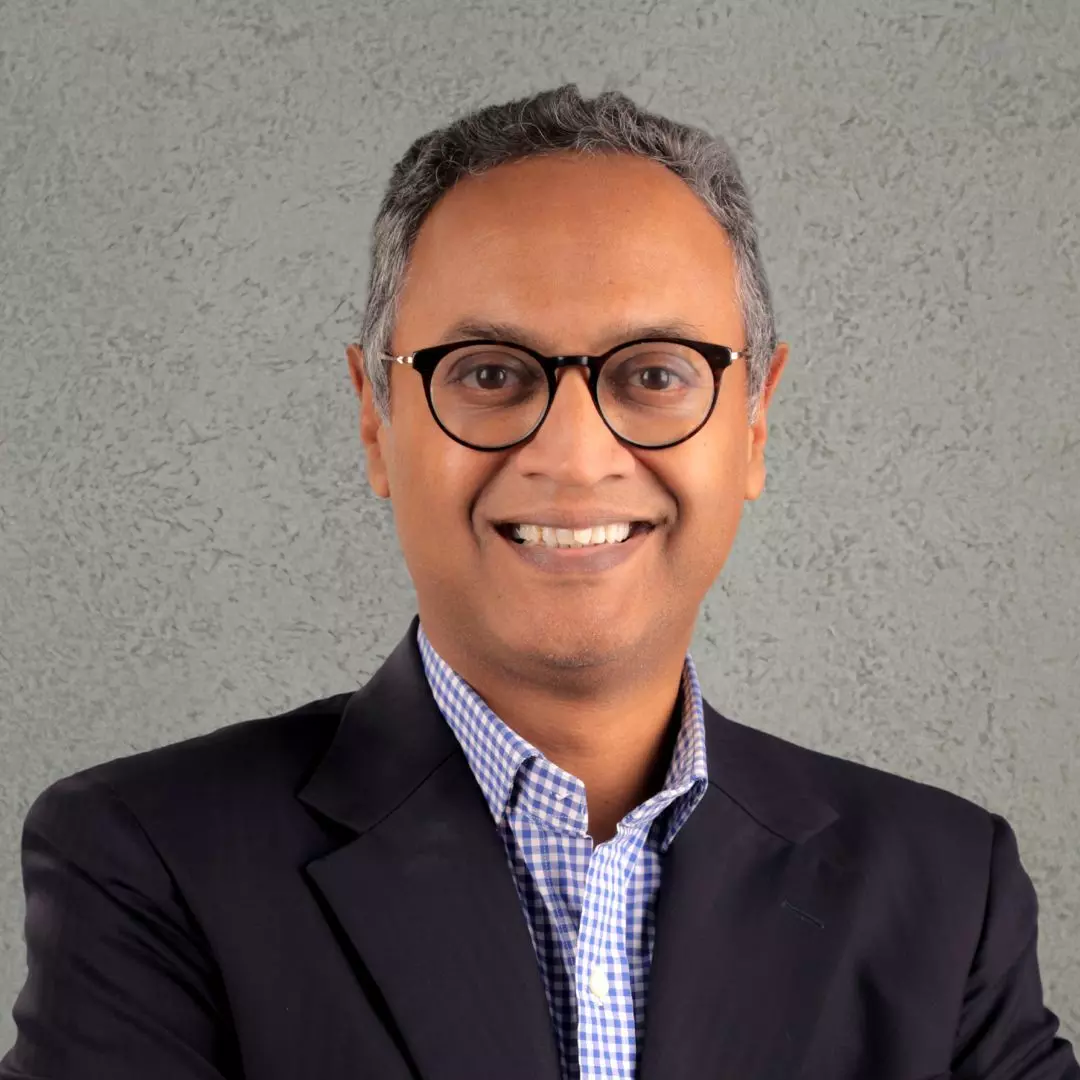
On Episode 835 of The Core Report, financial journalist Govindraj Ethiraj talks to Ajay Bagga, Veteran Market Expert as well as Indrani Bagchi, CEO at Ananta Aspen Centre.
SHOW NOTES
(00:00) Stories of the Day
(01:00) Sensex hits two year low as oil crosses $115 per barrel
(02:03) FIIs March sales at $12 billion hit all time high
(02:51) A RBI intervention to control rupee speculation does not seem to have worked
(05:44) Why defaults in the global private credit market should worry us
(18:02) What are India’s specific plans and options and whether we will intervene as the West Asia war progresses
NOTE: This transcript contains the host's monologue and includes interview transcripts by a machine. Human eyes have gone through the script but there might still be errors in some of the text, so please refer to the audio in case you need to clarify any part. If you want to get in touch regarding any feedback, you can drop us a message on feedback@thecore.in.
—
Good morning, it's Tuesday the 31st of March and this is Govindraj Ethiraj broadcasting and streaming weekdays from Mumbai, India's financial capital. It is a markets holiday today. Usually, we do not publish on market holidays like this, but this is obviously a very, very news-heavy week and month and God knows how long.
Our top stories and themes…
The Sensex hits a two-year low now as oil crosses $115 a barrel.
Foreign institutional investors' March sales at $12 billion have hit an all-time high.
A Reserve Bank of India intervention to control rupee speculation does not seem to have worked.
Why defaults in the global private credit market should worry us
And what are India's specific plans and options and whether we will intervene as the West Asia war progresses.
War, Markets, The Rupee, and Oil
Well, the financial year 25-26 has now ended for all practical purposes as today is a markets and bank holiday as we've just mentioned. Oil prices are falling and of course, Iran is being bombed relentlessly as targets are now being expanded to include civilians as well.
The consistent message from America in recent days, if one can somehow interpret one, is that they want the state of Hormuz to be opened up. Everything else can wait for now or will be up to war partner Israel to finish the job. US President Donald Trump put out a fresh threat to bomb all energy infrastructure in Iran before leaving if the state is not opened up.
India's primary approach to the West Asia crisis right now is to focus on energy flows and more on that shortly. The equity benchmarks were down with steep losses being also the last session for 25-26. The Nifty 50 was down 488 points to 22,331 and the Sensex was down 1,635 points to 71,947.
In the broader markets, both the Nifty mid cap and small cap are down 2.6% and 2.66%. Now one reason the markets are falling so steeply is because foreign portfolio investors are selling at record levels having taken out about $12 billion from the markets in March alone through Friday and this number will obviously increase if we or as we get numbers for Monday March 30th. The previous high in terms of outflows was October 24th, that's 2024 and has also beaten the March 2020 COVID crash. Since February 26th, two days before the Gulf War erupted, FIIs have been net sellers every single trading day.
So in the last financial year that ends today, benchmarks Nifty 50 and Sensex have fallen 5.1 and 7.1% respectively which is their worst showing since 2020 when the COVID-19 pandemic brought on markets everywhere. The rupee fell to a record low in a volatile trading session on Monday marking the end of a rough fiscal year The Reserve Bank's surprise cap on forex positions gave the rupee a reprieve on the day but also left traders nursing losses as they rushed to unwind arbitrage positions according to Reuters which said that the rupee was likely shored up by central bank intervention and ended the session at 94.83 or 94 rupees 83 paise a little change from its previous close. Traders told Reuters the rupee's moves on Monday were hard to predict and even harder to trade and had the Reserve Bank not stepped in past 95 the rupee's fall could have extended deeper.
So in the fiscal year the rupee has now fallen 11% which is its steepest fall since 2011-12. Now a definitive move to curb speculation in the rupee something we discussed yesterday as well did not go as planned with an initial jump in the rupee fading which also reflects the broader economic weakness rather than speculator might. On Friday the Reserve Bank had said it would cap the open positions lenders can hold in the onshore currency market at a hundred million dollars a day forcing them to shrink their books.
Meanwhile Brent crude is just under 115 dollars a barrel. Monday's trigger for the rise in crude prices was the Yemeni Houthis who widened the war by launching their first attacks on Israel. Brent crude has risen about 58% this month the steepest monthly jump according to Reuters data going back to 1988 exceeding gains made during the 1990 Gulf War.
Analysts quoted in a business standard report say that markets are underpricing oil price shock risk and they see Brent crude hitting the 150 dollar mark in case the West Asia war prolongs even for a few months from now and damages critical oil and gas infrastructure in the Gulf region. According to them they're looking at a potential loss of 10 to 14 million barrels per day if the disruption persists in a market where global demand is just around 100 million barrels per day. Meanwhile analysts at Elara Capital said for India a retail fuel price hike is unavoidable with crude above 110 dollars a barrel at 125 dollars even after the excise cuts the retail price needs to rise by about rupees 8 to rupees 14 per litre.
At 150 dollars the rise required will be almost rupees 26 to rupees 30 per litre at which point inflation shock would be visible according to economists and analysts at Alara Capital in a note put out on Monday. Elsewhere India's residential property market has moderated with housing sales in the top nine cities dropping below the 100,000 unit mark for the first time in four years. Data from prop equity quoted by business standard says that housing sales fell 13 percent year on year and six percent quarter on quarter and new supply has declined even more sharply falling about 19 percent annually.
If all this leads to or is a signal that prices might moderate I guess that's good news.
Private Credit Woes
A wave of redemption requests across the global private credit market or other industry has led more than 4.6 billion dollars of investor capital trapped behind withdrawal limits with more asset managers expected to impose curbs in coming weeks according to a Bloomberg report. Investors have sought to pull about 13 billion dollars from over a dozen funds so far this quarter according to Bloomberg estimates but the vehicles have capped withdrawals at five percent of net assets per quarter so they've been able to access only about two-thirds of that amount according to data.
Apple global management is management Blackrock Morgan Stanley and Blue Owl are amongst the many firms who have limited redemptions. While we've made references to private credit markets this is a good moment to revisit what the private credit market exactly means how it operates and why we are talking about it or should be talking about it including in India. I reached out to veteran market analyst Ajay Bagga and began by asking him to define for us how private credit markets worked and why we should be focused on them here.
INTERVIEW TRANSCRIPT
Ajay Bagga: See, private credit is what we also refer to as shadow banking. What happened after 2008, the bank capital rules became very strict. So, investors started looking for funds or borrowers started looking for funds elsewhere and that led to this shadow banking growth.
And what happened, especially after COVID, as the interest rates went down to zero, a lot of the private equity funds, they stepped in with offerings where they were ready to give uncollateralized, very quick terms, very quick dispersal loans to players who would not have normally got bank credit that easily. Banks, because of their capital constraints, because of hyper-regulation, they moved out of certain segments and private equity hedge funds and these private market funds came in. They took over the role of bankers.
So, we can call them shadow banks, which are not regulated by the banking regulation, but they have been in the lending business, lending to not very great credits at higher rates, what we used to call junk bonds 50 years back, something like that. That's the nearest simile you would have. Right.
And why are we seeing a problem today specifically? What happened is structuring of these was, you know, by people who really did not understand bank credit too much. In fact, every time, even in India, when mutual funds have got into corporate credit, we have seen a lot of write-offs.
So, it's not that bankers are fools. There is a bank credit committee. Bankers didn't cover themselves with great glory in writing of 16 lakh crores, but still there is a 200-300 year history of bank credit.
What happened with these funds is, they gave very simple terms. I'll give one or two examples. There is no mark-to-market, it is mark-to-model.
And mark-to-model, remember 2008 subprime and the CDO issue was the mark-to- model. The model works till it doesn't work. Second, there is no liquidity.
These loans are for 5 years, 10 years, and just like the zero interest mortgages at subprime time, lot of these loans go in, are where the interest gets accumulated into the principal. So, they might be showing as current, but they are actually not repaying any interest. So, if you started with 100 rupee principal, and over the first year you accrued 15 rupees of interest, next year your principal becomes 115.
It shows as a current account, but you have never paid, you have not demonstrated ability to pay. So, at first, when the zero interest rates were there, they were issued as floating rate instruments, and they were very happy because they were getting zero plus mark-ups, so maybe 2%, 3%, that kind of loans were coming in. As the rates went up, these have become stressed, and as rates have stayed higher for longer, these are becoming stressed.
So much so, Fitch came out with a report yesterday that 9.2% is the default rate that they have monitored. This is versus about 5% for the good credit. So, a comparable credit given by a banker versus the shadow, it's double of that, but also within that, there is about 15% which is not counted.
A, they brush it aside. Banks, we would have a covenant. Once a 50 lakh cheque had bounced for an FMCG major, and I remember I was heading a foreign bank, and we had to make the whole loan as default, and we had to report to RBI.
Somebody in some branch forgot to put a cheque on time at the FMCG major. So, we have covenants and cross-covenants. So, if you default one place, I will use the collateral from somewhere else.
In this, there is nothing like that. So, there is extend and pretend, amend and pretend, amend and extend, that is happening. The model is in-house.
You can keep on doing anything you want, and then once the customers started wanting their money back, they realised the gates were closed. So, very big companies have closed the gates on customers saying, Blue Owl has said we can't pay at all. They have not even given any way out.
While others are saying that, okay, this quarter, we'll pay 5% at most of the NAV in any quarter. Now, next quarter, you again stand in line, which doesn't help customers who need liquidity. So, there is some panic in that.
And just to give an idea of the size, it's about $2 trillion. So, it's not small. It is fairly biggish.
And on $2 trillion, if there is a 30% write-off already, which is embedded in it, we are talking of something like $600 billion value at risk. On top of it, these funds took loans from banks to increase their returns. So, they would borrow from banks.
So, bank exposure in the US is $300 billion plus $600 billion of lines outstanding, which these funds could theoretically draw down in terms of extreme liquidity events. They have not right now. Banks should claw back those lines.
But $300 billion is at risk, as far as the banking system goes, and $600 billion overall in this private credit market.
Govindraj Ethiraj: And that's 30% number you're talking about. So, when we say at risk, I mean, how have we concluded that? Or how has the system concluded that?
Ajay Bagga: There is very little reporting. So, we don't have this number. These are estimates.
Fitch has come out with a 9.2%, which was written off in 2025. But when we analyse who's holding these loans, who are the borrowers? Auto is in deep trouble.
You've seen the automobile company numbers. We had two bankruptcies also in the US. So, auto input costs are going up and demand is soft.
So, their sales are not taking off. They're not able to repay. SaaS companies, software companies, they took a lot of loans based on revenues, not on earnings, thinking that by and by, they will get revenues.
Then AI happened. Generative AI happened. So, the software companies have got killed.
So, if you see healthcare, there were a lot of these companies which were aggregating small doctor clinics and making up a lot of composites. Those are again not performing as well, because the interest rates became very high. As the interest rates went up from 0% to 5% in the US economy, and these were paying huge premium over that, they are not able to service.
So, 9.2%, what Fitch is saying that even if that 9% continues this year, plus we are saying another 12% to 20% would be at risk where either they have never paid an interest, it just kept accumulating, or the model has broken, or they are from these sectors. So, it's just the back of the envelope. Nobody knows.
Jamie Dimon of JP Morgan has said there are a lot of cockroaches. JP took some write-offs on the automobile side. After that, he said there are a lot of cockroaches in the private credit.
Govindraj Ethiraj: And how does this or potentially will it affect India? And obviously, in India too, we have our version of it. And how deep is that?
Ajay Bagga: It will not affect us too much. So, directly, Indian banks don't have any exposure. They have not lent into this.
So, 50% of the US economy is by SMEs like these who are the borrowers. What happens when the credit seizes up? So, the credit, what we call the credit multiplier in the economy, the banks and the shadow banks both will stop lending because they are not able to get out.
And today, Financial Times had a headline saying a lot of distressed funds, what in the 80s, we used to call them vulture funds. Now, they don't like that nomenclature. So, they call themselves restructuring or distressed funds.
They are saying this is an opportunity of a lifetime. They're looking at picking up dollar loans at the pennies. And that's the kind of distress that seems to be unwinding here.
What will happen is the SME lending will get seized up because these guys don't have capital. So, a fund was raised of $10 billion which went and lent $10 billion plus it borrowed from a bank, say two more billion. So, it's lent $12 billion.
And out of that $12 billion, if 30% goes, they're down roughly about $4 billion. So, 40% capital would be wiped out. So, for them to return money becomes that much difficult.
Also, a cliff is coming in 2026 and 2027. About $620 billion out of that $2 trillion, $620 billion fall due. And those companies cannot repay.
They have to be even alone again. They have to be extended. But now nobody has funds.
And of that scale, $620 billion to repay to the lenders, to the fund holders, and repay $300 billion to banks. Now, there will be some intersection between this $620 billion and $300 billion. Some of it will be bank funding which would have gone.
But at a broad level, $600 billion is coming due over these next two years. And the funding is not there for it. So, it becomes a domino effect.
Govindraj Ethiraj: Right. So, there is no direct link as you've said and explained to the Indian markets. And are there lessons from this?
I mean, what we've seen in the private credit market and the way it's grown for the Indian financial system at this point?
Ajay Bagga: Definitely. Even for banks, the SME lending has not done very well. Micro lending, micro finance has not done very well.
So, micro finance, you can say is the subprime. And then SME lending, banks have not done well. Shadow banks have come in where banks were not lending on inflated property and stuff like that they have lent.
So, when this cycle turns, and if you remember, Shaktikant Das was very concerned about the retail unsecured lending, and he pulled back that engineered some amount of softness in the economy. But that was a good move, because the household indebtedness was really rising. And people who shouldn't have got one loan were running with five loans.
We have seen that in the micro finance segment. We have seen that in the SME segment. Now, with this Gulf War contagion coming in, what happens is the weakest companies, they fall first and they are lent mostly by the NBFCs or the shadow banks on a very thin margin at very exorbitant rates.
So, they fail first. So, this risk is very much there for it to come into the Indian market in our own version of the SME lending and the micro finance and other kinds of subprime lending. Right.
Govindraj Ethiraj: Ajay, that's very useful to know. And thank you for your insights and been a pleasure speaking with you.
Ajay Bagga: Thank you for having me.
India and the West Asia Conflict
There is considerable debate on how and whether India should be intervening in the West Asian crisis including if we've lost a potential role as mediator to neighbouring Pakistan but the question that we at the core want to ask is more to do with what India is specifically doing and planning to do at this moment in the crisis. So I put that question to Indrani Bagchi, CEO of Ananta Centre, columnist on foreign affairs with the Times of India and a regular guest on the Core Report and I began by asking her what India's game plan and pathway was looking like at this point.
INTERVIEW TRANSCRIPT
Indrani Bagchi: This war is not of India's making or India's choice or India's involvement. But India, you know, is, shall we say, a casualty of the second and third order consequences of this war, and quite significantly, if I may say so. We've seen this play out earlier, back in 2022, when Russia invaded Ukraine, and we ran into what I call the three F's crisis, fuel, fertiliser and food.
We are now many longer alphabet soup of crises that are coming down the road. So the government's effort is to be able to anticipate the crises as they're coming down the road. Because not all crises are hitting us at the same time.
A lot of these are sort of unveiled by and by. And say, for instance, your immediate crisis is keeping the Hormuz open for Indian ships. I mean, we cannot say we are not in a position to determine whether the Hormuz is in Iranian control or should we be able to take control of that.
That is not our game. Our game is to make sure that the ships that are coming to us with fertiliser, with oil, with LPG, what have you, make it through the straits. So to that extent, the core of the diplomacy right now is to be able to sort of shepherd those ships in.
I believe there are some 20-odd ships headed for India, which are sort of coming through in a trickle. And you may have noticed that Iran actually, in the first round of countries who are described as friends, put in Russia, China, India, Pakistan, and I think Thailand or Malaysia. So that's actually really the core of the in-government work right now, is A, how do you get your LPG?
That's coming down those straits. B, how do we work with other countries? For instance, I don't know if you saw this, but Argentinians sent 50,000 tonnes of LPG.
That was clearly a deal that had been done before the war started. But obviously, it's just made its way here. So whether it's LPG, the difficulty with LPG, of course, is the storage.
The same with LNG. We can't store LNG because you know it better than I do. That's the reason why you're really scrambling for sources outside West Asia.
So you're going to Algeria, you're going to Brazil, you're going to Argentina, you're going to Morocco, you're going to a whole lot of other places. That's actually what the whole deal is, because we are an energy-stressed country, we remain an energy-stressed country. So oil is not the problem.
LNG is also not that much of a problem right now. LPG is your current problem. But down the road, for instance, helium, you will need helium.
You will find that if you call any hospital for an MRI, you will get a really, really long waiting period. That period is going to get longer. That means every semiconductor fabricator in the world is going to run into problems.
The South Koreans have declared force majeure exactly on this point. The only people who recycle helium in the world are the Taiwanese. They recycle 70% of the helium that they use inside their semiconductor plants.
But even that isn't enough. To answer your question, at this point, the effort is to be able to get what we can get, open up the clogs where we can, and anticipate crises as we go down. You will see a crisis in the pharmaceutical sector, for instance.
Govindraj Ethiraj: So you're saying that we will be responsive, and I guess that's what business wants to hear, that anything to do with raw material inputs and, of course, energy inputs, we will be on the ball. And maybe on other areas where there is, of course, a lot of debate going on, whether we should intervene on the geopolitical side, is something that we are not doing much right now?
Indrani Bagchi: We are not. This geopolitical intervention is not, A, it's not our game. B, we see no real benefit from this.
There is a lot of social media FOMO, if I may use the word, on Pakistan's involvement. That's not where we are or we should be.
Govindraj Ethiraj: Right. So, you know, the Iran foreign minister had said that, as you said, you know, that there are five countries whose oil and gas we will allow to flow freely. And then there have also been reports that it was also on a case-to-case basis.
Is that clear in terms of whether we have continuous passage?
Indrani Bagchi: So far, we have had more or less continuous passage. I believe the method is that you identify yourself and your crew at some at a sort of a toll booth near that Larak Island to the IRGC, and then you make your way if it's an India-bound ship with Indian crew, India-targeted sort of cargo, and you make it there. So that's we know so far.
About whether we are paying in yuan or anything, I have not heard of anything.
Govindraj Ethiraj: Right. One of the other things that happened as an outcome of all of this is that we are obviously now reengaging with Russia and buying both crude and gas from them. Is that likely to, from your understanding, going to continue?
Or could there be again constraints imposed by the U.S. which will be forced to respect?
Indrani Bagchi: Very unlikely. If you remember, the Russian oil is now off sanctions. And although they had said off sanctions for a month, which would typically expire at the end of this week, actually, we don't expect that to go down anytime soon.
Oil prices, rent is touching 115. So there is no way that that is, I mean, Iranian oil is off sanctions, for God's sake. So you're basically allowing Iran to make money out of the oil that it is selling.
So fine. I mean, I mean, now all oil is on the road, on the water. Venezuelan oil, which was also under sanctions, is also on the water.
Because one thing that really triggers Trump is higher oil prices. So he's trying desperately to keep the prices under check. It's not working as he thinks it should be, but whatever.
Govindraj Ethiraj: Right. Last question. So from your perspective, is there any new alignments or realignments that you've seen or are happening or you think could happen?
And I say this geopolitically leading to energy or leading to other raw material inputs from our vantage point in the region or beyond it. I mean, for example, you talked about the Argentinian LPG, which of course was contracted earlier. But could there be newer relationships that are emerging?
Indrani Bagchi: Brazil is asking for Indian refining capacity, but also getting Indian oil companies to invest in their oil exploration. And they apparently have it under some salt flats or something. So that's a big one.
Morocco is a big one. I've noticed Angola has come back online. So yes, Russia, of course, will remain.
We are even looking at LNG from other areas like Norway, etc. Although that's a really long distance away, but whatever. I mean, so I think alignments in that sense, in the sense of geopolitical alignments, you know, our closest buddies there in that region, frankly, are UAE, Oman, Qatar, and Israel, of course.
Israel is on one side. If you notice the food corridor to the UAE remains intact. We continue to supply food, supply stuff to them.
We didn't stop it in the days of COVID and we are not stopping now. So yes, I don't think the alignments have changed much.
Govindraj Ethiraj: Right. Indrani, thank you so much for joining me.
Indrani Bagchi: Thank you.


