



 Newsletter
 Search
Resumption of Peace Talks will Provide a Floor to The Markets
- Podcasts
- Published on 20 April 2026 6:00 AM IST
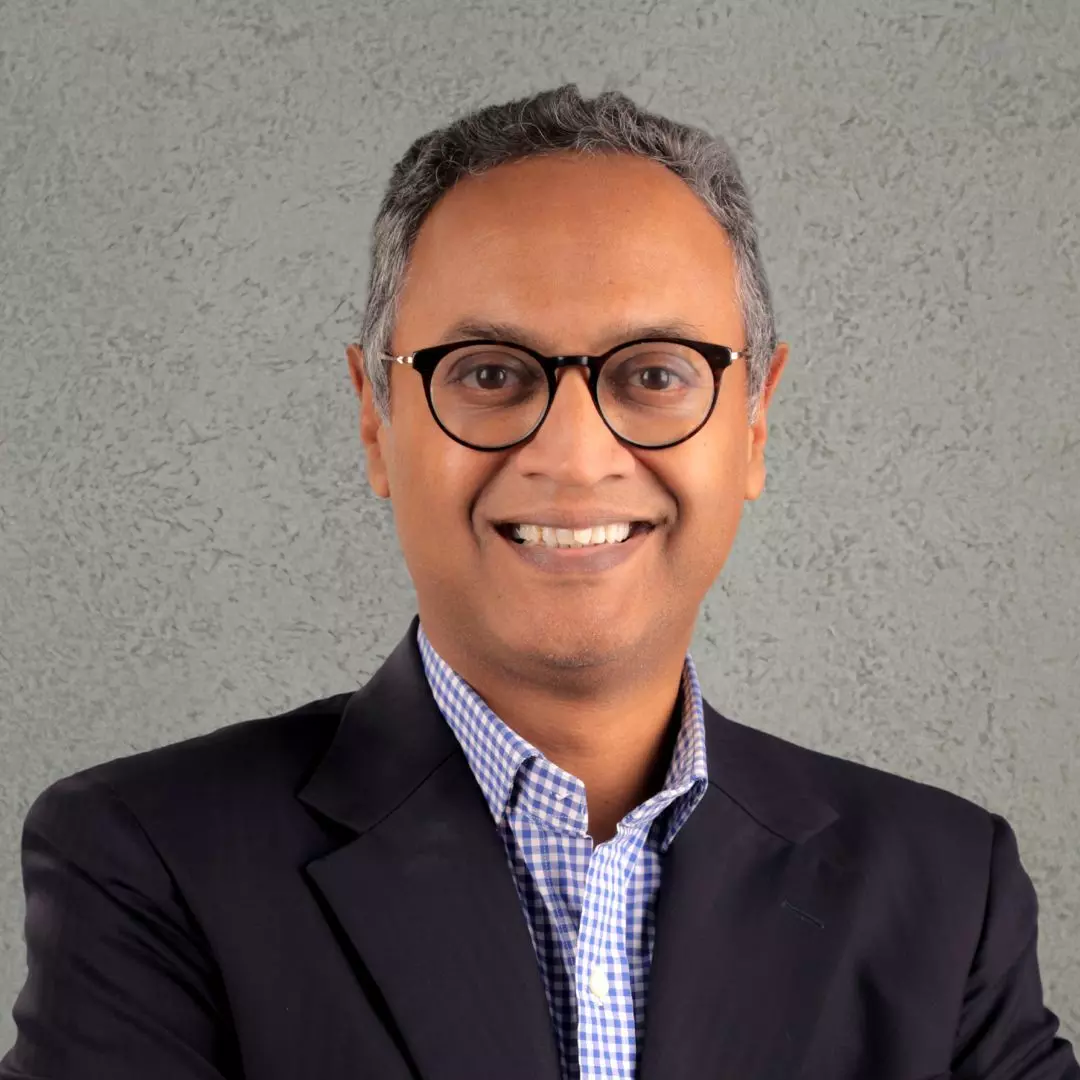
The markets are running way ahead of reality
On Episode 851 of The Core Report, financial journalist Govindraj Ethiraj talks to Brian Torrey, General Manager - India and West Asia at Scoot as well as Arihant Jain, Fund Manager and Senior Investment Analyst at Franklin Templeton Asset Management (India).
SHOW NOTES
(00:00) The Take: The Lost Art of the Adventurer Capitalist
(04:50) Resumption of peace talks will provide a floor to the markets.
(07:21) India can access Russian oil again, for a month.
(09:14) The first principles of investing in India, throwback with Mark Mobius.
(15:06) Meet a mutual fund scheme that will short stocks.
(21:44) How Indian travellers are choosing first time international destinations.
—
NOTE: This transcript contains the host's monologue and includes interview transcripts by a machine. Human eyes have gone through the script but there might still be errors in some of the text, so please refer to the audio in case you need to clarify any part. If you want to get in touch regarding any feedback, you can drop us a message on feedback@thecore.in.
Good morning, it's Monday the 20th of April and this is Govindraj Ethiraj broadcasting and streaming weekdays from Mumbai, India's financial capital.
The Take: The Lost Art of the Adventurer Capitalist
Stock picking, it's often said, is an art. But what kind of artist does it actually require? If you observe the arc of global capital over the last half century, fund managers seem to fall into two distinct camps.
The first are the visionaries, the prospectors who venture into the wilderness, locate the gold mine and pry open a new market. They take the early outsized risks and also reward the benefits. The second camp comprises the excavators, the highly trained technicians who arrive after the mine is mapped, optimising the extraction and figuring out exactly what grade of gold will fetch the highest market price.
The passing last week of legendary investor Mark Mobius serves as a reminder of an era when the prospectors rule the earth. When emerging markets like India began to crack open their economies in the early 90s, Mr. Mobius was already there. He arrived at a time when foreign capital was viewed by developing countries and markets with a mix of desperation and suspicion.
Flying across the world in a private jet previously owned by an Arab oil sheikh at that time, Mr. Mobius lived the life of a financial Indiana Jones. I interviewed him on one such trip from Mumbai to Bangalore on his jet and discovered that like him, his pilots too were adventurers. One pilot told me in a separate interview that they routinely navigated into obscure airports with decrepit runways where the navigation maps were either outdated or printed in languages other than English.
But where others saw insurmountable risk, Mobius and his team saw the undeniable trajectory of economic liberalisation. He was buying into the promise of a burgeoning skilled workforce in India, recognising the potential of the IT sector and of course companies like Infosys before the broader world and frankly many Indians understood what was brewing. When Mr. Mobius partnered with Franklin Templeton in 1987 to launch an emerging markets fund, they started with 100 million dollars and a small Hong Kong office.
Eventually that would grow to an emerging markets group over 40 billion dollars across 70 countries. I always found Mr. Mobius's resume striking. Modern finance is an industry obsessed with credentialed uniformity of MBAs and financial engineering degrees.
Mr. Mobius by contrast studied dramatic arts at Boston University, played the piano in a nightclub, held a bachelor's degree in fine arts and a master's in communications, learned Japanese in Kyoto and finally earned a PhD in political science and economics from MIT in 1964. To a modern human resources department, this would be an anomaly. But in the history of global capitalism, he was exactly what was needed.
Like Jim Rogers who co-founded the quantum fund along with George Soros, armed with degrees in history, philosophy and politics, Mr. Mobius was an adventurer first and investor second. Now that worldly curiosity is precisely what allowed them to discover new markets and find the diamonds hidden in the rough. Contrast that with today's financial ecosystem.
India's top fund managers, much like Wall Street's, are predominantly MBAs, chartered accountants and even cost accountants. This is not a slight on their abilities. Their track records of compounding wealth speak for themselves.
They are very good excavators. But as the last few years of global market volatility have demonstrated, extracting returns is getting increasingly difficult. Not every era requires the Mark Mobius to hack through the jungle and unearth entirely new asset classes.
But markets will always require inventive minds that can see beyond spreadsheets. Mr. Mobius's worldly perspective was forged on the ground long before the private jets and the billions in assets under management. He told me how he spent time in Chennai, most likely in the 1970s, doing a project for the UNDP at the Central Leather Research Institute.
With nothing to do in the evenings, he said he would spend his time watching local Tamil films. When I asked what he thought of them, he recalled only that they consisted mostly of heated arguments between mothers and daughters-in-law punctuated with endless weeping. The melodramas of Indian cinema may not have changed much since then, but the Indian economy and the vibrant global market system it now anchors certainly have.
Navigating its next chapter may require fewer technocrats and a few more adventurers.
And that brings us to the top stories and themes….
Resumption of peace talks will provide a floor to the markets.
India can access Russian oil again for a month.
The first principles of investing in India, a throwback with Mark Mobius.
Meet a mutual fund that will short stocks.
And how Indian travellers are choosing first-time international destinations.
The Bubble, The War, Oil and Gold Imports
The markets were up for the second week last week, and will that continue this week? Well, shipping in the state of Hormuz was close to frozen on Sunday after Iran reversed its decision to reopen the waterway and fired on vessels attempting to pass warning it would block transit as long as the US blockade of Iranian ports remained. Two Indian ships, too, had to turn back.
Meanwhile, talks are going to resume today in Pakistan. US President Donald Trump said, though he did not say who would lead the talks, the markets could take some comfort from the fact that there are talks. But the fact that this announcement was accompanied with renewed threats of bombing civilian infrastructure by Trump makes the analysis a little more challenging.
The larger problem is, of course, that the markets are running way ahead of reality. The S&P 500, for instance, is higher than what it was before the war started. Like there was no impact at all of what has happened in the last month across the world.
The US is clearly in a bubble. Even investors rushing to tap into market optimism warned in interviews to The Washington Post over the weekend that it masks deep underlying problems that threaten a reckoning in the not too distant future. A top official at investment firm Pine Tree Macro told The Washington Post that we know supply chains are breaking down in Asia and even Europe.
We know a correction is eventually coming, but everybody wants to live the present moment. People are just saying to themselves they will solve these issues, and if they don't get solved, we will sell then. So we have to dance while the music lasts and hope you're near the exit door when it stops.
I am in that exact situation despite talking to people in the background who know something is going to break that analyst told The Washington Post. The disconnect between what the market is signalling and what is actually happening is increasingly shaping the global economy. As investors and trading algorithms they rely on react to headlines and hints of diplomatic progress, analysts told The Washington Post that they are overlooking red flags around what is coming in the weeks and months ahead.
And all of this has led to some of the world's leading economic voices to warn that complacency is misplaced, including the head of the International Energy Agency and officials at the International Monetary Fund. Meanwhile, ahead of that meeting in Pakistan, European allies fear an inexperienced US negotiating team is pushing for a swift headline-grabbing framework deal with Iran that could entrench rather than resolve deeper problems, according to diplomats who have dealt with Tehran and spoke to Reuters. Now they also worry that the United States, eager to claim a diplomatic win for President Trump, could lock in a superficial agreement on Iran's nuclear programme and sanctions relief and then struggle through months or years of technically complex follow-on talks, according to that Reuters report.
Meanwhile, the Trump administration's treasury department on Friday renewed a waiver allowing countries to buy sanctioned Russian oil at sea for about a month, which is still about the middle of May, and this obviously benefits India. Now of course it's not clear whether access to Iran oil will continue as ships transporting oil to India have also been fired upon over the weekend in the state of Hormuz. By the way, just two days before that, Treasury Secretary Scott Besant of the United States said Washington would not be renewing the waiver for Russian oil and another for Iranian oil, which was set to expire on Sunday.
So the show goes on. And on Friday, the nifty 50 and cents were higher as markets stood by for the second round of US-Iran talks. The nifty 50 was up 156 points to 24,353 and the cents was up 504 points to 78,493.
Broader markets did well. The nifty mid-cap and small-cap indices were up 1.2 and 1.4 percent each. Meanwhile, oil prices were down almost 9 percent to about $90 a barrel on Friday, and that was when Iran had said that passage for all commercial vehicles through the state of Hormuz was open for the remaining ceasefire period.
Now, of course, that situation reversed on Saturday and into Sunday. So we don't know how oil prices will respond on Monday, but it's all quite likely that they will rise given the new uncertainty. Elsewhere, Indian banks have halted gold and silver import orders from OECD suppliers, according to a Reuters report, with some five tonnes of gold stuck without customs clearances at customs facilities.
The reason for this is a formal government order has not been issued authorising bullion imports, according to the Reuters report. Now, without fresh imports, there could be supply shortages as India is the world's second largest gold consumer and biggest silver consumer and relies on overseas purchases to meet nearly most of its demand.
Mark Mobius on his investing Strategy
Investor Mark Mobius passed away in Singapore last week.
As we spoke earlier, he was an exception to the rule of fund managers and investors. He also had some first principles which formed the basis of his investing. I've interviewed him many times over the years, but the last one was about a year and a half ago.
And in this extract, which we are going to play for you now, I asked him about his investing strategy and how he selected companies, particularly in a country like India.
INTERVIEW TRANSCRIPT
Govindraj Ethiraj: So when you look at companies or even industries, what are the aspects of, you know, free enterprise that you think are critical and or the criteria that companies should be able to meet in order to qualify for an investment from you or your funds?
Mark Mobius: First of all, not too many restrictions on how a company can operate, number one. Number two, freedom of expression, freedom of speech. It's no accident that India is so fast growing because it is a democracy.
It's the largest democracy in the world. So the general free enterprise, free expression, freedom to do what you need to do for your company, all these components are so important to create a profitable environment, profitable company environment.
Govindraj Ethiraj: So I think that's really the lesson, the secret. If you want to, I mean, contrasting with China, just for my understanding. So for example, if it was an automotive company in China, so where would the constraint be, which in turn, let's say, reduces the appeal of the stock?
Is it the ability to expand and grow? May, let's say, produce more cars or set the price or could it be something else?
Mark Mobius: Interesting case with China. If you look at China, electric automobiles, they're the top of the world now. The biggest producer that they have been critical of companies.
But why is that? It's because the government has introduced policies which will encourage the production of electric cars. But the problem is when the government intervenes in that sense, big errors take place.
So now how you find is overproduction of electric cars in China. There's quite a lot of corruption associated with all the benefits that come with this, the government programmes. So that's a problem for the sector.
Now in the short term, it may look wonderful. For the long term, it's not healthy for the environment, for the commercial environment of the country.
Govindraj Ethiraj: And whichever way it goes, eventually all of this is reducing the ability of the company or affecting the company's ability to deliver a better return on capital employed.
Mark Mobius: Exactly.
Govindraj Ethiraj: So now if we were to look at India and other markets, which are some of the older markets like Brazil and some more, let's say markets that India is being now benchmarked, at least in terms of appreciation, like the United States.
And that's happening already, I guess. So if you were to now look at, let's say, portfolio construction in a very broad sense, how are you now constructing it and between geographies, between types of companies and so on?
Mark Mobius: Well, first of all, in terms of geographies, as I say, it would be India, Taiwan, a little bit of Vietnam, a little bit of Korea, and some of Indonesia. That would be some of the geographical breakdown. Then in terms of sectors, the first would be chip companies involved in the software and design of chips.
And of course, the companies that are doing the boundaries, TSMC is Taiwan Semiconductors, one good example of that. That would be one category. The other category would be software because software is developing very rapidly and companies need software services and these software firms are doing very well.
The third category would be related to, as I say, services, whether it be delivery services, whether it be a company like Amazon, companies that are servicing the consumer. That would be the category. And then finally, some specific industrial areas.
I mentioned in the oil industry, but other companies that are industry leaders in various fields.
Govindraj Ethiraj: If I were to ask you to look back again and contrast with the present, what would you say are some of your best picks?
Mark Mobius: Well, the best picks came up as a result of that analysis I talked about. You know, looking at the profitability and growth aspects of the companies, but also more importantly, looking at the management. I found that managements that were committed to the success company and the work compensated based on the success of the company usually performed the best.
And by the way, that includes family owned companies. There's many of the families that run companies benefit directly from what is happening. Of course, I always do recommend to the family companies to have an independent director so that they get an outside view.
But other than that, that's the key to find managements that are going to be committed to the growth and prosperity of the company.
Govindraj Ethiraj: And you feel, are you biassed in some ways towards family run businesses, particularly in Asia, I guess?
Mark Mobius: Not really. You know, we're not biassed in any way, but when we look at this, generally speaking, I would say maybe half of our portfolio have, let's say, family dominated companies. They're listed companies.
They have lots of minority shareholders, but the majority of the shares are held by the family. These companies are doing very well, but also there are many companies that, you know, minority owned, but are run by a group of committed leaders who have a stake in the company as well.
New SIF Scheme from Franklin Templeton
Investing in a market which is mostly going sideways is obviously not simple and perhaps quite difficult to stomach. But what if more adventurous investors could, in keeping with the general theme today, invest in a fund that took short positions using derivatives? Well, Franklin Templeton, the fund that Mark Mobius once led, is launching a scheme called Sapphire Equity Long Short SIF, which promises to do this and use a proprietary quant model to decide long and short positions.
Well, we don't usually profile schemes like this, but this is an interesting one and obviously coming at an interesting time. I reached out to Arihant Jain, Portfolio Manager and Senior Research Analyst at Franklin Templeton India, and I began by asking him how this SIF would work.
INTERVIEW TRANSCRIPT
Arihant Jain: I think the Sapphire SIF long swath we are targeting is more like a flexi cap but with better downside. So if I just put into like 1.9 it's more like a flexi cap with better downside protection. In a mutual fund if you talk about any category let's say large cap, you know this fund will behave like a large cap.
But in SIF we have more freedom and more freedom comes from hedging, taking naked swath position. The way we are targeting is like let's say if the market is bull, market is just going one way up. We believe equity gives you best return.
Out of all the asset classes, equity is the best when it comes to bull market. So at that time we will run more like a flexi cap or more like a diversified equity portfolio because the benchmark and the universe is Nifty 500. And if you talk about like the market return also or a portfolio return, any portfolio return has two components.
First is the market return, second is the alpha. If market is going up by 10% let's say Nifty 50 or Nifty 500, we believe that portfolio will automatically go up by 10% and then you have the alpha where the portfolio manager skills comes into the picture. That will come from how best you can pick the stock, which fundamentally best company you can pick.
But in bullish market we will run it in that direction only. But let's talk about last two years. If you see market is more or less flat and we see that lots of stocks, themes, sectors are 40% up or 40% down and the market return is zero.
So you are not getting anything just by investing in the market because the beta is zero, the beta return is zero. So we will try to take the long position in the best companies, best fundamental companies and sort the worst fundamental companies and then try to generate alpha from the spread rather than just focussing on the market return where we try to believe that good quality factor or value factor will help us to generate the excess return through the spread. So if it's in a bull market, it will behave like a typical diversified flexi cap but in a bearish market, flat market, high disposal market, there it will behave like a long put portfolio.
Govindraj Ethiraj: Right. And is that common? I mean, do mutual funds short?
I mean, this is more a general knowledge question. And would you be amongst the first to do so?
Arihant Jain: So in mutual fund, in a typical long only mutual fund, sorting is not allowed. By sorting, I mean naked sort position is not allowed. And that's the key difference between a mutual fund and an SIR.
Naked sorting, as far as I know, it's only allowed in AIF. But in AIF, the taxation is very high. It can go up to 42 some percent.
But here the taxation is 12.5 percent if you invest for more than one year. So when it comes to regulatory or taxation, it will behave like a mutual fund, but one with additional leg, which is sort path, which is naked sort, which is not allowed in a typical long only portfolio or a mutual fund portfolio.
Govindraj Ethiraj: So your scheme obviously has the ability to do that. My question is really, why now? I mean, this particular approach to investing, is it because for all the reasons you said earlier that the markets have been flat for two years and we're only seeing, I mean, we've not really seen too many returns and so on.
Arihant Jain: There are two components to it. First is market has become more mature also. So now we see good liquidity in sorting part also.
Now we have approximately 200 to 250 stocks where we can create a sort bucket. And long component comes from Nifty 500. So we have breadth of stock where we can take long and sort position.
So that again, really help us to make sure that liquidity is there. Because whenever we talk about sort, people think that liquidity will be a key factor here. But now we see there's a good liquidity.
And second regulator has allowed us till now only naked sorting was allowed only in AIS. But now it's allowed in a diversified equity pooled investment also.
Govindraj Ethiraj: What's changing Aryan from your point of view in the structure of the market in terms of let's say, since when you talk about shorts, obviously, there are people who are buying it. And you'd also refer to liquidity. So is that liquidity coming more from institutional or retail?
What's changed in the last few years, if anything?
Arihant Jain: I think it's a mix. It's institutional also and retail also. If you see liquidity arbitrage funds they have become such a big component now.
And arbitrage fund on a day to day basis, they sort only. They typically hold stock in cash market. On a monthly basis, they roll over the sort.
From that component also liquidity is coming and also the retail component. So both liquidity is there now on the market.
Govindraj Ethiraj: Right. And what's your general outlook Aryan at this point of time in the markets? I mean, we are somewhere in the middle of April and there's an energy shock.
There are all kinds of challenges.
Arihant Jain: So if we talk about the macros of India, they're looking relatively good. If you talk about GDP growth, inflation is very, very tightly controlled below 4%. GDP growth is more than 7.2%. If you talk about OECD indicators forward indicators, also they're looking very high growth. So if I just talk about the macros, they're looking very, very good. Energy shock is there and sentiment is there. So we are seeing slightly better sentiment.
But I think over the last two weeks after this war has subdued, we are seeing positive sentiment now. And if we talk about the valuations also, they have become more like a long term average, especially in large cap and small cap. So there we see a good opportunity.
Govindraj Ethiraj: Right. Last question. So a product like this, which is an SIF, was there or did you feel there was consumer or investor demand for it? Or are you anticipating demand? And to that extent, are mentally people aware and ready for this kind of a product where, you know, it could behave quite differently compared to other funds?
Arihant Jain: We're taking one step ahead. Because when I talk about SIF, people believe it's a game changer. Because if it's a bull market, people enjoy that bull market.
But when it comes to flat market or bearish market, there right now the best position is to just hold it. There the strategy will try to, I will say, protect the downside, try to protect the short and then try to generate alpha from long short spread. So over a full market cycle, it might behave better than a typical long only portfolio.
And on a risk adjusted basis also. Because we are trying to reduce the risk by taking short. We're not actually trying to high risk.
It's more about bull market, be a flexicab. In a bear market, try to reduce the risk. Try to reduce the net equity exposure and play on the spread.
Govindraj Ethiraj: Got it, Arihant. Thank you so much for joining me.
Arihant Jain: Thank you, Govind.
Travels Trends from South Indian Travellers
Scoot, the low-cost subsidiary of Singapore Airlines, with roughly a 60-aircraft fleet, a few weeks ago unveiled findings from its latest travel trend report called South India Travel Insights 2025.
Now, that study reveals a discovery-led generation of leisure travellers, including solo ones from South India, but to some extent across India, who are rethinking the way they plan and experience travel. Now, Scoot flies mostly to south of India, including Chennai, Coimbatore, Tiruvananthapuram, Tiruchirappalli, and Vishakhapatnam, and then Amritsar in the north. The survey showed that Indians have a growing appetite for lesser-travelled international destinations over traditional tourist hotspots, and it also shows that they choose discovery over familiarity and unique and personal travel experiences.
Indian travel preferences are led by friendliness, less crowded spaces, easy visa processes, affordable flight tickets, and flight availability. And some of new destinations, at least from a Scoot perspective, are Krabi, Thailand, Darwin, Australia, and Chiang Rai, also in Thailand, emerging as some of these unconventional favourites amongst those South Indian travellers who were surveyed. I reached out to Brian Torrey, General Manager of India and West Asia at Scoot, and I began by asking him, firstly, how the current sentiment was affecting travel.
INTERVIEW TRANSCRIPT
Brian Torrey: I think we're going into some of our traditional peak seasons. So, we still see bookings and travel. The market is not stagnant.
It may be a bit slower. I think some passengers are taking a wait-and-see, and then we see small surges in bookings, you know, after they've made decisions. So, the market is building as expected for the peak seasons, as we're going into our school holidays in a lot of South India.
Govindraj Ethiraj: Right, and you did a survey about four months ago, roughly, and one of the things that the survey brought out was the rise of solo travel. Tell us about that, and how that's playing out for you as an airline.
Brian Torrey: I think solo travel will, you see the percentage was quite high of almost three quarters, I mean 75 percent. The travel also is indicative of what people are looking for when they travel. You know, are they looking for individualised experiences?
They want to do things on their own pace. Also, more confident to even travel, you know, solo travel. Solo travellers did have a 50-50 split between known destinations and off-the-beaten-track destinations, so there was still some conservative element, or they wanted to visit again places they've seen before and do it at their own pace.
I think for the expansion that we did last year, we brought on 12 new destinations, and we crisscrossed Indonesia, new flights to Okinawa, to Natrang, another beach destination. We have a lot of unique destinations that, you know, what solo travellers are looking for.
Govindraj Ethiraj: And what are the destinations that have surprised you in terms of the demand that you've seen?
Brian Torrey: I think Phu Quoc in Vietnam, and please forgive me if I mispronounce it, I think if you took me back 18 months, if I mentioned that name, a lot of people may not know. So we saw a destination go from off-the-beaten-track to maybe on-the-beaten-track, because there's such a demand for it. It's visa-free, it's a beach destination.
Vietnam is very popular now, it has good value for money. And you just saw the demand. We started with only one connection, and immediately numbers started to come in.
I wish I knew the special sauce to make a route that viral. Okay.
Govindraj Ethiraj: In India, I mean, you're flying from different parts, or you're connecting to different parts, Amritsar in the north and in the south, some of the main cities. Are there any trends within that, in terms of how people are travelling, or the destinations that they're choosing?
Brian Torrey: We are seeing growth into new destinations. I think the traditional destinations, I think, just to be clear, people would name Bangkok, Singapore, Kuala Lumpur. You saw that in the survey, there was a very high percentage, 90% that stated that they would plan to go to a lesser-known destination, to put it that way.
Also, the growth that we've seen into the Philippines, into Vietnam, connections into Taipei and Taiwan. We are seeing some of that, because these are not, I would say, traditional destinations, based on the last 10 years that we've been in the market.
Govindraj Ethiraj: And how would you define your typical customer, or your passenger, as in contrast to, let's say, your parents, Singapore Airlines, or even standalone?
Brian Torrey: Standalone, I think we have customers who are looking for value. That's a key consideration. We do have, of course, based on the survey, people were looking for sightseeing, they were looking for adventure holidays.
We also said self-exploration was another. But we also have a very diverse passenger profile as well. We would know that we have students, professionals, worker traffic, migration traffic, and especially visiting friends and relatives.
I think that would be very common across many Indian cities.
Govindraj Ethiraj: Right. And as someone who's part of the commercial side of the business, I mean, I'm sure you're constantly looking for new destinations. And you said that you would be thrilled if you found another Foo Cork, and maybe you might.
But what is it that you're looking out for right now, in terms of as you discover or explore or look out for newer destinations?
Brian Torrey: Well, we launched 12 destinations last year. We recently launched another two destinations. When you look at the Scoot network, you may need to take a map out to see some of the destinations.
In Indonesia alone, we have 17 destinations. So I think when you're looking at that type of network and the density into Malaysia, into Indonesia, into China, in Thailand, Vietnam, Philippines, we are looking for connecting traffic. And we offer a lot of very unique destinations to many different markets.
Of course, we bring you to Singapore for a one stop, but we hope you to shop and dine and enjoy yourself. And then you'll clear immigration right at your destination. So it's a frictionless experiences you can have.
Govindraj Ethiraj: Right. Last question. So you talked about preparing for summer.
How's the rest of the year looking like? And are you any trends that you're seeing or projecting?
Brian Torrey: I'm very particular to the India market. Trends further out are very difficult to say that, that we have even in, say, like a more, a less hectic environment than we have now. So I would say that some of the trends is we do see some booking later.
I think the visa free and the availability of more frictionless visa, you know, getting visas easier and more confidently is allowing people to book a bit later. Actually, the trends are near term. Of course, a lot of people will be looking forward to their holidays in the next couple of months, or maybe they'll go on holiday after some of the elections in the Southern states.
It's really very focused on the next three months.
Govindraj Ethiraj: Right. Brian, thank you so much for joining me.
Brian Torrey: Thank you so much.


