



 Newsletter
 Search
Qatar Supply Halt Squeezes Gas Flow to Critical Industries
- Podcasts
- Published on 4 March 2026 6:00 AM IST
Indian energy companies on Tuesday reduced natural gas supplies to industries in anticipation of tighter supply from West Asia
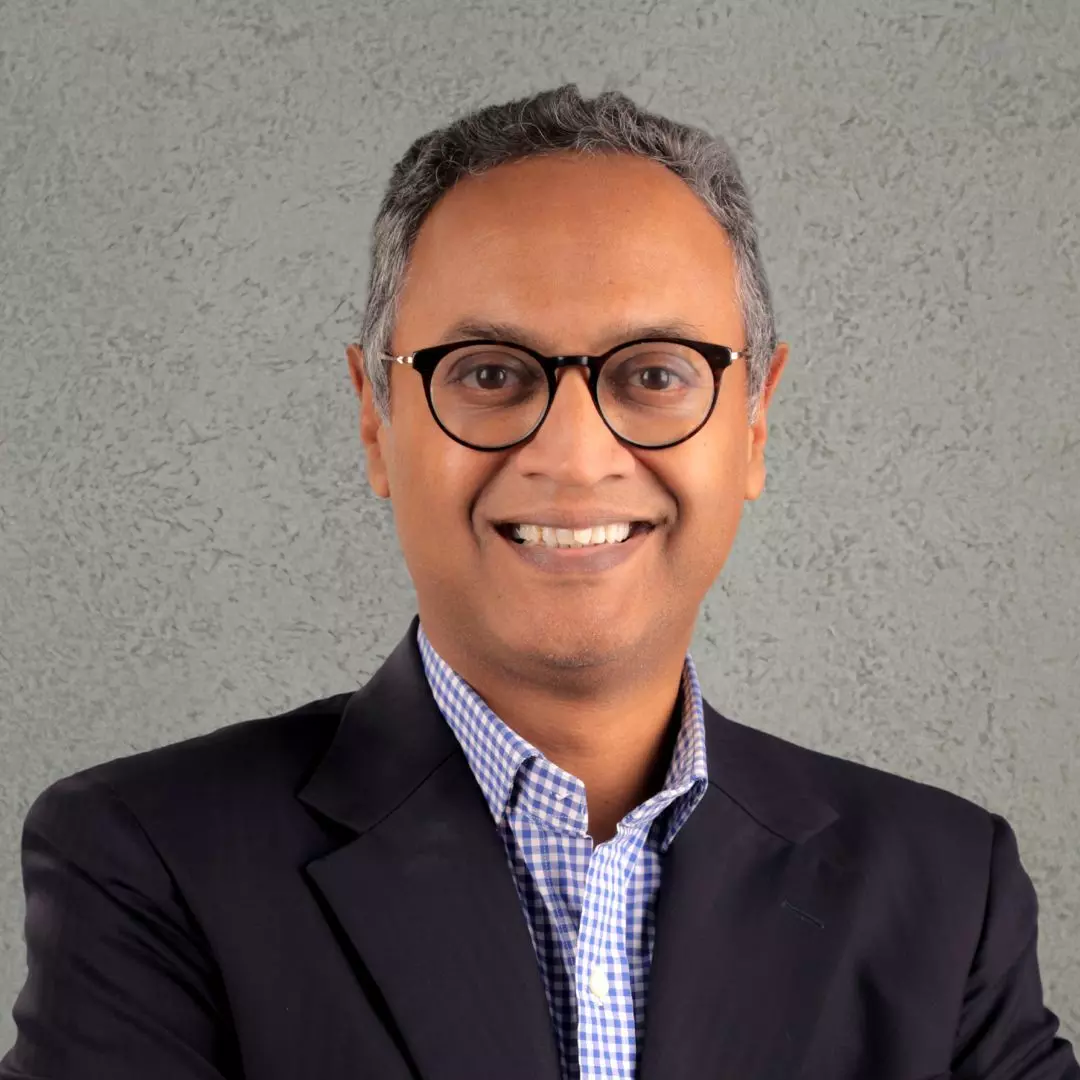
On Episode 813 of The Core Report, financial journalist Govindraj Ethiraj talks to Dr. Amit Goenka, Founder, Chairman and Managing Director at the Nisus Finance Group (NiFCO).
SHOW NOTES
(00:00) Stories of the Day
(01:09) Gas supplies to critical industries like fertiliser and power will see cuts as Qatar shuts production
(02:27) The amazing US argument for exporting its LNG to other countries.
(07:41) Brent crude futures have hit $85 a barrel
(08:56) How a strong dollar is keeping gold, silver in check
(10:26) Flights into and out of the Emirates have resumed but only sporadically suggesting travellers have a longer wait ahead
(11:22) Freight Rates have gone up Significantly
(12:03) Why real estate funds are becoming popular
Register for India Finance and Innovation Forum 2026
NOTE: This transcript contains the host's monologue and includes interview transcripts by a machine. Human eyes have gone through the script but there might still be errors in some of the text, so please refer to the audio in case you need to clarify any part. If you want to get in touch regarding any feedback, you can drop us a message on feedback@thecore.in.
—
Good morning, it's Wednesday, the 4th of March, and this is Govindraj Ethiraj broadcasting and streaming weekdays from Mumbai, India's financial capital, our top stories and themes…
But before we start, all markets were closed in India on Tuesday because of Holi, the festival which also heralds the beginning of summer. So it is going to get a little warmer hereon.
Remember, reports have already suggested a very warm March.
And now…
Gas supplies to critical industries like fertiliser and power will see cuts as Qatar shuts production.
A strong dollar is keeping gold and silver in check.
Brent crude futures have hit $85 a barrel.
Flights into and out of the emirates have resumed but only sporadically, suggesting travellers have a longer wait ahead.
The amazing US argument for exporting its liquefied natural gas to other countries and why real estate funds are becoming popular.
Gas Supply Squeeze
Indian energy companies on Tuesday reduced natural gas supplies to industries in anticipation of tighter supply from West Asia after top producer Qatar halted production, according to Reuters. Gale and Indian Oil Corporation have informed customers of the gas supply cuts late on Monday, according to the report, and those cuts range between 10% to 30%. Big industrial users of natural gas include fertilisers and power, which are the two largest consumers, and then petrochemicals, city gas distribution, and even small enterprises, manufacturing enterprises in states like Gujarat.
Qatar halted its liquefied natural gas production on Monday as Iran continued to strike Gulf countries in retaliation for the US-Israeli strikes against it, according to Reuters, adding the attacks have also halted oil and gas shipments through the state of Hormuz, which in turn has driven up global energy prices and shipping costs, and more on that in a moment. India is the world's fourth-largest buyer of LNG and relies heavily on West Asia for its imports. The top LNG importer Petronet LNG, which is also a state-owned enterprise, has informed Gas Authority of India, or GAIL, the top gas marketing company, and other companies about lower supplies, according to sources who spoke to Reuters.
India is the biggest LNG client for the Abu Dhabi National Oil Company, or ADNOC, and the second-largest buyer of Qatari LNG.
US Argument for Exporting its LNG
Interestingly, the US or the United States is increasingly championing its booming liquefied natural gas exports as a vital stabilising force for global energy markets, and this is something I felt is worth talking about, if only to state the obvious contradictions, because following the recent US and Israeli military strikes on Iran, we've obviously seen a destabilisation in West Asia, and that has led to precisely the kind of shutdown we've just spoken of. An opinion piece in the Trump administration-friendly Wall Street Journal highlighted this strategic pivot, promoting American LNG producers, including industry giant Chenier Energy, as essential buffers against West Asia volatility.
Now, companies like Chenier also have had contracts with Indian buyers, particularly the state-owned ones. The circular logic at work here is quite fascinating. In deploying military force that jeopardises global energy infrastructure while simultaneously leveraging the resulting market panic to advance the economic interests of domestic fossil fuel producers, that's in the United States.
So, essentially, it would appear that the US is offering the cure to a disease, it just helped spread. Now, bombing West Asia and then pointing out how reliable the Gulf of Mexico is for LNG exports is obviously a contradiction, which is interesting. The Wall Street Journal article also argued that robust American LNG exports are a necessary strategic weapon, ensuring that allied nations are not held hostage by West Asian conflicts or adversarial regimes.
US producers have spent the last decade positioning themselves as reliable domestic alternatives to Russian pipeline gas and West Asian LNG. But back home, and to get a sense on how important gas has been and is becoming to India's industrial economy, listen into my interview with GAIL Chairman and Managing Director Sandeep Kumar Gupta about eight weeks ago.
INTERVIEW TRANSCRIPT
Sandeep Kumar Gupta: So we have a very well diversified portfolio we are importing from Qatar, we are importing from US, we are importing from Australia and besides that we have many portfolio contracts. We have about 16.5 million metric tonne of portfolio out of about 27 million tonne all imported in India. So a lion's share of that imports is with GILT.
Besides that we have entered into certain new contracts also like certain quantities have been tied up with Qatar Fresh and certain new portfolio contracts have also been lined up. And we were in the market and now again we have revived that. So we will be lining some new volumes also.
As far as which sectors they are serving to? The primary demand growth centre is the city gas distribution network and that is growing at a phenomenal speed if we compare with 1920 to 2425 the increase is about 30 percent in domestic PNG connections and about 20 percent in the CNG volumes. So city gas distribution remains the biggest beneficiary of this growth and in fact the driver of this growth and through city gas distribution network lot of commercial establishments and lot of industrial establishments are also using this gas.
So this is one area. The second biggest area is the fertiliser plants. There in the past in the recent past only a few new fertiliser plants had come up which use gas.
But now with completion of our Mumbai Nagpur Jhansugada pipeline we are taking up the fertiliser ministry because we are interested in two fertiliser plants where we wanted to invest scale 100 percent investment in those fertiliser plants. So work on those two approvals for those two plants is also underway. This is about fertiliser.
Then the next consumption centre is power where we are again constrained because the gas at the present prices is not viable for the power sector and there is a huge potential if some kind of regulatory environment is there to reduce the pollution in the country then gas can find a very good use in the power sector also. Besides that refineries are using petrochemical plants as using instead of naphtha they are using gas for feed stock and going forward there will be usage in the steel sector as well as data centres perhaps also. So lot of sectors are getting benefited because of this natural gas availability.
Govindraj Ethiraj: Right and when you talk about city gas distribution you said it's the fastest growing and the largest chunk or just the fastest growing?
Sandeep Kumar Gupta: Both. It is both. It is fastest growing as well as the biggest user of the natural gas at present.
—
Gas imports are perhaps the first big victim. About 400,000 metric tonnes of Indian basmati rice are backed up at ports and in transit and export deals have dried up as freight rates have more than doubled since the US and Israel attacked Iran over the weekend, according to trade officials who spoke to Reuters.
Rice Exports Hit
India is the world's largest exporter of premium basmati rice and West Asia is a big buyer. And that includes Saudi Arabia, Iran and the United Arab Emirates, which account for more than half of its shipments.
Remember, a lot of diaspora also live in these parts and consume rice exported from India. The president of the All India Rice Exporters Association told Reuters that around 200,000 tonnes of basmati rice are stuck in transit and an equal amount is stranded at Indian ports as the war has disrupted shipping routes across the Middle East. Exporters had already moved stocks to ports but cannot ship to West Asia because of rising container freight costs and no alternative market can absorb that volume, he told Reuters.
Oil Prices
Oil prices are now rising steadily as the war escalates, as opposed to the earlier belief that most of the price response would have happened on Monday, the first day of trading after the US-Israel combined attacked Iran. Crude oil benchmarks were up about 8% on Tuesday and rising for a third session as the conflict widens, disrupting fuel shipments and heightening fears of further West Asian oil and gas supply disruption, according to Reuters, which added that Brent crude had touched about $85, which was the highest since July 2024, before settling around $83.79 or just under $84 on Tuesday afternoon. Tankers and container ships are avoiding the Persian Gulf after insurers cancelled coverage for vessels and global oil and gas shipping rates soared.
Meanwhile, the air war continues to escalate, with reports of damage to the US embassy in Riyadh and to Amazon data centres in the UAE and Bahrain, according to Reuters. And then of course, as we know and can see, residents of Gulf cities like Dubai, Abu Dhabi and Doha continue to lead a Covid-like existence as they're mostly sheltered in place and are unable to travel as such.
Markets
And in the market, stock futures deepened, losses in oil prices pushed higher as West Asian conflicts showed signs of widening and escalating on its fourth day on Tuesday and into its fifth day today.
Futures on Wall Street were down at least 1.4%, according to CNBC, though the commentary seems to suggest that the markets believe the US is protected from or is resilient to the kinds of shocks countries in Europe and Asia, including India, are feeling. European natural gas prices soared by more than 20% on Tuesday, upon Monday's surge. Concerns that higher energy prices could boost inflation propelled US Treasury yields higher and the 10-year yield had touched 4.1%, having crossed 4% on Monday, according to CNBC again.
Meanwhile, spot gold prices were down on Tuesday as a stronger dollar is now offsetting safe haven demand driven by the escalating war against Iran, which of course has heightened geopolitical and economic uncertainty, according to Reuters, which also pointed out that spot gold was at about $5,252 an ounce, which is down about 1.5%, and the US dollar, on the other hand, has risen to more than a one-month high.
Flights from the UAE
The UAE's General Civil Aviation Authority has announced the gradual resumption of flight operations across UAE airports to assist passengers stranded by recent regional disruptions.
It's quite evident, including to the Core report, which has been periodically monitoring flight tracking websites, that very few flights are actually taking off or landing in the Emirates, including those bound from India and returning to India. Some 11,000 flights have been reported to have been cancelled in the last few days, and that's a backlog that will take a while to catch up, even assuming many people cancel their travel plans and hold off on travel right now. The Emirati Airlines have repeatedly urged travellers not to go to airports unless contacted directly by their airline, with confirmed flight details to avoid congestion and ensure smooth processing.
Freight Rates
Supertanker costs in West Asia have hit all-time highs, Reuters said, quoting shipping data and industry sources on Tuesday. Shipping through the strait between Iran and Oman, which carries about one-fifth of oil as well as large quantities of liquefied natural gas, has come to a near halt after vessels in the area were hit, and as Iran retaliated against U.S. and Israeli strikes. The benchmark freight rate for the very large crude carriers used to ship 2 million barrels of oil from West Asia to China has doubled from Friday, according to Reuters, extending gains from six-year highs hit last week.
And daily freight rates for LNG tankers have jumped more than 40 percent on Monday after Qatar halted production.
Real Estate Funds
Switching gears, several fund managers we've been speaking with in recent months have been talking about the growing importance and size of funds that invest in real estate, both listed and unlisted. For instance, India's five publicly listed real estate investment trusts, or REITs, distributed about 2,400 crore rupees to about 380,000 unit holders in the third quarter of 2025-26, according to the Indian REIT Association, quoted by several newspapers in recent weeks.
The REITs include Brookfield India Real Estate Trust, Embassy Office Parks, and Mindspace Business Parks, who manage about 185 million square feet of Grade A office and retail space across India, and their total assets under management of the Indian REIT market is about 250,000 crore rupees. So, to get a sense on where real estate investments are going, particularly of the institutional kind, I spoke with Amit Goenka, founder and chairman of NISUS Finance, or N-I-S-U-S Finance, which manages at least three unlisted real estate funds, including a special opportunities fund. I began by asking him to describe the rising interest in real estate funds.
INTERVIEW TRANSCRIPT
Dr. Amit Goenka: It's one of the fastest growing asset classes and I'm very grateful to be on your platform. And starting off with REIT, which is a global product and a very proud Indian creation, I think that's an important segment to touch upon. So, you know, today REITs have crossed about 1 lakh crore in market capitalisation, but that is still covering less than 10% of the potential size of the market.
If you look at the market itself as a whole, there is almost about 1 billion square feet which can be REITed out. And what we've REITed out is just a fraction. And today we are consuming over 100 million square feet of office space a year.
So when you look at the potential for REITs in the country, it is actually quite enormous. What has been even more interesting is this budget when it comes to REIT, when the union budget highlighted that you could actually have a REIT by the central government assets. So when CPSCs are allowed to actually put out their assets on the market, and you know, remember the government has some of the most prime assets in the country.
And when you look at that being put on offer and that being privatised, I think it will suddenly deepen the market to the next level. It could actually multiply the entire market space to almost 10x almost immediately, because clearly you have the opportunity to get into some of the most prime sovereign backed rentals and assets in the country. So therefore, that becomes very interesting for effectively global players to start looking at REITs in a big way.
Again, remember, we've started diversifying the entire basket for REITs. So we started with office REITs, we've already looked at a retail REIT, we're likely to see a warehousing or an industrial REIT. So clearly, I think that basket is getting expanded very quickly.
And as more warehousing data centres, industrial parks, and other yielding asset classes get built, the opportunity for REIT will keep on getting expanded. So clearly, I think that's an important space, I think for us to be looking at, because today, what we effectively have is less than 150 million square feet under REIT, and you have the potential to go up to a billion square feet. So I think it's a very large space that is still left to be tapped.
When you look at SM REITs, it further deepens the marketplace. Because we are talking of REITs, which is only grade A offices, IT parks, campuses. But Govind, the country is not built on large corporates alone, it is built by SMEs.
It is built by midsize houses, which are present in the CBDs of the country. So in Bangalore, whether you're at MG Road, you're at Worli, Loa Parel, Nariman Point, or in Connaught Place, or in any of these major CBD areas, you will effectively see major corporations sitting there with their head offices. So what happens when you can take something like that and actually REIT it out?
And I think that space itself is another giant that can be brought to the market. So we are pretty excited about this space.
Govindraj Ethiraj: Okay, so a couple of questions. One is, I mean, I note that you talked about the budget announcements. And I heard that HMT, for example, is one of the largest landowners in the country, which many people didn't know about.
And obviously, that will come into the market. So tell us about the structure of REIT. And when you say that there is an opportunity to REIT it out, which means the assets are presently owned by let's say, the landlords or companies who developed it, but the opportunity I'm assuming is to parcel it out to shareholders.
So tell us about how broadly that works.
Dr. Amit Goenka: What we're trying to do is democratising the ownership of assets. Now, you had toll assets, road assets, power assets, which through invits, you could make it available to the larger public to enjoy the annuities from. So from the tolls getting collected, you could enjoy annuities from that.
Today, for example, when a government owns and operates a certain asset, and it wants to make it available to the public, it transfers that asset into an SPV under a trust. And then you have multiple SPVs under the trust, which will keep on acquiring these assets. And they're transferred and all are controlled by a single trust, where effectively investors come in and become beneficiaries by holding units in that trust.
And then there will be a manager who will be put on top of the trust to manage these portfolio facets. So suddenly, the ownership transfers from the hands of a central government enterprise into one of the SPVs, which are effectively 100% held by the trust. Then you bring in leverage at the SPV level, therefore, deleveraging the books of the central bank agencies or the enterprises.
So they are A, divesting their assets, B, they are divesting the loan books also related to these assets, plus they're effectively earning back, unlocking their equity on their books, plus they're effectively reducing their cost of capital, because that money that is coming out effectively is 7%, 8% yielding money, because that's what they're effectively paying for having sold these assets. And the cost of equity obviously being much larger. So it does a multi-pronged benefit to the seller, it does a multi-pronged benefit to the buyer or the investor in the REIT, who suddenly comes into the trust and says, okay, now as a unit holder, I am the owner or fractional owner of all of these SPVs to own multiple assets, which are yielding, they're backed by central government as a rent, and therefore I'm secured.
So let's say LIC building, let's assume as an example, starts divesting and say, I'm offering LIC building, would I want to be part of the LIC's ability to pay me on any given day? So on any given day, if I have such high credit quality in terms of occupiers using the entire building as a headquarters, I've been doing it for decades, suddenly that becomes available for private ownership, it becomes a very huge opportunity. So effectively, therefore, that divestment into a private trust is something, which is obviously when it is listed, then it gets created and all of that.
So it's a trust structure, which is acquiring these assets from central government or from owners of these assets who end up obviously paying the rent for that from being owners, which is enjoyed by the public at large.
Govindraj Ethiraj: So that the original owner could be a government or a private company, you quoted the example of a government being, I mean, in this case being LIC. Well, the CTSCs, but it could be anybody. Anybody.
Okay, now you managed four funds yourself, of which three are funds here and one is a gift city fund. So tell us about what are the kind of assets that you've invested in and where you've seen greater returns?
Dr. Amit Goenka: Over the last decade and a half, our focus has been on development of assets because India has been underserved in terms of supply. Today, if you want to buy 5,000 homes, let's say, ready homes in the city, you'll not find it, right? You maybe find 10 in Malad, 5 in Goregaon, 15 in Goreli.
But to find 5,000 homes that you can take on rent is almost impossible. So we're very underserved when it comes to supply. So we said, let the money go to actually start completing inventory.
So we've the last 15 years helped complete several million square feet of residential, commercial, retail, and other assets from mid-stage to late stage. Because that's really where the intervention of capital has been the most effective. Because several projects had been conceived either with foreign capital or with institutional money, but never saw the light of the day.
And that's really where our capital has gone to ensure that they get completed, delivered, and become monetizable in the hands of the home buyers, in the hands of the asset owners, in the hands of the developer, in the hands of the landowner, and unlocking value for the hostile banks, lenders, and other stakeholders. So it's largely been a structured capital, which has gone into project by project over the last 13, 14 years to ensure that these projects get completed, delivered, and are available for monetization. In the new scheme of things, what we've also now started to do is create partnerships or invest into land banks or into land.
Because I think that requirement for development capital today has become less relevant because the demand is very high and internal accruals are very strong. And in an upmarket, when internal accruals are very strong, the need for development capital becomes even more muted. So therefore, the need for capital really starts at the land stage.
Can you actually buy the right piece of land at the right location for the right product? And we saw this as a huge opportunity where effectively, therefore, hence accelerating the entire investments into clean passes of land that can go into warehousing, data centres, industrial parks, you know, into villas and plotted development into low-rise developments and quick turnarounds and affordable housing. So that becomes a very large value-creative opportunity.
Govindraj Ethiraj: And you've invested in all these categories that you've just mentioned?
Dr. Amit Goenka: Yes. So the land is obviously available for development for all of these assets. So every location has a certain geographic impact on an asset class.
So for example, Bewaldi will be very high when it comes to warehousing, but not necessarily commercial. It also depends upon the micro-market, the location, the utilisation, zoning, etc. But yes, all of these become part of our impact zone.
When it comes to studied, structured capital, mezzanine, quasi-equity, that has gone again across asset classes to help accelerate and complete it in the hands of the right people, for which we've also created partnerships. So the government of India created a large sovereign fund managed by SBI. So we partnered with them.
We created a solution together where we could finish projects with an impact fund. We partnered with asset reconstruction companies to revive projects from NCLT, from Bad Banks, and actually complete them and get them delivered as well. So it's always been a very solution-based approach to actually see projects getting delivered.
Govindraj Ethiraj: Right. So the funds that you have today, and I'm sure there are others as well, these are largely institutional investors who obviously have a longer term horizon when it comes to returns. Do you see this becoming more retail?
And if so, in what way?
Dr. Amit Goenka: Yes, I think today the interest for the larger investor community from small to large to institutional to family offices become very profound. I think the deepening of participation has been led by A, REITs, B, the spate in capital markets where several developers went public and they were being able to access developments and developers through public capital markets. They've been issuances of public bonds as well.
And also effectively all suddenly been a sudden spike in the total capital formation, crossing almost $9 billion of inflows in 2025 alone. So the market has deepened because of the entire proliferation of interest at the smallest unit level to the largest institutional investor. In fact, you'd be surprised, Govind, that like we've seen in the public capital markets, there's actually been a replacement of domestic money with foreign capital.
Likewise in India, Indian private credit funds, Indian asset managers, Indian public equity managers, Indian retail investors have largely been today bringing more and more capital to replace the foreign capital idiosyncrasies, making the investment more secured, more long term, more permanent.
Govindraj Ethiraj: Got it. Last question. A lot of, let's say, the outlook for real estate obviously depends on how real estate prices themselves will do, even in all these categories that you talked about.
So how are you seeing 2026?
Dr. Amit Goenka: I think 2026 continues to be part of the decadal growth for the sector, which pretty much started in 2022-23. And I see therefore another 5-6 years of significant growth trajectory. You know, we are already predicting that 2030 will effectively end up becoming a milestone year with predictions being that the sector will cross a trillion dollars of asset value within that period.
And we are seeing this happen also with the high level of redevelopment that we see in Mumbai, with the acceleration of all asset classes. Now we have senior living coming up, student housing coming up. So acceleration of all asset classes, the development of tier two, tier three cities into metros and urbanisation of 50 cities.
So what didn't happen for 50 years is likely to happen in five to seven years. And I think that is where the impact of that. Therefore, 2026 is just towards that objective of 2030.
And therefore, we don't see it stopping. Govind Raj, I think interestingly, what has happened is that it has now become a core asset class for every citizen. No longer people want to be not having a house having seen COVID.
And therefore, it's now become a fundamental asset class for everyone to own and acquire and be part of their portfolio irrespective, which is why we've seen that the houses sizes are becoming more livable. They're becoming more amenity driven, more technology driven with all the amenities and sizing for the family to reside comfortably. So I think the fundamental driver, and of course, capital gains, of course, being a big driver, people have made a lot of money on stock markets.
People have made a money on a lot of exits. So a lot of that has been called back channel into property, which is allowing this consumption to become real and the transition from old to new. No longer are there families who want to stay in villas or townhouses or into old settlements, or colonies, they want to actually stay in modern high rises.
They want to actually be part of a modern community. And I think that transformation is also quite rapid, which is leading to this consumption. And I think it's just got started.
You will see this transition from old to new continue with the newer generation wanting to stay in a more gated community within a more amenity and with the people or peers of their type. And therefore, the villas are getting broken, the old layouts are getting broken, pan India and getting built into modern high rises and townships. So I think that journey has just started going large.
And it's interesting to see that we are seeing the scale at which it is happening is absolutely mind boggling.
Govindraj Ethiraj: Right. Amit, thank you so much for joining me.
Dr. Amit Goenka: Thank you so much, Govindraj.


