



 Newsletter
 Search
Oil Prices: The Most Critical Indicator to Watch This Week
- Podcasts
- Published on 9 March 2026 6:00 AM IST
It's tough to put an index level on uncertainty even as the war enters the second week
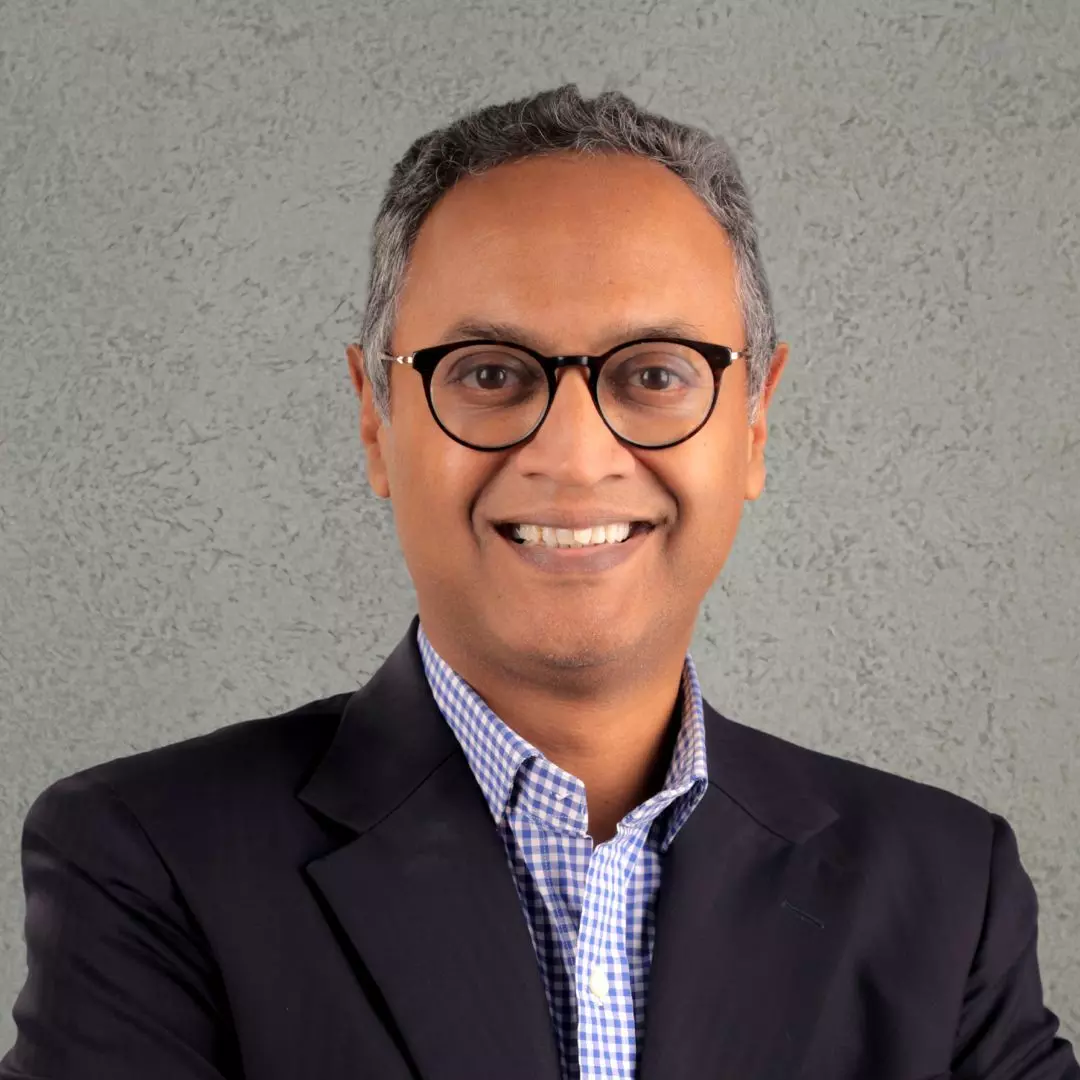
On Episode 817 of The Core Report, financial journalist Govindraj Ethiraj talks to Sourav Mitra, Partner – Oil & Gas at Grant Thornton Bharat as well as Saugata Bhattacharya, Member of the Monetary Policy Committee at Reserve Bank of India.
SHOW NOTES
(00:00) The Take
(04:41) Why oil prices are the most critical indicator to watch this week.
(07:58) Between oil and gas, how will India cope in the coming weeks?
(15:46) A global shortage of capital will affect economies like India. What could come next?
Register for India Finance and Innovation Forum 2026
NOTE: This transcript contains the host's monologue and includes interview transcripts by a machine. Human eyes have gone through the script but there might still be errors in some of the text, so please refer to the audio in case you need to clarify any part. If you want to get in touch regarding any feedback, you can drop us a message on feedback@thecore.in.
—
Good morning, it's Monday the 9th of March and this is Govindraj Ethiraj broadcasting and streaming weekdays from Mumbai, India's financial capital.
The Take: Indians built Dubai's oasis, Why can't we build our own?
About 25 years ago, Ravi Ruia, who founded the SR Group with his late brother Shashi Ruia, asked me a simple question when I met him as a reporter.
Had I seen how countries like the United Arab Emirates or the other Gulf countries were scaling up their infrastructure? At that time, my answer was no, but his response has stayed with me ever since. You should visit and see, Roya told me in his expansive and new office in South Mumbai. It's all being built by Indians.
It would be a few years before I finally took his advice. Around 2004, I found myself driving down Dubai's arterial 14 lane Sheikh Zayed Road, then well on its way to becoming one of the city's most recognisable landmarks en route to Dubai International Academic City. My destination was the SP Jain School of Global Management, which founder Nitish Jain had just established.
As Jain showed me around the business school campus and the broader city, Roya's words came back to me. In more ways than one, the vision unfolding in the desert was ahead of its time and Indian hands were laying the foundations. Over the last few decades, some 9 million Indians have settled in West Asia.
What began primarily as a migration of blue-collar workforce has evolved into a sprawling diaspora that owns, operates, and staffs a vast array of businesses from heavy construction to elite financial services and education. For most visitors flying out of Mumbai, Dubai is regarded as the closest first world city a mere two and a half hour flight away. And yet, while Roya referred to the role of Indians in building the hard infrastructure powering this Middle Eastern oasis over the years, soft infrastructure has joined the list as well.
The economic ties are staggering. According to a Citibank report recently cited by CNBC, the Indian diaspora in the Gulf contributes to nearly 38% of India's total remittance inflows and based on inflows of about $135 billion for the 2025 financial year, the Gulf share equates to about $51 billion. But as conflict engulfs the region, this vital economic pipeline is under threat.
The unfortunate developments of the past few weeks have forced many to question the very assumptions that created the allure of cities like Dubai, Abu Dhabi, and Doha. The most pressing question for the ultra-wealthy, is it still worth staying in Dubai simply for the tax benefits if the geopolitical roof is caving in? The answer, it seems, is no. According to a Reuters report last week, several Asian and Indian millionaires who had previously offshored their wealth and residencies to Dubai are now frantically attempting to transfer their funds to Singapore and Hong Kong.
There is a rich irony here, of course, given that many of these same investors fled Hong Kong just a few years ago as Beijing tightened its grip over the once autonomous financial hub. But the glaring takeaway from this capital flight is what is missing from their list of alternative destinations. While Indian millionaires are exploring all available options to safeguard their assets, India itself does not seem to figure in this equation, and certainly not from a tax residency standpoint.
Now this raises a much larger albeit rhetorical question. How is it that Indians can build the Gulf states, contribute to their modern efficiency and opulence, and relocate their wealth there as we've seen in recent years, and yet remain entirely unable to reproduce that same degree of attractiveness in Mumbai or other major Indian metros? For decades, India has treated the Gulf as its outsourced first world playground, a place to earn tax-free wealth, enjoy world-class infrastructure, and send billions back home. But if there is one lesson to be drawn from the escalating crisis in West Asia, it is that outsourcing your quality of life is a fragile economic strategy.
If India truly wants to become a destination for global investment and retain the vast wealth and talent of its own people, it must get its act together. And that means moving beyond basic economic reforms and doing the hard work of making its own or our own megacities livable, efficient, and attractive. Until we can build our own oasis, our capital will always be at the mercy of someone else's war.
And that brings us to the top stories and themes for today…
Why oil prices are the most critical indicator to watch this week?
Between oil and gas, how will India cope in coming weeks?
And a global shortage of capital will affect economies like India, what could come next?
Markets
It's tough to put an index level on uncertainty even as the war enters the second week. Except that Indian markets have lived with uncertainty for the last year, even as war risk is now hitting us more squarely than it did all this while.
The uncertainty now is how long the West Asia war will last and who else will get dragged into it and in what form. There will be other longer term consequences of all of this. For instance, the vulnerability that's been now exposed of the Emirates or countries like Bahrain and Qatar to attacks from Iran and how they might respond in future, depending on or aligning with the United States, even if forced, is clearly not the preferred path anymore.
And it is clear as the core report pointed out on day one that you cannot bomb your way into regime change, which is what the US-Israel axis appears to be desiring. So while the markets fell last week, including on Friday, India is still somewhat shielded from the events of West Asia. The one figure that we have to watch closely is of course crude prices.
Brent crude, the global oil benchmark, jumped about 8.5% to about $92.69 or almost $93 a barrel over the weekend. Now that price captures everything that's going on, including the fact that overall demand side conditions are still weak and of course some optimism that the war will reach some conclusion sooner rather than later else oil prices could have shot up further. High oil prices can and will damage India's economy, but we can wait a few more days before we start dissecting that angle.
The question that I'm asking right now is will oil and gas be available for our needs at some or any price? The markets are obviously fearing even at this point that a broader energy supply shock would substantially increase inflationary pressures and strain India's current account and fiscal balance according to a Reuters report. The Nifty 50 meanwhile on Friday was down 315 points to 24,450 and the Sensex was down about 1,097 points to 78,918. Both were down around 1.3 percent.
The Sensex saw its worst weekly decline since December 24 and the Nifty saw its worst weekly fall since February 25. The Nifty mid-cap and small-cap indices were also down about 0.7 and 0.25 percent each. Reuters reported on Friday that India's central bank that's the reserve bank has mounted an aggressive defence of the rupee last week deploying an estimated 12 billion dollars to contain the fallout from an escalating middle east war.
This figure is median of estimates bankers shared with Reuters with projections ranging from 9 billion dollars to more than 15 billion dollars. India does have foreign exchange reserves of more than 720 billion dollars at the time. The reserve bank's intervention comes against the backdrop of India's foreign exchange reserves which are at around 723 billion dollars which would be largely considered a comfortable figure.
On Friday the rupee hit a low of 92 rupees 30 paise per dollar that's a record low and then finally ended at 91 rupees 74 paise which is down about 0.8 percent for the week according to Reuters.
West Asia Conflict and LPG Prices
Prices of cooking gas have been raised for the first time in almost a year following the disruption caused by the Iran war and flows of energy through the middle east and from the middle east which is now set to affect about 330 million LPG or cooking gas users across the country.
Indian oil India's largest refiner increased the price of a 14.2 kilogramme LPG gas cylinder in Delhi by 7 percent to 913 rupees according to its website quoted by Bloomberg which also added that other retailers like Bharat Petroleum and Hindustan Petroleum also increased their prices and this was the first time since April. India is the world's third largest LPG consumer and sources more than 90 percent of its imports from West Asia. Much of that supply as we've been pointing out transits through the state of Hormuz which is now effectively close to traffic.
Low-income consumers will continue to get a subsidy of 300 rupees for gas cylinders but they too will have to pay 60 rupees more according to officials who spoke to Bloomberg. So they will now pay 613 rupees per gas cylinder. Urban consumers also have access to pipe natural gas though the overall impact of high cooking gas prices will be on inflation.
Prices of commercial LPG cylinders have also been raised by about six and a half percent to about 1883 according to Indian oil. So where do things stand on both oil and gas prices and supply given what we've seen in terms of curtailment of production or supply from both Qatar and Kuwait and how could things develop in the next week or so. I reached out to Sourav Mitra partner oil and gas consulting at Grand Thornton Bharat LLP and I began by asking him where India stood given what we were seeing on the supply side shutdowns as well as prices rising.
INTERVIEW TRANSCRIPT
Sourav Mitra: If we start about the petroleum products, that's the basic MS and HSD. Government has a very diversified sourcing strategy. It already had some, I think, three important strategic reserves that could at least help us with a crude storage of 7 to 10 days.
Plus, if you see the OMC's commercial stocks, which they store both crude and petroleum, that ensures that from our petroleum product, we are sufficient to see this situation for at least another 60 to 70 days. There could be no immediate alarm in terms of supply sources, in terms of crude particularly, given the government's position. In terms of LPG, I think it could be a matter of concern.
And rightly, government has instructed the Indian PSUs, the refineries, the IOCLs and HPCS refinery, to focus more on LPG production so that the demand which comes could be addressed. And also, there is a curtailment on the industrial supply of LPG also, so that the domestic front, which is the cooking front, is not disrupted at all. When you talk about natural gas, yes, Qatar is one of the prominent suppliers of natural gas, that is the LNG to India.
With their declaring force majeure, the Indian counterpart like Petronet has also declared a force majeure. There have been instances, particularly in industrial belts, where there is a gas curtailment which has happened, particularly in Gujarat, Murvi, which will definitely be a pinch to those industries. But then government again is planning to have other routes also.
It could be the US markets or the Australian markets or the African markets per se, where both crude and gas could be tapped up and the domestic market could be addressed.
Govindraj Ethiraj: So, a couple of questions. When you say the government asked refiners to focus on LPG, can you give us the technical differentiation between LNG and LPG? That's one.
Secondly, when they focus on something, what happens then? I mean, how does that technically flow through?
Sourav Mitra: Right. So, I think there is a basic difference. The hydrocarbon is the difference.
When you say LPG, LPG is basically a mixture of propane and butane, while your LNG is a super chilled liquid natural gas. So, normally when it is transported, it is done at minus 160 degrees. There are cryogenic ships which brings the product here.
Then it is, again, de-gasified here and then stored at the terminals and then transported immediately to the pipelines. So, that is the difference. In terms of your cracks, what happens when you have a crude, there are different cracks levels which happens on the crude.
Based on the crack levels, there are, you have your derivatives come out, AMA, SHST, LPG. So, when you focus more on LPG, the technical terms, your refinery crack will have reduced output for the other products and much more from the LPG. However, if it is LPG extraction by GAIL, which is again, that is done by natural gas.
So, again, what happens is that either if in shortage of LNG, a domestic natural gas, which India has, that will be supplied to them on a decent amount and then the process will start where LPG will be extracted. That is, propane and butane will be extracted more from that hydrocarbon and then that will be bottled and shipped out.
Govindraj Ethiraj: Right. And as we look at the supply side, roughly half our gas comes from Qatar. Where do we stand then in terms of our oil and gas imports, in terms of options available at any price?
So, because my question really is, yes, prices will go up. We are already seeing that happen. But at some price, will we get all the oil and gas that we want?
Or will there be a more structural shift?
Sourav Mitra: See, in terms of crude, government, as I said, is very diversified in its procurement. So, I think whatever supply shortage is happening from the Middle East, that would be easily taken care by the Russian crude, which is already available on high seas. India already enjoys a lot of crude procurement from Russia.
Secondly, is that there are other sources from Saudi, if the state of Hormuz is closed, like the Red Sea, from which the crude could be pumped out and that could be bought forward. So, I think, crude point of view, that could not be a problem, as there are multiple sources. Already, India has engaged, has committed some crude offtake from Venezuela recently, Africa it takes.
So, there are multiple sources that will definitely take care of the crude. Natural gas, as I said, is something that has to be worried about, given that India's 50% natural gas demand is imported. And out of that 50%, 40% comes from Qatar gas.
So, I think that is where the complexities are. But yes, gas will be available, if you see the spot prices have really shot up. But then it would be a matter, is that price competitive enough or effective enough on the Indian shore?
You have the major things are your fertilisers, but your subsidy will really go high. Your city gas distributions, affordability could be a concern. So, it has to be balanced off.
So, it could be where government may ration or curtail the gas to the industrial users completely. And then, I think, supply it to the CGD sector and fertiliser sector to make it good. And answering the third part of the question, yes, there are multiple sources.
Australia is one of the sources. We already have some contracts with US. Gale has a long-term contract with them.
I think while transportation cost will increase, vending that product should not be a problem, if the price points permits to be floated in the Indian market.
Govindraj Ethiraj: Right, Sourav. Thank you so much for joining me.
Sourav Mitra: Thanks, Govind. Thanks. It was a pleasure talking to you. Thank you.
Capital Shortage
Data centres are seeing an infrastructure investment super cycle requiring up to 3 trillion dollars by 2030 according to a note from real estate facilities and consulting firm JLL. Roughly 100 gigawatts of new capacity are anticipated to come online between 2026 and 2030 equating to about 1.2 trillion dollars in real estate value creation. Tenants will likely spend another 1 to 2 trillion dollars to fit out their space with IT equipment said that JLL note.
Now data centres and AI perhaps the most visible face of the sheer hunger for capital in the global economy right now. They also highlight the shortage of capital and or where it's going. Now the shortage of capital is a serious one and is affecting countries large and small including India and deserves a bit of a step back and a broader look.
I spoke with Saugata Bhattacharya, a member of the monetary policy committee of the reserve bank of India and I began by asking him how he was seeing the capital shortages play out a theme that he has been following closely for some time.
INTERVIEW TRANSCRIPT
Saugata Bhattacharya: So, this is something that is building up. I mean, not that the current situation is helping it. As you put it, the reduction in the total amount of global savings.
You remember in the 2013-14, there then Federal Reserve Chairman Ben Bernanke talked about the global savings clock at that point in time. So, that has now changed very dramatically, almost 180 degrees into a major global savings shopping. I think the reasons are manifold.
So, first, there's been a structural change. China had been a major provider of savings. Chinese savings, household savings used to be about 50 odd percent, 48 percent in 2013-14.
That has now come down to about 43, 42, 43 percent in 2024-25. So, that's one. China's growth anyway has slowed.
China used to be growing in the 2000s at about 8, 9, 10 percent, which then provided that 50 percent savings into the global economy. China's growth has almost halved at this point in time. So, that's another major problem.
The second part is during the last 20 odd years with Japan, with interest rates almost at zero or even negative and the yen depreciating. So, the Japanese yen became a very major carry trade currency. Carry meaning, I mean, you know, you borrow at zero percent and then go to a higher interest rate, invest that in a higher interest rate economy, primarily the U.S. So, that is now rapidly unwinding. I mean, it started in 2024 when Japanese inflation of the Japanese central bank started raising rates and the yen started depreciating. So, estimates there are anywhere between $500 billion to $4 trillion. So, that's yet another major shock that has come into the system.
More importantly, I mean, from the time of 2022-23 with the very high inflation periods, all the global central banks, which were happily doing quantitative easing, expanding their balance sheets, etc. So, the Federal Reserve's balance sheet is down from about almost $9 trillion to about latest in December, about $6.6 trillion. So, that's taken out a couple of trillion dollars for the system.
The same with the European central bank. So, all of this coming together at one point has essentially created a very major global savings problem. India, of course, is affected because we have always been a net receiver of global capital because our savings is lower than our investments.
So, current account deficit country. So, India is caught into this trap. And you know, the bigger problem with this savings problem now in hand, exactly, unfortunately, at this point in time, there's been a major increase in global investment of the public spending, government public spending.
The US has always been fiscally profligate. So, from about 4% fiscal deficit in 2024, etc., the CBO, US CBO estimates about a 5.7% of GDP fiscal deficit in 2026, going on to about 6.7% in 2030. So, that's one.
Germany, which has been absolutely a model of fiscal discipline, there the fiscal deficit has moved from 1.4% is expected to be around 4% in 2027. Even Japan. So, everybody is rearming defence spending, supply chains, alignment, semiconductors, high technology, etc.
And this is just the government. I mean, on top of that, there are billions and billions of dollars of private sector spending on tech, mass manufacturing, etc. So, very unfortunately, this has created a major situation of a dollar shortage.
Govindraj Ethiraj: Right. And I'll come back to that in a second. And how is this phenomenon played out in India?
Because you're saying it's a global problem. And what has been the specific impact or fallout or outcome as we see it?
Saugata Bhattacharya: So, one part is, of course, I mean, India has had periods of depreciating currency, there will be depreciating against the dollar. So, but all of those instances in the past, I'm just talking about the external side, I'm not even coming into the domestic economy. So, on the external side, typically, I mean, every episode of a rapid currency depreciation has been caused by fragility in our current account.
Current account deficit had expanded, exports were a problem, large imports, etc. This time round, our current account is very reasonable, very, very sustainably low 0.5%, 1%, 1.3% we just saw recently. But because of a shortage in capital flows, FDI, net FDI is actually very low, portfolio flows are going out of the country.
So, even during a situation of a very manageable current account deficit, you've got a trend of a depreciating. This is one of the on the external side. On the domestic front, there's been also been a major problem.
But that's more sector specific channel dependent things. So, banks, for instance, heavily dependent on retail CASA, current account and savings account. Now, their savings mix have changed from a retail led deposit franchise into more of an institution, where mutual funds, corporates, etc.
are putting their money in. So, they're drawing money. And that unfortunately, has only served to increase the cost of capital, the blended cost of funds or banks.
So, that is one part of the aspects, which is the domestic part. And so, domestic savings still remain relatively strong, certainly not as strong as it used to be in the past.
Govindraj Ethiraj: Right. And as you look ahead, assuming as where we started, that this is also a phenomenon that is somewhat cyclical, or definitely we could see periods where let's say there are higher savings leading to lower and then back again. What could be the outcomes or the fallouts of this?
If I can supplement that, Chhagat, can this lead to some other and what second order effects? That's really my question.
Saugata Bhattacharya: So, obviously, I mean, you know, so the first part of your question that is this more cyclical, unfortunately, what I talked about in China appears to be more structural. The yen carry can be more cyclical in nature, although a long drawn out cycle, not unlikely to reverse anytime soon. But all the others, the fiscal deficits, the demand for investment, etc, seems to be very, very structural nature, it's not going to back down, back off very, very quickly.
I mean, it's not going to reverse quickly. So it's more long cycle or quasi structural in nature, this problem that has risen, because the fiscal deficits investments will keep on at least for the near future that I can't see this reversing. In terms of the effects, your second question, the first impact, of course, is on monetary policy.
So globally, you have seen that monetary policy is now very wary of the so called effect of fiscal dominance. I mean, with high fiscal deficits, this is constraining the ability of central banks to cut further, because this is likely to stoke inflation. That's one problem.
And this, because of the nature of open economy, macroeconomics, I mean, the same thing is going to happen to India's monetary policy stand, because without a gap between the G7 interest rates and India opening up wider, which is very unlikely at this point in time, other than the Fed, potentially. So other than that, I mean, if you need to draw in capital, that constrains India's domestic monetary policy, the same impossible triviality effect. And also from the domestic side, again, this is constraining monetary policy, because you need to have that balance between investment and savings.
So lower cost of credit versus the ability to attract deposits from the system. This mix of domestic and external impacts is likely to have a profound impact on India's monetary policy at least.
Govindraj Ethiraj: Sanjeev Sanyal Right. And therefore, as savers or as enterprises, what should we be preparing for? And how can we prepare for or arm ourselves to respond to this, particularly for countries which are obviously in an investment mode in a larger scheme of things?
Saugata Bhattacharya: So one from a macroeconomic perspective, I think the government has already acted quite proactively in this, I mean, whatever the major cross sectoral reforms, etc, that we have seen in 2025. I think this is bearing the laying the ground for further investments into India, increasing India's productive capacity, its potential growth, which we have already seen, I mean, you know, we have already seen an increase in private sector investment, using data from the first half of FY26. We are seeing other investments coming in into data centres, into semiconductor missions, etc.
So that is already happening that part, but we need to be far, far more active in opening up the economy. Even there, we have seen the slew of FTAs, EFTAs, etc, CEPAs that we have been signing. I think even that with opening up the economy, that should also help to bring in more investments, as we integrate into the global supply chains and more productive capacity begins to come to the country.
Govindraj Ethiraj: Right. And the war that we are seeing in Central Asia right now, we obviously don't know how and when it's going to resolve. How does that link with this larger challenge of savings?
Saugata Bhattacharya: This is aggravating an already tight global saving situation because of money moving, flowing into safe havens. Even that is more limited now. I mean, typically, Switzerland is one part, but it's too small.
And that's the reason that you're seeing an increase in the dollar index and in the dollar strengthening, that there's more move into safe haven assets, there will be more move into gold, other factors, which is also likely to further constrain India's access to the global savings pool. So again, we don't know how long this lasts. But I mean, we need to be cognisant of the effects that might potentially have on further restricting India's access to savings pools.
Govindraj Ethiraj: Right. Last question. And, you know, just to come back to monetary policy, and every country has to respond differently.
And how are you seeing that happen right now, across the world, or at least the dominant economies, and including India, in the context of the largest structural stroke cyclical problem that you've outlined, as opposed to, let's say, the immediate responses to inflation and other factors.
Saugata Bhattacharya: As you said, it's very difficult to figure out, I mean, how long what the longer term structural effects of this conflagration might be. So even assuming that this is a relatively short lived phenomenon, this will have had significant effects over a longer period, even if hostilities cease, the Straits of Hormuz, the Gulf of Hormuz, etc. It's likely to take some time for petroleum, other fuels, petrochemicals, products, etc.
to come back online in the system, the effects are likely to be longer. US pump prices, gasoline, petrol pump prices in the US have increased very significantly. So even that will have an effect on their potential inflation that will have need a rethinking for the Federal Reserve for what they do.
Markets are already pricing in a ECB rate hike sometime this year. Generally, the Reserve Bank of Australia has already hiked rates. Metals prices are increasing because of various factors consideration.
We need to be aware the meteorological department in India has already forecast hotter than nonsense. We have forecasts of an illinear conditions developing in H2 of 2026 that coincides with our monsoon period. So these risks are accumulating.
There's no doubt about that global central banks more or less at the end of their easing cycle. So these factors will need to be taken into account when India's own domestic monetary policy is formulated. As of now, I would say given this current information set and keeping the risks in mind, I think the monetary policy stance and rate is more or less appropriate.
Of course, I mean, as and when data comes in, you need to be monitoring the data and you take decisions based on the data that begins to come in late.
Govindraj Ethiraj: Right, Saugata, thank you so much for joining me.
Saugata Bhattacharya: Wonderful conversation. Thank you so much, Govind.


