



 Newsletter
 Search
The Nuclear Bet that Could Power India’s Future
- Podcasts
- Published on 24 April 2026 6:00 AM IST
The war is in a strange holding zone, with the United States evidently holding back from dropping more bombs and sticking to its ceasefire status
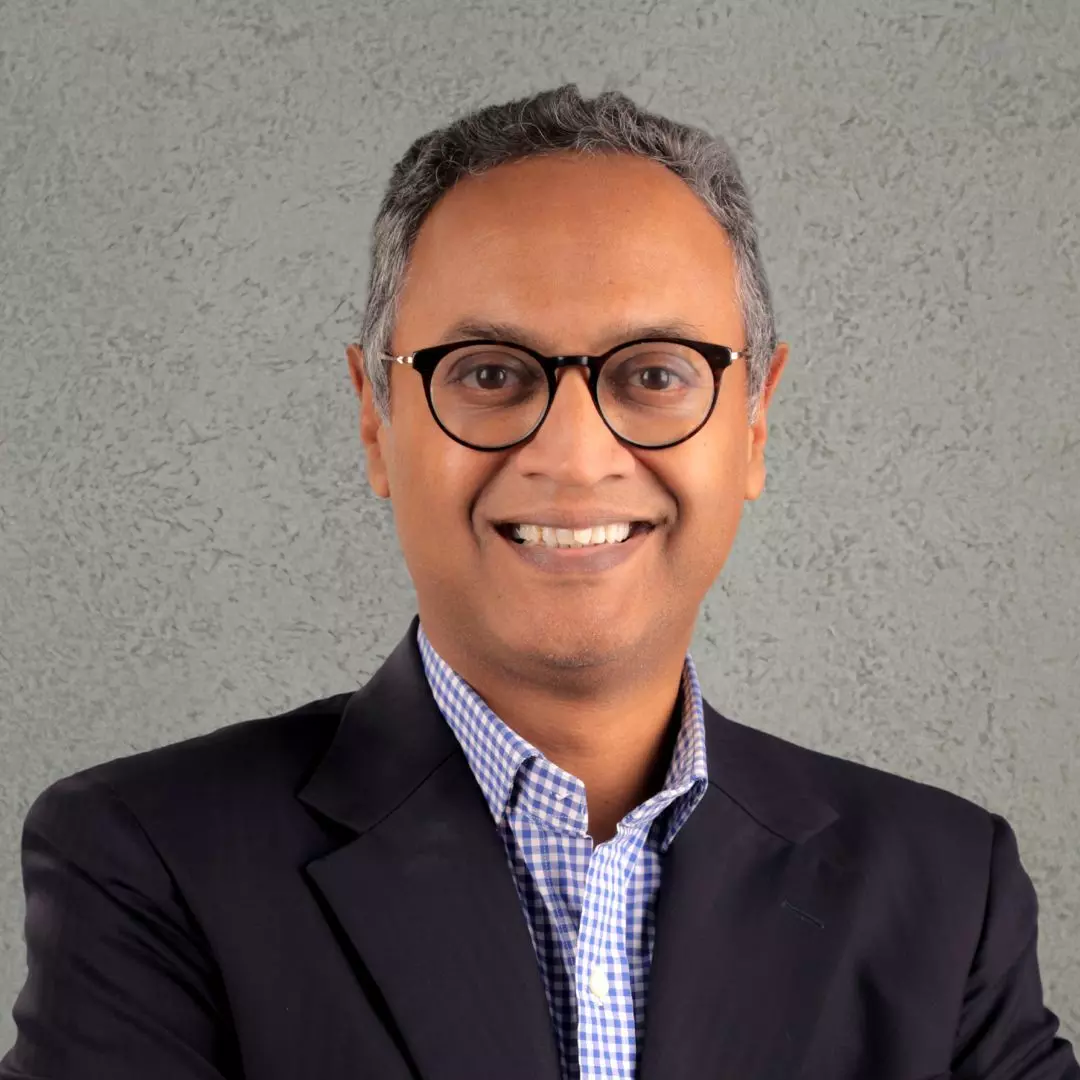
On Episode 855 of The Core Report, financial journalist Govindraj Ethiraj talks to M.V. Ramana, Professor; Simons Chair in Disarmament, Global and Human Security at the University of British Columbia and a nuclear power expert.
SHOW NOTES
(00:00) Stories of the Day
(01:00) Official Government figures on how much oil retailers are losing per litre of petrol and diesel sold
(03:34) HSBC says India now looks less attractive than North East Asian equities
(04:18) The war goes into a holding zone with renewed threats as markets turn nervous
(04:46) IT Services Results
(07:05) Brokerage Bernstein says India has overfunded aviation at the cost of rail
(10:43) What are fast breeder reactors and how does India benefit by having them?
Check out our Live Earnings tracker: https://earnings.thecore.in/
The Core presents “Navigating Market Risk in 2026” (Wed, 29 April, 8:30am) at The Quorum, Lower Parel
Register at this link: https://luma.com/0etd8b63
—
NOTE: This transcript contains the host's monologue and includes interview transcripts by a machine. Human eyes have gone through the script but there might still be errors in some of the text, so please refer to the audio in case you need to clarify any part. If you want to get in touch regarding any feedback, you can drop us a message on feedback@thecore.in.
Good morning, it's Friday the 24th of April and this is Govindraj Ethiraj broadcasting and streaming weekdays from Mumbai, India's financial capital.
Our top stories and themes and a small announcement…
The war goes into holding zone with renewed threats as markets turn nervous.
Brokerage Bernstein says India has overfunded aviation at the cost of rail.
Official government figures on how much oil retailers are actually losing per litre of petrol and diesel sold.
HSBC says India now looks less attractive than Northeast Asian equities.
What are fast breeder reactors and how does India benefit from them?
And our new real-time earnings tracker is live on our website www.thecore.in. The link is in the description.
The War, An HSBC Note, The Markets and Oil
The war is in a strange holding zone, with the United States evidently holding back from dropping more bombs and sticking to its ceasefire status. Talks between Iran and the US have not happened, mostly because Iran is refusing to come to the table.
Still, the United States lifts its naval blockade on Iranian ships in the Persian Gulf. Both Iran and the United States have a stranglehold on the Persian Gulf, and both are seizing ships, and Iran has fired upon a few as well. Oil prices are holding, with Brent crude futures down slightly to $101.70 a barrel on Thursday morning, and that of course means that it is well above a $100 mark now.
The head of the International Energy Agency, Fatih Birol, told CNBC on Thursday that we are facing the biggest energy security threat in history. As of today, he said, we've lost 13 million barrels per day of oil and there are major disruptions in vital commodities. Birol has previously warned that the Iran-born and ongoing closure of the state of Hormuz would result in the largest energy crisis we have ever faced and urged governments to bolster their resilience with alternative energy sources.
He told CNBC that he expects, first of all, nuclear power would get a boost, renewables will grow strongly, solar, wind and others will, and he expected electric cars to benefit from all of this, and also that alternative fossil fuels could make a comeback. He also said that in some countries, coal could see a push and go back up, particularly in Asia. Elsewhere, in a sign that fuel prices could rise soon, as they should, even if the government is holding back for now, Indian fuel retailers are suffering a revenue loss of Rs 100 per litre on the local sale of diesel and Rs 20 per litre on petrol or gasoline for selling the two fuels at below market rates, according to a senior oil ministry official who spoke on Thursday and reported by Reuters.
Indian refiners have last raised fuel prices about five years ago on April 2021, according to the Reuters report, and the government spokesperson said that India has no plans to raise fuel prices as of now to shield customers. Meanwhile, HSBC has downgraded Indian equities to underweight from neutral, its second cut in less than a month, as it expects surging energy prices because of the Middle East war to threaten the durability of India's earnings recovery, according to a Reuters sum-up. Brent crude is up 42% since the war started in late February and is above $100 a battle, which obviously raises inflation and growth risks for a country like India, which is the world's third-largest oil importer.
HSBC said in a Thursday note that India now looks less attractive than northeast Asian peers in the current macro setting, with the benchmark Nifty 50 and Sensex falling 6.7% and 7.9% so far this year, amongst the worst-performing markets globally, in that Reuters report. And in the markets, the Nifty 50 and Sensex were down for the second session as traders turned nervous with the continued double blockade at the Strait of Hormuz. The Nifty 50 was down 205 points to 24,173.
The Sensex was trading 852 points down at 77,664. The Nifty mid-cap and small cap indices were also down at 0.41 and 0.67%. US President Donald Trump has said that the ceasefire which was announced on the 7th of April will remain in place till Iran submits a unified proposal. Iran of course has said that it is not taking part in any negotiation right now, at least on the face of it, but of course it is quite logical that there is or there are multiple back-channel discussions and negotiations going on, not just with the United States, but various other countries who are vested in a peaceful outcome to all of this.
IT Services Results
And some results in this case, information technology services, Infosys consolidated sales for the fourth quarter rose about 13% to 46,400 crores, surpassing analysts' average estimate of 46,000 crores. According to data compiled by LACG and reported by Reuters, Infosys is India's second largest IT services company and has also forecast 1.5% to 3.5% revenue growth for the current year, slightly below expectations, with the management saying demand was steady. Net profits rose about 21% to 8,500 crores, going past the 7,465 crore expected by analysts.
The company said that large order bookings or deals over $30 million stood at about $3.2 billion during the quarter compared to $4.8 billion in the previous quarter and $2.6 billion in the year period. The company also declared a dividend of Rs 25 per share and CEO Salil Parikh said work might go up for the company because of Anthropic's mythos, and he said this in a press conference after the results on Thursday. Elsewhere, the company said its total employee count was at about 328,000 at the end of the fourth quarter, 2025-2026, and they plan to hire 20,000 freshers in the coming year or rather this year.
A Note from Brokerage Bernstein
It's interesting how economic shocks make everyone go back to asking the basic questions or pointing out lacunae, economic lacunae, that were always evident and waiting for some form of The more worrying part, of course, is that if we seem to remember structural problems in the economy when the engine is slowing down, then obviously that suggests a bigger problem than the one that's being called out. After Kotak Mutual Fund's note and call to action yesterday, foreign brokerage Bernstein put out a similar note raising the stakes somewhat by addressing it to India's Prime Minister.
It broadly says that India's recent success is real but risks complacency. It says India has moved up global GDP tables and benefited from a productive capex over subsidies approach, but the temptation to extrapolate this success and underplay structural gaps in infrastructure, innovation, and technology readiness is a genuine danger. It says that Gen AI is an existential threat to India's IT BPO workforce.
That's about 10 to 15 million people who serve the IT services, including global capability centres and BPO, which is also, as the report says, the backbone of India's aspirational middle class. And all of this is exposed to automation. It also says India risks becoming a consumer of AI technology rather than the creator of it, with most of the economic surplus in AI, that's models, platforms, and IP currently in the U.S. and China.
There are some other relevant macro observations which are not new per se but usefully encapsulated, including a low productivity cycle in agriculture and pointing out that 42 to 45 percent of India's workforce depends on a sector that contributes to only 15 to 16 percent of GDP. That's agriculture. It also highlights challenges with India's energy economy, which imports 88 percent of crude oil, while distribution companies' accumulated losses are now between 500 to 600 thousand crore rupees.
It goes back to saying that India must not just be a data centre host and must become an AI driver. Also, that manufacturing intent has not translated into depth. Even in electric vehicles, battery cells, which are 30 to 40 percent of cost, are largely imported from China and that India must shift to early identification and funding of emerging sectors like automation, robotics, advanced materials, AI-integrated manufacturing, before global supply chains are formed fully and not after.
An interesting point on India's transport model, it argues that it needs a fundamental rethink. India has over-invested in aviation, where it has no manufacturing advantage, and under-invested in railways, where it does. There is only one bullet train project underway, despite India having the financial and engineering capacity for multiple high-speed corridors.
It also says that state-level cash transfer schemes are crowding out productive capex. Unconditional cash transfers to women now run across about 12 states, with total annual outlays of between 170,000 crores to 250,000 crore rupees, or 0.5 GDP. In some states, these are absorbing 2 to 3 percent of state GDP, squeezing capex budgets and narrowing fiscal space.
It says that the concern is not cash transfers per se, but making large unconditional election-synchronised transfers a permanent fixture locks the country into low productivity equilibrium. It also points out that R&D spending is low, rather dangerously low, and institutional quality is hollowed out. And there are some, what I would think, loony ideas under the guise of bold proposals, like phasing out high-denomination currency notes, keeping only a 10-rupee note within five years to accelerate formalisation and broaden the tax base by removing exemptions for political, religious, and sporting bodies.
India’s Thorium Future
India's most advanced nuclear reactor has reached a self-sustaining stage, marking a big step forward and a step closer to cutting dependence on uranium. The prototype Fast Breeder Reactor, or PFBR, at Kalapakkam in Tamil Nadu reached criticality, the state at which a nuclear chain reaction can continue on its own earlier this month. Once the reactor becomes fully operational, India will become only the second country after Russia to have a commercial fast breeder reactor.
Prime Minister Narendra Modi said this advanced reactor, capable of producing more fuel than it consumes, reflects the depth of our scientific capability and the strength of our engineering enterprise, and is a decisive step towards harnessing India's vast thorium reserves in the third stage of the programme. So what is a fast breeder reactor? How does it work? How does it link to the whole nuclear programme? And why does this latest advance matter for India and the world? I reached out to M. V. Ramana, Professor in Disarmament, Global and Human Security at the University of British Columbia, and a nuclear power expert, who's also the author of The Power of Promise, Examining Nuclear Energy in India, and a member of the International Panel on Fissile Materials, the International Nuclear Risk Assessment Group, and the team that produces the annual World Nuclear Industry Status Report. And I began by asking him to explain what fast breeder reactors were.
INTERVIEW TRANSCRIPT
MV Ramana: So there are two terms there, the fast and the breeder. A reactor is basically a very complicated way to boil water using nuclear fission as the source of the energy, and instead of a coal plant you burn coal, instead of that here you're producing the heat using nuclear fission reactions. So the reactor part is the same, in a sense.
There's the word fast and there's the word breeder, okay? So the fast refers to the fact that neutrons that are produced during a nuclear fission process in a fast breeder reactor, they are not slowed down. They continue to be fast, meaning highly energetic, and they are the ones which are causing the fission reactions to happen inside the nuclear reactor.
The problem with the attractiveness of a fast neutron reactor is that fast neutrons can fission a wider variety of uranium isotopes. In the pressurised heavy water reactor it's primarily uranium 235. There are two kinds of isotopes in nature, uranium 235 and 238.
Uranium 235 is a smaller component, only about 0.7 percent in nature, and in a pressurised heavy water reactor that's the primary component that is getting fissioned. In a fast reactor the uranium 238 component can also get fissioned, as well as other plutonium isotopes that are created, okay? So that's the point about a fast reactor, but the negative side of the fast reactor, or the challenge for a designer with a fast reactor, is that the probability of a neutron inducing another fission is lower when the neutron is fast.
Imagine sort of like a ball that's going past you really fast, and so it doesn't have much chance of causing fission. And so you have to add a lot more fissile material into the core of the reactor, and I'll explain what the consequence of that decision is. Then the term breeder means that sometimes some of the neutrons that don't fission a nucleus, but would have otherwise escaped from the reactor's core, if they were to surround the reactor with a blanket of uranium, usually called depleted uranium, then some of the neutrons are captured by the uranium 238 in that blanket, and those get converted into plutonium.
In the initial core of reactor, you have to start with some plutonium or highly enriched uranium because of the fact that I told you, you have to have a high concentration of fissile material, okay? This is unlike in the case of heavy water reactors. So you typically, in the Indian PFBR design, the fuel in the core is a mixture of uranium and plutonium called mixed oxide fuel, okay?
MOX fuel. And so the plutonium has to be made first, and then in the case that you design the reactor appropriately, you could, in principle, produce more plutonium than you put in, because more of the uranium 238 is getting converted into plutonium. So that's what they mean when they say, this is breeding plutonium.
You're producing more plutonium than you put in, right? It seems kind of magical, but ultimately what you're doing is a nuclear conversion reaction of uranium 238 into plutonium.
Govindraj Ethiraj: Right. And if we were to look at the time that it takes to set up a fast breeder reactor like this, and the cost, what is the output or the outcome that helps us? I mean, one is the generation of electricity, but is there any other benefit?
MV Ramana: Yeah. So in principle, if you had only a limited availability of uranium, then you would have to start using more of the uranium 238 component. As I mentioned, in heavy water reactors, it's only the uranium 235 component that's getting efficient.
So one way to try and utilise the uranium 238 is to use breeder reactors, which produce more plutonium than you put in, and you can take that extra plutonium. And once you have enough extra plutonium, you can use it to produce the core of a second breeder reactor and a third breeder reactor and so on and so forth. Right.
So that is the attraction that in principle, on a limited amount of uranium, you can produce more nuclear reactors. You can set up more nuclear reactors than if you were to use only the uranium 235 component, use only heavy water reactors. That's the attraction of this.
Two aspects here. One is that the time it takes to produce more plutonium than you put in and how much you need, at least enough plutonium to be able to fabricate the core of a second reactor. That time can be quite long, depends on how much extra plutonium is being produced.
And in the case of the PFBR, the extra plutonium that is being produced is not very significant. So the time it will take for them to produce enough plutonium for another reactor is quite long. So in the original plan that Bhabha envisioned and other people have talked about, the expectation was that there would be a large number of nuclear power plants already, heavy water reactors, and those things also produce plutonium.
If you were to set up these so-called reprocessing plants, which is basically a chemical process through which the plutonium is extracted from the spent fuel coming out of the heavy water reactor or the breeder reactor, then you will be able to accumulate large amounts of plutonium. Therefore, then you can keep producing breeder reactors and so on and so forth. As I said, the reason why this was envisioned was because uranium was expected to be quite limited.
Remember, this was an idea that came up in the 1950s. It was not just India. France also had similar ideas.
Many countries which felt that they didn't have enough uranium resources within their country but wanted a large nuclear power programme thought that the breeder reactors was the way to go. And the second reason why many countries were interested in breeder reactors was the expectation that nuclear power would become very, very common. Much of the world's energising would happen to nuclear power reactors.
This was the imagination in the 1950s and 60s when they had absolutely no experience building any nuclear power plants. So two things have changed since then. First, nuclear power has not grown as expected, in part because nuclear power plants are very expensive.
They take a lot of time to build. They are risky. There are the risk of accidents.
It's been difficult to deal with the radioactive waste. So a number of reasons why nuclear power is not as attractive to most governments. And so it's just not grown fast enough.
And the second is that the amount of uranium that people thought was there turned out to be quite wrong, meaning there's a lot more uranium available than what was expected in the 1950s and 60s. So in a sense, both of the rationales to build these breeder reactors are no longer present anymore. So in a way, with many other countries, they see that writing on the wall and they have kind of said, OK, we are not going to pursue this.
And the last thing I should say is that breeder reactors turned out to be even more complicated than heavy water reactors or light water reactors, more expensive. And the producing the fuel for these reactors, because you have to use plutonium in the fuel, that process of producing plutonium is expensive. Each gramme of plutonium is far more expensive than a gramme of uranium, OK, because of the process that you have to use to produce the plutonium.
And even if you got all that plutonium for free, trying to fabricate plutonium into fuel is much more complicated. The reason is that plutonium is much more radioactive compared to uranium. And the radioactive nature of plutonium becomes a particular problem when people breathe in plutonium dust.
OK, it can go and lodge inside your lungs and cause cancer and so on. So when people try to handle plutonium, they have to handle it in what are called glove boxes, meaning that you have some ability to work with the fuel, but none of the fuel particles, dust can escape out of the box. But when you try to do things of that sort, it drives up the cost of fuel fabrication.
So even if you got the plutonium for free and the uranium for free, just making the fuel turns out to be more expensive. The cost of fabricating fuel turns out to be much more than if you were to go and mine the uranium and refine it and process it and produce the uranium fuel. It's much cheaper to do the uranium stuff than with plutonium.
So which means that fuelling the breeder reactor becomes also very much more expensive.
Govindraj Ethiraj: Right. And in a broad sense, what's the availability and flow of uranium today in countries like India, given the requirements that we have?
MV Ramana: So there was a period of time when India was not importing uranium. After the 1974 nuclear test, other countries sort of kept India out of the nuclear market. And then all that, of course, changed with the U.S.-India nuclear deal between 2005 and 2008. So after that, India has access to uranium from around the world. And you just saw recently when Prime Minister Mark Carney came from Canada to India, they signed a deal to import uranium. There is ample uranium in Canada and India too.
There is enough uranium. What is different about India is that the quality of the uranium ores is not as high as other places. So you have to process a lot more ore to produce each kilogramme of uranium in India as compared to in Canada or Australia or Kazakhstan, places like that.
So it's more expensive to produce uranium in India. I mean, uranium is ubiquitous. If you went to your garden in your backyard and you dug, you'll find a little bit of uranium there.
But how much it will cost to produce the ram of pure uranium from that is the challenge. So that's why you go to mines.
Govindraj Ethiraj: Right. And if you were to look at the cost of power, let's say per unit of electricity, how would electricity generated through the nuclear route roughly cost today between, let's say, fossil fuels, which include gas or coal and so on?
MV Ramana: So the costs of power vary from country to country. Today, the cheapest source of power are renewables, especially solar power around the world. And with batteries becoming cheaper, even the fact that the solar power plant doesn't generate power all the time has ceased to be so much of a problem.
So that's the cheapest. And we can just leave that aside. And then the second more expensive one typically is natural gas or coal, depending on the availability in the country and so on, where the cost of producing power is kind of some of it comes from the capital cost of building the power plant and some of it comes from the cost of the fuel itself.
In a nuclear plant, the cost of power is primarily from the building the nuclear reactor and in some cases also from the cost of fuelling the nuclear plant. Usually that's not a big deal. In the case of things like heavy water reactors, the cost of fuelling is not so high.
In the case of the breeder reactor, it will actually be much higher because of the problem with the plutonium that I mentioned. Plutonium is hard to produce. It's hard to work with.
So that is going to drive up the cost of fuelling the PFBR or any other breeder reactor. And typically nuclear power around the world has been more expensive. Many years ago, probably around 2007-2008, my colleague Suchitra and I did some calculations of what it would cost to produce power at the PFBR at the stated cost at that time, which was around 3,500 crores.
I think the 3,492 crores was the official price when construction started in 2004. At that point, construction was supposed to be finished by 2010 and electricity was supposed to be generated. So what Suchitra and I did was to look at the cost of producing power at the PFBR and compare it with one of the heavy water reactors that were being built, the ones that were built in Kakrapath, the most recent re-water reactors at that point.
And again, we were using the stated costs at that point. And what we found was that producing power from the PFBR was about 80% more expensive compared to the heavy water reactor. And now the cost of the PFBR has gone from 3,492 crores to somewhere close to 8,200 crores.
So more than doubled. I have not done the calculation again, to be honest. There is no doubt that it is going to be much more expensive than from heavy water reactors.
So I would imagine it's at least 100% more expensive.
Govindraj Ethiraj: And heavy water in contrast to, say, fossil fuel, I mean, coal-based power plant, I mean, roughly?
MV Ramana: Yeah, I think heavy water reactors would be more expensive than coal-based power. Yes.
Govindraj Ethiraj: Yeah, I know it'll be expensive, but do you have a percentage sense or even from the past?
MV Ramana: I've not seen it any recent numbers. To be honest, very honest, we don't see a lot of detailed data anymore. So I'm unable to do the calculation also, even if I wanted to do that.
In the West, for example, in the US, there is a company called Lazard that produces annual reports of what it is going to cost. Remember that their estimate of cost of nuclear power for the United States is roughly around $180 per megawatt hour. And the cost of solar and wind would be probably somewhere around $50 to $60 per megawatt hour.
And then for natural gas, it will be probably just a little bit more.
Govindraj Ethiraj: Yeah, that gives a sense. Okay. One of the things that's changed, I mean, you've spoken in the past about global electricity consumption going down.
But one of the things that's changed, obviously, is the AI data centre rush. And that's increasing consumption again. And one of the ways that has been seen as a solution to that is to go back to nuclear, including small and modular reactors, and so on.
So how are you seeing that in the context of everything that we've spoken of?
MV Ramana: Great question. So two points. One is that, you know, global electricity consumption itself has not been going down, it's been going up.
But what has been declining is the share of nuclear power. So globally, if you took all the nuclear plants around the world, and you saw how much they contributed to the world's grid, they used to contribute something like 17.5% in the mid-1990s. That has come down to about 9% as of 2024.
We are yet to see the 2025 data. Okay. So that share has declined.
Now, it is true that with AI and data centres, there's a lot of talk about building nuclear reactors and small modular reactors. But if you actually read the announcements very carefully, what you see is that many of these companies, these big tech companies that are making these announcements, the amounts of money they are putting into this, the claim, what you see in the announcements, is a few hundred million dollars, $300, $500 million, something like that. The largest I've seen is from NVIDIA, they said $650 million in a particular design.
Okay. Now, to put that into comparison, the last set of nuclear reactors that were built in the United States was in the state of Georgia, the Vogel plants. Those cost somewhere between $36 and $37 billion.
So where is $300 million, where is $36 billion, right? So from my perspective, what I see these companies doing is basically engaging in this announcement game about reinvesting nuclear power as a public relations exercise to kind of put pressure off them from people saying, oh, you're increasing emissions, we are making climate change worse, stuff of that sort. Okay.
So that's one thing. The second thing you see is that, look, to build a nuclear plant on average around the world, it takes about 10 years between the time you start pouring concrete into the ground to the point where electricity is generated. In the case of something like the PFBR, it took 22 years.
And then this, of course, assumes that you're ready to start pouring concrete to the ground. Typically, if you want to start a new nuclear reactor, you have to get the environmental clearances, safety clearances, find the community willing to buy it, and raise all the tens of dollars. So that's going to take another five to 10 years.
So we are not going to see any new nuclear plants being built in the United States till the 2040s and producing power, right? Who knows what's going to happen with the AI market and the data centre market at that point? I mean, lots of financial analysts tell me this is a bubble, it's going to burst, right?
So I don't see nuclear power really contributing anything different in terms of actual energy use. There's a lot of talk about it. Some old nuclear plants may be restarted, some of the consumers might be losing their power for these companies, etc, etc.
But that's all sort of really in the, you know, it's a very small marginal changes.
Govindraj Ethiraj: And you're saying small and modular reactors are not conceptually different from...
MV Ramana: No. Okay, I'll give you a two minute explanation about that also. Again, it's a reactor.
The small refers to producing less than 300 megawatts of power, okay? Modular is just a way that the reactors is constructed. So how you would in the old days, you know, if you were to construct a nuclear reactor, there would be a lot of activity at the field site.
Now what they're saying is you should do more of the construction and in a factory, bring it to the field site and assemble just like any modern skyscraper is built today. You don't bring, you know, carpenters and bricks to the site, you just make everything. So exactly the same thing.
Now, the last reactors that I mentioned in the United States, the Vogel reactors in Georgia that cost 36 billion dollars, those were modular constructions, right? The modules for it were manufactured in Louisiana, and it had exactly the same kind of pattern of cost overruns. The small is even more interesting, right?
So around the world, whether it's in India, or whether it's in the United States, or in Canada, the first nuclear power plants that were built were all small reactors, because they were trying out all kinds of things. And over a period of time, all these countries started building larger and larger reactors. And the reason was that they were trying to take advantage of what are called economies of scale.
That when you build a reactor that is producing five times as much power, you are not going to spend five times as much money for the concrete or for having five times as many workers, right? But you're producing five times as much power, so you get five times as much revenue, right? So that's the advantage of larger reactors.
Going back to small reactors, you're going to lose that advantage. So small modular reactors start from an economic disadvantage in the first place, right? They make a lot of stuff about, oh, it's going to be much more efficient in the factory, blah, blah, blah.
The proof is in the eating. Anybody who wants to invest in small modular reactor, in New York, they say, if you believe in that, I have a bridge to sell in Brooklyn, which is like, you can't really sell that, right? It's like, I'm saying I'm going to sell the Taj Mahal to you, right?
So if you believe that small modular reactors is going to be somehow magically cheaper, then maybe you'll also be willing to buy the Taj Mahal.
Govindraj Ethiraj: Professor, thank you so much for joining me.
MV Ramana: You're very welcome. Thank you so much.


