



 Newsletter
 Search
Markets Recover Over 2,000 Points
- Podcasts
- Published on 19 March 2026 6:00 AM IST
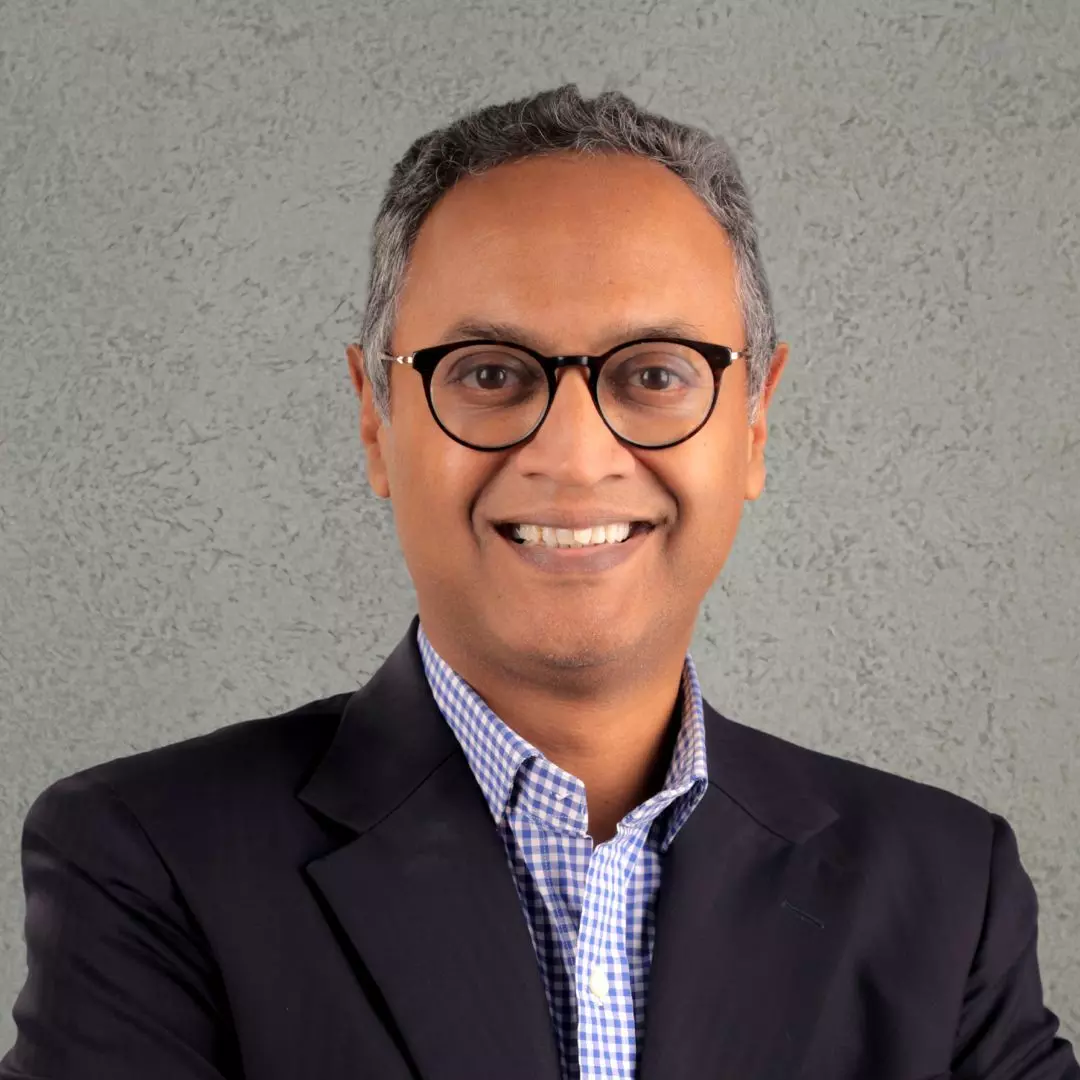
There is no real development from West Asia that can be construed as positive
On Episode 826 of The Core Report, financial journalist Govindraj Ethiraj talks to Narendra Taneja,Chairman of the Independent Energy Policy Institute as well as Anindya Banerjee, Senior VP and Head of Commodity Research (Currency, Commodities and Interest Rates) at Kotak Securities.
SHOW NOTES
(00:00) Stories of the day
(01:09) No let up in West Asia as bombing continues as the US might resort to more desperate moves as opposed to expectations of pulling back
(02:30) Markets recover over 2,000 points, will they hold
(04:24) The rupee hits a new record low. What is the rupee tracking?
(11:45) India’s gas shortages are compounded by unique distribution challenges
Register for our event “Who Builds the Future of AI?”
NOTE: This transcript contains the host's monologue and includes interview transcripts by a machine. Human eyes have gone through the script but there might still be errors in some of the text, so please refer to the audio in case you need to clarify any part. If you want to get in touch regarding any feedback, you can drop us a message on feedback@thecore.in.
—
Good morning, it's Thursday, the 19th of March, and this is Govindraj Ethiraj broadcasting and streaming weekdays from Mumbai, India's financial capital. Some, house or holiday keeping before we start? We've had quite a few holidays in March, and I mean trading holidays, and into April first week as well. However, there are no holidays this week, including for Gudi Padwa. Banks may be closed in some states, but the stock markets are open. So the trading holidays we do have this month are on Thursday, the 26th of March, and Tuesday, the 31st of March, being days we usually take a break.
And that brings us to the top stories and themes…
The stock markets recover over 2,000 points in three days, but will they hold?
No letup in West Asia as bombing continues, as the US may resort to more desperate moves as opposed to expectations of pulling back.
The rupee hits a new record low.
What is the rupee tracking?
And India's gas shortages are compounded by unique distribution challenges linked to law and order.
Markets
India's equity markets extended their recovery for a third straight session on Wednesday with the BSE census now having jumped more than 2,000 points over the past three trading days, which of course leads us to the question on what's happening in the market right now, given everything else that's happening around us. Before we come to the markets, there is no real development from West Asia that can be construed as positive. There is, of course, a statement from US President Donald Trump saying that the war might end soon.
But of course, we've learned not to believe those statements until we can see specific actions. As the bombings from both sides continue and the US appears at this time determined to find a visible and satisfactory conclusion that will make it look good and like a winner. And that also means that expecting anything concrete at this point might be a little too early.
We could also expect that a visible and satisfactory conclusion could come by either extending the bombing to civilians or an on-ground invasion. Since residential apartments are already being bombed in Beirut by Israel, extending that effort to Tehran or elsewhere in Iran does not appear too distant. Meanwhile, India is getting more crude and gas, but shortages of gas continue and more on that shortly.
And the trading desks at the oil marketing companies are clearly working overtime to capture as much of crude, particularly seaborn crude as they can, particularly from Russia, which the US has officially granted permission to buy oil from two countries like India. Now, the arrival of crude and gas is giving the Indian market some hope, though the price impact as well as the second order effects on lack of input materials like helium or fertiliser inputs would be only felt in coming months and more on that again. But like we said, the markets have seen a 2,100 point bounce back till Wednesday, largely driven by value buying and short covering.
We have no way of knowing at this point whether this will last. On Wednesday, the benchmarks were close to the day's highs. The Nifty 50 was up 195 points to close at 23,777 and the Sensex was up 633 points to close at 76,704.
The broader markets did better. The Nifty Mid Cap and Small Cap indices were up 1.9 and 1.7% each. On Wall Street, stocks erased gains after Iran said some of its energy facilities had come under fire, rekindling fears about the impact of the war and including on inflation.
Treasury is trimmed in advance ahead of the Federal Reserve meeting Bloomberg reported, adding that Brent rose about 2.5% to $106 after the attack on the South Paz gas field in Iran. The dollar was mostly steady and gold hit a one-month low. On Wednesday morning, investors were looking ahead to the Fed's interest rate decision and expecting the central bank to keep interest rates unchanged in a range between 3.5% to 3.75%. However, traders would be watching.
Bloomberg reported for any guidance from Fed Chair Jerome Powell on whether oil prices could impact future monetary policy. Back home, in keeping with a continued trust on manufacturing, India's cabinet approved spending about $3.6 billion to develop about 100 industrial parks. That's about 33,600 crores, by the way.
And the move is aimed at boosting India's domestic manufacturing capabilities and would be developed through joint ventures with state governments and a state-run company. The government expects to develop about 33,000 acres of land for manufacturing over six years.
The Rupee
The rupee fell to a record low on Wednesday, even as the conflict in the Middle East continued, which kept oil prices high, also leading to capital outflows and increasing macroeconomic risks.
The rupee closed at Rs. 92.63 to the dollar, which is going past its previous lifetime low of Rs. 92.47, which was hit last week, according to Reuters.
The rupee has declined more than 1.5% since the war began, and there have been about $8 billion of foreign portfolio outflows from Indian equities. So the question is, is currency tracking oil prices and is there a somewhat direct correlation there? Or what other factors are influencing the rupee's behaviour right now? And what's the outlook? I spoke with Anindya Banerjee, Head of Research for Forex and Commodities at Kotex Securities, and I began by asking him how he was seeing the latest movements in the rupee.
INTERVIEW TRANSCRIPT
Anindya Banerjee: Actually, India Rupee, yes, it is the oil which, in fact, everything in the world right now is trading off oil or one can say trading off the whole moves. Of course, because India is a big importer of energy and this time around it's just not oil. We have the gas, both LPG and LNG.
That translates to other chemicals, petrochemicals, petrochemical feedstocks like naphtha and then the end products like fertiliser, etc. So, it's the whole supply chain which is now kind of at risk at various stages because I think after 1970, this is the first time the world is facing a shortage of hydrocarbon molecules. So, it's not just about the price.
Every time we would have seen a price spike in energy, that's nothing new. Even during the 2022 Ukraine war, the oil had gone to $130 or $135 a barrel for Brent. But that time, it was again a fear geopolitical risk premium but never the world faced an actual shortage of barrels or molecules of gas.
This time around, because of the old moves, the supply has dried up and that has taken offline close to 10% of the global oil supply and 20% of the LNG supply with impact all across the hydrocarbon chain and other products. So, yes, the rupee is watching all these things because that triggers your inflation risk. That leads to more outflows from the FDI and that exerts a downward pressure on the Indian rupee.
Govindraj Ethiraj: Right. And if you were to look at the last few days specifically, what's the kind of movement that we've been seeing in the rupee? What I mean is, I mean, on a more granular basis, what's happening?
I mean, foreign portfolio outflows is obviously one factor, but it's also been counterbalanced to some extent by the Reserve Bank's intervention. So, what's been happening there?
Anindya Banerjee: Yes. So, RBI is the major supplier of dollars. But considering that we are the last two weeks of the financial year, we tend to see the exporter selling pickup because of the repatriation flows.
But seeing the oil where it is, the exporters might hold up till the last moment when they have to convert. So, that means the RBI has to be the seller of last resort and they have to supply the dollars, whether synthetically through the forward market or NDF, or actually through the spot market. But they will be mindful that if they intervene too much through spot, it tightens the rupee liquidity, which aggravates the macro economic shock.
So, they would be basically striking a fine balance between the derivative and the actual spot.
Govindraj Ethiraj: Right. And you said that exporters could come in or would most likely come in in the next couple of weeks because they're all sitting on dollars that they've earned. So, how much could that be?
I mean, not in actual numbers, but I mean, what could that do to the rupee if they were to do so?
Anindya Banerjee: So, generally, March has been a good month for the Indian rupee because of this seasonality, especially the last two weeks. We see a lot of these exporter companies, etc. They come and sell during the last week.
That is a substantial amount. But all that would fail in comparison if the oil continues to rise. Currently, the Brent is around $108.
It just jumped, I would say, almost $6 from the day's low. So, that will be the concern. Because now, what has happened is, if you want to understand the current, what is happening with a fast script, I think a compatible would be the COVID lockdowns.
So, we have a Hormuz lockdown. So, every extra day or every extra week will make things worse. It will have an impact on the price.
It will have an impact on the availability globally. So, if this disruption continues, let's say, into March end, that is another two weeks, we could see even the oil prices jump towards $130-$140 a barrel, if not more. So, in that situation, the pressure on the rupee could be substantial and RBI has to sell dollars aggressively.
They have enough dollars with them and they can obviously create it synthetically through the forward market.
Govindraj Ethiraj: And how are you measuring the transmission of inflation, particularly with crude going up and the dollar-rupee ratio being where it is?
Anindya Banerjee: See, if it is transitory, which means if this gets resolved by max-to-max the mid of April, then I think the impact on the inflation, if you take the CPI, would be, we estimate it around to be half a percent to 0.7 percent. But it will then again start falling after a point in time. But the longer this continues and longer oil stays above $90, then what happens is that you get second and third round impacts, which starts to feed into your core inflation.
Right now, the impact will be more on the headline inflation and one can strip away, ignore that, by saying that it's just headline inflation. But if it persists, then it gets into the core and that's where the RBI monetary policy could get impacted.
Govindraj Ethiraj: Right. And last question. So, what are you telling clients, for example, to do at a time like this?
See, the trade is simple now.
Anindya Banerjee: As I said at the start, everything is of four moves. So as long as oil continues to move up, especially as long as Brent is above the level of $95, it's more of an escalation zone. Anything below $95, we start to de-escalate, especially looking at the situation now.
As long as above $95, $100, a battle, it is just that the rupee will be under pressure. And the only thing to trade, because we have a lot of commodity trading clients, we advise them to focus on oil as a play, because everything else is getting sold off to raise the dollar liquidity.
Govindraj Ethiraj: Right. Anindya, thank you so much for joining me.
Anindya Banerjee: Thank you for having me.
India’s Fuel Supply
India is assessing fuel supply requests from its neighbours and will approve exports only if there are surplus volumes, the foreign ministry said on Wednesday, as the war has obviously disrupted shipments into India, which comes through or came through the state of Hormuz.
India is the fourth largest refiner in the world and supplies fuels to Bangladesh, Nepal, Bhutan, Sri Lanka, and the Maldives. And of course, India has been hit hard by the jump in crude prices, but unlike China, India has not moved to ban exports of refined fuel, according to a detailed Reuters report. The report also added that India's four oil vessels carrying about 1.6 million metric tonnes of crude, six tankers carrying 320,000 tonnes of LPG, and one ship of 200,000 tonnes of LNG, or liquefied natural gas, are stranded in the state of Hormuz, according to a shipping ministry official.
Earlier on Wednesday, before prices rose again, oil had fallen after Iraq resumed crude exports via pipeline to Turkey's Mediterranean port of Ceyhan, which of course provided some relief in terms of supplies. Oil production from Iraq's main southern oil fields, where most of its crude is produced and exported, have fallen about 70% to just 1.3 million barrels per day, sources told Reuters, as of course, the conflict has shut the vital state of Hormuz, through which 20% of global oil passes. Now, while we focused on the sourcing of oil and gas, and we will do so even now, the distribution of it here in India, that's particularly cooking gas, is a more complex issue, given also the role of states in ensuring fair play.
I reached out to Narendra Taneja, chairman of the Independent Energy Policy Institute, a think tank based in New Delhi, and also distinguished research fellow at the Oxford Institute for Energy Studies in Oxford, UK. And I began by asking him how he was seeing the supply and demand forces right now before dwelling on his outlook.
INTERVIEW TRANSCRIPT
Narendra Taneja: Well, if you look at the overall landscape, it's not very happy. It's disturbing, it's a bit disrupting, as you know, that since we source 89% of our crude requirement from multiple geographies, almost like 41 countries, and the story for natural gas is no different. The LPG is more or less the same.
So when you look at crude oil or LPG or LNG, the story is rather complex, and since we source much of our LPG from the Persian Gulf area, LNG too, the same story, mainly from Qatar, and crude, as everybody knows, we source much of our crude from that region. And as you know, that the entire area, particularly state of Hormuz, had been weaponised by Iran, and very successfully. America is trying to kind of force open the state of Hormuz, despite the that they are supposed to be the most powerful army ever in the history of humankind, they're not able to do it.
And the state of Hormuz, as you know, is basically a channel that's used by tankers, crude tankers, LPG tankers, LNG tankers, that roughly accounts for 20% of global energy trade. I'm not even talking about containers and others. So that's in that kind of situation, very tense, very disruptive.
And of course, you can see the ripple effect of that practically across the country. In India, our consumer is still more insulated by the government. The government has insulated majority of consumers so far, but let's see how the war goes and how long it goes.
If it lingers on, then I think probably even consumers like me and you would start feeling the impact.
Govindraj Ethiraj: Right. And to come to that, there's pipe natural gas and there's LPG, and pipe natural gas for domestic consumers at this point seems to be under control. And the encouraging users to switch to pipe natural gas or actually activate connections, which seem to be dominant.
LPG, of course, has been already turned off for commercial or at least reduced for commercial. Homes are still getting it. What's your sense and what are the dynamics at play as we grapple with these distribution challenges, apart from the sourcing challenges?
Narendra Taneja: You see, natural gas and LPG, we can't really talk in the same, but we can because molecule is the same, but at the same time, economics is different. Technology is different. Distribution methods are different.
Let's talk about LPG first, for instance, as you know, LPG is sourced from wet gas and also from refinery. Refineries, you use crude oil to produce it. So LPG, since we are heavily dependent on imports, thanks to the government plans in 2014, there were hardly 13 crore consumers.
Today, there are roughly 34 crore consumers across the country. They got used to it, including people living in faraway hinterland, deep areas and so on and so forth, which is great because in terms of environment, health of women, especially those who spend long hours in the kitchen, great, I think, great revolution. But at the same time, the fact is that our dependence on import is so high that even a little bit of disruption here or there, any part of the geography would impact us.
So that's precisely what's happening. So what the government has done is that as a refinery is all right, prioritise LPG because you produce LPG also using crude. So they started doing that, both the public and the private sector.
That has helped the sentiments a little bit. But that said, at the same time, when you look at the consumer base of 34 crores, it remains a huge, huge challenge. But when it comes to pipe natural gas, I think there are roughly 15 million consumers, mostly in urban areas.
Some of them, of course, in the small towns to these days, some part of the country. But that's a different gas, that's natural gas. So we produce a lot of natural gas in the country, roughly 50-50, or roughly like it's like we import and 50 is available from our gas fields across the country, like Bombay High and Krishna Godavari and Gujarat and Assam and many other places.
So there since PNG consumer base is rather small, if you compare it with LPG, and the fact that we also produce a lot of our own gas, which is available, you know, for the supply system. So there you don't feel that kind of anxiety. But even there, we import a substantial amount of natural gas, which is important in the form of LNG, where the prices have gone up.
And also the bulk supplier of LNG to India, Qatar is offline, because there's stock production. So it's not that there is no challenge. But at the moment, we are comfortable, because the consumer base, especially when it comes to domestic consumption, PNG is small.
And at the same time, you know, we have got a gas available. So the government can always say prioritise consumers, because and also ask more consumers to switch to PNG, where the infrastructure has been already built. But the comparison is actually, to be honest, is not very fair.
But LPG is different, while are together while pipe gas is different. However, natural gas is also used in the form of CNG, compressed natural gas, that again, in turn, either is coming from India's own oil gas fields, ONGC, Reliance, BP, Oil India, and so on, or is imported, mostly from Qatar. But we are also now these days shipping LNG from other geographies, including Norway and Algeria and, and the United States and so forth.
So this picture seems to be comfortable so far. But if the war goes on, let's say for another three, four weeks, and the prices go further up, or demand goes further up from other geographies, like Taiwan and Japan heavily dependent on imported LNG, then the scenario can change. But right now we are comfortable in terms of LNG or natural gas in the form of LNG or CNG or PNG, and so on and so forth.
But I think the real challenge for us, as far as our economy is concerned, our consumers are concerned, remains in the domain or in the area of LPG.
Govindraj Ethiraj: Right. And tell us about the dynamics of the central and the state governments when it comes to distribution, and who's doing what and where does the effort maybe need to be enhanced going forward?
Narendra Taneja: Well, this is actually the most interesting aspect when it comes to CNG, as I said, PNG is different because infrastructure is there, it's piped, even if you've been a consumer of natural gas for years, you've never seen the gas, because it's piped into your kitchen, you just use it, consume it and over, cook your food and it stays over. But LPG is something that you see across the country, in the form of cylinder, sometime where you are actually using pipe to transport it or trucks, you see LPG trucks practically everywhere. So there the economics and the governance, LPG governance is such that the role of state governments, and even the district administration play a very, very important role.
For instance, now what is happening, hoarding is happening. There are rumours, they're all kinds of things, there's anxiety in the market, especially in small towns and all that. So people got into hoarding and some people got into hoarding, not only because they want to store, they got into it to make some money, earn some profit.
So there are lots of people doing that. So how do you do that? Indian oil or BPCL or HP, these companies can't really go and get into that kind of thing, because this is a law and order.
So therefore, when it comes to either distribution of LPG, federal government takes some initiative, government of India company, private sector company, they produce and distribute and district-wise, tehsil-wise and all that. But the role of state government is very important. Without the participation of state government, you can't control the distribution, or you can't regulate, and especially in crisis like this.
Second, the economics of this can go, you can work on the economic sale, or this is the price, or this is the subsidy. But without the involvement of the state government, it doesn't really work. So when it comes to the end delivery of LPG, it depends on the quality of governance in that particular state.
And also within that state, in that particular area. And also it depends, for instance, the unemployment rate there, the crime rate there, and so on and so forth, because they all get into it. And in some places, for instance, in black market, people are selling LPG for 3000, 4000, 5000, someplace in 2500 rupees.
They depend from state to state. As I said, central government is coordinating. My reports are they are coordinating practically at the district level now.
Home Ministry in particular, in order to make sure that when government makes it available, that the distribution is such that those who actually need LPG, they get it, especially those underprivileged, those, you know, kind of below poverty line, and those who get LPG cylinder under the Ujjwala scheme, basically, subsidised. So it's a tough challenge. It's like 50% of federal government of this union government in terms of making sure is available, is sourced from outside or is made available through Indian refineries and so on and so forth.
But I think the role of state government, and especially at the district level, the governance, the quality is very, very important how the whole thing works out.
Govindraj Ethiraj: Right, last question. So as you look ahead, at this point of time, given that we are now almost 19 days into the war, and it's definitely not going to end in the next couple of days, or it doesn't look like it will. Anything that we should be prepared for mentally or otherwise?
Narendra Taneja: Well, that's an interesting question. My own sense is that you know, the war is not going as for instance, the United States or Israel, or they together had really initially planned, if there was any plan, it's more or less out of their hand, it's out of their control. They didn't expect the kind of resilience Iran has shown.
And Iran is very clear, because they are not as powerful as the United States or even Israel. So what they decided is, all right, let's weaponise the state of Hormuz. And what does state Hormuz mean?
It's not an ordinary channel. Basically, Iran as part of the strategy has weaponised oil and gas for the whole world, the global economy, including American economy, is putting pressure on America, is putting pressure on global economy, is putting pressure on the entire, you know, the international trade system, and even infrastructure. That's helping Iran.
So if you ask the people, the same people who were supporting Israel and the United States, until recently, now they say, hey, look, come on, we got to do something about it, because they're going to be no winners. Basically, what they mean is Americans are not going to win. They can't win.
So in such a situation, Iran has upper hand. They're not going to end the war just because Trump wants it. They're going to say, all right, we are ready to talk, we are ready to end the war, but now it has to be on our term.
A, the state of Hormuz now forever is going to be part controlled by Iran. They would want some kind of arrangement there, which means oil and gas for years to come, now decades to come is going to be, the control of Iran is going to be more than ever before. And that would be also on Saudi oil, Kuwaiti oil, Iraqi oil, Abu Dhabi oil in terms of, you know, the use of channel.
Two, the thing is that they would like this kind of guarantee from Israel in particular and in America also, that you will never do it again. And that is not going to be easy. So my sense is war probably will go on for longer than we think.
And that means that, you know, more challenges for us in terms of LPG in particular, because LPG, as I said, we are the second largest consumer of LPG in the world. So there is shortage of LPG because other countries are also demanding, including China. Also the charter rates for LPG tankers, you need a specialised tankers like LPG tankers gone up, insurance rates have gone up.
And the fact is that, you know, we are today, if the prices have gone up, not only now, even before the war, LPG prices, LPG tankers rates have been going up thanks to us because we have suddenly emerged as the second largest consumer. So we drive the market LPG. So it's all now in a situation like this, when the war is going on, war is happening, the challenge of it will prove us.
So for us, as far as oil is concerned, I'm talking only today, we don't need to worry too much, plenty of oil available. As per natural gas challenges, prices are going up, LNG prices are going up, charter rates are going up and so on and so forth. But LPG, even sourcing has become a challenge.
So I think that's one area that is, as far as I'm concerned, when I look at the landscape, worries me more than anything else. But I think the government is trying to level best. Hopefully state governments are trying to level best.
Private sector refiners also have chipped in, they're trying their level best. So let's hope for the best.
Govindraj Ethiraj: Narendra, thank you so much for joining me today.
Narendra Taneja: Thank you, Govind.
—
A government spokesperson said on Wednesday that India has added about 120,000 new piped gas connections in the last two weeks, after LNG supplies have been disrupted.
India, of course, is in a much better position, as we've been discussing, when it comes to piped natural gas, which comes from LNG, and therefore the hope is that more people will either switch on dormant connections or take new piped natural gas connections. However, we also need to focus on whether there can be more active demand created by consumers. One is, of course, incentives, which the government is right now doing for piped gas, but maybe there could be also more active messaging to people, including in the big cities, like Mumbai and Delhi, to switch to piped natural gas.
Moves by Standard Chartered and Citibank
A little bit of consumer finance news. You may recall that Citibank had sold its credit card business to Axis. So if you were a Citibank credit card holder, you're now an Axis credit card holder.
Standard Chartered is now offering its 600,000 customers up to bidders and is reviewing offers from Kotak Mahindra Bank and Federal Bank. So if you are a Standard Chartered credit card holder, it's quite likely that you would end up being a Kotak Mahindra or a Federal Bank customer soon. Reuters reported that this potential divestment is part of Standard Chartered's strategy to reduce focus on single product clients.
Standard Chartered has also been offloading non-core components of its portfolio in India to improve its profitability. And last year, Standard Chartered sold its personal loan business that at that time was valued close to $500 million to Kotak Mahindra Bank.


