



 Newsletter
 Search
Markets Look Up as The Rupee Hits Fresh Low
- Podcasts
- Published on 21 May 2026 6:00 AM IST
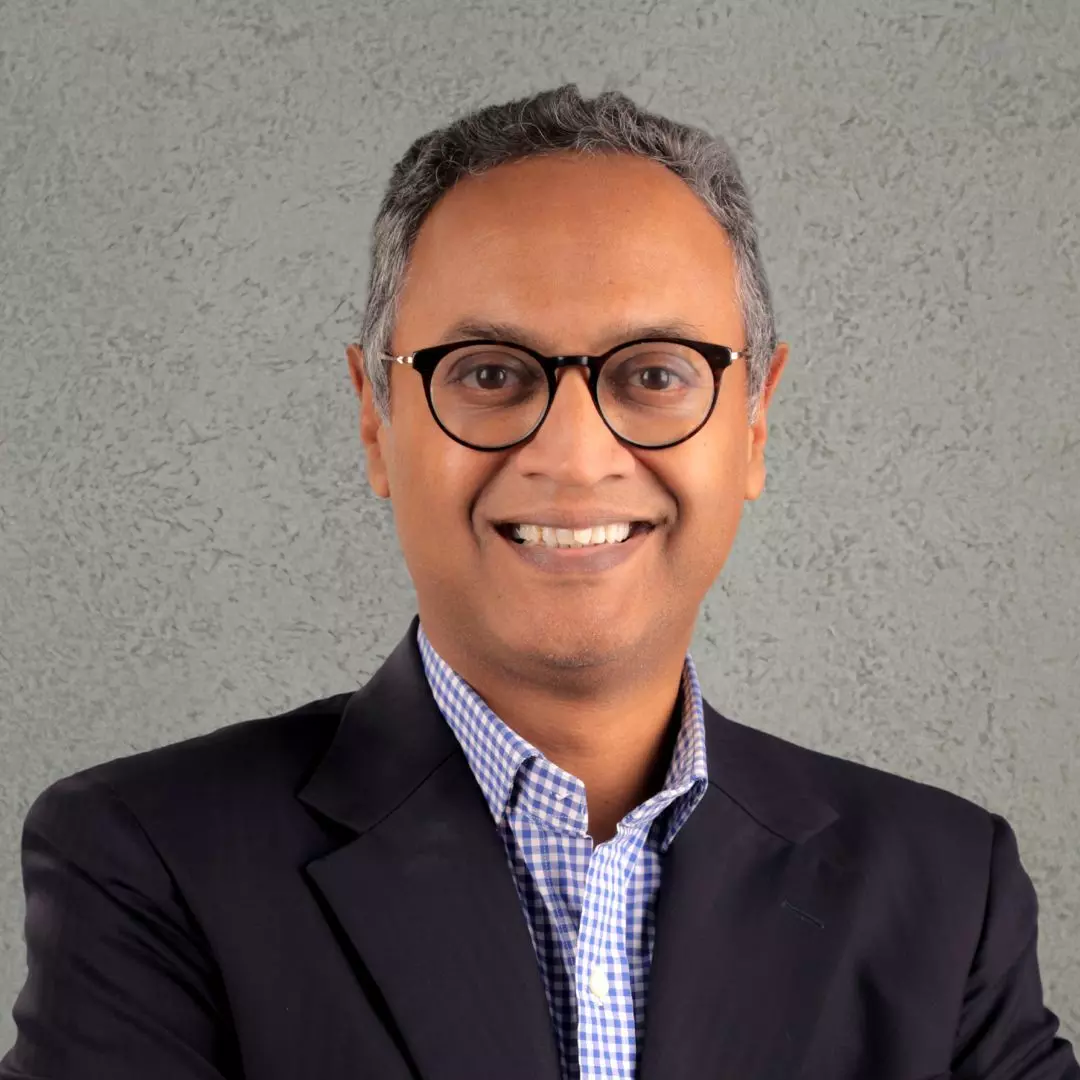
Speculation is running high on what kind of curbs will come on dollar outflows
On Episode 879 of The Core Report, financial journalist Govindraj Ethiraj talks to Abhishek Bisen, Head- Fixed Income at Kotak Mahindra AMC as well as Yashwant Deshmukh, Founder-Director of C-Voter.
SHOW NOTES
(00:00) Stories of the Day
(00:50) Could there be curbs on dollar outflows?
(06:01) The markets look up as the rupee hits fresh low
(06:56) US Treasury yields are in the danger zone, what the India impact could be?
(14:04) A leading economist says the Government is winning elections but losing the economy. A deep dive.
Check out our Live Earnings tracker: https://earnings.thecore.in/
—
NOTE: This transcript contains the host's monologue and includes interview transcripts by a machine. Human eyes have gone through the script but there might still be errors in some of the text, so please refer to the audio in case you need to clarify any part. If you want to get in touch regarding any feedback, you can drop us a message on feedback@thecore.in.
Good morning, it's Thursday the 21st of May and this is Govindraj Ethiraj broadcasting and streaming weekdays from Mumbai, India's financial capital.
Our top stories and themes…
Could there be curbs on dollar outflows?
The markets look up as the rupee hits a fresh low.
Consumers have cut down their average purchase occasions.
The U.S. treasury yields are in the danger zone. What the India impact could be?
And a leading economist says the government is waning elections but losing the economy. A deep dive.
Markets, The Rupee, Wall Street
Speculation is running high on what kind of curbs will come on dollar outflows. The most likely is some kind of curtailing of overseas direct investments by Indian entities, including companies, even as, presumably, work is on to bring in dollar deposits into India. Now the delay in doing one of the above or similar suggests either the plans are not going past the design board or that the planning has started much later than it should have.
The stock markets were steady but the rupee was not, falling to another record low as oil prices and global bond yields stayed high and the focus shifted to the prospect of interest rate hikes. The rupee went past its previous record low of Rs. 96.61 which was hit in the last session and ended the day at Rs.
96.82 but hit an all-time low of Rs. 96.96. That's almost Rs. 97 to the dollar.
So Rs. 100 to the dollar is now within sight. The currency has fallen over 6% since the began in late February.
The other currency that's been hitting record lows is the Indonesian rupiah. On Wednesday, the central bank there delivered a larger-than-expected interest rate increase to intensify its defence of the currency after it tumbled to successive record lows this month according to a Bloomberg report which added that Bank Indonesia raised the BI rate by 50 basis points to 5.25% on Wednesday which was the first such move since 2022. Could India head in that direction? Well, we don't know for now but do stand by for the discussion around bond yields and interest rates coming up.
On the last streets, the market swung through the day with the Nifty 50 finally ending up 41 points to 23,659. The Sensex was also on a positive run ending 117 points up to 75,318. Now, markets look to corporate performance for setting the tone and companies it appears have had a better fourth quarter than some may have expected.
Profit margins of companies in the fourth quarter that's of 25-26 reached its highest levels in about 21 quarters thanks to lower employee costs and a fall in interest payments according to a report in Business Standard. Savings from these more than offset the rise in costs of raw materials owing to higher prices of commodities. Combined net profits adjusted for exceptional gains and losses of 837 companies in sample were up 15.5% as against 9.5% year-on-year growth in their revenues including other income.
The data is as on May 15 and represents roughly 70% of listed companies financials. Oil prices lost more than 2% on Wednesday after US President Donald Trump said the Iran war would end very quickly though of course investors remain wary on where this could go in the near term. Brent crude were down $2.7 to $108.5 per barrel on Wednesday afternoon.
Meanwhile, as the street grapples with what artificial intelligence could do to Indian IT companies, global MNCs are figuring out how to run AI solutions from India as several top executives have been telling us in recent weeks. A Reuters report quoted a Daimler Truck senior executive saying AI is enabling Indian engineering hubs of global firms to quicken intellectual property generation and mitigate supply chain risks. The newly appointed head of Daimler Truck Innovation Centre India told Reuters that AI would further speed up innovation and engineering work.
Daimler Truck Centre in Bangalore works across the full vehicle life cycle including engineering concepts, simulation, software, connectivity, and analytics and is partnering with universities and training recruits internally to find the right talent. The challenge the company says is getting the specialised talent and of course the intensifying competition for it. Elsewhere, all eyes are on consumption trends indicative of demand in the economy.
One of the clearest behaviours this year is the decline in purchase occasions even as overall consumptions continue to go up. According to market research firm World Panel by Numerator, formerly Kantar, in its latest March 2026 FMCG average purchase occasions for FMCG have shortened to 156 trips from 158 in full year 24 and the same trend is visible across sectors. The report says the combination lower trip frequency alongside growing volumes points to the fact that shoppers are consolidating their shopping instead of buying less they're buying less often but more per trip.
Meanwhile, value momentum for the March quarter is intact says the report at 13.1 percent and volume growth has accelerated from 3.5 percent to 5.4 percent. The firm said that even if elevated crude price persists FMCG volume growth is likely to remain range bound at about four to four and a half percent as it expects select pricing actions to return frequency recovery to slow further and planned shopping behaviour to become more entrenched. Elsewhere, India's electricity demand hit a record high on Tuesday that's the 19th of May as high temperatures drove up the use of cooling appliances including air conditioners.
Peak demand touched a record 260.5 gigawatts during daytime on Tuesday and that went past the previous occasions of all-time highs including 256 gigawatts on 25th April.
How is RBI’s Interventions Affecting the Rupee?
The Reserve Bank's daily currency market intervention estimated at about a billion dollars is slowing but not halting the rupee slide with the currency hitting a string of record lows thanks to high oil prices and rising U.S. treasury yields according to a Reuters report on Wednesday. Bankers who spoke to Reuters said the Reserve Bank's daily dollar sales in the spot market could be between 800 million to 2 billion dollars in recent days based on USD-INR volumes.
Central Bank intervention they said has moderated the pace of losses rather than reverse them with a rupee on a nine-day slide and in breathing distance of 97 rupees per dollar for the first time. One banker said the intervention was in and out rather than continuous through the session and one economist said that based on her calculations from reserve money data the Reserve Bank sold about 5 billion dollars in the first week of May.
What does US treasuries being in the danger zone mean for India?
India's treasury bill yields surged at a weekly auction signalling fixed income traders are starting to price in potential interest rate hikes by the Central Bank according to a Bloomberg report.
Yield on the 364-day treasury bill was up 21 basis points to 5.97 percent on Wednesday the most in nearly four years according to Bloomberg data. Yields on 182-day T-bills were up 22 basis points and those on the shortest 10-hour T-bills were up over 18 basis points. One analyst told Bloomberg that the three-month T-bills are pricing in a 25 basis point rate hike.
Meanwhile US treasuries have entered a danger zone as rising long-term yields raise fears that sticky inflation and hawkish rate expectations could begin spilling over into equities and broader risk assets CNBC reported. The bank HSBC saying a sell-off in bonds intensified on Tuesday and pushed the 30-year treasury yield above 5.19 percent to its highest level since 2007 and the benchmark 10-year yield climbed towards 4.69 percent according to CNBC. I reached out to Abhishek Bissen senior vice president and fund manager of fixed income at Kotak Mahindra Mutual Fund and I began by asking him how he was seeing the statement that US treasuries had entered a danger zone.
INTERVIEW TRANSCRIPT
Abhishek Bisen: This headline is definitely a matter of concern. Now, global markets are linked with each other, typically with the root of currency and bond yields. Both are interlinked.
Let me try and explain it to you. When bond yields are hardening, typically the cost of borrowing for any consumer or business becomes expensive and it typically ends up leading to a slower and slower growth. And when things become abruptly very higher and in such kind of environment, it can have a difficult outcome at the same time.
U.S. being one of the largest economy in everything, starts from the U.S. Yields are already at a fairly high level and recently they surpassed 4.5 mark. And on the 30-year, it has surpassed 5% mark. It is said that when the 30-year bond yields grows higher than 5%, probably the possibility or the probability of recession increases.
As I explained it to you, higher bond yields mean higher cost of borrowing, lower business and definitely a lower growth, probably a recession.
Govindraj Ethiraj: So, I mean the other point that's been obviously raised is that at these levels, there is a significant inflation risk, which you also referred to. I mean, my first question in some ways again, how should we view this from India? I mean, does this affect us?
Are we insulated? And if so, why or if not, why?
Abhishek Bisen: So, definitely as you rightly said, key driver is inflation and the key driver for inflation is oil. So, given the oil prices, sudden spike because of supply shortage due to the war in the West and the closure of Strait of Hormuz, we were trading at around $60 to $70 a barrel in the international markets. And now we are trading at $110 a barrel.
So, which is a significant spike due to external factors. Definitely we are also paying the same price. The escalated price has to be paid, which will drain out our savings.
Inflation will go higher. Now, this high inflation has to be absorbed by somebody. Be it the government is not passing on the higher oil prices to the consumer, government will have to bear the losses.
If they pass it on to the consumer, the consumer will have to bear the losses in terms of higher cost of fuel will drain out their savings or their consumption. Both ways, it is going to have an impact on the economy. And given the magnitude of the spike, the impact is severe for now if it sustains for the remaining part of the year.
So, given we are in an uncertain time, the possibility or the probability is equal for now. So, markets are concerned and that is what is getting reflected in the bond yields.
Govindraj Ethiraj: Right. And how would you see this or how should fixed income investors see these developments, particularly of in the last few weeks?
Abhishek Bisen: At the face of it, it's a good time for the fixed income investors because investment means you have a particular investment objective in mind and you would not like to fulfil. Let's go three months back. These yields were significantly lower and you had the same objective.
If you have the same objective, still you are getting a bonanza and you should not think about that. Okay, I'm going to get at a cheaper price or a higher yield tomorrow and try and wait. If your objective is getting fulfilled by the level and by the investment horizon, you should definitely consider.
But you should be aware of the fact that given we are in such an uncertain and volatile times, you may see much higher levels tomorrow and much lower level at the same time. Should the things normalise, but everybody cannot wait for that moment and everybody cannot catch the peak. So my recommendation will be, you have to just follow your discipline and look at your investment objective.
If all things are meeting, definitely go for investments. But at this time, being little conservative for trading purposes or some short-term purposes also has some merit. Given such huge amount of volatility, keeping some powder dry also helps if you want to spread your bets over next three months.
Govindraj Ethiraj: Right, the other concern in global markets again, and maybe more on Wall Street than elsewhere, is the divergence between equity markets and bond markets. Do you have a sense on how this has played out in the past and whether the past has any lessons for the present?
Abhishek Bisen: So again, a very good and interesting question. This is leading towards AI and AI related stories are creating anomalies in the equity space. And it is also creating problems in the domestic or Indian equity space.
So AI story is actually some kind of crystal ball using everybody's trying to, no one has seen what exactly is going to happen. Nothing is in black and white. Results are not yet out, earnings are not yet there.
It is all estimation, right? So in such kind of circumstances, well, yes, momentum is against you. But there are veterans, there are people who've seen these things many times in the history.
They believe that this is probably going towards some kind of a bubble zone, and one has to be patient and wait and watch. We will get opportunities in such space. And this is creating problems in the world markets because people believe these are very attractive bets and pulling out money from the emerging market, especially India.
If you look at the Indian IT, et cetera, money is going towards these equations. And if these do not materialise in next over next six to 12 months, the same thing can reverse even more sharply. So while you can place your bets, but at the same time, you can wait and watch as well.
So these are the things which you should be very well aware of, and you should track the AI story, how it is emerging. Let these IPOs come, let these companies show their numbers for a few quarters. Then we will be able to take a call that these companies, which are much larger than the Indian economy itself, how well they are able to sustain their earnings and whether these stories are likely to see the light of the day.
Govindraj Ethiraj: Abhishek, thank you so much for joining me.
Abhishek Bisen: Thank you so much for having me on the show.
Is BJP doing well on the economy?
Economist Dr. Surjit Bhalla and former executive director IMF or the International Monetary Fund for India, Bangladesh, Bhutan and Sri Lanka wrote in the Indian Express on Wednesday that the BJP is winning the elections but losing the economy. He argued that the deeper danger of overwhelming political success was that it could encourage the belief that policy is already good enough. According to him, India still holds the advantages of stability, scale and global relevance and the present West Asian crisis is a perfect storm for economic reforms and argues that elections can deliver power but only policy can deliver prosperity.
Now this is of course a valid question for our audiences on whether the government is devoting sufficient energy to addressing the economic challenges of the day which are of course dire. I reached out to Yashwant Deshmukh founder director of polling agency C-Voter and also a frequent political commentator and I began by asking him how he read Dr. Bhalla's statement.
INTERVIEW TRANSCRIPT
Yashwant Deshmukh: Well, on his first part that, you know, he is winning elections, that is true, no doubt about that. And many people keep on asking me, when your MOT and another series are very clearly indicating economic distress across the board, close to 65 to 70% household have been saying that running the household has become difficult for the last few years, you know, unemployment remains the top of the block issue among the crisis in crisis mode. So how exactly, you know, his numbers are still high, and he's autumn.
So one easiest frame is to understand the vacuum on the other side, somehow, fortunately, for the opposition, Rahul Gandhi is just nowhere near in that one. And it is the one is to two kind of ratio between Modi and Rahul Gandhi and the Congress and the BJP won't share. Congress is about 20, BJP is 40, Rahul Gandhi is 25, Modi is 50, in the popularity and all that.
But going beyond that, very simple answer would be that in the last few years, we have been just jumping from one crisis to another, be it at a global crisis, be it a local crisis, you know, be it India, Pakistan, be it pandemic, be it current war situation. And we have seen in the ground to phase two of COVID, wave two of COVID, that globally speaking, all the strong leaders which were perceived to be strong, their ratings went up big time in the way. So basically, it's a human psychology that in a time of crisis, people like to stick to a strong leadership, which they perceive as a strong leadership.
So that is one reason, just to give a very small answer, where he is winning. He is winning, hands down, no doubt about that. And 2024, you know, when we discussed after the election results, and I had maintained at that point of time, this is more like an abrasion.
It's not a generalised phenomenon, it's more of a blip in the radar. So don't read too much into 24 number that 99 telly meant nothing, literally nothing in that way. You know, people started celebrating many of the people, you know, like it was 299, not 99.
So let's leave it there. But yeah, what you are saying is right. For many years now, we are watching the economic crisis or the perception on economic or reported economic crisis by the households in our tracker is way high is still Prime Minister Modi maintains his popularity rating and is electorally successful.
And we have seen after 24, the series of assembly election, their BJP has kind of steamrolled, you know, all the opposition, you know, in that way. So organisationally also very, very strong. The big question which you are asking is, whether that is the reason that he is postponing all the economic reforms, whether it is the reason that we are not looking at government doing a lot the way many people see, probably the economic policies are not really going the way they should go.
I see there is a partial truth. It's a kind of thing that there is partial truth in that that he's winning election, that is why you don't see much of the movement. It's business as usual.
One can also argue there is a sense of lethargy as far as the key decisions are concerned. I was discussing with a very close friends group, and they were very agitated why this coal liquidification programme wasn't pushed in the last 10 years. You know, why now?
Massification, yeah. Yeah, one of those things, you know, I can see merit into that. But having said that, one also has to look into the larger, broader picture of every leader.
I won't say government, you know, government is different, leader is different. I mean, you see big ticket reforms only when it is under pressure, or when a leader is very clear in what he's trying to do. I don't think that Modi's frame of mind is only limited to one or two structured reforms.
Somehow, as a person, as a leader, I also always feel like these kind of leaders always look into what kind of legacy they are going to leave. And two things which I believe now looking at his public interaction, and his overall visionary thing that I kind of tend to read, what this individual wants now, what does he really want to achieve? What is it that he is trying to do?
I genuinely believe that now he is going on two lines, almost like Indira Gandhi. The only actually comparable figure in Indian politics that you can compare Narendra Modi is with Indira Gandhi, honestly, there is no other comparable figure. So, Indira Gandhi had an economic policy of, you know, nationalisation, and that line of thing.
But with a solid social welfare thing in block, because that is delivering the votes.
Govindraj Ethiraj: But the current government is also exercising state control. Of course, it is. To that extent, they seem to be similar to Indira Gandhi rather than...
Yashwant Deshmukh: That's why I said there are quite a lot of similarities between the two. Only thing that times have changed, the global environment has changed. So, you have to just probably construct it in a different way how they are looking at.
So, one solid thing which you can be absolutely sure about is the national security, just like Indira Gandhi in the 70s when war and like everything. I think that's an unfinished agenda of Narendra Modi. The ideological thing of 370 done, Ram temple done, common civil code is kind of making its own way in the national game.
But one significant thing is the question of security, internal as well as external. So, question of Maoism and all that, that part is, you know, it has been dealt with. But Pakistan or China remains that one block of his mind, you know.
China, he has tried bending over backward to accommodate, full credit on that. He got betrayed, just like Nehru got betrayed. That's another thing.
But Pakistan, Operation Sindoor is still an unfinished business on both of the sides. Shekhar Gupta has written, you can expect within six months or maybe earlier, something stupid from Pakistan again, you know. I believe that that's an unfinished agenda of Modi's leadership, number one.
Number two is a big ticket economic reform, big ticket. I still believe because Narendra Modi's leadership globally, people love to, you know, move around the one single point of attrition is that in 2002 riots in Godhra. While his ascendance to Gujarat politics was not 2002 alone, it happened once, but it was vibrant Gujarat and the Gujarat model as we talk about.
So, he was focused on Gujarat model of economic development, you know. So, that tells you one thing very clearly. Business and economy is integral part of Narendra Modi's psyche or his headspace, whichever way you want to say.
It cannot be. Why it is getting delayed? Why it is on the backstore right now?
I mean, that is something which puzzles to me as well. I don't know about the timing and all that, but I see one very quick line of differentiation. He somehow is trying to promote the idea of entrepreneurship into the next generation, be it make in India, be it whichever way, you know.
I understand from a larger macro business perspective, many of the huge industry leader might not be able to very keen to understand that. But at micro level, the SME level, the mudra alone or the female entrepreneurship, he is just trying to inculcate that Gujarati mindset of doing business, where, you know, people are not looking for job, where in the North Hindi heartland, people are looking for job. So, I think these are two major things that is still in his legacy point.
For your big ticket economic reform, even I am puzzled that when he has the numbers now, he has the political capital within. Most importantly, he has something which many of our biggest leaders did not have, that is the trustworthiness to take a tough decision, even if it is a wrong decision, like demonetisation. People own a failure.
Can you imagine? That kind of political capital is not available to every other leader. So, his back rolling or going back on like agricultural reform for that matter, or many other things which you feel that he should have just enroled, I think somewhere it is not adding up.
Maybe one step forward, two step backward, he does not want to be seen as ruthless as probably Indrajit, for example, he is as ruthless as he was in taking decision. So, that is why the rollbacks happened. And that kind of confuses me as well.
Govindraj Ethiraj: Right. So, I guess what the business or any business leader or maybe even investors large and small would want to know as you look ahead, does this mean that since we will always be in an endless cycle of state elections, that the government will continue to be, let us say, distracted or I mean, distracted from an economic standpoint, or that basically this is as far as we will go in terms of pace of change and therefore not to expect too much, because that is the other interpretation that people come to in retrospect that you know, India only moves at a certain pace, and it could be the result of all of this. So, and really, maybe we should not therefore expect more and tough decisions from this government, because that's really what this is all about.
Yashwant Deshmukh: He is probably not encashing his political capital in taking tough decisions. That's a odd thing at this point of time, what I would like to say. Also keeping in mind that he is the guy who is saying for one nation, one election so that he's done with the elections.
It also tells you people analyse it, oh, he wants to do it one nation so that he can sweep everywhere. No, he is in any case sweeping. He doesn't need your one election to sweep the electorate.
Please try to understand. You know, it's a contradictory logic in that way. He is in any case sweeping.
He won West Bengal for that matter, God damn it. I mean, what else you can expect of a leader to make his party win? So, I think somewhere he is also having this fatigue of constant electioneering, because that's the logic he has been giving that you know, that's the logic that he has been giving, not the opposition.
So, it does stick in his mind. Somewhere it is restlessness, I can see of sorts. But at the same time, one crisis after the other is also making him extra cautious, maybe in taking a decision because we really don't know.
I mean, this West Asian crisis is out of the blue. We were like actually expecting this is going to derail everything. Now, at this point of time, how can you expect anybody to take a big ticket reform decision, where your 99% of calculation is purely depending on how much oil you're getting So, basically, that is also creating trouble.
And I'm not giving this as I'm just trying to understand the psyche of a person, what exactly he must be thinking, and how much can he do with this much of political capital, you know, he could do a lot, and no doubt about that. But still, one crisis to the another, I don't know. But you can expect him if it comes to it, that if he feels that this is what is going to define my legacy, he is the kind of person who probably will take a decision to define his legacy.
But I think he is still not in a goodbye mode. Sometimes people take very harsh decisions and very classical decisions and they are in goodbye mode. That okay, you know, decision at least 10-20 years down the line, people will be thanking, you know, that kind of thing.
Govindraj Ethiraj: What's an example of that from the past?
Yashwant Deshmukh: Of course, PVNR was the guy who got Manmohan Singh done. But at the same time, while that was happening, he was very clear somehow, those who knew him and around him, he was very clear that opening the economy is not going to be politically beneficial to him. He knew it.
Still, he carried that. Okay, because there was no other option but to go ahead with that. And he knew he was not going to come back.
Forget about the election and campaign. But those who were around him, they knew it very well that deep inside he had shared that I'm not going to come back. Sometimes that happens that you take a big ticket assignment because okay, this is it and you know, let it be.
This has to be done. It has to be done. I do not think that Modi is hanging the boots anytime in near future.
He still sees that five to seven years or maybe more, I don't know, whatever thing, but there is a political capital for him to sustain in the electoral politics. So that is where probably in his roadmap, these decisions have been kind of pushed a bit further in the planning cycle. And he's just trying to deal with the crisis.
That's how I feel. Not many of his detractors actually agree on that one because I do talk to them a lot. You know, just like you do a lot of talking and try to understand there is a sense of significant pessimism creeping in among big number of business people.
I see it. Somehow there is also a bipolarization of sorts. You deal with them every day.
So you will realise that when you are talking off the camera to them, there are two kinds of reactions. One is like, everything is going to fine. And one is like, everything is doomed.
So the political echo chamber, which we used to see in social media, somehow surprisingly, I see in the business decision makers sphere as well. Either everything is doomed or everything is fine kind of thing. There is no midway.
And that's not a very good scenario, I would say. Something has to be done. That's something, what exactly is that something I cannot really pinpoint.
What I can pinpoint is the gap between what the business side of India is saying. And by the way, one interesting thing. For many years, if you look into our mood of the nation for a day-to-day tracker, overwhelming majority of the public is saying this government is only working for the big businesses.
You know, see, it's a liability. If you look into that, this kind of perception is an electoral liability. But still, he's overcoming that.
So if the perception is that Modi works for the big business houses, you know, his policies are benefiting the big rather than the common man. Something is amiss here. You know, business people are unhappy, public is saying that they are working.
So if you are still working for the businesses houses, then why the business people are unhappy? Something is not adding up in that entire thing, because that something is crisis after crisis, which forks up the mind, which disorients in that way. We just recently, last week, we did a snap poll on the austerity measures that Prime Minister asked for.
So it was interesting to see that a significant chunk of 45 plus, 55 plus, 65 plus was in sync with what Prime Minister was saying. But a significant chunk of 18 to 35 age group was not taking it seriously. They were looking at a political angle in that way.
35 to 45 age group was 50-50. So there is a disconnect as far as the younger voter is concerned. Now, again, that is an electoral liability, if you will ask me, because the bigger chunk of votes are from that 18 to 35 chunk.
So there is something which is not in sync.
Govindraj Ethiraj: You're saying younger people are indifferent? Or are you saying that they are more attuned?
Yashwant Deshmukh: There is anxiety, large scale anxiety about what's happening in West Asia and how it is going to impact on me. But the political messaging side of it, you know, the way people used to take Prime Minister saying something and, you know, and the gravity of the situation in address to the nation, the gravity of that thing goes up and up and sincerity goes up with the age. But the younger side of the lot is not finding the appeal or not finding the situation.
They are not appreciating it in that way. They are looking at it more of a political jingoism, political play at work rather than something serious, which is hurting the Indian economy or they should be worried about. So there is a definitely disconnect in communication now that is happening.
Now, that is a major chunk of the voter. Now, again, people ask me, you are saying contradictory things. Well, it is the big chunk, they are disconnected.
So you have to always keep in mind democracy is all about the viable alternatives. If there is alternative is a vacuum, then you are going to go back by default to what is there. So that is one thing.
You know, Govind, I genuinely believe that for good or the worse, I am not going for that whichever way, I think Modi has a lot of political capital, trustworthiness to take hard decisions. Somehow that decision making we are not looking at what people are expecting this way or that way, whatever it is, some of the key elements will come in, but at which time and which crisis he is taking on priority, that is something for as an individual leader for him to decide. We can only speculate all of us, you know, on what he is thinking and what is going behind his mind.
Govindraj Ethiraj: Yashwant, it's been a pleasure. Thank you so much for joining me.
Yashwant Deshmukh: Always a pleasure, Govind. Thank you for having me.


