



 Newsletter
 Search
Markets Brace Once Again for a Fall
- Podcasts
- Published on 29 May 2026 6:00 AM IST
It's now 3 months of the West Asia conflict started by the US and Israel after they attacked Iran
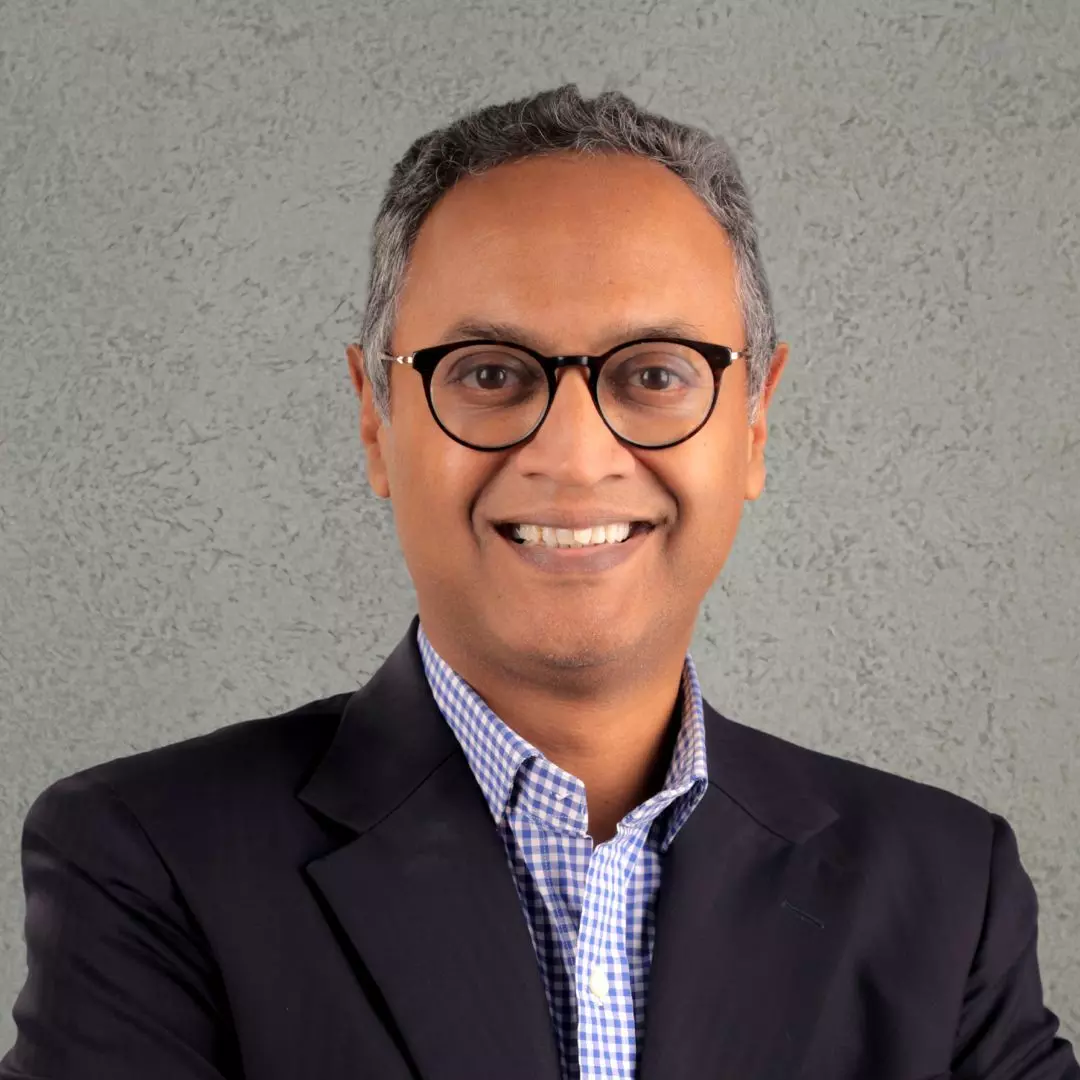
On Episode 887 of The Core Report, financial journalist Govindraj Ethiraj talks to Ajay Rotti, Founder and CEO at Tax Compaas as well as Moses Kemibaro, Founder & CEO at Dotsavvy.
SHOW NOTES
(00:00) Stories of the Day
(01:24) With no end in sight to the was in West Asia, markets brace once again for a fall
(05:50) Air India, Indigo to cut back flights in June and July
(07:29) Will the Government cut capital gains taxes for foreign portfolio investors?
(16:53) US airlines are stepping up their India presence but not for flights
(17:40) Lessons from Kenya’s experiment with satellite internet
Register for our event on Tuesday, 2nd June "Navigating Market Risk 2026 Part II"
Check out our Live Earnings tracker: https://earnings.thecore.in/
—
NOTE: This transcript contains the host's monologue and includes interview transcripts by a machine. Human eyes have gone through the script but there might still be errors in some of the text, so please refer to the audio in case you need to clarify any part. If you want to get in touch regarding any feedback, you can drop us a message on feedback@thecore.in.
Good morning, it's Friday the 29th of May and this is Govindraj Ethiraj broadcasting and streaming weekdays from Mumbai, India's financial capital, but in transit right now.
Our top stories and themes…
The war has now run for a full three months with no end in sight as markets brace once again for a fall.
Will the government cut capital gains taxes for foreign portfolio investors and what's at stake?
Air India Indigo took cutback flights in June and July.
US airlines are stepping up their India presence but not for flights
And lessons from Kenya's experiment with satellite internet.
Markets, The War, AI and the Weather
It's now three full months of the West Asia conflict started by the US and Israel after they attacked Iran. Is this a forever war already? Well, not yet presumably, but it's surely inching towards that.
Meanwhile, the $100 mark for a barrel of oil is what we are watching closely given that prices are presently lower but could edge up once again. As we discussed on Wednesday, the truce is fracturing at several places and it will take considerable effort once again to bring it back to a reasonable start point. Which of course brings us to our original thought that we've showcased here, which is that there is no point celebrating or even mildly cheering any development in the Iran-US stocks until there are tangible outcomes.
In India, markets were shut on Thursday, but the GIFT 50 index futures tumbled over 300 points, indicating a gap down opening for Indian markets today. So that's about 1.3% at that point. So you can watch to see how the markets react on Friday, unless of course there are some positive developments early Friday morning.
Meanwhile, Reuters reports citing US officials said American forces intercepted and shot down several Iranian drones that were considered a potential threat. So looking at it from here, both sides are essentially firing missiles of some form or the other at each other. Crude oil prices were higher on Thursday.
Brent crude was up close to 3% at $97.09 per barrel. So it's still under $100 per barrel. And equities, Indian stocks are set for their first annual decline in more than a decade according to a Reuters poll of equity analysts and benchmark equity indices are underperforming most peers with investors outside India selling more than $23 billion of their holdings in 2026, which is more than all of last year's record outflows.
The GIFT 50 is already down about 8.5% while it was forecast to rise only around 8.7% by end 2026. This poll was conducted between the 15th and the 27th of May and comprised about 24 analysts. If realised, the report says the annual decline of about 0.5% would be its first yearly loss since 2015.
Society general equity strategist speaking to Reuters said that everyone wants returns at the end of the day, whether it's foreigners or domestic investors, nobody wants to park their money for fun. But the returns are not there. Earnings growth is almost negligible to very low.
AI is where the flavour of the town is right now. And this is where India, not just we lack it, we're actually on the wrong side, according to that analyst. Of course, we did mention on Wednesday that the nifty mid-cap index is at a record high.
So somewhere in the market, there is movement and upwards, even if the benchmarks are not fully reflecting that. Elsewhere, gold prices fell to a two-month low on Wednesday, thanks to expectations of tighter monetary policy to fight rising inflation, even as the war continues. Spot gold was at about $4,447 per ounce on Thursday afternoon.
And finally, the chip rally is at $5.7 trillion and counting. How much further can it go? Asks the Wall Street Journal. Even by the standards of the AI boom, the gains have been extraordinary.
The report says SanDisk has gone up 570%. Intel has more than tripled. Samsung, Micron and SK hynix have all entered the club of $1 trillion companies.
Advanced micro devices now has a higher valuation than JP Morgan Chase. The Wall Street Journal report says investor enthusiasm for the building blocks of artificial intelligence helped pull the stock market out of its Iran war slump, while raising worries that a surge of this dramatic size and scale must end sometime. We will have more interesting views on the AI boom, but as viewed by fund managers in the United States.
So watch out for that over the weekend. Elsewhere in climate, average global temperatures are forecast to reach near record levels in the next five years, with Arctic temperatures expected to warm faster than other regions, according to a report by the UN Weather Agency and the UK's Met Office on Thursday. A research scientist at the UK Met Office told Reuters, there is very clear evidence that the climate is warming and the global average temperature is continuing to rise.
Rising temperatures affect businesses directly, including sectors like construction, which will and would be severely hit in countries like India, as we're already seeing this summer. Businesses, including those marshalling gig workers, would be wise to prepare for these times of extreme weather, as must consumers.
How are Indian Airlines having to adjust due to the War?
Meanwhile, the impact of high energy prices is spreading.
Indigo and Air India, the country's largest airlines, have cut their planned domestic flights for June and July, according to a Reuters report. Jet fuel costs have jumped sharply, as we know, and Indigo has reportedly cut about 7 to 10 percent of their flights, and Air India has cut 22 percent for the next two months. Indigo is a bigger airline, so presumably the numbers may end up being close.
An Air India spokesperson told Reuters, the airline would continue to monitor demand and operating conditions closely, with a view to restoring frequencies as conditions stabilise. Passengers affected by the changes would be offered places on alternative flights, complementary date changes, and full or full refunds. Air India has already cut back on international routes, and this is something that's created more opportunity for foreign airlines to add more flights.
Indigo has also cut long-haul flights prior to the war, citing operational constraints and airport congestion. Unlike international carriers, India's airlines cannot overfly Pakistan because of a ban in Pakistan's airspace. And interestingly, Air India Express, part of the Air India group, has just announced a large promotional campaign, offering about 5 million seats under its new express sale, with discounts of up to 50 percent across domestic and international routes.
The sale has already opened and will be up till about May 31st for travel between June 15th and October 10th. Now, of course, it's interesting to see whether the cutbacks will affect any of these flights, but as many aviation entrepreneurs have pointed out in the past, including to me, advance fares are a good way of building positive cash flow for the airline, and for the passengers, of course, these are good deals.
Will the Government Cut Capital Gains Taxes for Foreign Portfolio Investors?
Is the government at all considering a reduction or doing away with capital gains on sale of shares by foreign portfolio investors? Now, the clamour for this has obviously been rising even as the markets have fallen and the rupee has depreciated sharply, and foreign portfolio investors have pulled out close to 50 billion dollars in the last 18 months alone.
Any changes in the Income Tax Act to mollify foreign portfolio investors would, of course, mean an admission that the tax was too onerous to start with, and also that India is not in a bargaining position right now. Be that as it may, there are other tax issues that investors are concerned with, and they are not always to do with the rate of tax. I spoke with Ajay Roti, founder and CEO of Tax Compaas in Bangalore, and also tax expert, and I began by asking him how he was seeing the prospects of a tax cut.
INTERVIEW TRANSCRIPT
Ajay Rotti: So, going like with most tax policy decisions, there are always pros and cons. There are always certain benefits of having tax on FIIs and there will be certain benefits of not having taxes on FIIs. Now, some countries may be doing it, having a zero tax for reasons well known to them.
We had zero tax for a point of time because we needed foreign capital at that point. Domestic capital was not what it is today and we didn't have an equity market which was as buoyant as it is today, as good as it is today. So, we did have it for zero for a particular point of time.
Now, whether it has to be zero, whether 10 is good, 12 and a half is good, 20 is good, it's really a policy decision. Now, if we want to argue there are equal merits on both sides of this debate, it boils down to what the government is wanting, where this is fitting into their other decisions and what they are wanting to do. So, does it make India a little less attractive with a tax?
Yeah, post-tax and pre-tax differences in terms of returns always are important. But is this the only reason that's holding back a capital or the FIIs are selling and taking money out? My personal reason, I don't think it's obvious.
This is only the reason. So, this is a debate which we can sort of have for a long time and we need to see what is it that we have to do here and now. In my view, at this point, we are able to sustain without foreign capital.
Our domestic capital, SIPs, BIIs are doing a fantastic job. There's good money that's been raised there. Are we as stout for capital as we were many years back when we needed to make it zero?
I don't think so.
Govindraj Ethiraj: So, one of the arguments is that this kind of tax which is levied because after all these investors are being taxed in their home country, one of the arguments is that this in a way goes against the convention of tax for portfolio investors and such a tax does not exist in most other parts of the world. What do you feel on that?
Ajay Rotti: That's slightly a complex question and it's a little technical but I'll try to simplify it as much as possible. You know, FIIs are not taxed in a simple manner in most countries. You know, there could be sometimes single-stage taxation.
They could be passed through which really means it gets taxed in the hands of the ultimate investors and not FII itself etc. Therefore, sometimes if they are getting taxed in two jurisdictions, whether foreign tax credit is available etc. becomes difficult.
But principally, they may not suffer double taxation in most cases. There will be treaties and things like that. But there could be inefficiency, there could be tax inefficiency that will be there.
Does it go against how it's done in all other countries? No, there are countries which I can give you examples where FIIs are taxed or foreign investors are taxed. Forget FIIs.
US, for example, doesn't tax. Singapore doesn't tax. So, there are countries which don't tax.
This takes me back to the earlier point. It's really about there's no right or wrong. It's what we want to be doing at this point of time.
For every country that we have an example of not taxing foreign investors, there could be one which is taxing. Now, these could be two different countries at different stages of their life and for different purposes, they may be doing it. But yeah, of the larger countries which matter, most of them don't tax.
Govindraj Ethiraj: Okay. So, let me ask the other question. So, yes, tax is only one aspect of why investors come in or go out.
And obviously, a lot of flows have happened when these tax rates were there. Now, but what are the other tax-related interventions in a broader sense, not just Section 210, that India could look at to make, let's say, inbound investment easier and outbound investment or outbound flows more seamless?
Ajay Rotti: I think that is the most important thing going in my view. It's not just about the tax, it's about everything else around that. Now, the biggest pain that every foreign investor has with India today is our whole litigation, tax litigation, tax administration, how returns are scrutinised, companies are fighting huge tax battles.
It need not only be the investor, it could be the investing company. They're stuck in a large dispute, exits become difficult, there has to be lock-ins, escrows, indemnities, multiple things. I think addressing our whole tax litigation, tax administration approach to scrutiny is one of the biggest things that any investor would want.
Specific to FII is this whole tiger global ruling, which really outdoes a lot of the principles about foreign investors coming in from certain treaties, which enjoyed a beneficial treatment, which they no longer do. But that has sort of, again, troubled them a bit. Some clarity there, some stability there.
Of course, the government has not been making large retrospective amendments, some small tweaks for administrative purposes they have done, but not really large things like the old retro-tax that troubled. But more on your own stability on the tax matters, administration, litigation, issues like withholding while monies are being remitted, the timelines for that. I think a little bit focus on these kind of things.
It's not only about the headline tax, right? There's lower litigation helps and then stability helps. The government could look at other things like selective benefits to tax and we'll get there, but select players, stable capital, long-term capital, giving a different treatment.
These are the kind of things that they can think of rather than straight away, we get to abolishing or taking away the tax or making it zero. I really don't think making it zero and having the kind of litigation environment that we have today will help again. Other things on tax matters being addressed is equally important in my view.
Govindraj Ethiraj: Can you elaborate on that when you say that making it zero and not doing something else?
Ajay Rotti: You make it zero, but then there's still this kind of aggressive tax administration, litigation for everything. Then you have the same problem, right? Because the companies in which you are investing is actually going through these tax litigation issues.
Therefore, there's an impact on the valuation. There's an impact on your exits. I personally know funds which have not been able to have a good exit, clean exit, because there's a huge tax litigation that's there, which can't be closed.
Therefore, who will take the past litigation burden? Therefore, there's money that's locked in. These kind of things, when they want to transfer shares, past litigations impact them.
That's the big problem.
Govindraj Ethiraj: When you say companies are unable to sell and you're talking about really primary market, in the sense they're locked into as private equity or venture capital.
Ajay Rotti: I'm not talking purely only on the public market, but the larger class of foreign investors coming into India.
Govindraj Ethiraj: The Mauritius route, for example, was most likely created because we did need capital or we were hungry for capital at that time. It was a route that was accepted by all. It was not that Mauritius was a big source of original investment and so on.
It was obviously being routed, so we knew that. My question is, obviously times change and our need for capital may change, our policies may change. What is the one or two things we can do to manage the transition better, even as we introduce policies back and forth?
Ajay Rotti: On managing the policies better, I think one is this whole thing of past positions. You go and unsettle them. If you've admitted and if everybody knows that the Mauritius route was being used for that, then you've already plugged it.
You've revised the treaty, you've renegotiated the treaty, you brought them into tax. Same with Singapore. Then you want to go back and unravel all of those things, question those things to say, yes, you didn't have a substance.
You amended the treaty because you always knew people were coming in without substance. This whole thing of unsettling past positions, once you have accepted, moved on, going back and changing and questioning that. And why that happens is again, because of the way our tax administration litigation functions.
Things happen two years later, it goes into a stay and then it gets revived again. There's some other decision. So there is no certainty for a long period of time.
So one way of doing that transition is to say, we are changing here and now, therefore I will do a prospective thing for you. Whatever was retrospective in that sense, I truly grandfathered it. Today we have a situation where you actually grandfathered it in the law, but you are actually questioning the grandfathering in the courts.
So therefore you grandfather it in letter and spirit and don't touch those old positions because you always knew that was an issue, like you rightly said, Bhuvan. So that's one bit on the transition. And second is really lay out some of these things.
When you are transitioning, what is it that you're looking for? Give guidance to the taxpayers. I think that a little more communication, more statement of their position as to why they have done and what is the thing that for the past, for future, what are the things that is expected?
Those are things that will help in a very smooth transition when you make these changes because change will happen, but then how do you do it?
Govindraj Ethiraj: Got it. Ajay, thank you so much for joining me.
Ajay Rotti: Thank you, Govind.
Why are U.S. airlines are ramping up their presence in India?
U.S. airlines are ramping up their presence in India. It's not off flights. U.S. carrier American Airlines, which has a daily service to New Delhi from New York, is going to double headcount at its India technology hub to about 800 by early next year, according to a Reuters report.
Meanwhile, Southwest Airlines has also said it's going to expand its GCC to about 1,000 employees over the next few years. Several global American companies like JPMorgan Chase, Walmart, McDonald's, NVIDIA, and L.I.LiLi have already expanded technology operations, as the Reuters report points out. American Airlines set up in Hyderabad two years ago employs about 400 people focused on software engineering, AI, and cybersecurity.
How can Starlink’s entry to India affect local operators?
The Meghalaya government has signed an agreement with Elon Musk's Starlink India to improve connectivity in remote and inaccessible areas in the state, according to a report in the India Today magazine last month. The agreement suggests that Starlink services could arrive soon in India, as the company has already received the necessary approvals or most approvals from the government. Now, Meghalaya is a hilly state and faces unreliable internet connectivity due to its unique topography.
However, Starlink's rollout of satellite internet services is still pending as the telecom regulator, that's the Telecom Regulatory Authority of India, or TRAI, is yet to finalise spectrum pricing for satellite internet and spectrum allocation by the Department of Telecommunication. So, even as we wait for that, how will Starlink do versus other services already in India, particularly the terrestrial kind? Last month, Moses Kemibaro, Nairobi-based digital entrepreneur and founder and CEO of Dotsavvy, wrote a piece saying that three years ago Starlink was going to disrupt Kenya's internet market, but things did not go as planned. Quoting federal data, Kemibaro says Starlink has only about 0.9% of Kenya's total fixed internet subscriptions today, and thus the much-hyped and expected Kenya internet market disruption quite simply never happened, at least not as expected, he says.
The reason, he says, is that the incumbents, perhaps alarmed by the Starlink threat, responded aggressively, faster speeds, better pricing, and broader coverage. Interestingly, he says, Kenya's fixed internet market grew an impressive 85% in two years, and in a nutshell, consumers won, and the competitive pressure that Starlink brought to Kenya's internet market was a good thing for everyone. And Starlink also grew, particularly in more rural areas and remote businesses, also being a likely target market in India.
Of course, in India, Airtel and Reliance Jio are also set to launch satellite internet networks, assuming all clearances come through. But right now, the red carpet is laid out or has been laid out for Starlink and Elon Musk. Kemibaro also says last month, Airtel Africa and SpaceX tested Starlink direct-to-sell in Kenya, standard 4G phones connected to satellites in dead zones with no dish, no hardware, and even completed Airtel money transactions.
I reached out to Moses in Nairobi, Kenya, and I began by asking him how he was seeing Starlink and satellite internet advances in his country and what we could take away.
INTERVIEW TRANSCRIPT
Moses Kemibaro: First of all, I was one of the very first people in the country to have a Starlink unit. It wasn't actually mine, it was given to me by one of the local internet service providers to review, because they were looking at it as sort of as a backup option for some of their customers. And immediately one of the challenges that I faced was something called obstructions, where if you're in an area where there are a lot of trees, a lot of buildings, and you don't get a clear line to the satellite, it becomes quite compromised in terms of the quality of the speed and of course the reliability of the connection.
So just environmental factors right there sometimes can be a challenge in an urban style setting. But more importantly, I got this service, I tried it out, I was generally quite disappointed initially. And as you can imagine, at that point in time, you know, everyone's been on the internet, you know, there's a lot of hype around, you know, mask, you know, three years ago and Starlink.
And there was this expectation that when Starlink comes to Kenya, it's going to transform the market, right? And of course, it's because many of us have what I call fairly lacklustre internet experiences quite often with our service providers for various reasons, but people saw that this is going to be the one that changes everything for them. As it turned out, you know, when Starlink came in, one of the biggest concerns was the price, because in order to get the unit, the terminal and get it up and running and then the monthly subscription, you know, you are going to need, I think, at least something close to $1,000.
You needed to spend a subscription that was significantly higher than what many of the providers in most urban locations would provide. So the economics didn't seem to make sense, but people were generally excited. And certainly of the early people who signed up and got it working properly, even in urban environments, because you just have to mount it properly, et cetera, were actually celebrating the fact that you're not getting this 100 megabits per second connectivity.
It's fast, it's doing the job as it were. And although the price was quite prohibitive for many people, many people actually saw the benefits of that, not just in rural parts of the country, but also in the cities. But you've got to remember that there's providers in Kenya with millions of customers, millions of subscribers, you know, whether it's largest mobile networks or the largest fixed home internet, fixed fibre to the business, fibre to the home connectivity, many of them on the ground.
And I think what happened is that when the hype started to build up, many of the incumbents sort of fought back by offering faster internet connectivity at more or less the same prices or even lower prices. And that sort of changed the complexion of the internet service space because suddenly it felt much more accessible. They started innovating in what they were selling in the marketplace.
And to a large extent, I think they probably overreacted to the Starlink sort of threat. And the reason I say this is because if you look at Starlink and its satellite technology, it does not have the ability or the capacity to handle what a fibre-based internet service provider can do on the ground, not just in terms of speed, but just in terms of serving customers. And in fact, when the demand exceeded supply, so to speak, Starlink actually stopped selling their services in Kenya at some point as they built up the base stations that allow you to then have more capacity.
So there were some what I'd call technical constraints that also limited their growth. But I always held the opinion that Starlink was always going to be a peripheral player, that they were going to be in those areas where adequate internet infrastructure is lacking, in which there are many parts in Kenya where that is still the case. But in any sort of typical urban, peri-urban situation today, if you're not able to get high quality mobile database, 4G, 5G, which has significant coverage around the country right now, then that is when you would probably use a Starlink.
And if there's no fibre, you might get a wireless through some of the other internet service providers that specialise in underserved areas, but for sure not as fast as what Starlink is. So to some extent, it was a boon because it meant that we got lower price internet from the incumbents. They also started covering the grey areas.
There's still corporates even in Nairobi that use Starlink and other cities and towns in the country as sort of a backup internet connectivity for redundancy. And I think it's just sort of added to something that was already there, but it didn't transform the market per se. But for those who were in areas where generally internet was hard to get, it became a game changer.
Govindraj Ethiraj: I think that sentence you used in one of your posts was that it did not disrupt Kenya's internet market, it transformed it.
Moses Kemibaro: Yes. Like I said, the players overreacted, I think, because they were really panicking that this had the real potential to take a big share of the market. But even as we speak, I think Starlink has only 25,000 subscriptions or something to that order, less than 30,000.
You have suppliers like Safaricom, who across their subscriber base, I think is over 35 million users of which inherently each one of them has internet access. Albeit the problem is you're using data bundles, which can be very costly. You have service providers like Mawingu, where I think for 1,000, 1,500 shillings in Kenya, you have at least 10 megabits per second or something of that sort per month, which is not the fastest, but for most use cases, perfectly adequate.
And I think those underserved markets really will never use a Starlink. The more altruistic classes and the business class were the ones who would actually use it, as well as the non-profits, the schools in the rural areas, non-profit organisations, tourism businesses, who are generally off the radar when it comes to internet collectivity.
Govindraj Ethiraj: Right. And there too, you're saying that in most cases, it's a backup rather than the primary source of connectivity.
Moses Kemibaro: Yeah. Because today even Fiverr, you can get gigabit internet in Kenya now, and even home level, it does cost a bit of a premium. But if speed is really your concern, and you are using it for gaming or applications that require high speed, maybe online trading and so forth, then I'd say the incumbents are there.
But the moment you've got to go beyond the peri-urban parts of the country, and you start getting into rural, then it becomes a game changer.
Govindraj Ethiraj: And Airtel Africa has also partnered with Starlink to launch this service, and do they have other services as well in Kenya?
Moses Kemibaro: Well, what we've seen with Airtel, I think it was just last month or the month before that, they ran a test so that you could use your 4G device, standard 4G smartphone to actually connect to the satellite link. And you'd be able to make phone calls and also do texting and some limited data capabilities. I do not see Airtel actually partnering with Starlink to sell the internet per se.
But where they are, I think partnering, it's more of a scenario where they might have an existing client, possibly on a corporate or enterprise level connectivity, and then Starlink becomes this additional redundancy that they put into the network mix. That's how I see them actually deploying it.
Govindraj Ethiraj: And what's your sense as you look ahead, Moses, in terms of the kind of consumption patterns in Kenya, what people are using the internet most for, what are their kind of demands or needs, and which, let's say, blend of services do you think will best meet it, at least in the near future?
Moses Kemibaro: One thing I've got to say is that the biggest game changer that came to internet in this country and many other countries globally is obviously COVID, right? Suddenly, internet moved from being something that was nice to have for many people, many people didn't even have fibre to the home, just using phones and that sort of thing. It became a necessity because then, you know, that's the only way your children could do it, that's the only way you could work from home, that's the only way you could watch movies, that's how you get on social media.
And I think really that acceleration that happened because of COVID in terms of connectivity, you know, many, many homes, businesses, and people who traditionally were not online were suddenly there. I mean, even court cases to date and things like this I heard, you know, done virtually on platforms like Zoom. So that transformation was instructive in the sense that it just changed our notion of what the internet was and what you could use it for.
And then by extension, we sort of saw a surge in e-commerce, we saw a surge in online education, we saw a surge from working from home. Many of us are still working from home most of the time, you see? So when you think about use cases, that's what I'm talking about.
I know people who never moved back to Nairobi when they moved to coastal towns and did all sorts of experiments because they wanted a new lifestyle that COVID, you know, opened up for them. And I think in that sense, internet became much more central, much more endemic to the lifestyles and the work styles of people in Kenya in general. And now I'd say it's like oxygen, right?
Everyone, everywhere has an internet connection at every level of society. And you'll find that they're using it from everything to filing their taxes, which is coming up next month, to making sure their kids can attend school. So today, most of us are working from home because there's a strike.
But I can tell you it's business as usual because of the internet. You know, there's a transport strike because of the sharp increase in fuel prices. But no one is panicking because everyone knows they have the internet and they can work from home.
Govindraj Ethiraj: That's a good note to end on, Moses. Thank you so much for joining me.
Moses Kemibaro: Well, thank you for having me and all the best.


