



 Newsletter
 Search
Markets Are Still Optimistic
- Podcasts
- Published on 10 April 2026 6:00 AM IST
Tensions are running high because analysts are expressing concern that this ceasefire may only be used by the US to change tactics
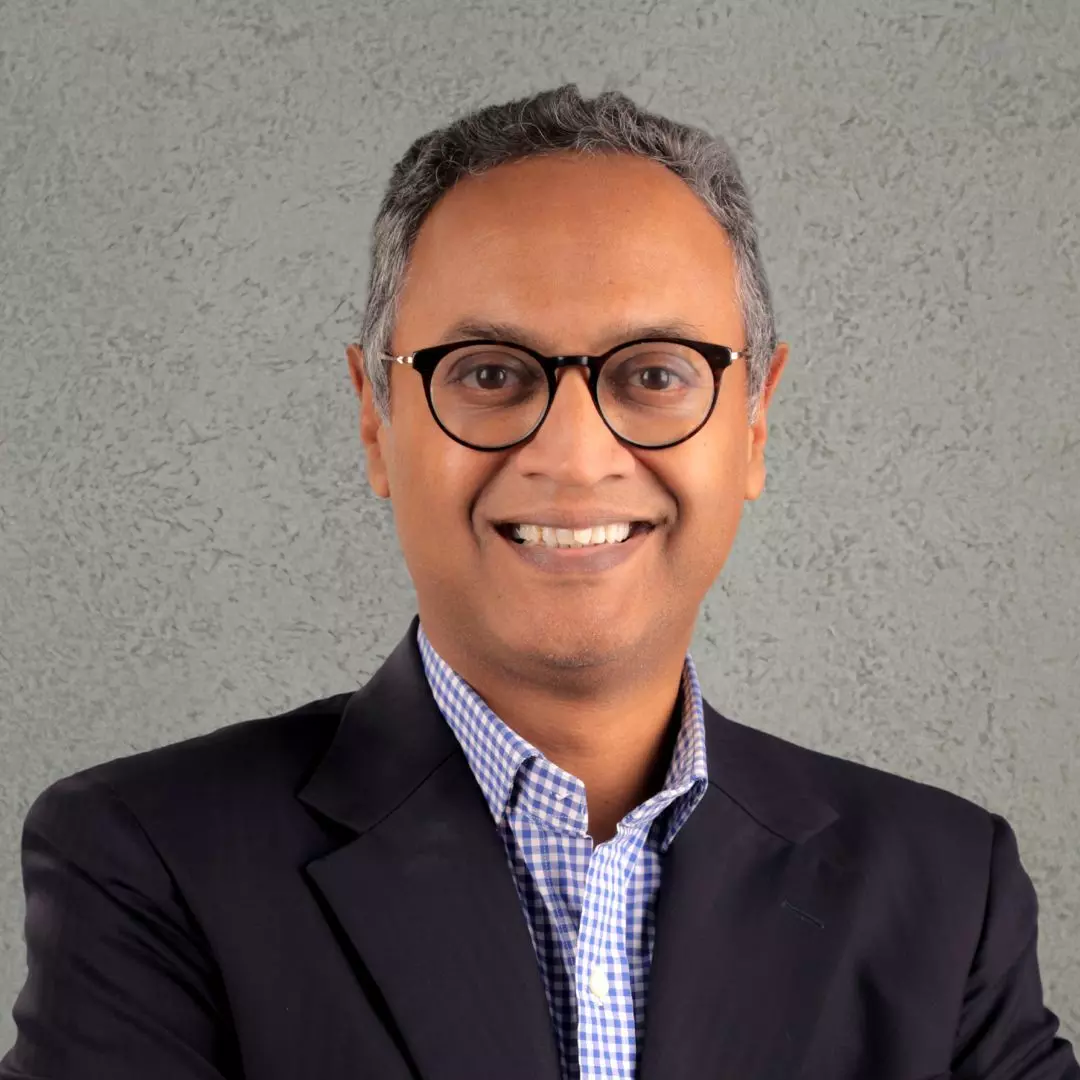
On Episode 842 of The Core Report, financial journalist Govindraj Ethiraj talks to Sheetal Sapale, Vice President at Pharmarack as well as Soumya Mohanty, MD & Chief Client & Solutions Officer, South Asia at Kantar.
SHOW NOTES
(00:00) Stories of the Day
(00:50) A ceasefire is hanging by the thread but why markets are still optimistic
(05:10) The first major quarterly result from TCS is positive
(08:23) Oil producers are seeing windfall gains from high prices already
(10:42) How India saw a massive market push in weight loss drugs in the last 10 days of March
(18:55) How India’s rapid digital adoption collides with a growing desire for personal grounding
—
NOTE: This transcript contains the host's monologue and includes interview transcripts by a machine. Human eyes have gone through the script but there might still be errors in some of the text, so please refer to the audio in case you need to clarify any part. If you want to get in touch regarding any feedback, you can drop us a message on feedback@thecore.in.
Good morning, it's Friday the 10th of April and this is Govindraj Ethiraj broadcasting and streaming weekdays from Mumbai, India's financial capital.
Our top stories and themes…
A ceasefire in West Asia is hanging by the threads but why markets are still optimistic.
The first major quarterly result is out and it's from TCS.
Oil producers are seeing windfall gains from high prices already.
How India saw a massive market push in weight loss drugs in the last 10 days of March
And how the country's rapid digital adoption collides with a growing desire for personal grounding.
Markets, The Ceasefire, Gold and The Rupee
The ceasefire in West Asia with Iran on one side and attackers US and Israel on the other as we said yesterday is fragile.
The United States has already reiterated its demand for the state of Hormuz to be opened up and said it will not move its military or weapons out for now. Iran has pointed out that Israel is bombing and killing civilians in Lebanon and that constitutes a violation of the ceasefire. The United States appears to have reversed a previous position and is now saying Lebanon was never part of that deal.
Be that as it may, the markets are nervous and are once again back to interpreting where things could go from here but having said that the underlying sentiment seems to be leaning towards a positive resolution though it may take longer but that was always expected and therefore markets are still not falling beyond a certain point even including in India. In-person negotiations between the United States and Iran are set to begin in Islamabad between today and tomorrow and any material developments will come from there if so. Meanwhile the opposition to the United States leading the war against Iran is rising within the United States with a fairly damaging New York Times piece exposing how several members of the Trump administration were against the war to start with in February.
And of course tensions are also running high because analysts are expressing concern that this breather may only be used by the United States to change tactics or rearm since there is some precedence to this approach. So given all of this Indian markets were back in the red on Thursday. The Sensex was down 931 points to 76,631 and the Nifty 50 was down 222 points to close at 23,775.
Both indices were down further but recovered slightly during the day. Remember just like we said before the underlying sentiment is still that there is a resolution closer on the horizon. In the broader markets the Nifty Mid Cap Index and the Nifty Small Cap Index were positive gaining 0.3 and 0.17 percent each.
Meanwhile foreign brokerages are sounding the bullhorns quite literally. Morgan Stanley in its India equity strategy playbook for Asia Pacific has said that there is a bull market on the horizon. Trailing performance, valuations, positioning and earnings all support a major recovery in Indian stocks in coming months.
Morgan Stanley said pitching a 95,000 target for the Sensex as a base case. The market appears set for a big move Morgan Stanley has said adding that the trailing 12-month performance is almost the worst in history and relative valuations are at previous troughs. India share in profits it says exceeds its index weight by the highest margin ever and the Sensex is nearly the cheapest ever in gold terms.
Foreign portfolio investment positioning has only weakened over the past several months at the same time it seems earnings up cycle has resumed with high frequency data showing strength except for some scattered conflict related weakness in March. The Reserve Bank of India has turned the sentiment on the rupee which remains undervalued says Morgan Stanley and also adds policy momentum looks strong and the domestic bid has withstood a major market drawdown. Now of course all of this does assume a certain return to normalcy soon and if that does happen I'm sure we'll see many more bullish calls.
Another similar one from Bank of America Global Research which says that India's battered bank stocks offer a compelling buying opportunity with valuations for some large private lenders near their cheapest levels. According to Bank of America financials hold the heaviest weight among sectors on the benchmark nifty index with four banks featuring the flagship index 10 heavyweight stocks. The nifty bank index has fallen eight percent since the start of the war on the 20th of February and that underperformed the benchmark nifty 50 which is down 4.7 percent in the same period according to reports quoted by Reuters.
Most of Morgan Stanley targets by the way for various reasons in the last 18 months have not been met maybe this time we'll see the 95,000 mark which is base case just to remind you once again and not the bull case which is even higher. All the Morgan Stanley targets are set for December 2026 that's this year. Meanwhile gold prices were steady on Thursday broadly for the same reasons as most investors are now cautious about the US-Iran ceasefire.
Spot gold was about 4,715 dollars per ounce on Thursday morning. The rupee fell also for roughly the same reasons and the rupee closed at 92 rupees 65 paisa against the dollar down 0.1 percent for the day. Meanwhile the first major corporate results are coming out that's for the fourth quarter and the final quarter and of course the full year.
Tata consultancy services reported larger than expected fourth quarter revenue on Thursday thanks to North America business consolidated sales for the March quarter was up about 9.7 percent to about 70,698 crores or 7.6 billion dollars beating the analyst average estimate of about 69,494 crores according to LSEG data reported by Reuters. Net profit for the rose 12.2 percent to about 13,718 crores or 1.48 billion against the average estimate of about 13,646 crores.
TCS also highlighted strong traction in AI-led businesses with annualised AI revenue crossing about $2.3 billion in the fourth quarter, thanks to increasing enterprise adoption of AI solutions, according to a report in Money Control, which also quoted CEO K. Krithivasan saying the company's growth was supported by strong deal wins and broad-based demand across markets and industries, despite macroeconomic headwinds. TCS also saw a net reduction of about 23,000 employees and its headcount is now down to 584,509, that's for the whole year, though employee expenses were up to about 1.5 lakh crore, that's about 150,000 crore rupees for 2025-26, that's the full year, and that's up about 10,000 crore rupees over the previous year. TCS's board has also proposed a final dividend of 31 rupees per share for 2025-26, subject to shareholder approval, and total shareholder payout for the year stood at about 39,571, or rather about 39,000 crores for the year in terms of dividends.
Margins, that's the other figure to look out for, operating margins were at about 25 percent, expanding 10 basis points sequentially, excluding one of items net margin for the quarter, that's the fourth quarter, stood at 19.4 percent according to that Money Control report. Elsewhere, Reliance Industries has capped fuel purchases across its retail outlets, limiting customers to about a thousand rupees worth of petrol or diesel, according to a Bloomberg exclusive report. Reliance Industries is apparently restricting individual purchases at fuel stations it operates with its partner BP, PLC, and the joint venture has more than 2,000 fuel pumps across the country, which of course is only about 2 percent of the 102,000 fuel pumps in India run mostly or majority by the oil marketing companies like Indian Oil Corporation, Bharat Petroleum, and Hindustan Petroleum.
The Bloomberg report says while the company has issued no formal directive, operators have begun enforcing the caps to curb panic buying and prevent their stations from running dry as demand surges. While some of the data shared by the oil marketing companies like BPCL and HPCL in the last few weeks has suggested that because of panic buying, consumption at some of their retail outlets had shot up dramatically, and perhaps this is one way to control it, though of course in such situations it can also have the opposite effect.
Oil
India's oil minister Hardeep Puri is headed to Qatar for a two-day visit from Thursday building on an opportunity presented by the tentative US-Iran ceasefire to press for priority gas delivery and speedy supply of cooking fuel according to a Bloomberg report.
India as we know depends on imports for half its natural gas needs and two-thirds of liquefied petroleum gas used mostly for cooking and much of that supply comes from West Asia. Qatar is India's single largest supplier of both LNG that's liquefied natural gas which comes from oil fields and LPG which comes from refineries providing 45 percent and 20 percent each. Qatar has declared force measure on gas exports and has also said it could take years to fully recover.
Oil prices meanwhile rose about three percent on Thursday thanks to that fragile two-week ceasefire and also concerns whether energy flows through this crucial state of Hormuz will resume. Brent crude futures were at about 98 dollars and 16 cents a barrel that's about 3.4 dollars up on Thursday morning. Meanwhile Chevron said on Thursday it expected a 1.6 billion dollar boost to 2.2 billion dollars to its first quarter upstream earnings versus the fourth quarter of 2025 thanks to obviously shooting oil and gas prices according to a Reuters report.
Oil prices as the report points out have gone up almost 65 percent in this period. Meanwhile it's not just companies like Chevron. Russia will see revenue from its biggest single oil tax double to 9 billion dollars in April due to this crisis according to Reuters calculations put out on Thursday.
This also is the first concrete evidence of a windfall for Russia which is also the world's second largest oil exporter from the Iran war. So the average price of Russia's Urals crude used for taxation is at about 77 dollars per barrel in March which is the highest since October 2023 according to data put together by Reuters and that is 73 percent up from February's 45 dollars a barrel and above the 59 dollars assumed in this year's Russia state budget. The Kremlin said on Tuesday that there were a huge number of requests for Russian energy from many places thanks to this grave global energy crisis according to the Reuters report.
Branded Generics In The Weight Loss Drug Space
The launch of branded generics in the weight loss drug space has triggered a gold rush of sorts in India's semi-glutide market driving a near six-fold increase in injectable unit sales in the final 10 days of March according to latest industry data from PharmaRack. The reason for this is that the market landscape shifted in late March after local pharma giants that's Indian pharma giants scrambled to capture an off-patent opportunity semi-glutide has gone off-patent so now there are about 13 companies marketing 26 different semi-glutide brands across both oral and injectable formulations. Novo Nordisk who held the market till now has seen its share go from 98 in February to 76 percent in March but remember Novo Nordisk has also dropped prices in India to bring it online with the domestic launches.
Amongst the new entrants Torrent is leading with its Semalix and Sembolic brands with about eight percent, Dr. Reddy's is at three percent and Zydus Healthcare, Lupin and Sun Pharma are at about two percent each and this of course is just the 10 days of March. April promises to be more engaging. Eli Lilly's diabetes medication Monjaro is the country's top selling brand that's in India at sales of 923 crores.
That's top selling brands across all categories. GSK's Augmentin and USV's Glycomed GP are second and third with 916 crore rupees and 898 crore rupees. This is all for the month of March.
PharmaRack is also expecting an acceleration of aggressive generic launches throughout April 2026 and that's back in the semi-glutide space. I reached out to Sheetal Sapale, vice president of PharmaRack and I began by asking her what the weight loss drug data is telling us for the month of March.
INTERVIEW TRANSCRIPT
Sheetal Sapale: So basically what we have seen is, we had estimated that almost 40 companies would be entering this segment and with almost 50 brands. But it was only the last 10 days of the month of March that we could see a significant introduction that have been there. And in fact, some companies have got permissions only in the last week or so.
So almost 13 companies we could check in the market with along 26 brands. Out of those 13 companies, three companies would be known orders, CanitsPartner, Emcure, as well as Abbott. But the rest are companies like Torrent, Zydus, Eris, the major ones which have launched a significant number of brands in the market today.
So almost 26 brands in the semaglutide segment seen today.
Govindraj Ethiraj: Right. And of the 26 brands that are there, is there anything that's differentiating the next few that is apart? Novo Nordisk obviously owns RibalSys and Bigobi and Ozempic.
The ones who come after that, is there any sort of distinguishing feature between those brands?
Sheetal Sapale: Yeah, no major distinguishing feature because it's the same molecule available across different dosage forms. Of course, there will be some distinguishing feature in terms of the device, the administration device, which may be a little unique. Because this is like a similar thing to your inhalers.
It is the device's delivery system, which increases the stickiness of the patient to that brand. So devices, they have their uniqueness in their delivery system, more convenient and user-friendly. But otherwise, more or less the molecule is the same.
And the strengths are also more or less in line with what the innovators have in the market today.
Govindraj Ethiraj: When you say delivery device, what would be the different types here?
Sheetal Sapale: They are available in prefilled syringes, vials, cartridges. So there are different delivery systems that are available. One unique feature that I've understood about the one which Zydus has brought in is, you can actually give different dosage forms through the same device.
This is one unique feature that I have heard of. But then otherwise, more or less the delivery devices are, I think they have done some innovations, but then the major thrust is on semaglutide available at affordable rate.
Govindraj Ethiraj: Right. And what's the average price gap between the original or the earlier Ozempic versus the Torrent, Redis and Zydus?
Sheetal Sapale: On an average, the price is anywhere in the range of 2000 to 5000. So if you look at the bigger brands or companies which are at the top, Torrent, DRL, Zydus, Lupin, pricing is only slightly lesser than the known orders reduced prices. Somewhere, if I were to look at the known orders initial prices, which were around 10,000 to 20,000, there would have been a significant gap.
But now even has reduced the prices. So more or less, Novo also has brought its pricing at par with the branded generics.
Govindraj Ethiraj: Right. And you've said that right now you're looking at 26 brands from 13 companies in the crowded categories, if that's the right term. Is this the usual number that you see?
And of course, in this case, we are yet to see more players.
Sheetal Sapale: Yeah, I mean, it is the usual number that you see. In fact, when it comes to oral preparations, the number jumps to close to 100 brands. But still, we are around at only 26 brands.
So this is quite normal. This is the usual number that one sees. Only thing is the competition is going to be a little tougher over here because the patient base is going to be quite restricted.
And companies will have to start building the market by targeting different patient segments.
Govindraj Ethiraj: So you're saying that we could see 100 brands in Semadlutide?
Sheetal Sapale: No, right now we don't, we could not see 100 brands because our understanding is only 50 brands would be there in the market. Because this molecule is not an easy molecule to be produced. In fact, it's a biosimilar.
So not very easy to produce and not many manufacturers have got permission to develop this brand. So production availability, whole chain maintenance is definitely going to be a difficult task for a manufacturer to venture into this segment.
Govindraj Ethiraj: Right. So what you're saying is that in the crowded categories, you could see up to 100 brands in one medicine category?
Sheetal Sapale: Easily.
Govindraj Ethiraj: Got it. And you've also seen sort of unusually high numbers in the cardiac space or the cardiovascular space in March?
Sheetal Sapale: Yes, cardiovascular we have seen a double digit growth, but this has been the phenomena for quite some time now. Because cardiac segment, diabetes segment, these segments end up showing double digit segment. Even respiratory segment for quite some time is showing a double digit growth because all of these are chronic consumption segment.
The moment your chronic diseases increase, or in fact, lifestyle diseases are more aligned to your chronic segment. So since India is showing more of lifestyle related diseases, we see this segment showing a double digit growth. In fact, if you see, these segments are not just showing a value double digit growth, but also a unit double digit growth.
So that is, it's not just a price led growth, but a genuine consumption led growth.
Govindraj Ethiraj: Right. Last question, obviously, the whole semaglutide and weight loss drug space, a lot of action in the last financial year. Is there anything else that stood out for you for the 25-26?
Sheetal Sapale: In the last financial year, it was even the respiratory segment because you have seen the pollution related things dropping up quite severely in the last second half of 2025. And also in the initial months of 2026. So respiratory segment, especially the asthma and COPD segment have shown a significant growth.
Also recently, because a lot of talk is happening around the vaccine segment, even the vaccine segment has shown a double digit growth more for the adult related vaccines.
Govindraj Ethiraj: For example?
Sheetal Sapale: HPV vaccine primarily, these vaccines are showing significant push. So it's like the vaccines which are more for smaller children or younger children are available mostly in the institutions. Whereas vaccines for adults, whether it is HPV or flu vaccines, they are the ones which have shown an increased consumption because it is probably a proactive approach that many of the patients follow, also is advocated by many physicians today.
Govindraj Ethiraj: Right. Sheetal, thank you so much for joining me.
Sheetal Sapale: Yeah, thank you so much.
—-
Meanwhile the same PharmaRack report says the rapid market expansion may also draw regulatory scrutiny noting that impending government advisories could introduce strict cautionary notes regarding the prescription and administration of Semaglutide to ensure it reaches only eligible patients and we've seen some early reports on that prospect.
India’s Rapid Digital Adoption
India is experiencing a profound cultural shift as rapid digital adoption collides with a growing desire for personal grounding according to research from Kantar's newly released India in Search 2026 report. The study analyses Google search data to map consumer behaviour and highlights how India is navigating powerful dualities. Key trends show that when AI has become an everyday utility with AI related searches surging 154% year-on-year, Indians are increasingly seeking tactile offline experiences to counteract digital fatigue.
The report also underscores how Indians are approaching faith, ageing and childhood. Childhood on the part of parents particularly, religion is being repackaged through tech-enabled personalised lens and modern Indian childhood is becoming highly supervised as parents look for and engineer safe digital environments. I reached out to Soumya Mohanty, managing director and chief client and solutions officer South Asia at Kantar and I began by asking her what stood out for her in this latest report.
INTERVIEW TRANSCRIPT
Soumya Mohanty: I think what really stood out for me is that the way searches are fragmenting, there are a lot of niche searches that are growing. It's not just about searching for categories and for brands. People are actually searching to understand themselves and understand the world around them a lot more.
So I think that is one interesting thing. And the second is, we talk a lot about Gen Z. Everybody wants to understand Gen Z.
But there's a lot of search around parenting the Gen Alpha, which is growing in a digitally saturated environment. How do we keep them safe? And on the other hand, the largest, I would say, the demographic group that has got the widest variety, which is the healthy ageing, the 45 to 65, 70 year olds, there's a lot of different kinds of searches that is happening in that age band, which I guess brands and categories should take note of.
Govindraj Ethiraj: And let me start from the top, which are the older segments. So what are they looking for, which is different from before, the 45 to 70?
Soumya Mohanty: So earlier, it was a lot about preventing diseases, staying healthy. Now, it's a lot about being more independent, being more active. So there are actually multiple searches, to be honest.
There is one area, which is about financial independence. There's another area, which is about physical independence, if I may put it like that. And there's a third area, which is emotional independence and looking for communities, looking for companionship, looking for things to do.
So that is the change. The change is they're no longer a monolith. There are segments within them.
And that's something that creates a lot of opportunities for brands that want to talk to them.
Govindraj Ethiraj: Right. And I'll come to the parenting part, because that's clearly something that is challenging people or concerning people, even at the policy level. When you talk about people wanting to discover themselves, and that's what the searches are showing.
Again, what's different here? I mean, everything is different, I guess. But what's sort of standing out to you again?
Soumya Mohanty: A lot of polarity. There is definite anxiety among people about what's happening around us. It's a lot of anxiety about job loss, et cetera.
And so when I'm saying people are trying to understand themselves better. So there is a lot of, how do I prolong my career? How do I upskate?
We would expect that in a country like India. But there is also the other part of it, which is slow living, slow joy. That's growing.
I mean, we are actually talking about internet and search, but people are searching for experiences which are physical. People are searching for things to do with their hands, things to do with their time. And they're going on the internet and searching for it.
That's quite ironical. I think that's what is more about discovering themselves. And spirituality.
I think spirituality itself, there are elements to it. There is the standard rituals that people are searching for. You know, gifting during Navratri.
How do I do this ritual in a better way? There is also inclusive kind of, I would say, rituals that are coming out. There was an interesting one, which is a female pundit for a marriage.
You wouldn't expect that kind of a search, right? These are still small, but they're growing. And of course, stuff like what I call packaging of spirituality, hajan clubbing, Gita, GPT, that kind of stuff.
So spirituality is the other end of it. And there's something which we are calling beyond labels, where you are going beyond the institutions that you'd normally expect, where people are searching for things like secularism, things like Karl Marx, things like, you know, it's just not as normal.
Govindraj Ethiraj: I mean, I saw the Karl Marx part. And how do you think that happens or that happened? I mean, what could have got people attracted back to Karl Marx?
Soumya Mohanty: I don't think they're attracted. I think they're trying to understand. Because there is so much of stuff happening around us, which we are not able to control.
That is our hypothesis.
Govindraj Ethiraj: And this is all in India, right?
Soumya Mohanty: All in there. So we are not able to understand completely why we are being buffeted the way we are being buffeted. Things are not under our control.
I think the desire to understand is growing. Not just the desire to consume, which you would expect, but desire to understand the world around them. It's a more educated, informed India, I would say.
It's still a lot urban. The searches we are talking about are English language searches, still does not include the 47% searches that are happening in vernacular. It includes voice searches, but again, English.
So to that extent, we are talking about the urban India, more metro. So yeah.
Govindraj Ethiraj: Right. And to come back to the parents and parenting part, I mean, what's your sense from looking at the findings? I mean, are people frustrated?
Are people trying to grapple with this? And if so, how is it manifesting itself?
Soumya Mohanty: I think we don't know. Parents want to keep the kids safe in this environment. And that's the fundamental thing they're searching for.
If you look at what they are searching for, of course, there are searches around nutrition for kids. And that was happening even last year. But the safety element has gone up.
How do I keep my kids safe? What are the parental controls I can use? People are actually searching for that kind of stuff.
How can I connect my account to my kid's account so I know what they are doing? How can I track them? So that part is growing.
And that's where, as you said, the policy, I mean, there are discussions also going on on what we can do as a policy favour.
Govindraj Ethiraj: In terms of age limitations, yeah. Yes. Yeah.
How do you see brands responding to this? I mean, what are the sort of positive signals from all of this for brands, since that's your constituency? And what are the not so positive signals?
Soumya Mohanty: I think the positive signals, very obvious. Positive signals, there's a lot of opportunity. We always knew there were many Indias.
We can see the fragmentation of searches. We can see there are niches and there are multiple niches. And to give you an example, the searches around menopause and perimenopause is a huge segment there, which is talking about it.
You're wanting to understand what I can do. I'm probably not that comfortable talking to somebody else about it versus finding out the information themselves. So there is a lot of stuff that brands can do around all these different niche areas that are emerging.
The negative or the downside is what we have called intent over impulse. People are becoming more intentional. They are trying to verify.
They are trying to understand deeper. You can't just tell them I am a brand which has got aloe vera and this turmeric, et cetera, and just buy me. They will want to understand.
They will want to know, is it really good for me? It's becoming a lot more, they're searching for evidence. They have the ability to search for evidence.
So it's become that much more important that brands are present in those places that the search is picking up from and showing up in the right way in those different category entry points that are there in the entire digital world. It's a different way of thinking.
Govindraj Ethiraj: I guess what that also means is that people are doing extensive research on products before they actually buy them.
Soumya Mohanty: Absolutely. So the way I'm looking at it is people were always doing a lot of research, but they were doing it much more for the high involvement categories. They used to trust the relatively lower involvement, lower outlet categories a lot more in terms of what the brands are saying.
Today, they are verifying everything. In a way, it's like leaving the label behind something. They're verifying a lot more than they were earlier and they have the ability to verify it.
So it's important for brands, therefore, to put out information in a way that when they are searching, they find what you want them to find and not what you don't want them to find.
Govindraj Ethiraj: Right. Last question, Soumya. So this study I'm assuming you're also doing in other parts of the world and or in different ways.
What are the key differences between India and elsewhere, if so, or anything that's caught your attention?
Soumya Mohanty: Actually not. This is a very unique to India initiative. So we haven't done it elsewhere in terms of we don't have a UK in search or US in search.
Maybe because India is still developing, is still evolving. But what I do know is in those markets, consumers are a lot more anxious. They are a lot more.
I mean, it's not as positive in terms of what they are looking forward to. I don't think there is this level of fragmentation and these many different, so much of polarity that you find in India. They're similar to the extent that the anxiety, there's an undercurrent of anxiety in India also.
But the difference is just the diversity that you find when you look at searches that are happening in India versus what would happen in some of the other more developed countries.
Govindraj Ethiraj: Right. Thank you so much for joining me.
Soumya Mohanty: Thank you.
India’s Commercial Real Estate
Office space activity continues to grow. Domestic firms continue to lead office space take-up with a share of 43% followed by US-based firms at 38% according to a report put out by CBRE. Global capability centre or GCC leasing activity stood at about 9 million square feet in the first quarter of 26, that's the calendar 26 representing a 44% of total absorption.
E-commerce, technology and banking and financial services firms accounted for 64% of that GCC leasing activity. Furthermore, says that CBRE report fortune 500 companies account for over 21% of total office take-up in the quarter. Bangalore, Delhi, NCR and Mumbai led the leasing activity together accounting for about 67% of total absorption.
The CBRE report also says that while it builds on three years of record-breaking absorption, the first quarter that the quarter that we just spoke of set a new benchmark and that was the strongest January-March office space take-up in India to date.


