



 Newsletter
 Search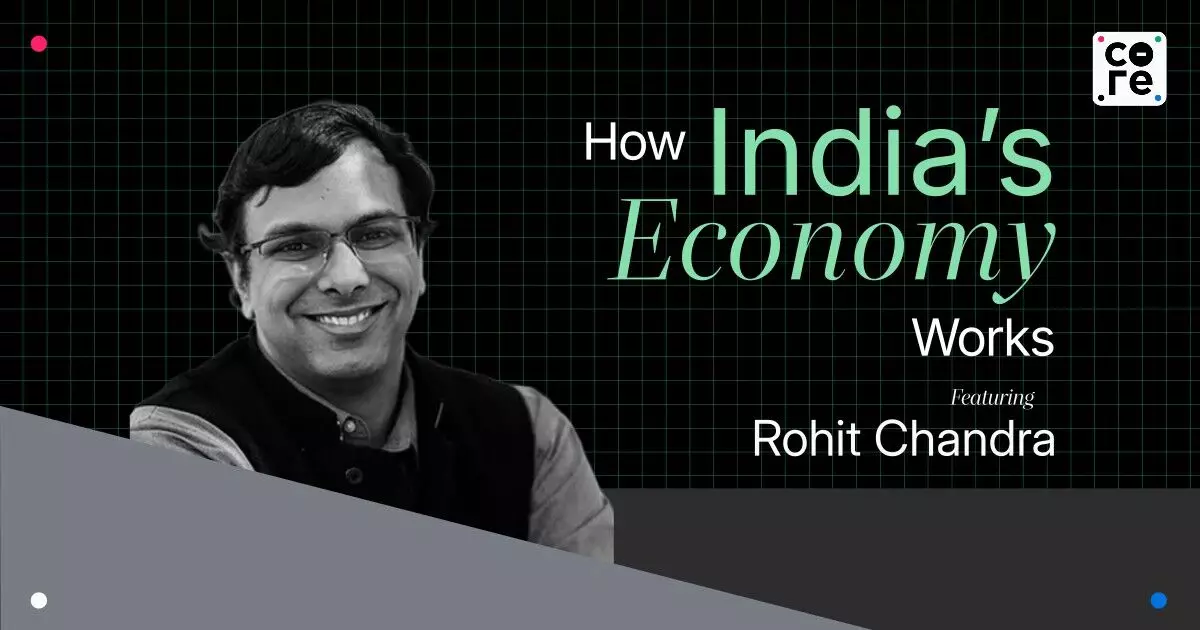
What the Iran Conflict has Revealed about India's Energy Security
- Podcasts
- Published on 16 Sept 2026 5:00 PM IST

Insights on India’s oil shock, energy security, strategic petroleum reserves, LPG shortages, energy efficiency, PSU autonomy and the lessons from past crises
India has faced major oil and energy shocks before — in the 1970s and during the Gulf War in the early 1990s. In this episode of How India’s Economy Works, Puja Mehra speaks with political scientist and economic historian Rohit Chandra, Assistant Professor at the School of Public Policy of IIT, Delhi. They talk about what those crises taught India, how the country’s energy system has changed, and what the latest Iran conflict and Strait of Hormuz disruption reveal about India’s continuing vulnerabilities.
Chandra explains why India was better placed to absorb the latest shock than it was in the 1970s, thanks to greater electrification, domestic refining capacity and crude storage. But he argues that the human and economic costs have been underestimated, particularly for poorer households, migrant workers and small businesses. He also discusses India’s dependence on imported energy, the delayed response to LPG shortages, the need for greater strategic petroleum reserves, and why energy efficiency must focus more on industry than households.
The conversation also looks ahead at what India needs to do differently: give public-sector energy companies greater autonomy, allow them to invest and experiment across a changing energy economy, make energy-sector contracts more transparent, and create a more predictable policy environment for investors. Chandra argues that crises often push governments towards ad hoc, statist interventions — making clear rules and predictability essential for long-term energy security.
Tune in for insights on India’s oil shock, energy security, strategic petroleum reserves, LPG shortages, energy efficiency, PSU autonomy and the policy lessons from past crises.
—
TRANSCRIPT
NOTE: This transcript is done by a machine. Human eyes have gone through the script but there might still be errors in some of the text, so please refer to the audio in case you need to clarify any part. If you want to get in touch regarding any feedback, you can drop us a message on feedback@thecore.in.
Puja Mehra: Rohit, thank you so much for coming to the show.
Rohit Chandra: Thank you, Puja, for inviting me. Pleasure to be here.
Puja Mehra: The Iran conflict has once again shown to us that India's economy is vulnerable to oil shocks. I thought today I'll ask you to help my listeners understand three things broadly. One, how oil shocks have historically played out for the economy.
Two, if any lessons have been imbibed from those earlier episodes which may have better prepared us at the onset of this particular shock due to the Iran conflict. What fallout, therefore, we've had because of this latest episode. And then, you know, what your thoughts are for the future.
Rohit Chandra: Yeah, absolutely. I mean, it's interesting because I think, as a political scientist and economic historian who works a lot on energy policy, I think some of this has definitely passed as prologue, right? We have seen this happen previously in Indian history, especially in the 1970s and 1990s.
And we definitely learned a few things, but I mean, in my opinion, perhaps not enough and so much more remains to be done. I think it's useful to go back in history and just kind of understand what the oil shocks in the past looked like, especially for a lot of people. For example, my students weren't born when the 70s and the 90s oil shocks happened, right?
So I'm catching them up on a lot of these things. But I think one of the most important things to remember is, I mean, in the 1970s, India is not an electrified country, right? Power is spreading, but it is not widespread.
Power cuts are pretty likely. A lot of the Indian power system is also running on fuel oil, surprisingly, right? And I mean, India, you know, kind of about 20-25 years after independence, is just starting to build up its energy economy slowly.
And so the shocks of the 1970s, which happened throughout, were actually quite disruptive in the sense that if you read writing from the period, long lines of people waiting for kerosene, which is probably the primary fuel in most households at that time, electricity outages were far more common. And more importantly, I think this spilled over to the agrarian economy and industrial economy in various ways as well, right? I mean, India has never been a huge producer of oil and gas.
And I think the 1970s oil shocks were actually one of the primary reasons that India turned to a coal-based power generation economy during this period. So just kind of a brief timeline during this period, right? Kind of the first oil shocks happened in the early 1970s with kind of the Yom Kippur conflict and everything.
And coal is nationalised in 1971 and the 73, right? Koking Coal in 71, then 73. And Coal India and NTPC are formed in 1975.
And so, I mean, I'm not attributing some kind of econometric causation to these things, but there's definitely a series of events which have impacts on each other, in the sense that Indian energy security is pretty strongly threatened during this period. And Indira Gandhi decides to nationalise these industries for various reasons, which we can get into. One of the most important documents during this period, which I encourage everyone to read, and perhaps I can share a link with you, is the Sukumoy Chakraborty-led Fuel Policy Committee, right?
Which actually advocates that India move away from fuel oil for power generation and other purposes and start using coal-based power generation at scale. This came out in 1974 and Coal India and NTPC were created in 1975. What most people don't know is NTPC was created through huge World Bank loans.
Both, I think, international finance and domestic kind of political efforts are being made to make Indian energy security more dependent on resources, which we have domestically. And that leads to the creation of this coal-based power generation economy, which is over 65-70% of all power in India today. So, one of the interesting things, and we'll see this over and over again, is whenever you have these kinds of crises, countries tend to become more statist and don't care about markets as much in the short run.
Politics dominates economics. You are a democracy, you are accountable to your citizens. When shortages happen, the first thing you start doing is trying to produce the thing which citizens need most, which is either power or in the case today would be something like LPG, which we had kind of considerable shortages of.
Then let's fast forward a little bit to the 1990s. Now, I mean, in some senses, this was an even bigger oil shock, although it's not called that, right? The Gulf War happens and India's macro is hit in three different ways.
First of all, oil prices go up, makes everything more expensive. Secondly, at this point, India has millions of people in the Gulf who are sending valuable foreign exchange. All of that stops fairly quickly.
And then thirdly, India is sending repatriation flights to Gulf states with expensive oil and expensive flights, which also adds to macroeconomic stress. Not surprisingly, liberalisation also happens during this period because that macroeconomic shock leads to the balance of payments crisis, and that eventually leads to kind of all the reforms that proceeded from 1991 onwards. So, I mean, in one way, 1991 was an oil shock-based liberalisation.
I think that's one way of framing it. That is about as big of a economic reform and shock that you can get because so many things were happening at the same time. I don't think it gets framed that way in popular discourse, but two clearly very big shocks which happened along these lines.
Then let's come to today, right? Just kind of to have these kind of three periods to compare with. So what happens is, earlier this year in 2026, the Strait of Hormuz is blocked for various reasons related to the war in Iran.
Oil prices go up overnight. And over the last 50 years, North America has managed to insulate itself by not importing as much Middle Eastern oil and kind of developing their own resources. The most dependent area in the world is South Asia and East Asia, right?
Especially China and India on imported oil and gas resources. So not surprisingly, these regions are some of the hardest hit because nothing starts moving for at least a month, month and a half, while the conflict is ongoing and the blockade is in effect. Now, I think the interesting thing there is that, you know, because these happen with like 20-25 year increments, there's a bit of complacency that comes in the middle.
And we can talk about a lot of the good things that happened in the middle as well. But I think part of it is that Indian energy policy has always had this kind of all of the above strategy. Energy policy discourse is something that comes up over and over again, that because we are an energy deficient country, we develop whatever resources are available, right?
So whether it's coal, oil, gas, solar, I mean, we'll start projects in all of them. And some of them will work and some of them won't. I think at this point, India's energy security has improved enough that being a little strategic makes sense.
And so that piece you were discussing that I wrote with my PhD student Dattatreya, part of it was about the lessons not learned around the efficiency side, that like we've managed to consume a lot more, we've managed to industrialise a fair bit, our consumers at the household level are also consuming a lot more energy than they were 50 years ago. But I think when these kinds of shocks hit, how do you manage to reduce consumption without reducing your quality of life dramatically, both at a household level, but perhaps even more importantly, at a firm level. Most energy consumption still happens in industries, not in households.
And our firms are not very good at being efficient in their energy usage. And so, you know, the Bureau of Energy Efficiency has done a little bit of this kind of work, but a lot more remains to be done. And so that was the thrust of that piece.
Puja Mehra: So from what you're saying, it does seem to me that the fallout of the energy shocks back in the 70s, or even in the 90s, relative to those this time round, of course, probably the shock isn't as large, but hasn't been felt that much around the world also as much. But this time, can we say that we were better placed for various reasons? Yes, there has been disruption for small businesses to a great degree, not as much at the household level, perhaps not as much at the large industries level.
We haven't seen rationing outside of the industrial LPG use base. We haven't seen overnight inflation going up and those kinds of things. Did we handle it better, or we are as an economy now, sort of better placed?
We may remain vulnerable, we are still vulnerable, I'm not denying that. But we've come a long way from the 70s is probably what I'm trying to say.
Rohit Chandra: I think we have come a long way from the 70s. And I think we also did not handle it well. I think both of those things are true, at least in my interpretation of it.
So I think what has improved a lot is that India has actually electrified so much more than the 70s. Part of the reason I think the 70s hit much harder was because India wasn't as electrified a country. I mean, I could buy an induction and start cooking and not be affected by the problem where 50 years ago, there were no inductions, and there wasn't electricity for that induction either at the household level on a regular basis.
Part of the solution to this is this whole interesting electrostate versus petrostate dilemma, where I mean, in the 70s, most countries were petrostates because electrification in the global south had not spread as much. But today, I think India is well on its way to becoming more of an electrostate where both for industries and households, electricity consumption is perhaps more important than at least direct oil product related consumption, although there's so many oil derivatives that it gets very complicated very quickly. I don't think that the human cost of this conflict has been massively underplayed.
I mean, literally millions of people left their working sites and went back home because there were LPG shortages. There were IIMs which were cooking on wood in their canteens. I mean, there's all kinds of stories around those lines.
And even at a very personal level, like our domestic help in Delhi, basically, we were giving them bridge loans to buy 3000 rupees cylinders because they went up by 3x. So I think a lot of this is hidden and not shown on nice macro statistics. But I think that the human costs were very real.
And I mean, you see this, as you said, in kind of the small businesses kind of scenario in like Morbi and all, right, where basically an entire ceramics cluster was closed overnight and still is struggling to recover. But I think you would also see it in a place like Surat, right, where basically an entire migrant population decided to go home rather than stay there because LPG wasn't available. I think some of the, at least for me, some of the best reporting on this was done by M.
Rajshekhar in Carbon Copy, where basically he showed that actually South India suffered much less because of these shortages than North India, partly because most of North India still doesn't have formal gas connections. The numbers are still very high, but it's only 20-30% of the population which has direct formal gas connections. Most people are still going to secondary markets.
And the people who go to secondary markets in much smaller amounts are the ones who tend to get affected the most when black market prices or secondary market prices go up by 2-3x. Some of that is resiliency, right, the fact that so much of the country now has formal connections when 50 years ago it was much more informal. That's progress.
Electrification is progress. But our population has also doubled, so it hits harder, right. From the 1970s today, we have 600 million plus more people.
So the size of the human impact also goes up proportionally, which I don't think should be minimised. The other thing is that I think a lot of this pain has not shown up on balance sheets yet because it's delayed. For example, agriculture, right.
We had huge fertiliser shortages because we cut off gas to all of our fertiliser plants. Then we needed to import fertiliser, whether that happened in time or not is an open question. But all of those agricultural yields and results are finally going to come out in the next few months, right.
So those long-term impacts I don't think have been measured yet because they haven't shown up on balance sheets. And a lot of this will show up on smaller SME balance sheets and private company balance sheets which aren't publicly listed. And so, you know, I think Sensex firms don't have to worry as much about this.
But I do think that smaller firms definitely suffered a lot, partly because of the Middle East as a hub of transport for intermediate goods as well, right. This wasn't even just the energy shortage, but the fact that the disruptions in those regions have a lot of impacts for textile exporters and small, you know, kind of device exporters or small industrial exporters who are trying to send things to Europe via shipments and other kinds of things. So I think that remains to be seen.
I mean, I'm a little more sceptical on the fact that we weathered it well. It's not as catastrophic as the 1970s for sure. What I do think that did go pretty well is the fact that when the government did start responding, and that was fairly late because of the Bengal elections and all of this kind of stuff, there were a lot of mandates that went out to private companies very quickly on what they should be doing.
And this literally came out, I think, last week in the news as well, that the centre is thinking of putting out mandates on what domestic refineries need to be making for domestic markets. I mean, the saving grace of this crisis was the fact that our public sector refiners were still producing lots and lots of LPG, so they could push that into the system. Our private refiners do not do that at all.
Our private refiners largely produce things for export markets which are not LPG. And now the central government is creating mandates for them because they were the ones who weren't contributing to the domestic issue when all of this happened. And so the interesting thing about refineries, and I'm not a technical expert on this, but one of my PhD students is, so he's tried to explain it to me, is that you can configure refineries for different kinds of output.
And basically during the crisis, the LPG percentage went up considerably in a lot of refiners who would prefer to produce other things which are higher value products. This is kind of a recurrence of this idea that markets get suspended during crises and you start becoming more statist and more command and control during those periods of crisis. What does that mean for balance sheets?
I don't know, right? I mean, if a refiner suddenly has to produce a lot more LPG, what does that do to their bottom line? I think that's something for equity analysts to try to figure out, but I think these things will show up in the next quarter or two, I'm sure.
Puja Mehra: So what you're saying leaves me very concerned because you're saying that it's not that significant segments of the economy did not get affected. They did get affected, but probably they were the voiceless and those under the radar, which we don't see as easily. And therefore, a lot of the impact that has been there, we are probably not taking note of as much and it's not getting measured in the routine course of things also.
Rohit Chandra: Especially in the kind of macroeconomic indicators, for sure. You go to any district collector and they will probably tell you the kinds of distress that was showing up. But whether that trickles up to the kinds of reporting systems and the kinds of press coverage that happens, especially for economics, I'm not sure that was necessarily captured.
I think what would be very interesting, for example, for someone to do is look at the CMI's consumer pyramids and see post-March 26, what has happened there. I am sure something will show up there. I haven't seen anything like that yet, but I think that's where you would see something like this.
Puja Mehra: Right. I want you to talk a little bit more about the responses, because it's one thing to respond to a shock, but also how you're getting into the shock, what you have done in the decades preceding the shock. So that is also important.
So those two things, how we done on those.
Rohit Chandra: So one of the things I think India actually did quite well is that it has a fair amount of storage for crude oil. Calling it a strategic petroleum reserve might be a bit strong. I mean, I think they've tried to do that, but at least kind of Indian oil, HPCL, BPCL, just store a lot of crude.
And that actually ended up becoming very useful for that first month.
Puja Mehra: If I'm not wrong, I think we don't even have one third the storage capacity of what China has, strategic storage capacity.
Rohit Chandra: China is bigger on everything. I don't think that's the right comparison, but yes. But it ended up becoming part of the saving grace for the region.
For example, if you look at Nepal, if you look at Bhutan, if you look at Sri Lanka, most of their liquid fuels end up coming through Indian refineries. And I think part of the reason their supplies continue to some extent was because Indian refiners still had something available. Now within the first few months that ended up going down fairly quickly, but that's something very different from the 1970s and 1990s where clearly we've invested in some infrastructure on that front.
I would like there to be much more, but I think that takes a certain amount of long-term thinking that this is kind of a strategic investment, which should happen. But yeah, I mean, India should be invest more in SPRs. I mean, I think that's a no-brainer in some senses, right?
Puja Mehra: I have a small story to tell her, you know. In 2014, when the government changed the very famous, now very famous Mr. Dhavendra Pradhan, who was the first oil minister in the government, a bunch of us journalists, we were interviewing all of these new ministers who were debutants. And I'd gone to interview him and it can be checked, you know, what he told me in that interview in 2014, I think May or June, that the mandate given to him as the first oil minister of the new government was to build strategic reserves and increase production of petroleum products, domestic production of petroleum.
And now I went back and I looked at how he and his successors in that ministry have done on those two goals. And I don't have much to say.
Rohit Chandra: Yeah, yeah, yeah. I mean, I think the story looks better over the last 30 years, but over the last 10 years, it's one of those things where you have to commit your FISC to it or your company resources to it, right? Which means you have to do a fair amount of long-term thinking.
I think that would have been productive infrastructure spending rather than some of the other things which have happened. At least for energy, sometimes it takes a crisis to make good decisions. And one hopes that this is crisis enough.
I mean, it wasn't as bad as the 90s or the 70s, but it's enough to at least push that kind of thinking a little bit.
Puja Mehra: Especially because 2014 oil prices were very high at that point in time, which had led to huge surge in inflation and partly created the political terrain on which there was a change in government. And he was, I think, responding to that. Except that even when governments know what has to be done, implementation somehow never keeps pace.
Rohit Chandra: I mean, I think some of it is also what you, I mean, this comes back to broader policies on kind of fiscal management. Either you can leave money on your oil marketing company's balance sheets to actually invest in assets, or you can drain them and put them all in the FISC. Now over the last 15 years, we've seen a very one directional policy on that front where PSUs are somehow not worthy of leaving money on their balance sheet for their own infrastructure investments.
And this is what happens when you don't give them some amount of at least fiscal independence on that front. I think our OMCs are remarkably competent organisations technically. They have the capability to do these things, but you have to let them do it and not interfere too much.
As someone who works on PSUs for a living, I think that that leaves much to be desired.
Puja Mehra: Yeah. So let's go back to, you were saying, you know, over the decades, what all we've managed to do and what all remains to be done towards energy security.
Rohit Chandra: I mean, I think one of the lessons from the Sukumoy Chakravarthy Committee in the 1970s, which I think has been followed through on quite nicely, is this idea of at least energy efficiency on the electricity consumption front, right? So the kernel of an idea around energy efficiency, which came out of those committees, was eventually turned into what became the Bureau of Energy Efficiency in India in kind of the early 2000s. And I'm lucky enough that one of the first chairmen of BE is on my faculty now at IIT Delhi, Ajay Mathur.
And so part of that push to try to make industries introspect a little bit and say, look, just monotonic increases in energy consumption is not a good thing. You have to make your processes better, faster, more efficient. You have to find ways of harnessing waste heat.
You have to use less electricity per unit output. And the PACT scheme, the Perform Achieve Trade Scheme, which BE came out with, was actually able to do that in various industries for a short period of like maybe 5, 10, 15 years. I think after that it fizzled out a little bit.
So those kinds of things definitely need to be revived because part of the solution to this is just managing your demand better. And there, I don't think guilting individuals and households is useful. I think this is entirely, it has to start with industry.
And obviously there's lots of lobbies left and right on these kinds of things, but that's where you have to manage the politics to kind of think long-term a little bit. Me or you using an induction instead of a gas cylinder is not going to make that much of a difference in aggregate energy demand for India. Even though we have a large population, but our consumption falls off after the first 15-20% quite starkly.
India just doesn't have that many high energy consumers. Sure, the rich people flying private planes could do better. That's still a very small number of people compared to industrial consumption.
So I think the energy efficiency agenda is on the right track, but needs a stimulus. So that's one lesson which has been partially learned. I think, I mean, and this is me being kind of a little selfish and advertising my research a little bit, but public sector unit or state-owned enterprise autonomy is very important in these because I think sometimes our PSUs are better at long-term thinking than some of our ministries are.
That's the nature of politics, right? Five-year terms, you want to get things done. But I think the OMCs, Coal India, ONGC, these companies can actually do a lot if you leave money on their balance sheets instead of taking huge dividends and taking it out in the form of unproductive CSR and all of these kinds of things.
And so I think some of our best energy thinkers in this a lot of them, you know, a lot of the backstopping of the intellectual work of ministries, whether it's in coal, oil and gas, heavy industry and all comes from the PSUs which land under those ministries and basically provide thinkers. And so giving them a little more autonomy and direction and giving them a broad mandate, right? Like energy security is important.
We want you to build reserve, but then letting them figure it out rather than micromanaging it. I think that's one thing which I would like to see. I don't think that's happening at the moment, but especially with the OMCs, I think there's a lot of potential there.
Finally, I think there is something to be learned about public communication here. And this is not kind of an economics thing so much as kind of a more of a political communication question, but world events happen. India couldn't have done much about the Iran war.
I mean, it doesn't have that much diplomatic, but there has to be a better way of preparing your citizens early rather than waiting months for an election to go by and then having it hit people in all kinds of ways. I think what I was most disappointed with was the fact that it took two, three weeks to even admit that this is a problem as if we sit unconnected to the rest of the world. At least in the 1970s, I think that kind of political communication did happen.
It didn't help because we had shortages of everything at that time, right? I mean, India was a poorer country. I mean, we had food shortages, we had kerosene shortages.
I mean, it was a much different political environment.
Puja Mehra: We had foreign exchange shortages, I think, which was biting the most.
Rohit Chandra: Exactly. So, I think one of the things behind this is that, I mean, clearly Indian populations have grown used to in the last 10-12 years taking certain kinds of pain, whether it was demonetisation or other kinds of things. I think being honest with your citizens that the world is under distress, that India is going to be affected by this, please scale back your consumption a little bit, even if it is 15-20% in all.
I mean, I think there were public campaigns during the 1970s in advertisements and newspapers about energy efficiency. I think this time, other than a few broad mandates, I didn't see any broad messaging efforts on that front to try to convince India, I mean, until it was too late, right? That kind of the worst of the shortages started hitting.
That efficiency is actually a good thing, right? That this is something that we should have as a national aspiration. This is not just an Indian thing, this is across the world.
In the 1970s, the kind of interesting ads that came up in Denmark, in the UK and all of these kinds of places, this is a tough decade. We are struggling as a country, we need to tighten our belts a little bit and all take the pain a little bit, right? Part of being a kind of mature democracy is having that, I mean, if you have a direct voice to citizens the way many of our politicians do, it should be used for these kinds of things as well.
That's one of the least learned lessons, which, again, is not very kind of econ-finance kind of thinking, but I think is something about our culture around energy, which is super important.
Puja Mehra: But perhaps also the assessment in government, I feel, is that with, you know, because the oil prices, global oil prices generally blow up as much, I think the assessment was that, you know, we can manage. This is not as big a hit. Which brings me to the question of how is it that oil prices did not blow up as much as they tend to during such shocks?
Rohit Chandra: I mean, look, I think the 1970s was exceptional in the sense that prices went up by like multiples. I don't think that's ever happened again in world history, partly because the entire oil industry has worked to try to prevent that from happening, right? I mean, we have kind of a more liquid market, we have more diversified sources, fewer countries are dependent on single places for their supplies, etc, etc.
So there's been a kind of coherent effort at diversification of supply, which I think helps with this a little bit. That doesn't stop the fact that like 30-40% of all oil coming into this country was coming through the state of Hormuz, and so immediately that it's an all gas more or less. I mean, some of this is an open question, I don't think it has been fully diagnosed.
My sense is that some of this has to do with intentionally reduced demand in places like China and all, right? I mean, one of the interesting things about China is that because it has this overcapacity issue, it can also turn off capacity very quickly. And so a lot of that burgeoning demand for steel, cement, all of these kinds of things, when it goes offline, that tends to affect things a little bit.
I think some of this also has to do with flexibility. The fact that people were able to move to electricity now meant that some of this pain around gas meant that it's just the kind of demand didn't shoot through the roof the way you would in a crisis. I have a suspicion, I don't necessarily have the data to back this, that some of this is also like North American supply coming online in a big way.
That because of shale gas and all of these kinds of shale oil, shale gas production over the last 20 years, North America has become one of the biggest exporters in the world, right? Which wasn't true certainly in the 70s or the 90s. Because of that, I think the supply dynamics have shifted quite a bit.
I'd have to look at the IAN production numbers to confirm this, but my sense is a combination of all of these things combined with some of the SPR releases from the US and the IEA more broadly did manage to kind of stabilise things at maybe like 110, 120, not too far above that. So there was still a 50% increase, but it wasn't a few hundred percent increase, which is what we saw especially in the 1970s. I'm not a deep expert on oil markets, but that's why I think prices didn't go up massively.
Oil prices are not the only metric of where pain comes from, right? I think unfortunately in finance and macro circles, it's just that one indicator gets, you know, because you see it in a newspaper every morning and you see the Bloomberg ticker, like you think about that. But actually, I think what mattered much more in the Indian case is just the number of shipments which were arriving to Indian shores.
So even if the price is low, if the ships aren't coming, that's a problem. Or if the refineries are not producing the right product. I think the single biggest failure of I think the Indian government in this entire thing was the fact that it did not force refiners to start producing LPG right after the conflict started.
They actually waited quite a long time because, I mean, there was a lot of complacency about whether this would actually last. And I think because of that, if refiners had pivoted towards LPG production earlier, even some of this short-term pain or this kind of less kind of intense pain could have been mitigated a lot. And it did affect the bottom 30-40% of the population by income the most, which, I mean, those are the people you are trying to protect in this situation, right?
Puja Mehra: So from what you're saying, we should be looking out for the consumption figures and not necessarily the numbers that come out of large listed corporates, FNCG kind of companies, because if smaller companies are hurting, then actually the larger companies tend to do better because they corner the market share of the smaller companies. But what we should be looking at is probably macro numbers of consumption, etc., which will now begin to come, and that may capture some of this pain that you're talking about, which we haven't paid as much attention to so far.
Rohit Chandra: Yeah, or even, I mean, honestly, I think consumer surveys are more important on that front. Sensex firms, whether we like it or not, are not representative of anything in India when it comes to employment. Our top 30-50 firms in India employ maybe a few million people at most, if even that much.
The pain on the household side is not reflected by anything on the market side. And, you know, Sensex companies are the ones which are usually making profits and have the buffers to last these things out. They're the ones who have access to emergency credit lines.
They're the ones who can go to SBI and get a loan whenever they want. I think what would be interesting to see is, for example, did a lot of people's Sibyl scores drop after this crisis hit because credit card debt and all of these kinds of things went up, right, on the consumer side, or even for small businesses, are you seeing credit ratings take a hit after something like this because they have to take more emergency loans. And so, I think the Empirics hasn't quite caught up with the impacts, partly because we don't measure the bottom side of the distribution as well.
But, I mean, I think one place this would definitely show up is CPHS. I haven't done this work myself, but hopefully the next generation of PhD students were much smarter than we will.
Puja Mehra: And you've already partly answered this in the discussion so far, but, you know, if you want to give some in bullet point format, maybe, you know, what do we do about the future if we were to sort of, you know, begin to now say that now we will roll up our sleeves and get things done.
Rohit Chandra: So, look, I mean, there's short-term fixes, right, SPR, all of this kind of stuff. We've discussed some of those things, but actually, and this is where kind of Ajay Mathura and I had written a piece in the Economic Times about this a few months ago. I do think we need to kind of revisit this Sukhumvit Chakravarthy Committee type big picture thinking about the energy economy.
It's not just the kind of Iran and state of Hormuz problem that is affecting India's energy economy right now, right? We're trying to electrify, move to EVs, bring in more renewable energy, maybe over the next 30, 40 years phase down coal power at some point. There's a lot of changes happening in the energy economy, and I think that we have a lot of incumbent firms in these areas, especially in the public sector, who can actually play a very strong role in shaping what the future looks like.
I don't think necessarily they're being given the kind of flexibility to experiment and do things the way they would ideally like to. So, let me give you one anecdote from coal India, which I've studied in great depth over the last 15 years, right? I was interviewing a former chairman of coal India in maybe 2015 or something who said, look, since the late 2000s, we've been wanting to get into the solar industry, but this was MNRE's domain and our ministry told us not to, right?
So, we didn't. Now, I mean, sure, okay, yes, ministerial turf and all of these things matter, but energy is indifferent to ministerial silos, and I think we're figuring that out, right? NTPC is now getting into coal mining.
Coal India is starting to build solar power plants, like all of that has happened at this point. And so, I think allowing our public sector firms to experiment a little bit, because they're the ones, I mean, they get these supernormal returns or they get guaranteed returns because of the kinds of resources they have access to. They're also incredibly high capacity organisations.
They have some of the smartest engineers in the country. They're also publicly listed, so they're not independent of commerce, right? They're making their money, right?
This is not some kind of, the budget is not subsidising them at this point. I think allowing that kind of experimentation is one definite move for the future, which I would like to see. And some of our private firms do this quite well as well, right?
I mean, whether it's the Adanis or the alliances and all, all of them are investing in the green economy. Now, how sincere some of those investments are and all, we can ask questions, but I think there's definitely, I mean, they're raising money for all of those kinds of things. I think the second thing is to, this is a very big ask, but have a little more transparency on the kind of contracting that happens in the energy sector.
So everything from power purchase agreements to kind of the kinds of shipments that are being bought from international markets to even like power trading that happens on short-term electricity markets. All of our large government companies in these spaces are now active market participants. And there is unfortunately a bit of a tussle between should these gains go to either favoured or new private sector companies or should these go to PSUs, right?
Some kind of basic articulation of like what is considered core part of kind of Indian energy security. And where is there room for the private sector to experiment a little bit? Because these kinds of crises always redraw those lines a little bit, right?
Refining and exporting for private sector gain was fine until this happened. And then suddenly you're going to start drawing lines. Power prices are allowed to fluctuate as high as possible, but when it gets too expensive, they're going to put price caps.
I think this is part of the, discovery process of how market building happens. Stephen Vogel, who's a very good political scientist called this market craft. But India is not very good at market craft because we've only been doing it for 20, 25 years.
So more experiments with this kind of market craft where the rules are very clear, the entry barriers are very clear, and lots of people are allowed to participate. I think that would help. For example, in the power sector, why are states signing certain kinds of power purchase agreements, but not others?
There's a lot of political motivations behind these things, but if you just made all the power purchase agreements and their terms publicly available, this is very hard to get as a researcher. Trust me, I've tried. I think it would give a lot of transparency on where things are inefficient and where things are efficient.
One of the big conversations happening in energy policy today is, is renewable energy cheaper than coal-based power? Simple question, hundred different answers, depending on who you talk to. Oh, but you're not accounting for transmission costs.
Oh, you're not accounting for environmental costs. Everyone has their own equation around this. I think these things deserve to have good debates, but it's very hard to do them in the absence of basic transparency on these kinds of things.
Again, this comes back to communication. Part of the reason you don't want to communicate is because there's a lot of deals being made behind the scenes, which unfortunately are problematic in various ways. The energy economy is in everyone's public interest at this point, so a little more sunshine into the contracting practises would help a little bit.
Then finally, historian Rohit Dey has this very interesting idea called the commodity control complex. The idea is that whenever there's a crisis, like for example, when World War II happened, one of the first things the government of India did, this was in pre-independence, is that they took over a lot of industries. 1970s oil crisis happens, nationalised things.
1991 was a little bit different because it was somewhat the opposite. But I think there is a very strong move to become statist in intervening when these crises happen. That scares off investors for the next five years.
Look, I mean, as someone who studies PSUs for a living and thinks that they're an important part of the Indian economy, I'm not saying that that's the problem. But being a little more clear about where private participation and experimentation is encouraged and what is core to Indian energy security, I think that needs to be articulated in some way, which is not kind of ministries fighting over turf. But whether it's a white paper or ministerial statements or other kinds of things, I mean, that's my high aspiration for Indian public policy or energy policy.
One can dream.
Puja Mehra: You're making a case for sort of a rules-based system rather than an ad hoc system where, you know, depending on what is happening today, you take a decision. Then tomorrow, two steps back. The day after, three steps forward, which is how policy tends to move.
Rohit Chandra: Yeah, exactly. And I noticed that in the core, I think literally last week, Ajay Shah gave this great interview to Govinda Teraj, where he was talking about how we think we're this fantastic economy where everyone wants to invest. And I think the reality of how people are investing money internationally shows something a little different.
So this comes down to predictability, right? I'm not saying that everything has to be rules-based, right? I mean, these things take time, but a little more predictability would help in making that case.
So the next time an Indian company has to pitch something to an international firm for a loan, it's not as hard.
Puja Mehra: I think I can nuance that and say not even rules-based, but at least investors should know what are the go areas and the no-go areas. This is something Indian policy makers will never do. And this is something, you know, they may do given circumstances and that sort of helps them take decisions.
But the biggest example is of how these orders came out about controls on imports of laptops, for instance. That really spooked everybody, I think.
Rohit Chandra: I mean, I ran to buy a laptop after that came out.
Puja Mehra: Yeah, I know many people who did that. And I think that sudden surge in demand is what actually forced a rethink in the ministry.
Rohit Chandra: People should be allowed to make money, but at least there should be some stability in that. That's all, right? Some predictability.
Puja Mehra: Thanks. Thanks, Rohit. Thank you so much.
Rohit Chandra: No, no. Thank you, Puja. It was a pleasure to be part of this podcast.
Puja Mehra: I realised that we've only touched the tip of the iceberg on this subject and you must come again to the show so that we get to see more and more sides of it.
Rohit Chandra: Absolutely. I'll be back soon.


