



 Newsletter
 Search
Indian Markets Are Taking The Hardest Hit Of All
- Podcasts
- Published on 22 Jan 2026 6:00 AM IST
A key takeaway from the last few months observations of the capital markets, is that India is unable to disconnect itself from global sentiment
On Episode 779 of The Core Report, financial journalist Govindraj Ethiraj talks to Monisha Advani, one of the founding partners of Emmay Entertainment (the company that produced the Freedom at Midnight series). We also feature an excerpt from our recent episode of our show How India’s Economy Works, hosted by journalist and author Puja Mehra and featuring Dr. Jahangir Aziz, Economist (Head Emerging Market Economics) at JPMorgan and a former finance ministry official.
SHOW NOTES
(00:00) Stories of the Day
(01:00) Indian markets are taking the hardest hit of all
(05:05) Global oil markets will be in deep surplus in 2026 first quarter, says IEA
(07:32) What India’s falling core inflation numbers are really telling us
(17:03) Why Indian viewers are devouring historical nonfiction across platforms right now
(26:23) India’s latest and most beautiful GCC, quite literally
Register for India Energy Week 2026
https://www.indiaenergyweek.com/forms/register-as-a-delegate
NOTE: This transcript contains the host's monologue and includes interview transcripts by a machine. Human eyes have gone through the script but there might still be errors in some of the text, so please refer to the audio in case you need to clarify any part. If you want to get in touch regarding any feedback, you can drop us a message on feedback@thecore.in.
—
Good morning, it's Thursday the 22nd of January and this is Govindraj Ethiraj broadcasting and streaming weekdays from Mumbai, India's financial capital and it's still a little cool here in our city.
Our top stories and themes…
Indian markets are taking the hardest hit of all.
Why Indian viewers are devouring historical non-fiction across platforms right now.
What India's core inflation numbers are telling us even as they fall.
Global oil markets will be in deep surplus in 2026 first quarter says the IEA
And India's latest and most beautiful global capability centre quite literally is here.
The Disconnect
A key takeaway from the last few months observation of the capital markets is that India is unable to disconnect itself from global sentiment particularly when they're negative. Now we've touched upon this before but whether it's the India-US free trade agreement which is obviously yet to materialise or now US President Donald Trump's desire to annex Greenland similar to Russia's desire to annex Ukraine, the sentiment impact on Indian markets is greater than one would have expected or believed. Evidently we believed wrong.
The other way of looking at it of course is that at times like this markets tend to expose hidden weaknesses or weaknesses rise to the surface. So while geopolitics in Europe right now is indeed impacting stock prices world over what's also happening is that disappointing earnings and higher relative valuations are being highlighted or questioned. That's in India.
On Wednesday stocks fell after extending losses after their steepest drop in over eight months in the previous session as foreign selling continued. The Nifty 50 and the BSE Sensex have both hit fresh three-month lows with the Sensex having lost over 1,600 points in three days. At close the Sensex was down 270 points to 81,909 and the NSE Nifty 50 was down 75 points to 25,157.
In the broader markets the Nifty Mid Cap 100 was down 1.1%, Nifty Small Cap was down 0.9%. Foreign investors have now sold about $3.2 billion of shares in January after selling about $19 billion in 2025 according to a Reuters computation which also pointed out that foreign outflows hit the rupee which hit a record low on Wednesday. The rupee ended at 91 rupees 55 paise which is the lowest ever. BOB or that's Bank of Border Research says this is a combination of geopolitical tensions being sparked by the U.S. speaking of higher tariffs on Europe over Greenland, a widening trade deficit, rising foreign portfolio outflows and discrete central bank intervention directed at volatility rather than any specific level of currency.
Meanwhile gold prices extended their record run to cross the $4,800 per ounce level on Wednesday on safe haven flows thanks to all that action that we're seeing over in Europe or between Europe and the United States. Remember the optimistic projections were $5,000 per ounce only a few months ago and that now seems to be in touching distance. Spot gold was at about $4,861 on Wednesday morning after hitting $4,887 earlier in the session.
Spot silver was at about $95 four cents after hitting a record of $95.87 on Tuesday. Thanks to a combination of factors, one of course is the same as gold which is safe haven demand and the second physical limitations. Meanwhile gold premiums have risen or rather gone past $100 an ounce according to Reuters on Wednesday and this is the first time this has happened in more than a decade and silver premiums are also at a record high.
The reason for this Reuters says is traders are pricing in possible curbs on precious metal imports to shore up the rupee which means that there could be a rise in import duties on gold and silver. Bullion dealers charged a premium of up to $112 per ounce over official domestic gold prices inclusive of 6% import and 3% taxes the highest since May 2014. Last week dealers were offering a discount of up to $12.
If import duties indeed rise on gold and silver that could be quite interesting because we are generally hoping for steady to lower import duties though gold and silver are in a slightly different category. Stock futures were down on Wednesday morning a day after the three major indices saw their worst day since October as the sell America trade continued with the US dollar weakening. Stocks were down ahead of President Donald Trump's speech at the World Economic Forum in Davos, Switzerland where he was expected to escalate his Greenland tariff threats and also reiterate America's desire to take over that country.
An Oil Disconnect
There is a disconnect that many analysts are unable to fully fathom. The United States is going all out to increase the flow of crude oil including via the recently attacked Venezuela but excess oil and low prices means the incentive to drill also drops sharply.
Meanwhile the global oil market will be in deep surplus in the first quarter of 2026 according to the International Energy Agency which says that so far excess supplies have offset the geopolitical risk of disruption. The IEA in its monthly oil report projected global oil supply would exceed demand by 4.25 million barrels per day in the first quarter and that surplus would be about 4% of world demand and is larger than other predictions according to a Reuters report. Barring any significant disruptions to supplies in Iran, Venezuela or further cuts from other producers, a significant surplus is likely to re-emerge in the first quarter of 2026 according to the IEA.
Now supply has risen faster than demand mostly because the Organisation of Petroleum Exporting Countries plus Russia and other allies began increasing output in April 2025 after years of cuts. Other producers like the United States, Guyana and Brazil have also increased production. OPEC plus has however paused its output hikes for the first quarter of 2026.
Oil prices have risen about 6% since the start of the year. Global benchmark Brent crude was trading at about $65 on Wednesday morning according to Reuters. Elsewhere Reuters also quoted analysts saying that global liquefied natural gas or LNG output is set to jump this year easing constraints seen since the 2022 Ukraine war and dampening prices which could spur demand including from top importers China and India.
This year will mark the start of a large wave of supply that analysts feel could last until 2029 depressing prices that could drive more demand from emerging economies and that should obviously include India as well. Energy analyst Kepler said 2026 is expected to be a transitional year for the LNG market and it's expected to move away from tightness towards ample availability with sufficient supply even as winter demand and storage needs emerge particularly in Europe.
The Budget
Will the budget 2026 reduce customs duties as some including the core report hope and expect and what are the larger issues of market structure and regulation that the mandarins of the finance ministry should be or would be looking at right now as they work on the final drafts of the budget speech to be presented on the 1st of February 2026 that's in 9 days from now.
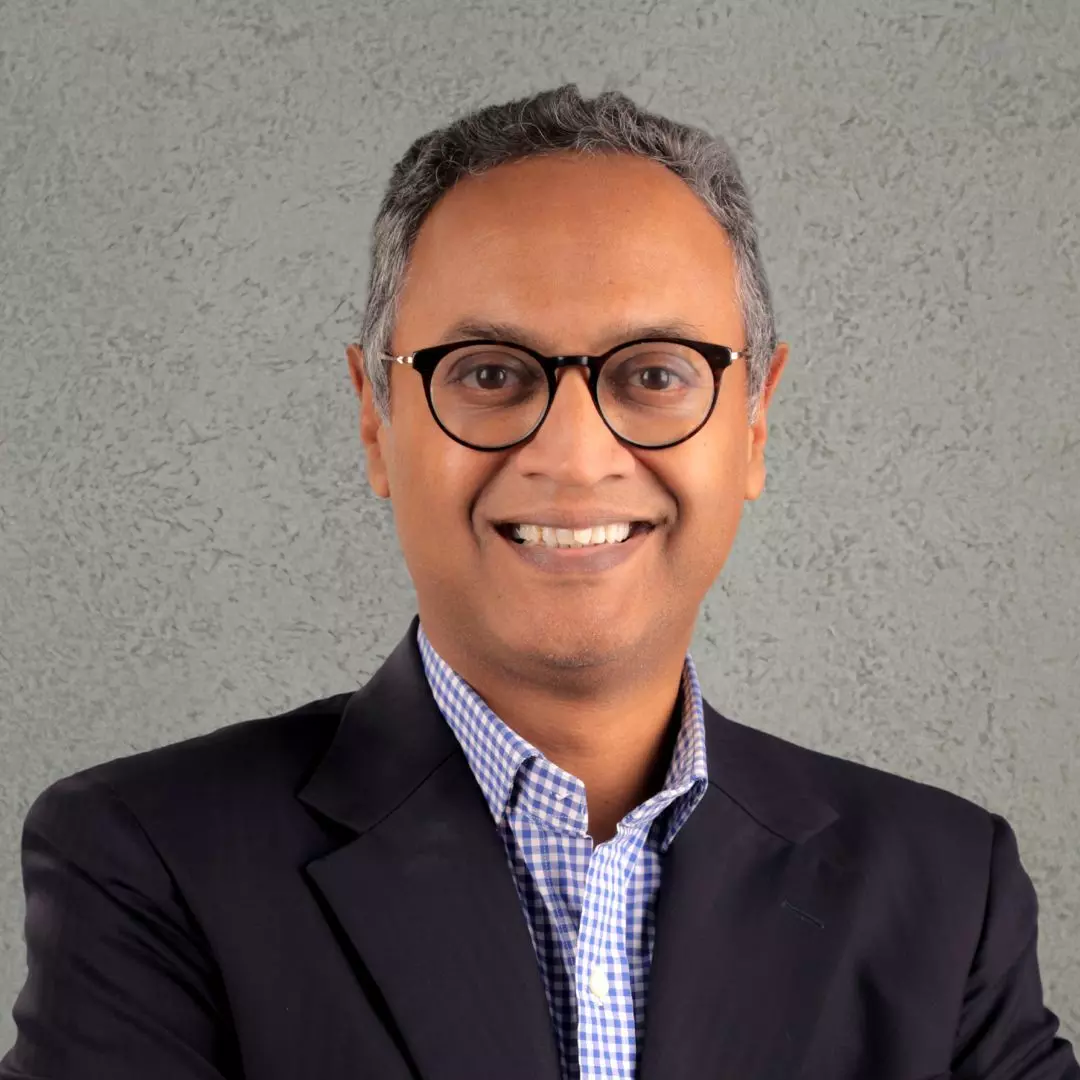
Puja Mehra my colleague and host of how India's economy works spoke to Dr. Jahangir Aziz head of emerging market economics at JPMorgan and also a former finance ministry official on what India's economy is really signalling ahead of this year's union budget.
INTERVIEW TRANSCRIPT
Jahangir Aziz: So it is a tricky thing. If we are going to start slashing tariffs, I'm guessing that is your question, right? In response to the trade negotiations with the U.S., we are still part of the WTO. Because we are still part of the WTO, India simply cannot go and say it is going to cut tariffs only for the U.S. It has to be extended to all most favoured nations, which is practically all the trading partners. Therefore, I think that there might be some decline in tariffs, largely because there has been a significant increase in tariffs over the last 10-15 years. It's not just me, the previous chief economic advisors, all of them have talked about it.
Arvind Palagari himself has talked about it. In the case that it wants to reduce tariffs on a specific country, it has to have a trade agreement. It can do it via trade agreement if it doesn't want to lower tariffs for everybody else.
And that is the tricky part. None of the trade deals that the U.S. has signed have been turned into trade agreements. Because the parliaments or legislatures of either the U.S. or the trading partner have actually endorsed it. So these are just trade deals. Trade deals do not really have the legal standing that a trade agreement has. So I think, yes, you are right that we could see some restructuring of the tariff regime.
But I don't think we should expect a very large change in that because of this problem. It's one thing to go and have a trade deal or trade agreement with the U.S. It's a completely different story if you're going to bring down import tariffs, let's say for wine, across the board. You really have to go back and start thinking about what it does to your domestic wine industry.
That's just my favourite example.
Puja Mehra: Right. So the other thing that came out of last year's budget was deregulation. We saw some follow-up on that through the year.
And you've said that you're going to be looking at what the finance ministry is going to do in the next 365 days. So what would you like to see, both for deregulation and when you said 365 days outside the budget?
Jahangir Aziz: Obviously, you want to ask for the moon. You're not going to get the moon. So what is within the purview of the Ministry of Finance?
Deregulation is actually the purview of other line ministries, not so much the Ministry of Finance. So the Ministry of Finance can basically push on deregulation in capital markets. Now, that is something they haven't done in a very, very long time.
We haven't seen any real reform or liberalisation in the capital markets. Instead, the sound bites that have come out of the regulators is more regulation. Sometimes in the guise of protecting the innocent consumers and individual investors.
But it is an increase in regulations that you see rather than a decline in recognition. What happens in the banking sector is RBI's purview. So that's not Ministry of Finance.
Obviously, Ministry of Finance has a very huge say in that because financial services is part of their responsibilities. What really sits with the Ministry of Finance is non-banking capital markets. And there, there is a lot that needs to be done and a lot that hasn't been done.
But I'm not holding my breath either in the case of capital markets. Just to give you an example. So if you think about India over the last 15 years, let's start from tapered timeshift onwards.
Since then, India's GDP has more than doubled. So imagine an economy where the level of GDP is more than doubling. You would imagine that in that doubling of the economy, a whole host of new sector leaders have emerged.
Now go back and look over the last 15, 20 years or even 25 years. Look at the top 10 sectoral leaders in any sector. Apart from one or two sectors, telecom recently.
You'll find whether you're looking at infrastructure, banking, whatever you want to look at. Pharmaceuticals, technology. The leadership has remained unchanged.
Within the top 10, people have moved from number 9 to number 7 or from 1 to 1.5. But the top 10 companies in any field has remained unchanged. The question that needs to be asked is how come an economy more than doubles its GDP without any change in the leadership of any sector. As I said, leave out telecom for the time being.
Pharmaceuticals, infrastructure, you just name it. There hasn't been any change. Auto industry, nothing.
On the other hand, you get to hear of a new startup every 20 minutes coming up in India. So there is enormous amount of private equity, venture capitalists or private equity firms which are willing to take bets on startups. Otherwise, these startups won't happen.
There is enormous number of IPO activity, even last year when the stock market didn't move at all. So there's a lot of money that is willing to initially fund a company and there's a lot of public money that's willing to buy those IPOs. But there is very little in between.
A startup has to get funding for 3 to 5 years outside of the risk capital that comes initially or the end where it's basically selling the company. Between that period of time, there's a 3 to 5 year period, where it requires significant amount of capital. Banks cannot do that.
Banks can't provide capital to an unnamed firm that is trying to do something that may or may not work. That's not the banking sector's problem. That's the capital market's problem.
That's where private credit comes into play. That's where corporate credit comes into play. And I'm not even talking about corporate credit in the 2030 infrastructure space.
I'm not even talking about that. In the 3 to 5 year space, there's hardly any corporate credit. There's hardly any private credit.
Now, that has to do with the structure of the capital markets. And that's where the government, particularly the Ministry of Finance, because it is the Ministry of Finance purview, it can make changes and make significant impact on financing growth or reducing the concentration that is happening in Indian industry. But I haven't heard either the Ministry of Finance in public discussions or through committees that they may form, etc., showing any real signs that that is the place where it wants to go. I mean, I can count at least 15, probably you can count about 20 committee reports that has been done over the last 30 years. But there hasn't been any real ownership of those recommendations by the Ministry of Finance. And it's not just this particular dispensation.
It hasn't been done in the past also. I'm not blaming this dispensation. Whereas most people in the capital markets will say that is a real need and that is where we have a structural issue that only the Ministry of Finance can solve.
Private sector can't solve that. Ministry of Finance can solve it. But as I said, I haven't heard anything in the past six months or nine months or a year of the government initiating any rethinking on the capital markets.
Instead, they have allowed their own regulators to actually make regulations more intrusive. And again, you know, the intentions may have been noble, but the impact is that it's essentially much more intrusive today than it was 10 years, 15 years ago.
Historical Non-Fiction
The last month has seen a flood of historical non-fiction content on both big screens as well as streaming platforms.
Freedom at Midnight 2 dropped on Sony live two weeks ago and followed Freedom at Midnight's first season which was released in November 2024. Freedom at Midnight as the name suggests looks at events in and around India's independence in 1947 and is based on a book by the same name and authored by Larry Collins and Dominic Lapierre. Durandal released a few days before Freedom at Midnight 2 is an espionage action film also based around more recent events including the terrorist attacks on Mumbai in 2008 and the hijacking of Indian Airlines IC 814 in December 1999.
Durandal has been termed as an all-time blockbuster with a Times of India report saying it has now touched about 1,300 crores in worldwide collections. Freedom at Midnight 2 being an OTT or over the top as its non-product has no direct revenue linkage to viewership but has been getting fairly positive reviews and coverage. I spoke with Monisha Advani, one of the founding partners of Emmay Entertainment, the Mumbai based company that produced the Freedom at Midnight series and I began by asking her what was sparking the burst of historical non-fiction content that we're seeing right now.
INTERVIEW TRANSCRIPT
Monisha Advani: What's really interesting is country, so God, country and man, I think it follows in that order and I think content is also following in that order. That's of course the pragmatic statement. I think we as a company came into making historical content very accidentally.
I'd like to think that it's fact-based content and I think that if it continues to resonate and when titles like Rocket Boys and Freedom at Midnight are seeing success, I think it is largely driven by the appetite of audiences to want to fact-check what they are watching. So there's a great companionship that their devices are providing them in watching something fictionally portrayed and something that they can go back to and seek validation from social media or from Google, for instance. I mean, but that is of course consumer behaviour or habit.
What I think has overwhelmed us is Freedom at Midnight is of course based on the book, the very, very famous book by Dominic Lapierre and Larry Collins. And I think that while we knew that we had something that would cater to a certain audience, it's really overwhelming to see the kind of attention it's drawn in its second week of being on the service.
Govindraj Ethiraj: Right. And this is actually the part two. You had a part one earlier and which I'm assuming gave you the confidence to launch into part two.
So was there a difference? And when I say difference is the way people are responding to the genre between the first part and the second part that's come out now in 2025?
Monisha Advani: I think so. And it's a very good, valid question. So we shot, because it's a limited series based on actual contained material, we shot both seasons simultaneously.
And because of the linear nature of the book, because we've adapted from there, the first series or the first season really deals with the setup of the environment pre-independence. And the second is the immediate aftermath of gaining independence and the partition. What has taken us by surprise and while data is still to validate that, but if we go by the reactions we're getting, the second season has really found water.
The first season was critically acclaimed and did great numbers, but the second season has just gone beyond expectations. So I would say if I was to reflect on what my conversation the day before we dropped was with the management at Sony Live, they were completely bullish on season two as well. And I think that comes from the insights they have and the fact that the content is easier to relate to, you know, talking about the partition, talking about the outcome or the heroes that played out, whether it was the story of Sardar Vallabhbhai Patel, whether it was the story of Nehru, Gandhi, Jinnah.
I think there was a familiarity built in understanding them as well through the first season. So the second season has really exceeded expectations.
Govindraj Ethiraj: Right. And between Durandar and Freedom at Midnight, Durandar is of course recent history and Freedom at Midnight is literally before partition and goes back more than 75 years. So is there a commonality at all in the way audiences are pulling this kind of content or desiring to see this content?
Or is it just coincidence that both are come at this time and both have done well?
Monisha Advani: I think your question has really triggered me to even make that interesting comparative. But what has struck me is that people are drawn to human stories. Durandar is a human story.
And as much as Freedom at Midnight follows a book and a narrative of historical events, the more important thing about it is that we've tried to talk about the human aspect of our leaders. I mean, we see people as heroes and leaders. We forget they're also human beings.
And what we've attempted to do in Freedom at Midnight is show the humanity that made those leaders, those heroes make decisions and also demonstrate and expose their vulnerability towards each other, towards themselves. And I think that is really something that's resonated because what's coming out in the public domain and in the feedback we're getting is that people are really finding that element enduring to have that insight and accept their heroes to be human.
Govindraj Ethiraj: Right. And I'm going to come to how you could be building upon all of this. But before that, the business question.
So in the case of films, we see numbers, 800 crores, 900 crores, 1000 crores. And in the case of OTTs, we don't see numbers. So we're going more by anecdotal response.
And I'm talking about, let's say, someone sitting outside like me. What is your metric for success in an OTT stream as opposed to, let's say, a film? And you're in both spaces.
Monisha Advani: Quite right. It's easy to measure the success of a feature film because it's governed by box office and box office returns. Also, the fact that we get very absolute numbers in terms of non-theatrical values attached to those projects.
It's easy to, again, ascertain what is a moneymaker or a moneybreaker. In the case of OTT, I think one metric that a production house can say is the fact that we come back to business. If our product has resonated, if our content has resonated and succeeded, we'll have people asking us to do more of it.
And when it doesn't, there is a deafening silence that we have to contend with. Having said that, I think that the conversation around trying to find transparency in consumer insight or consumer engagement on OTT platforms is one that has been across the globe an open conversation. It's something that would benefit, but I think at this current moment, for whatever reasons, platforms prefer to keep a tap on it.
What we get at the end of a three-week cycle normally, we get onto a huddle or a call with our OTT partners and we ask them to share insights. Their insights are generic, but enough for us to decode and recognise that, okay, we've done a good job or the fact is that maybe we may have to try harder the next time or there may not be a next time.
Govindraj Ethiraj: Right. Last question. So as you look ahead at 2026, I'm assuming many of the movies or OTT streams that you will debut in the next few months have already been worked upon or are in the final stages.
But be that as it may, how does 2026 look to you and do you see any thematic shifts in the way you are seeing consumers change or anything in your slate that's shifting in order to meet that?
Monisha Advani: For Emmay Entertainment, we have become the accidental gatekeepers of or alibis of Indian history. So we will be coming out with The Revolutionaries, which is on Prime Video, something that's been talked about and is expected with great expectation. It talks about the period in the early 1900s when the independent struggle was taking shape and root across the subcontinent.
Really excited to bring that because it's a very youthful take, again, that we're bringing and stories that were lost that we think will find their audience. For us, apart from that, there is, of course, Hamidistani, which is something that we'll be dropping on Netflix, which is dealing with India's first election. We have some exciting work coming up, which is also feature films, which we're in the process of producing right now.
Thankfully, one of them is a rom-com and the other one is like Mrs. Chatterjee vs. Norway has female protagonists, but dealing with, again, a real-life impact story. I think ME Entertainment does a lot of that.
What do we see for the industry? I think that it's an exciting time. There are changes.
There are green shoots in the area of digital. With the advent of AI, I think cost dynamics are changing, which will bring in efficiency. We'll hopefully return to deeper volumes that have so far been absent for the last two years.
Theatres, I think that, and this is not just a commentary on the weather, but I think what we have to see is that people have more disposable time and disposable income available in not just metros, but in many metros and towns. I think that going after that wallet share for getting them to have a good time at the cinema is going to be something that, as content producers, we're taking seriously. I think the main shift for us is what is it that they're watching?
What is it that they want to? There is, of course, this big argument that, it's only masculine stories that are selling. I really think that if we come up with enough alternatives to that, we will find takers.
It's just about returning to, again, the volumes of content that we were seeing pre-pandemic make their way to the theatres.
Govindraj Ethiraj: That's a good note to end on, Monisha. Thank you so much for joining me.
Monisha Advani: Pleasure. Thanks. Cheers.
A Beauty Tech Hub
French cosmetics giant L'Oreal said on Wednesday it will set up a beauty tech hub in Hyderabad with an initial investment of about 380 million dollars or about 3,500 crore rupees. The hub aims to be a global base for AI driven beauty innovation and it will create 2,000 tech jobs in the next four years and speed up the rollout of advanced AI beauty solutions the company said in a statement quoted by Reuters.
L'Oreal's CEO and the state government of Telangana which houses Hyderabad formalised the partnership at the World Economic Forum in Davos. Bilateral trade between India and France is at about 15 billion dollars in 2024 and both sides have been working to recast their tax treaty since 2024 according to a Reuters report.


