



 Newsletter
 Search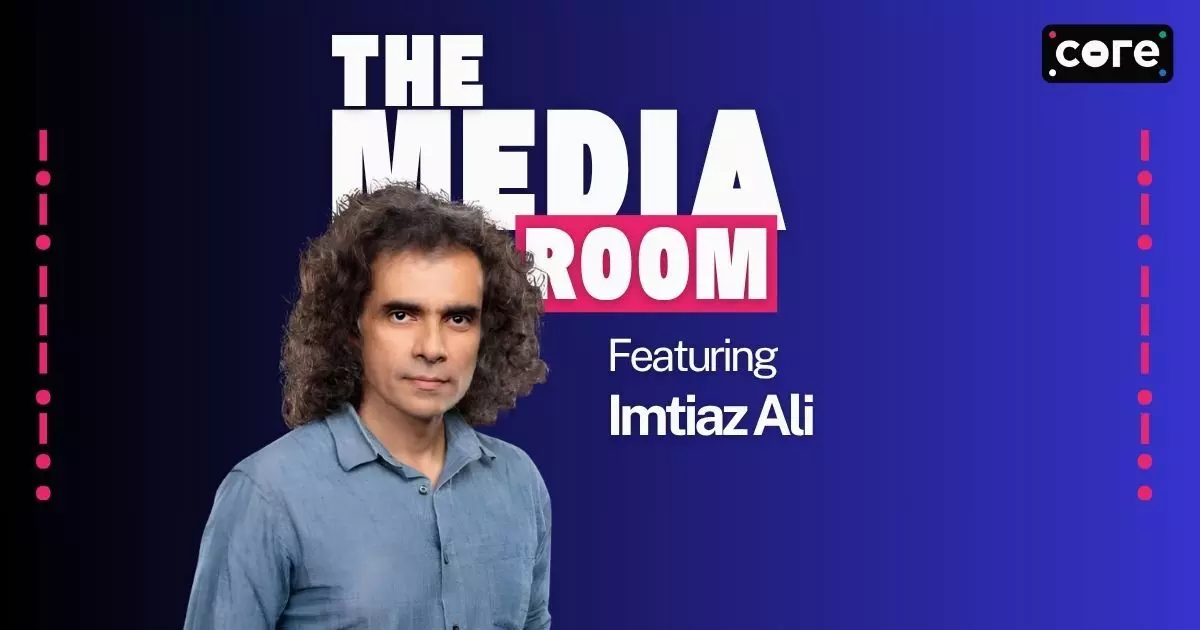
Imtiaz Ali on Cinema’s Comeback and Bollywood’s Future
- Podcasts
- Published on 1 July 2026 6:00 PM IST

From audience-driven success to the global potential of Indian cinema
Imtiaz Ali on Cinema’s Comeback and Bollywood’s Future, in this episode of The Media Room by The Core, is a conversation about why audiences are returning to theatres, why storytelling still wins, and what Bollywood’s next chapter could look like.
Speaking with Vanita Kohli-Khandekar, filmmaker Imtiaz Ali reflects on the unexpected success of Main Wapas Aunga, the film’s box office turnaround, and how audiences took charge of its publicity when traditional film marketing fell short.
From Jab We Met, Rockstar and Tamasha to Amar Singh Chamkila and Main Wapas Aunga, Imtiaz Ali has built a filmography around love, longing, memory, music and emotional storytelling. In this conversation, he explains why cinema is not dying, why audiences still want the big screen experience, and why long-form storytelling may matter even more in an age of short-form content.
The discussion also explores Bollywood’s future, India’s untapped global soft power, the business of film marketing, the emotional role of cinema halls, and why Indian cinema should not lose its originality while trying to reach global audiences.
Watch this episode for a deep, thoughtful and timely conversation on cinema, culture, business, audience behaviour, Bollywood, film marketing and the future of Indian storytelling.
NOTE: This transcript is done by a machine. Human eyes have gone through the script but there might still be errors in some of the text, so please refer to the audio in case you need to clarify any part. If you want to get in touch regarding any feedback, you can drop us a message on feedback@thecore.in.
TRANSCRIPT
Vanita Kohli-Khandekar: Hello and welcome to The Media Room. Today I have with me the inimitable Imtiaz Ali because I love his work and I've just seen Main Wapas Aunga and I love the film. I even made an emotional reel because I love the film.
So Imtiaz, how does it feel now? You know, there's sleeper hit, trade war, sleeper hit, audiences have rediscovered good storytelling. I think you've been giving interviews quite a bit and I'm very worried about asking you similar questions but how does it feel?
Imtiaz Ali: It's, I have not processed how I feel honestly, Vanita. I have been every day going to theatres, many of them and meeting lots and lots of people. More than even meeting them, just gazing at their faces and trying to understand this phenomena.
This never happened in my life where people have really taken the lead in publicity and marketing and have been the ones to force other people into the theatres literally and every day this has grown. Every day the number of people in theatres and the collection has grown and I'm just looking at people and somehow I feel that this is a defining moment for me, you know. That's all that is coming to my mind.
Yeah, it is different because here there was a kind of a box office verdict initially on the day one and you know, business calculates itself from that opening day number and then later on that verdict was reversed and that in this way has never happened before. We feel that Jab We Met was a huge success. It was but not so much at the box office.
It was later through satellite, it was discovered by the general audience and it became, it got so much love and I'm very thankful about it but it did not completely while it was still in the theatre and that has happened for Tamasha, that has happened for to some extent Rockstar and so on and so forth. However, this film is still in theatres while people are going and watching, you know and that is a huge step forwards for me, I feel because I don't want to be the director whose film has to be seen multiple times to be experienced. This one-time experience is nobody has told me that I didn't understand.
Nobody has told me that I understood the second time, you know and that's a huge thing for me.
Vanita Kohli-Khandekar: Fabulous but you know why I will come back and I saw Chamkeela by the way, I loved the music of Chamkeela so much but is there some Punjab theme happening in your head? What is happening there?
Imtiaz Ali: I think Punjab is symptomatic of what's happening in the world at different times. I felt like that in Chamkeela that somehow the conflict of people and artists that is happening in the life of Chamkeela is symptomatic and represents the whole world. Similarly, I feel that what happened during partition in Punjab is symptomatic to what's happening in the world now and what has been happening for at least 300 years in this world.
One way or the other, people are getting displaced. One way or the other, we are finding a reason to push ourselves out of our homes and putting ourselves into this bandwagon that never stops and is there no other way of doing it is what everybody feels. When we see faces of people that have been displaced on television daily, in newspapers daily, we feel something but we are unable to express it you know because we are so much in a hurry all the time so I just I don't know maybe it was collecting and the story of what happened in Punjab during 1947 which was which I was told and retold and retold by everybody who has seen partition with their own eyes when I went and shot Chamkeela in Punjab, I met these people gentlemen and ladies and what I heard from them, I felt there is some sort of a like a resonant frequency that that story has with me in the present you know and that is why I made the film.
Vanita Kohli-Khandekar: So it was born out of your shoots of Chamkeela in Punjab really but you know this otherwise, Chamkeela and otherwise, sorry. Otherwise, also. Of course, Jab We Met also had a lot of elements, I don't know if you shot it or not.
Imtiaz Ali: Yes, I did.
Vanita Kohli-Khandekar: And Jab We Met also had an element. This unrequited love, longing, going back and forth in time, these have become some of your signatures in all the films. It's like you know a wandering thought which comes in every film.
Is that something you've ever tried to pin down or you just express yourself creatively with whatever you're making?
Imtiaz Ali: See, when I'm writing or making a film, I'm not thinking of how things are happening. I just put down things that are appealing to me and then I take that forward. It's almost like a brain fever you know, it's like it just goes on like that.
However, since I have been asked this question many times, I ponder upon it and I feel that the way a person experiences the world is not chronological. I feel that people constantly dip into their memories in order to retrieve the story of their life and I find that my films also do that but not necessarily. I wouldn't want it to be a pattern necessarily but that I see happens a lot.
Vanita Kohli-Khandekar: Even you know and for some reason, I mean before Chamkeela, you had Jab Harry Met Sejal and before that I think you had Tamasha, if I'm not mistaken. Is that correct?
Imtiaz Ali: No, there is one film which is Love Aaj Kal 2.
Vanita Kohli-Khandekar: The one with Kartik Aryan, right? Yes. Okay.
But this film feels different also. You know, you mentioned that the audience was promoting the film and I find that film promotion is like one of the weakest links because I look at it more often than not as a business. I find promotion is one of the weakest links and when I see this, was it choice or was it budget constraints because the promotion was totally different.
I didn't see the usual shindigs happening in this film.
Imtiaz Ali: And we didn't know any better here honestly. We messed up. I think in the passion of making the film, in the passion of bringing it out, in all of the things that have to be done, I think we didn't really know how to promote it.
We thought that we knew how to promote it but now it has been proved that we didn't and we came to a point where the audience rescued us. I think the world has changed ever since I brought out a film into the theatre the last time and not that that time was also a magnificent run at the theatres. But I feel that no, we didn't do it deliberately at all and this time I'm glad that we are getting a second chance and we will learn hopefully what we have to do in terms of marketing also because you know I realise that for movies marketing is not a, it's not only a business function you know, it's also an emotional function.
When we talk about marketing and since you are you know economically intelligent magazine I'm also trained in marketing and advertising so I feel that we always talk about media mix. How many spots, how many hoardings, how many blah but what is it putting out there which is the like the creative so to speak. That is more important like if I put a very bad hoarding and put it everywhere else people will get more and more re-confirmation about the fact that we are paying money in media to say that please don't watch.
I think and also I feel post-covid we've gone into like how we went into our biological bubbles, we've got into our media bubbles also which are very difficult to permeate and the general rule of that one communication applies all doesn't work anymore. So totally and people that watch movies are very different from people on social media mind you. So you know it's just in case everybody who is on somebody's social media came to watch the films that was enough for all of these stars to make a hit of their films but the fact is they don't.
For me this step needed to discover that yeah these people these are the people that watch films because I go every day to theatres and meet them.
Vanita Kohli-Khandekar: I've been seeing that what's that experience been like I've been seeing all these shots of you in theatres and some of the other elderly gentlemen or ladies coming up and talking to you and you know it hasn't sort of is it emotionally overwhelming? I mean what has that experience been?
Imtiaz Ali: I feel that this is happening how can I miss this? People are watching this film and they're something which is genuine to them a genuine emotion is being released. It has been unleashed and how can I not be there and how can I miss this?
And I want to like I feel personally thankful to all people that have received this film in this fashion because they've also done the hard work of publicity which we messed up in and anyway something so substantial. We make movies and we would like those movies to be successful but when you see in a theatre somebody dealing with the real emotion of his life or her life I just want to be there to say that buddy I'm also a part of you you know somehow so I just I don't know I don't know I don't even know whether this is a very nice marketing strategy whether it's making one percent sense in terms of driving audience into the theatre by me being there so but I'm still going to be there for my own sake and this is great learning for me. I've exposed myself to the fire of the fire of the marketplace you know.
Vanita Kohli-Khandekar: What's the big thing you learned if I may ask?
Imtiaz Ali: Don't listen to anybody about what people are or what audience is. There is audience for everybody, there's audience for everything that is good and you can't categorise people that this is the audience for this is the audience for so on so forth. The same person is audience for everybody also in times you know we so just I feel that there you have to make your movie well and I'm so happy to be reintroduced to people time and again we need the reason to connect with people and say who the hell are we making these movies for so I feel that yeah so this is the kind of vibe I'm getting from audience.
Vanita Kohli-Khandekar: We are swimming in deluge of content, there's a deluge of content. In every format, in every length, in every type, it's professionally produced, it's user-generated. I mean, in every way.
Even if you keep watching for 24 hours, that sea won't end. And there's a gluttony as well. So, there's a supply deluge and as an audience and I include myself we are consuming endlessly and I feel it's neurologically rewiring us in ways we don't even know as an audience you're absolutely right.
What you do as a creator, how do you do you make something that you believe in or do you plug in totally to the audience?
Imtiaz Ali: You make something that you believe in and you go ahead with the confidence that I am also getting that if you make it well and if it has something unique there will be an audience to it for it. While we are blamed for being so short of attention span and we are supposed to be so fragmented in our brains and consuming so much and blah blah blah we are also seeing the deluge of people to who go and watch films in cinema theatres as though it's cinema is going out of fashion or something. Like the kind of numbers that some movies have done in cinema theatres post-COVID have never been done before before COVID.
Totally. The fact is that the relief of surrendering to a long movie in a cinema theatre has become even more sweet for us who are constantly consuming short substances constantly through the day. That go somewhere, it's a dark room, just surrender.
Don't judge, you can't judge, you don't have the remote in your hand. What do you want to do? You might as well, you've paid the money.
So just watch. That is one thing that people are loving. The other thing I've realised is as a filmmaker I should make what I want to make because people are also looking at avenues for like a group feeling, a community experience.
They are seeking that. The fact that all of us from different walks of life who don't know each other can sit in a space and feel the same emotion is something that is getting more and more rare. It is so difficult and guess what, everybody is seeking that.
There are so many people I met this time who've come, who came alone to watch the film. I always make it a point to ask them, how was your experience? They were like, I was fine, I was not lonely.
How much money am I being able, will I pay today for not being bloody lonely man in this world? And I think that cinema theatres are always going to give us. It is also telling me that cinema is not dying on us.
Don't worry.
Vanita Kohli-Khandekar: No, I agree with that. You know, one question on the film which puzzled me possibly more as a viewer. You know, you say that Keenu says that there is a curse on this family.
You know, you shouldn't marry. But Keenu is married. He has two sons.
That bit is, that context is left out and I always feel like, how did he marry? And that resentment that is one of his sons has, Rajat Kapoor. I don't understand that context.
Was it deliberate or was it like edited?
Imtiaz Ali: No, no, it was deliberate. Because people, women don't survive is what they feel. Who was Keenu's wife also passed away.
Who was Rajat and Iqbal's wife also passed away. Right? That was Nirvair or Diljit's mother in the film.
And we see all of those women on that board, you know, which has the pictures of all deceased women that Nirvair is watching before he decides to go back to London. And so it is implied in that way that she was around but she passed sooner. And as far as the curse or the curse is concerned, it's like how some families have a certain superstition, which is just superstition, you know.
There were coincidences that led for them to believe in that way. And, you know, it was like, it just sad thing, but it is not realistic fact.
Vanita Kohli-Khandekar: You have collaborated with or worked with Rehman and Ishaad Kamil, by the way, I'm a big fan of both. More Ishaad Kamil. More?
That's nice.
Imtiaz Ali: You said more Ishaad Kamil.
Vanita Kohli-Khandekar: Yeah, more Ishaad Kamil. I think he doesn't come forward, he doesn't talk. So, you know, I don't hear so much of Ishaad Kamil.
Here you have a sense because he has a persona. It's like I'm a big fan So, I look for anything written on Sahir Ludhianvi. I think somebody is making a film also, if I'm not mistaken.
Imtiaz Ali: You know, Ishaad is a big fan of Sahir Ludhianvi.
Vanita Kohli-Khandekar: Oh, really?
Imtiaz Ali: Big fan of Sahir Ludhianvi. He is one of the authorities on Sahir Ludhianvi, I would say.
Vanita Kohli-Khandekar: I must meet him. I really must meet him. So, you know, this is your fifth film together, I think.
Imtiaz Ali:
With Ishaad, well, I've made 10 films and this is my 10th film with Ishaad Kamil.
Vanita Kohli-Khandekar: So, with Rahman and Ishaad's combo, when I did my research, I saw this was your fifth film. This is something different every time. What do you tell them?
How does it become so magical every time when the three of you meet?
Imtiaz Ali: Well, I just talk to them about the story. I just tell them what the story is, what the world is, what the character is, what the feeling is. And it's not so much about the songs in the beginning.
It is not so much about this is the situation, this is the song we have to make. I think especially with Rahman, it is more a process of finding the nerve of the film, which he does subconsciously. I don't see it happening.
But then when he produces the first stroke of music, I realised that he's got the soul of the film somehow. And then we work from there. And then we talk more and then music is created.
And then every song, each time, in every film that we've done together has had a different process of making. Sometimes Rahman sir asks for a phrase and then there is like something else. Like in this film, there was or in this film, there was these phrases were written before, before the music was made.
So lyrics were written, like the poetry was written before Rahman composed. He composed on the lyrics. And the rest of this, yeah, yeah, he does that.
Vanita Kohli-Khandekar: It's unusual. Normally it is the composition which comes first.
Imtiaz Ali: The point with Rahman is that there is nothing normally. Everything is uniquely for every song. And so then, and then otherwise there is like, he just composed Ishq Mittai, the tune.
And then we wrote, then Irshad wrote Ishq Mittai. And then Rahman just composed this Masakara tune. And then Irshad, while it was being recorded, started to write the lyrics and the singer on the booth was recording.
So every time it's a unique thing. And every time we feel, is it happening well or is it not happening well? But then I just go with what I feel is, is I'm liking, you know, what we are liking as a group, rather than I'm trying to figure out what people will like at that point.
Vanita Kohli-Khandekar: And Mohit Chauhan seems to be, I mean, I love his voice. I know I'm saying a lot of nice things, but the fact is I just love these things. These people, their work, their voice.
Mohit Chauhan's voice, I mean, I think the range and versatility in his voice, I've not seen in many male voices.
Imtiaz Ali: You know, he's my friend. But I will say for Mohit is that when Mohit sings, it's like it's a real person. When you hear his song, it feels as though a real person is expressing.
And this is not coming out of any studio. It is just, you seem to know this person. There is a personality to his voice.
And through, and because he himself as a person is a very like, he fits into many categories, you know, you can have him sitting on the floor and jamming. You can have him be exquisite in a hi-fi place. He can, he's great with families.
He's great with friends. He's very good with male friends. He's very good with ladies.
So he's got a range as a person. And I think that is why Mohit has a range as a performer and a singer. I don't know what I have learned or forgotten.
I will go back and do that operation or try to understand what's happening in terms of my growth. But I feel this, that initially I was my own assistant director. You know, there was this friend of mine who assisted me once and said that, you know, your problem is that you're your own first AD and that you are trying to plan things and do all of that so much.
Now, I have the confidence of giving up the reins of controlling the set to someone else. I'm not deluding myself to believe that I'm controlling everything. I feel that there are so many people and they are all doing my job so I can concentrate a bit more on my job.
And I have to thank the first ADs that I have worked with in my life. Adrian Hernandez for this film, Heather Nakvi for Chamkeela. And before that, all of the first ADs that I've worked with, starting with Oliver Robinson in London.
Vanita Kohli-Khandekar: This film's success, does it free you in some ways commercially, creatively, your ability to raise money for the next film or two? Because the last five years have been tough on the money front for many filmmakers. Does this film in some way sort of liberate you creatively and commercially?
That's my question.
Imtiaz Ali: I hope so. Hopefully.
Vanita Kohli-Khandekar: I've been speaking, there are two new film funds in town and I was speaking to them. One is Siddharth Jain, you probably know him. Story Inc.
Yeah. And they were telling me we are only financial investors, but they all have lien on the IP. Then ultimately though you have control over the whole thing.
But anyway, I was just hoping. And the last question, Imtiaz, is more to do with something else that I'm doing. I'm doing a book on the global footprint of Indian cinema.
Just trying. Soft power, hard facts. Just looking at what our status is in the world as a cinema.
Imtiaz Ali: Of course, very, very good. I'm very interested in this.
Vanita Kohli-Khandekar: So for this, I just want to ask you, the fundamental premise, how do you think we stand in the world as far as the cinema goes? And I'm looking at three levels, creative, commercial, perceptual.
Imtiaz Ali: These three levels are all rolled into one. They are not independent of each other. I will say this, there is massive interest globally in things Indian.
As a community, as Indians, we have not really gone out and exploited the soft power that we can have. I feel there is great potential. Maybe we have to start tapping into it now.
It is not tapped.
Vanita Kohli-Khandekar: No, it's not.
Imtiaz Ali: There is great interest. Wherever I go in this world, I see people eating Indian food, doing Indian yoga, talking about Indian philosophy, listening to Indian music. In the remotest parts of this world, everybody is taking sustenance from something Indian.
And also looking at Indian, you can't believe how many Bollywood dance classes that happen in Europe.
Vanita Kohli-Khandekar: Yeah.
Imtiaz Ali: There is so much and in South America, in Brazil. And, you know, all my international friends also tell me that great potential for our music, for everything. But somehow, we are now maybe beginning the process of tapping into it.
And the mistake that Indians should never make is trying to fit into the Western format to be consumed. We can't lose our originality. So, very exciting times ahead for media, for brand, because the soft power is for us to build in the world.
This is a very exciting time.
Vanita Kohli-Khandekar: Super. And next, what is yours?
Imtiaz Ali: I am thinking about what should happen next. Because as I'm saying that I'm very happy to be in this fire test by myself, by the market and by the audience. And I'm getting, if I'm being shown all of this, there must be a reason or at least I should try to make the best of it.
And this will help me decide what I want to make next.
Vanita Kohli-Khandekar: Super. Thank you so much, Imtiaz. Thank you for your time.
Imtiaz Ali: Thank you.


