



 Newsletter
 Search
How Long for Energy Supplies to Stabilise if the War Ends
- Podcasts
- Published on 8 May 2026 6:00 AM IST
Countries have leaned on temporary buffers, commercial stockpiles, oil at sea and emergency reserves to offset the shock of the war in West Asia
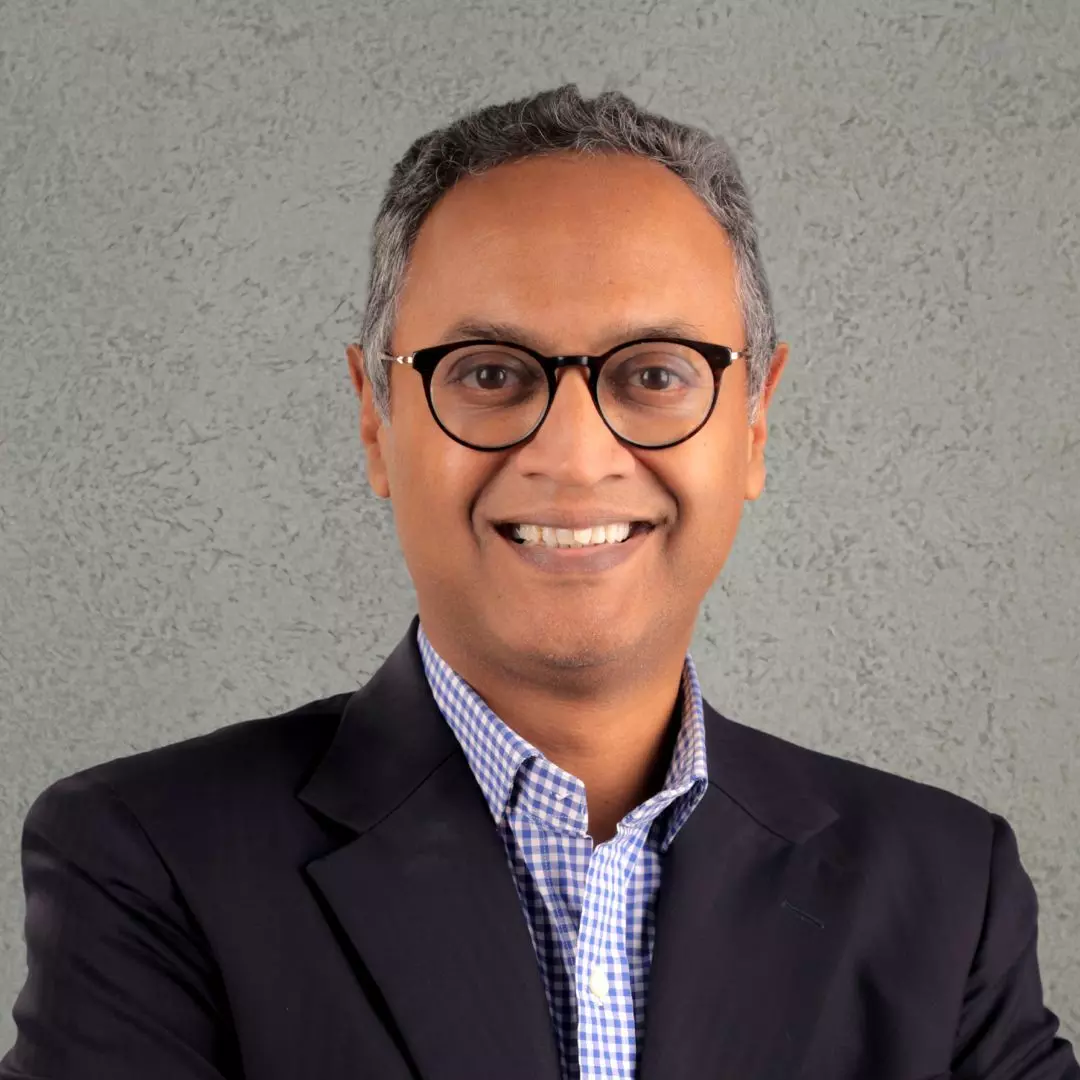
On Episode 867 of The Core Report, financial journalist Govindraj Ethiraj talks to Pranav Haldea, Managing Director at PRIME Database Group as well as Professor Ram Singh, Director of the Delhi School of Economics and member of the Monetary Policy Committee of the Reserve Bank of India.
SHOW NOTES
(00:00) Stories of the Day
(00:50) How long will it take for energy supplies to stabilise if the war ends?
(06:26) India could be emerging from a Goldilocks economy, what does that mean?
(20:37) How Indian markets are getting more institutionalised
(26:31) Which is the world’s best selling drug now?
Check out our Live Earnings tracker: https://earnings.thecore.in/
—
NOTE: This transcript contains the host's monologue and includes interview transcripts by a machine. Human eyes have gone through the script but there might still be errors in some of the text, so please refer to the audio in case you need to clarify any part. If you want to get in touch regarding any feedback, you can drop us a message on feedback@thecore.in.
Good morning, it's Friday the 8th of May and this is Govindraj Ethiraj broadcasting and streaming weekdays from Mumbai, India's warm financial capital.
Here are top stories and themes on this Friday morning…
How long will it take for energy supplies to stabilise if the war ends?
India could be emerging from a Goldilocks economy, but what does that mean?
How Indian markets are getting more institutionalised
And the world's best-selling drug now is…
Markets, The War, Oil Prices and The Rupee
It is increasingly becoming clear that businesses are now focused on how long it will take for energy flows to stabilise assuming the war were to end in coming weeks.
The answer to that is not very encouraging. A Reuters report says that oil supplies are set to tighten further in coming weeks even if the U.S. and Iran agree on a peace deal to end the war because it would take weeks for oil shipments to resume from the Middle East, Gulf, and reach refiners worldwide. So oil companies will essentially continue to deplete storage tanks to meet peak summer demand.
So how have things worked so far? Well, countries have leaned on temporary buffers, commercial stockpiles, oil in transit, or held in storage at sea and emergency reserves to offset the shock of the war in West Asia. The full impact of the disruption to oil supplies has yet to wash through markets and the global economy because it will be many months before Middle East production and exports return to pre-war levels, according to executives from energy companies, investment banks, and market analysts who spoke to Reuters. Now, this rapid depletion of commercial stockpiles and emergency reserves has come at a time when stockpiles typically build up as refiners and retailers prepare for peak demand during summer in the northern hemisphere.
The global energy system will soon enter peak demand in a weakened position to deal with the spike in consumption from summer driving, aviation, farming, and freight, and more on aviation in a moment. India of course is already here as it is in the middle of a blazing summer and we've seen already record electricity consumption levels in recent weeks. Another red flag which is not going to go away soon is jet fuel prices which have doubled roughly in a matter of weeks after the war began and they've remained high.
Airlines have said that they will add billions of dollars of additional expenses this year in the United States, squeezing profit margins. The Wall Street Journal reports that airlines spent more than five billion dollars on fuel in March, up 30 percent from a year earlier. Airlines have also been raising ticket prices, hoping to pass the cost along to customers, also reducing flights, and that's something that we are seeing in South Asia and Southeast Asia as well, particularly flights that will no longer make money at higher price levels.
So far, airlines, at least in the US, are saying that higher fares haven't deterred bookings as they're hoping to recoup more of the fuel cost increases as the year goes on. President of the industry group Airlines for America and a former state governor, Chris Sununu, has sounded the alarm to the Trump administration about the economic fallout from high jet fuel prices. The war, Sununu has argued, must come to a close soon or things will get worse.
Moreover, he cautioned, and this is the important part, that it could take months for prices to return to pre-war levels. Ticket prices won't go down immediately after the state has fully reopened, the Wall Street Journal quoted him saying. He also said that you're looking at elevated ticket prices through the summer and fall because it takes a while for the prices to go down.
In the oil markets, prices were down on Thursday, falling more than four percent to take the Brent crude level to below $100 a barrel, as of course hopes rose once again on a US-Iran peace deal, which could lead to a gradual reopening of the state of Hormuz. Brent crude futures were down about $4.3 to $96.96, so just under $97 on Thursday morning, according to Reuters. Both Brent crude as well as West Texas Intermediate had fallen more than seven percent on Wednesday, hitting two-week lows, and price drops continued into Thursday, as we just reported.
Back home, the markets were flat as they assessed all the fresh developments in West Asia and tried to make sense of what was likely to happen and when. The Nifty 50 and Sensex were flat mostly after moving in a tight range throughout the Thursday trading session. The Nifty 50 was down four points at 24,326 and the Sensex was down 114 points at 77,844.
In the broader markets, the Nifty mid-cap and Nifty small-cap ended 1.1% and 0.87% higher. The fall in oil prices also helped Asian currencies, including the rupee, which was up about 0.5%, and closed the session at Rs 94.25, higher than its intraday low of Rs 94.90. Reuters reported that the dollar-rupee forward premiums, or the cost of hedging currency exposure, retreated, with the one-year forward implied yield falling to a three- week low of 2.97%.
More Investments in Andhra Pradesh
Among business news, Andhra Pradesh continues to pull in fresh investments. Earlier, it had showcased big-ticket investments from Google, Reliance Industries, and Adani Group, amongst others.
Eicher Motor, maker of Royal Enfield bikes, plans to invest about Rs 2,200 crore to set up a manufacturing plant in Andhra. The factory will come up in two phases. The first be completed by 2029 and the second by 2032.
This plant will add about 900,000 units to its current annual capacity of about 1.46 million units as of end February. You may recall our take on Royal Enfield's more than 1 million production of which over 100,000 units are being exported, including to competitive markets like the United States. This project is expected to generate about 5,000 direct and indirect jobs.
But more interestingly, it's the bike makers' first manufacturing expansion outside Tamil Nadu state, according to Reuters.
West Asia Impact on India’s Goldilocks Phase
The minutes of the latest Reserve Bank of India's Monetary Policy Committee meeting, which was released over two weeks ago, showed a shift in tone, with members acknowledging that the economy's recent Goldilocks phase of high growth and low inflation could be under threat from the war in West Asia. The six-member panel did vote unanimously to keep the repo rate unchanged at 5.25% and retain a neutral stance, but the discussion reflected heightened concern over the growth-inflation trade-off.
So, what does a Goldilocks phase mean in the context that we are speaking of today, and where does India stand in that? I reached out to Professor Ram Singh, Director of the Delhi School of Economics and also a member of the Monetary Policy Committee of the Reserve Bank of India, and I began by asking him to walk us through where India's economy stood from his vantage point before the 28th of February 2026, that was the start of the war in West Asia, and where it stands today, and of course, breaking down Goldilocks.
INTERVIEW TRANSCRIPT
Prof. Ram Singh: Before February 28th, 2026, we were, Indian economy was in a state that was widely described as a Goldilocks status. It was a kind of unique state situation for Indian economy and in a sense, so Indian economy for the first time tested a combination of macroeconomic situation variables that put together and describe an economic status at Goldilocks status. These variables are growth rate.
So growth rate should be not very high but should not be very low. It should be something that is considered to be high but not something that will heat up the economy. The other feature of Goldilocks is that inflation should be low.
So it's primarily a combination of high growth and low inflation combined with few other variables. Low unemployment rate goes hand in hand with high growth rate. So that was also the case with Indian economy.
And interest rates should be what are perceived to be market friendly. And final piece of Goldilocks feature is that the risk profile of the economy should be stable. We take all these parameters in February 2026.
Since then, Goldilocks status has been under serious stress test. We are still in that phase but facing serious stress test primarily for external factors, West Asia conflict to be specific.
Govindraj Ethiraj: Okay. Now it's more than two months, nine weeks plus since the war started and we've seen several kinds of pressures flowing in including of course because of fuel shortages, I'm talking about gas and fuel price rises though it may not be or not have been transmitted to retail right now. So how are you seeing both the first order and the second order impact so far, which allows us to assess what the impact on inflation or economic growth could be?
Prof. Ram Singh: So we have seen very limited pass through of crude oil price escalations, even though the crude oil prices have increased by upward of 40% but there has been very limited pass through. So retail LPG prices for domestic sector and also for diesel and petrol have been primarily contained stable. It's only for the commercial sector we have seen some pass through.
The other channel we have seen some pass through is the exchange rate channel. Rupee has depreciated as a result. There has been some pass through through that channel and some of the pass through is inevitable and in my view is actually desirable because crude oil prices shock is a terms of trade shock for Indian economy.
So when an economy is hit by external terms of trade shock, it is important to let some of that effect pass through to send right kind of signal. In this case, it is important for Indian household sector, commercial sector to optimise to go for a healthier energy mix in their consumption basket at households as well as for manufacturing and services sector. That's where we are heading now.
In terms of the second round effect, there has been very limited pass through, there has been very limited first round effects. So the second round effects are yet to play out. But my conjecture is that the second round effects will persist for short term and will be moderated.
And for that, I give credit to central government in managing the first round price effect, keeping the retail prices in check.
Govindraj Ethiraj: Right. And, you know, of course, in this case, we are talking about a shock because of war. Usually when economies exit Goldilocks phase, what happens and what is the trigger or what often is the trigger?
Prof. Ram Singh: So the same variables that go to describe Goldilocks status, we have to watch out for the same set of variables. What happens to growth forecast? What happens to inflation trajectory?
What happens to the exchange rate? What happens to the interest rate guidance? We have to watch out for these variables.
But these variables take time before they show up in actual numbers. So in the interim, we can watch out for high frequency indicators. Exchange rate is a very good signal.
So as you know, that yesterday we witnessed dropping crude oil prices to the tune of 8 percent. And that immediately showed up in our stock market performance becoming better. Rupees strengthening by, I think, around 75 paisa, 67 or 70 paisa.
So crude oil prices and exchange rate good indicators to watch out in the short term. Also, we will be watching out for any percolation of this price phenomena by way of second round effects in the wider economy. So WPI will also be a variable of interest.
Govindraj Ethiraj: Right. So therefore, from either a monetary or a fiscal response standpoint, what is it that we could be doing and should be doing?
Prof. Ram Singh: When we frame our fiscal and monetary policy responses, we can still draw a lot of comfort from the fact that the state economy is in today. It's still unprecedented. You know, this is not for the first time that we are in a high growth phase.
So we have had in the past at least two rounds of high growth phase. But those phases, like from 2003 to 2012, was high growth phase, but was combined with also with high inflation. Today, on that front, we are uniquely placed.
So growth rate is still high, seven plus. And we can expect in fiscal year 27 also to clock upward of 6.5 percent GDP growth. And inflation will still be contained in a manageable state.
So around 4.5, 4.6 percent is the inflation forecast by MPC of the RBI. On foreign exchange front also, we are in a much better state than we were back then. So these sources of strength are there.
And also other thing is that the growth momentum that was picked up last year in the Goldilocks stake, it's still playing out. So last year, we witnessed private investment, private capex building up and actually performing better than public capex. So last year, private capex saw a growth rate of more than 40 percent.
And in terms of new projects, it's actually about 70 percent growth that we witnessed. So that momentum will still last. Consumption, private consumption also grew at a healthy growth rate.
That momentum will also be there. So we can build up on this momentum. And if we can manage the price front, then we should be doing OK.
In terms of the fiscal policy response, I would recommend that the pass through should happen, but in a staggered way so that the second round effects are not kind of rippled, but they are more moderate. So that would be primary recommendation. Government has done a very good job of providing credit guarantee, extending credit guarantee for working capital, for MSMEs and also for the corporates.
That will also be a saving grace. But we should watch out and do more if needed to be done. On monetary policy front, we should be watching carefully the incoming data.
But at the moment, I do not have a sense of alarm. If West Asia conflict gets resolved in the next two weeks or so, then we would have passed the stress test. Goldilocks period can still be extended at a manageable level, from a very comfortable level to a manageable level.
That's where we will find ourselves.
Govindraj Ethiraj: So the other aspects of Goldilocks phenomenon is obviously that we are not leading to recession, nor are we overheating. And I think what you're saying is that we should not be worrying at this point about overheating because inflation levels are low. But that could obviously change if, let's say, the war continues and there is some price transmission for fuel or could be some other areas as well, for example, food because of monsoons and so on.
So I'm just trying to get a sense on how are you seeing it from a top down view?
Prof. Ram Singh: Some price pass through is inevitable. You know, whatever we decide from fiscal point of view. So there will be, if we allow pass through, there will be direct effect and also second order effect.
If we decide to, let's say, go for higher fiscal deficit, then that will also put some upward pressure on prices. So some upward pressure on prices is inevitable. And because of supply side disruption, some hit on growth front is also inevitable.
My point is that at the moment, we are not in a situation where we should be alarmed. I repeat, you know, if the conflict gets resolved in coming weeks, then at some relaxing of the fiscal prudence, we should be able to, perhaps my recommendation would be, let there be limited pass through, not the complete pass through. Let it be staggered.
Give support to MSMAs and some direct transfers to other groups if need be. So on the monetary policy, just be, remain watchful in a neutral stance so that we can, we have ample scope, both on fiscal front and also monetary policy front. We have ample leeway to respond to the situation.
But I would also like to add that in my view, this conflict should get resolved in coming weeks. That's the kind of signal that one is receiving from West Asia or from countries that are involved in the conflict. I hope it answers your question.
Govindraj Ethiraj: Yes. So, you know, assuming let's say growth does slow down a little bit for various reasons, including let's say companies being not investing enough in CapEx at this point, as opposed to what you said when it had overtaken public CapEx. Do you think we are in an interstate environment which is conducive for further investment or does that not matter beyond a point?
Prof. Ram Singh: So investment environment still remains conducive. So let me give you two data points. One is that if you look at sales of vehicle sales for April, which happens, you know, in the thick of West Asia crisis, whichever way you look at commercial vehicles, private passenger vehicles, whichever way you look at rural sales, urban sales, two wheelers or four wheelers, whichever way you look at.
So the growth rate has been in double digit and rural areas actually doing better than urban areas on several count. So that is one signal that, you know, there's an underlying demand and there's a domestic fundamental still remains strong. And other is that activities index as captured by HS, this is PMI index, also signals that companies both in manufacturing sector and also service sector, services sector, they expect demand to be there.
Our exports or also services exports have done very well last year and they seem to be doing well as of now also. And we expect them also to be in steady state. But I would say that this is an occasion for us to think seriously about some structural reforms for the economy, both on the prices front, energy prices, and also other factors that hamper our competitiveness in the exports front.
This is a good time to act on both the fronts.
Govindraj Ethiraj: So one is you pointed out that rural demand and of course, this is backed by figures that we've seen from the automobile dealers has been much higher than urban demand. And that's been the case for some time, particularly entry level four wheelers, two wheelers and so on. A very broad question.
So why is that happening? Is it because urban is slowing down? Or is it that rural is accelerating now beyond or catching up with demand, which was had not been fulfilled earlier?
Prof. Ram Singh: So urban is not slowing down, Govind. It's rural India that is catching up. And there are two reasons for that.
One is that in last few years, there has been some modest, but increase in real wages. And last year, I think it was the low inflation that gave double boost. So what we are witnessing today is the combined effect of moderate wages, nominal wages, growth rate, combined with low inflation, giving them additional purchasing power to rural India.
So it's rural India is catching up in my view.
Govindraj Ethiraj: Right. Professor, thank you so much for joining me.
Prof. Ram Singh: It was a pleasure, Govind.
Changes in Investor Breakup
A data point that we reported on two days ago, the share of individual investors, that's retail plus high net worth individuals in NSE listed companies, has fallen to a five-year low of 9.1% as of March 31st this year, even as mutual funds have risen to a record of 11.5%, the highest ever and obviously ahead of direct retail ownership. At the same time, foreign investors have fallen back to a 14-year low of 16% according to data analysed by Prime Infobase, an initiative of Prime Database Group based out of Delhi.
So, the result obviously is that there is a structural transition where retail investors are exiting direct stock picking and domestic institutional money fuelled by systematic investment plans or SIPs is becoming an important or dominant force in Indian equities. I caught up with Pranav Haldea, Managing Director of PRIME Database Group, and I asked him how he was seeing the trends in institutionalisation, what was driving it, and more importantly, his outlook ahead.
INTERVIEW TRANSCRIPT
Pranav Haldea: So yes, you're right, you know, as far as individual investors, which comprises retail and H&I investors. Retail are those investors who hold up to two lakh in a company and H&I investors are those who hold more than two lakh in a company. So if you look at the combined share of these classes of investors in the Indian market, that has now come to a five-year low as on the quarter which ended in March 2026.
At the same time, like you said, you know, the share of institutional has been going up and in particular, within the institutional investors, what you're seeing is, you know, the share of domestic institutional investors, which has really been climbing for several consecutive quarters. For example, mutual funds, you've had the 11th consecutive quarter of increase in their share. So what you're, you know, essentially seeing is, I think from an individual investor's perspective, I think there is some realisation which is coming in that, you know, dabbling in stocks directly is not a great idea unless you really have the time and the expertise to do that.
And perhaps there is some merit and there is sense in trusting a professional fund manager who's there in the mutual funds to park your money. And which is why you're seeing a consecutive also, you know, on a month-on-month basis, a huge amounts of influence through the SIP route, which has been something of a note over the last couple of years, especially seeing the kind of volatility that you've seen in the market. There were a lot of concerns that, you know, how will retail investors behave?
For example, a lot of these individual investors have actually come into the markets only in the last two, three years, and they've never actually seen a negative return. However, at least what you're seeing thus far is that their faith seems to be maintained and the SIP flows continue. Siddharth Right.
Govindraj Ethiraj: So then what explains the other number coming down, the retail HNI? I mean, is it because they've actually shifted out or has that stock of investors now moved out?
Pranav Haldea: Deepak So actually, if you look at the figures, the share has actually remained broadly the same. If I go back 14 years, which is in March 2012, the share of these individual investors at that time was 8.51%. And that has now come to 9.11%. So marginal increase. But at the same time, if you look at the share of mutual funds is now 11.46%. At that time, the share of mutual funds was just 3.21%. So from 3.21%, it's gone up to 11.46%, which shows the growing heft of these fund managers.
Govindraj Ethiraj: Siddharth Are we able to put numbers on this, like accounts or DMAT accounts or individual accounts?
Pranav Haldea: Deepak I'm sure we can, but I don't have those numbers. But I'm sure we can find out those numbers from the depositories. The number of folios as far as mutual funds are concerned, and also as far as DMAT accounts of in sheer quantum, I'm sure there would be a huge increase in both numbers.
But what these figures essentially also represent is the share of the value of the market. That's a very interesting point, actually, which we can probably take a couple of minutes to talk about as well. There is a share of the value of the market and there is a share of the volume of the market.
By value, we essentially mean is, of course, we are taking into account the market cap. For example, if one were to look at the share of individual investors by value, it would be much lower, but by volume, it would be much higher because individual investors continue to hold significant stakes in several small and micro cap companies. And when we are doing the calculation by volume, we are considering the top rated market cap company and giving it the same weightage as the smallest market cap.
While in the case of value, we're describing the value share of that stock as well.
Govindraj Ethiraj: Right. So as you look ahead, do you see any of these trends accelerating? I don't know if there's a way to project that, but is any of these trends accelerating or do you see this being a sort of new normal of institutionalisation of the market?
Pranav Haldea: Well, one of the changes which we saw last year in March 2025 was when domestic institutional investors, after a long time, overtook the foreign institutional investors. Govind, you would remember, you know, 10 years back when you would find FII selling, you know, markets used to crash. And essentially at that time, you only had the LIC, which would be called upon to kind of provide some support to the market and how times have changed.
You saw in March of 2025, DIIs as a whole overtook FIIs. And this trend I've been calling as the Atma Nirbharta of the Indian markets. And very slowly, and you know, my expectation is that in the next few quarters, you will also see mutual funds alone will also overtake the share of FIIs.
So I expect this trend to continue. I think you are seeing continuous inflows into mutual funds by individual investors. And that trend is set to continue.
And I think mutual funds will soon become the largest set of investors, non-promoter in the Indian market.
Govindraj Ethiraj: Right. That's a good note to end on. Pranav, thank you so much for joining me.
Pranav Haldea: Pleasure as always. Thank you.
The World’s No. 1 Drug by Sales
Eli Lilly's blockbuster diabetes drug, Monjaro, has surpassed Merck's cancer therapy, Keytruda, as the world's best-selling medication according to a report in Bloomberg.
This, of course, highlights that the world's best-selling drug till now has been a cancer drug. Monjaro generated about $8.7 billion in the first quarter of 2026, overtaking Merck's Keytruda, which posted sales of about $7.9 billion. Now, Keytruda has been the world's top-selling drug since the first quarter of 2023, and at that time it had displaced AbbVie's autoimmune disorder drug Humira.
Lilly is doing even better according to Bloomberg, particularly if you consider both Monjaro and its weight loss drug ZepBound, because they use the same active ingredient called tirzepatide. The combination generated about $36 billion in 2025, surpassing Keytruda's $31.6 billion for the year. There are, of course, differences in the kinds of drugs.
Analysts also told Bloomberg that at the time of its approval in 2014, Keytruda was revolutionary, extending the lives of patients who were previously given a death sentence and thus was priced accordingly. Tirzepatide, meanwhile, offers low-cost options for millions of people with life-limiting, but not deadly, obesity. In India, Eli Lilly's weight loss therapy Monjaro was the top-selling drug and has been so since October last year and has overtaken GSK's widely used antibiotic Augmentin, as demand has surged in India.


