



 Newsletter
 Search
Goldman’s Big Prediction For Indian AI Stocks
- Podcasts
- Published on 15 Oct 2026 6:00 AM IST
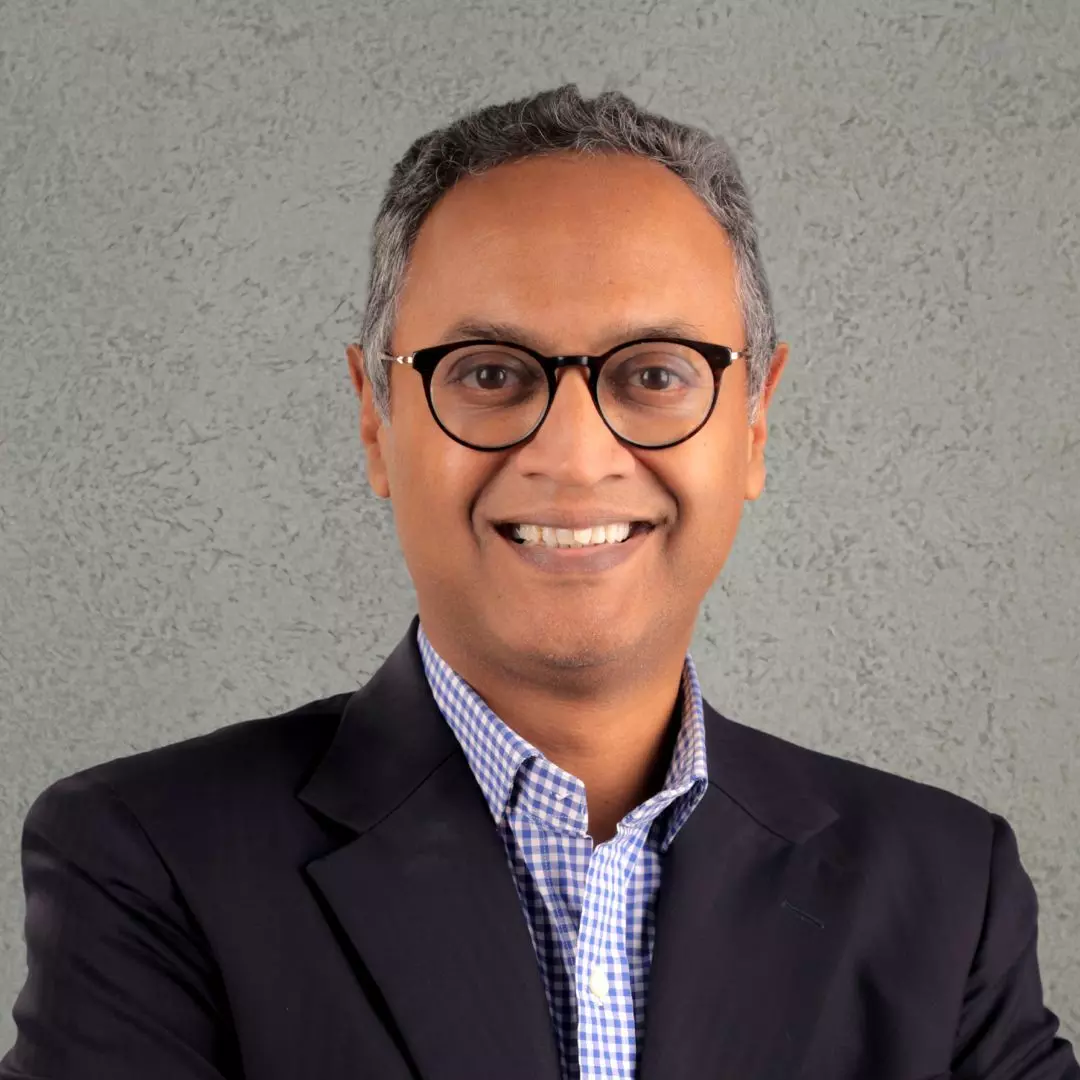
Goldman Sachs said it is seeing strong momentum across Japan, India and China, partly driven by AI infrastructure spending
On Episode 1005 of The Core Report, financial journalist Govindraj Ethiraj talks to Vishal Mehta, India Leader – Energy Practice at Boston Consulting Group (BCG) as well as Harsh Roongta, Founder at Fee Only Investment Advisers LLP.
SHOW NOTES
(00:00) Stories of the Day
(00:50) Goldman’s Big Prediction For Indian AI Stocks
(03:15) Rupee Continues To Rise As RBI Battles Speculation
(04:56) Wholesale Inflation Jumps
(07:21) India’s Energy Grid Is Seeing Big Shortages, What Is The Way Out?
(17:17) The Insurance Industry Has Pushed Back On The Regulator's Proposals On Slashing Distributor Commissions. Where Will The Meeting Point Be?
—
NOTE: This transcript contains the host's monologue and includes interview transcripts by a machine. Human eyes have gone through the script but there might still be errors in some of the text, so please refer to the audio in case you need to clarify any part. If you want to get in touch regarding any feedback, you can drop us a message on feedback@thecore.in.
Good morning, it's Thursday, the 15th of October and this is Govindraj Ethiraj broadcasting and streaming weekdays from Mumbai, India's financial capital.
Our top stories and themes…
Goldman's big prediction for Indian AI stocks
The rupee continues to rise as the Reserve Bank battles speculation
Wholesale inflation jumps
India's energy grid is seeing big shortages, what's the way out?
The insurance industry has pushed back on the regulators' proposals on slashing What could the meeting point be?
Markets, AI, The Rupee and Wholesale Inflation
A strong demand for AI has bolstered growth in China, India and other Asian countries and outpaced the overall growth in global trade, the IMF or the International Monetary Fund's new chief economist, Silvana Tenvero, said earlier this week in Bangkok. On Wednesday, Goldman Sachs said it is seeing strong momentum across Japan, India and China, partly driven by AI infrastructure spending. Goldman president for Asia-Pacific ex-Japan Kevin Sneader said in an interview with Bloomberg TV that North Asia was a particular beneficiary of AI-related capital expenditure.
Moreover, he said Goldman had identified 42 AI-enabling companies listed on Indian exchanges that were collectively growing around 60% in market performance and he pushed back against the narrative that India is disadvantaged by lacking a large language model of its own. He said that India is home to what we call AI enablers and also added that 42% of India's agricultural sector is available for AI augmentation, representing a significant longer-term opportunity. Nirav Sheth, CEO of Institutional Equities at MK Global, told The Core Report on Wednesday in an interview which is to be released next week, that one of the many subsectors that will benefit from the global data centre boom will be power transformer makers, particularly since custom building is often involved.
Back to Wednesday's markets, they followed prices, that's oil prices once again, rose on Wednesday following attacks on the headquarters of Saudi Arabia's state-owned oil company Aramco. Iranian officials told Reuters they were deploying new tactics to target chips seeking to keep oil prices high and influence U.S. midterm elections. Brent crude futures were up just under $1 to about $106.60 a barrel or under $107 a barrel on Wednesday morning.
Sensex fell 251 points to 72,781 and the nifty 50 was down 99 points to 22,622. In the broader markets, the nifty mid cap and nifty small cap were down 0.08 and 0.32% each. Some data that might be of interest, in 2026, foreign portfolio investors have invested about 55,000 crores into the primary market while selling in the secondary market has hit a record 315,000 crores.
So roughly six times according to prime database data quoted by business standard. In the last two years, FBI or foreign portfolio investor flow trend has followed the same trajectory. In 2025, they sold stocks worth 240,000 crore rupees but bought shares worth about 73,000 or 74,000 crore rupees.
The rupee rose for the third consecutive session on Wednesday to hit a more than one month peak as the reserve bank continued to fight the battle with an array of aimed at stemming the decline and stemming speculation. The rupee closed at Rs 95.15 on Wednesday after hitting a peak of Rs 94.77. Reuters quoted DBS bank saying in a note that a durable turnaround in the rupee will also require negative global triggers to subside and the latest announcements may not fully quell speculation over further policy action. Meanwhile, results season is underway and the prognosis for sectors like consumer goods is still not very positive.
Consumer goods makers are expected to report narrower September quarter profit margins despite double-digit sales growth thanks to rising raw material costs which have outweighed price increases. Analysts told Reuters adding that rising costs are squeezing margins at these companies. Nestle kicks off the sector's second quarter earning season race on Thursday, that's today, and some analyst firms have said that they expect operating margins at the 10 major consumer staples firms to shrink 45 basis points from a year earlier despite a revenue growth of about 13 percent driven by a 8 percent rise in volumes and price increases of 5 to 6 percent, a Reuters report added.
Also saying that quota constitutional equities has forecast a steeper 150 basis point margin decline across its coverage. Jeffries expects a 45 basis point drop for staples firms excluding ITC and Barun Beverages. So the nifty FMCG index has fallen almost 19 percent this year which makes it the second worst performing sectoral index after nifty IT while the benchmark nifty 50 has fallen about 13 percent.
Macro news, India's annual wholesale inflation has accelerated at a faster than expected 11.39 percent or about 11.4 percent for September according to data released on Wednesday thanks to rising oil prices amidst the war in Iran. Wholesale prices have risen more quickly than retail prices in India as state-run fuel retailers have passed on only a fraction of the higher energy cost to consumers, a Reuters report said. Price rises for petrol and diesel according to economists that we've been talking to is now imminent at the pump.
Now whether that happens or not is obviously up to the government and the oil marketing companies who mostly report to the government except for a couple of private sector players. In the US, inflation was also up in September a sign that high energy prices are tightening their squeeze on consumers ahead of next month's midterm elections, the consumer prices were up 3.7 percent in September from a year earlier which is much higher than August's number of 3.4 percent and also above the 3.6 percent rise expected by economists who the Wall Street Journal surveyed. Meanwhile in a significant M&A deal in the financial services space where we've already seen several cross-border financial services deals, Fairfax Financial Holdings has said it'll take a majority stake in IDBI Bank in a deal worth about five and a half billion dollars or about 52,000 crore rupees the government said on Wednesday.
The acquisition has taken over four years and we'll see Fairfax take control of IDBI Bank and this will also be the biggest cross-border bank deal. The plan to sell IDBI was first announced in 2022 but faltered because bids fell short of the government's sale price expectation. It was restarted after the government lowered price expectations after accounting for a fall in IDBI's publicly traded price, a Reuters report said.
IDBI has total assets of about 444,000 crore rupees or about 47 billion dollars as of June this year and has 2,000 branches across the country. Elsewhere, Hyundai Motor said it'll invest a little over a billion dollars in its Pune plant to scale up its annual production capacity by nearly 90 percent by 2030. This was of course earlier announced as well but the Hyundai Bras is in the country right now and the move comes a day after Hyundai Motor Group said it would invest more than 15 billion dollars in India through 2032, positioning India as a key growth market, a Reuters report said.
India’s Energy Grid Is Seeing Big Shortages, What Is The Way Out?
India's electricity grid has faced an average shortfall of nearly 4 gigawatts a day in the first 10 days of October. Bloomberg quoted data from the grid controller of India. It also said that this is enough power to run about 2 million rural Indian households.
Moreover, India's rapidly growing demand for electricity could force it to add much more coal-fired power capacity than planned, Reuters quoted the chairperson of the Central Electricity Authority saying. India had planned last year to add 97 gigawatts of coal power capacity to reach 307 gigawatts by 2035 and currently has about 230 gigawatts. So where does India stand right now given among other things rising temperatures which we can all experience and thus loads on the grid? I spoke with Vishal Mehta who leads Boston Consulting Group's energy practise in India and I began by asking him how he was seeing the shortfall numbers and also what he saw as a way out.
INTERVIEW TRANSCRIPT
Vishal Mehta: Good, I think that's a slightly macro number, the 4 gigawatt one. The reality is slightly more nuanced. See, I think most of our capacity addition, which has happened is basically the day or afternoon capacity.
So, which is all the solar capacity that we are adding, which is on a fantastic run. We are on a trajectory of 45, 50 gigawatt addition per year, right? Now, all of that is going towards solving and almost creating a surplus for the afternoon slots, which is there.
So, all the issues that you see in terms of the demand supply mismatch are actually coming in the slots post 6 p.m. Now, the evening capacity, obviously we are not adding at the same pace that we need to add. Now, what is the evening capacity? Thermal, of course, coal-based is a dispatchable capacity.
So, you can use it during day, you can use it during night. So, the more thermal you will have, the more you have cushion for the evening. Have basically your hydro generation, which can be done pretty much around the clock.
You have gas-based generation, which is there. And wind, which is also more seasonal, but at least it comes in during that particular slot, right? Now, we've done a great job, honestly, on the solar addition.
The thermal addition, if you see from last year to this year, I think incrementally we would have added about 3.5% thermal capacity, whereas your spike in demand this year has been almost 12%. Of course, this 12% spike is on the back of a benign year we had last year. We had last year in very low single digits.
And this is highly correlated with what happens to average peak temperatures during this both summer season, as well as this September-October, you again see another peak coinciding with obviously the weather changing as well as the festive season kind of picking up it. So, I think this year our temperatures have been obviously higher than usual. So, that's the reason you see the demand spike almost 12%.
You know, on a usual basis, you will plan for about 6-7% kind of increase on a year-on-year basis, right? But this year it's been 12%. The second order impact is if your monsoons have been lower and, you know, there has been a heat wave, then your hydro actually goes down because, you know, there are plants which are there.
So, hydro, if you see the data, we are almost down by 10-11% as compared to last year. I mean, those two are the factors. One is you had an unusual demand spike.
And secondly, our capacity addition, and that's not a problem of last year. We've been obviously not adding the night-time capacity. See, adding coal-based capacity takes time.
It's not like you can, this year has been bad, so I can immediately bring on some capacity next year. The more immediate term solver is to bring in more and more storage into the system, which you would have seen a lot of people have responded very fast by putting up battery storage. Plants and a lot of them have been tendered out also.
So if all of them get constructed, honestly, hopefully we should not have this issue in the coming year. But every year you're going to compound this problem. So it'll solve for a year or two.
Then again, you will end up in a situation until unless you add enough, what is called as dispatchable capacity. And for us, honestly, the dispatchable capacity solves are only two. You either add storage or you add thermal or you add a mix of the two.
Govindraj Ethiraj: Right. Let me start with thermal. On thermal, in terms of the projects that are ongoing, where is most of it happening or who is putting in the capacity on ground right now?
Vishal Mehta: So majority of the capacity is being put up by a combination of NTPC is putting up a lot of capacity, which is National Thermal Power Corporation. Adani Power is putting up capacity. You have JSW, which has acquired capacity and is putting up capacity.
And then you have the Torrent Group, which is putting up new thermal plants. So those are the main, I would say, new additions which are happening. Having said that, all of these have been tendered out in the recent past.
So it's not like, you know, these tenders have gone in the last one or two years. They take on an average four or five years for the capacity to come to life.
Govindraj Ethiraj: Right. You mentioned that hydro also we've seen shortfalls obviously because of deficient monsoons. And between hydro and wind and let's say non-solar renewable capacities, where do we stand right now as a country?
Vishal Mehta: Both are behind the targets that have been set out. So if you look at the CA targets, I'll take wind as an example. Wind, the target is to add 10 gigawatts every year.
We are, you know, in the five, six kind of range right now. It's shortfall of almost four. So next year, we just do the simple addition saying what you lost out last year, you add that capacity this year.
Then, you know, this year you should add 14, right? So you are going to play catch up on that unless there is a step jump on the capacity addition on wind. That will solve the evening problem in a season.
It will not solve the evening problem through the year. Hydro is honestly very, very difficult to pull off. All the projects are running much far more delayed as compared to, you know, what they were planned.
And almost all the hydro projects are being done by public sector. Very limited appetite in the private sector to pick up hydro projects because you know, the uncertainty around pulling off a hydro project is very high. So, I mean, I'm not even saying we should go down that path because we all know the uncertainties involved around that.
So I think the non, you have to convert the daytime capacity, which we are creating in surplus to be able to dispatch in the evening. So I think everybody will have to change the plan trajectory on storage. And I think the thermal, once it starts coming in, in the four to five year period, then it should ease off the burden a bit.
I think if anybody thinks that we can do without thermal, honestly, that's a little, it's difficult to plan the Indian power system without that.
Govindraj Ethiraj: So you're saying in terms of manageable responses, battery storage investment is the biggest or the most comprehensive that would solve the problem, at least in the near term. Okay. Another question on what can we, or should we be doing on the demand side?
Vishal Mehta: See, I mean, there are a few measures. There is one, every state has a different profile on when they are providing agricultural power. So no, I mean, all states are providing the agri load, which on a national level will be anywhere between 15 to 20%, right?
Many of the states earlier used to provide the agri feeders. They have started segregating the agri feeders and they would provide the load to agri feeders in the nighttime. You know, because at some point in time, our system was nighttime surplus and daytime deficit.
So that's how I planned it. Now we need to just reverse that order is that, you know, the supply needs to actually go in the, in the daytime. And which honestly farmers should also be very happy, right?
Because otherwise they would have had to wake up in the middle of the night to operate their pumps, et cetera. Gujarat has done a great job on actually shifting this already. I was speaking to some other states as well, who have started that and moved on that journey.
But I think the agri load will have to become, honestly, have to come in the afternoon. Second is slightly more longer term measure, which is, I mean, we've spoken about it in the past as well, is a little more tailoring of the grid because majority of this load that you're seeing in the evening is now AC load. There have been programmes and schemes around keeping that temperature, let's say a degree higher.
Or even the time of day metering, which has started like wherever smart metres have been rolled out, even pricing has been rolled out in that way. I mean, I live in Bombay and my metre has moved to a smart metre with a differential pricing in the afternoon and evening. So the afternoon is cheaper for me and evening is expensive.
Of course, there is only that much I can do. I mean, if I need the AC in the evening, I need the AC in the evening. I'm not at home in the afternoon, so I cannot do much about it.
But at least, you know, you create some incentive to be able to shift loads a little bit and be more dynamic in the response, right? This is all again, trying to say that, you know, the right answer is to shift loads in the daytime. Honestly, if we react to this price signal, a lot of nighttime capacity gets added, which basically means I put up a lot of storage and start shifting the generation or dispatching the generation in the evening.
It is not unlikely that you will see a reverse situation also at some point in time. The idea is that can the market and the both supply side and demand side respond to demand and price signals. And so that responsiveness, if you create as a structure, then obviously, you know, you will have less and less of this, right?
So, I mean, even now, for example, while if I was a utility and, you know, I am seeing a shortage of power, you know, I don't have that many ways to actually go and contract out expensive power because, you know, it's a regulated entity. The spot exchange prices are locked at 10, so I cannot buy beyond 10. So even if I'm willing to pay 12, 13, 14, 15, then I have to go to a different market to buy that, right?
Or I need to do bilateral deals, which become very, very difficult for any utility to justify to the regulator, right? But I mean, there have been deals which have been done. You would have read in the press, Tamil Nadu has bought, it was in the news yesterday or day before, I think, where they bought power for 37 rupees.
Now that's an absolute emergency, desperate measure where somebody has to do. And it's not like at 37 also the gas generator is making a lot of money because the imported gas prices are $30, where the usual price is $13, $14 kind of number, right? So immediate measures, as I say, is change that trajectory of storage.
A lot of private entrepreneurs have reacted very fast to this this year and actually put up a lot of storage capacity. But from a planning parameter point of view, that trajectory obviously needs to change because it's, you can react very fast and you can put up a battery plant in less than a year's time. And it's quite modular also.
So you can kind of spread it out across the country and set it up as well. So I think that is the more from the hard, I would say generation measure is that. Softer is just let the price signals play out for people to respond both on demand side and supply side.
Govindraj Ethiraj: Vishal, thank you so much for joining me.
Vishal Mehta: My pleasure, Govind. Thank you.
Push Back On IRDAI’s Proposals On Slashing Distributor Commissions
The Insurance Regulatory and Development Authority of India or IRDAI put out a consultation paper on distribution reforms pointing out that the prevailing remuneration structures were placing more emphasis on premium procurement rather than suitability or persistency or long-term customer outcomes. The paper titled recalibrating economics of insurance distribution was released on the 23rd of September or last month and argued quite controversially for capping of commissions. It said among other things that sales were being commission-led instead of pricing and quality-led and high cost and uncertain service qualities weakening trust and limiting coverage.
The industry has pushed back quite predictably and it would appear that solutions as they are could be found somewhere in between and now that a few weeks have passed where could that point be? I reached out to Harsh Rungta, founder of fee-only investment advisors who wrote in a recent column in business standard that the job of insurance used to first protect and yet he said that the insurance industry measures penetration as the premium collected as a percentage of GDP. I began by asking him how he was seeing the development so far and what other broader reforms he was looking out for apart from of course bringing down commissions.
INTERVIEW TRANSCRIPT
Harsh Roongta: You know, on insurance, I have always been amazed at the way they measure. You know, they measure by how much premium is collected, and that as a percentage of GDP. That, as I have written in my column, is like, you know, measuring progress in a journey by the amount you spend on petrol.
So, if petrol becomes more expensive, have you progressed better? No. You must measure by the distance you have covered.
Same way, the core function of insurance is to protect. So, if you are looking at life insurance, let us look at percentage, the value of protection provided, the value of life insurance provided as compared to the GDP. Okay, and that gives you a percentage.
Same applies with health insurance. How much protection have we provided as an industry? I think that the industry needs to provide.
Trends are very important. One of the issues here, of course, is that globally also, there may not be precedents. And that is the excuse that the industry has used in the past.
But let us form that precedent. I mean, it just makes so much sense. How can we measure progress on a journey by the amount we spend on petrol?
That is my simple question. Let us start measuring the distance that we have covered.
Govindraj Ethiraj: Right. And what is your sense on how the industry is responding right now to the proposed guidelines, which obviously bring down commissions for distributors drastically. Do you feel that the industry will be suitably incentivised to grow the way they have grown and, in a sense, be able to reach more potential insurance customers?
Harsh Roongta: So I will just hark back to the mutual fund revolution because that is all we can talk about. Mutual funds have been a revolution. And look at the journey they have performed from, you know, having those upfront charges that used to be there.
Commissions were higher. Commissions were never atrocious the way they are in insurance. But even those reasonable commissions have been drifting downwards through pressure from commercial and market sources.
And it has been inversely proportional to the penetration. Today, the below 30 cities are the ones leading the charge in the mutual fund industry. So very clear, was there some resistance in the mutual fund industry?
There was. But I think time has proven that, you know, penetration increases. And when penetration increases, everybody benefits.
All stakeholders benefit. I mean, the time has now come that, you know, this should happen. It just makes so much sense.
And, of course, I don't think the distributors are going to give up in a hurry. So there will obviously be some pushback.
Govindraj Ethiraj: Now what eventually happens, we don't know. Right. So you're saying fundamentally because the premium cost for insurers or customers will come down, the incentive to take insurance or take up insurance will increase or should increase.
Harsh Roongta: Absolutely. That coupled with, of course, claim payments. Because, you know, there is so much distrust about insurance.
I mean, people, the general feeling you go out, you know, just like as I have written in my column, if I speak about a man who announces a tariff and pauses it the same day, you immediately know who I am speaking of. Same way, if I talk of misselling, you think of life insurance. If I talk of claims denied, you think of health insurance.
Now that is the reputation the industry has. And unless that reputation improves, there is no way penetration will increase.
Govindraj Ethiraj: Okay. What else do you feel is causing or holding back the growth of the industry? I mean, it's a broader question, but I guess it also links back to what we're talking about.
Harsh Roongta: I have suggested in my column two or three more issues because we don't know which way the distribution reforms will pan out. They may stall. They may be a diluted form that is ultimately going out.
But other things can be done which nobody can possibly object to. One, the Bhima Sugam marketplace should be activated. It has been tremendously delayed.
It should be activated. It should offer very simple health and term products from every insurer. It should be compulsory to participate in Bhima Sugam where online issuance of policies should be there.
And those policies should have no commissions inbuilt because, you know, that by itself will tell a policyholder whether the extra premium they pay when they go directly to the company's website, because of the only difference then would be the commission, right? Whether that is worth it. It will become like the direct and regular plan in the mutual fund industry.
Direct plans are already 46% of the entire growing mutual fund market and the percentage is going up. So, of a growing pie, it is a growing percentage. So, that is one.
Second, for true fiduciary advice and fiduciary is a big word, advice that is in the interest of the client, the fee has to come from the client. Only then you can be saying that you have client's best interest at heart. And therefore, along with these direct equivalent policies available on Bhima Sugam, class of intermediaries, much like the investment advisors, like we are investment advisors, like that there should be insurance advisors who are not entitled to any commissions and do only work on fees that they can charge their clients.
Those kind of intermediaries should be licenced. And the fourth, the very interesting proposal that is already there, the public insurance registry, the details of the complaints and how they were resolved and the grievance process, the orders of the ombudsman, all those should be available against each insurer, against each intermediary, so that general people can understand there will be specialised institutions that will sort of inspect them. And even a client is able to take an informed decision.
When claim payment is such a big thing, then knowing in advance how many complaints are there against an insurer for a particular product or against the claims they have paid, that will really, really help. So I think these things can be done irrespective of what happens on the distribution side. And I think these things should be done.
Govindraj Ethiraj: On the demand side, how do you make people realise or appreciate the need for more insurance, particularly term insurance?
Harsh Roongta: So I think, unfortunately, the data is not existing. But today, I think this old adage about insurance has to be sold, not bought, is not true. I don't think it is true.
I mean, the world has changed. India has changed. The social media is very pervasive and term insurance and health insurance, if only people trusted them.
So term insurance, at least there is no issue about claim payments. Not yet. I have not seen too many complaints on that, although that process can be improved as well.
But health insurance, nobody believes that claims will be paid. And that's a lived experience. All of us have experienced it, if we have been unfortunate enough to make a claim.
And it comes at a time when you are very vulnerable. I remember my friend telling me that when his father first had some health problems, the first thought that came to him was not what treatment that we should give. The first thought that came to him is that, hey, will I get covered in health insurance or not?
So I think when that is the kind of response that comes from, you know, educated folks, to expect it to penetrate among the common people, unless that trust comes, it is not going to penetrate.
Govindraj Ethiraj: Right. And trust is the bedrock of insurance in both sales as well as continuance. Harsh, thank you so much for joining me.
Harsh Roongta: Thank you.


