



 Newsletter
 Search
Global Markets Turn Nervous Again
- Podcasts
- Published on 27 March 2026 6:00 AM IST
A ground attack or invasion by the US in Iran is now imminent
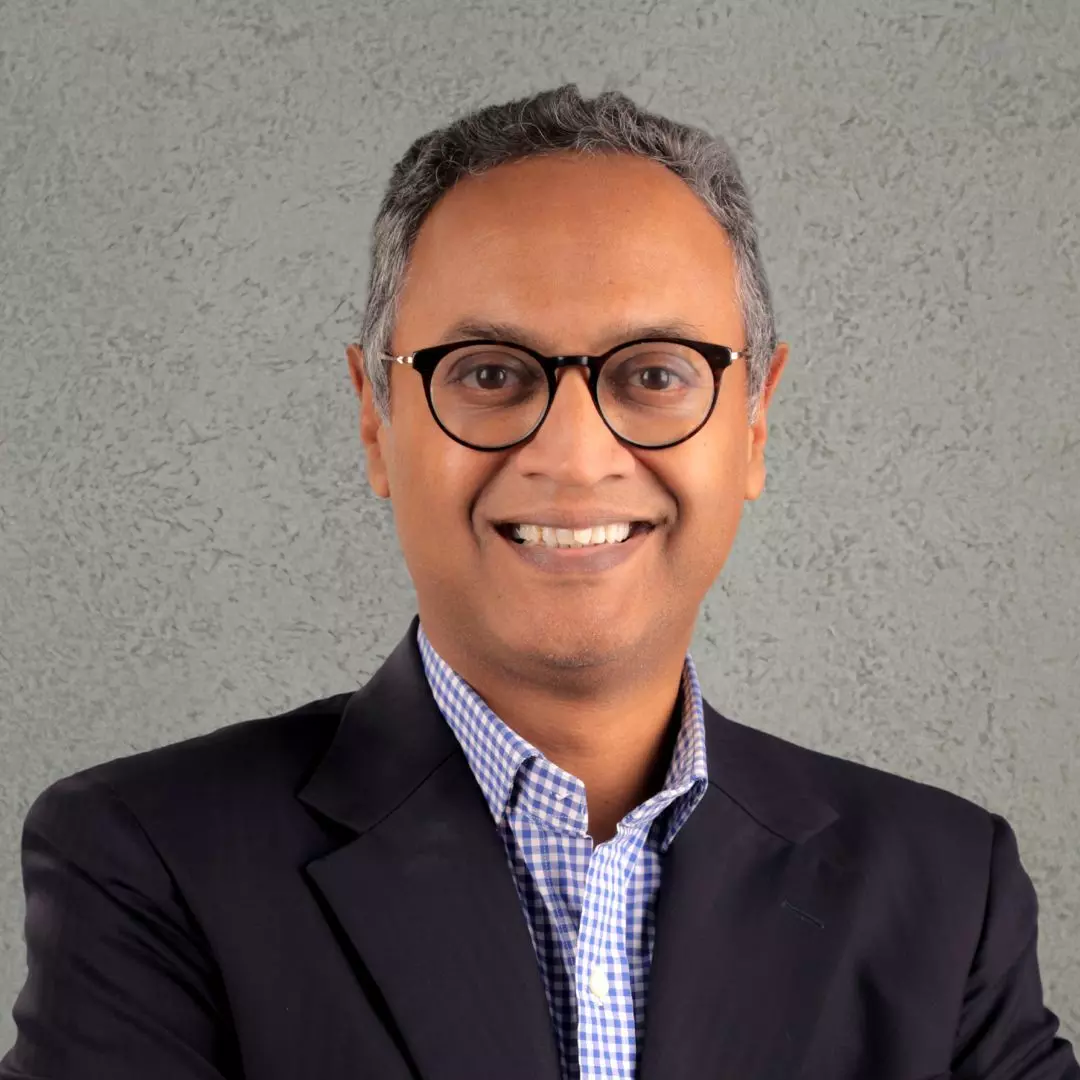
On Episode 832 of The Core Report, financial journalist Govindraj Ethiraj talks to Ben Powell, Managing Director, Chief Investment Strategist for APAC within the BlackRock Investment Institute.
SHOW NOTES
(00:00) Stories of the Day
(01:00) Markets turn nervous again as US-Iran peace talks falter without starting
(02:29) What a US ground invasion will target
(03:21) India has crude supplies for at least 61 days
(04:57) Blackrock says investing has to become active in the post-war era and one-way bull markets are gone
NOTE: This transcript contains the host's monologue and includes interview transcripts by a machine. Human eyes have gone through the script but there might still be errors in some of the text, so please refer to the audio in case you need to clarify any part. If you want to get in touch regarding any feedback, you can drop us a message on feedback@thecore.in.
—
Good morning, it's Friday, the 27th of March, and this is Govindraj Ethiraj broadcasting and streaming weekdays from Mumbai, India's financial capital, Just a reminder, Thursday was a markets holiday in India and all markets and banks were closed.
Our top stories and themes…
Global markets turned nervous again as US-Iran peace talks faltered even without starting.
What a US ground invasion could target.
India has crude supplies for at least 61 days.
Asset management giant BlackRock says investing has to become more active in the post-war era and one-way bull markets are gone, an exclusive interview.
Markets
The Indian markets could have possibly risen on Thursday if they were open, even if slightly, because US President Donald Trump's response, predictable as it was to Iran's statements, came only after market closed India time. In it, he said Iran must move quickly to salvage stocks, claiming its negotiators were begging for a deal while publicly stating that they were only reviewing America's proposal. He warned that there would be no turning back if progress stalled.
He said the Iranian negotiators are very different and strange. They're begging us to make a deal, which they should be doing since they have been militarily obliterated with zero chance of a comeback, and yet they publicly state that they're only looking at our proposal. Obviously, all of this is on social media.
A day earlier, Iran said it reviewed the ceasefire framework proposed by Donald Trump and found the terms unacceptable, and they described a reported 15-point proposal as excessive and said it did not reflect Iran's position according to reports. Iran's conditions reportedly include a full cessation of military actions and targeted strikes guaranteed against future aggression, compensation for losses, and acknowledgement of Iran's strategic interests, including its position over the state of Hormuz. All of this is obviously something that the United States will not meet and will thus go ahead with its plans, which would have in any case stayed the way they were.
According to the report, the Iranian official signalled the talks would not resume until these demands are met. So while we obviously are not negotiators, it is obvious Iran is operating on a different frequency and is visibly refusing to back down. Elsewhere, the Wall Street Journal reported Trump is discussing with his associates on how he is looking for a quick end to the war, which of course can mean anything, and thus we would refrain from further speculation.
Remember, a ground attack or invasion is now imminent since the promised 2,000-plus special forces troops would have reached their staging points. A report in CNBC quoting military analysts says the U.S. could try and seize Qeshm Island, which sits in the Horseshoe Bend of the state of Hormuz, and Karg Island, a coral island located 15 miles off the coast of Iran, through which some 90% of Iran's crude exports pass through before tankers go through the state of Hormuz. The third objective could be a raid to capture over 400 kilogrammes of reprocessed material, provide the U.S. can locate this and it's sufficiently concentrated to make a raid viable.
Of course, the nuclear material was supposed to be the whole objective of this war, but then I guess these are minor details that do not matter now. The only good news from West Asia for India from Thursday is that ships carrying crude oil or gas bound to India and from India presumably will get safe passage, according to Iran's government, which has referred to India as a friendly country, which is obviously a diplomatic breakthrough. India has secured crude oil supplies for the next 60 days, the government has said, ensuring stable fuel supplies, despite those disruptions.
Reuters also reports that taking advantage of a temporary U.S. waiver, Indian refiners have also ramped up purchases of Russian crude, securing millions of barrels to fill the supply gap. The capacity is about 74 days of supplies usually. The government also said that despite the situation at the state of Hormuz, India is receiving more crude oil from its 41 plus suppliers across the world than what it was previously receiving through the strait.
Meanwhile, stocks and bonds fell globally as growing uncertainty over Iran's willingness to engage in talks about a ceasefire in the Middle East sent oil prices higher. Crude oil is now back above $100 a barrel. Meanwhile, Bloomberg reported S&P 500 futures falling with about 48 hours to go before a U.S. delay in strikes on Iranian energy infrastructure expires.
And Iran, of course, continues to reject those talks. Bloomberg reports Axios, the publication, saying that the Pentagon is preparing options for a final blow, including ground forces and a massive bombing campaign, and Trump has urged Iran to get serious before it is too late. And of course, as we look back, it's quite evident that this was always the timetable and was likely to be the eventual outcome, whichever way things went in the interim.
“The Era of the Everything Bull Market is Over”
BlackRock is the world's largest asset manager with some $14 trillion of assets under management. The BlackRock Investment Institute is the research and strategy division of BlackRock and looks at overall markets and economies and creates the investment outlook and strategy approach on which BlackRock's investment decisions, which obviously run into trillions of dollars, are made. I spoke with Ben Powell, Managing Director and Chief Investment Strategist for APAC with the BlackRock Investment Institute, who provides the market and investment insights across asset classes in the APAC region.
I began by asking him in this exclusive interview if he was sitting in BlackRock's Singapore office and looking at a map of Asia right now, what were the red and green spots, if so, particularly at a time like this?
INTERVIEW TRANSCRIPT
Ben Powell: Yeah, I think there's a lot of red around at the moment in all candour. So, in Asia, there's a significant energy dependence. There's a couple of exceptions, Malaysia and Indonesia, but in the round, Asia is very thirsty for energy, and clearly that's a little bit complicated at the moment.
I will say there's always opportunity, so we shouldn't be too kind of bearish. We should be open-minded to the opportunities. And actually, if we do get, let's say a general risk sell-off, then that can present what they call a baby-with-the-bathwater kind of situation, where actually, we might get the opportunity to buy some assets, buy some exposure to countries which can be, you know, great holdings in the portfolio over the next several years.
So, it's a little bit of a complicated time at the moment, including in significant parts of Asia, but it will pass. And at that stage, actually, we might get the opportunity to buy some great assets, relatively more attractive valuations. Right.
Govindraj Ethiraj: And you mentioned Malaysia and Indonesia as being exceptions, and why is that?
Ben Powell: They have energy, I guess, simply put. So, it's a little bit more complicated than that, of course. So, there will be a significant impact, even in those economies, in certain parts, certain sectors, but they've got an offset in the sense that other parts of their economy, the energy-producing parts of the economy, will be benefiting from the higher prices.
So, for them, it's more balanced. For other parts of Asia, we are significant importers. So, I'm afraid it is just a pure headwind.
And I think we should be clear. There's sort of two parts to this. One is higher prices, which is obviously uncomfortable, inconvenient, and weighs on growth.
So, that's not a good thing. But it's sort of normal, right? So, you might be grouchy about having to pay a bit more for energy, but we can.
What is, you know, coming up on the horizon? Not yet, but if this situation persists, is actual shortages where you simply can't get hold of energy at any price. I want to be careful.
We're not there yet. We're very much focused on the higher prices, the inflationary consequences, all of that stuff. That's still the story.
But, you know, a little bit, half an eye at least, is on the potential for outright shortages, which would be an acute problem resulting in some of these more energy-vulnerable economies having, you know, not enough fertiliser, not enough gas, not enough energy. And that's, again, we're not there yet, but I think it's something to be aware of if this problem in the Middle East persists for more weeks to come.
Govindraj Ethiraj: Right. And you've talked about India's disadvantage, traditional disadvantage. When I say traditional, I mean the last couple of years, which is the AI factor or the lack of it.
And, of course, the current factor, which is the energy risk. Now, between the two, what could really change? I mean, we know that energy is not something that we don't know when it's going to resolve itself, but could the other factor, which is the AI factor, will it get equalised in some way in the coming year?
I'm, in a way, asking you also how you were looking at things before February 28th.
Ben Powell: So I think the AI story will evolve in a way that should be more of a tailwind for India. And what I mean by that is AI, as with any other technology, in the first instance, when you create fire or electricity or AI, it's the creators who kind of get all the benefits, and that's totally natural. But over time, it's the user of the technology.
As the technology diffuses, is the word that people use, as the technology diffuses and we can use it, then the users are actually the ultimate beneficiaries. And when I look at India with its very, obviously very large, sophisticated workforce, with a great track record over the last 10 years and more of digitalising the economy, becoming more efficient, kind of as a general statement, is it possible that India can leverage AI and become more efficient, again, as a kind of a broad statement? Yes, it is.
It is absolutely possible, even likely. So I think as the AI story evolves, away from the kind of manufacturing side towards the consumption side, the adopting of AI, there's every reason why AI can actually become a tailwind for India, as the focus goes to more on the users, rather than the creators, where it's been, again, I understand that the focus has been on the creators for the last couple of years now.
Govindraj Ethiraj: Right. I'm going to go back again and then come back to the present. So pre-February 28, one of the things you do look at is energy transition.
Was that a consideration at all in the past when it came to deciding either country risk or company risk or your asset allocations?
Ben Powell: Yeah, of course. So all risks are risks, right? So we don't think about sustainability risk as anything special.
I don't want to offend any sustainability experts on the line here. You're really special. But in a sense, when we think about buying an asset, we need to think about, is it a good price, given the potential reward and the potential risk?
And that word risk is doing a lot of work. It covers economic risk, interest rate risk, uncertainty risk. And if you think about sustainability, there's weather risk.
There's also policy risk. So some people are more sceptical on climate change, and that's fine. Everyone has the right to do that.
But the hundreds of billions of dollars we've seen flowing from US and other policies is just a fact. So all of that, we can kind of subsume into energy transition. And yes, as an institute, we try and be very pragmatic and all-embracing when we think about risks and want to incorporate those into how we think about what's cheap and what's expensive.
And sustainability, energy transition risk would be on that long menu, that long laundry list of risks that we're trying to account for.
Govindraj Ethiraj: And as we come back to the present, we're obviously going to see a different kind of energy transition, even as countries try and de-risk themselves. But how do you see this creating opportunities? Do you see new ventures coming up?
New kinds of, I don't know, whether it's startups or existing companies, large energy companies who diversify. How are you spotting, or how are you looking ahead?
Ben Powell: With optimism. So I'm kind of long humanity. I believe in human ingenuity.
And as they say, necessity is the mother of invention. So I think, you know, the way to turn this, you know, quite serious situation, what's the silver lining? I think there is going to be an awful lot of thinking, both by individuals, to your point on startups, but aligning with governments about what the Chinese call self-reliance, right?
So the idea that the world's a really complicated place, sadly, and becoming more complicated, more fractured, both in terms, sadly, of military conflict in the Middle East right now, but also tariffs and all of that stuff, I don't think is going away anytime soon. So we're all going to have to learn to rely on ourselves a little bit more. And I think that's going to necessitate conversations between governments and private companies as to how we can align, if you like, private capital, human ingenuity, and societal goals, as framed by the government, in roughly the same direction.
And I do think, again, maybe I'm sad about this, but I think national security is going to be really central. And national security doesn't just mean military, it absolutely means energy security, I think, moving forward.
Govindraj Ethiraj: And you feel that that will create new investable opportunities for funds like yours?
Ben Powell: Yeah, of course. Yes, I think so. So again, the joy of capitalism is we try and solve problems.
And we make mistakes and not every investment is a good one, let's be clear about that. But the beauty of the capitalist system is it's flexible, right? So as the world evolves, capital can flow from wherever it was to wherever it needs to be.
Defined, hopefully, is investing like a good idea, which makes a return. So that's good for the company. It's good for the economy in that that company is servicing a need that was obviously there.
And it should be good for investors as well, who are making a fair return on their investment. So that's the beauty and the power of capitalism is the investor wins, the company wins and society wins. So that's what we should be shooting for.
I'm pro-capitalism. But again, they're not all good investments. So as an investor, we're looking forward with optimism, but also with a brutal pragmatism trying to obviously weed out the less compelling ideas and try and focus on the more compelling ideas.
And some of those, given, I think, the context, the macro and geopolitical context we're all living through, I think some of those absolutely going to be in and around the energy space in the coming quarters and years ahead.
Govindraj Ethiraj: And if I can ask you a few sort of macro questions, the deep globalisation phase that we're already in and maybe it will accelerate now, what could that lead to in terms of inflation? That's one. The second is we're at a point right now where interest rates are clearly high.
U.S. 10-year treasury yields are close to 4.4%. And the feeling is that if it crosses that, there are shifts in policy, which may again reverse the next day, depending on which way it goes. But how are you seeing this whole mix right now?
Ben Powell: With respect, I don't think interest rates are high. I mean, if you look over the last 100 years, 200 years of human history, they're very low, actually. And if we think that we're going into a structurally less efficient kind of time, which we think we are.
So we at BlackRock have been talking for several years, actually, about what we call a world shaped by supply. And there's a beautiful kind of long white paper that you can Google if you want to. But I'll give you the 15-second version.
What we think is happening is countries all over the world are choosing resilience. And that's fine. That's a perfectly reasonable political choice to make.
But sadly, that comes with a cost, literally a cost. So you can make things at home. You can decide to trade only with countries and people you like.
Again, that's a political choice that the nation states are going to have to make. And it's reasonable. But it comes with a certain degree of cost.
So for the last several years, three or four years, we've been arguing inflation is going to be more of a problem and is going to hang around longer than people think. And we don't get everything right, for sure. But that's been a good call, I suppose.
And looking forward, what we're living through like now is a very acute version of that more chronic kind of condition. So the acute thing, the energy crisis we're in right now will pass at some stage. But I think on a kind of multi-year, forward-looking basis, this kind of maybe slightly strange from an economics perspective to deliberately choose to be less efficient, I think that's going to continue.
Again, not because people are mad, but because we are prioritising resilience in a complicated, confusing, and frankly, scary world. So the consequence of that should be higher inflation, should be higher interest rates. And we think actually the 10-year yield of 4.4, I don't want to exaggerate, is a somewhat low number, you know, too wild here. But we think that's a somewhat low number given the persistence of inflation that we see, not just right now. Obviously, there's a right now thing. But beyond that kind of structurally, given this world shaped by supply as we see it.
Govindraj Ethiraj: Right. And that links in some ways to how you look at other asset classes, including at a time like this. So we've seen extreme volatility, even in gold and silver, which was not expected or foreseen, at least at this point.
And of course, we are seeing volatility in fixed income and equities. And of course, currencies or some currencies like India's rupee have depreciated even more than many others. While the dollar surprisingly has turned around in the last month.
So how are you seeing from an investor's vantage point, how do these asset classes or opportunities appear?
Ben Powell: A couple of things. Firstly, on the dollar, just by the way, for our 2026 outlook in December, we were overweight. We are we still are overweight.
Emerging market hard currency, a preference for that over local currency, which is kind of an implied dollar bullish view a bit. I don't want to make too strong a case there, but just that there are ways that you can benefit from that, I suppose. But anyhow, back to, I think, the deeper question you're asking, which is how do we invest in a world where it feels like everything's going down?
I would say a couple of things. Firstly, the era of the everything bull market is over. So when we were in what some people call the great moderation, it maybe didn't feel like it because it wasn't literally every day.
But when you look back in that period of time, post the GFC pre-COVID, it kind of is bottom left, top right, almost any asset you look at. So the right approach, I'm not condescending the approach. The right approach was just be long.
Don't touch it. And you were kind of a genius. And that was fine.
Clearly, to the points of your question, we are not in Kansas anymore, right? We are not in this low volatility world. So sadly, we're all going to have to work a lot harder and be much more selective, much more picky by asset class, by geography, by theme.
There's many ways to cut that cake. But the general point is we're going to have to be much more active in our approach to investing. And, you know, let's be straight about that.
That's hard, right? So being long and being right is very pleasing and pretty straightforward. Having to pick relative winners and losers is a much more difficult, higher skill game from BlackRock, the world's largest investor by far.
We feel that that's the game that's kind of necessary to play, not because we want to, but because we feel that's a necessary consequence of a more fragmented, chaotic, and the word they use is dispersed kind of world. So the way I put it is we have to move through the five stages of grief to acceptance. I'm sad the moderation is over.
Have to accept it as a pragmatic investor, deal with it. And the way we would suggest dealing with it is a slightly more active approach to investing today and looking forward.
Govindraj Ethiraj: Right. And when you say that, you mean that across asset classes, right? I mean, for instance, in the case of bonds or metals, you're saying that you have to be active everywhere.
There's no category that you can really hold and wait.
Ben Powell: So yes, but like an asterisk, see Appendix 2. So let's go to Appendix 2. So yes, but what I would suggest is you want to be hedged against inflation for the reasons I've mentioned, that structure and efficiency, inflation is going to hang around.
So, you know, okay, we want to be hedged against inflation. So when I look at equities, real estate, fine arts, gold, right, whatever, there's a long list of assets, which historically at least have done a pretty good job of hedging you against inflation. So I want to be long like inflation hedges.
That's a general statement. But then the slightly clever bits, I guess, is depending on their relative valuation. So if you think like properties done too well versus gold or equities look a bit cheap versus treasury and protected insecurities, that's the slightly clever bit is trading dynamically in those various inflation hedges, depending on how they're valued through time.
So worry about inflation, do something about it, which is to really protect against inflation within the portfolio. And then the slightly clever bit, which, you know, isn't easy by the way, is to then kind of adjust your relative positioning in gold versus equities or whatever it might be, depending on your frame and your work around what looks cheap and expensive over time.
Govindraj Ethiraj: Right. And to go back to the map of Asia, you know, so if you're looking at Asia X Japan right now in from your office in Singapore, and if you were putting out a hundred dollars or investing a hundred dollars, where would that be going?
Ben Powell: I'll duck the question and I'll answer it. So the duck the question is the answer has to be a well-diversified portfolio in line with your financial goals, right? So that's the answer.
And it's really the answer, right? So all investors listening to this, please do that, right? That's how ultimately you kind of flourish over time is a relentless rigorous or rigorous adherence to what are you trying to fund kids or healthcare?
What just stick to that now? Okay. So in the spirit of like fun and games, I will answer the question.
So what do we like within the Asia piece? I think we've got to talk to China a little bit here. So the AI super mega boom is real and ongoing and I'm very constructive.
We're very constructive on that and China's in the mix, right? So you look at China, they've got 1.4 billion people. Some of them are really clever.
They've got very huge companies. They've got government really pushing for AI competitiveness, let's say. And then I know this sounds like a sci-fi movie, but it's real.
The robots are coming. So when AI becomes more of a physical thing, China also has an astonishing, completely unique on the planet, global manufacturing heft. So they're kind of in the AI game already for various different reasons.
And I think their position and their competitive strength as AI becomes more physical in the years ahead is likely only to grow. So we're neutral China, but I'd make that same point, right? We'd want to pick our spots and I think AI as a general thing is good and China, the AI kind of plays in China, I think are worth thinking about for some of your $100 there.
Govindraj Ethiraj: And where does India figure in this broadly and specifically?
Ben Powell: So I think actually the diversified portfolio point is worth thinking about in the context of India. So again, India, I think will become an AI play as the story moves to adoption, but it isn't right now. And that's obviously been a headwind for the equity market over the last 18 months, let's say.
But when I'm building a global portfolio, yes, I'm bullish AI, but I don't just want AI. I want to have a diversified mix of different risks in the book. And India, again, for better or worse, is currently not an AI play.
So when I look at India, I see the tremendous pleasing combination of demography and productivity over the next years ahead, right? I think that's well understood, but it's true. And that story is a little bit on discount now because it's not an AI play and obviously the energy headwind.
So this is an if statement, but if and when the current Middle East situation resolves, I think India starts to look very, very attractive. Valuation, much cheaper than it was. The growth story, that nominal GDP clipping along at 10 or 11%, that's all just true.
Demography, productivity, digitalisation, all of that, as we know, right? That's well understood. And kind of weirdly, the advantage within a global portfolio of India giving me something totally different actually makes it more attractive within that context of a well-diversified global portfolio.
Govindraj Ethiraj: Ben, thank you very much for joining me.
Ben Powell: Thank you.


