



 Newsletter
 Search
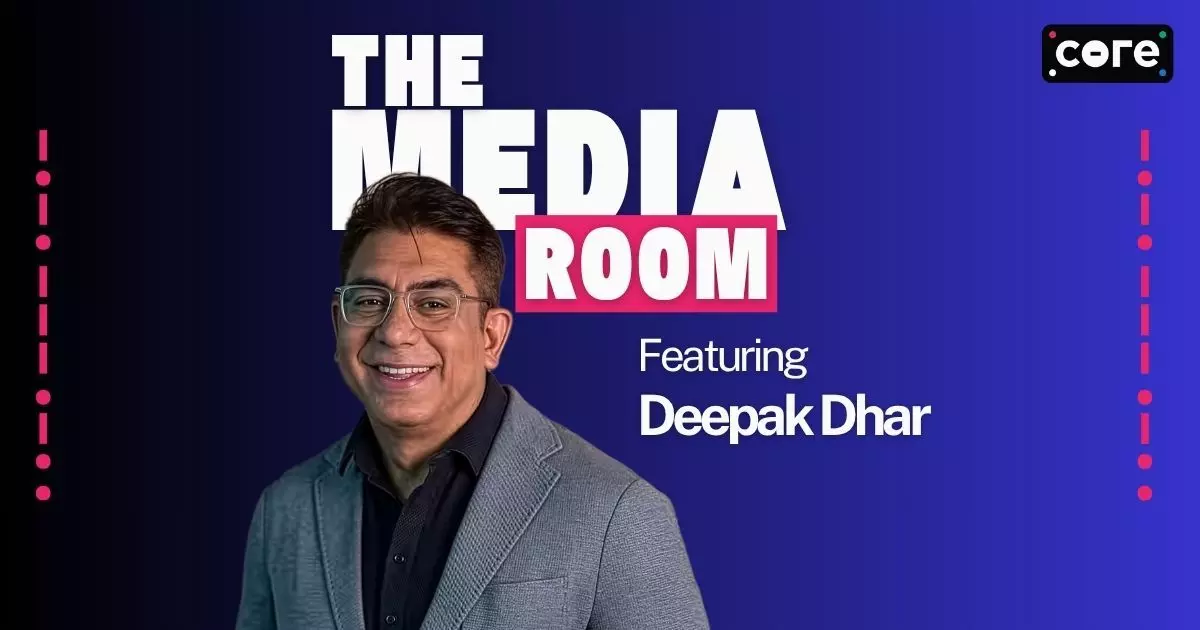
From Bigg Boss to The Night Manager: How Banijay Makes Money? | The Media Room | The Core
- Podcasts
- Published on 4 Nov 2026 6:00 PM IST
Bigg Boss reaches 500–600 million viewers across seven languages, with 800 production days a year, says Deepak Dhar.
From Bigg Boss to The Night Manager, how does Banijay Asia build some of India’s biggest entertainment franchises? In this episode of The Media Room from The Core, Vanita Kohli-Khandekar speaks with Deepak Dhar, Co-founder and CEO of Banijay Asia and Endemol Shine India, about the business of entertainment, the economics of content production and the strategy behind building successful television and streaming franchises.
The conversation explores the extraordinary scale of Bigg Boss, its expansion across seven Indian languages and its ability to reach an estimated 500–600 million viewers cumulatively. Dhar explains why Bigg Boss has become one of India’s biggest entertainment properties and why he considers cricket and the IPL its closest competitors for audience attention. He also discusses how reality television creates daily engagement across television, OTT platforms and social media.
How does a production company move from Bigg Boss to premium scripted shows like The Night Manager? Dhar discusses Banijay Asia’s expansion from unscripted entertainment into premium OTT content, including The Night Manager, Trial and Raak. He explains the fundamental differences between scripted and unscripted content, from creative development and production timelines to budgets, profitability and return on investment.
The conversation also examines the business of intellectual property (IP) in India’s media and entertainment industry. How important are global formats, established franchises and original stories in a market where content budgets remain under pressure? Dhar shares how international formats are adapted for Indian audiences, explaining how Big Brother became Bigg Boss, Fear Factor became Khatron Ke Khiladi and how The Night Manager was reworked to reflect Indian cultural sensibilities.
As streaming platforms and television networks rethink their content strategies, the discussion turns to the growing opportunity in unscripted entertainment, the future of MasterChef and the potential of Indian content to travel to international markets. Dhar also shares his perspective on microdramas, vertical entertainment, AI-era content opportunities, films, theatrical releases and Banijay’s expansion across Southeast Asia.
Where is Banijay Asia headed next? Dhar outlines his ambition to transform the company from a content production studio into a broader entertainment hub spanning television, streaming, mobile platforms, films and live entertainment.
For business leaders, investors, consultants, marketers, media professionals and anyone tracking India’s media and entertainment industry, this episode offers an inside look at the business of television, OTT platforms, reality shows, content economics and the future of entertainment in India.
Watch the full conversation on The Media Room. Can Indian entertainment franchises become global successes, just as Korean and European content have? Share your views and subscribe to The Core for more conversations on business, media, technology and the forces shaping India’s economy.
NOTE: This transcript is done by a machine. Human eyes have gone through the script but there might still be errors in some of the text, so please refer to the audio in case you need to clarify any part. If you want to get in touch regarding any feedback, you can drop us a message on feedback@thecore.in.
—
TRANSCRIPT
Vanita Kohli-Khandekar: Hello and welcome to the media room. I have a very special guest with me today. Deepak Dhar is co-founder and CEO of Banijay Asia and Endemol.
And also the man behind some of the biggest shows running in Indian television and streaming today from Big Boss and Masterchef to many, many others. I've got Deepak here to talk. First of all, Deepak, welcome to the media room.
Deepak Dhar: Thank you very much for having me here.
Vanita Kohli-Khandekar: It's long pending.
Deepak Dhar: We've been wanting to do this for a very long time. My bad, you know, I've never, you know, stepped out to talk, but with you, I would be very comfortable.
Vanita Kohli-Khandekar: I am so glad. Deepak, tell us first a bit about Banijay and also some of your bigger shows for my viewers to know. I know Big Boss is the one you get most recognised by, but you do a lot of work around fiction, around non-format, non-unscripted also.
Deepak Dhar: If you could take us through So, you know, we founded Banijay in 2018, you know, and this was really founded in a manner. And as you know, I was earlier also the CEO of Indemol for a very, very, very long time. I've literally grown up with Indemol.
Indemol was founded around the time when my daughter was born. So, you know, I really, you know, would tell the industry colleagues, you know, I have two little babies, my own daughter, Anushka and Indemol. So very, very emotional about my Indemol journey.
I left it, you know, in end of 2017 and left it at a point where I felt I personally was going through a little bit of a change in my personality as well. And I really wanted to step away from unscripted because I think I was seen as maybe a one-trick pony that we can only do unscripted shows and non-fiction shows, you know, because having done so much of Big Boss and I'll come to Big Boss a little later because then that takes over the conversation.
Vanita Kohli-Khandekar: There's a big question on Bigg Boss.
Deepak Dhar: Yeah. So, but you know, so 2018 is when we founded Banijay with an intention to really start building out premium scripted content because the market was going significantly in that direction, given the fact the advent of Netflix and Prime and Disney Hotstar and everybody moving towards the subscription side of the business. So with that intention, you know, I stepped out.
It's been a great journey at Banijay itself. You know, we did shows like The Night Manager, we did shows like Trial, we did shows like Call My Agent, we did early shows like Hostages for my dear mentor Sami Nair at Applause. So, you know, it was a great, great start.
So, you know, in my vulnerable days, you know, when I was starting this new journey and a new startup, you know, people did really, you know, you know, mandate me to do premium scripted, you know, so, you know, it was outside of my comfort zone in a vulnerable phase. And I really would like to thank, you know, a lot of them, you know, Sameer being one, Gaurav Banerjee being another one who really helped because The Night Manager came out of those discussions. And a whole lot of other people as well.
So it was really, really good to see that, you know, you know, people were not seeing me as the only nonfiction.
Vanita Kohli-Khandekar: Only the Bigg Boss guy.
Deepak Dhar: Yeah, you know, like the big boss producer. So, yeah, so that change happened. But I would say fortunately, you know, or, you know, in turn of circumstances, Banijay globally bought over Endemol and that merger and integration, you know, brought in the legacy brand.
Vanita Kohli-Khandekar: Bigg Boss chased you.
Deepak Dhar: Yeah, so it's a life, it's a, you know, circular movement in my life as well. And it was literally in less than two years, you know, and, you know, my group and my board thought who better to run this, you know, entity, both Endemol and Banijay. So, yeah, here we are now running Endemol Shine India as a separate entity, which does Bigg Boss, Fear Factor, MasterChef, and a whole lot of legacy big brands.
Vanita Kohli-Khandekar: And unscripted large.
Deepak Dhar: Unscripted. And on the other side, there is also Banijay, which is a mix of both premium scripted and unscripted there. Shows like Night Manager, Trial, Trial in Tamil with Priya Mani, Trial with Kajol in Hindi is all, you know, sitting out of our colleagues here at Banijay.
And more, more sort of, you know, shows in the offering there as well.
Vanita Kohli-Khandekar: You know, but there is a huge growth we can see in unscripted across in streaming also and on television also. I'm assuming that has been fortuitous for Banijay and Endemol because you have so much. But when you do, when you do a scripted show and you do an unscripted show, how is the whole thought process, the thinking different?
And is it correct to surmise that the scale for unscripted could become huge compared to scripted?
Deepak Dhar: No, you're absolutely right. You know, the, you know, the market has, you know, largely moved towards the unscripted side, you know, and these are waves that come and go, come and go, come and go. I've seen this many times, there was the premium drama wave at one point in time, and that still exists.
It's not that that's gone away. And of course, may have slowed down a tad bit. But yes, there is right now a huge swing in the unscripted side of the business, I think, largely to do maybe stemming from the fact that, you know, most of India is seen as an award market, right?
And where you are really, you know, going out to advertisers, bringing them on board, and you know, premium dramas and premium storytelling or scripted would take almost two to three years, like Night Manager took us two and a half, three years to produce. And it's very difficult to get brands in and advertisers in and you know, obviously, that's not the, it's not organic to that. But in terms of nonfiction, or in terms of unscripted, it's very easy.
I mean, we can turn around a show in three to six months, we get it up and running. You know, we can get brands on board brands on big celebrities or unique celebrities or great names that go in. And that's really been the huge swing that we saw.
And we already saw this swing, maybe five, seven years ahead of time, which when we actually started moving with Big Boss, which was already a cult phenomenon in Hindi, moved it to Tamil, Telugu, Kannada, Malayalam, now Bangla, Marathi. So, you know, we are, you know, that's the only show that is, you know, present across all content consumption, regions, states, or you know, any meaningful in India. So, you know, we do seven versions of Big Boss, that is, that's how huge it is.
We produce 800 days of Big Boss in a calendar year in 365 days, it's unheard of, when I put it on a slide for my shareholders, they think it's a typo, say you mean 80 days, I mean 800 days. So, how do you do 800 days in one year?
Vanita Kohli-Khandekar: Because you have languages.
Deepak Dhar: It's like the European subcontinent, like the French, the Italian, the Spanish, I mean, those versions literally are Tamil, Telugu, Kannada. And we are sitting on the top of it, like, you know, and we have the wherewithal, we've got the learnings and we've, you know, been, you know, building this process and workflows for since 2005, 2006. So, we really mastered that act right now.
And also, which other format or which other IP gives you literally daily engagement and daily engagement on your linear TV, on your streaming service, and on social media, you know, the short format, the viral clips and internet explodes the time we put it out at nine o'clock in Hindi, the internet has like exploded by 9.15, 9.20 that night where people are loving it, hating it, judging it, taking positions.
And, you know, like there's so much of conversation that comes out of, you know, and finally, the storyline is about, you know, kitchen politics, food, eggs, onions, and it's really, people connect with it because it's possibly similar conversations that are happening in every other home. Like literally, it's the voyeuristic peek into your neighbour's home that we've created. We've simulated this.
Vanita Kohli-Khandekar:Because Saas's reality show is Kitchen Politics. But tell me, how big is Big Boss? So you say 800 days of shoot in a year, how big is it as a brand?
And in terms of its plug with Bani J's, whether you look at top line or ours produced or whatever, whatever metric you choose to share with us, how big is it? Is it like one of the biggest in the country?
Deepak Dhar: It is one of the biggest globally, I would say it is clearly one of the biggest, you know, in India, by far, I wouldn't see there's a closest, you know, Biggest in viewership or in scale? Both in scale and viewership. And in terms of viewership, I would talk about it in terms of it would be almost cumulatively, almost about maybe 500 to 600 million viewers coming into that show.
2 to 250 would be only Hindi. And the other half would be largely the rest of the other over a year.
Vanita Kohli-Khandekar: That's huge, that's close to cricket.
Deepak Dhar: That's yeah, that really makes this and you know, that was my next point. This is really coming closest to our competitor is really cricket and IPL. It is not another unscripted show.
Vanita Kohli-Khandekar: My god, this is something.
Deepak Dhar: Not just that, not just in terms of scale and numbers, I see that, you know, like, even when I pick up a lot of the social sentiment, the minute the show feels to produce, people hate it, you know, because they feel that, you know, it's now becoming too scripted, or people are, you know, stage managing it. So, you know, you got to keep it like live sport, people have to feel that it aids life. It is extremely fair.
And we are not really controlling things. And we genuinely are not controlling things. I mean, which is why possibly now viewers are engaging more so with this brand like in the last two to three seasons, because we run this with a process, which is very, very neutral, and extremely fair, you know, it's really the last.
It's truly unscripted. Absolutely unscripted. I wish we can have you out there, you will see it.
It's once we locked the door, we have no, no contact with what's really happening. The only contact is Salman Khan, who's obviously counselling, coaching them through the weekend episodes. And the only person who's talking to them is Bigg Boss.
I do not know who those contestants are, once they have gone in, and we or my colleagues have no, no communication or no contact with them. It's absolutely unscripted. And there there is no other show that runs it in such a neutral and fair manner.
Vanita Kohli-Khandekar: But then on the other hand, you do a night manager or you do a trial, you know, how is how much gear shifting in terms of budgets in terms of thinking creatively, do these, or a MasterChef or a Fear Factor, whatever, you know, these are, is there any commonality? My point is, how do you get economies of scale as a Bani Jai if there are so many?
Deepak Dhar: No, I mean, one show is so different from the other, you know, on one side, you got Bigg Boss, it is what it is today. On the other side, you got Fear Factor, that is, like by far the most genre defining show there is again, no number two show in the country. We don't shoot Fear Factor in India, we shoot this globally, either in South Africa or in Argentina or in Brazil.
So, that's the size and scale. It's pretty much like a Hollywood, you know, stunt action adventure, like in the jungles, in the mountains, in the ranges, with alligators, crocs, cheetahs, lions, elephants, you know, ostriches, you know, I mean, that kind of visual, you know, so it's very different from, you know, while Bigg Brother, Bigg Boss becomes very captive and it's very short in our backyards here across in many cities, you know, Fear Factor is so different in terms of just production, scale, mounting, you know, next comes MasterChef. MasterChef is closest to us because again, it's food, we are very territorial about it. We have like multiple versions of MasterChef running in, you know, two or three markets right now.
Again, we are, you know, building on MasterChef.
Vanita Kohli-Khandekar: MasterChef has the potential to be another Bigg Boss.
Deepak Dhar: Absolutely, food is, we are so territorial about food and it's so local, it's so culturally relevant. So, MasterChef has already gone into three different markets. We'll also go into the fourth market maybe by early next year.
So, these are shows, one is very different from the other. Of course, we've got, you know, Rise and Fall, which is doing well for our, you know, partners at, you know, Amazon MX. We've got Alliance on Prime Video, which did really well.
We are already working on season two of that. So, we've got a lot of that in the pipeline. So, that's one end of it.
The second end of it is shows like the top 1% that's on Star Plus and Hotstar, you know, that's also my favourite because it's on KBC or Millionaire, you get the host to, you know, engage with one contestant. Here, we are engaging 100 contestants. 100 participants have the opportunity to take home a crore every night and we are already seeing that in terms of engagement and, you know, the love that we are getting for the show.
It's really, really, you know, reassuring that, you know, people want not just kitchen politics but people also want clean, you know, fun, engaging content where people, it's all about knowledge, wit, it's not all about, you know.
Vanita Kohli-Khandekar: You've just done the Marathi one, no?
Deepak Dhar: Yeah, we've also done KBC Marathi recently, just launched on Monday. It has done exceedingly well, you know, I just gave you the numbers as well in terms of, you know, engagement, in terms of scale. It's very early days but I can only see this building up to some sort of a frenzy in the Maharashtra market.
And of course, you know, you also asked me about, you know, how does this change, you know, that's also important because, you know, our one show is so different from the other, you know, we move from Big Boss to, I would say, the Night Manager. We, you know, that's the size and scale and the variety that we offer and, you know, every month when we have a launch, our one launch is so different from the previous month, you know, like so our colleagues on marketing and promotions are also, you know, pivoting constantly and, you know, wanting to, you know, be, you know, true to the format and to the genre as well but yeah, I mean, you know, more in the development side of the process, it is a completely different paradigm shift, you know. To me, unscripted is like running a 100 metres sprint, scripted is like running a marathon, you know, like, you know, so you are staffed, you are crewed up, you know, the skill set that is needed, the patience that is needed, like, to, you know, build it from a scripted standpoint, it's very different. Like, we just produced the Raak for Prime Video which was, you know, the number one non-English language show globally for them and Raak is the, like, a true crime story, Ali Fazal and Sonali Bendre did really well, you know, so that's so different from any other show, it is dark, it's twisted, it's, you know, and I was personally very excited and also nervous because as a parent, I have a daughter who's in the US roaming around and, you know, as a parent, you're like, oh my god, you know, you know, when you get sucked into it but, you know, that's, you know, how the showrunners, the writers, the creative team wrote it and it really did really well for us.
Vanita Kohli-Khandekar: But, you know, so I can understand creative gears changing, how do the economics change? I mean, I understand that unscripted will have more hours, so in terms of hours, the scale is unscripted would have less hours but in terms of economics, whether it's costing, whether it's top line or profitability, how do they differ?
Deepak Dhar: Very, very different, you know, the, you know, the budgets, you know, the size, the scale, the mounting of the budgets is very different, I mean, the line items are very different, on one side, you would have technology, software, you know, as a huge cost like and shows like KBC, shows like One Percent Club, shows like Big Boss, there's a lot of tech and software costs that comes into it because, you know, all of this needs to be mechanised and synchronised for the output to really come alive, you know, there are different control rooms, there are different editorial, you know, gears on the show and so that's one side of it, so the costing is very different, yes, in terms of profitability also, it's very different both on the scripted and the unscripted side and on the scripted side, you know, you would have again the development cost would be more, the writing investment that would go in and that I think is the most important investment that needs to go in because that takes us, you know, Night Manager was written across almost 12 to 15 months, only writing phase was 12 to 15 months, you know, so we would take more time to write and hopefully less time to produce, you know, so it would, we would take 12
Vanita Kohli-Khandekar: to 15 months to write maybe and then, if the writing is good and tight, then the production, yes, then
Deepak Dhar:
that would, then you finish it off in 100 days, in 3 months you can be over and done with,
Vanita Kohli-Khandekar: so that's the different, but on a profitability perspective or you cannot compare, I'm just
Deepak Dhar: curious, you cannot compare because A, the ROI on a unscripted show is, you know, you realise that in 3 to 6 months, in this case, you realise it over 2 to 3 years, you know, but you know, which is why maybe the profitability on the unscripted side looks a lot more better and healthier than on the scripted side, but I would not judge it, really, the life of a scripted one, if it's good, it's timeless, it's timeless, you can still watch a Night Manager, you still watch a Raak, you'll still watch a Delhi Crime or a Scam or a Squid Game, so that's the difference, so which is why I wouldn't really judge it from the bottom line, I would judge it from the long-tail revenues that come out of it.
Vanita Kohli-Khandekar: Fabulous, you know, there was a MPA report, I don't know if you saw it, at FICCI also, they presented a report on, you know, the video business is slightly challenged across screens, it's nothing to do with TV or streaming and content budgets have been stagnant now, at least 3 years, I have seen that they've been at the same level in India, what is that a challenge for a company like Bani J or for the ecosystem you're in, how do you, you know, what happens when that happens so consistently, what does it mean for companies like that?
Deepak Dhar: Well, the ecosystem is under pressure, there is no ducking that, you know, point today or that question today, it is, we have to accept it but again, I think these challenges have come maybe three to four times in the past as well and we've, I think, successfully managed it, as long as your IPs are seen as extremely strong and tailor-made for today, as long as they are delivering engagement, I don't see and we don't see that pressure because pretty much all our IPs are at its shining best today, be it Big Boss, Fear Factor, Fear Factor was, before Big Boss, the number one unscripted show in the entire Hindi landscape, so if your IPs are strong enough, that's not an issue, that's not an issue and we are honestly, honestly, you know, like chiselling it and, you know, polishing it every, you know, I'm most bothered about, you know, getting the format right, the editorial of it right, you know, so we're constantly polishing it, so I don't, I'm not too surprised by or too, you know, challenged by the market ecosystem or sentiment at this point in time because we have the best formats and those are only growing and we are the best teams, you know.
Vanita Kohli-Khandekar: Now, speaking of IP, now when you do a thing like a night manager, the IP is yours, correct? So, you're not, strictly speaking, the typical producer who's being commissioned.
Deepak Dhar: That's right.
Vanita Kohli-Khandekar: Correct? So, is a bulk of the programming you make or the video stuff you make, is IPs owned by Bani Jai?
Deepak Dhar: Well, a lot of the global formats, the IPs owned by Bani Jai, so that is very clear distinction because these are, these are stories or formats that are tried and tested, there's significant amount of proof of concept which is why people want to, you know, engage with them and more so in these challenging times when the aversion to taking any risk is at its lowest right now, so you would go with the format right now, something that's tried in 10-20 countries, why would it suddenly fail unless we really, you know, not made it in the right manner. So, I think from that perspective, you know, we are at a good vantage point to really keep building it going forward.
Vanita Kohli-Khandekar: But how does being part of Bani Jai help the India business or even the other way? I mean, what does Bani Jai India bring to Bani Jai Global and what does Bani Jai Global bring to India?
Deepak Dhar: Well, Banijayt Global brings a significant heft, Bani Jai Global brings in significant amount of the formats and IPs that, you know, are cherry-picked across the globe in 25 different markets. It brings in learnings and adds a lot of depth to how do we keep evolving some of our long-running legacy formats and franchises like Big Boss. Today, we are spoiled for choice because we are looking at the trends of Big Boss in 40 different markets.
So, we are bringing those trends into the Hindi version or the Tamil version or any of our regional versions as well. So, a lot of that depth of the learning comes from the Bani Jai Group. So, we are very, very blessed to have that strong support here.
And what we as Banijay Asia and now India bring to the group is the fact that the diversity, the fact that we are in a very peculiar market where we are the ones who produce 800 days of Bigg Boss in a calendar year. It doesn't happen globally. I mean, it's not a story or a statement that you can give globally.
It only happens in India the way it is here. And also, a lot of Indian IP that would travel, you know, we are very, you know, we're really pushing that mandate as the next one.
Vanita Kohli-Khandekar: Has it happened?
Deepak Dhar: It hasn't but we are really, I think now is the time it's going to happen because at one point in time, you know, and we spoke about this as well that, you know, there was a time of Scandinavian content. There was a time of, you know, Korean content. You know, I think now is the time because now because of streaming people are watching all kinds of foreign languages and their content.
So, either dubbed or subbed or, you know, and, you know, today the language is not the barrier anymore.
Vanita Kohli-Khandekar: Access is homogenised.
Deepak Dhar: Absolutely. So, we're going to watch a Spanish series, we're going to watch a Korean show, we're going to watch an Israeli show or a Turkish show and of course an English language show. So, why would you not want to watch an Indian show which is truly global but still very, very rooted.
So, today I feel if we really, you know, really push that mandate, I'm sure that pipeline will start moving. Already that noise is being done by Elephant Whisperer or RRR which is really going out globally and people are connecting and seeing what our culture is or what our stories are or what our characters are.
Vanita Kohli-Khandekar: But when you, just to come back to India, when you adapt a night manager or a trial is an original or is it a format?
Deepak Dhar: No, Trial is based on Good Wife.
Vanita Kohli-Khandekar: So, you know, when you adapt something or even for that matter a MasterChef, are there challenges which are specific to the Indian market? Not challenges, I don't mean it like there are problems but what tweaks, what adjustments do you need to make when these, you know, because these are formats which are all over the world.
Deepak Dhar: Absolutely.
Vanita Kohli-Khandekar: So, what do you, is anything special you need to do?
Deepak Dhar: No, absolutely, you know, I think it's a good question. I'll give you an example of how that tweak was made in the night manager and that will probably answer the thing. See, you can't just take a global format and just fit it into India and say hope it's going to work.
There is a reason why Big Brother is called Big Boss in our market. There's a reason why Fear Factor is called Khatron Ke Khiladi. So, the amount of localisation that has happened to make this culturally relevant, like if you see the English version or the American version or the Australian version, you'll wonder how this brand is ever going to come to India but we made it locally relevant because those brands are possibly quite risky.
I mean, in our market, a frame of that would not work. So, you had to be culturally, so we worked in the unscripted manner. It was, like I told you, it was the neighbour's home on air and it moved towards kitchen politics, it moved towards the politics inside the house and it was not really so much about anything else that's really happening in the house.
So, that was how culturally relevant, non-fiction wise or unscripted wise, we made it.
Vanita Kohli-Khandekar: No, one sec. Go back to Bigg Boss. You said, why did Big Brother become Big Boss?
Why did it become Bigg Boss?
Deepak Dhar: Because I felt Big Brother was very cold. In India, boss or big boss is something that's very colloquial and we use it in our normal vocabulary. So, we wanted to make it something which is like Big Brother would, to me, sounded very alien and very English and this was early days in 2005 when I was just stepping out of Star and trying to see if Big Brother could be made and when we brought the rights and India was a distant dream those days for any IP to come into India those days and I called up.
Vanita Kohli-Khandekar: No, KBC had happened.
Deepak Dhar: KBC was one of them but not too many of these. KBC had happened and for any other company sitting in Amsterdam or in Paris or in London, India was a distant dream. So, I called them, I said, you know what, I don't want to call it Big Brother, I want to call it Big Boss.
They would say, why would you do that? You're paying so much money as the royalty fee for this brand, why would you change it? It's not happened globally and that change has not happened globally but we convinced them to make that change, you know, after many, many calls later and then I made another call saying, you know what, I don't want to, my big is with the double G.
So, they were like, there's a guy, there's a Dutch guy on the other side, who are we giving these rights to? This guy doesn't even know his English, like why would you, why would, first we agreed to make the change.
Vanita Kohli-Khandekar: There's a Dutch guy telling you, you don't know your English.
Deepak Dhar: So, you know, that's how, I mean, that's of course, you know, other astrological and numerological. We would do anything to make the show right and successful. So, yeah, so that's how, you know, in the unscripted space, these things have become culturally relevant.
Even Fear Factor, we have a very fun story and, you know, when I took Fear Factor to Viacom, Viacom's network Colours was not even in its inception stage, they didn't even have a name called Colours, those days it was still a blueprint and I think they were calling a lot of producers to see what Rajesh and Ashwini are doing and I remember they were in this hotel room and there was a three-day producers workshop and producers were called one after the other.
I was one among them, so on the third day, it was my turn. I think by the third day, they were all fried because they've listened to too many ideas and I think they must have made their shortlist internally. In walked, I walked in and I plugged my laptop and on the screen came up, the first title was, first slide was Fear Factor and pretty much in like 10 seconds, I had lost the room because everybody had gone on to their phones and coffee and books and notes and all the same, saying Fear Factor, you know, like, you know, maybe this guy's got his brief wrong and so Ashwini at that point in time told me, Deepak, we're not looking for a show on MTV, we're looking at mass premium Hindi entertainment network and my next slide was, it's an all-female version of Fear Factor and I still didn't get the room, I only got Ashwini's attention and she like leaned forward and said, what did you just say? I said, this is an all-female version of Fear Factor.
Vanita Kohli-Khandekar: This is Ashwini Yadav?
Deepak Dhar: Ashwini Yadav and she said, okay, why? Has this happened globally? I said, no, it's not happened globally, it's going to be the first time that we're going to try this and the first time in India, okay and we said, why are you making this change?
I said, because I want my aunt, aunt and my mother sitting at home to say, look, what are the women of today doing? To the extent they are, so it's a very progressive way of looking at, you know, Fear Factor from an Indian perspective and my next slide was, the host is Akshay Kumar. And the last slide was, this is not Fear Factor, this is Khatron Ke Khiladi.
I walked out with the channel Driver Show.
Vanita Kohli-Khandekar: And I remember Raghav was complaining about the money he had to pay for that show. I remember this from many years back.
Deepak Dhar: Yeah, but this tilted the thing like, you know, form a network that was the number eight or the ninth network that was coming into the market in a very saturated market. The rise of colours and what Rajesh Kamath and Ashwini and you know, the entire Viacom team did like really became the number one network in eight or 10 weeks, there must be a reason the, you know, because of, you know, of course, on one side, they had, you know, Khatron Ke Khiladi, they had Balika Vadhu as well. So, the range was something that was, you know, very compelling.
And I think, you know, that's how culturally relevant we made.
Vanita Kohli-Khandekar: That's how you keep adapting.
Deepak Dhar: Yes, to all our formats and coming to the night manager, coming on the scripted side, again, there's significant amount of localisation, adaptation, development that happens like, in the English version, if you've seen the lead character, Tom Hiddleston's character, you know, is actually, you know, going and setting up this conspiracy to bring the antagonist down because it's a one night stand between him and this lady. Culturally, it won't get accepted in India at all.
That's not going to happen. In our version, if you've seen it, it's the death of a little girl and the guilt that Aditya Roy Kapoor, our lead and protagonist had witnessed. And that guilt and that emotion was carrying him to create this conspiracy to bring down the antagonist.
So, the emotional depth that was planted into the script at that point in time is very different because just a very cold relationship and hence the entire story based on that emotional hook may not have translated into something but the emotional dynamic because then everybody was invested because he was now in this emotional guilt and he would bring down the antagonist.
Vanita Kohli-Khandekar: Possibly, last couple of questions. One is micro dramas. How do you view it?
Because there's a lot of noise about it and, you know, I just did another recording with the Bullet TV guys and Ormax and the numbers being thrown about seem a little too fantastic to me. I'm sceptical about monetization but how do you view that? Because if nothing else, it's taking time away.
Deepak Dhar: You know, honestly, I would endorse your thoughts. Don't do that. You're dismissing it.
No, I'm not dismissing it. I'm not taking it upon myself. It's something that we are not strategically working on.
We are very tactical about it. We will do a few. We are doing some stuff but we're, you know, possibly going about it in the same premium impact manner, you know, because if Bani J comes into that space of short format, vertical dramas or micro dramas, we would look at it very different.
To me, we're looking at it as micro entertainment, you know, so we might, we are actually already producing a lot of non-fiction or unscripted micro entertainment kind of format. So, you know, I'd possibly elaborate on that maybe when we catch up next because there's a lot in the pipeline.
Vanita Kohli-Khandekar: What about films, Deepak?
Deepak Dhar: Well, that's the next growth area for us. You know, I would say a lot around micro entertainment is our next foray. A lot around films and theatrical is our next foray because I think our kitchen is quite set on the unscripted side.
It's quite aggressive and moving in the right manner. On the premium drama side as well, it's moving in the right manner. These are the next two, three pieces that we are really set, you know, putting in.
We also built out another company called CreAsia which is based out of Southeast Asia, Singapore specifically. We've already produced, we produced the Pan-Asian version of MasterChef across and we shot that in Macau. We are already, you know, evaluating season two on that.
We produced a lovely small, you know, story that came out of Taiwan and it was sold in Indonesia and also sold and produced in Thailand and we're probably bringing that to India as well. A show called My Chef in Crime, it came out of a Taiwanese creator and that's a show that we own 100% rights to. So, we're bringing and going very locally.
Vanita Kohli-Khandekar: To other markets in the, yeah.
Deepak Dhar: So, you know, be it Philippines, Vietnam, Indonesia, Thailand, Taiwan, you know. So, this was a Taiwanese script that we got access to and we've already produced it in two markets. So, imagine an Indonesian version and a Thai version already produced.
We also produced a horror franchise in Indonesia. So, we are, you know, evaluating now. Obviously, growing more geographically because we see a lot of Indian content travelling into these markets.
They are looking at India as where the trends are really bubbling under. So, you know, we're talking to a lot of partners in the region. So, for us, the next few things on our table are Southeast Asia, micro-entertainment, theatrical and maybe even live entertainment because that's something that globally Banerjee Group is doing in a fantastic manner.
You may know that we've acquired a company called Balic Wonder Studio, the company that actually produces the opening ceremony of FIFA and Olympics and the Winter Olympics. So, a lot of the opening and the mid-inning, mid-ceremonies are done by this fantastic Italian company. It's part of the group now and a whole lot of other live events.
Vanita Kohli-Khandekar: So, that could become a, the live events is quite happening as far as our market. Okay, last question now, totally last. Where do you see Banerjee three years from now?
Deepak Dhar: Well, I think we've transitioned from being a, you know, content studio or a production studio. I think our, you know, our transition next needs to be towards being seen as an entertainment hub, you know, with all offerings. I think we've ticked two-three boxes, two-three more to go like I've just illustrated to you.
So, I see ourselves being an entertainment hub and more importantly being on every screen possible. I think right now we've taken over the linear TV and the streaming side in a fairly good way. We could, of course, do a lot more but I think the closest screen is in your pocket today.
So, you know, we would like to, you know, bring a lot of the Banerjee premium thinking and content to that and of course, the theatres at some point in time as well.
Vanita Kohli-Khandekar: Yeah, Inshallah, that too shall happen. Lovely, lovely. Thank you so much.
Deepak Dhar: Thank you. I'm so glad we did this.
Vanita Kohli-Khandekar: We did this and I'm looking forward to the first film from you guys. That should be fun. Thank you, Deepak.


