



 Newsletter
 Search

FPIs Have Invested $6 Billion This Month Already
- Podcasts
- Published on 12 Nov 2026 6:00 AM IST
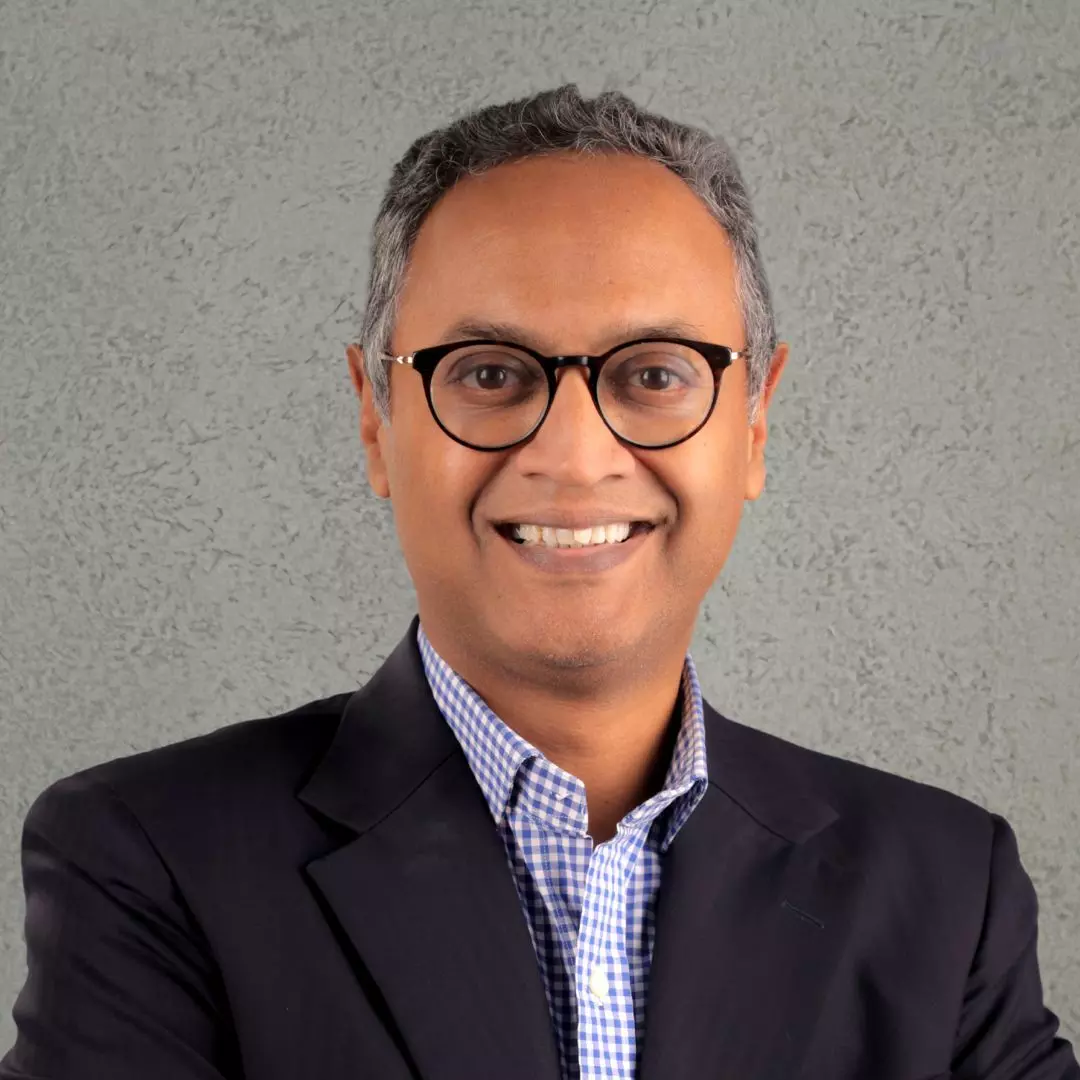
Foreign portfolio investors have played an important role in deciding the flow and momentum in Indian capital markets
On Episode 1031 of The Core Report, financial journalist Govindraj Ethiraj talks to Shashi Kumar, co-founder and CEO at Akshayakalpa Organic as well as Jason Knauf, CEO at The EarthShot Prize.
SHOW NOTES
(00:00) Stories of the Day
(01:00) FPIs Have Invested $6 Billion This Month Already, Highest Since September 2024
(07:13) Indian Airlines Saw Lower Capacity In October, The First Capacity Decline Since 2020
(08:12) Milk Prices Are Jumping Today, What Is The Outlook, Including For Food Inflation
(19:12) The Mahindra Group And A Body Helping Keep Roofs Cool For Women Workers Are Finalists At This Year’s Earthshot Prize
(31:05) Anthropic Launches Microsoft Office-Like Tools
—
NOTE: This transcript contains the host's monologue and includes interview transcripts by a machine. Human eyes have gone through the script but there might still be errors in some of the text, so please refer to the audio in case you need to clarify any part. If you want to get in touch regarding any feedback, you can drop us a message on feedback@thecore.in.
Good morning, it's Thursday, the 12th of November and this is Govindraj Ethiraj broadcasting and streaming weekdays from Mumbai, India's financial capital.
Our top stories and themes as the Diwali festival winds down…
Foreign portfolio investors have invested $6 billion this month already, the highest since September 2024.
Milk prices are jumping starting today. What's the outlook including for food inflation?
The Mahindra Group and a body helping keep roofs cool for women workers are finalists at this year's Earthshot prize.
Anthropic launches Microsoft Office-like tools.
India's airlines saw lower capacity in October. The first capacity decline since 2020.
Markets, Oil, The Rupee and Optimism
Foreign portfolio investors have played an important role in deciding the flow and momentum in Indian capital markets, particularly secondary markets, for close to three decades now, ever since they started investing.
The last 10 days have proved that their presence is important and continues to be. Foreign investors have poured in nearly $6 billion in November, which is their biggest monthly purchase since September 2024. And the markets are rising again, despite no clear certainty on oil prices or AI trades.
Though on both counts, the mood is more optimistic seen from an India lens, which means that we could benefit from lower oil prices and global investors flipping out or away from AI stocks. The latest scandal at NVIDIA is something that is obviously not helping NVIDIA or America's AI industry, and more on that shortly. Back home, foreign portfolio investments are now coming after two years of net outflows, which also gives you a timescale on how long the markets have been flat or just meandering.
On Wednesday, also a Diwali festival day, though not a holiday, the key indices pulled back from highs but still closed up. The Sensex closed up 772 points to 81,879 and the Nifty 50 was up 210 points to 25,255. The broader markets are also up with the Nifty mid cap 100 and small cap 100, rising 0.8 and 1.6% each.
The focus has also come back to large cap stocks, which is quite evident in the way the indices are moving. But this is something that we've been discussing on the core and the core report with various leading fund managers and analysts, particularly in the few weeks, some of whom have specifically argued that large caps are being ignored. If you've been listening to us or watching us regularly, then you'll know who or what we're talking about.
Large caps are also likely to benefit most from foreign buying as we're already seeing because they typically look for bigger chunks or bigger lots to buy, at least in the early days. Meanwhile, Brent crude futures were up again on Wednesday at around $93 per barrel after hitting a two month low of about $89 in the previous session, that's Tuesday. While it does seem like there will not be a war, at least in the predictable horizon, there is no clear sign of peace either.
So matters are likely to be in abeyance for a while. Reuters quoted Bernstein, the brokerage saying that while the US midterms provided a long missing spark to the markets, Trump's recent statement on Iran war being effectively over furthers the momentum. The brokerage also raised their nifty 50 target for December to 26,100 points from 25,000.
As we mentioned yesterday, the optimism amongst the foreign brokerages is also now spreading and brokerages like HSBC and Citi have also put out positive outlook reports. On Wednesday, the big banks like HDFC Bank and State Bank of India also were up with banks overall as a category doing well. Elsewhere, Reuters reported that Indian companies are rushing to tap the bond market after a sharp fall in yields opened a window for cheaper borrowing ahead of the Reserve Bank's December policy review because there could be or there is likely to be a rate hike.
Companies including government-owned firms and non-bank finance companies are set to raise about $3 billion or about 28,000 crore rupees through bond sales in November, according to Reuters. Analysts also told Reuters that several borrowers had postponed or withdrawn bond issues when yields were higher and some of them are likely to bring those plans forward. Meanwhile, if you have some overseas travel coming up or remittances to do, things are looking a notch better.
The rupee touched its strongest level since April on Wednesday despite a stronger dollar, thanks of course to foreign buying in equities. The rupee ended at Rs. 93.69, up slightly during the day after touching a high of Rs.
93.63 in afternoon trade, according to Reuters. In May, the rupee had hit a record low of Rs. 96.96 or almost Rs.
97 and is now down about 4% year-to-date, nearly halving its losses from its worst point in the year so far, according to Reuters. Gold prices were up on Wednesday but are near the $4,000 level after much selling thanks to hot U.S. inflation data and bets on rate hikes in the U.S. too. Spot gold was at about $4,055 per ounce on Wednesday.
And on Wall Street, stock futures were up on Wednesday thanks to sharp gains in CoreWeave and a rebound in Nvidia following back-to-back losing sessions for the chipmaker. NeoCloud stock CoreWeave was up 13% after it reported third-quarter revenue that beat analyst expectations, according to CNBC. Apart from India, most other Asian markets were also up.
In keeping with this revived sentiment for AI, Nvidia was up 5% after the stock dropped nearly 10% to begin the week following CEO Jensen Wang confirming he had an affair with an alleged Chinese spy. CNBC says that the latest U.S. inflation data has also increased expectations for a December Federal Reserve rate hike. Back home, broad-based economic growth and energy resilience has led credit trading agency Moody's to raise its India growth forecast 7% from 6.5% for the year ended March 2027.
Strong consumption, improving investment, and sound macroeconomic fundamentals should help India sustain growth near 7% over the medium term, Reuters quoted Moody's saying. India's economy had grown 7.8% year-on-year in the April-June quarter. Meanwhile, domestic equity fund inflows are moderating around 32,900 crores for October 2026, about 14% lower than the 38,000 crores in September, according to data from the Association of Mutual Funds of India.
Small-cap, mid-cap, and flexi-cap funds saw lower net inflows in October compared to September. Large and mid-cap pulled in more investments, and large-cap also saw an increase in net inflows. Overall, the mutual fund industry saw net inflows of about Rs.
173,000 crores in October, reversing the net outflows of about Rs. 133,000 crores in September. SIP inflows, systematic investment plan inflows through the vehicle on which most Indian retail investors are investing in the markets, are broadly steady but having fallen marginally by about a percent to about 32,000 crores for October, against a little higher in the previous month.
Indian Airlines Saw Lower Capacity In October
India's airlines operated fewer routes during the peak Diwali travel season, a sign that rising costs and operational disruptions are cooling momentum in one of fastest-growing aviation markets, a Bloomberg report said. Airlines scheduled about 6% fewer flights across October and November than a year earlier, according to data from aviation analytics firm Sirium, quoted by Bloomberg. This, now interestingly, is the first capacity decline since 2020, when carriers slashed service capacity by nearly 45% because of a pandemic-induced fall in travel.
The pullback comes, the report says, as India's aviation sector is showing signs of strain as capacity reduction pushes fares up, something that we've been reporting here on the core. Domestic passenger traffic is falling, has already declined about 6.5% in September, both because of higher fares as well as lower routes.
Milk Prices Are Jumping Today, What Is The Outlook?
The major milk producers across the country are hiking prices starting today.
Dairy major Amul, which operates across the country, and Mother Dairy, which operates predominantly in Delhi NCR, are hiking milk prices by anywhere between ₹2 and ₹6 per litre, depending on the specific category. Mother Dairy is the largest milk supply in Delhi NCR, had last raised prices on 14th of May 2026, according to the Economic Times. Prior to that, a price division happened in April last year, that's 2025.
That report said, procurement prices of milk from farmers have increased, forcing the company to partly pass on the rise in input costs to consumers. Mother Dairy, according to the ET report, passes on about 75-80% of its milk sales realisations to farmers. Earlier we reported a Reuters poll, which projected India's consumer inflation accelerating in October, taking it closer to 6%, thanks to a broad-based rise in food prices pushing up household costs.
Food prices account for nearly 40% of India's consumer price index, and have obviously risen sharply in recent months, also because of a deficient monsoon. I reached out to Shashi Kumar, co-founder and the current CEO of Bangalore-based Akshay Kalpa, a 16-year-old predominantly milk and milk products company that's also positioned as an organic milk supplier. I began by asking him how he was seeing food inflation through his lens, and also how he was seeing the broader agricultural horticultural universe, particularly in coming months.
INTERVIEW TRANSCRIPT
Shashi Kumar: The entire CPI array price inflation part and affordability predominantly comes from the TG which we are trying to address. So, we are predominantly in Bangalore, Chennai and Hyderabad and Mumbai and Pune. What we have seen at least first two quarters of this year is we have not seen any fall in demand so far because our TG is very very different and it's not a mass TG.
So, that is one part. Second is, okay, from an inflationary trend point of view, input costs have been rising, okay. So, irrespective of where the product being sold, that is the market, but input side of, for example, farming side inputs, okay, they've been becoming expensive.
Dairy milk production is becoming expensive and production of eggs is becoming expensive and also El Nino effect, okay, has put a lot of distress. For example, the area where we work, the Cobra prices have been skyrocketing. First time Cobra prices hit 36,000 a quintal.
That's the highest ever in the history. Earlier we had reached around 31,000. So, therefore, the short supply to market is happening, okay.
There's no doubt about that at all. So, therefore, we need to really see this short supply to market which is leading it to price hike. It definitely will have an impact on affordability.
It will definitely will have an impact, but again, depends upon the TG which we are addressing.
Govindraj Ethiraj: Right. And I'll come to your product mix in a moment, but you said that Cobra prices have hit all-time high. So, why is that happening?
Shashi Kumar: So, what is happening is last one year, there are less rains, okay. They have resulted in less coconut yields and the coconuts need to be dried for nine months or so, okay. Now, that is resulting in short supply to market.
For example, Asia's biggest Cobra market, Tiptur, where we operate. You've seen inward, okay, is reducing day by day, day by day. Also, farmers are holding it back.
They know it's going to, prices going to skyrocket. So, therefore, holding back to supplying to ABMC. That's the reason the Cobra prices have been shooting through the roof.
Govindraj Ethiraj: And where is Cobra an input for you? I mean, which of your products use that?
Shashi Kumar: So, most of our, let me say, input for our dairy, part of it is Cobra, which is after de-oiling the cake, it constitutes two to 3% of input to dairy units. Okay. It becomes a Cobra.
Therefore, it has an impact. So, oiling has reduced, input has reduced. So, therefore, the Cobra cakes have really gone up.
Govindraj Ethiraj: Right. And you said cost of producing eggs has gone up. Is that because of the cost of feed for chicken that has gone up or hens?
Shashi Kumar: No, there are two parts, okay. One is the cost of feed to the poultry is going up because the input to market is going down. The second part is the situation, which is leading to less rains, a lot of weather impact on poultry units.
I have seen, because we are closely working in poultry backyard, eggs, etc. The mortality rates in poultry units have gone up. So, in our poultry units, mortality rate is close to around 8% now.
That is quite high. Mortality rates anywhere between three to five is fine. 8% is substantially higher than what generally happens.
Govindraj Ethiraj: And these mortality is because of the weather? You're saying it's because of heat?
Shashi Kumar: Yeah, because of the weather patterns, because poultry needs, okay, a little bit of what you call dry-ish weather. I've seen, for example, last 20 days in the month of where the winter, we are raining, when it was supposed to rain, that is June, July, August, we did not have rains. So, it has got a huge impact on poultry cycles.
When the bird gets inducted, what happens between day two chick to four months chick, four months chick to onwards till it becomes a layer. So, what happens? There are a lot of challenges.
Bird induction didn't happen on time. We inducted the birds when rains are happening. So, therefore, now you can see the impact of the mortality.
Govindraj Ethiraj: Right. And on the product side, could you give us a sense on the product mix today and their rough contributions to revenue in hierarchy?
Shashi Kumar: Around 65% of our revenues come from milk. Remaining around 20% comes from value-added dairy. Remaining all of it comes from non-dairy like eggs, little bit of mushrooms, little bit of vegetables.
So, that's how remaining revenues are constituted.
Govindraj Ethiraj: Right. And tell us about milk. I know that your positioning is and the product also is organic, which means that the cows are not consuming any synthetic or are consuming pure agricultural produce.
If you could walk us through that and how that is different from what others are doing.
Shashi Kumar: So, generally what happens in dairy industry, farming is not linked to the dairy. For example, if you have five acres of land, okay, you could see people owning 25, 30, 35, 40 cows in a dairy industry. Technically, five acres of land won't support so many dairy cows.
So, therefore, you need to buy the ingredients for the dairy from outside. So, in an organic system, this is broken. So, for example, if I have five acres of land, maximum you can have is probably around eight to 10 cows.
It is limited because land bearing capacity for dairy animals is defined so in a tropical, subtropical climates like ours. That is one predominant step in terms of number of animals in a unit. Second thing is where the feed and fodder is coming from.
So, therefore, number of animals to the land ratio is defined and for what is required for the animals is grown in same land, no external inputs. This is a predominant definition of an organic dairy space where you can grow your own inputs to dairy at your own farm. So, rather than depending upon external inputs, this is the predominant differentiator.
Govindraj Ethiraj: How are you seeing the next few months in terms of both input side costs as well as the ability to price your product and the flexibility you have there?
Shashi Kumar: See, the input side, for example, if you really look at, so this is November month. October and November we had rains. It's winter.
Now we are having rains and sowing generally is not done in October and November. So, we couldn't sow it on June, July and August, September, okay. There will be a production problem on feed and fodder in the farms.
So, therefore, it will reduce the ability to produce large quantity of milk in the farms, okay, unless you buy feed and fodder from outside. So, this is one restriction we have. And when you say outside, you mean import?
No, no. I mean, you can't buy from outside the farm. So, whatever farm produces, you are limited to that.
So, these results probably we are seeing that from January onwards, we'll start seeing the impact because we had good storage of silages from previous year. Now the silages get consumed. You couldn't grow the feed and fodder to make good silages.
So, therefore, it will have an overall impact on dairy productivity starting January. So, you will see huge milk shortages in summer. So, you need to really look at, summers are generally milk deficient, but this time it is going to hit very hard.
That's what it is because sowing didn't happen on time. On the market side, I think the price flexibility is very, very limited because we are already in the premium space and flexibility to price a product much higher to compensate for increase in the input product input is very, very limited. So, therefore, we need to probably play between 2-5% increase on the market side, while we need to compensate farmer 10-15% more than what you are doing right now to make up for some of the challenges they are facing on the milk production.
Govindraj Ethiraj: And when you project or are projecting a shortage or shortages of milk production down the line, you're saying that this will happen or likely to happen across the country? Yes.
Shashi Kumar: So, this is the pattern seen across the country. Now, if you really look at three clusters we are operating, we are operating in Thiptul cluster in Karnataka, Chengalpetu cluster in Tamil Nadu, Rangariddy-Mehboobnagar cluster in Telangana. We are operating in these three clusters around 3,500 farmers.
So, what we have seen is milk production in general has gone down and milk pricing sourcing from the farmers has gone up. So, across starting from the cooperatives, they have increased the milk prices. The private players, they have increased the milk prices and we have also increased the milk prices.
So, that's how I really see good trend indicator that milk production is falling. At this point of time, you need to peek at the milk production. If you really look at past year patterns, September, October, November, December, the cheapest milk you can buy.
Now, this year you are seeing you're buying the milk at the highest possible cost. Never ever seen in the history. That's how which is happening right now.
Govindraj Ethiraj: Right. So, I'm assuming like all manufacturers, you're also moving more towards value-added products. So, what are some of the newer products that you're planning?
I know it's a pretty large portfolio already, but what else would you be adding or could you be adding?
Shashi Kumar: So, I think the key part has been our high-protein milk. So, last six months, every month we have launched one variant of high-protein milk that has been a substantial value-added product in the market for us. And we are going to go take the yoghurts through December, starting December.
We're going to get into the market on yoghurt side. So, that is also going to be a substantial new addition. We already have yoghurts, but we are going to increase the portfolio of yoghurt and we are launching in December.
So, these are the two main aspects. Of course, we are trying to really see can this high-protein milk, we can do it in long shelf life format. Right now, it is a fresh milk.
We are trying to see we can value-add and take it to bigger markets.
Govindraj Ethiraj: Shashi, thank you so much for joining me.
Shashi Kumar: Thank you.
This Year’s Earthshot Prize
The EarthShot prizes, a global environmental award starter in 2020, will be given out next week in Mumbai. The EarthShots are ambitious goals designed to protect and restore nature, clean air, revive our oceans, build a waste-free world, and fix our climate by 2030. The prize scans thousands of submissions from hundreds of official nominators around the world with EarthShot's own science-backed research.
Every year, the 15 most impactful solutions become EarthShot prize finalists, and five of those winners receive a million pounds each to help take their work to the next level. Two of those 15 finalists this year are from India, and include Mahindra Group for their work in electric vehicles and last-mile mobility, and the Mahila Housing Trust for using affordable reflective roof coatings to low-income homes by up to 5 degrees Celsius, and also pioneering climate risk insurance to protect women's livelihoods when extreme heat makes work impossible. Even countries get selected, like Bhutan for its work in forestation.
Bhutan's constitution requires at least 60% of the country to stay under forest cover forever. Bhutan actually exceeds this, maintaining nearly 70% forest cover and protecting more than half its land through a National Protected Areas Network. In the Philippines, the Mother Earth Foundation, started by five women, organised their Kwezon City Neighbours to separate waste, compost, organics, and turn an empty lot into a community garden, an idea that now runs city-by-city.
Households sort waste at source, community-run facilities collect and sort it, and organic waste is composted. Philippines, by the way, contributes about 36% of the world's ocean plastic waste, and 70% of Filipinos lack access to proper disposal facilities. Fixing this means building circular systems that bring informal waste workers into the process and deal properly with organic waste, not just plastic, built at the source city-by-city.
I spoke to Jason Knauf, CEO of the London-based Earthshot Prize, and I began by asking him to walk us through what stood out for him this year.
INTERVIEW TRANSCRIPT
Jason Knauf: Yeah, so the EarthShot Prize was launched back in 2020, and there was a very simple theory behind it, and it was that we were seeing incredible progress on environmental issues, huge amounts of innovation coming from right across the world, but we were confronted every day with quite a pessimistic take on our ability to solve these big problems. There was lots of political disagreement at the global level, at domestic level, at different countries. People kind of didn't think big businesses were going to be able to play their part, and that really contrasted with what we were seeing on the ground.
So what we wanted to do was build a platform that actually helped show the world that huge innovations were happening across every sector and across every geography, and then to mobilise a network to help scale and replicate those solutions. The other thing we wanted to do was also show, kind of break down some of these barriers in the environment world. Lots of people want to specialise and say, oh, I'm focused on climate change, or I'm passionate about nature, or no, I work on oceans, but actually all of these things are interconnected, and I think everyone in India in particular can see the way that all of these different sectors support each other and interact with each other.
So we wanted to show that solutions are coming from all levels of society, all levels of the economy, and across all these different issues. So that's why we have climate alongside nature, air, waste, oceans as well. So yeah, that's how we got started.
Govindraj Ethiraj: Right. And I'm going to come to 2026 and the finalists, but if you were to look back at the award winners of previous years, how would you say their projects have shaped up or evolved or expanded? I mean, if you were to look back?
Jason Knauf: Yeah, we've been rolling away. I mean, the Ayrshire Prize, we don't just want to recognise big achievements, although that is an important part, recognition plays a huge role in what we do. We also then mobilise our huge network of international corporates, philanthropists, policymakers to get behind these solutions.
And since our first awards in 2021, what we've really seen is huge progress. The startups and nonprofits that are in our portfolio of winners and finalists have raised over 800 million US since they've been named finalists. We've seen incredible breakthroughs in species being brought back from the brink of extinction, solutions replicated across different states and regions and countries.
India in particular has been hugely successful. We've had winners in almost every year of the Ayrshire Prize from India. It's been our most successful country in terms of finalists and winners.
But just to give you a few examples of what that's looked like in terms of how they replicated and scaled their solutions. Last year, Gujarat was recognised in the air pollution category for having a breakthrough in the world's first emissions trading market that was focused on PM2.5 pollution and really helping to work with industry to put limits on the amount of industrial pollution and cleaning air across the entire state. The team in Gujarat working with the University of Chicago's Emissions Market Accelerator have really seized on our platform and have helped replicate this across other states in India.
We were in Brazil last year and they started working with the government in Rio de Janeiro and they've taken up the scheme. They've really used the platform to build connections globally. So one good idea in Gujarat has become something that is now spreading right across the world.
Govindraj Ethiraj: Right. And if you were to look at this year's finalists, and I can see they're a couple from India as well. What stands out to you or to the Ayrshire Prize?
Jason Knauf: I think what we're seeing in this year's finalists is that the solutions are becoming sort of more mature. You're seeing big business really have a crucial role. This year, we have two large corporates as finalists for the first time.
You know, the Ayrshire Prize, we don't just look at startups or just at governments or just at large corporates or NGOs. We've got all of it because that's what's required to meet the great challenges of our time. And this year, there's two Indian finalists that are truly inspirational in terms of the leadership that they're providing.
One is an NGO solution from the Mahila Housing Trust that's focussing on heat and the real strain, particularly for women, that heat has played in people's lives and the economy. So they've developed a really simple and scalable solution around reflective paint for roofs for women who work and run their businesses from home, but then also a simple, scalable insurance product that makes sure that these women's incomes are protected when it becomes too hot to work. Then at the other end, Mahindra is probably leading one of the most significant environmental innovations that we've seen in our time, which is the rapid electrification of three-wheel vehicles in India.
So they've now reached a positive tipping point where 400,000 electric rickshaws have been sold in this country. They're on track to do much more than that. This is globally hugely significant, both for the climate transition, but also for air pollution.
We view air pollution through the lens of human health, obviously, but also as a real economic barrier to growth. And the role that Mahindra is playing alongside other electric vehicle manufacturers in India is helping to get into one of the hardest issues, which is around this last mile mobility, where a lot of this pollution is coming from, either a diesel and LNG sort of pollution in those tight urban spaces. If we can crack this over the next few years, the benefits for people and the economy are going to be massive.
Govindraj Ethiraj: Right. And one of your finalists is the country of Bhutan, who has a clear approach and policy to maintaining a high level of forestation. So tell us about that and why you chose them.
Jason Knauf: Yeah, Bhutan is a really interesting case. It's not the first time we've had a country as a finalist. Actually, in our first year, the country of Costa Rica won the airshow prize in the nature category.
Bhutan really stands out for a couple of reasons. One, they've enshrined the protection of nature into their constitution. They have national thresholds, minimum amounts of the country that has to remain forested.
And like India, nature plays a really crucial part in culture and society in Bhutan. But Bhutan is also being recognised because what we know is that this country of 800,000 people is playing a disproportionate role in protecting the water security of the 1.6 billion people across South Asia that are relying on nature. If we don't protect our forested areas in the Himalayas, the impacts for everyone downstream across Northeast India, West Bengal, down into Bangladesh, will really be put at risk.
We saw with the tragedy in Nepal earlier this year, which has many different causes around glacial melts and other challenges, that the role of nature is going to be a crucial part in making sure we build resilience. So Bhutan is doing something that is massively important for the whole planet. It's the world's first carbon negative country.
It's taking more carbon out of the atmosphere than it's putting in. But also, every tree that they keep in the ground matters for everyone that's living downstream of it as well. So we really see this as a great story for the entire South Asian region.
Govindraj Ethiraj: Right. And Jason, in your meetings with companies, individuals, governments, what are the factors do you feel bring out these leadership tenets? As in, is it individuals who are responding to a problem, are seeing a profit opportunity, or a business case in building a solution?
Or is it a sense of responsibility? Obviously, it must be a combination of many things. But what has stood out to you in your encounters with all these finalists over the years?
Jason Knauf: You know, it's varied. But I think what we're seeing more over the last couple of years is that there's lots of inspiring leaders in this space. And you know, people have worked hard for decades to put climate on the map.
India's conservation community is world famous for the revival of tigers and protection of nature right across the country. What we're seeing now, as you say, leaders are really understanding that what is good for nature, good for the climate, good for air quality, is good for business. And at the EarthShot Prize, you know, we don't look at motivations as having to be, oh, you have to leave nature for nature's sake or climate for climate sake.
Leaders are understanding that these issues matter for their customers. If you're running a business, for your investors, if you're a policymaker, they matter for the people who are voting for you and the constituents that you serve. So all of these motivations are really welcome because we're not going to get there if you're just making sure that people have to care about nature for nature's sake.
And I think that's exciting. I think people are really understanding that there's a wide variety of opportunities here. And I'll give you the example of India's rapid electrification of its energy sector.
This country has hit its targets for renewable energy five years earlier than expected. So they set targets through the climate cop process. But then because of private sector investment and government leadership, those have been blown through much earlier.
And that is because people realise that the faster that a country can get to having abundant, clean and cheap energy, that where they're not going to be exposed to the rapidly fluctuating prices through geopolitics and everything else that fossil fuel dependency will expose them to, then that's going to be better for consumers. It's going to be better for businesses and also better for the environment. So I think India is a really great example of just understanding that this is about national security, economic security, and all these motivations are going to point in the same direction.
Govindraj Ethiraj: Right. Thank you so much for joining me.
Jason Knauf: Thank you for having me.
Anthropic Launches Microsoft Office-Like Tools
Anthropic is releasing a suite of tools that weave the company's AI capabilities into more everyday office work, a move that puts it in close competition with two of its backers, Microsoft and Google, Bloomberg report said. Adding the features were unveiled at a company event, and they include a video call assistant, a data dashboard tool, and a spreadsheet service called Cloud Sheets, which looks pretty similar to Microsoft, Excel, and Google Sheets, but with Anthropic's AI built into it.
Many of the new tools are available in a beta format for paid users, that Bloomberg report said.


