



 Newsletter
 Search
Foreign Investors Will Have It Easier To Buy Indian Stocks
- Podcasts
- Published on 17 Aug 2026 6:00 AM IST
The markets are seeing more foreign portfolio investment, but the moves are still measured and careful
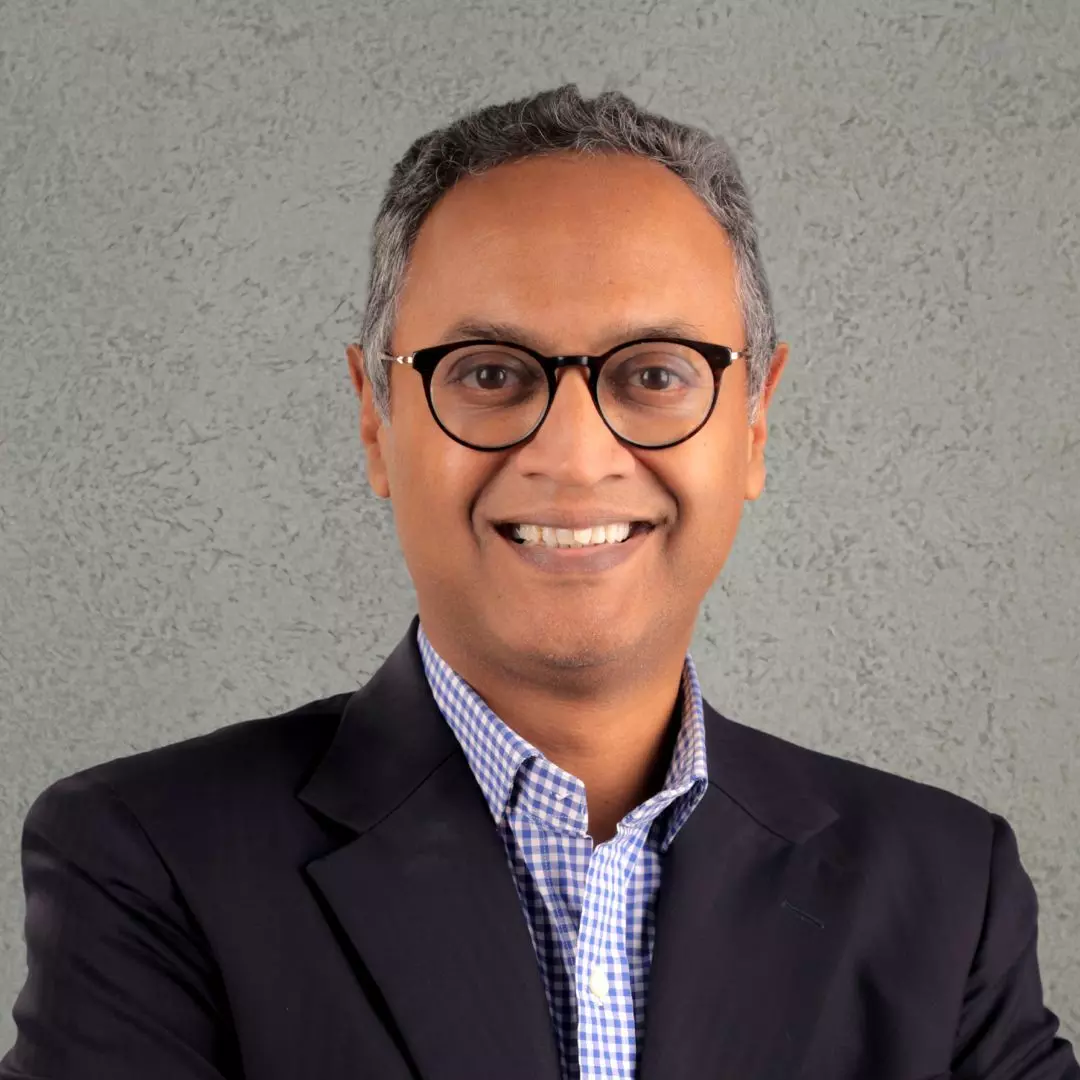
On Episode 950 of The Core Report, financial journalist Govindraj Ethiraj talks to Tarun Pathak, Research Director at Counterpoint Research as well as Suvendu Bose, Partner at Grant Thornton Bharat LLP.
SHOW NOTES
(00:00) The Take
(04:12) Foreign Investors Will Have It Easier To Buy Indian Stocks
(05:44) Trump Quips Strait Of Hormuz To Be A US Territory
(09:43) Why The Rs 10k Smartphone Might Be History
(21:02) What India Needs To Do To Score In The Critical Minerals Race
Sign up for our Daily Newsletter: https://www.thecoredaily.in/
EVENT: Spotify x The Core's "Building Wealth for a Longer Life" with Saurabh Mukherjea of Marcellus Investment Managers. Register Here
—
NOTE: This transcript contains the host's monologue and includes interview transcripts by a machine. Human eyes have gone through the script but there might still be errors in some of the text, so please refer to the audio in case you need to clarify any part. If you want to get in touch regarding any feedback, you can drop us a message on feedback@thecore.in.
Good morning, it's Monday the 17th of August and this is Govindraj Ethiraj broadcasting and streaming weekdays from Mumbai, India's financial capital.
The Take
When Natarajan Chandrasekaran steps down as chairman of Tata Sons in February 2027, ending a decade-long tenure, his exit and thus effective resignation will trigger more than a routine boardroom succession. It will force a referendum on the direction of Indian corporate capitalism.
The chairman of Tata Sons does not merely oversee a holding company, he sits atop a sprawling industrial empire comprising more than two dozen publicly listed entities from tech titan Tata Consultancy Services to Tata Motors and Tata Steel along with Indian Hotels and Tata Power alongside volatile unlisted ventures like the recently reclaimed but still struggling Air India. Moreover, in the nature of conglomerates, the ultimate accountability for strategic missteps or breakthroughs lands directly on the Tata Group chairman's desk despite the fact that there are empowered and professional CEOs and managing directors who run some of the very large enterprises that form part of the Tata Group. Now, India's commercial landscape has historically belonged to family-run dynasties.
While families like the Ambani's and Adani's maintain active owner-manager control, the Tata's have attempted professional stewardship. Though the possibility remains that a family scone such as Noel Tata or one of his children could mount a bid for the chair, modern precedent within the group favours a professional drawn from the group's executive ranks. The role also demands a technocratic mindset capable of managing hard physical infrastructure or scale manufacturing.
Technocrats often come from engineering backgrounds and some of India's big investments would likely, though not necessarily, be driven by such business leaders. Reliance's Mukesh Ambani is a chemical engineer by training from Mumbai's UDCT. Incidentally, Cyrus Mistry, Chandrasekharan's predecessor and Ratan Tata's successor appointed by him, was a civil engineer from the Imperial College, London.
It is another matter that Ratan Tata, an architect from Cornell University, and Mistry, whose family owned a substantial stake in Tata Sands or rather still owns it, had a rather messy falling out. Under Chandrasekharan, a master's in computer applications from Trichy, who started his career with TCS, Tata aligned its balance sheet with India's strategic industrial priorities, deploying capital into iPhone manufacturing and multi-billion-dollar semiconductor foundries, amongst many others. Like its peers in energy and ports, the group recognised that long-term outperformance requires pairing private capital with national ambition.
Now, the supreme test for Chandrasekharan's successor will be managing this tension between Dalal Street's demand for quarterly returns and the prolonged gestation periods of high-tech manufacturing, a point highlighted by veteran market analyst Devyan Choksi in a conversation with me last week. So the easier path for any CEO is conservative cash preservation and margin optimisation. But deciding whether to finance the next wave of data centres, semiconductor fabs, electric vehicles, supply chains, defence hardware, or whether to hold on to sentiment-driven money pits like Air India requires a risk tolerance level far higher than normal.
For all the recent challenges, India is still considered one of the most promising aviation markets in the world. So the stakes extend far beyond the walls of Bombay House. If India's private titans lose their nerve and retreat into defensive balance sheet management, the government will inevitably step into the breach with state-directed capital and industrial policy.
That outcome rarely bodes well for economic efficiency. The next leader of Tata Sons must be more than a prudent manager of legacy assets. They must possess the vision to take the giant bets that keep private enterprise at the centre of India's economic future.
And that brings us to our top stories and themes...
Foreign investors will have it easier to buy Indian stocks.
President Donald Trump quips that the Strait of Hormuz would be a U.S. territory
Why the Rs 10,000 smartphone might be history
And what India needs to do to score in the critical minerals race
Markets, West Asia, Oil and Nuclear Power
Around 20 years ago, I was on a flight from Europe to the United States and I was seated next to, as it turned out, a senior pilot with a global cargo airline returning home. When I mentioned that I was a financial journalist, his question, or rather next question, was what I thought of Wipro's ADR or American Depository Receipt listed on the NYSE since 2000. Actually, not much, though I gave him a general sense of IT services from a local perspective, all of which it turned out he already knew because he was following Indian IT stocks closely and found ADR as a hassle-free way of investing in India.
Some things have changed since then, though efforts are on, it would appear, to make it even easier for investors like that pilot to step in. On Friday, the Securities and Exchange Board of India proposed allowing all individual foreign investors to complete regulatory onboarding digitally to boost participation in the securities markets. SEBI has proposed relaxing the requirement that overseas investors be located in India while undergoing digital know-your-customer verification.
Individuals investing in India from well-regulated and compliant jurisdictions would be allowed to complete onboarding through video-based verification and digital document submission. Will this boost foreign investment right away? Well, that's unlikely, though it does help when the next wave of broad investor interest in Indian stocks kicks in. Also remember that resident Indians can invest in US stocks, for example, and the KYC norms, while strict, are still not as exhaustive.
The markets are of course seeing more foreign portfolio investment, but the moves are still measured and careful in sync with the massive AI swings in global markets even as of last week. Oil prices are still staying high with no further developments in the West Asia war save for US President Trump saying he would designate the state of Hormuz a territory of the United States pretty soon. Iran has already fired back, calling its threats as nonsense as the Memorandum of Understanding signed between the two in June expires on Sunday or rather expired yesterday.
Crude oil futures were up about a dollar a barrel on Friday amidst attacks on tankers and lack of progress between the two countries. Brent futures were about $88.50 a barrel or up about $1.50 on Friday according to Reuters. Back home, the benchmark Nifty 50 and the Sensex were down even as oil prices rose.
The Sensex was down 71 points to close at 78,009 and the Nifty 50 was down 29 points to close at 24,366. In the broader markets, the Nifty mid cap and small cap were also down 0.5 and 0.7% each. Amongst macro news last week, direct tax collections were up about 23% to over 811,000 crores as of August 10th thanks to higher non-corporate tax and securities transaction tax collections.
On Saturday, the Prime Minister laid out a seven-pillar development roadmap for Vixit Bharat or Develop Bharat or India by 2047 and more on one of those aspects shortly. Gas is in the news again. The government has set a maximum daily cooking gas production target of about 63,000 tonnes for state-run and private refineries to ensure domestic supplies and build buffers, according to a 13 August order reported by Reuters.
Elsewhere, a tax amnesty scheme for small taxpayers to declare certain undeclared foreign assets of up to Rs 5 crore or Rs 50 million opens on Sunday and will be available till the 31st of December, according to the government. The scheme was announced first in the February 1st budget and targets small taxpayers such as students and non-resident Indians. Meanwhile, an Air India Airbus A320 flying from Phuket in Thailand to New Delhi dropped about 300 feet earlier this month, injuring about 24 people.
The news now is that the aircraft registered a loss of hydraulic pressure that briefly left key flight controls unresponsive, according to a preliminary Airbus analysis seen by Reuters. The incident occurred on August 4th on that flight from Phuket in Thailand to Delhi and it landed safely despite that altitude loss, but there were injuries to some passengers. Sticking to aeroplanes, Reliance Industries said on Friday it planned to partner with Britain's Rolls-Royce to develop and manufacture an engine for India's fighter jet programme.
A prototype of the jet known as the Advanced Medium Combat Aircraft is expected to roll out in two years' time and could play a role in India's future air combat strategy, according to a Reuters report. On energy, the government proposed a tightly supervised approval regime for private nuclear power generation, opening the door to foreign reactor technologies with proven track records. The Reuters report says that the draft rules and regulations offer the clearest picture yet of how India intends to open a tightly guarded sector to private and foreign investors while retaining control over entry and operations in line with global nuclear markets.
Affordable Smartphones
The sub-Rs 10,000 smartphone may be history at least for some time. Skyrocketing memory prices are making phones more expensive and hitting entry-level phone prices the hardest. All of this could cause a fundamental reset in India's value-conscious smartphone market and shipments are already falling.
Data from Counterpoint Research says that India's smartphone shipments fell about 10 percent year-on-year for the second quarter that's April to June and the decline which is the biggest for a June quarter in six years was driven by record high memory prices which increased smartphone prices across segments, weakening consumer demand, extending replacement cycles despite promotions and financing initiatives. So what are the July and latest trends telling us not just about memory prices but also smartphone sales and where could we end the year and what could of course be the impact of this on consumers? I reached out to Tarun Pathak, Vice President at Counterpoint Research and I began by asking him how he was seeing the latest trends in memory prices.
INTERVIEW TRANSCRIPT
Tarun Pathak: So it's a very important topic right now what is happening for the smartphone market on the whole. So if you look at the primary reason for the shipments to decline is because you do not have memory that goes in these smartphones. So the supply of the memory is very low and I think my colleague Neel Shah in your earlier podcast talked about that in detail because much of that demand is being taken over by AI servers and data centre companies.
So that remains the context. Now the thing is what started from December last year has actually increased quarter on quarter. So the memory prices are almost like 4.5x what it used to be in Q3 or Q4 last year which means for a smartphone which has like 12% contribution of DRAM and NAND that contribution has increased to almost 45% 40-45% which means your phones are getting expensive. So there are two things to it one the expensive phones and second is the less supply of memory. So the OEMs are basically try to look at all possible angles to make phones or realign their product portfolio for a better visibility on memory and hence as a result of it the supply is not getting in the shipment is falling. It declined 3% in Q1 but then it declined 10% in Q2 and counterpoint research is projecting by the end of the year in terms of volume we'll see 13% decline in smartphone market and if we translate everything into numbers and everything the entry tier segment which we call as like sub 10,000 segment there is a high possibility that this segment will be completely wiped out.
There will hardly any devices we'll see in sub 10k segment going forward.
Govindraj Ethiraj: Okay that's quite dramatic. I'll come to the sub 10,000 segment in a moment but when you say 13% decline in the overall market what does that translate into in absolute numbers?
Tarun Pathak: So we had like on an average smartphone the new smartphone shipments are about like 150-154 million every year right. So this year we are projecting close to like 133 million smartphone shipments. So you can do a math on top of it like 20 million units will be taken out from the market and India market normally operates at like an ASP of $300-$310 and if those numbers are going out 300 into 20 million so that's the kind of impact we are seeing if not for the memory crisis.
Govindraj Ethiraj: Right and you said that basically a lot of the fall will be in the lower segment that's the sub 10,000 rupee segment and when you say that will disappear what does that mean? Are you saying that the phones will not come at all or?
Tarun Pathak: Correct so let us say like a 10,000 rupee phone used to have a memory which contributed to around 1200 rupees or 1500 rupees a year back. Now to make any phone in that particular segment you need to spend almost like 5000 rupees to just procure a memory. So I'm just talking about one component and now you add chipset display battery and camera which are also a very expensive component.
The economics doesn't allow you to make a great phone under 10k so there are high chances if you look at the consistent pricing of the phones so there are two things that are happening in the market. One is the prices of the existing phones are going up; the new phones are getting expensive. So we did a detailed calculation on that. So if you look at from January till July this year, the prices of almost 95 percent of the models have already increased. It's just, apart from Apple, everyone has increased the prices of their existing smartphone models, and the average increase is close to like 15 percent. So that's just the existing model.
And now, if you look at the new smartphone models that have been launched from January till July, and if you compare to the previous last year launches for Apple-to-Apple comparison, some of them are even expensive by almost like 30–35 percent. So your devices that are coming into the market are getting expensive, your existing devices are expensive, which means the entire portfolio shift is happening towards higher price.
So 10 to 20 thousand used to be like the key smartphone segment for India market where bulk of the purchase used to happen; now 20 to 30 thousand rupees is the new 10 to 20k. So the—all the—shift is happening means consumers have to spend more, and even by spending more, there is no guarantee that you will get the features and the specifications that you used to last year. So I think this is a new normal for a smartphone industry where everyone used to talk about cutthroat specifications, the numbers where India used to be very aggressive. I think gone are those days, and we might not be able to see that kind of pricing on smartphones ever.
Govindraj Ethiraj: Okay, so two questions again. So one is: do you think there could be some hacks and runarounds for, you know, you reduce memory or you cut prices of, let's say, the camera lens and therefore keep prices low? I mean, could manufacturers be doing that, or could they do that?
And secondly, isn't it likely that memory at some point will see more production or catching up of production, and therefore maybe prices even out again?
Tarun Pathak: So I'll start with the first one. If you look at the—we call it as—cutting the corners in terms of specifications for the devices, that is happening. But the point is, if you have a one component that is increasing every quarter sequentially—like the memory growth was like 85 percent sequential in Q2; in Q3 it will be like another 15–20 percent; it's growing every quarter, right?—so you have only the rest of the 55 percent of the BOM to play with. You can cut corners, you can reduce the camera spec, but the savings you can do will be around, let's say, for a like $150 device, you can do only about like $60 to $80 of BOM saving. That didn't offset that cost in a big way, because something that has increased 450 percent.
So if you look at the trends, there are certain OEMs that have launched the LCD—they replace the whole OLED with LCD; they cut down on the front camera, the selfie camera; they cut down on the charging spec and all. But even doing that, you can't control the overall price. So that is happening.
Even from the consumer point of view, we do not see clear-cut trend on downgrading with respect to specifications or of certain features or even the price. So with any consumer research at Counterpoint, only six percent of the consumers said will downgrade in case the price hike happens. So there is a clear-cut appetite of consumers to spend more, and there is not enough room for the OEMs to cut a lot to save money on that. So that is point number one.
The second thing: if you look at from the overall supply chain point of view and we look at the upstream memory suppliers and all, so the entire memory industry is being driven by three players like from the DRAM perspective, and now you have a couple of coming. It's like Samsung, you have Micron, and you have SK Hynix. So that is happening, but the production and the demand is not matching up.
If you look at the recent earnings of all these memory players, the one thing that has been very consistent is they are facing a hard time catching up to the demand. The demand is exceeding supply by almost like three-is-to-one ratio, right? So these players are all catching up for the excess demand that AI and data centres have created. So all the memory, at least for 2028—till 2028—will go into that direction.
And yes, one can argue that if you can open more fabs, more factory, this might help a bit. But to even open a fab—memory fab and all, which these players have started—these are like long-term projects. It will take at least three years, two and a half three years, to actually open, build on your cleanroom, look at those facilities, expand operations. So that is why the time period which industry is saying that we are here to stay for a longer period of time is until like 2028; even 2027 is going to be crazy.
Govindraj Ethiraj: Right. So how should consumers and buyers be looking at all of this?
Tarun Pathak: So there is, uh, definitely a premiumization trend that is happening. So you need to have some kind of—if something is getting expensive, the only way to offset this is the affordability levers. And Counterpoint Research at a consumer survey where we have seen a clear-cut increase in the EMI purchases. Consumers are saying, "We love to go for a higher devices, but if we can have a better EMIs or financing schemes." And that is why, if you look at the recent trends, what Apple did with Klarna, or Samsung upgrade programme on a Pixel upgrade programme, everyone—or the steps what Bajaj is doing in Bajaj Finserv—everyone is looking at either the leasing, financing.
And the other thing I would love to add here is the second-hand market. Keep an eye on the second-hand market. I think our projections are showing that if the new market will decline by 13 percent, the refurbished and second-hand market will actually grow by 13 percent, because people will find every way to reduce the cost of their new phones. What they will do is they will bring back the droid phones that are there, trading in the channel, and hence you will have more options in the second-hand market as well.
So those are the different like affordability levers and the financing what the consumers are looking at right now.
Govindraj Ethiraj: Right, that's very interesting and insightful. Thank you so much for joining me.
Tarun Pathak: Thanks.
Critical Minerals and India
In his Independence Day speech, India's Prime Minister Narendra Modi highlighted the importance of critical minerals for emerging technologies.
He referred to the steps being taken to strengthen India's capabilities in the sector. He also pointed out that the national critical mineral mission has been launched. A critical mineral corridor has been announced in the budget and agreements have been signed for several countries for critical mineral supplies.
A new report from consulting firm Grant Thornton says that India's critical minerals challenge is no longer limited to securing mineral resources but now hinges on building resilient domestic capabilities across exploration, refining, processing, recycling and financing to support India's clean energy transition and industrial ambitions. The report called building a critical minerals ecosystem in India outlines a roadmap to strengthen India's end-to-end critical minerals value chain through policy reforms, strategic investments and global partnerships. I reached out to Dr. Suvendu Bose, partner at Grant Thornton, metals and mining specialist and author of the report and I began by asking him first what were the three or four key priorities for India to tackle in this area.
INTERVIEW TRANSCRIPT
Dr. Suvendu Bose: I'll just quickly start with the definition of critical minerals, very basic question that why we are calling them critical. So, that will give you the proper answer, you know. We are calling these minerals critical because these minerals, first thing, we need these minerals maybe next 50 years or 100 years in, you know, not only in India, across globe, these minerals are very much needed because we are going towards a non-fossil fuel energy source.
And for those, first thing, anything green and zeroing down to the carbon emission, these critical minerals are very much required, okay. And though government of India, they have initially identified 30, from 30 now it has been reduced to 24 minerals. And these minerals are occurring very small quantity in India and also extraction, processing of these minerals are very difficult and that is the reason these minerals have been designated as critical.
Govindraj Ethiraj: You've outlined several policy measures, which could help in increasing our critical mineral output. And that includes both efforts within the country as well as outside.
What would you say are the two or three key things that we need to do to achieve greater self-sufficiency in critical minerals that we are not already doing or maybe we are still in the early stages?
Dr. Suvendu Bose: See, when you are talking about policy measures, and you must be aware of NCMMM, National Critical Mineral Emissions, and all allocation of some 3,400 crore of fund. But you know, the thing is like this, you know, when I'm talking about policy, I have to start it from the security, material security, raw material security point of view. Like the blocks, the critical mineral blocks, these are being offered by Indian government.
They are offering it at G4 level of exploration, which is nothing, no drilling data. It's only surface exposure data. And, you know, we know that all the mineral presence cannot be established based on surface exposure.
So it's a G4 level of exploration they are offering. Vis-a-vis government of India is expecting number of statutory payments, bank guarantees, performance guarantees, and upfront payment and things like that. So whenever we are interacting with the potential investors in critical mineral, we realise that the, or most of the promoters, of course, because it is also their hard-earned money.
So they cannot invest based on some buying a lottery ticket kind of, it sounds to be a little bit negative, but this is the actual fact that, the investors are a little bit apprehensive that if tomorrow we cannot establish the availability of critical minerals in that particular block, that entire money I am going to invest, that may be a sound cost. So that is becoming a major, major issue. So what I feel that government of India should take immediate measure to do the basic level of exploration, at least to the level of G3, not G4.
So G3 means it can be offered as a CL and if not mining lease as an ML in G2 level. So G3 level of exploration should be done. And then the block should be offered for exploration.
That is number one. Number two, whenever you are offering a block that involves, they are giving what is happening in nature. It's not unique, like it's a bauxite block.
It's an iron ore block. In case of critical minerals, that is across globe, that's the nature's characteristics, that it comes up with the multiple minerals. And whenever they offer, you know, government of India is offering these blocks, they are offering with all these multiple mineral lease.
But what we have done after doing a detailed analysis, there may be the five minerals lease, what they are offering, government of India is offering, you know, the investor can use only three minerals. Two minerals they cannot, and they cannot economically exploit also. And the quantum also is so low, they cannot invest money for extracting that minor amount of mineral.
But since government of India is announcing it for five minerals, they will take the statutory payments for all the five minerals. That is another big issue which we are facing for critical minerals. Third, you know, whenever we are calculating the statutory payments or the premium, because all these block auction is based on certain premiums on the sales price published by Indian Bureau of Mines, IBM.
Now, most of these minerals, since these minerals are not being traded on regular basis, they do not have any average sales price, what we called ASE, published by Indian Bureau of Mines. So what Indian Bureau of Mines is suggesting, and government of India is also following, to follow some reference price, international reference price. Now, when I'm taking these international reference price, maybe published by US Geological Survey, those are huge.
And as a result, the statutory payment itself, the burden itself, while doing the profitability calculation, that becomes huge and makes the project, all the projects, almost all the projects financially unviable. So that is the another big problem. Third, mining.
I don't think we have any issues in India, any mining technology. Mining is, we can do mining, but the biggest issue we are facing in the processing. Because most of these processes are theoretical.
Even if the investors is asking us whether these processing is viable or not, we are saying that, you know, theoretically is possible, but maybe possible. Some place in Europe, some place in USA or some place in Latin America, these are happening. But getting India the prototype, the lab scale study or the pilot scale study, those have not been done.
So India, they need some support from the processing. That is the biggest and most critical requirement for development of critical minerals. And subsequent, of course, the market, the long term contracts, the downstream value addition.
And those should happen in India, then only it will have a direct impact on Indian economy.
Govindraj Ethiraj: Right. Suvendu, thank you so much for joining me.
Dr. Suvendu Bose: Okay.


