



 Newsletter
 Search
FIIs Stay Positive In August
- Podcasts
- Published on 31 Aug 2026 6:00 AM IST
The month of August has ended positively from a foreign portfolio investment point of view bringing in more than $3 billion of investments
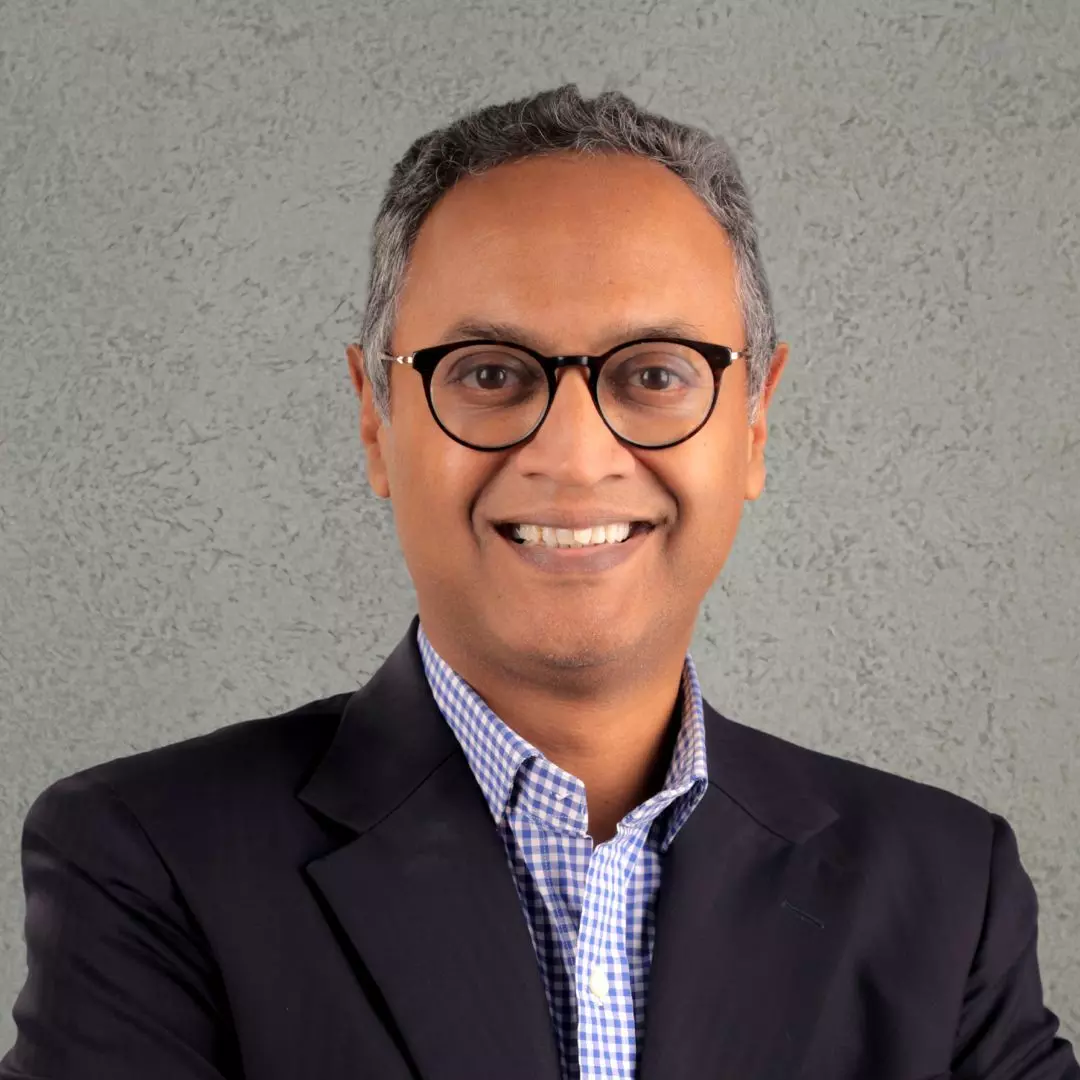
On Episode 964 of The Core Report, financial journalist Govindraj Ethiraj talks to Ajai Chowdhry, Co-Founder of HCLTech and Member to the Advisory Board of India Semiconductor Mission.
SHOW NOTES
(00:00) The Take
(04:02) FIIs Stay Positive In August And Could Continue To In September
(06:51) Forex Reserves Hit New Highs As Flows Continue
(07:52) Oil Prices Are Slipping As Optimism Over Shipping Movements Through Strait Returns Again
(08:45) Federal Reserve Chair Kevin Warsh Surprises The Market With A Frank Take On Interest Rates
(09:49) What Does It Take To Build A Company That Successfully Lasts 50 Years And More
—
NOTE: This transcript contains the host's monologue and includes interview transcripts by a machine. Human eyes have gone through the script but there might still be errors in some of the text, so please refer to the audio in case you need to clarify any part. If you want to get in touch regarding any feedback, you can drop us a message on feedback@thecore.in.
Good morning, it's Monday the 31st of August and this is Govindraj Ethiraj broadcasting and streaming weekdays from Mumbai, India's financial capital.
The Take
When Shashidhar Jagadishan abruptly decided not to seek reappointment as Chief Executive of HDFC Bank last week, the announcement seems to have caught Dalal Street off guard.
It shouldn't have. For years, a persistent red light has been flashing on the bank's dashboard, a frustratingly stagnant stock Over the past year alone, HDFC Bank shares have dropped about 26%, capping half a decade of broad underperformance. It has not helped that HDFC Bank has a between 10% to 12% weightage in the benchmark indices, the Nifty and Sensex, often posing a drag to all of them.
During the same five-year stretch, private sector peers like ICICI Bank and Axis Bank have delivered returns between 160% each. While the $40 billion merger with mortgage parent HDFC Limited has undeniably weighed on performance, forcing HDFC Bank to absorb lower-yielding home loans and compressing net interest margins, the problem cuts far deeper than balance sheet arithmetic. Even with standalone net profit compounding at a respectable 19% plus over five years, HDFC Bank simply fell behind a faster and nimbler competition.
The core issue has been a faltering leadership handoff. When iconic founder CEO Aditya Puri stepped down in October 2020 after a 25-year reign, outsiders and perhaps insiders assumed HDFC Bank's clean brand and institutional machinery could run on autopilot. Mr. Jagdishan, an accomplished financial chief, was viewed as a safe pair of hands.
But he has struggled to replicate Puri's commercial aggressiveness or retain top talent. Over the past six years, a steady exodus of senior executives running key business verticals has eroded the operational edge Puri had spent a quarter-century building. Governance and regulatory friction have added to the drag.
Barely two months after Puri's departure, even then, the Reserve Bank of India halted HDFC Bank's credit card issuances and digital launches over technology outages. More recently, the cryptic resignation of Chairman Atanu Chakraborty, citing practises not in congruence with his personal values and ethics, left an unresolved shadow, even if external reviews seemingly found no explicit wrongdoing. But rival institutions have also faced their own trials.
ICICI Bank successfully navigated the scandalous exit of former CEO Chanda Kochar to post industry-leading returns under Sandeep Bakshi, the new CEO. Indecent Bank has weathered the departure of top executives over derivatives accounting losses, though like HDFC Bank, its share price has also stagnated. Yet, ICICI proved that a well-executed leadership pivot can revitalise a legacy titan, whereas HDFC Bank appeared content to coast on past prestige.
With rumours mounting that Deputy Managing Director Kezad Bharucha or an external candidate could take the reins, HDFC Bank reaches another and critical fork in the road. One fund manager, Alok Agarwal of Alchemy Capital, told me last week that we have to accept that many of India's mature companies have simply outlived their hyper-growth phase. But as corporate history demonstrates, institutions can always be turned around with the right captain at the helm.
The lesson of the past six years is plain. Pristine systems and powerful brands are vital, but in high finance, individual leadership still makes all the difference.
And that brings us to the top stories and themes for the day…
FII stay positive and August could continue into September.
Forex reserves hit new highs as flows continue.
Oil prices are slipping as optimism over shipping movements through the Strait of Hormuz returns.
Federal Reserve Chair Kevin Walsh surprises the market with a frank take on interest rates.
And what does it take to build a company that successfully lasts 50 years and more?
Markets, Forex, Oil and Kevin Walsh
The month of August has ended positively from a foreign portfolio investment point of view, bringing in more than $3 billion of investments and also ending optimistically on the West Asia crisis with possible solutions in sight for a resumption of higher shipping flows through the State of Hormuz. Now, all of this means that September could be a better month.
Remember, other macro factors, including corporate results, have been strong and will continue to be strong for the next quarter as well. And therefore, all of this could portend a better September. Now, whether that will happen, we don't know.
And will it last? We also don't know. But there is other oil news which might occupy the world's attention for some time, and we'll come to that. Specifically, foreign institutional investors invested about $3 billion in August, extending their buying streak to the second straight month, thanks to improved corporate earnings, resilient economic activity, stable rupee, and also easing geopolitical concerns.
According to a Business Standard report, the inflow follows about $2 billion invested in July net, and that marked a sharp turnaround after four consecutive months of heavy selling, which included March, April, May, and June. Since now we've seen two straight months of buying following a bad six-month stretch, there is a good indication of a likely trend reversal in portfolio investments, that's foreign portfolio investments. With all of this, the major indices also snapped a two-day losing streak on Friday, with the Sensex rising 330 points to 77,264, and the Nifty 50 rising 84 points to 24,175.
In the broader markets, the Nifty mid-cap and small-cap were trading slightly above as well. The markets on the weekly front, however, saw a third straight weekly loss, which was their longest falling streak in five months, including on concerns over the new closing auction mechanism. The new closing auction session, which determines the official closing prices of futures and options-eligible stocks, has seen sharp moves on monthly derivatives expiry days.
Reuters quoted the Securities and Exchange Board of India's chairman saying on Thursday the regulator was not considering immediate changes to the mechanism despite concerns over the market swings. Meanwhile, Jio Platforms, part of the Reliance Industries Group, received approval for a $3.8 billion IPO on Friday, which could also be potentially India's biggest listing. A Reuters report pointed out that in less than two months since July 1, more than two dozen IPOs have been announced or launched, nearly matching the 28 in the first half of 2026.
The rupee ended higher on Friday as well, rounding out a weekly gain thanks to an increase in dollar liquidity ahead of closing of a special deposit window, which is the FCNRB deposits, that ends today. The rupee ended at Rs 95.37, up slightly from Thursday's close. The Reserve Bank of India's FCNRB or NRI deposit scheme ends today and the few weeks have seen an aggressive push by banks to bring in more deposits at fairly attractive rates.
Bankers told Reuters the Reserve Bank's decision to give lenders greater flexibility in accessing its swap facility should prevent excess dollar liquidity from lingering in the banking system for an extended period. Now, with flows rising, India's foreign exchange reserves have climbed to a record high of $729 billion. This is until the week up to August 21, so it would be higher for the latest week as well, but we'll have to wait for that data.
Now, India's foreign exchange reserves have been rising for eight straight weeks and have risen about $63 billion during this period and passed the previous peak hit in February, according to the Reuters report. Now, on oil, prices are still trending downwards as optimism appears to have returned on hopes of a resumption of more shipping traffic through the state of Hormuz. Brent crude futures were at about $89.30, so under $90 on Friday.
Sticking to energy, U.S. President Trump on Friday announced plans for the U.S. to take partial control of Venezuela's vast oil reserves, betting that American companies can help revive the South American nation's battered energy industry while providing a new source of crude to help lower U.S. fuel prices, according to a Reuters report. Meanwhile, Venezuelan Interim President Del Chi Rodriguez said on Saturday that an energy agreement with the U.S. would remain in force for 25 years, target an increase in crude output to one and a half million barrels per day, and preserve the country's sovereignty over its natural resources. President Rodriguez, who was in India a few months ago, also hailed the accord in a late-night address as a historic deal that would help revive the economy and boost government revenue, and it would help shape the country's future, according to the Reuters report.
Now, obviously, none of this is as simple as it sounds, but such is the nature of the world contemporary geopolitics. On Wall Street, the S&P 500 fell but still notched a winning week after Federal Reserve Chairman Kevin Walsh conveyed some worry over current inflation trends, according to a CNBC report. Now, the markets were looking to see how candid he would be in his comments, and in his remarks at the Central Bank's, that's the Federal Reserve's, annual symposium in Jackson Hole, Wyoming, Walsh said, while this summer's PCE and CPI readings were better than expected, they do not tell me that underlying trends have meaningfully improved.
He also said that we must be confident that underlying inflation is moving to our objective clearly and at sufficient speed, otherwise we have work to do. That's our job, our mandate, and our charge to keep. Bets amongst Fed funds' future traders that the Fed will raise interest rates in September increased on Friday, according to CME Group's FedWatch tool, and that went up from 35% a day before to about 57.5% on Friday, according to that CNBC report.
Analysts told CNBC that Walsh's comments about the composition of CPI in particular signal that he's very much looking for consensus internally to raise rates.
What Does It Take To Build A Company That Successfully Lasts 50 Years
Once known as Hindustan Computers, HCL Tech today sits on the top deck of Indian IT services companies. Somewhat similar to Infosys, which came later, HCL was set up by six founders, including Shiv Nadar and Ajay Chaudhary, 50 years ago.
HCL Tech also owns HCL software, and HCL Infosys is also part of the group. Now, what does it take to set up a company that lasts 50 years? Can you even plan for that at start? And what does that tell us about companies and entrepreneurs today? How does one distinguish as a shareholder or investor between a company or founder that will last and grow versus one that will not? In some ways, this also goes back to the HDFC Bank case that we spoke of earlier in the show. Now, HCL was started with a dream to take the microprocessor and change the world in 1976.
I reached out to Ajay Chaudhary on what it takes to build a company that has now lasted 50 years and continues to grow, and a company that he continues to be a shareholder in as well. Also, on how he applies the lessons he learned to the investments he now makes, and what he takes away from them.
INTERVIEW TRANSCRIPT
Ajai Chowdhry: Well, actually we built the company for very long term and in our minds was 100 years plus plus. I think the key thing that we have created is a culture of HCL. And this culture of HCL is very, very unique.
And that is what helps us to continue to grow and continue to invent and do new things. And one of the things that we have also always looked at is that we look at internal people to take the company forward. So if you look at the current CEO, he's also been with the company for a very long period.
And he started as an engineer in the organisation and then grew up and became the CEO. So that is one of the things that people like within the organisation.
Govindraj Ethiraj: And when you say that you think or you thought of building a hundred year old organisation, how would you contrast that to what entrepreneurs today set out to build, given the fact that they seem to mostly exit or are looking for exits? And therefore, as an extension, do they make or would you make the same kind of bets you would on them as someone did on you?
Ajai Chowdhry: Well, you see, there was nothing like exits, etc. There was nothing like startups. There was nothing like incubators.
So none of those things were there when we started. These things have all come up in the last five to 10 years. This size of the company, when you've gone through an IPO and you've already got a good standing in the market, you know, you will do any of these things if it is absolutely required.
Otherwise, you can grow on your own. Why not? And we have grown by many, many acquisitions.
So that has been one of the strengths of HCL that when we originally started as a company, we started as a hardware company, then we pivoted to being a software company. And then when we pivoted to being a software company, we focused on engineering software because that was our strength. We started from R&D of the original HCL.
And then as we went forward, we did a lot of acquisitions post the IPO. And that has allowed us to keep growing and growing and growing. So I think this model of having nothing in software while Infosys and Wipro had already gone far ahead of us.
We caught up with them and exceeded them.
Govindraj Ethiraj: And we are now at a stage where we can call ourselves a full system company from infrastructure management to engineering and exports to application software, etc., So would you say then the DNA of HCL was more the agility and the ability to, let's say, adapt to changing environments or the ability to build something at start, which was going to be something big?
Ajai Chowdhry: Let me give you an example. Let's look at HCL software. HCL software is a product company.
All other software companies do not have a product business. HCL is the only listed software company that has a product business. And that product business is around 1.5 billion dollars, which is the largest software product company in India. So how did we do it? We didn't start from scratch. We went and bought IBM software.
And from there, we converted the product and used those customers to upsell and cross-sell. And that's how we created a product company. So these are some unique things that we have done when we bought the product company.
And I remember Mr. Nadar was questioned many times by investors, that why have you spent so much money on buying old software? Now you look at that particular business is doing extremely well.
Govindraj Ethiraj: And could you walk us through what that product is in terms of what its current avatar is and what it serves?
Ajai Chowdhry: So basically, originally, it was all the old IBM software. And then we kept upgrading it and using it and adding more products and along that doing a lot of cross-selling of other products. So that's how the whole business sort of got created.
Govindraj Ethiraj: Right. And you've also written about this and you've talked about that period 50 years ago when the six of you assembled, including Shiv Nadar, and you worked out of Barsati in Delhi and in South Delhi, and you were essentially building a computer to start with. What would you say is similar and what's changed in the environment vis-a-vis someone starting up today and in your time?
Ajai Chowdhry: Well, actually, when we started, there was nothing called startups, as I said. Also, there were no angels or VCs. So getting funding was very, very difficult.
The second thing that we had confronting us when we started, it was the days of the licence raj. So we needed to get a licence to make computers. And that is where we innovated.
We found that UP government had a licence. We went to them and created a joint sector company called Hindustan Computers Limited. And once we became a joint sector company of a government organisation, that helped us to get additional funding from UP government and others.
So it gave us the credibility to get funding which we wouldn't have otherwise. So one thing that I've always said is what I learned from Dr. CK Prahlad, A is greater than R. If you have the aspiration, resources will happen.
So what did we start with? 1.86 lakhs. And therefore, having created a 15 billion dollar corporation globally, it's all because A is greater than R.
Govindraj Ethiraj: You said that you tied up with UP government and there was a phase when many private sector companies were partnering or tying up with state governments in different parts of the country. We don't see that much of that happening today. Do you think there's been a disconnect?
And do you think there is a role for government or government owned corporations or government owned funds or government run funds to work with private sector today?
Ajai Chowdhry: Not really, because there was a need at that time, because we didn't have the licence, the UP government had the licence. So therefore, we had to go and do it because working together with government, you have to work in a different way. Today, there is no need to do that.
So that's why I don't see too many people, you know, going and working with a public sector company, et cetera, et cetera, in a joint venture. It's quite rare today to even think of that. I think the way people are working today is to have them as a partner and they are utilised for getting to a certain market, which directly you cannot get in.
For example, you may work with BEL to get into the defence market.
Govindraj Ethiraj: Right. And I asked you about what's changed and not changed. So you did say what's changed, but what's not changed?
Ajai Chowdhry: Well, what's not changed is the fact that today the aspirations of India are definitely the same as they were before. Every Indian wants to do something different and wants to grow and create something. That entrepreneurship, which has been a part of India's DNA, continues to stay.
And that's why you see a range of entrepreneurs all over the country that keep growing and growing and growing. So this has been something there for a long, long time in India. And I think this will continue to be our biggest strength.
Govindraj Ethiraj: So one of the things that you didn't have, as you mentioned earlier as well, was capital. Today, there is far more capital. Do you think too much capital is also a disadvantage in a manner of speaking?
Too much capital is not good.
Ajai Chowdhry: I mean, you must have the adequate capital. I have seen some of my startups. I've invested in about 70 odd startups.
I saw one of the startups going down because the VC had funded it and they were pushing them to do keep growing, growing, growing, growing without looking at profits. So that is something that is not good for organisations because, you know, they must earn their stripes and that's where the difference is, you know.
Govindraj Ethiraj: So when you talk to startups, including the companies you said you've invested in, do they look at you as a fuddy-duddy old man who lived in a different era or do they feel that you have something to contribute to their journey and growth?
Ajai Chowdhry: You know, wisdom is something you cannot replace and that comes with grey hair. So they do listen to me when I mentor them and explain to them. See, what I do is that I don't talk in the air.
I go down to their level, make them understand, work together with them and sometimes I've even made customer calls with them. So you can't just talk in the air and make them believe that, you know, you can help them. You have to go and sit down with them and work through the problem.
For example, one of the companies had created a product and I noticed that they had not taken care of a design for manufacturing or design for service. So I sat down with them, I said, open the box and show it to me. How will you service this product?
And when they showed me that the product had stacks of things, one on top of the other, and to reach a particular card, it would take me 20 minutes to open different cards. So I said, look, this is not a way to design a product. So then I brought a bunch of people to help them to redesign the product so that it was designed for service.
So this is a way I sort of mentor my startups.
Govindraj Ethiraj: So to come back to HCL, it started, as you said, as a hardware company transitioned into software services and went on head on against all the other big guys. We are now at a phase where we are relooking at hardware again through data centres and so on. And HCL has also talked about it.
Do you think we are now or we are in a position to make it back into the hardware world? I mean, do we have any advantages or are there still things that are holding us back?
Ajai Chowdhry: The government in the last five to seven years has done a phenomenal job of creating various schemes for promoting the hardware business. So therefore, I think there's a great future for design to manufacturing in hardware. Till now, a lot of attention has been paid to making large volume play, which has been done in the manufacturing today.
But now the next stage is coming when component scheme has been introduced and soon enough, ISM 2.0 will appear where there'll be a focus on design to manufacturing. So I think that is a lot of value addition will happen in the country. My belief is that the country must become a product nation and that is very critical.
You know, we can't just depend on services. We have to become a product nation and to become a product nation, you have to start with manufacturing, then do design, increase the value addition, then do branding and then take it global.
Govindraj Ethiraj: Right. You know, when you look at companies that you invest in and I'm sure there is a natural response to compare the person you're meeting with to your younger self and maybe your five other colleagues. So and what do you see today when you meet these youngsters and what do you hope you see or what do you hope you saw that will perhaps give you the confidence that, you know, these are those hundred year companies or hundred year businesses.
Ajai Chowdhry: You see, one of the things that we did very early in our journey is to hire the best. So when we were just one year old, we went to IIM Calcutta and we said, we want you guys to join us and be looking for eight people. And after our presentation, our students came up to us and said that, look, you're just starting out.
How can we join your company? HLL is something that we are getting as an offer and that is where we would like to go. So we told them, look, we are not giving you a job.
We are giving you adventure and sort of you have to always create a strategy to attract people, the best people to work for you. So once we got these best people, we put them through a solid training programme on how to sell the product. So when we were selling the product, we also needed to tell customers, why should you buy a computer?
Those days computers were not bought. And so our product was much higher than an ambassador. We needed to create something which was different.
So what we did was that we taught these salespeople to use an ROI calculator. And by doing that, they could actually tell them that in two and a half years, you'll recover your investment. So this is what you need to create when you do B2B business.
Govindraj Ethiraj: Right. You know, to those who invest in markets and whether it's in the primary market or secondary market, what are the one or two lessons or takeaways that you can share from the way you would invest in a company that looks like it has, you know, everyone looks for long term holdings. I mean, some are, of course, buying for the short term, but many people like to buy a stock that will literally survive for 50 years or more.
So what would your advice be there?
Ajai Chowdhry: I think the key to it is going to be people. And if the founder team is very complimentary and then the rest of the people within the organisation have been selected in a proper way and they actually have all the capabilities, that is what makes us comfortable. And the second thing I think is that the world has changed now.
We are now looking at deep tech companies and where R&D is very, very critical. So today when I invest in a deep tech company, the first area that I focus on is what is the R&D? Are they genuinely having something new?
Are they actually having a team that will actually be able to make and design products which are going to be world class? See, this is a major change that's taken place in India. Today, you don't look for companies who are only looking at India as a market.
You also need to have companies that get globally as a market and how they will create a brand. So all these questions you ask from the teams and when you get the right answers, then you're sure that you are going to invest in that company.
Govindraj Ethiraj: Right. You know, a lot of analysts I speak to, for example, feel that sectors like IT services, sectors like consumer products are now in their sort of latter years and have lost the spunk that they had earlier for various reasons. Do you feel that IT services specifically now and companies like HCL tech or Infosys, this is a general industry question, can actually bounce back in a way that they can grow once again as they grew before?
Ajai Chowdhry: You see, I think each of the software companies have gone through multiple challenges like this in the last 30 years. Somewhere, you know, the financial market crashes, those kind of things we've all gone through. So we have discovered what to do.
Like, for example, 10 years ago, this whole H1B problem started and all of us started to go and hire more locally everywhere. And we also did near shore investments. So these are kind of strategies you have to develop as the environment changes.
You must respond to the environment. See, if 10 years ago, a lot of companies had not gone offshore, we would be in trouble today because of the H1B problem. But we no longer feel that as a problem because we've been hiring locally in the United States.
So this is a major change that we took. Now, look at the whole situation of AI today. Everybody feels that AI, we will lose jobs.
I'm telling you one thing very clearly, low end. Yes, some of the jobs will be lost, but more jobs will be created. And if you don't have a implementation agency like a software services company, you'll never be able to use your AI product because I've seen many, many companies out there.
For example, look at the situation that happened with Uber. In three months, they exhausted all the tokens they had planned for one year because they did not know how to use AI. You know, AI is just a tool.
Somebody has to help you implement it in the enterprise and connect it to existing software products that you're using, like the ERP, etc. Otherwise, you know, just taking a tool is not going to help.
Govindraj Ethiraj: Right. That's a good note to end on, Mr. Chowdhry. Thank you so much for joining me.
Ajai Chowdhry: Thank you.


