



 Newsletter
 Search
Dalal Street on Weak Footing Post US-Israel Attack On Iran
- Podcasts
- Published on 2 March 2026 6:00 AM IST
Foreign portfolio investors brought in about $2.4 billion into Indian stocks in February
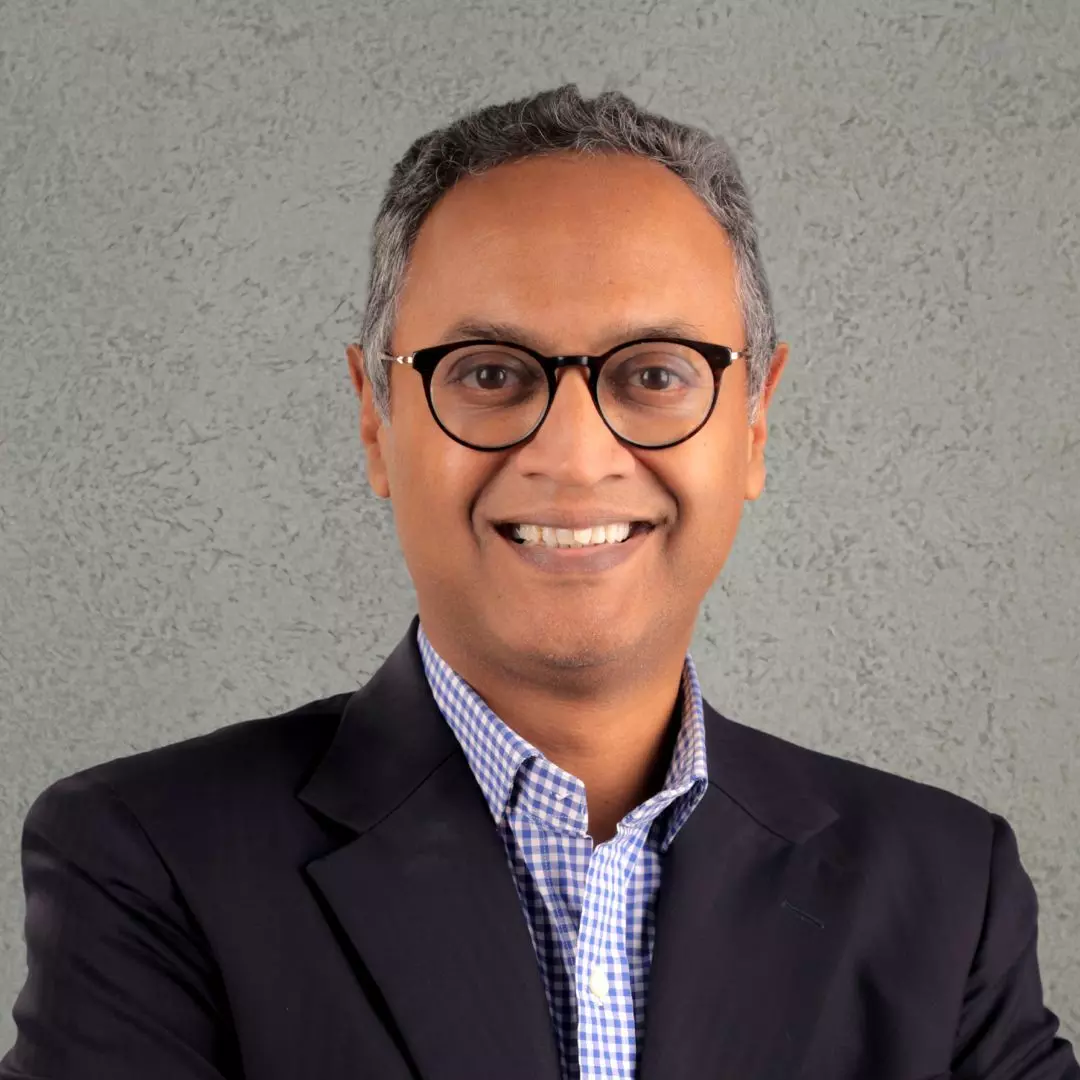
On Episode 811 of The Core Report, financial journalist Govindraj Ethiraj talks to George Koshy, CEO of LetsSolv as well as Vivek Kumar, Economist at QuantEco Research.
SHOW NOTES
(00:00) The Take
(05:44) Dalal Street on weak footing post US-Israel attack on Iran
(07:51) A new GDP series is out and last quarter growth is at 7.8%. What changes?
(16:34) The Emirates are pulling out all stops to make tourists and passengers feel safe
(22:27) OPEC is raising oil output in anticipation of supply challenges: Macro impact on India.
(24:26) New SEBI Notification on Gold and Silver
(25:24) February GST Collections
Register for India Finance and Innovation Forum 2026
NOTE: This transcript contains the host's monologue and includes interview transcripts by a machine. Human eyes have gone through the script but there might still be errors in some of the text, so please refer to the audio in case you need to clarify any part. If you want to get in touch regarding any feedback, you can drop us a message on feedback@thecore.in.
—
Good morning, it's Monday, the 2nd of March, and this is Govindraj Ethiraj broadcasting and streaming weekdays from Mumbai, India's financial capital.
The Take
For those of us old enough to remember the 1990 Gulf War, the current moment feels eerily familiar. That conflict was the first true television war, beaming graphic images of guided missiles and live trench coverage straight into our living rooms, today's social media.
It began with Iraq, then ruled by Saddam Hussein, who invaded and occupied neighbouring Kuwait. A coalition led by the United States served an ultimatum for Hussein to withdraw by January 1991. He refused, and the rest is modern history.
Hussein personally survived the 1991 retaliation by the U.S.-led forces, but his regime, or he, could not survive the second American invasion in 2003, a conflict predicated on widely contested claims of weapons of mass destruction, though the U.S. forces were in control of most of the conflict. Fast forward to March 2026, and the geopolitical theatre has shifted. The U.S. and Israel have launched strikes against Iran.
The precise reason for the timing of the attack is somewhat opaque. Until recently, several reports suggested that negotiations between Washington and Tehran aimed at curbing Iran's nuclear programme were progressing well. Some reports even suggested a conclusion that could have been agreeable to the United States.
In retrospect, it appears that those diplomatic channels may have been a smokescreen, providing U.S.-led forces the time to manoeuvre into formation even as the broader Middle East braced for an imminent clash. What the wider region, including the Emirates, clearly did not anticipate was the sheer scale of the collateral expansion. Bombs and interceptor debris have rained down on Manama, the capital of Bahrain, Dubai, Abu Dhabi, Doha, and Kuwait in the last two days.
Tehran's grim strategic logic dictates that all U.S. military bases are legitimate targets regardless of geography. And that sweeps up major air bases in or adjacent to these cities, as well as the headquarters of the U.S. Navy's 5th Fleet in Bahrain, which oversees the Gulf, Red Sea, and parts of the Indian Ocean. Now, whether by direct targeting or as a consequence of midair interceptions, the fallout has literally struck the heart of Dubai.
Projectiles have impacted locations ranging from the iconic Burj Khalifa to a breech-front hotel in Jumeirah. As it stands, commercial aviation into and out of most of the Middle East now is suspended. The economic cost of an airspace, airport, and airline shutdown now stretching beyond 48 hours will be staggering.
The inconvenience caused to hundreds of thousands of transiting passengers, many of whom remain stranded across various global hubs and not just in the Middle East, is incalculable. There is no immediate end in sight. Iran has confirmed that its Supreme Leader, Ayatollah Ali Khamenei, was killed in his office on Saturday morning during the U.S.-Israeli attack, and a succession plan seems to be in place already.
Military history teaches us that there is a strict limit to what aerial bombardment alone can achieve, and the threat of Iranian missile reprisals will thus linger, as will anxieties regarding maritime transit through the Strait of Hormuz. So it does feel like the 1990s all over again, including that dreaded feeling at the pit of the stomach about what tomorrow might bring. During the Gulf War, oil prices doubled, by the way, from $20 a barrel to $40 a barrel.
When markets open this week, oil prices will undoubtedly jump, though a full doubling is unlikely given the robust global supply and softening demand. Expect gold and silver prices to shoot too, even as stock markets fall. So where does that leave us? India, for one, is in a vastly different place today than it was during Desert Storm in the 90s.
New Delhi began opening its economy at almost the exact same moment the Gulf War commenced. By dismantling the stifling licencing regime and embracing market liberalisation, Indian industry grew vastly more competitive and capable than it had in previous decades, and of course we've seen an unleashing of entrepreneurial energy like never before. Tariffs in India fell steadily for 13 years, until 2014, before protectionist instincts crept back in.
Now spurred by pressure from the United States and impending free trade agreements with the European Union and the United Kingdom, those tariff barriers are set to fall again. The medium and long-term impacts of the strike on Iran remain clouded in the fog of war, and many consequences are impossible to predict at this point. The coming weeks, if not months, will be difficult for India and Indians who live in and depend on the Middle East for their livelihoods.
However, India does approach this crisis stronger and more resilient, precisely because it is, despite recent hurdles, an open economy. Crisis always leads to reform in India, but waiting for one to arrive and drive internal change is not the best way of doing things either. In the last year, it was a global trade war that rang the reform bells for the Indian economy.
Now, it is just war.
Our top stories and themes…
Dalal Street is on a weak footing post the US-Israel attack on Iran, but will share pain with global markets.
The OPEC is raising oil output in anticipation of supply challenges, analysing the macro impact on India.
The Emirates are putting out all stops to make tourists and passengers feel safe. Why this could help?
A new GDP series is out and last quarter growth was at 7.8%. What changes?
Markets
The big question is, how will the markets open today? That's Monday, March 2nd. The interesting thing is that many investors have shifted or increased their exposure to gold and silver because of a trade war.
And now that we're in an actual war with bombs and missiles flying all over the Middle East, perhaps those investments were the right ones. While oil prices will rise, markets are likely to fall somewhat uniformly. Indian markets did not have a very good day on Friday though, so the start point is already weak.
The nifty 50 had closed down 311 points to 25,178 and the Sensex was down 961 points to 81,287. The broader markets were also down. The nifty mid-cap and small-cap indices were down 1.1% each.
Meanwhile, a positive sign that may or may not hold this week, foreign portfolio investors brought in about $2.4 billion into Indian stocks in February, and this was the highest in about 17 months, according to a report from PTI. And the higher inflows were obviously driven by the interim India-US trade deal, which came before the US Supreme Court decision to dismiss those tariffs as illegal. And there have been stronger third quarter earnings as well.
In January, investors, that's foreign investors, had pulled out about $3.8 billion. And in 2025, they had pulled out about $19 billion, making it together amongst the worst periods for foreign flows. By way of background, foreign portfolio investors had invested close to $6 billion in September 2024, also being the month the markets had hit their previous peaks.
Elsewhere, more distinct bilateral ties are taking shape after the French and Brazilian leaders, amongst others, who came also for the India AI Impact Summit. It was the turn of the Canadian Prime Minister to visit India as Mark Carney passed through Mumbai on Friday and met with several business leaders as well, including Tata Group chief and Chandrasekharan.
India’s New GDP Series
We have a new GDP series now, which means GDP or Gross Domestic Product is being computed differently. India's economic growth slowed under this new GDP series in the October to December quarter as government spending and private investment slowed down.
But strong consumption, among other factors, is keeping India at the position of the world's fastest growing economy. The economy grew 7.8% in the October to December quarter from a year earlier, slowing from the 8.4% figure in the previous quarter. For the full year, that's 2025-2026, the economy is expected to grow at 7.6%, according to the National Statistics Office, and had been forecast to grow by 7.4% under the old data series, according to a Reuters compilation.
So what does this new series mean? And how is it different from the past? I reached out to Vivek Kumar, economist at Quantico out of Mumbai, and I began by asking him how he was reading the numbers and also a sense on how he was seeing the impact of the latest developments in the Middle East.
INTERVIEW TRANSCRIPT
Vivek Kumar: As you said, it's early, but nevertheless, I think you have a sense that the direct exposure for India from an economic perspective is going to be fairly limited. We'll definitely talk about the indirect exposures later, but from a direct exposure perspective, what we know is that Iran has a fairly low in terms of trade integration with India as we stand today. So, for example, if we look at the export side, we export just about 0.3% of our total merchandise exports to Iran. Our imports are even lower than that. It stands at just about 0.1%. I think from a trade deficit perspective, it's almost flat. It's nearly flat.
So, not much in terms of the direct trade. It's not a direct trade exposure that we have. It's about the indirect exposures, which in this particular case, they stand much more important.
And the indirect exposure comes through the channel of crude oil prices. So, Iran probably is at a very strategic geolocation where it can control one of the most important arterial choke points for the transport of crude oil, which is the state of Hormuz. Any disruption in that for a prolonged period of time will probably start spilling over to crude oil prices.
Now, what we know is that the early indicators in terms of how markets have reacted in the West Asia, the early indicators are telling us that the crude oil prices could be heading towards 80 or probably is trading close towards 80. That's the early sense that we have. It's not a catastrophic situation for us.
So, if let's say if you think about Viva that goes to 65-70 dollars in that range for a major part of the year, and if crude oil kind of shoots up to 80, well, it's not going to be catastrophic, but the comfort that one enjoyed vis-a-vis let's say stability in growth or stability in inflation, that can come into a little bit of a question if the 80, let's say 80 or 90 dollar barrel price kind of sustains over the period of next 12 months.
Now, there are various parts to it, whether it sustains or not, whether crude oil prices will come back, whether other OPEC members will try and compensate for the loss that comes from Iran. So, these are open-ended questions for now, but for us, I think the moot point or the moot takeaways is the fact that the indirect exposure is going to be larger than the direct exposure.
Govindraj Ethiraj: So, if I were to supplement that, my previous question, is there any other impact that you're seeing because of either financial markets or shifts in asset allocations by investors, including governments, because of all this uncertainty?
Vivek Kumar: It's a broader question, Govind, and I'm glad that you brought it up because it's not just, you know, when we talk about capital flows, we typically tend to focus our attention on portfolio flows because that's the kind of number that we have on our table on a daily basis, and equity or, for that matter, even debt probably will not be as, I would say, impacted by what's happening. Well, yes, there can be a very short-term knee-jerk impact on these flows, but from a broader context, I think it's the direct investment flows that one needs to keep an eye on because what it is doing, it's not just an Iran episode. I think if we start clubbing together all such episodes which have kind of taken place in the last few years, then it has raised the geopolitical risk premium in the global capital flow market, and the entire supply of direct investment flows globally has started to ebb.
So, it's not a problem that India is facing on a unilateral basis, it's a problem that the entire world is facing. So, China has seen a dip in its FDI flow, India has seen it. So, all those FDI magnets which we were kind of used to in the previous decades, so India and China were poster boys for FDI magnets in the previous decade, they are seeing a dip in the FDI flow.
So, there has been an increase in geopolitical risk premium, there has been an increase in geoeconomic risk premium because of tariff-related uncertainty. So, it's a combination of both. They move towards protectionism, they move towards uncertainty on trade, they move towards a higher geopolitical risk premium is affecting direct investment flows at a global level.
And portfolio flows, yes, they are much more reactive in the very short term, but for us, this is where one needs to keep an eye on. So, we are seeing part of the story already playing out in case of India.
Govindraj Ethiraj: Right. Last question, Vivek. So, we also have a new GDP series now with us and growth has come in at 7.8%. So, a quick comment from you on what is the key difference that people should know of when they look at what the GDP number is now versus what it was earlier?
Vivek Kumar: I would say, along with the GDP data which came out for the quarter 3 of financial year 25-26, there were also GDP data which was provided for 22-23 until 24-25. So, you have a set of four GDP numbers for the past financial years, including FY 25-26. One needs to probably look at the entire message that one is getting from the revamped GDP series, because just looking at FY 26 will not be fair because it's a comparatively newer basket.
So, there are methodological changes, there are new surveys which have been incorporated. And because of this, the comparison of both the baskets, and obviously there has been a change in base here, the comparison of the basket is not going to be fair. So, one needs to look at totality and the message that we get or the takeaway that we have when we look at the data for the last three or four years is that the size of the economy is somewhat lower.
By somewhat lower, I mean on an average basis last four years, the size of the economy is roughly 3.4 percentage points lower than what was anticipated earlier in the previous GDP base data series. That's one takeaway. The other takeaway is that over the last three years, the GDP growth is about 0.4 percentage points lower than what was estimated to be in the previous older series. So, there has been ups and downs in the new GDP growth data. So, for example, FY 24 saw nearly 200 basis points decline in GDP growth. FY 25 saw 60 basis points increase in GDP growth, when you compare the old and the new series.
And FY 26 is about 16 basis points above the old series. So, there has been ups and downs, but on an aggregate basis, it's about 40 basis points lower than what it was in the older series. So, that's the broader message that we have when we start looking at the real view.
When we look at the very near term, vis-a-vis let's say what just happened in the previous quarter, then the notion that one had that economic growth momentum has started to moderate still holds. Yes, the numbers are slightly up and down, but the broader message is that after peaking out in terms of growth momentum somewhere in H1, slowly growth momentum is starting to moderate. Having said that, the moderation is still not concerning, because overall, you are still kind of maintaining the 7% growth handle, which is, I would say, a very commendable feat.
And that's also in alignment with, Govind, what you would have noted, what the finance ministry had said before the presentation of the union budget in that economic survey, which is that India's growth potential is somewhere close to 7%. So, if we are able to kind of uphold that 7% number, barring the inter-quarter, let's say, volatility, I think that is going to be a commendable achievement in this kind of a global environment.
Govindraj Ethiraj: Vivek, thank you so much for joining me.
Vivek Kumar: Thanks. Thanks, Govind.
Current Airline Suspension
Airlines across the Persian Gulf extended their suspension of operations into the second day, causing major disruptions at some of the world's busiest airports right down to India and Delhi and Mumbai. Emirates, the world's largest international airline, had suspended operations as of Sunday night.
Etihad Airways extended cancellations until 2am on Monday, while Qatar Airways said all flights would be halted and it would provide an update on 9am this morning. That's Monday morning, according to Bloomberg, adding that the United Arab Emirates Civil Aviation Authority said it tended to more than 20,000 affected passengers caught up in the disruption, and more on that shortly. India's Director General of Civil Aviation said local carriers cancelled 410 flights on Saturday and 444 were expected to be cancelled on Sunday.
Airlines around the world, from Canada to Europe to Singapore, all said they suspended their services to the Middle East. A glance at Flightradar24.com showed that there was almost no air traffic activity in and around the Middle East, that's particularly the Emirates and Iran, on Sunday night. A quick aside here, it's quite evident that the Emirates are going all out to convert this crisis into an opportunity of sorts with their agile responses to stranded passengers, including helping arrange for visas for transiting passengers and hotel accommodation.
The level of detail is quite impressive actually, with one report saying that hotels in Abu Dhabi were told that guests should not be charged for staying on beyond their checkout times because of non-available flights. While those living in the Emirates, including Dubai, have received a rude shock and reminder on where they actually reside in a geographical and geopolitical context, it's equally true that this level of empathy and response will quite likely win the hearts off and attract more tourists and visitors and not less, as some have speculated. To get a sense on how things were on ground, I spoke with George Koshy, former journalist with Bloomberg TV India, whose flight from Dubai to San Francisco came back and is now in Dubai in a hotel which he had been moved to. I began by asking him to describe to us how things were at this moment.
INTERVIEW TRANSCRIPT
George Koshy: Well, the day one was quite a surprise because most people didn't know what was happening. The news was only still trickling in, so we were already in the air when all of these announcements started coming up and then we started watching live TV in the plane itself and that's when we got to know that, you know, there is something amiss and then the captain made that announcement and said that we may have to turn back. We're looking for an alternate route because the route that we were supposed to take has been completely blocked off and the airspace has been blocked off.
He then tried to take another route over Pakistan but I think there was some tension there as well and that airspace was also shut and therefore we were brought back into Dubai. As soon as we got here what we saw was a large terminal full of people, multiple planes that were cancelled, so all of those people landing up in one terminal and I'm talking about just about an hour since the whole thing had happened and yet in just about a few hours from there the government had already decided that all of those passengers stranded there would be given a transit visa. Those visas were being quickly stamped and handed over, people were being asked to step out, their luggage had already been, you know, set up and arranged very efficiently next to the numbers of the places that they were being told.
There were huge queues obviously because there were so many people there but and yet all of them were being, you know, transported in buses and being given hotel accommodation quickly and some people would definitely have had to wait for multiple hours but things were happening really quick and they were officially standing. The best part that caught me was all of this was happening with very less or absolutely zero drama and it was amazing how, you know, all of these things were kicking in very quickly and even while we stood in those queues and lines there were people actually offering us food and water and think of it right, it is the month of Ramadan, so most of these officials and individuals who were helping us were obviously not even having water of their own and still very patiently constantly answering questions of these hundreds and thousands of people who were stranded there.
Govindraj Ethiraj: George, so what happens now because you're still in Dubai and you are waiting for your onwards flight, has the airline told you when that could be or how does it look from here on?
George Koshy: Emirates and all of the airspace here is currently entirely blocked and there is no decision being made on that especially because there's been a lot of activity, say for instance last night all of those people living in the central district of Dubai kind of got messages on their phones to evacuate tall buildings, even as I talk to you I can I can hear these stains, spider bits actually passing through the air, all of these noises are, there is something happening all along and as these activities happened there were three missiles that landed up in the middle of Dubai in prominent places too, so with all of these things happening people haven't, yes people have, I mean they haven't really made the decision but they're constantly texting us to kind of get back to them and each day they're ensuring that hotel authorities are being told whether to, you know, keep adding up the number of days that we'll be taking care of over here.
Govindraj Ethiraj: Right, so you are an Emirates passenger and therefore technically under the Dubai government but what about other passengers and other tourists that you are aware of, are they getting similar treatment?
George Koshy: But anyone who was supposed to take a flight in and out of the airports around this time and who were already at the airport or were being, were transit passengers and have landed up in UAE, have been taken care of and have been continuing to be taken care of, those passengers who were to take a flight out of here at this point of time, they were initially itself told that not to come to the airport and therefore they're all, you know, in their own private residences and stuff like that but even as we speak there is a lot of air activity that we can hear constantly and while everything seems safe at this point of time, I think airspace would be blocked for some more time.
Govindraj Ethiraj: Got it George, thank you so much and I wish you a safe and onwards journey and hope to speak to you soon.
George Koshy: Thank you Govind, thanks so much.
OPEC Output
The Organisation of Petroleum Exporting Countries Plus has agreed in principle to a modest oil output increase on Sunday, according to sources who spoke to Reuters, after the US-Israeli war on OPEC Plus member Iran and Tehran's retaliation led to shipment disruptions in the Middle East. OPEC Plus usually raises oil output to cushion disruptions, but analysts told Reuters that the group currently has little spare capacity to add to supply except for its leaders Saudi Arabia and the United Arab Emirates, who will also find it difficult to export oil until navigation in the Gulf returns to normal.
Saudi Arabia has been raising oil production and exports in recent weeks in preparation for US strikes on Iran, according to the same sources who spoke to Reuters. Oil, gas, and other shipments from the Middle East via the state of Hormuz have come to a halt since Saturday, after shipowners received a warning from Iran saying the area was closed for navigation. On Friday, oil prices had jumped to $73 a barrel, the highest since July, on fears of a wider conflict in the Middle East and supply disruptions through Hormuz, which is the world's most important oil route, amounting to over 20 percent of global oil transit, according to Reuters.
Meanwhile, a Bloomberg report is projecting the most significant disruptions for gas markets since Russia's invasion of Ukraine upended global trade four years ago. Iran's neighbours like Qatar say Bloomberg are some of the world's most important producers, and the region is also a vital supply route, with 20 percent of liquefied natural gas exports also travelling through the states of Hormuz, and LNG trade through the narrow waterway is now all but halted, according to ship tracking data examined by Bloomberg. The news agency said that Asian buyers who take roughly a quarter of their LNG from Qatar, the world's second-largest exporter, have been calling suppliers to check if alternative cargoes were available.
Egypt is also trying to bring forward shipments after supplier Israel shuttered some fields.
New SEBI Notification
With more attention likely to ship to gold and silver, this would make sense. The Securities and Exchange Board of India last week allowed some $385 billion of actively managed equity funds to park more of their money in gold and silver, giving them greater flexibility at a time when global demand for hard assets is rising.
This notification actually came ahead of the U.S.-Israel attack on Iran, and in some ways, the regulatory body seems to have had a premonition that something bad was coming. Under revised rules by the Securities and Exchange Board of India, stock funds can invest the remainder of their portfolios, that's up to 35 percent of their assets in gold and silver instruments, as well as in units of infrastructure investment trusts. The Bloomberg report says this change could also create a new source of demand for gold and silver, which have attracted robust investor interest amidst a strong rally.
GST Collections
Goods and services tax of GST collections for February at the gross level stood at about 183,000 crore rupees, which was about an 8.1 percent year-on-year increase. A note from Grant Thornton Barrett said that this reaffirms the steady fiscal momentum as the economy reaches the close of the financial year. Cumulative collections have touched 20 lakh crore rupees, up about 8.3 percent, and the numbers indicate GST revenues are holding firm even on a high base.
Domestic revenues grew at a moderate 5.3 percent, while import-linked IGST rose 17 percent, suggesting that trade activity and tighter customs-side compliance or duties are currently providing a stronger lift to overall collections than core domestic demand, said that note from Grant Thornton. They also pointed out that there is a 10 percent increase in refunds, with net revenue still posting a healthy 8 percent increase. Maharashtra continues to lead, followed by Karnataka and Gujarat.


